Flashback Friday.

In Hearts of Men, Barbara Ehrenreich talks about the launching of Playboy in 1953 and how it forever changed how we thought about single men.

At that time, a man who stayed single was suspected of homosexuality.  The idea of being an unmarried heterosexual adult of sound mind and body was totally foreign.  Hugh Hefner changed all of that by inventing a whole new kind of man, the playboy.  The playboy stayed single (so as to have lots of ladies), kept his money for himself and his indulgences (booze and ladies), and re-purposed the domestic sphere (enter the snazzy bachelor pad full of booze and ladies).

With this in mind, check out an attempt to attract advertising dollars from a 1969 issue (found at Vintage Ads).  It nicely demonstrates Playboy‘s marketing of a new kind of man, one who lives a free and adventurous life that is unburdened by a boring, dead-end job needed to support a wife and kids.

Text:

What sort of man reads Playboy? He’s an entertaining young guy happily living the good life. And loving every adventurous minute of it. One recipe for his upbeat life style? Fun friends and fine potables. Facts. PLAYBOY is read by one of out every three men under 50 who drink alcoholic beverages. Small wonder beverage advertisers invest more dollars in PLAYBOY issue per issue than they do in any other magazine. Need your spirit lifted? This must be the place.

Today, we commonly come across the idea that men are naturally averse to being tied down, but Hefner’s project reveals that this was an idea that was invented quite recently and promulgated for profit.

This post originally appeared in 2008.

Lisa Wade, PhD is an Associate Professor at Tulane University. She is the author of American Hookup, a book about college sexual culture; a textbook about gender; and a forthcoming introductory text: Terrible Magnificent Sociology. You can follow her on Twitter and Instagram.

In a fancy bit of marketing, U.S. capitalists have been reborn as “job creators.”  As such, they were rewarded with lower taxes, weaker labor laws, and relaxed government regulation. However, despite record profits, their job creation performance leaves a lot to be desired.

According to the official data the last U.S. recession began in December 2007 and ended in June 2009. Thus, we have officially been in economic expansion for almost five years.  The gains from the expansion should be strong and broad-based enough to ensure real progress for the majority over the course of the business cycle.  If not, it’s a sign that we need a change in our basic economic structure.  In other words, it would be foolish to work to sustain an economic structure that was incapable of satisfying majority needs even when it was performing well according to its own logic.

A recent study by the National Employment Law Project titled The Low-Wage Recovery provides one indicator that it is time for us to pursue a change.  It shows that the current economic expansion is transitioning the U.S. into a low wage economy.

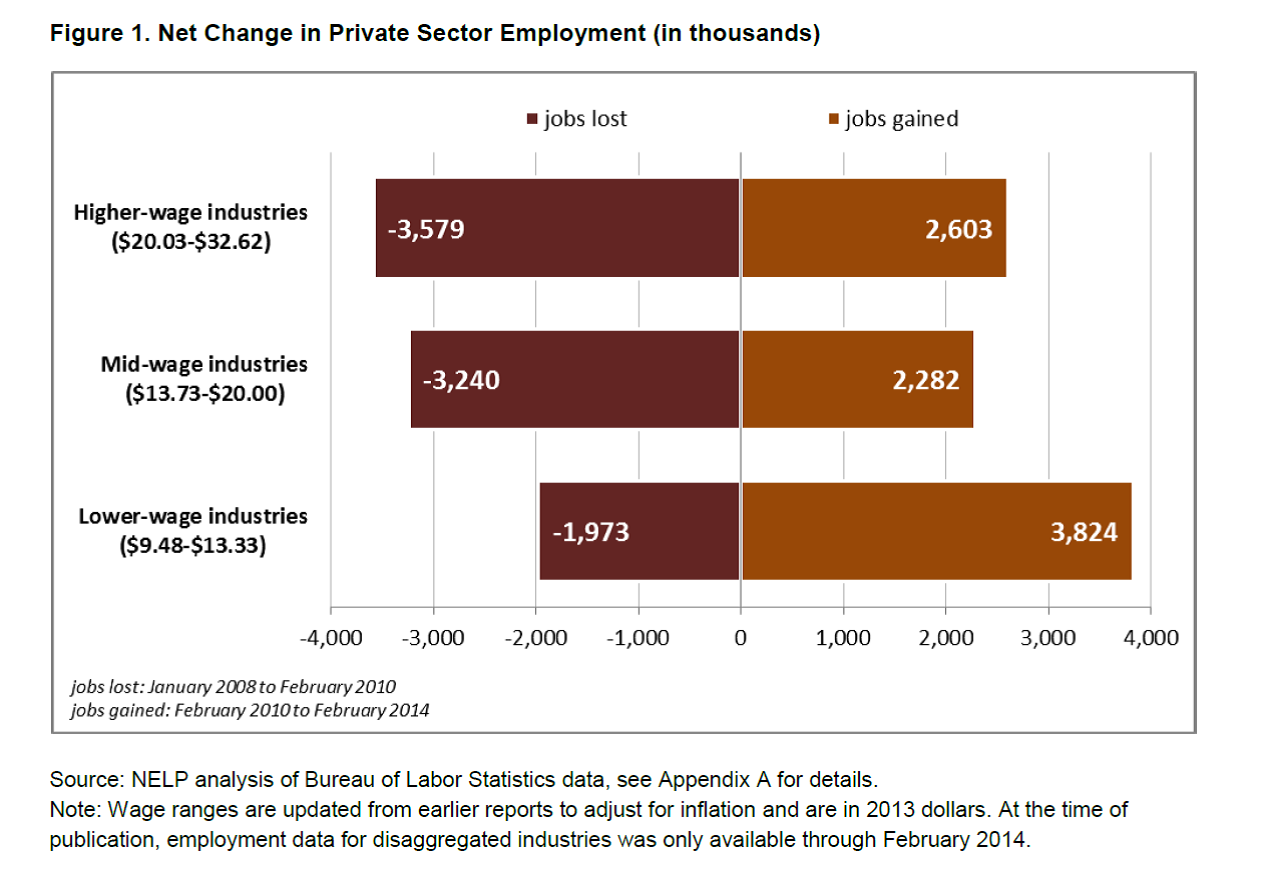
The figure below shows the net private sector job loss by industries classified according to their medium wage from January 2008 to February 2010 and the net private sector job gain using the same classification from March 2010 to March 2014. As we can see, the net job loss in the first period was greatest in high wage industries and the net job creation in the second period was greatest in low wage industries.

1 (2) - Copy

As the study explains:

 The food services and drinking places, administrative and support services (includes temporary help), and retail trade industries are leading private sector job growth during the recent recovery phase. These industries, which pay relatively low wages, accounted for 39 percent of the private sector employment increase over the past four years.

If the hard times of recession disproportionately eliminate high wage jobs and the “so called” good times of recovery bring primarily low wage jobs, it is time to move beyond our current focus on the business cycle and initiate a critical assessment of the way our economy operates and in whose interest.

Cross-posted at Pacific Standard.

Martin Hart-Landsberg is a professor of economics at Lewis and Clark College. You can follow him at Reports from the Economic Front.

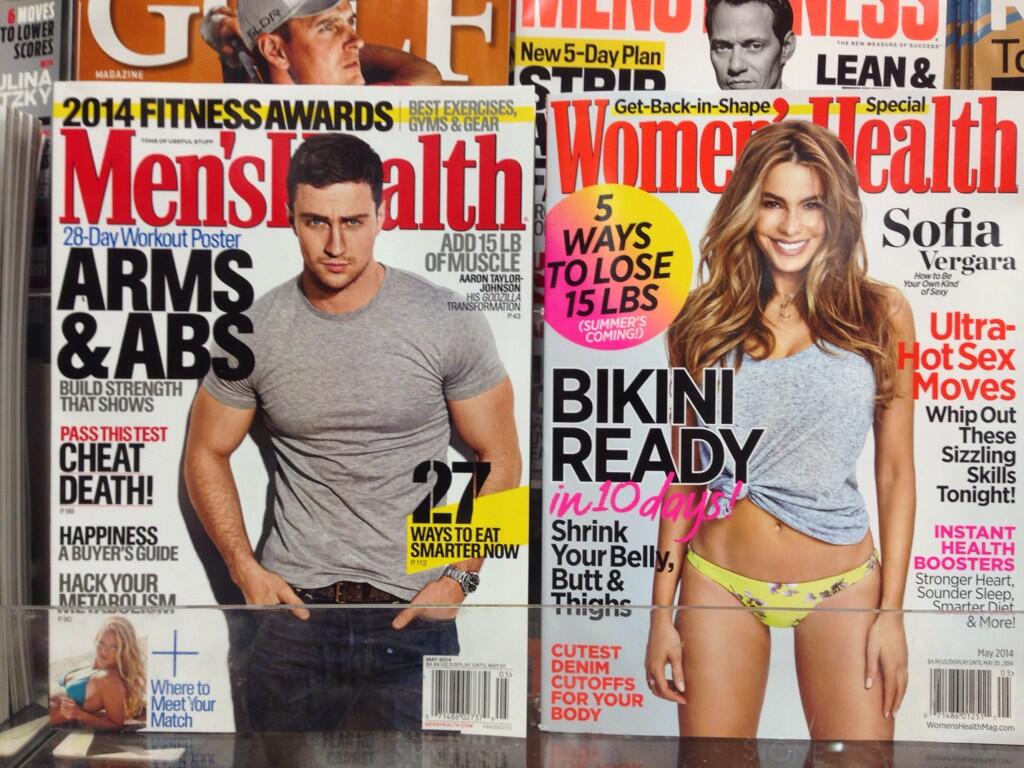
We commonly hear claims that men are naturally more muscular and physically intimidating than women.  “It’s a biological fact,” someone might say.  If that were true, though, we wouldn’t have to work so incredibly hard to make it so.

@IllMakeItMyself sent in this great example of the way in which we are pushed to force our bodies into a gender binary that we pretend is natural.  On the upper right part of the Men’s Health cover, it reads: “Add 15lb of muscle” and, right next door on the Women’s Health cover, it reads “5 ways to lose 15 lbs.”

If we have to try this hard to make it true, maybe we’re not as different as we think we are.

1

Lisa Wade, PhD is an Associate Professor at Tulane University. She is the author of American Hookup, a book about college sexual culture; a textbook about gender; and a forthcoming introductory text: Terrible Magnificent Sociology. You can follow her on Twitter and Instagram.

I am so pleased to have stumbled across a short excerpt from a talk by Alan Watts, forwarded by a Twitter follower.  Watts makes a truly profound argument about what money really is.  I’ll summarize it here and you can watch the full three-and-a-half minute video below if you like.

Watts notes that we like to talk about “laws of nature,” or “observed regularities” in the world.  In order to observe these regularities, he points out, we have to invent something regular against which to compare nature. Clocks and rulers are these kinds of things.

All this is fine but, all too often, the clocks and the rulers come to seem more real than the nature that is being measured.  For example, he says, we might think that the sun is rising because it’s 6AM when, of course, the sun will rise independently of our measures.  It’s as if our clocks rule the universe instead of vice versa.

He uses these observations to make a comment about wealth and poverty. Money, he reminds us, isn’t real. It’s an invented measure.  A dollar is no different than a minute or an inch.  It is used to measure prosperity, but it doesn’t create prosperity any more than 6AM makes the sun rise or a ruler gives things inches.

When there is a crisis — an economic depression or a natural disaster, for example — we may want to fix it, but end up asking ourselves “Where’s the money going to come from?”  This is exactly the same mistake that we make, Watts argues, when we think that the sun rises because it’s 6AM.  He says:

They think money makes prosperity. It’s the other way around, it’s physical prosperity which has money as a way of measuring it.  But people think money has to come from somewhere… and it doesn’t. Money is something we have to invent, like inches.

So, you remember the Great Depression when there was a slump?  And what did we have a slump of?  Money.  There was no less wealth, no less energy, no less raw materials than there were before. But it’s like you came to work on building a house one day and they said, “Sorry, you can’t build this house today, no inches.”

“What do you mean no inches?”

“Just inches!  We don’t mean that… we’ve got inches of lumber, yes, we’ve got inches of metal, we’ve even got tape measures, but there’s a slump in inches as such.”

And people are that crazy!

This is backward thinking, he says.  It is allowing money to rule things when, in reality, it’s just a measure.

I encourage you to watch:

Lisa Wade, PhD is an Associate Professor at Tulane University. She is the author of American Hookup, a book about college sexual culture; a textbook about gender; and a forthcoming introductory text: Terrible Magnificent Sociology. You can follow her on Twitter and Instagram.

You like!  Here are our most appreciated posts this month:

Thanks everybody!

Editor’s picks:

In other news:

We put together a new Pinterest board: Racist Antics at Colleges and High Schools.

We reached 10,000 followers at our new Tumblr page. Please feel free to follow us there. We’re putting up all our new stuff, plus the best material from our archives.

We’re so honored to receive an award from MERLOT, the Multimedia Educational Resource for Learning and Online Teaching!  We’re so grateful to know that instructors find the site useful. 1 (2)

Flashback Friday.

Non-white people are increasingly being featured in advertisements and a principled interest in “diversity” is not the only, or likely even the main motivation.

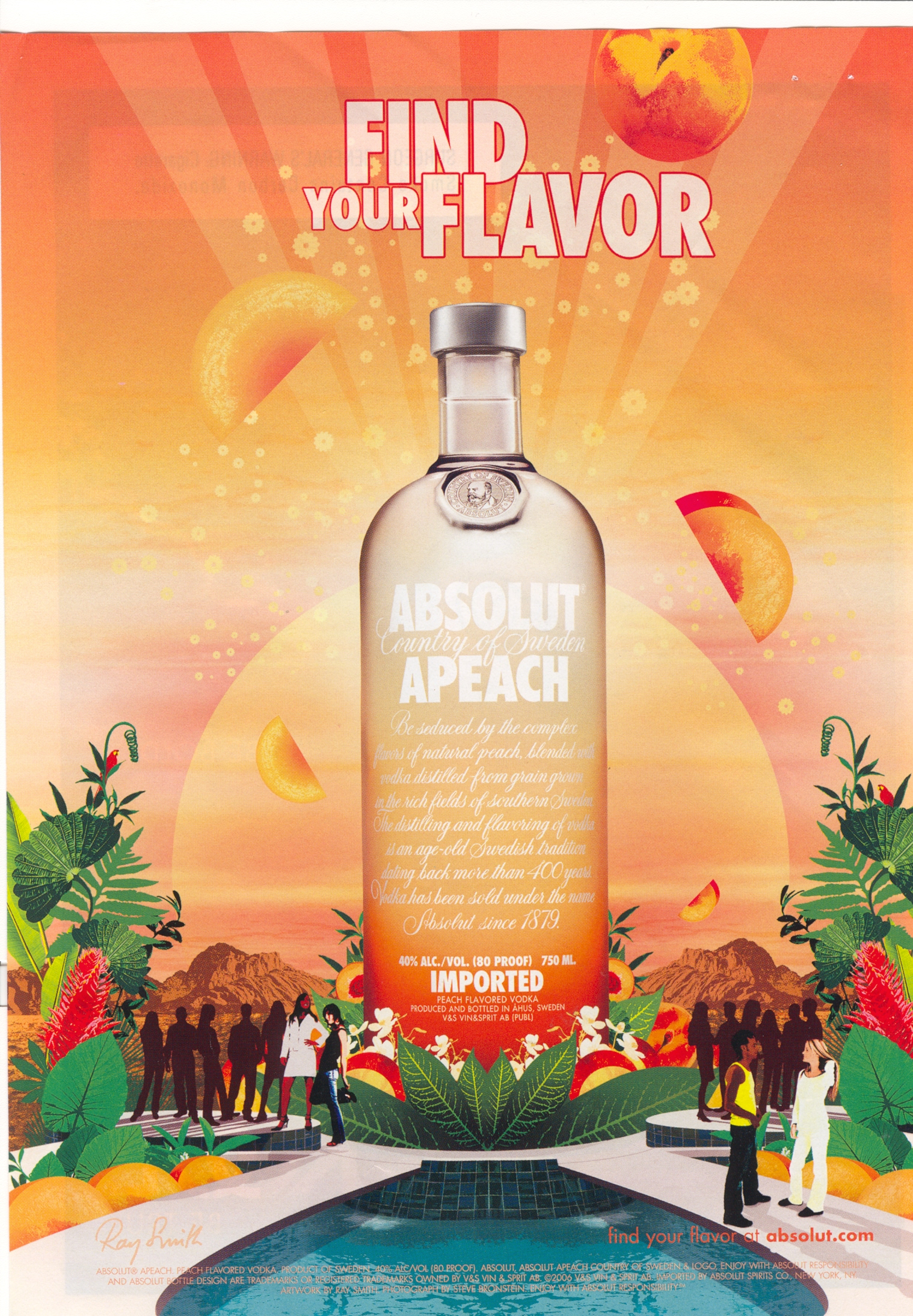
In this series, I share some ideas about why and how people of color are included in advertising aimed primarily at whites.  This post is about the inclusion of people of color in ads to invoke the idea of “color,” “flavor,” or “personality.”

Consider, this ad for Absolute Vodka Peach (“Find Your Flavor”) includes two white and two brown people, plus a set of silhouettes.

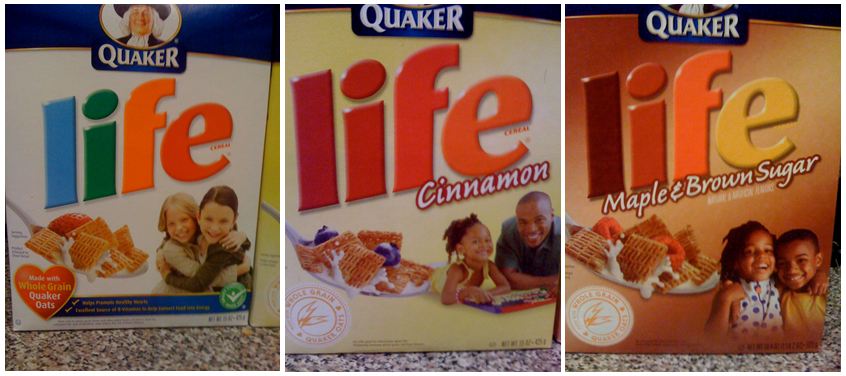
Holly F. and Lafin T.J. sent in three Life cereal box covers.  Notice that “regular” Life has white people on the cover, while cinnamon and maple and brown sugar flavors have people of color on their covers:

1

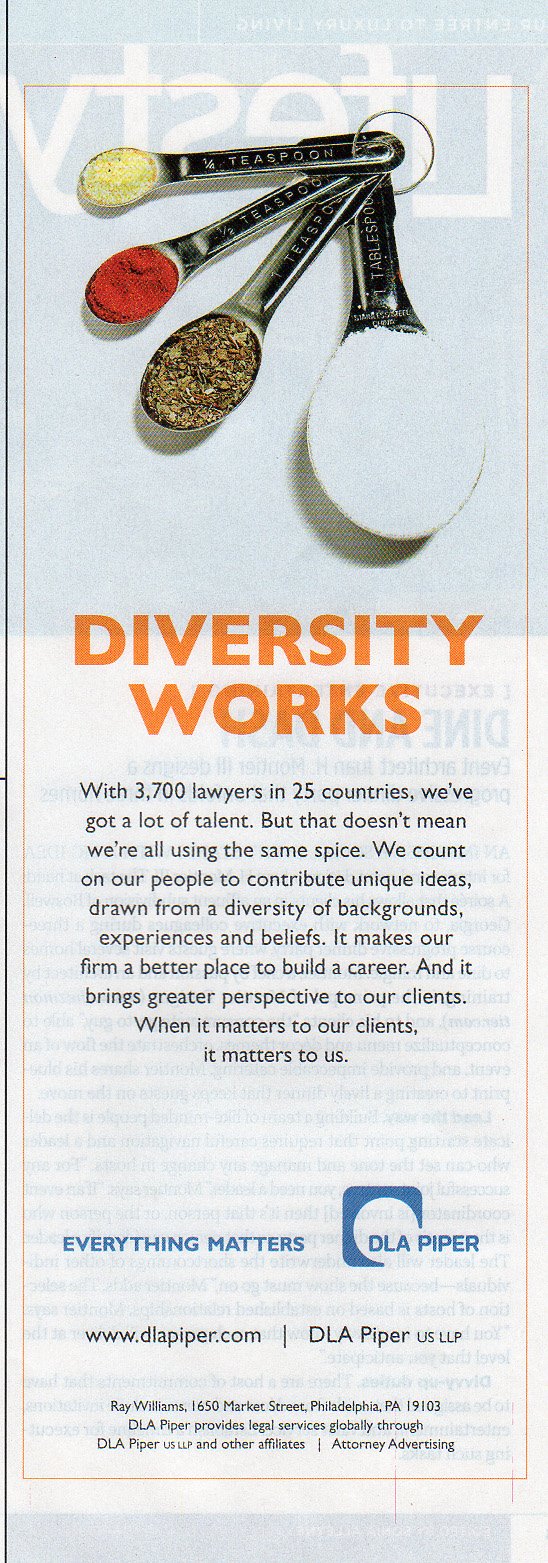
In this pro-diversity ad, spice is literally used to represent diversity (via MultiCultClassics).  (Just a bit misguided too: Just a teaspoon or less of color, please.)

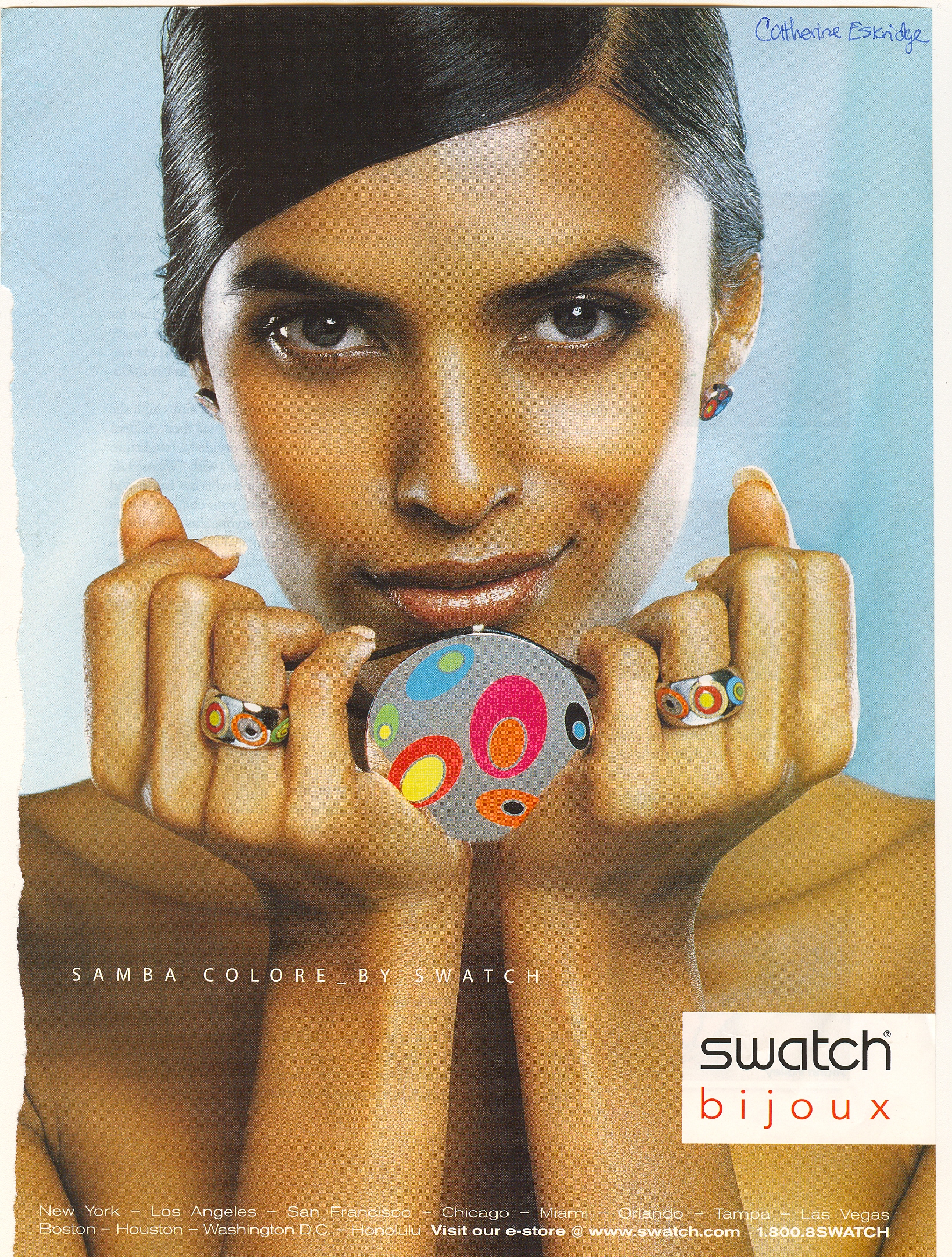
This ad for Samba Colore by Swatch also uses a model of color:

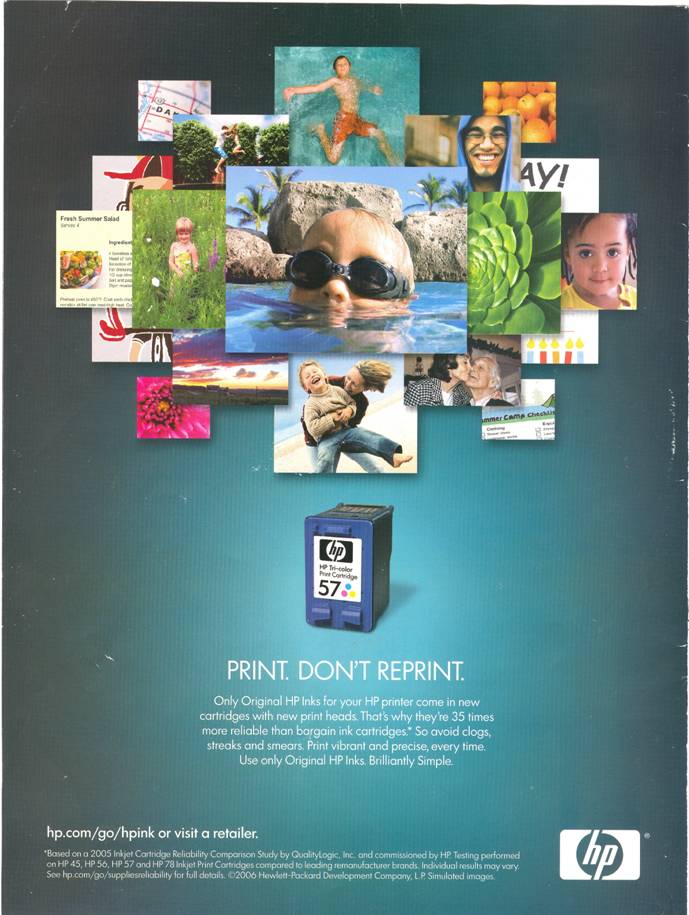
“Welcome to the Color Factory.”  These two ads for a color photo printer and a color printer cartridge both use models of color alongside white models in order to express how “colorful” their product is.

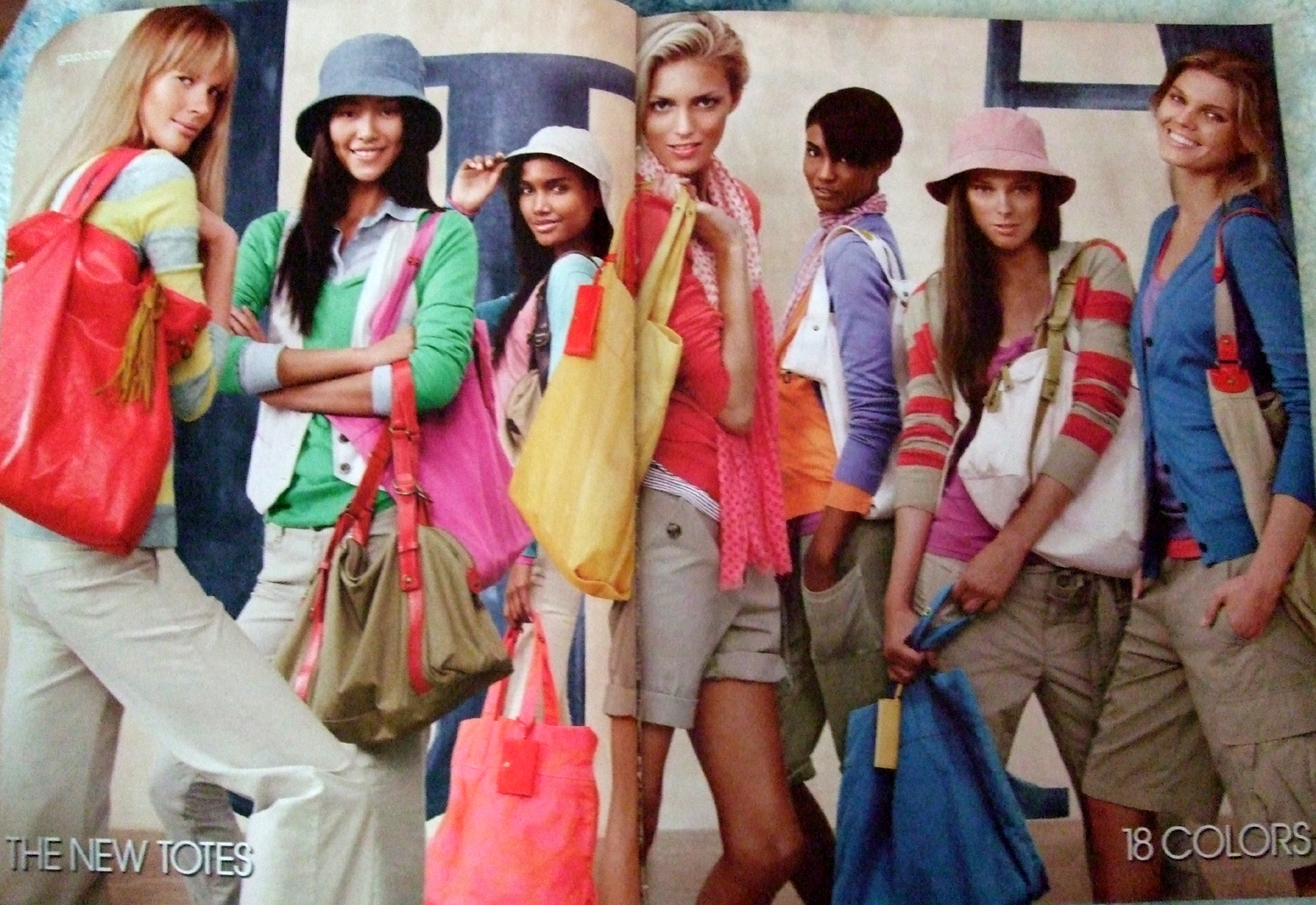
Bri sent in these four images (three from Gap and one from United Colors of Benneton).  Each Gap ad is advertising a different product, with an emphasis on how many colors they come in (bottom right corner).  They all, also, feature models of color.  Here’s just one of them:

gap03

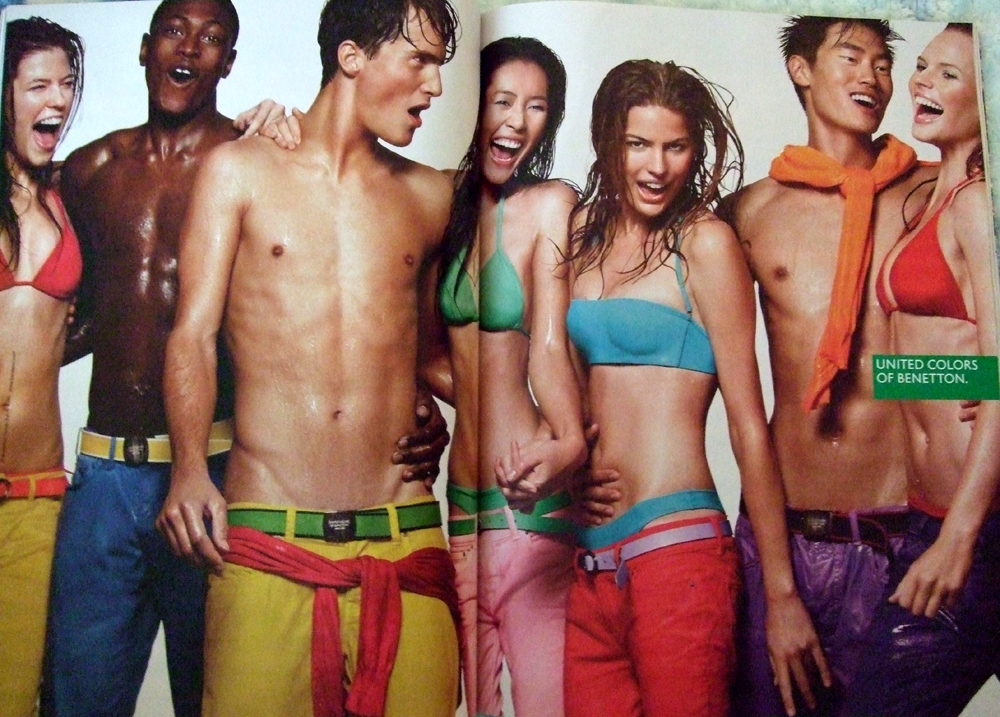
And, of course, the United Colors of Benneton is famous for its use of models of color in its ads, blending quite purposefully the idea of clothing colors and skin colors:

unitedcolors

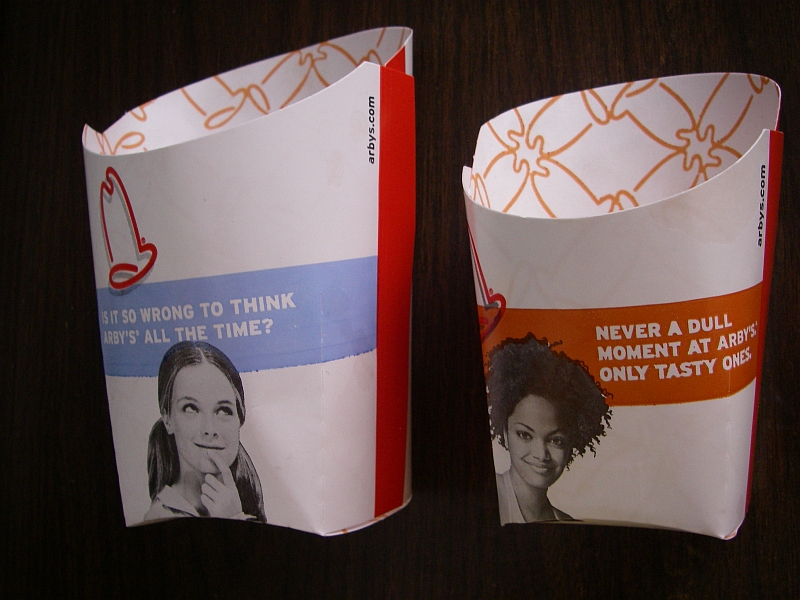
Finally Joshua B. sent in this photo of two french fry holders, one with a black and one with a white woman, reading “never a dull moment, only tasty,” and “Is it wrong to think Arby’s all the time.”  The black woman, then, is presented alongside the ideas of excitement and flavor:

Arbys

There is also this Crystal Light ad campaign that compares water to a “pale” white woman and crystal light to a “pumped” black woman and these ads for an Australian bread company that use Blackness to argue that their bread is not bland.

This kind of advertising can easily be explained away as coincidence, but I think it’s a pattern.  Feel free to send in examples and counter examples if you see them.

Next up: Including people of color so as to make the product seem “hip,” “cool,” or “modern.”  Don’t miss the first in the series: Including people of color so as to associate the product with the racial stereotype.

Lisa Wade, PhD is an Associate Professor at Tulane University. She is the author of American Hookup, a book about college sexual culture; a textbook about gender; and a forthcoming introductory text: Terrible Magnificent Sociology. You can follow her on Twitter and Instagram.

Shock, frustration, and rage. That’s our reaction to the hate-filled video record that Elliot Rodger left behind. The 22-year-old, believed to have killed 6 people in Santa Barbara this week, left behind a terrible internet trail.

I cannot and will not speculate about the “mind of the killer” in such cases, but I can offer a little perspective on the nature and social context of these acts. This sometimes entails showing how mass shootings (or school shootings) remain quite rare, or that crime rates have plummeted in the past 20 years. I won’t repeat those reassurances here, but will instead address the bald-faced misogyny and malice of the videos. It outrages us to see a person look into a camera and clearly state his hatred of women — and then, apparently, to make good on his dark promises. It also raises other awful questions. Are these sentiments generally held? If you scratch the surface, are there legions of others who would and could pursue “retribution” as Mr. Rodger did? Is serious violence against women on the rise?

Probably not. Rates of sexual violence in the United States, whether measured by arrest or victimization, have declined by over 50 percent over the last twenty years. As the figure shows, the rape and sexual assault victimization rate dropped  from over 4 per 1000 (age 12 and older) in 1993 to about 1.3 per 1000 in 2012.  And, if you add up all the intimate partner violence (including all rape, sexual assault, robbery, and aggravated assault committed by spouses, boyfriends, or girlfriends), the rate has dropped from almost 10 per 1000 in 1994 to 3.2 per 1000 in 2012. The numbers below include male victims, but the story remains quite consistent when the analysis is limited to female victims.

1 (2)

Of course, misogyny and violence against women remain enormous social problems — on our college campuses and in the larger society. Moreover, the data at our disposal are often problematic and the recent trend is far less impressive than the big drop from 1993 to 2000. All that said, “retribution” videos and PUA threads shouldn’t obscure a basic social fact:  22-year-olds today are significantly less violent than 22-year-olds a generation ago.

Chris Uggen is a professor of sociology at the University of Minnesota and the author of  Locked Out: Felon Disenfranchisement and American Democracy, with Jeff Manza. You can follow him on twitter and at his blog, where this post originally appeared.  Cross-posted at Pacific Standard.

A new study finds that users of classified ads discriminate against people perceived as black.  Over a one year period, economists Jennifer Doleac and Luke Stein placed fake ads for used iPods in local online classified.  They included photographs of the product held by a hand.  Some hands were light-skinned, others dark, and they also included a second potentially stigmatized identity, men with tattoos.  Otherwise the ads were all identical.

1

Doleac and Stein found that buyers were less likely to contact or make a deal with black sellers; they received 13% fewer responses and 17% fewer offers.  When they did receive an offer, the price suggested was slightly lower than that offered to presumably white sellers.

Buyers also seemed to be significantly more suspicious of black sellers.  When interacting with a seller with brown skin, Doleac and Stein write:

They are 17% less likely to include their name in e-mails, 44% less likely to accept delivery by mail, and 56% more likely to express concern about making a long-distance payment.

Black sellers did especially poorly in the Northeast, when there wasn’t very much competition, and in markets that were racially isolated or had high crime rates.

Notably, buyers discriminated against people with wrist tattoos at about the same rate, suggesting that both tattoos and brown skin inspire similar levels of distrust.

H/t to Abi Jones for the link. Cross-posted at Pacific Standard.

Lisa Wade, PhD is an Associate Professor at Tulane University. She is the author of American Hookup, a book about college sexual culture; a textbook about gender; and a forthcoming introductory text: Terrible Magnificent Sociology. You can follow her on Twitter and Instagram.