Archive: Aug 2013

Our favorite economist, Martin Hart-Landsberg, has written a detailed account of what is causing the rise of income inequality around the world.  Here I’d like to highlight just one of his really interesting observations.

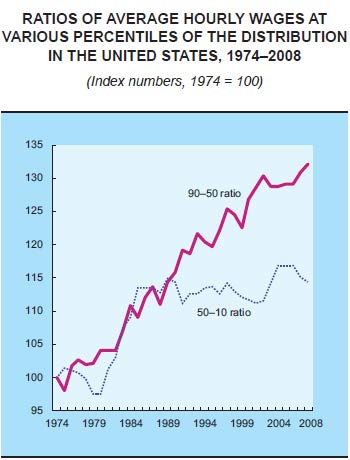
While we usually think that rising income inequality is caused by the rich getting richer and the poor getting poorer, a more complex picture is emerging.  The graph below plots the hourly wages of the 90th percentile (Americans who make more than 89% of the population) relative to the wages of the 50th percentile (the purple line) and the wages of the 50th compared to the 10th percentile (the dotted blue line).

In English: it asks how quickly the richest people (90th) are pulling away from the average person (50th) and how quickly the average person is pulling away from the poorest (10th).  The answer?  Income inequality has been increasing since the 70s but, since the late ’80s, rich people have continued pulling ahead of the average American, but the average American has not been gaining on the poor.
Wage-ratios

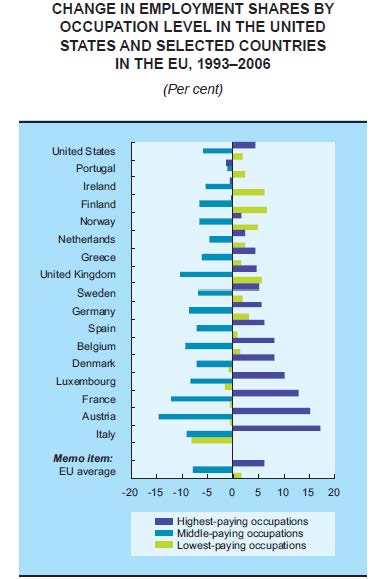
Another indicator that the middle class is shrinking is changes in the share of jobs that are low-, middle-, or high-paid.  The next graph shows that, across a wide range of countries, high- and low-paying jobs are on the rise, but middle-paying jobs are on the decline.  So, middle income jobs are disappearing, but there are more of both high- and low-income jobs.
Jobs (1)

Hart-Landsberg suggests that the reason for this shift in the economy involves the globalization of production.  For more, visit Reports from the Economic Front.

Lisa Wade, PhD is an Associate Professor at Tulane University. She is the author of American Hookup, a book about college sexual culture; a textbook about gender; and a forthcoming introductory text: Terrible Magnificent Sociology. You can follow her on Twitter and Instagram.

Screenshot_2The short answer? No.

Law professor Osagie K. Obasogie interviewed a series of people who had been blind since birth about their understanding of the concept of race.   Counter-intuitively, he found that race was as meaningful to them as it was to sighted people and that their descriptions and biases were largely in line with cultural norms.  The article includes really striking quotations from the interviewees and what Obasogie describes as an “empirical assessment of the metaphor of colorblindness.”  He’s also published a book based on the research: Blinded By Sight.

In this three minute interview, he explains some of his findings:

Lisa Wade, PhD is an Associate Professor at Tulane University. She is the author of American Hookup, a book about college sexual culture; a textbook about gender; and a forthcoming introductory text: Terrible Magnificent Sociology. You can follow her on Twitter and Instagram.

The Trouble with Apple

Suicide at Foxconn. Poisoned workers. Colluding to inflate the price of e-books. Tax evasion (albeit, legal). Shady suppliers who can’t toe the line of labor or environmental laws in China. Apple’s reputation has taken a hit in recent years. Or, so it seems it should have. But, despite the fact that news reports on the company’s behavior and supplier relationships have been more negative than positive since 2012, Apple’s revenue has continued to climb and break records.

In fact, while the press has illuminated terrible labor conditions in the supply chains for iPhones and iPads (with the most recent revelations coming via China Labor Watch’s report on Pegatron sites where the “cheap iPhone” is in the works), sales of these products in particular have soared, and now account for the majority of the company’s revenue. Apple has jockeyed with ExxonMobil for the world’s most valuable company over the last few years, and currently stands second to the oil giant with $413.9 billion. Remarkably, Apple amassed $156 billion in revenue in 2012 without being the industry leader in any of its product sectors (in terms of unit sales), due to the very high profit margins on iPhones and iPads.

Screenshot_1

How does Apple maintain this economic dominance in light of negative press that should be bad for its bottom line? How do we, the highly educated consumer base of the company, remain invested in Apple products when work conditions in China and the clever skirting of tax liability grate against our progressive sensibilities? As a sociologist who focuses on consumer culture, I suspect that it is Apple’s brand power that keeps us eating its fruit, and the company afloat. With its iconic logo, sleek aesthetic, and promise of creativity, excitement, and greatness embedded in its products and message, Apple successfully obscures its bad behavior with its powerful brand.

“Emotional Branding”

1

Marketing and branding experts describe a brand as a vision, a vocabulary, a story, and most importantly, a promise. A brand is infused throughout all facets of a corporation, its products, and services, and is the ethos upon which corporate culture, language, and communication are crafted. A brand connects the corporation to the outside world and the consumer, yet it’s intangible: it exists only in our minds, and results from experiences with ads and products.

To understand Apple’s brand and its significance in our contemporary world, I have embarked on a study of the company’s marketing campaigns. I started with a content analysis of television commercials, and with the help of Gabriela Hybel have analyzed over 200 unique television spots that have aired in the U.S. between 1984 and the present. One of the key findings to emerge is that Apple, and the ad firms it contracts with, are exceptionally talented at what the marketing industry calls emotional branding.

In his book named for this approach, Marc Gobé argues that understanding emotional needs and desires, particularly the desire for emotional fulfillment, is imperative for corporate success in today’s world. After studying Apple commercials, one thing that jumps out about them is their overwhelmingly positive nature. They inspire feelings of happiness and excitement with playful and whimsical depictions of products and their users. This trend can be traced to the early days of the iMac, as seen in this commercial from 1998.

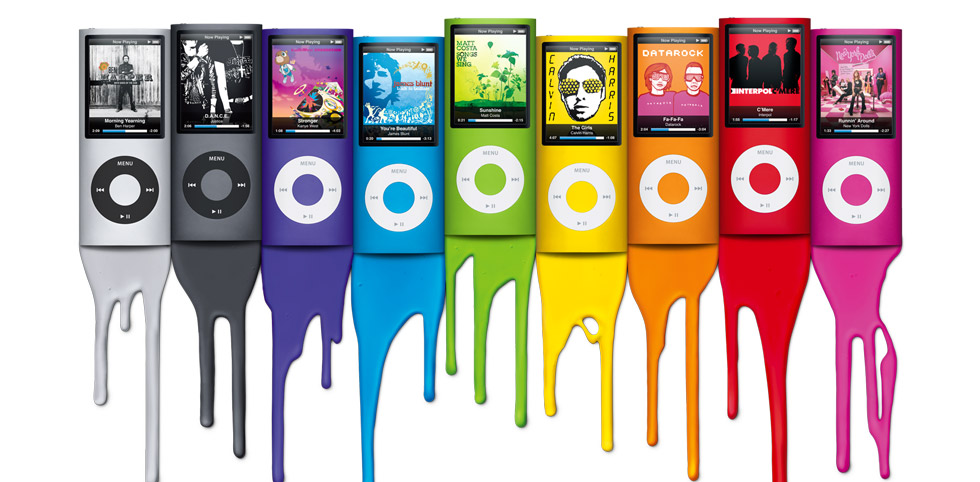
An iPod Nano commercial that aired in 2008 takes a similar approach to combining playful imagery and song:

In a more recent commercial, actor and singer Zooey Deschanel, known for her “quirky” demeanor, performs a playful spin on the utility of Siri, the voice activated assistant that was introduced with the iPhone 4S in 2011.

Commercials like these — playful, whimsical, and backed by upbeat music — associate these same feelings with Apple products. They suggest that Apple products are connected to happiness, enjoyment, and a carefree approach to life. To tip the sociological hat to George Ritzer, one could say that these commercials “enchant a disenchanted world.” While Ritzer coined this phrase to refer to sites of consumption like theme parks and shopping malls, I see a similar form of enchantment offered by these ads. They open up a happy, carefree, playful world for us, removed from the troubles of our lives and the implications of our consumer choices.

Importantly, for Apple, the enchanting nature of these ads and the brand image cultivated by them act as a Marxian fetish: they obscure the social and economic relations, and the conditions of production that bring consumer goods to us. Now more than ever, Apple depends on the strength of its brand power to eclipse the mistreatment and exploitation of workers in its supply chain, and the injustice it has done to the American public by skirting the majority of its corporate taxes.

Next: Sentimental Consumerism, the Apple Way.

Nicki Lisa Cole, Ph.D. is a lecturer in sociology at Pomona College. She studies the connections between consumer culture, labor, and environmental issues in global supply chains. You can follwer her at 21 Century Nomad, visit her website, and learn more about her research into Apple here.

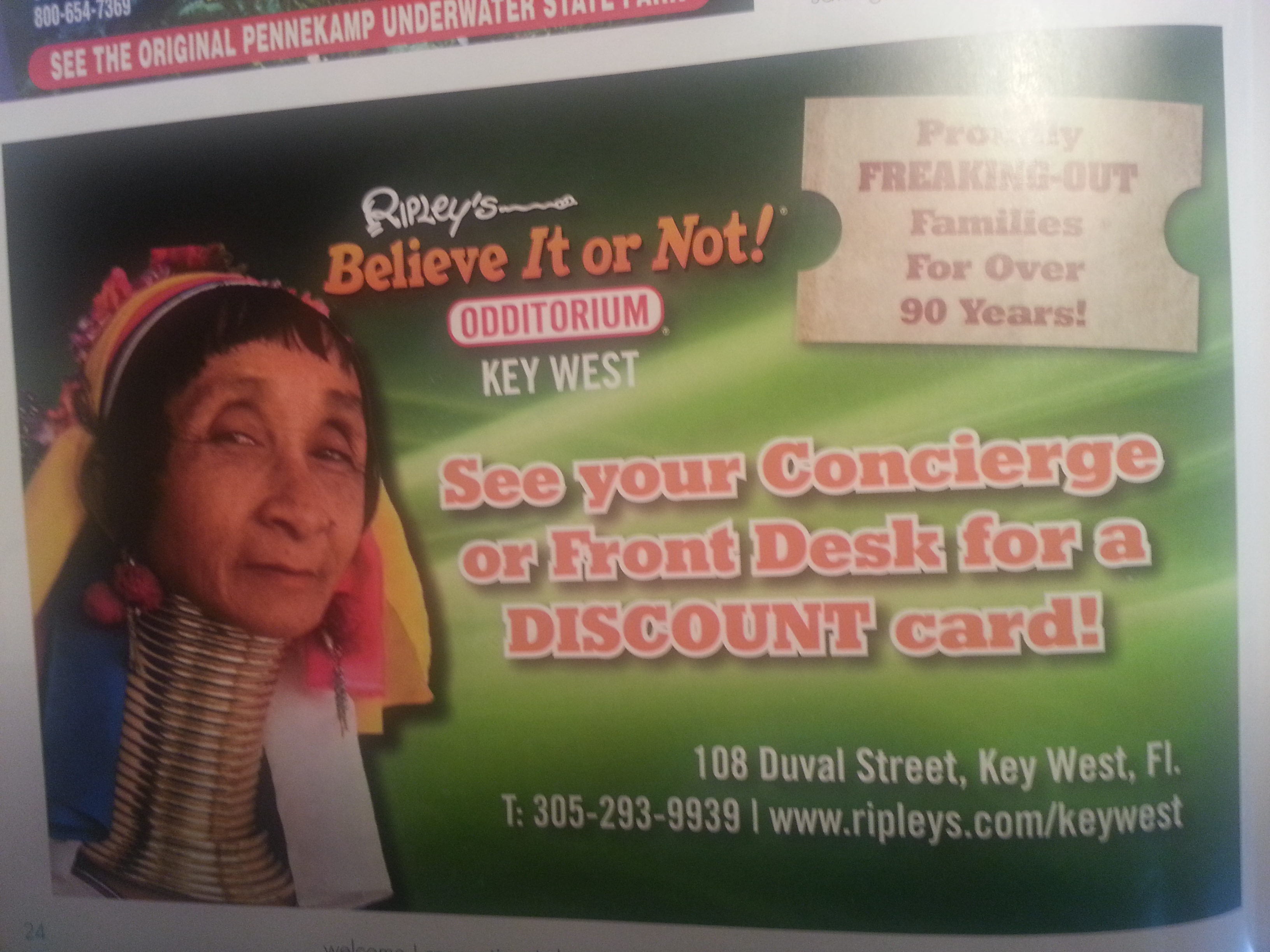
This month I enjoyed a lovely week with my mother and step-father, during which we drove down to Key West, FL.  Flipping through the tourist book in the hotel, I was surprised to see this:

20130805_165653

I’ve been writing for Sociological Image for over six years now and, as a result, it takes a lot to shock me.  Well, you got me, Ripley’s!  I did not know that we were still marketing racial or ethnic others as “oddities.”  At least not this blatantly.

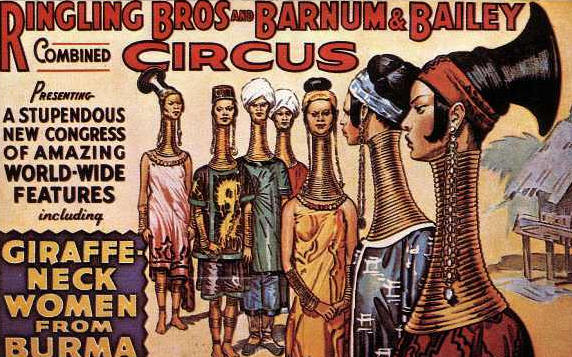
The women who have historically practiced this neck lengthening illusion (what you are seeing is a depressed collar bone, not a longer neck) are a Burmese ethnic minority called Kayan or Padaung.  As late as the early 1900s, Europeans and Americans were kidnapping “Giraffe-necked women” and forcing them to be exhibits in zoos and circuses.  Promotional materials from that era look similar. Here’s an example:

114

By the way, Kayan women weren’t the only humans kept in zoos.

I knew that Westerners still traveled to the communities where Kayan people live to see them “in their natural habitat” (sarcasm) and I’ve argued previously that this is a case of racial objectification.  I had no idea, however, that we still featured them as grotesque curiosities.  Ripley’s Believe It or Not!: “Proudly freaking out families for over 90 years.” Taking that tradition thing really seriously, I guess.

Lisa Wade, PhD is an Associate Professor at Tulane University. She is the author of American Hookup, a book about college sexual culture; a textbook about gender; and a forthcoming introductory text: Terrible Magnificent Sociology. You can follow her on Twitter and Instagram.
1
Columbia Pictures/Sony Pictures Animation

.

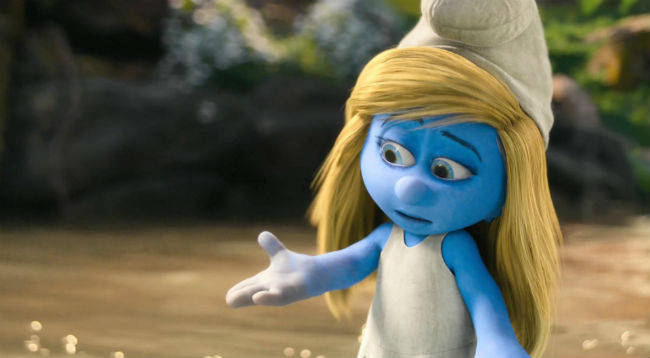
The Smurfs, originating as they did in mid-century Europe, exhibit the quaint sexism in which boys or men are generic people – with their unique qualities and abilities – while girls and women are primarily identified by their femininity. The sequel doesn’t upend the premise of Smurfette.

In the original graphic novels, Smurfette (or La Schtroumpfette in French) was the creation of the evil Gargamel, who made her to sow chaos among the all-male Smurf society. His recipe for femininity included coquetry, crocodile tears, lies, gluttony, pride, envy, sentimentality, and cunning.

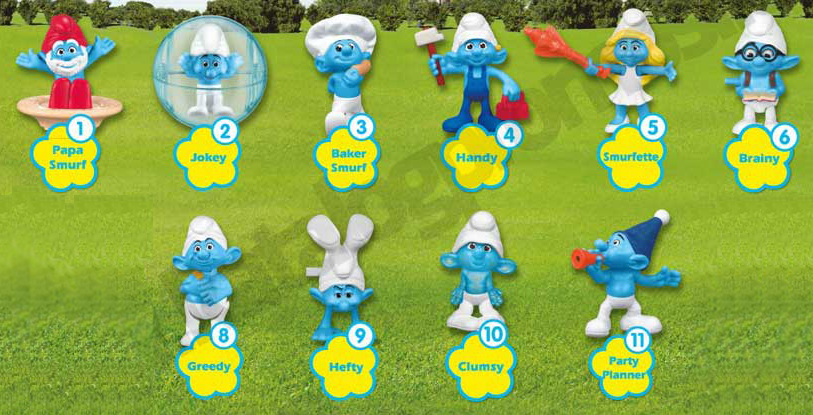
In the Smurfs 2, there are a lot of Smurfs. And they all have names based on their unique qualities. According to the cast list, the male ones are Papa, Grouchy, Clumsy, Vanity, Narrator, Brainy, Handy, Gutsy, Hefty, Panicky, Farmer, Greedy, Party Planner, Jokey, Smooth, Baker, Passive-Aggressive, Clueless, Social, and Crazy. And the female one is Smurfette–because being female is enough for her. There is no boy Smurf whose identifying quality is his gender, of course, because that would seem hopelessly limited and boring as a character.

Here are the Smurf characters McDonald’s is using for their Happy Meals:

2

When you buy a Happy Meal at McDonald’s, the cashier asks if it’s for a boy or a girl. In my experience, which is admittedly limited to my daughters, girls get Smurfette. I guess boys get any of the others.

The Way It’s Never Been

Identifying male characters by their non-gender qualities and females by their femininity is just one part of the broader pattern of gender differentiation, or what you might call gendering.

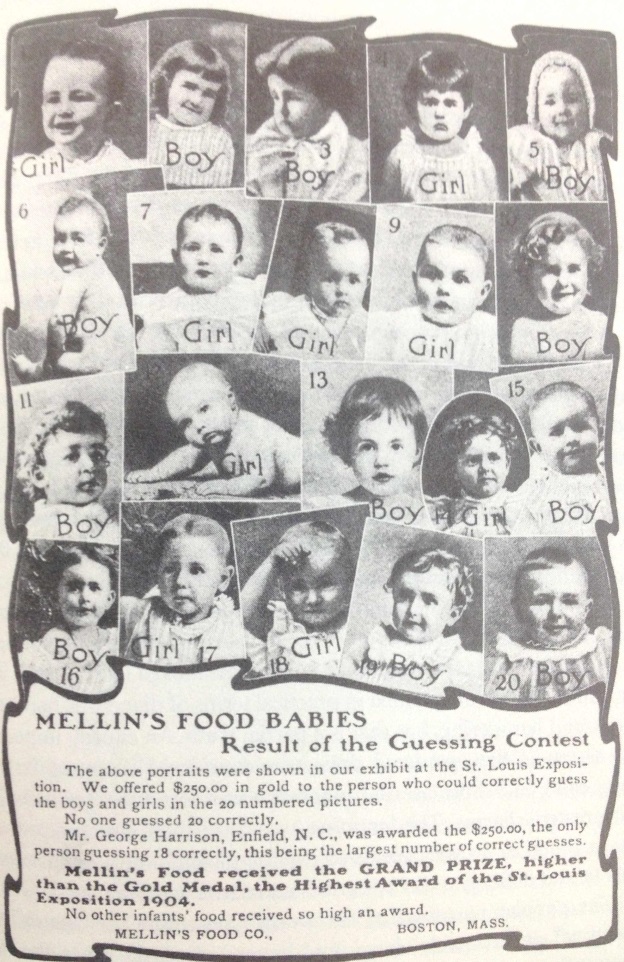
There are two common misconceptions about gendering children. One is that it has always been this way – with boys and girls so different naturally that all products and parenting practices have always differentiated them. This is easily disproved in the history of clothing, which shows that American parents mostly dressed their boys and girls the same a century ago. In fact, boys and girls were often indistinguishable, as evident in this 1905 Ladies’ Home Journal contest in which readers were asked to guess the sex of the babies (no one got them all right):

3
Source: Jo Paoletti, Pink and Blue: Telling the Boys from the Girls in America

.

The other common perception is that our culture is actually eliminating gender distinctions, as feminism tears down the natural differences that make gender work. In the anti-feminist dystopian mind, this amounts to feminizing boys and men. This perspective gained momentum during the three decades after 1960, when women entered previously male-dominated occupations in large numbers (a movement that has largely stalled).

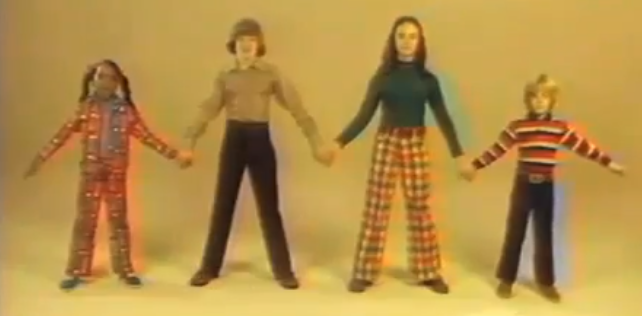
However, despite some barrier-crossing, we do more to gender-differentiate now than we did during the heyday of the 1970s unisex fashion craze (the subject of Jo Paoletti’s forthcoming book, Sex and Unisex). On her Tumblr, Paoletti has a great collection of unisex advertising, such as this 1975 Garanimals clothing ad, which would be unthinkable for a major clothier today:

4

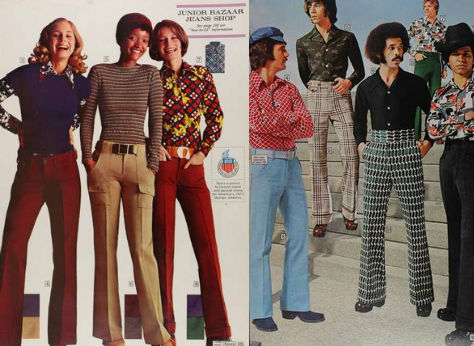
And these clothing catalog images from 1972 (left) and 1974 (right):

5

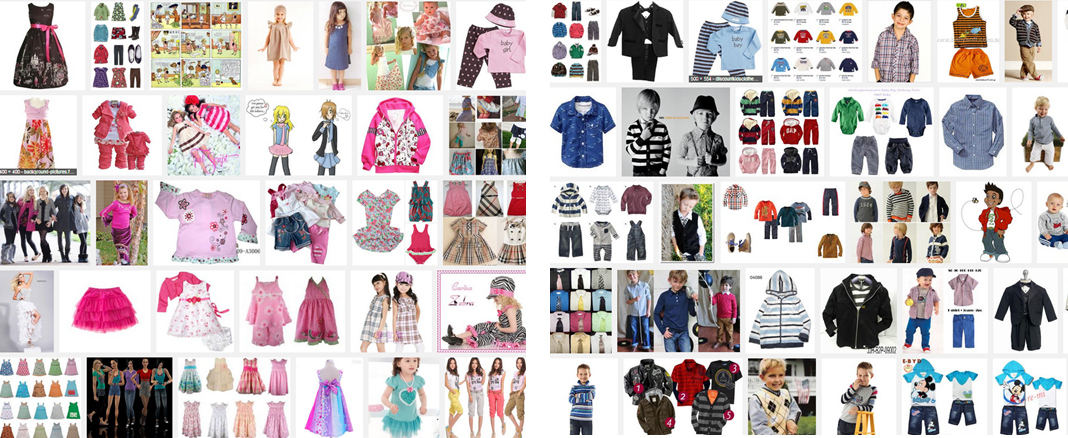
Today, the genders are not so easily interchangeable. Quick check: Google image search for “girls clothes” (left) vs. “boys clothes” (right):

6

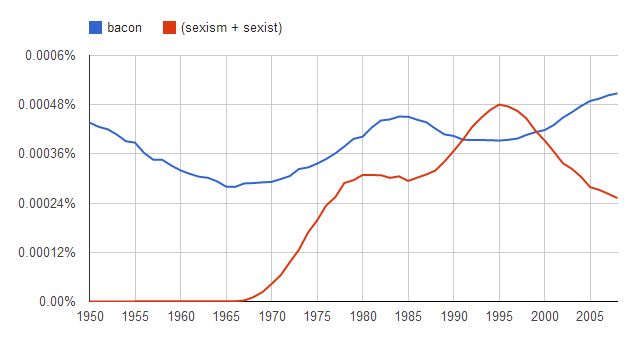
Today, a blockbuster children’s movie can invoke 50-year-old gender stereotypes with little fear of a powerful feminist backlash. In fact, even the words “sexism” and “sexist,” which rose to prominence in the 1970s and peaked in the 1990s, have once again become less common than, say, the word “bacon”:

7

And the gender differentiation of childhood is perhaps stronger than it has ever been. Not all differences are bad, of course. But what Katha Pollitt called “the Smurfette principle” — in which “boys are the norm, girls the variation” — is not a difference between equals.

Cross-posted at The Atlantic and Family Inequality

Philip N. Cohen is a professor of sociology at the University of Maryland, College Park, and writes the blog Family Inequality. You can follow him on Twitter or Facebook.

In survey questions, the result you get might depend on the choices you offer.

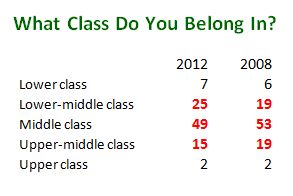
An article at The Atlantic explains “Why Americans All Believe They’re Middle Class.”  But is that what we all believe?  The author, Anat Shenker-Osorio, started with from these figure from a September 2012 Pew report.
1
Only 8-9% of Americans put themselves in the lower or upper class.  The other 91% say that they are “middle class,” some with a modifier (upper or lower), some without.  Shenker-Osorio continues:

Researching how people’s unconscious assumptions affect their perception of economic issues, I explored the linguistic dynamics behind the term “middle class,” especially in comparison to other economic groupings.

That would be fine, except that both she and Pew made one huge omission.  The Pew survey didn’t include “working class” as an option.  Out of sight, out of unconscious assumptions.

Language and Surveys

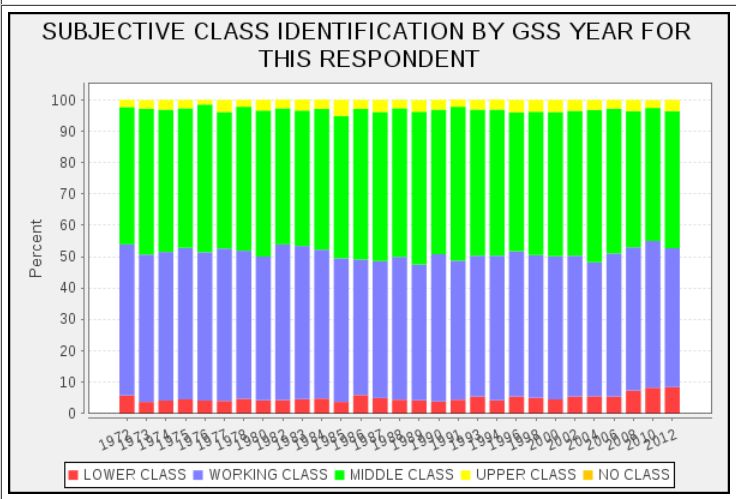
How big an omission is this?  Since 1972, the GSS has asked a similar question to tap “subjective social class” (i.e., what class people think they are regardless of their objective circumstances).  But the GSS includes “working” along with the upper, middle, and lower.

2

Like the Pew survey, the GSS finds less than 10% putting themselves in the upper or lower class.  But for the past forty years, the remaining nine-tenths of the population have been evenly split between “working” and “middle.”

Shenker-Osorio’s linguistic analysis runs into other data conflicts.  It’s not always easy to know what Americans mean by upper, lower, or middle class because:

Americans are relatively skittish about mentioning class. Contrasting databases of text from U.S. and UK sources, we find that Brits use “upper class” and “lower class” more readily; we prefer “wealthy” and “poor.”

But another database, the books in Google nGrams, shows something much different.

Contrasting Data

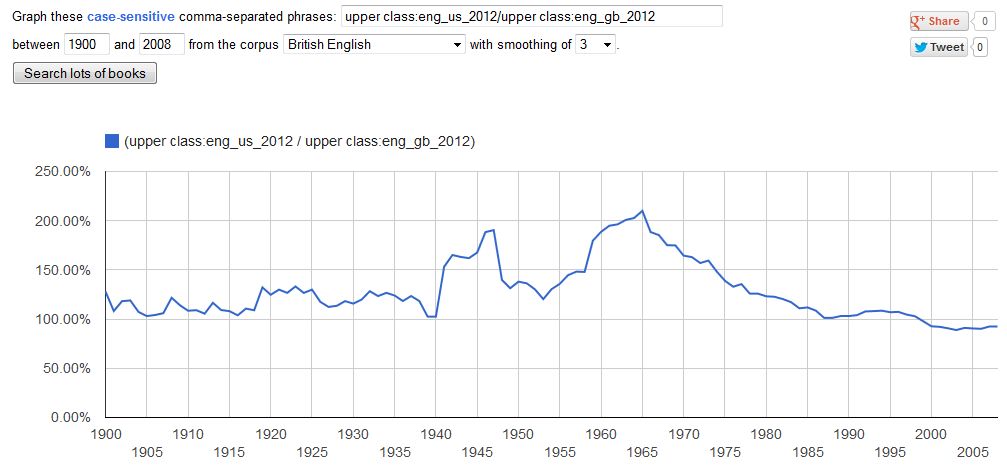
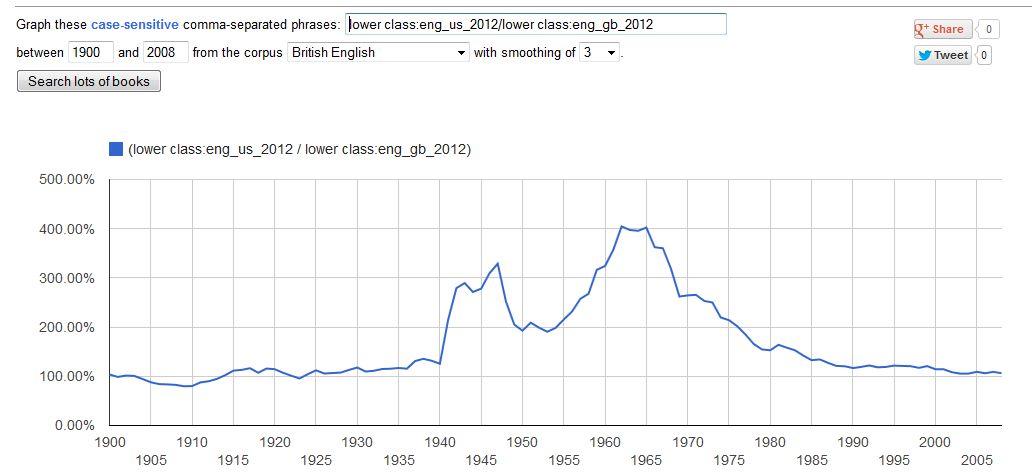
I constructed a ratio of American to British for the terms “upper class” and “lower class.”  A ratio of more than 100% means that the term appeared more frequently in American books.

Ratio for “upper class”:

3

Ratio for “lower class”:

4

In general, since 1900, US and UK books used these terms at about the same frequency.  But from 1955-1965, the US heard a crescendo in class talk.  By 1965, US books mentioned the “lower class” four times as often as did UK books.  Since then class talk in the US declined as rapidly as it had increased. (For some reason, Shenker-Osorio was unaware of my earlier post on these matters.)

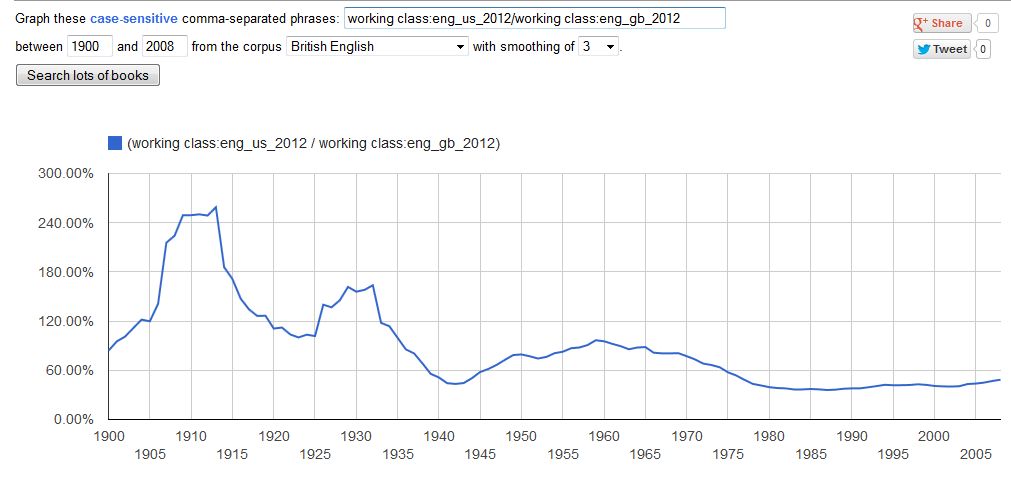
The real US-UK difference is in “working class,” a term that Shenker-Osorio ignores. Since 1935, it has appeared less frequently in US books.  For the last 30 years, British books have mentioned the working class twice as often.

Ratio for “working class”:

5

It may be that the databases Shenker-Osorio used are better than nGrams, and it’s frustrating to find different sources of data pointing in different directions.  More important, we still don’t know what people mean when they say they are middle class.  Shenker-Osorio sees it as a category of exclusion.  The images we have of upper and lower are so extreme as to apply to almost nobody.

Not finding popular depictions of wealth and poverty similar to our own lived experiences, we determine we must be whatever’s left over.

True perhaps, but it tells only what people think middle class is not. I’m not familiar with the research on subjective social class, but it seems that we still don’t know what people think “middle class” actually is.  Nor do we know what they have in mind when they say they are working class.  I have my own hunches, but I will leave them for a later post.

Cross-posted at Montclair SocioBlog.

Jay Livingston is the chair of the Sociology Department at Montclair State University. You can follow him at Montclair SocioBlog or on Twitter.

Screenshot_2Sorry for the spoiler!  The gaze in the Wacoal commercial below, sent in by Kathe L., dances all over the body of a lovely young woman, focusing especially on the curve of her breast alongside the lace of her bra.  She slowly removes her make-up and disrobes, only to reveal a male body underneath.  The message?  A push-up bra so good it can even give men breasts.

I wonder what y’all think.  Does this queer the body?  Is there a transgressive identity behind the gaze?  Or is it just more gimmicky advertising based on normative expectations?  Both?

Lisa Wade, PhD is an Associate Professor at Tulane University. She is the author of American Hookup, a book about college sexual culture; a textbook about gender; and a forthcoming introductory text: Terrible Magnificent Sociology. You can follow her on Twitter and Instagram.
Gender job segregation is the practice of filling certain occupations with mostly male or mostly female workers.  Today 40% of women work in jobs that are 3/4ths female or more and 45% of men work in jobs that are more than 3/4ths male (source).  Job segregation is the main cause of the wage gap between men and women because jobs that employ women pay somewhere between 5% and 19% less than ones that employ men (source).

Job segregation decreased during the decades following the women’s movement, but progress towards integration stalled out in the ’90s and hasn’t budged since.  There are lots of reasons why job segregation why gender persists; one of them is recruitment and selection.  That is, employers sometimes have preferences for whether a man or woman is suited for a job.  Usually these preferences match historical trends/stereotypes.

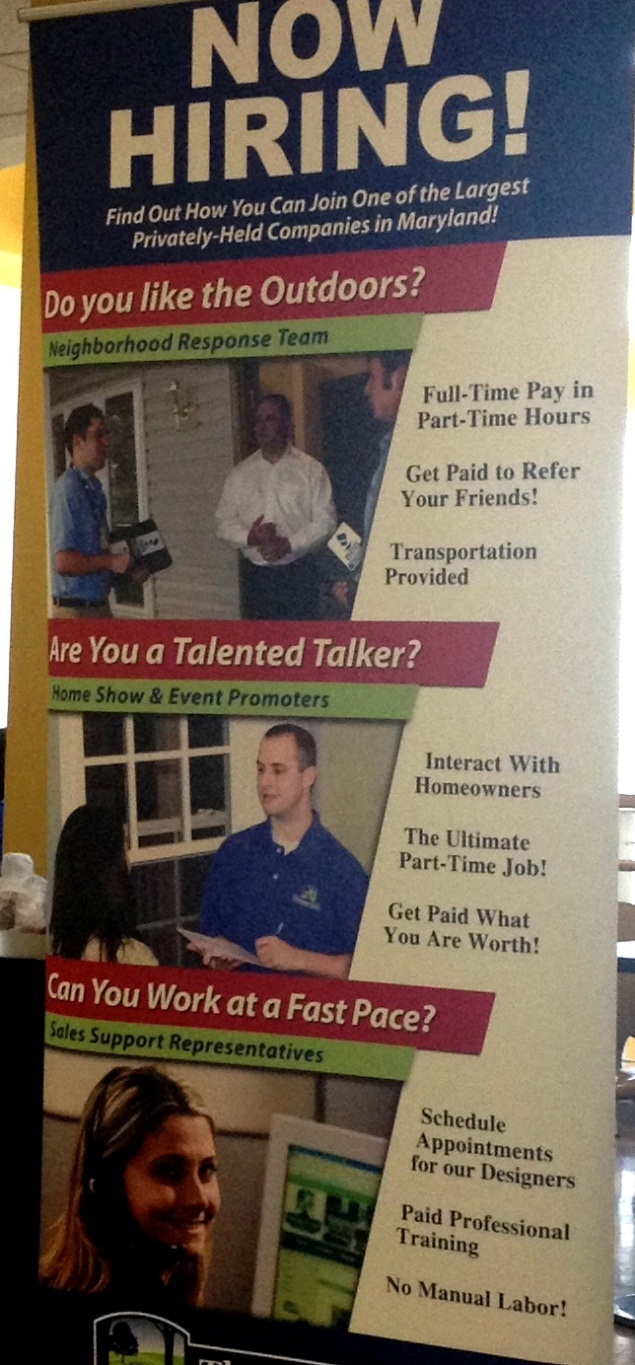
Philip Cohen offered an example of this over at The Atlantic.  It’s a photograph of a recruitment banner for a window replacement company that he came across in the University of Maryland Student Union.  The banner features men as representatives of employees who do sales and installation, but a female in the role of customer support.

1

Cohen also observed the behavior of the white male job recruiters accompanying the banner.   He writes:

In 20 minutes, as dozens of people walked by, the recruiters approached 18 men and 0 women, asking them, “You guys looking for a job?” (or, in the case of a black man, “Hey man, you looking for a job?”).

This is one way that jobs remain segregated by gender. We have an idea of who is suited for what jobs, we illustrate that supposed “fit” in imagery, and employers actively recruit men into “male jobs” and women into “female jobs.”  Doing so doesn’t just slot men and women into different jobs, but into different and unequal ones.

See also: boys learn to play doctor, girls learn to play nursefortune teller tells you your gendered occupational future, and who does what for airlines.

Lisa Wade, PhD is an Associate Professor at Tulane University. She is the author of American Hookup, a book about college sexual culture; a textbook about gender; and a forthcoming introductory text: Terrible Magnificent Sociology. You can follow her on Twitter and Instagram.