Archive: 2008

In a comment to another post, Umlud provided a link to this post from Thoughts from Kansas about the following joke allegedly told by John McCain in 1986 when speaking to the National League of Cities and Towns:

Did you hear the one about the woman who is attacked on the street by a gorilla, beaten senseless, raped repeatedly and left to die? When she finally regains consciousness and tries to speak, her doctor leans over to hear her sigh contently and to feebly ask, “Where is that marvelous ape?”

Here is an image of the original story about the incident in the Tucson Citizen (link to image found at Think Progress). I know it’s small and hard to read, but I wanted to provide the original source.
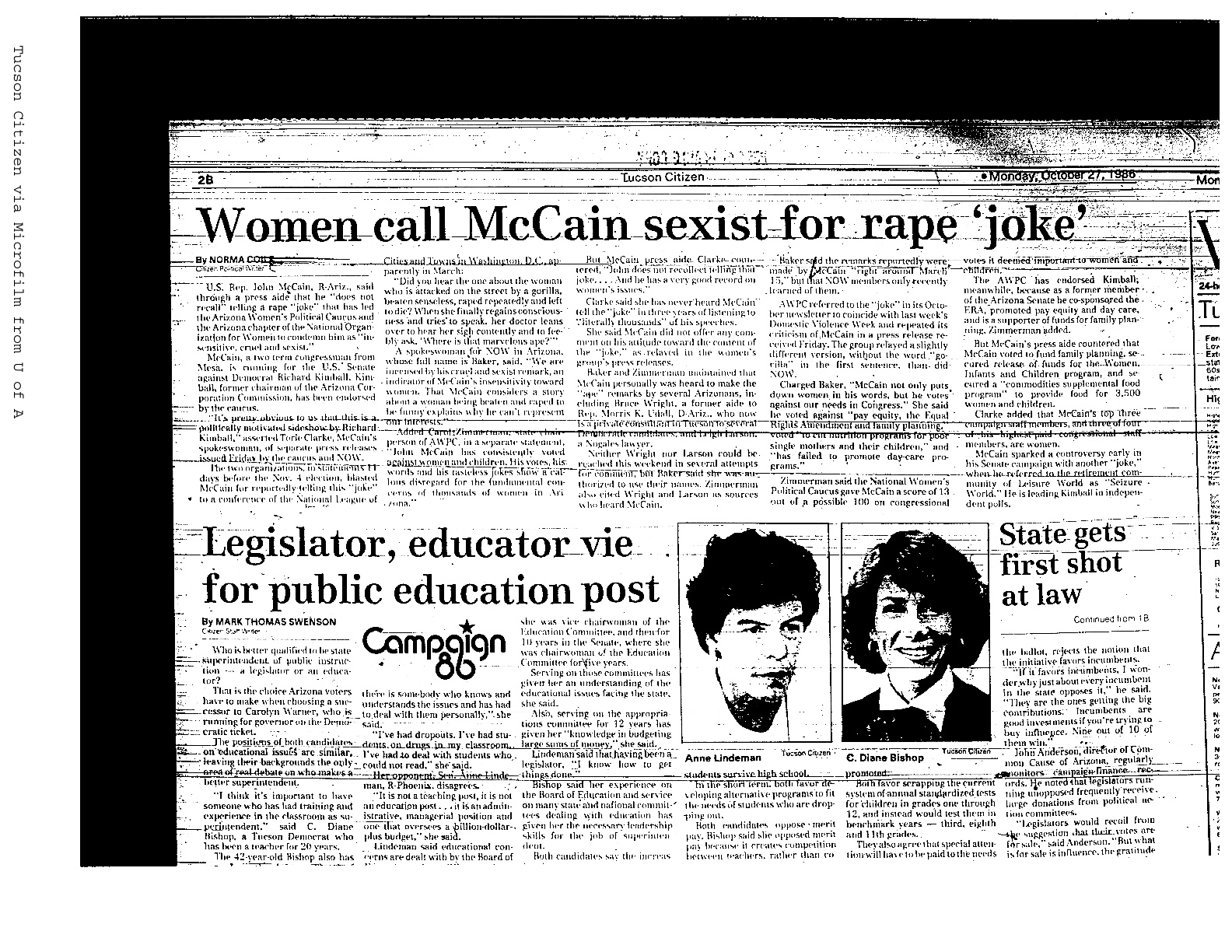
According to Think Progress,

McCain said he did not “recall” telling the joke. More recently, the McCain campaign scheduled a fundraiser with a Texas oilman who compared rape to the weather while running for governor. “As long as it’s inevitable, you might as well lie back and enjoy it,” said Clayton Williams in 1990. After public outcry, the event was “postponed.”

From what I recall, the comment by Williams was widely credited as a major reason Ann Richards won the gubernatorial campaign, becoming the second female governor of Texas.

Huh. I was looking up some information on Ann Richards really quick and discovered this list of the governors of Texas and discovered there have only been 6 Republican governors of Texas, and two of those were right after the Civil War, when the Republican party had quite a different platform and orientation. The other 4 have all been since 1979. And my home state of Oklahoma has only had 4. This shouldn’t be surprising, given that the Southern swing to the Republican party occurred mostly after the Civil Rights movement and Civil Rights legislation signed into law by President Lydon Johnson (who correctly predicted that the Democratic party would lose the South as a result of the policies), but it still surprised me.

Thanks for the link, Umlud!

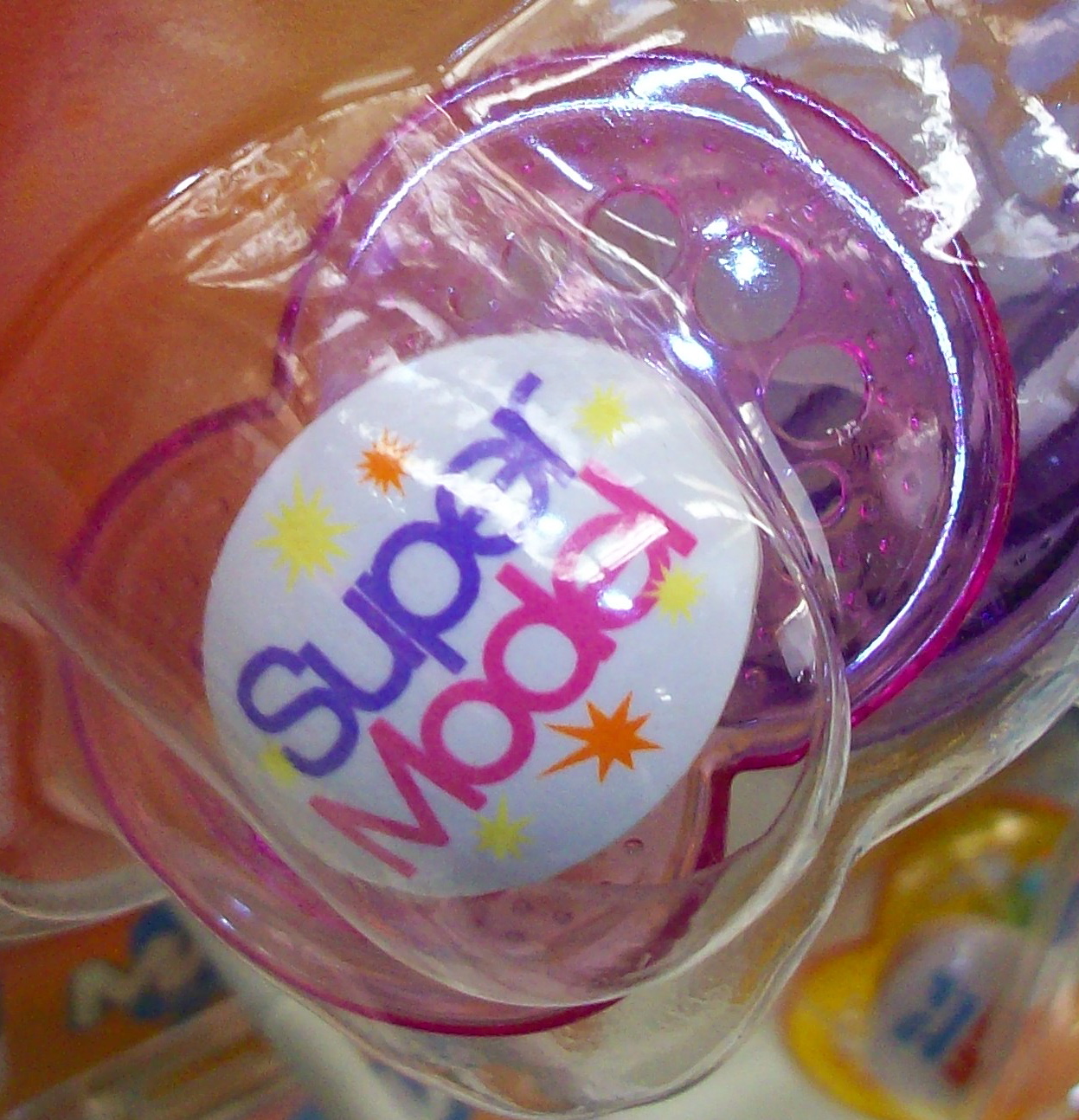
I took these two photos of pacifiers for sale at a Babies-R-Us in upstate New York:

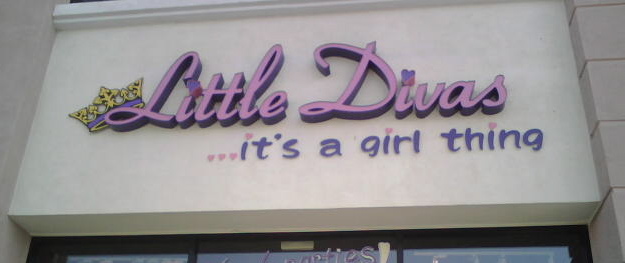
I hate the way we start labeling girls at a young age as high-maintenance divas who are vain, boy-crazy, and spend a lot of money. And we now start socializing infants into gendered stereotypes that portray girls in ways that, though superficially humorous, also imply that we expect girls and women to be self-centered, ridiculous people. For other examples of these types of messages, see here, here, and here.

NEW: Blanca M. took a picture of this sign for Little Divas, a store here in Vegas that provides a great example of the association between little girls and diva-hood:

Thanks, Blanca!

Gwen Sharp is an associate professor of sociology at Nevada State College. You can follow her on Twitter at @gwensharpnv.


The way that Jessica Alba uses her will (she goes after what she wants) to pursue make-up, of all things, reminds me of these, these, this, and these examples of the commodification of feminism.

Exactly in line with Gwen’s last post on symbolizing an eco-friendly identity, Dorothee H. sent us a link to a commerical linking leftist politics to the smart car.  I think Gwen’s comments say it all and Dorothee’s submission illustrates it beautifully:

See also this commercial that uses pro-communist sentiment to market a car.

Certain consumption choices have become badges of environmental consciousness, often to the exclusion of encouraging people to engage in other, less obvious lifestyle changes like, you know…maybe not buying so much stuff.

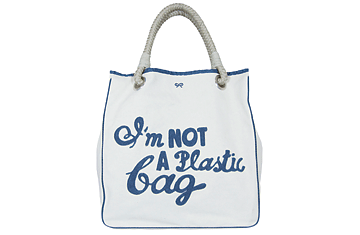
This tote bag, designed by a British activist group, came out last summer and became a fashion accessory:

According to this story from Time (which is also where I found the image),

…the bag was first introduced in Great Britain in April —Keira Knightley, Alicia Silverstone and singer Lily Allen were photographed carrying it, fashion magazines jumped on the trend, it was part of the Oscar swag, and before the bags hit the country’s Sainsbury grocery shops, supposed to be its primary retailer, a fanatic fashion following had taken root. The bags sold out immediately, with many turning up on eBay for hundreds of dollars. When 20,000 were released at 450 supermarkets across England, women got in line at 2 a.m. and had snapped up all of them by 9 a.m.

Soon enough, the controversy erupted…The Evening Standard revealed that the so-called green carriers were made in China, using cheap labor, and that the bag was neither organic nor fair trade.

Hindmarch responded that the message of We Are What We Do is that by changing the small things you do in everyday life you can make a large difference. Her company, she said, worked with a reputable supplier in China whose workers are paid double the minimum wage and that complies with Chinese Labor Law. And the bags were shipped by sea, and carbon credits were purchased to offset the environmental impact of production and transport.

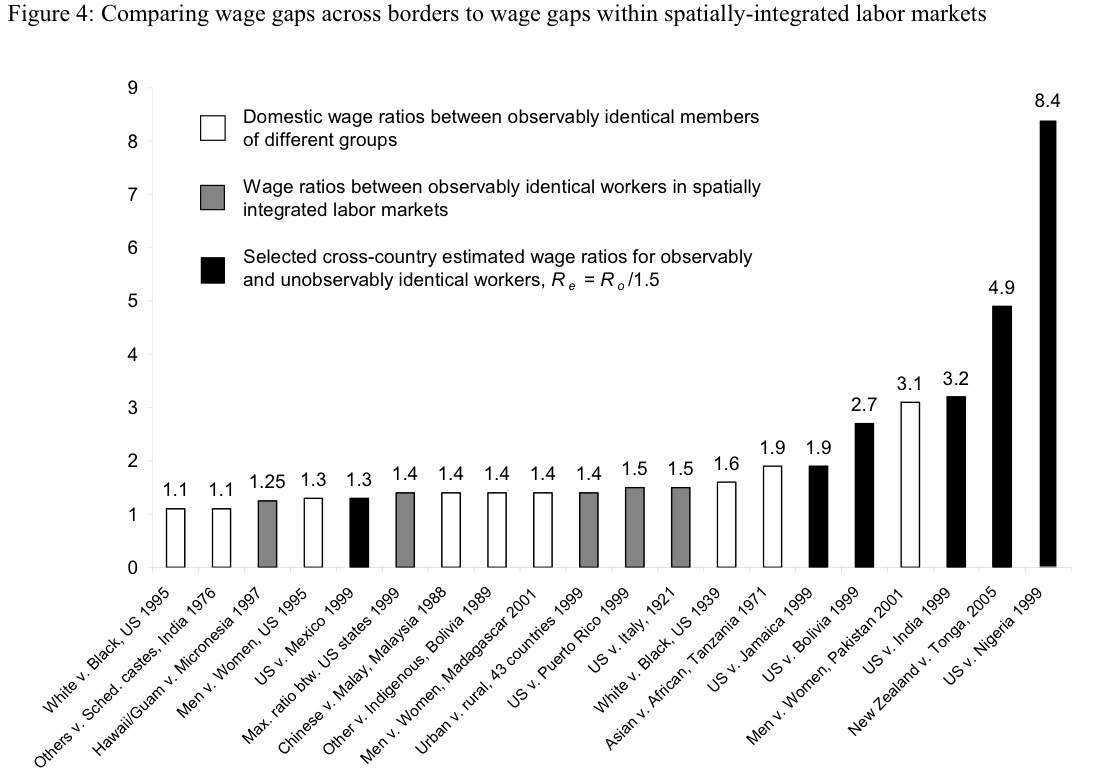
Z from It’s The Thought That Counts sends us this figure showing the wage gap between various types of groups.  The point is to show that wage differentials are most extreme across countries, not within them.  In an article, Kerry Howley writes:

Wage gaps between observably identical Nigerian workers in the United States and Nigerian workers in Nigeria (same gender, education, work experience, etc) are… considerable. They swamp the wage gaps between men and women in the US. They swamp the gaps between whites and blacks in the US. Actually, they swamp the wage gaps between whites and blacks in the United States in 1855. For several countries, the effect of border restrictions on the wages of workers of equal productivity “is greater than any form of wage discrimination (gender, race, or ethnicity) that has ever been measured.” The labor protectionism that keeps poor workers out of rich countries upholds one of the largest remaining price distortions in any global market.

Click here for the full research report.

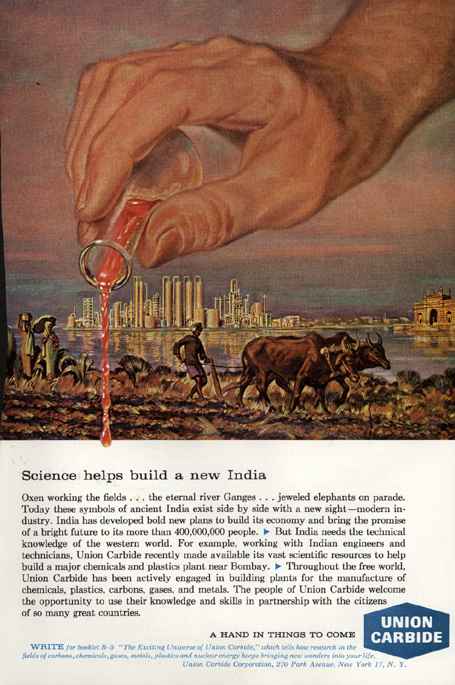
In this ad for Union Carbide is an excellent example of the dichotomization of “tradition” and “modernity” and the conflation of “modernity” with the West.  Text:

Science helps build a new India.

Oxen working the fields . . . the eternal river Ganges . . . jeweled elephants on parade.  Today these symbols of ancient India exist side by side with a new sight–modern industry.  India has developed bold new plans to build its economy and bring the promise of a bright future to its more than 400,000,000 poeple.  But India needs the technical knowledge of the western world.  For example, working with Indian engineers and technicians, Union Carbide recently made available its vast scientific resources to help build a major chemicals and plastics plant near Bombay.  Throughout the free world, Union Carbide has been actively engaged in building plants for the manufacture of chemicals, plastics, carbons, gases, and metals.  The people of Union Carbide welcome the opportunity to use their knowledge and sills in partnership with the citizens of so many great countries.

UPDATE:  In the comments, Village Idiot mentioned the imagery which I, ironically, lost sight of in favor of the text.  The great white hand (of God?) pouring what looks like blood out of a scientific beaker onto a scene of dark figures!  Wow!

Found at Vintage Ads thanks to Ben O.

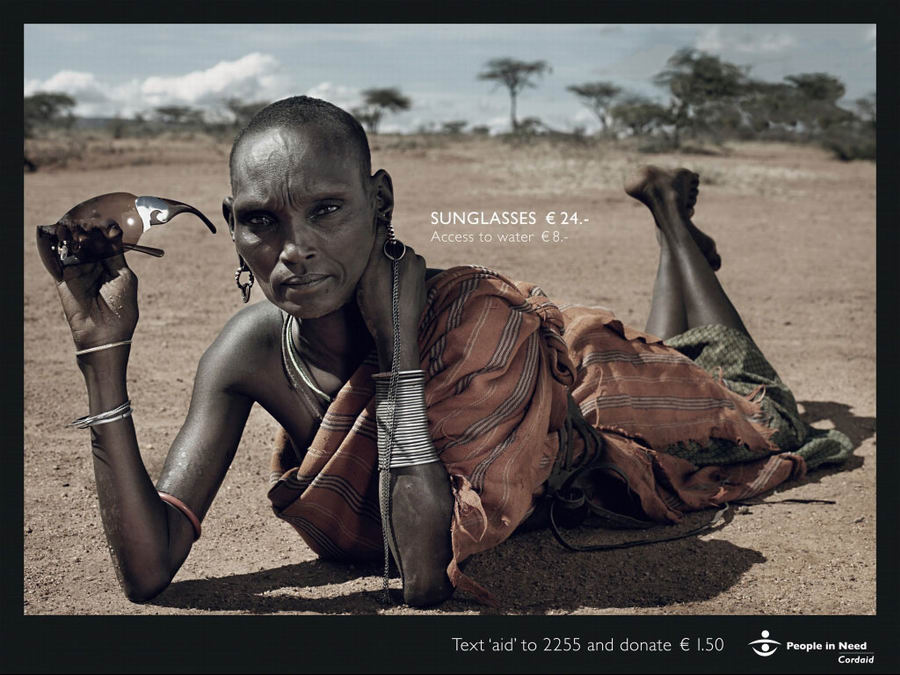
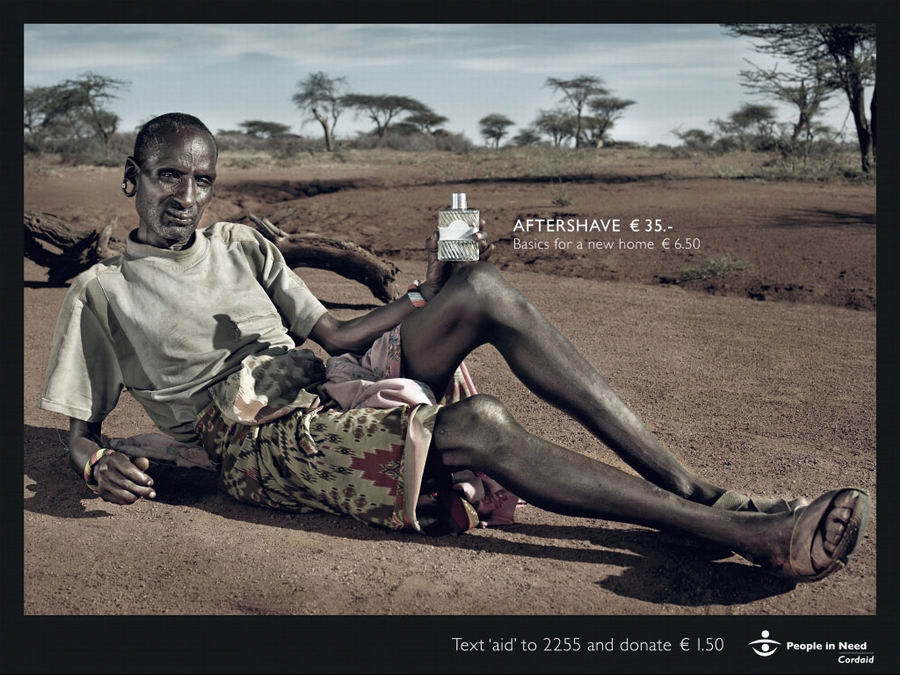
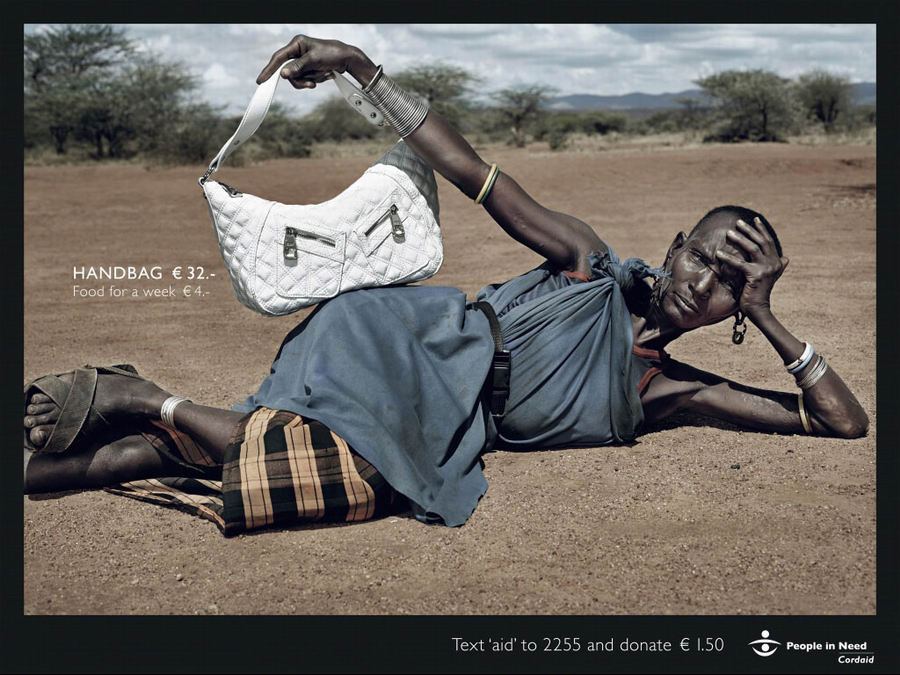
Ghanimah A. sent us these images for Cordaid, an “international development organisation” that specializes in “emergency aid and structural poverty eradication.”  We would love to know what you think.