Talking to a journalist in Nairobi this weekend, he mentioned something that I thought was as unnerving as it was interesting. The journalist lamented at the fact that it seemed the world had gotten so tired of Darfur that the news of soldiers raping at least 221 women and girls in the village of Tabit last October hardly caused a ripple. The first allegations of the 36-hour rape ordeal came in November when Radio Dabanga (The Hague) initially reported on the crimes. In December, the ICC prosecutor decided to shelve the war crimes probe after almost five years of stagnation by the world court, stating she needed more support to address Sudan’s lack of cooperation, and that the rape of the 200 women and girls in the village “should shock [the] council into action.” Sudanese security forces killed approximately 200 protesters in 2014 and the Sudanese state has been so confident that nothing would happen to it, it created a new force, the Rapid Support Forces, which was accused of having burned 3,000 villages in 2014.
We have come a long way from events that sought to raise awareness such as ‘Rock for Darfur’ (which according to Voice of America had 22 concert in 2006 alone), a long way from buying, and proudly donning, t-shirts 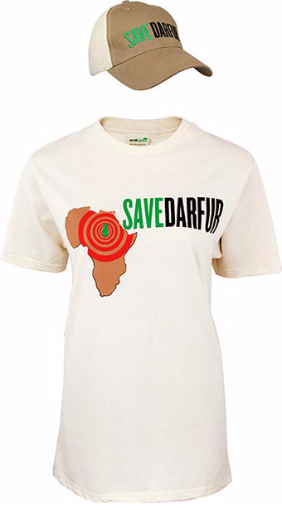 with ‘Save Darfur’ emblazoned on them. Syria, Iraq, Liberia, South Sudan, and Central Africa Republic have overtaken Darfur in the attention sweepstakes in the news. In previous posts I have talked about Compassion Fatigue and the four horsemen of the apocalypse whenever atrocities were covered in the media. However, when is it ok to say enough is enough? When do we, as global citizens, stop shaking our heads and going “tsk tsk, it is so sad what is happening in that country”? These are questions I have asked myself over the past few years. As a graduate student, I have often wondered if my keeping an eye on Darfur is influenced by the fact that my research is in the region. Would it matter as much if my research was on, say, farming practices in Africa? I would like to think it would, if for no reason other than the fact that my country (Kenya) shares a border with South Sudan. I would like to think that whenever I opened the local daily at a coffee shop, or on my way to work in the morning, I would read the news about Darfur and seek out like-minded individuals to try and help in some way, shape or form. What form of help this would be I’m not sure as of yet. So to the question, what have I done for Darfur lately? My honest answer is not as much as I would have liked to do. As Darfur has morphed into a conflict occurring in the shadows (a dreadful prospect) my sense of hopelessness has also increased. What will your answer be?
Wahutu Siguru is the 2013 Badzin Fellow in Holocaust and Genocide Studies and PhD candidate in the Sociology department at the University of Minnesota. Siguru’s research interests are in the Sociology of Media, Genocide, Mass Violence and Atrocities (specifically on issues of representation of conflicts in Africa such as Darfur and Rwanda), Collective Memory, and perhaps somewhat tangentially Democracy and Development in Africa.
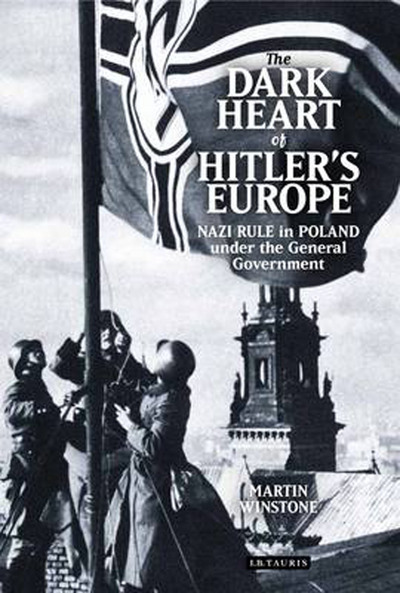 Even amidst the horrors of Nazi rule in Europe, the tragic history of the General Government – the Nazi colony created out of the historic core of Poland, including Warsaw and Krakow, following the German and Soviet invasion of 1939 – stands out. Separate from but ruled by Germany through a brutal and corrupt regime headed by the vain and callous Hans Frank, this was indeed the dark heart of Hitler’s empire. As the principal ‘racial laboratory’ of the Third Reich, the General Government was the site of Aktion Reinhard, the largest killing operation of the Holocaust, and of a campaign of terror and ethnic cleansing against Poles which was intended to be a template for the rest of eastern Europe.
 Utjiua Muinjangue is the chairperson of the Ovaherero and Ovambanderu Genocide Foundation. Ms. Muinjangue spoke on behalf of the school of Social Work at the University of Minnesota on the genocide of the Herero on November 10, 2014.
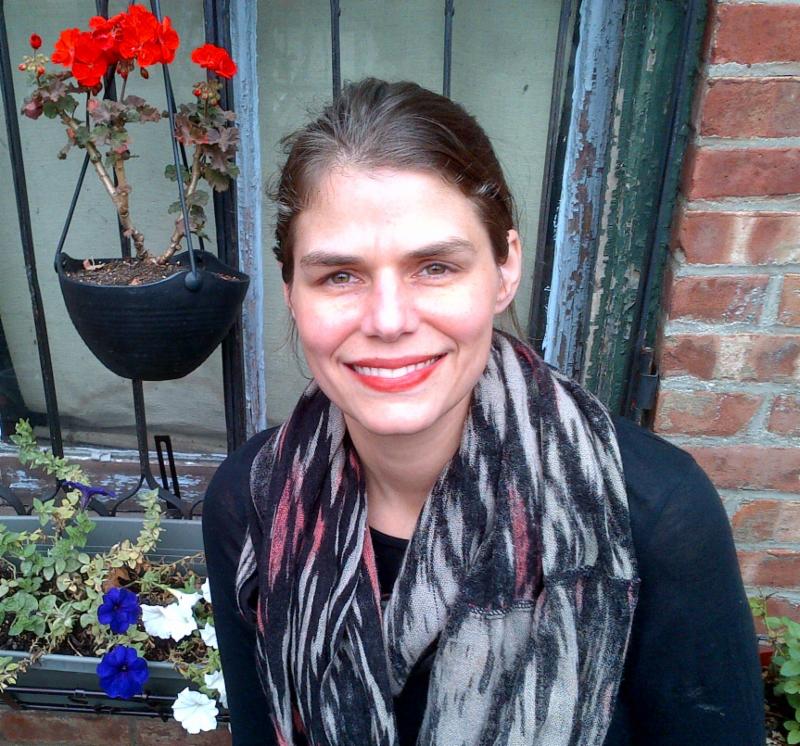 CHGS is pleased to welcome Jennifer Hammer, new program associate in the Institute for Global Studies with special responsibility to support the Center for Holocaust and Genocide Studies and the Center for Austrian Studies. Jennifer completed her degree at the University of Minnesota in Anthropology and Japanese, and has done graduate work in the history of design. Jennifer comes to us from the Department of Communication Studies and has programming and management experience at a number of non-profit organizations including JSTOR, Artstor, and the Minneapolis Institute of Arts.
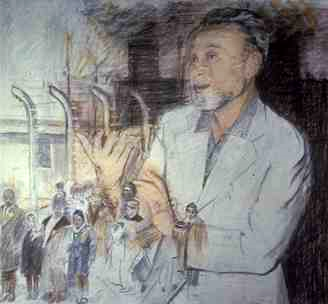 In his acclaimed book Survival in Auschwitz, Primo Levi recounts a recurring dream he and other inmates had in the Nazi death camp: that he returned home to his family and told them about it, but nobody listened. “The person standing in front of me doesn’t stay to hear, turns around and goes away,” he writes.
 The Bloomsbury Companion to Holocaust Literature is a comprehensive reference resource including a wealth of critical material on a diverse range of topics within the literary study of Holocaust writing. At its centre is a series of specially commissioned essays by leading scholars within the field: these address genre-specific issues such as the question of biographical and historical truth in Holocaust testimony, as well as broader topics including the politics of Holocaust representation and the validity of comparative approaches to the Holocaust in literature and criticism.
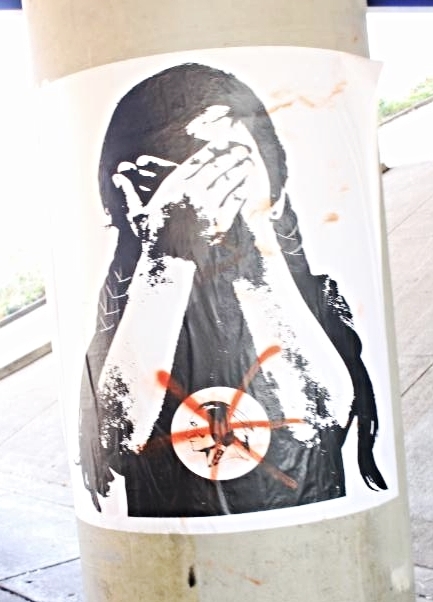 When the National Football League’s Washington Redskins franchise traveled to the University’s TCF Stadium to play the Vikings, they brought with them a considerable amount of controversy. It has been difficult to avoid the debate surrounding the Washington team and their controversial moniker. This is not solely a Minnesota phenomenon; nearly all of the team’s away games have seen a significant amount of protest by both sides. The use of the redskin name has pitted advocates of a change to a more inclusive name against supporters of the football team and their more than eighty year history. While fans of the franchise argue that the name does not reflect any racism, it is important to understand the origins of the term redskin and how it fits into the wider context of the Native American genocide.