On January 17, 2022, the book The Betrayal of Anne Frank by Rosemary Sullivan was published in a worldwide media campaign. In it, a self-proclaimed “Cold Case Team” identifies a new prime suspect in the alleged betrayal of Anne Frank and her seven housemates of the Secret Annex. Very soon after initial news reports faithfully reported on the team’s findings, a strong backlash arose from historians and others criticizing the study and its firm conclusion, based on empirical, epistemological, and moral grounds. To understand both the book’s findings and the criticism of them, it is necessary to outline the unique circumstances of this book and its research.
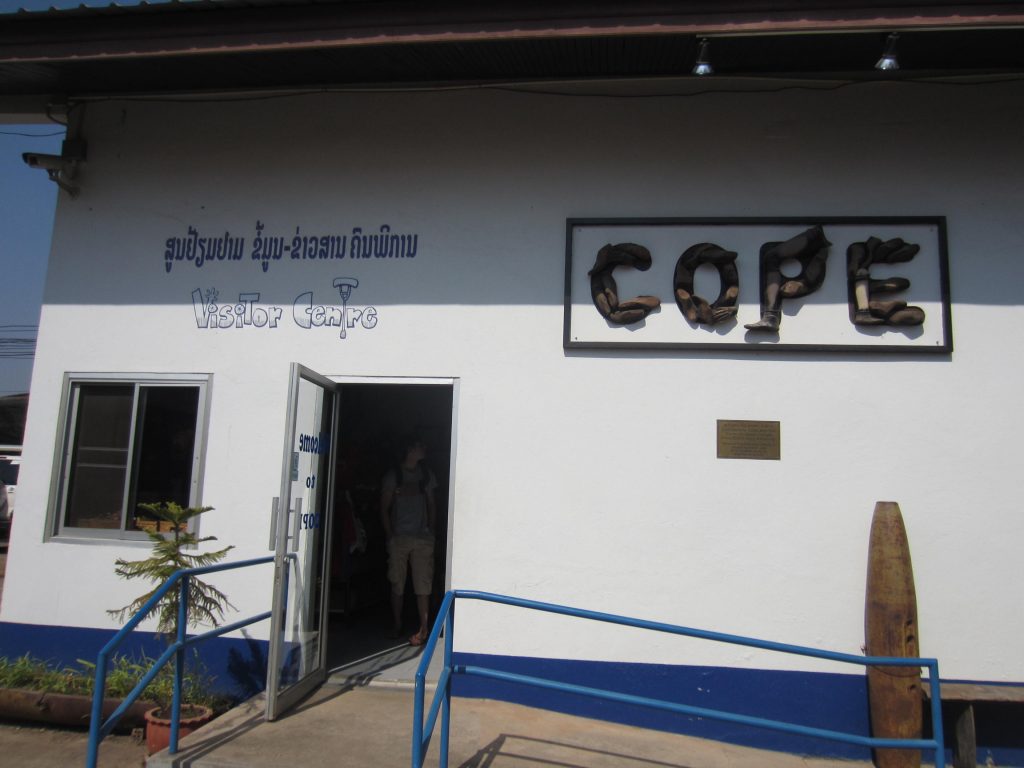
Before I visited Laos, I knew little about the country and its history. My sister had recommended I go for its natural beauty and laid-back tourist atmosphere. While visiting the capital city, Vientiane, I passed by a few humble buildings, tucked away from the roadside: the COPE Center. Intrigued, I paid a visit.
For anyone caring about ending mass violence, memorialization, reparations, and the role of civil society in democratization, the closing down of Russia’s Memorial International and its sister organization the Memorial Human Rights Center by the Russian Supreme Court in late December 2021 is cause for mourning. These are concerns, which the University of Minnesota’s Holocaust and Genocide Studies Center has promoted unstintingly.
Since 1989, the two Russian NGOs have accumulated impressive archives documenting human rights abuses during the Soviet era, advocated for reparations to survivors, and defended human right svictims in conflict zones, in and around modern Russia, as well as the rights of minorities such as LGBTQ Russians.[1] Having played a major part in the ongoing efforts to democratize Russia, they have vowed to fight the closing down of their activities in court and to pursue their work. So far, their homepages are being updated regularly and accept gifts from overseas.[2] The US media covered the news; and petitions of protest are circulating.[3] But rumors of a pending Russian invasion of Ukraine soon distracted minds.[4]
Flying the wrong flag can get you a lot of flak and usually from the wrong folk. Which is what French President Emmanuel Macron found out earlier this month when he had the flag of the European Union raised—blue with a circle of golden stars—in place of the French tricolor to mark France’s turn at the rotating EU presidency. Given the hysterical, mouth-foaming outrage of Macron’s conservative and rightwing rivals, it might as well have been the Union Jack of Boris Johnson’s Britain, France’s new-found favorite enemy.
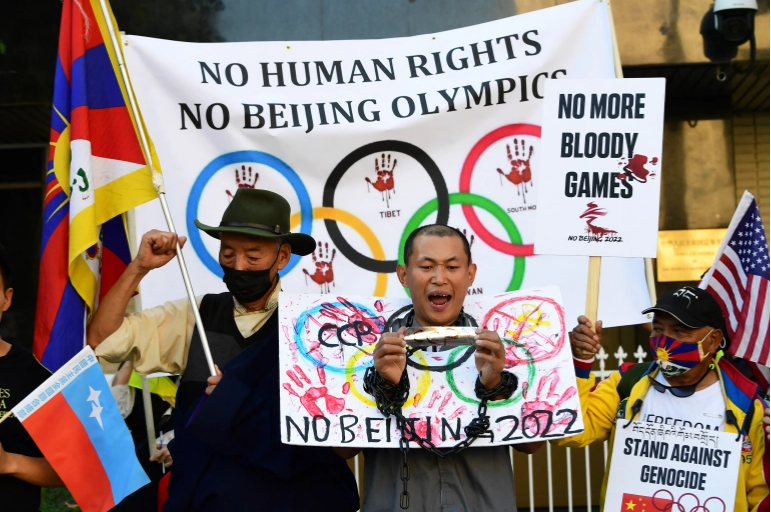
On Monday, December 6, 2021, President Biden announced that not a single U.S. official would be sent to Beijing Winter Olympics this coming February. The U.S. has not boycotted the Olympic Games since the Moscow Games in 1980, so why now? The United States is taking a public stance by symbolically protesting the atrocities committed to the Uyghur Muslim minority in Northern China.
The Center has been busily promoting the work of Professor David Feinberg, who has retired from the Department of Art after an illustrious 50-year career. A retrospective of Feinberg’s work is currently on display at the Katherine E. Nash Gallery on the UMN West Bank Campus.
The works on display serve as important reminders, best summed up in Feinberg’s own words:
“All art comes from the unconscious. The unconscious makes connections between the past and the present. Truth has to be found, not contrived or preconceived. Seeking truth is the way to originality. The only true thing a person has is their unique perception of the world.”
The exhibition, Divide Up Those in Darkness from the Ones Who Walk in Light, consists of two collections: Voice to Vision and a collection of Feinberg’s earlier works. Upon walking into the gallery, one first sees several of these early pieces on display, encouraging visitors to immediately engage with an overarching theme of the retrospective: the role of art for the individual—not only to shape public consciousness but also larger arcs of history. Subjects of these early pieces include partisans active during World War II, the 1956 explosion at the Brooklyn piers, the wreck of the Edmund Fitzgerald, and the “Day the Music Died” to name a few.
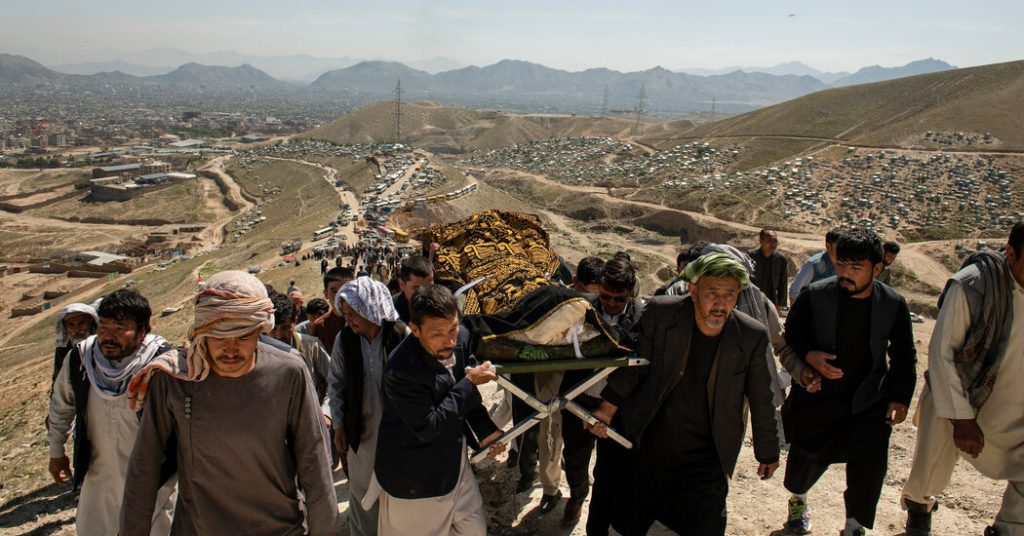
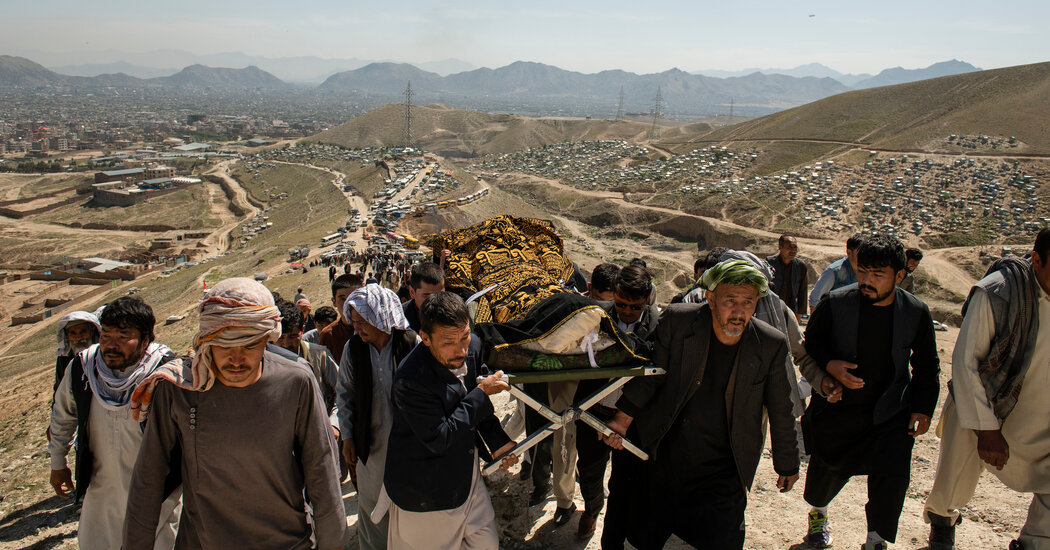
After 20 years, the Taliban have returned to power in Kabul. Two decades of progress for women and human rights are certain to be completely demolished. One group, in particular, the Hazaras, are especially fearful for what the future holds.
Hazaras bury their children after a recent school bombing. Photo Courtesy of the NYTimes.
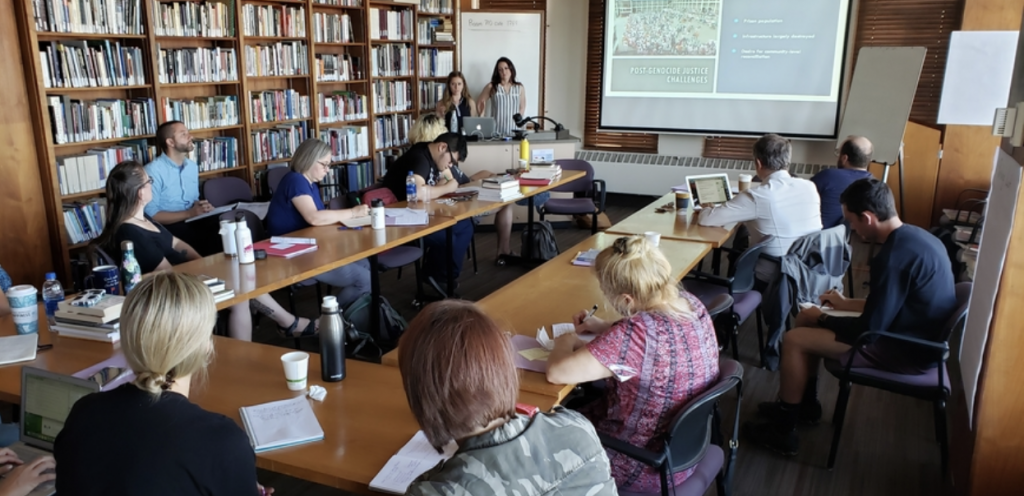
Holocaust and Genocide Education Workshop at The Center for Holocaust and Genocide Studies at the University of Minnesota
The Minnesota Department of Education (MDE) recently released the second draft of proposed social studies standards. The draft, part of a mandatory process to review teaching and learning standards every ten years, will not only secure but significantly expand Holocaust and genocide education across the state for years to come.
The months-delayed second draft follows the release of a controversial first draft in December 2020, which did not mention Holocaust and genocide education. The decision meant not carrying through the three existing references from the current social studies standards, which were adopted in 2011.
Eric D. Weitz’s untimely passing on Thursday, 1 July, sent shockwaves throughout the academic community. A distinguished professor of Modern European History at City College of New York, Eric was among the foremost researchers on human rights, the Armenian Genocide, Nazi Germany and the Holocaust, settler-colonial genocide in German Southwest Africa, and Weimar Germany.
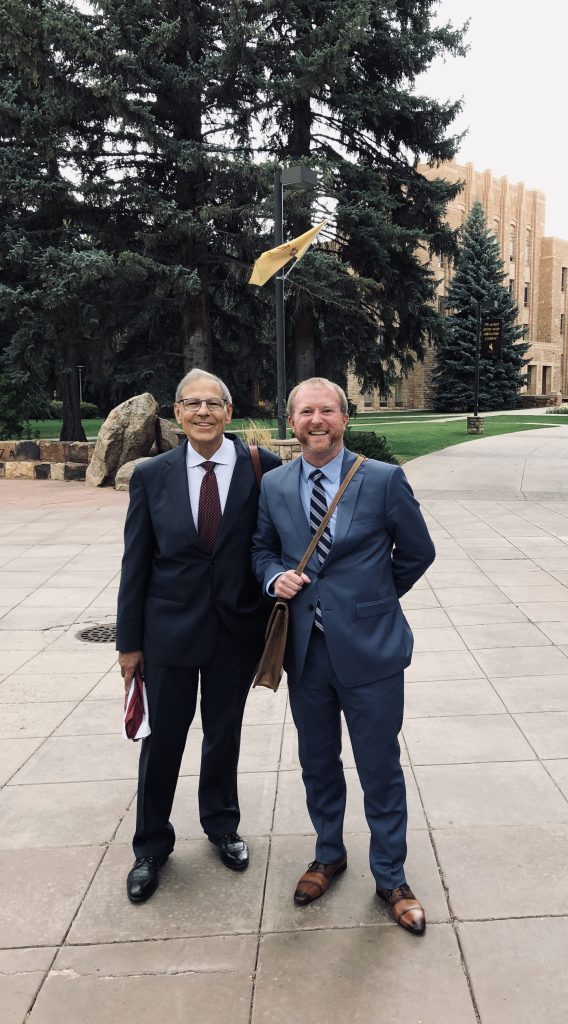
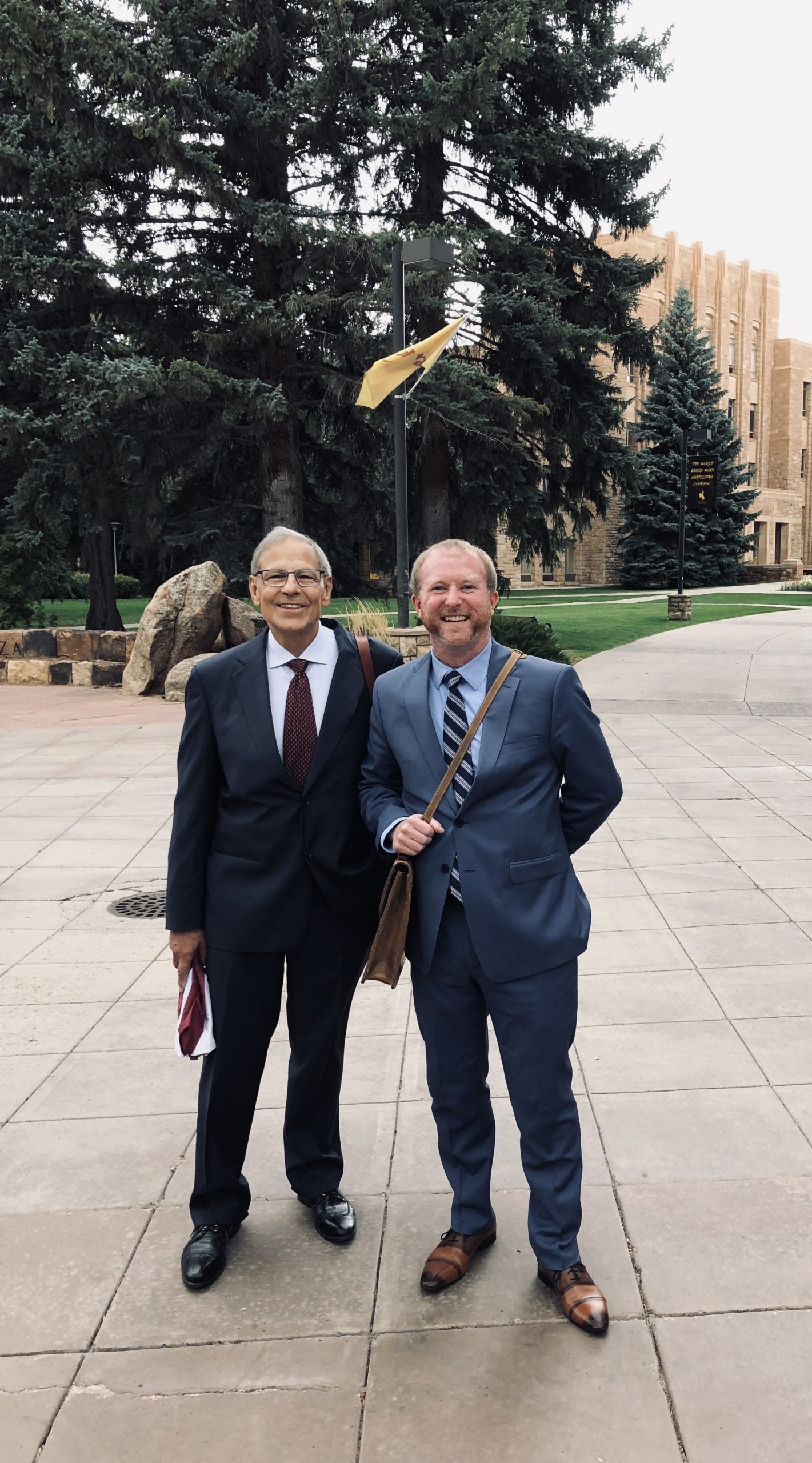
Eric Weitz and Adam Blackler at the University of Wyoming
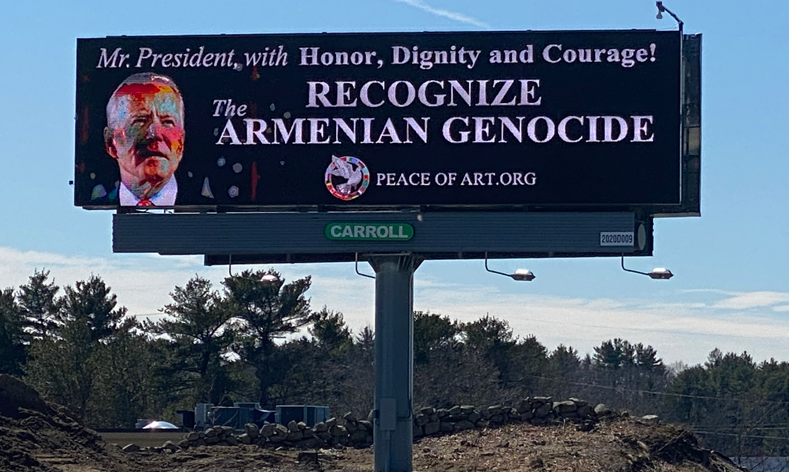
Nearly five years ago, the Center published two blog articles, Another Genocide Declaration: This One Matters, and Berlin’s Message to Ankara, detailing the importance of Germany’s recognition of the Armenian genocide. Then, Germany had just become the thirteenth country to formally declare the targeted destruction of the Armenian population of the Ottoman Empire as genocide. To many scholars, Germany’s recognition of the genocide was the most important official recognition, not only because of Germany’s support for the Ottoman military but also because the Armenian genocide paved the way for the horrors of the Holocaust just over two decades later.
Beyond that, back in 2016, it was nearly inconceivable for the United States to recognize the Armenian genocide in any meaningful sense. Several Presidential candidates campaigned on the promise of recognition, only for the idea to be eschewed by the realities of contemporary geopolitics. Finally, in October 2019, the House of Representatives passed a nonbinding resolution formally acknowledging the genocide. In December, the Senate followed suit. Praising the vote, Minnesota Governor Tim Walz tweeted, “the Armenian Genocide is historical fact, and the denial of that fact is a continuation of the genocide.”
The Center for Holocaust and Genocide Studies at the University of Minnesota-Twin Cities promotes academic research, education and public awareness on the Holocaust, other genocides and current forms of mass violence. It was established in 1997 by Dr. Stephen Feinstein as an interdisciplinary research center. Read more…