

We got ghosted.
Not in a dating app kind of way, but in a way that seemed surprisingly similar: messages were sent, plans were made, the momentum was building. We were excited. We had feelings. Then suddenly: SILENCE.
Of course, I initially assumed there was a reasonable explanation. Maybe my counterpart’s schedule was overbooked, or perhaps a technology issue had swallowed my emails. Maybe they were overwhelmed. But as the days dragged on, the lack of response left me feeling embarrassed and vulnerable. After all, I was the one who had initiated the partnership. Maybe I was too pushy. Maybe I had come on too strong.
I told myself it wasn’t personal. It was pedagogical.
I had built a cross-campus assignment around collaboration between my students and a class at another university in a different region of the United States. It is an idea that grew out of a connection I made through a Facebook discussion board with other sociology instructors. I proposed a collaborative project: students in two different regions of the United States would research the racial and ethnic histories of their local communities, create multi-media projects on their topics, exchange their work, and write responses to one another. The goal was to help them see how race, place, and inequality take shape differently across the United States.
I was so excited about what this assignment could be. I imagined that it would be a model for collaborative teaching. In fact, the assignment had already become the basis for an upcoming conference panel I will be presenting at the American Sociological Association Annual Meeting in New York.
For months, everything moved forward as planned. We exchanged syllabi and coordinated timelines. We created a shared Google folder. We checked in regularly in the weeks leading up to the assignment.
“We have a librarian coming in on Thursday to discuss how to find resources.”
“We are ready to start our assignment next week.”
“Students are still choosing topics, but we should have everything finalized soon.”
In both classes, students worked in small groups and selected topics within five shared categories: Indigenous histories; civil rights histories; immigrant communities and ethnic enclaves; segregation, urban planning, and redlining; and environmental injustice. Within this structure, my students chose topics such as Chickasaw and Choctaw histories, the Memphis State Eight, ethnic enclaves in Memphis, food deserts, and the xAI facility in South Memphis.
The resulting multi-media projects were thoughtful and well done. They took the assignment seriously. They produced work they were ready to share.
I uploaded their projects to the shared folder and sent a quick email to check in. “Please let me know if you have any trouble accessing them!” And then… nothing. No projects from the partner class. No responses. No confirmation. Just silence at the exact moment the collaboration was supposed to happen.
At first, I assumed it was a normal delay. I am well aware of how unpredictable a semester can be: weather disruptions, shifting schedules, adjusted deadlines. I followed up again. Still nothing.
Meanwhile, my students were on track. They had done the work.
So the week the response letters were due, I stood in front of the class with my hands clasped and my weight shifting from foot to foot. I took a deep breath, exhaled, and said, “This is awkward…”
And then I told them: “…we got ghosted.”
I felt embarrassed hearing my voice utter the words out loud. I could feel my face flush red hot with a deep sense of social awkwardness and a deeper sense of professional failure. I had been building this assignment up since the beginning of the semester, and now I could not deliver. The core of the assignment was gone.
Collectively, however, the students immediately reassured me. They laughed, noting that they had all experienced being ghosted before too, just not by a university professor.
I leaned into our shared understanding and proposed a pivot: Instead of writing response letters to students on the other side of the country, we would turn toward each other. I revised the final component of the assignment: Choose one idea, example, or insight from another group’s project. Connect it to your own topic. What does this comparison reveal about how race, ethnicity, power, and inequality operate in Memphis?
In retrospect, it is easy to write about this pivot as a clean, triumphant pedagogical choice. In reality, that week was a blur of academic panic and quiet resentment. In truth, I was deeply anxious. I worried about losing my students’ trust. I feared my students would see the revised assignment as frantic busywork, or worse, view me as (gasp) disorganized. I caught myself staring at my computer screen late at night, wondering what would become of my student evaluations.
The pivot also forced me to confront a complex sociological layer of teaching: the power of an audience. Initially, the quality of student work had been driven by the high stakes of an external gaze. I had specifically pointed out to them that they were writing for peers thousands of miles away. “You are representing Memphis,” I cautioned. The implication was that they would want to appear sharp, capable, and smart. When that outside audience vanished, I braced for a drop in momentum. I feared that turning inward would feel too small and low-stakes.
Instead, something else happened. A different kind of seriousness took over. No longer needing to explain Memphis to outsiders, students engaged deeply with the intersecting realities of their own neighborhoods. They compared, questioned, and extended one another’s ideas in ways that felt genuinely dialogic and part of a shared sociological landscape. For example, the group studying food deserts juxtaposed their map showcasing grocery store scarcity against another group’s project detailing Elon Musk’s new xAI “Colossus” supercomputer facility in Southwest Memphis. The students asked: How can the city’s political and utility infrastructures move at lightning speed to fast-track massive power grids and millions of gallons of water for a billionaire’s data center, while claiming for decades that it is economically unfeasible to incentivize a single corporate grocery store for the historic Black neighborhoods in the same city? Another group researching Chickasaw and Choctaw land cessions made connections to later patterns of segregation and racial inequality, They argued that the 1818 Jackson Purchase laid the groundwork for historical patterns of exclusion and segregation that would eventually necessitate the Civil Rights movement and moments like the Memphis State Eight. The students noted that there has been a continuous, unfolding struggle over who gets to belong in Memphis and who is forced to absorb the costs of its growth.
Instead of looking outward for comparison, they looked inward toward Memphis, toward shared histories, toward overlapping systems of inequality that were already present around them. The assignment evolved into a collective sociological mapping of the history of Memphis. Overall, I consider the pivot a success!
And yet, I do keep thinking about what was lost. The assignment was originally designed to disrupt the assumption that my students’ local context is universal. As a Sociology instructor teaching a course on Race & Ethnic Minorities, I have struggled with the notion of my students assuming that the specific socio-political realities of the American South are a baseline for how the whole country operates. I wanted them to swap projects with a class in a completely different region (specifically the Southwest, Pacific Northwest or New England) so they could understand how race and displacement manifest differently in different places. I especially wanted them to see what race and place look like when stripped of Southern iconography. Additionally, they lost the chance to see how a student thousands of miles away might interpret Memphis’s history, and conversely, they lost the chance to realize that their own local struggles are part of a fractured national history.
Until now, I have never heard back from the instructor. I hold no anger nor ill will; in fact, I genuinely hope they are okay.
As a sociologist, I ultimately have to look past personal explanations for the silence and look toward structural ones. I chalk this loss up as a direct symptom of the modern academy. Informal cross-institutional collaborations are exciting in theory, but they are incredibly fragile because they rely entirely on the invisible, uncompensated emotional and intellectual labor of overworked faculty. When a semester gets overwhelming, when grading piles up, or when institutional pressures shift, these under-the-table partnerships are the first things to get dropped because there is no institutional safety net to catch them. Higher education depends continuously on the extra labor of people who are already stretched to their breaking points.
I still believe in cross-campus collaboration. I still think there is value in connecting students across place and I plan to attempt this project again However, if it again falls apart, I remind myself that what matters most is not necessarily preserving the original design but preserving the learning.
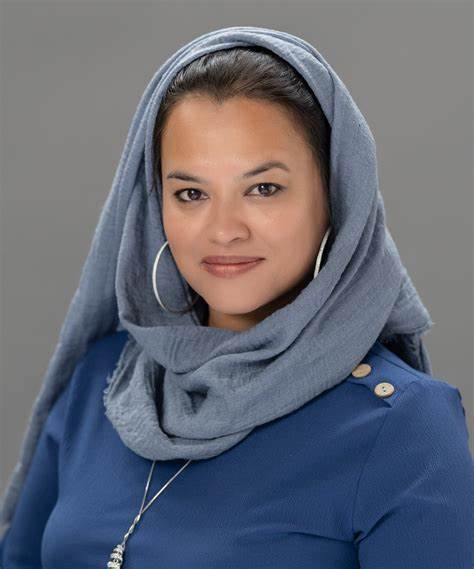
JoAnna Boudreaux is an Assistant Professor of Teaching in the Department of Sociology at the University of Memphis. She also serves as the coordinator of the internship program. Her pedagogical approach is centered on creating a collaborative learning environment, connecting sociological concepts to the local community, and exploring innovative teaching methods. She teaches a variety of courses on topics such as race and ethnicity, sociological theory, medical sociology, gender and society, and knowledge production in the age of AI.
Comments