education

New & Noteworthy

From the Archives

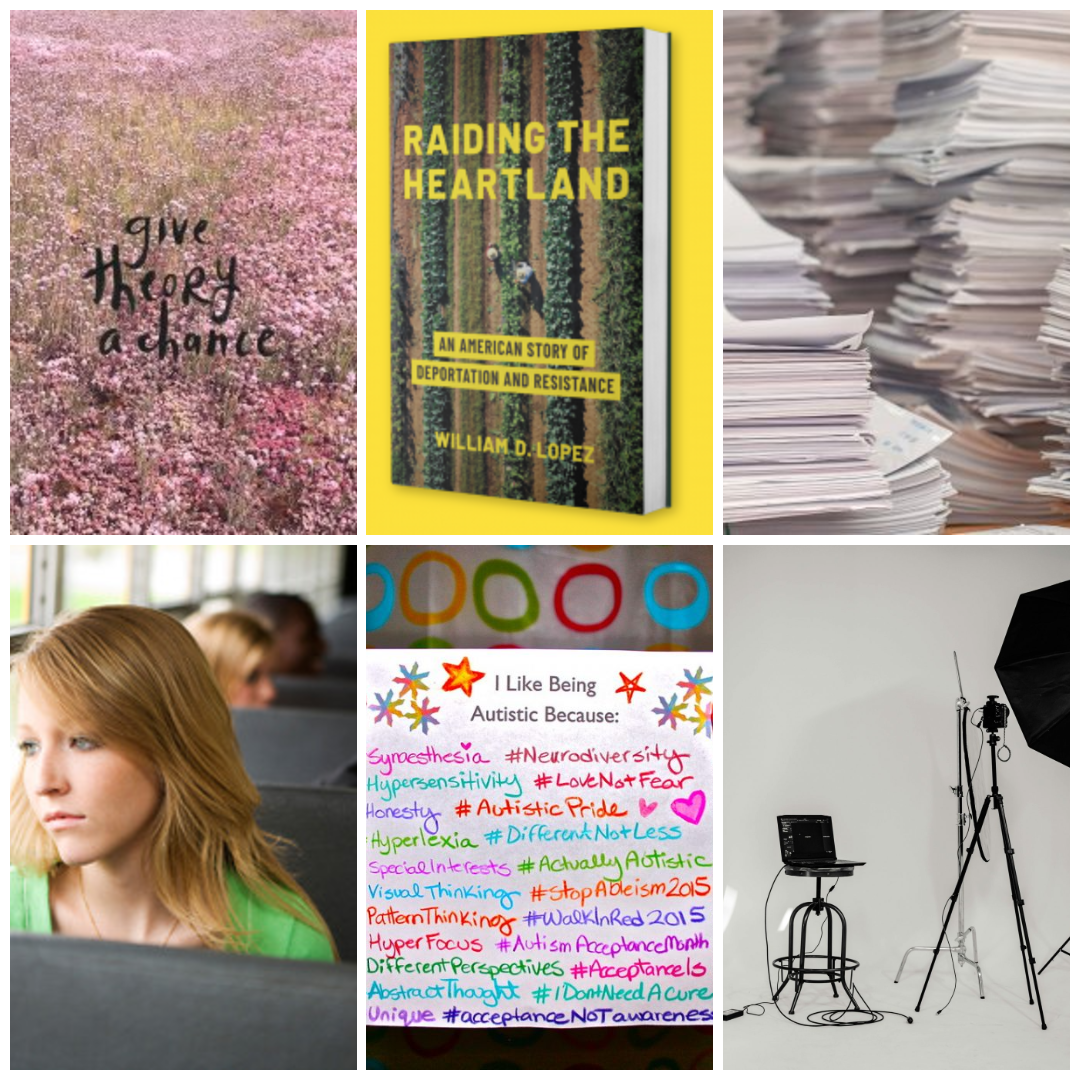
  • In the latest MAHA report on children’s health, Robert F. Kennedy Jr. insisted on the need to address “vaccine injury.” As Secretary of Health and Human Services, he has spoken about the supposed connection between vaccination status and rising autism diagnoses in children. Our 2019 piece, Autism Across Cultures, reviews research on the causes of autism, providing social context and explanations for recent increases in autism diagnoses.
  • As students return to school, many kids and teenagers will return to bullying from their peers. Despite the commonly used phrase “it gets better,” research warns that the consequences of peer aggression during adolescence can extend through adulthood. Read 2023’s Back to School, Back to Bullying from our partner World Suffering to learn more.

Backstage with TSP

  • “TSP Tuesdays” is now returning to “TSP Fridays.” We’re sad to see the alliteration go. New board member Sara Kadoura is taking the reins of our weekly roundup, where you’ll continue to get updates from TSP and our partners.
  • Anastasia Dulle is also now taking a leadership role on our flagship section, “Discoveries.” Anastasia will manage our publication schedule and join Jake, Doug and Chris on the editors team, streamlining our process to translate new and meaningful social science for the wider public.

More from our Partners & Community Pages

Contexts

Council on Contemporary Families

Give Theory a Chance

New & Noteworthy

This week’s Clippings by Mallory Harrington includes Swiss sociologist and mental health advocate Jennifer Walter’s Threads post on the Trump administration’s “shock doctrine” to cognitively overwhelm citizens; Tonika Lewis Johnson and Maria Krysan’s new book, Don’t Go: Stories of Segregation and How to Disrupt It, highlighting how warnings to avoid Chicago’s South and West sides reinforce harmful segregation; Ardeshir Geravand’s caution that Iran’s soaring inflation may foment social unrest if citizens’ legitimate paths to economic mobility remain blocked; and Jamie Lee Kucinskas’s forthcoming The Loyalty Trap: Conflicting Loyalties of Civil Servants Under Increasing Autocracy, on the challenges American civil servants faced during Trump’s first term.

Our latest podcast episode includes TSP Board members Jordyn Wald, Emma Goldstein, and Forrest Lovette discussing Tressie McMillan Cottom recent opinion piece in The New York Times on “Dry January”, or avoiding drinking alcohol during the month of January.

Francesca Bernardino‘s new piece, Listening to Music (and Being Tracked) In the Streaming Age, writes on research by Michael James Walsh in Media, Culture & Society, covering how music streaming services like Spotify and Apple Music blur the line between personal listening habits and public identity. These social media-like elements heighten self-consciousness and spotlight the burden of constant data collection.

From the Archives

According to a recent NYT article, 33% of 8th graders read at a “below basic” level according to the National Assessment of Educational Progress. COVID-19 and the move to online classes (which has been associated with absenteeism) has been one suggested source of the decline, as well as the increased shift of reading on devices. Check out this Discovery from 2022 on how virtual schooling had (and has) impacts beyond the classroom.

President Trump signed an executive order directing the Education Department to prioritize funding school choice programs and making alternative schooling more accessible to families. This TROT from 2019 reviews research on school choice and public education, showing that school choice can reinforce inequality.

The Super Bowl is this weekend. Check out this list of some sociology pieces by us and our partners before the big game.

More from our Partners & Community Pages

Contexts

Center for Holocaust and Genocide Studies

Council on Contemporary Families

First Publics

New & Noteworthy

Daniel Cueto-Villalobos‘s latest Discovery on research by Ioana Sendroiu on how small business during COVID-19 navigated the balance between keeping their doors open, and protecting the public. The study found that many small business owners prioritized public health and employee well-being over profits, navigating moral dilemmas beyond partisan divides.

This week’s Clippings of sociology in the news includes Melissa Milkie and Kei Nomaguchi in The New York Times on the mental health impacts of intensive parenting, Amanda Miller on 21 Alive News discussing the effects of police-action shootings, Laura K. Nelson and Alexandra Brewer in The Economic Times on how women receive less clear feedback at work, and Neil Gross in The New York Times on the debate over “viewpoint diversity” in academia.

From the Archives

Discussions on women’s health and morality have intensified, especially around pregnancy. Sociologists point to how cultural ideals of motherhood put women – especially poor women of color – under increased scrutiny. Learn more in this TROT by Allison Nobles.

The US recently ranked last among 10 developed nations in healthcare. Check out this Discovery by Amy August from ~10 years ago on where things were then.

Last week, Yale, Princeton, and Duke were quested over the decline in Asian Students. Read our recent Discovery by Shania Kuo on research about Asian Student’s views towards affirmative action.

More from our Partners & Community Pages

Council on Contemporary Families:

First Publics:

  • Toward a Better Vision of Classical Sociological Theory by Seth Abrutyn writes about how soc theory should be taught through a fresh, practical approach that links classical ideas with contemporary research, making it more relevant, engaging, and connected to students’ lived experiences and sociological inquiry – providing 2 approaches.

New & Noteworthy

Mason Jones and I published a new Discovery on work by Catherine Sirois, Dependent, Delinquent, or Denied? In her research, Sirois found resource scarcity was causing social workers and probation officers to be “institutional offloading” youth who required lots of time and attention.

Mallory Harrington’s media report on Clippings includes Casey Stockstill in Chalkbeat on her new book False Starts: The Segregated Lives of Preschoolers,  A.J. Jacobs in CNN on raise increases in Toyota, Honda, and Hyundai factors – possibly a preemptive move to prevent union organizing, Kevin Woodson in Fortune on his new book The Black Ceiling: How Race Still Matters in the Elite Workplace, and Mariana Luzzi in Barron’s on Argentina’s inflation and poverty crisis.

From the Archives

In the United States, Thanksgiving is around the corner. This holiday is notorious for family conflict around the dinner table, especially with politics. Learn more about some sociology behind this phenomenon from our video and TROT, “Visual Soc: Family Meal Conflict” by Isabel Arriagada and Mahala Miller.

Black Friday is also this week. Check out Nathan Palmer‘s piece on this consumer holiday to learn about the ritualization of this shopping frenzy.

More from our Partners & Community Pages

Contexts has their Fall 2023 issue to read before 12/15 for free:

In case you missed it, Engaging Sports latest:

First Public’s latest:

New & Noteworthy

This week’s Clippings includes Samuel L. Perry‘s work in The Washington Post on new House Speaker Mike Johnson and assault weapons, Carolina Are in El País on sexualization in social media, Carolyn Liebler in The Washington Post on the Census and measuring Americans with Indigenous heritage, and Amin Ghaziani in SciTechDaily on the ambivalence of coming out experiences of LGBTQ adults.

From the Archives

Pain and suffering are commonplace in the news, especially now. Read j. Siguru Wahutu’s TROT on “consuming the pain” through images of the “other” in the media.

Daylight savings time was this past Sunday (in case you haven’t noticed by now). Learn more about the history of Daylight Savings time by reading Lisa Wade’s piece in Sociological Images.

Backstage with TSP

Because of TSP’s growing student board, we have increased the number of “pitches” per week (where students review recent academic articles, write a brief summary, and present the articles to the rest of the board) and “workshops” (where students share their Discoveries drafts on screen and the rest of the board provides feedback real-time). This increased frequency of pitches and workshops will enable us to publish more content in the upcoming months!

More from our Partners & Community Pages

Contexts has a new piece on “dyadic interviewing”, interviewing both young adults and their parent, in research with Elena van Stee, Gaby FloresAriel Chan, and Angelica Qin.

Council on Contemporary Families has a new piece on 7 patterns of women’s journey through motherhood, education, and work through adulthood by Bo-Hyeong Jane Lee and Anna Manzoni.

First Publics has a new Reflections by Michael Kennedy on his teaching journey towards a critical and public-oriented approach.

New & Noteworthy

TSP is happy to announce our official TikTok page and our first video by board member Nicole Schmitgen on our TSP discovery Separate, Unequal, and Denied: The Double Discrimination of Black Disabled Students by Ellie Nickel – which are both based on “Not in My Schoolyard: Disability Discrimination in Educational Access,” in the American Sociological Review. Check it out!

Leo LaBarre’s most recent piece, “Child Poverty Prevention Policies and CPS Involvement” covers how poverty policies can impact the level of CPS involvement. This piece covers work by Jessica Pac and colleagues in Social Service Review on different policies’ potential to reduce the national CPS caseload by 669,018.

Citings & Sightings

Evan Steward (former TSP alum) at UMass Boston published a piece in The Conversation about voting patterns and religious affiliations. There were a number of surprising findings (at least to me).

Brian Donovan has been in the news for the sociology course The Sociology of Taylor Swift at The University of Kansas. Read some coverage of this course here and others like it.

Backstage with TSP

At our latest TSP meeting, we assigned “beats” for our board members, or topical areas of sociology that each member keeps a close eye on. This is one way we keep tabs on all the going-ons in the world of sociology. We also premiered our social media team’s latest work, discussed some candidates for potential discoveries, and discussed a recent publication by Dr. Uggen, Dr. Hartman, and our former Graduate Managing Editor Mahala Miller on how we translate research for public audiences.

More from our Partners & Community Pages

Contexts has a new video to watch:

Council on Contemporary Families latest on:

In “celebration” of the most challenging academic semester of our lives, our summer grad editor Amy August challenged herself to write a column based only on recent and classic TSP titles. Here’s what she produced. Feel free to link to actual stories along the way!  

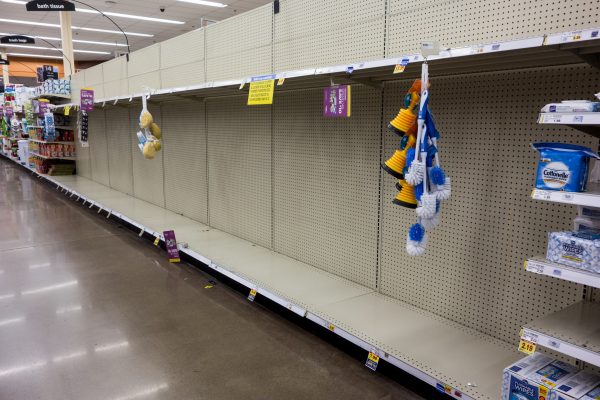
As the Coronavirus pandemic spread, Krogers experienced a toilet paper shortage. Photo by Danielteolijr via Wikipedia.

During the Coronavirus Pandemic, it would be ludicrous to claim that there were No Big Surprises in the First Month. From the beginning, it started to seem like  We Are Living In A Computer Simulation and that Computer Voices are “Calling the Shots:” We had to “Take Courage,” they said. And so we asked ourselves Why We are Uncomfortable Talking to Our Computers, and Whose Problem Is It? that we don’t have enough toilet paper. How can we continue Squatting with Dignity in India and everywhere else without Some Resources that are absolutely necessary? We started to imagine The bathroom of the future, pondering topics like, just How does a waterless urinal work? (But, then again, What’s Ikea for? if not supplying answers to these Big Questions.)

Education Under COVID-19 has changed as well, and even though our own American Parents Emphasize Hard Work, we’re still not used to seeing that Caring is Work. As teachers and TAs, there are at least Three Reasons You Might Be Exhausted Right Now, but probably many more. Nobody is good enough, and we may accomplish Perfection, but not Brilliance, no matter what we do. It seems that Students of All Backgrounds Prefer Teachers of Color, but also Community Building in the Classroom. After all, Online learning will be hard for kids whose schools close – and the digital divide will make it even harder for some of them.

We keep trying to be The Way We Still Never Were, but “Doing Nothing” During the COVID-19 Suspension of everything is not an option. Merely acclimating to the new  “Normal” Is Not Good Enough. We must engage in Spring Cleaning, Food Shopping, and succumb to The Drain of Doing the Dishes. Make sure to Do Your Chores (Whatever They Are), lest you wind up living in a Care Vacuum. There really is No Rest for the Weary.

Moreover, we have entered a time When Breadwinning Is Not Enough; now we have to be Superheroes at work as well. We stretch the Definition of ’Hero’ when we say, “ This guy is my new hero!” everytime we go to the grocery store or convenient care. Yet we still don’t know How to Honor our Heroes adequately, and these Changes in How and When We Die are hard to handle. 

But depending on Where You’re From? you may now face Too Many Choices with regard to your time. Some of us have traded in Working for the Long Weekend for the indefinite future. The appropriate answer to the question, “Whose Time is it?”: your time! Some of us have managed to combine Work + Leisure = Weisure quite effectively, after all. Others have used the time to become YouTuber Influencers. (What is an internet celebrity anyway?)

While some may be writing odes On Graduate School Misery, the TSP editors and grad board have handled all of this with Creative Resistance and The beauty and strength of Wonder Woman. As they say, The More Things Change. And we’ve gotta be at least Halfway There by now. To this, I say, Frack Yes! and make a (hopefully) Graceful Exit

Click for companion content.

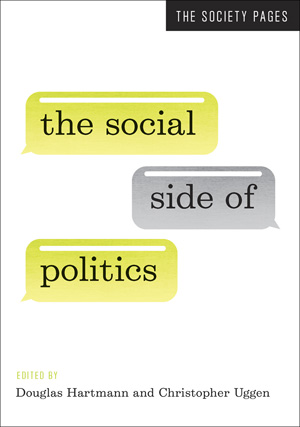
As we head into tomorrow’s Super Tuesday contests, statistics, analytics, and minutia of all sorts are being bandied about, examined for their possible predictions and the clues they can give us about how those who turn out to caucus will make their choices for the presidential candidates who want to represent them. In a classic piece, Skidmore College’s Andrew Lindner looks at how such numbers and stats remain a form of elite knowledge in “The Sociology of Silver,” published online and in our first TSP volume with W.W. Norton & Company, The Social Side of Politics.

Photo by Hawks and Doves (Flickr)

That collective sigh you hear isn’t just kids and college students bemoaning the start of a new school year. The chorus is rounded out by professors and researchers tanned from fieldwork (or, more likely, pale and blinking after emerging from weeks in libraries). Luckily, all their hard work means we have lots of new research on education to share as we, collectively, head back to our campuses and classrooms. Here’s a taste of what our prolific friends at the TSP Community Page Education & Society have published recently:

They also provide links to the following articles about education and school:

Elsewhere on TSP, don’t miss our topics page for “Teaching” and our blog, Teaching TSP. You might also enjoy Sociological Images for Instructors, including course guides and collections alongside recommended class readings; Contexts pieces including “How Students Experience Desegregation Efforts” and “Academic Doping?“‘; and our Discoveries—summaries of recent research published in sociology and social science journals—on education and collegiate life, including “Not So Different: Color-Blindness and Diversity,” “The Social Costs of Punishment, From Prisoners to Pupils,” “Active Learning and STEM Success,” and “Second-Generation Schooling: Good News for Girls.”


RU013114This week, on The Editors’ Desk*, Doug Hartmann enumerated and tried to define** six elements of the sociological worldview. Elsewhere on The Society Pages, our many contributors worked to demonstrate that worldview—enjoy!

*That’s right: we all share one desk. It’s adorable. Possibly even adorkable.

**See what I did there? The man never met a conjunction he didn’t like. more...