Archive: Aug 2015

RU082115

Hellllllooooo, Chicago! Here’s what TSP’s been up to this week—some excellent reads as sociology converges on the Windy City. Be sure to say hi to our grad board members and editors as we make the rounds, and watch our Twitter for some live-tweeted-panels courtesy @EvanStewart23 (with Jacqui Frost, our graduate editor).

There’s Research on That!

We All Live with the Effects of School Segregation,” Evan Stewart with research by Gary Orfield, Susan E. EatonGrace KaoDaniel T. Lichter, Domenico Parisi, and more.

Discoveries:

Freshman 15 or Family-First 50? College and Family Sequencing Affect Obesity.” Sarah Catherine Billups sums up Journal of Health and Social Behavior research from Miech, Shanahan, Boardman, and Bauldry.

Clippings:

“‘Moving to Opportunity’ After Katrina.” Billups shares some sociological highlights from a New Yorker article on mobility and displacement in New Orleans. Featuring David KirkPatrick SharkeyStefanie DeLuca, and Corina Graif.

Contexts Magazine:

Bathroom Battlegrounds and Penis Panics,” Kristen Schilt and Laurel Westbrook. How transgender rights legislation got framed as “bathroom bills,” with seemingly everyone trying to mark their territory.

Scholars Strategy Network:

The Downside of Separating ‘Good’ Undocumented Immigrants from ‘Bad’ Criminals,” by Abigail Andrews. “As long as protection seems conditional on quiet and deferential personal conduct, any approach that divides undocumented migrants into good versus bad categories reinforces secondary status for all.”

Council on Contemporary Families:

Getting Current on Cohabitation,” by Virginia Rutter. “Fifteen years ago, the going wisdom on cohabitation was that marriages preceded by living together were more likely to fall apart—that news is out of date.”

A Few From the Community Pages:

Last Week’s Roundup

Sign Up for Inbox Delivery of the Roundup

Our Latest Book

Check out Getting Culture (just $15!)
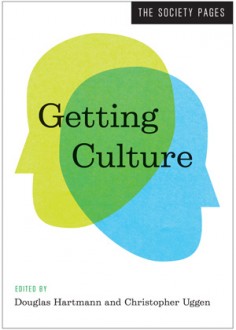
culture volNow available! With Getting Culture, the fifth in our series of paperback readers with W.W. Norton & Co., it feels like we’ve really hit our stride. The new volume features work on the “stuff” of religion, fast fashion and global production, musical tastes, same-sex marriage, and so much more—all bolstered and rounded out by “TSP tie-ins” that bring readers to the site for interactive content and a discussion questions and activities section for reading groups. Oh, and it’s only $15. Stop by Norton’s booth at the ASA conference or check out our series online. We’re awfully proud.

Also, if you’ve already picked up a copy, be sure to log on to thesocietypages.org/culture for links and additional content. Our TSP topic page on culture continues to be updated weekly, so you can always get your culture, culture, culture there, too!

081515


Since last we met… Our new book arrived! Check out Getting Culture (just $15!), then read on for the rest of this week’s fresh sociology.

The Editors’ Desk:

Back to School Research,” by Doug Hartmann and Chris Uggen. Some of the fresh sociology research on education and learning as featured on TSP, its partner sites, and its Community Page blogs.

Discoveries:

Policy Changes that Help Reduce Murder Rates,” by Ryan Larson. Patricia L. McCall and Jonathan R. Brauer‘s new research shows that welfare might not stop homicide, but increased social support certainly wouldn’t hurt.

Clippings:

More than 9 to 5,” by Caty Taborda. Randolph Cantrell on trends in juggling multiple jobs.

Are Behavioral Issues Black and White?” by Caty Taborda. David Ramey on finding that race affects how schoolkids are punished.

Cougars: Literal Mountain Lions,” by Sarah Catherine Billups. Milaine Alarie and Jason Carmichael on the myth of the wealthy older woman making prey out of 20-somethings.

Scholars Strategy Network:

U.S. Latinos Care About Many Issues Beyond Immigration,” by Stella M. Rouse. When it comes to voter priorities, for Latinos, immigration only makes the top three.

Council on Contemporary Families:

Overwork May Explain 10% of Men’s Wage Advantage Over Women,” by Youngjoo Cha. Some of the wage gap owes to men’s taking on extra hours.

The Community Pages:

Last Week’s Roundup

Sign Up for Inbox Delivery of the Roundup

Our Latest Book

Photo by Hawks and Doves (Flickr)

That collective sigh you hear isn’t just kids and college students bemoaning the start of a new school year. The chorus is rounded out by professors and researchers tanned from fieldwork (or, more likely, pale and blinking after emerging from weeks in libraries). Luckily, all their hard work means we have lots of new research on education to share as we, collectively, head back to our campuses and classrooms. Here’s a taste of what our prolific friends at the TSP Community Page Education & Society have published recently:

They also provide links to the following articles about education and school:

Elsewhere on TSP, don’t miss our topics page for “Teaching” and our blog, Teaching TSP. You might also enjoy Sociological Images for Instructors, including course guides and collections alongside recommended class readings; Contexts pieces including “How Students Experience Desegregation Efforts” and “Academic Doping?“‘; and our Discoveries—summaries of recent research published in sociology and social science journals—on education and collegiate life, including “Not So Different: Color-Blindness and Diversity,” “The Social Costs of Punishment, From Prisoners to Pupils,” “Active Learning and STEM Success,” and “Second-Generation Schooling: Good News for Girls.”


RU080715

Since last we met…

Features:

Commemorating 50 Years Since the Voting Rights Act… By Restricting Voting Rights,” Ryan D. King and Vincent Roscigno. How landmark legislation is being eroded, to the detriment of participatory democracy.

There’s Research on That!

A Hate Crime By Any Other Name,” Ryan Larson. Whether we call a domestic attack a hate crime or terrorism has implications for and is shaped by public perception.

Social Boundaries and Music Streaming,” Evan Stewart. By TROT-ifying Spotify data, we see how musical preferences are reinforced and reshaped. more...