
gender

An array of colors arranged in a shape of a thought bubble. Photo by author, Jordyn Wald.

How do Americans define discrimination? Lauren Valentino and Evangeline Warren reveal that it’s not as clear-cut as we might expect. Through interviews and a nationally representative survey, they found that Americans don’t exactly share the same ideas on what “counts” as discrimination—much less racism, sexism, or classism—and these differences aren’t random. 

According to Valentino and Warren, Americans view discrimination through different lenses, depending on whether they’re thinking about racism, sexism, or classism. These lenses guided respondents in deciding whether an act qualified as discrimination:

  • Intentionality: Some participants believe that discrimination requires a clear intent to harm. If an act was unintentional, they didn’t view it as discrimination. 
  • Unequal treatment or outcomes: Some participants felt that discrimination only occurs when someone is directly targeted and treated unequally. Others saw it through unequal outcomes—where past barriers still limit opportunities for certain groups today, regardless of intent. 
  • Power imbalances: Some participants viewed discrimination as tied to structural power imbalances. This means that certain groups have held more power over time, making discrimination a persistent issue rather than isolated incidents.

When it came to types of discrimination, most participants thought racism required intentional actions and targeted unequal treatment. In contrast, sexism and classism were more often seen as unintentional or rooted in unequal outcomes. While all three forms of discrimination were connected to systemic power imbalances, participants linked racism and sexism more closely to historical dynamics, whereas classism was seen as a more contemporary, pervasive issue.

Demographics also determined different definitions. Younger participants and Democrats, for example, were more likely to define discrimination in terms of unequal outcomes, regardless of intent, whereas Republicans and older respondents often emphasized intentionality. Women and nonbinary individuals focused on power imbalances and structural inequalities, while men tended to view discrimination as isolated instances of unequal treatment. Black and Hispanic respondents highlighted disparities in outcomes, whereas white participants were more concerned with intent. Additionally, those with lower incomes were more likely to interpret discrimination through the lens of power imbalances compared to wealthier individuals.

In the end, what “counts” as discrimination depends on who you ask and what type of discrimination is under question—but one thing’s clear: Americans aren’t just discussing definitions; they’re grappling with varied and dynamic perspectives on power, fairness, and inequality. 

Abraj Al Bait Towers in Mecca with Crowd by jimmy papaziad is licensed under CC BY 2.0 in pexels.

Conversations in American public life can often further negative stereotypes of Islam and Muslim communities as repressive, misogynistic, and patriarchal. In an interview-based study with 80 men and women American Muslims, Eman Abdelhadi and Anna Fox highlight the diversity of gender beliefs in this group, emphasizing that American Muslims make sense of gender while facing negative stereotypes and blatant Islamophobia. For many American Muslims, navigating external Islamophobic perceptions becomes part of how they understand gender in their own lives. 

Most American Muslims interviewed in this study showed two different positions; the first gender ideology group was critical of stereotypes of Islam as inherently repressive and patriarchal. This group believes that Islamic doctrines and history reflect that men and women have naturally different social roles and capacities. They may interpret Islamic doctrine and practices as appreciative of natural differences in the skills of men and women. Generally, however, this group did not believe that the gender differences reflected in Islamic doctrines and practices translate into gender inequality, challenging mainstream perceptions of Islam as repressive.

The second group responded to stereotypes differently. These respondents tended to highlight narratives of repressive gender relations and practices in their Muslim communities. Yet, this group focused their critiques of patriarchy on their Muslim communities, while implicitly assuming or explicitly stating that Western and secular society is fundamentally gender egalitarian. In contrast to the first group, who did not see the separation of men and women in Islamic doctrine as an obstacle to equality, this second group evaluated the gender divides in Islamic doctrine and practice as inherently negative. At the same time, these respondents faced a dilemma, acknowledging that condemning their communities as patriarchal could contribute to or confirm negative stereotypes of Islam. 

Abdelhadi and Fox explain that anti‑Muslim bias affects Muslim Americans’ daily lives. It shapes how they act in their communities and even changes how they think about gender, because outside ideas slip into their own views.

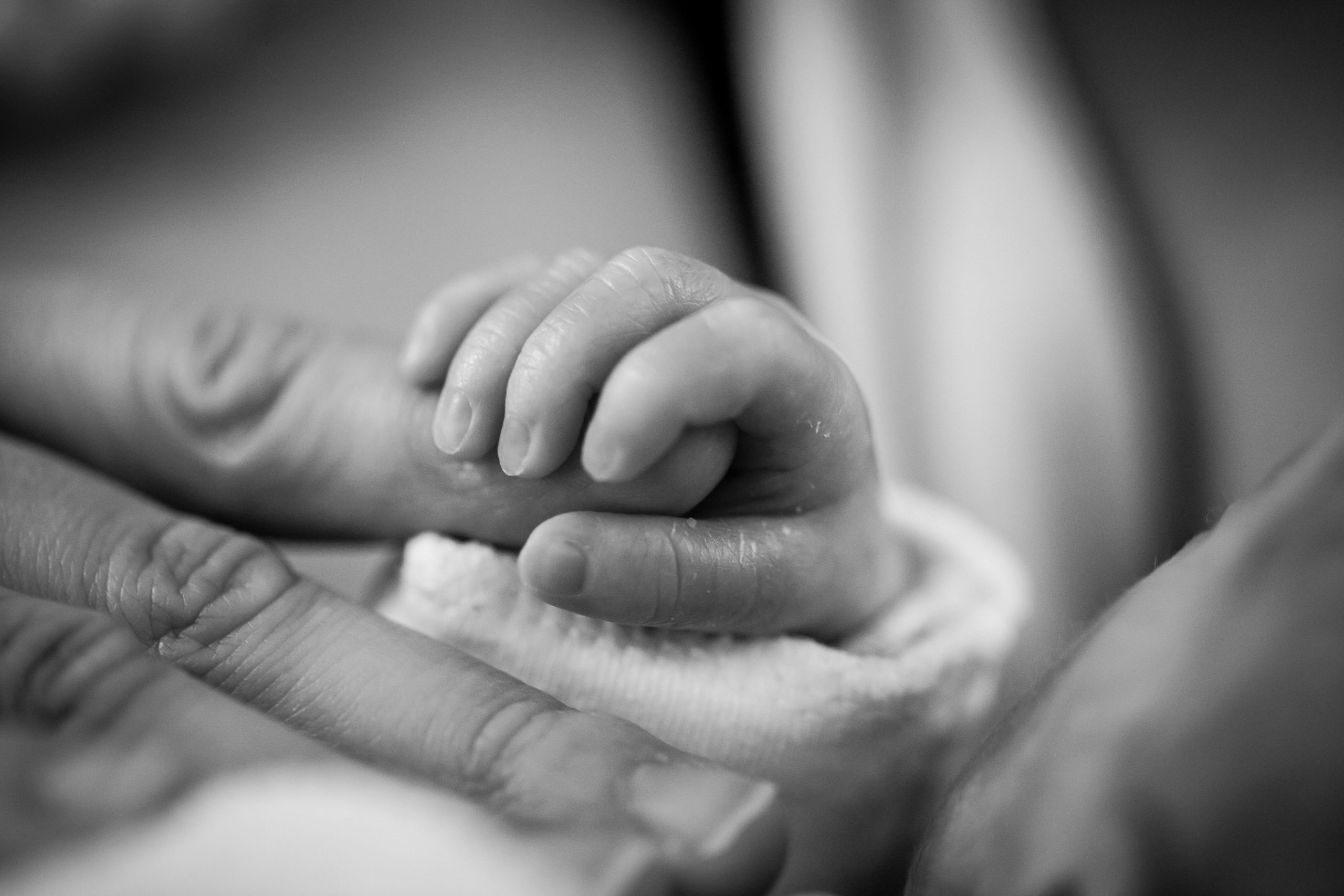
An infant’s hand gripping an adult’s finger, in black and white. Grayscale Photography of Baby Holding Finger” by Pixabay is licensed under CC BY 2.0.

Major political events, such as elections, can affect public health towards many areas. Entire segments of a country’s population can be affected, and these political changes have a big effect on our most sensitive and vulnerable citizens — mothers and infants. 

Considering comments of racism and xenophobia associated with Donald Trump’s 2016 campaign, researchers Paola Langer, Caitlin Patler and Erin Hamilton examined how infant health was impacted. The researchers looked at over 15 million US birth records between 2012 and 2018 and compared changes in adverse birth outcomes, such as preterm or low birthweight births (which increases the chance of adulthood chronic diseases, like obesity and diabetes) among US and foreign born White, Black, Hispanic and Asian mothers. 

The researchers found that the rates of low birth weight and preterm births for Black, Hispanic, and Asian (specifically Asian Pacific Islanders) US and foreign born mothers increased after the 2016 election, and the gaps between these groups and White mothers increased. Conversely, White mothers had no change or a slight decrease in adverse birth outcomes.  

The researchers suggest multiple factors that could have contributed to these disparities. Notably, election years can be highly stressful periods for women of color since their wellbeing is often threatened by proposed and enacted policies. In return, physiological responses to stress can impact their infants in utero. 

Since 2016, many people of color have increasingly questioned their safety in the USA as the number of hate crimes has increased in recent years. As for our future, infants’ health is a critical indicator of future population health and societal well being.

Bamboo Scaffolding in Causeway Bay neighborhood” by gribbly is licensed under CC BY 2.0.

The construction industry is widely recognized as one of the most dangerous industries around the world. In Hong Kong, the scaffolding industry is viewed as particularly dangerous and is particularly stigmatized, in part due to the widespread use of bamboo for scaffolds. Official regulations have increasingly viewed the use of bamboo (rather than steel, the most common alternative) in the scaffolding industry as dangerous and have made efforts to limit and regulate the practice, which has drawn greater scrutiny and stigma to the occupation. In the face of these threats, how do workers learn to manage risk while maintaining respectability?

“Macho” culture has long been part of the answer. Previous research has established that construction workers are often looked down upon by wider society because of the “dirtiness” of their work, and these Hong Kong scaffolders are no exception. Because the bamboo scaffolding trade in Hong Kong is relatively easy to enter and relies on on-the-job training, most apprentice scaffolders are young men who have few career options. Many of the men in the industry have connections to criminal gangs, contributing to scaffolders overall having a reputation for being criminals and ex-convicts. Additionally, the highly visible and public nature of scaffolding work makes bamboo scaffolders especially vulnerable to overt prejudice from the rest of society, with passersby sometimes cursing at and threatening scaffolders as they work.

Researchers Ken Kamoche and Kuok Kei Law sought to identify how bamboo scaffolders in Hong Kong navigated the risks of their work and the social stigma associated with it. Through interviews with a variety of workers and contractors in the bamboo scaffolding industry, Kamoche and Law found that scaffolders managed the danger and stigma of their work by leaning into a particular expression of masculinity: the scaffolders (all of whom were men) portrayed themselves as tough, macho men who were unafraid of danger. This was visible in the culture at the construction sites, which featured camaraderie, swearing, and competitive public displays of bravado and risk-taking (such as throwing bamboo poles to other workers, jumping from heights, and failing to follow safety regulations or use personal protective equipment).

As legal regulation and standardization of construction in Hong Kong has grown, and the wider society increasingly sees the bamboo scaffolding industry as a dying trade, scaffolders have struggled to convince others that scaffolders’ informal knowledge of working with bamboo is legitimate. In the midst of the inherent risks of their work, the stigma associated with it, and the precariousness and uncertain future of the industry itself, bamboo scaffolders worked to establish their identities as tough, masculine, and fearless, able to dismiss both the dangers of the job and the prejudice of those around them.

A small pile of piles next to a stack of money, by Kaboompics.com is licensed under Pexels License

Over the past two decades, insurance coverage for gender affirming healthcare has rapidly expanded. Gender affirming care includes surgical, hormonal, or other care that enables patients to physically present as the gender they identify with. For example, genital modification, facial feminization surgery, chest reconstruction, hormone replacement therapy, voice modification, and more. However, insurance generally only covers care that is “medically necessary” (allowing the individual to be perceived as a certain gender), rather than “cosmetic” (enhancing attractiveness). So how do insurers decide what care is medically necessary?

To study this process, Tara Gonsalves examined national health insurance plans published between 2002 and 2022. The plans detail which gender-affirming care procedures are considered medically necessary vs. cosmetic, along with the insurer’s reasoning for that decision. Individuals who undergo a procedure defined as cosmetic—and subsequently denied coverage—can submit an appeal to a review board to argue that the procedure was medically necessary. Gonsalves also examined 225 of these appeals that were filed between 2009 and 2019.

Starting in 2009, no appeals were approved. But, 6 years later more appeals were approved than denied—signaling a substantial shift in what counted as “medically necessary.” Gonsalves found that, in order to distinguish between medically necessary and cosmetic procedures, insurers started defining which parts of the body are gendered and what features are masculine or feminine.

However, Gonsalves also found that the decision-making processes for appeals relied heavily on stereotypes of an ideal male or female body. For example, in a case involving facial feminization procedures, a reviewer described “softer” noses, prominent cheekbones, and narrower chins as feminine features. Reviewers tended to judge individuals against the ideal of a white, thin body, ignoring differences across age, weight, race, and other variations. 

Expanding insurance coverage has made care more affordable and accessible for transgender individuals. The increasing visibility of transgender and nonbinary individuals can challenge the male/female gender binary. At this same time, this study highlights how using gendered stereotypes as the justification for gender affirming care is also reaffirming societal gender norms. 

Jill E Yavorsky, Lisa A Keister, Yue Qian, and Sarah Thébaud, “Separate Spheres: The Gender Division of Labor in the Financial Elite,” Social Forces, 2023

A father and his three children wearing surfing wetsuits, running on a beach. Photo by Kampus Production under Pexels license.

Gendered work and family patterns among couples in the financial elite may be contributing to our widening socioeconomic divide. The unexpected recent growth in traditional arrangements, in which men work while women stay at home, offers clues as to why. That’s according to new research by Dr. Jill Yavorsky and her colleagues. 

The researchers analyzed longitudinal survey data from the Survey of Consumer Finances, which measures trends in household finances and labor dynamics across 108,854 different-gender, married households. By capturing both income and wealth over three decades, this data provides more nuance into the different sub-group dynamics among the most wealthy. 

The financial elite consist of three groups: the top 1% “super-rich”; the top 10% “rich”; and the top 20% “upper-middle-class”. These categories are based on both income and net worth. In addition to a “traditional” division of labor, the authors identify a “neo-traditional” division of labor if the husband works full-time and the wife works part-time. In a “dual-earner” household, both partners work full- or part-time.

The authors find that super-rich couples were more likely to engage in traditional divisions of labor, in which female partners oversee the home and domestic duties while the male partner works. Examining net worth, measured as all assets minus debts, revealed a larger gap between super-rich (53%) and rich couples’ (27%) traditional household arrangements. Looking at both wealth and income is critical to understanding the intergenerational transmission of status hierarchies. 

IDespite women’s increased workforce participation and the rise of dual-earner households across the bottom 99% over the last three decades, the prevalence of traditional labor arrangements among the top 1% remains unchanged. Understanding why these arrangements remain so common among the super-rich could provide a clearer picture of the cultural dimensions of wealth inequality. Moreover, trends in elite family formation, including the growth in family size and the moral prestige of being a “good parent,” may make traditional labor arrangements the logical choice for families in the top 1%.[ In contrast, pressures to maintain status may lead both partners in rich or upper-middle-class couples into full-time employment. 

By tracing the gender dynamics at the top, this research helps us make sense of the recent developments in gender norms, including the “tradwife” movement. Considered against the backdrop of widening socioeconomic inequality and reversals in reproductive rights, these findings show the enduring cultural influence of the super-rich.

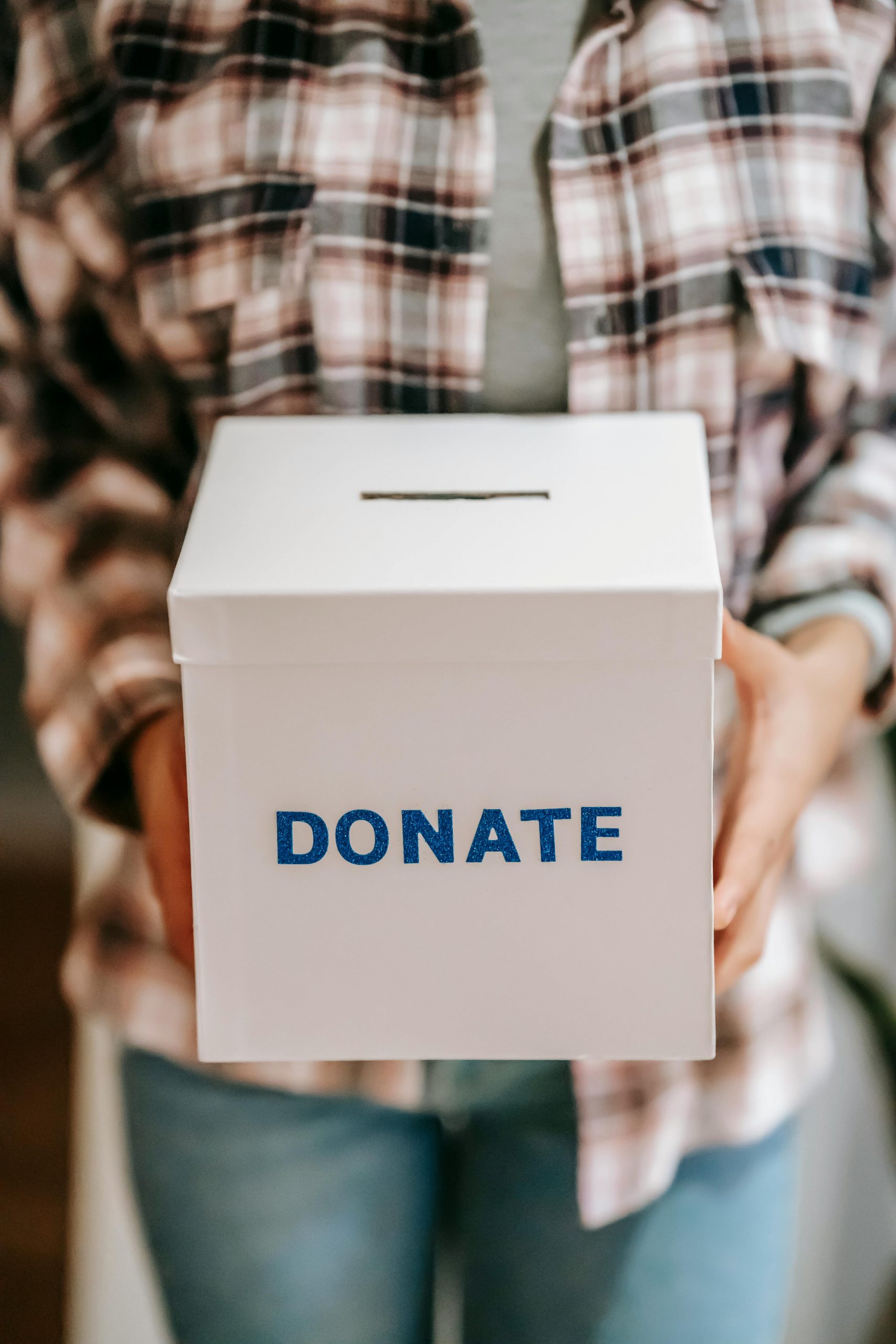
A woman holding a white box saying “Donate” on it, by Liza Summer is licensed under Pexels License.

Gun violence remains a critical public health crisis, causing measurable and immeasurable loss to families and communities across the United States. The economic toll of this violence on families is also staggering, with an estimated $557 billion spent annually on everything from funeral and medical costs to criminal justice processes and psychological support. 

When support from employers, insurance companies, and victim compensation programs falls short, many families turn to crowdfunding to help cope with their losses. But what shapes the financial requests families make—and the support they receive—after gun violence?

A recent study by Catherine Burgess and Jennifer Carlson examined this question by analyzing 535 GoFundMe campaigns created for women and girls killed by gun violence in California and Florida between 2016 and 2018. Their findings reveal how race and gender play key roles in how victims are portrayed in fundraising campaigns and the financial support their loved ones receive.

Their research shows that crowdfunding pages for white women and girls often portrayed them as innocent victims deserving of public sympathy and financial support. These campaigns emphasized their moral character—such as being a good mother or loving daughter—and often highlighted gun violence as their cause of death. For white victims who were mothers, their GoFundMe pages asserted their moral worth as protective and selfless, intensifying the tragedy of their loss. One page read, “[Her children] are her whole wide world, & she was also their world.”

In contrast, crowdfunding pages for Black and Latinx women and girls often focused on the immediate needs of their families, such as funeral expenses, rather than portraying them as victims deserving of public grief. Campaigns for women of color rarely mentioned gun violence and instead framed their deaths as private tragedies: “We are asking family and friends to support us in this hard time because her family doesn’t have the funds to provide her a proper farewell.” Caregiving roles were also central to the narratives of women of color. However, rather than evoking public grief, they underscored the personal hardships their families faced. GoFundMe pages for women of color were also more likely to highlight the victim’s resiliency, recognizing their strength in overcoming adversity.

In addition to the differences in framing, there were also disparities in fundraising success. On average, campaigns for white women and girls in the sample raised six times more money than those for Black women and girls and three times more than those for Latinx women and girls. White victims were also more likely to have campaigns that supported charitable memorial funds or gun violence prevention efforts. 

It is sobering that over 535 women and girls were killed by gun violence in just two states over two years, highlighting its devastating toll on U.S. women and girls. In the midst of this violence, Burgess and Carlson’s research reveals that inequality persists even in moments of charity. The same biases found in traditional support systems also exist in crowdfunding appeals, highlighting the racial and gender disparities in society.

A woman holding two phones, one with “1000 likes” and the other with none.” “Person Holding Smartphones” by Kaboompics.com is licensed under Pexels License.

Women’s voices remain underrepresented in many types of online political participation,  even as digital platforms expand. But why do women participate less actively in these conversations than men? New research from Zhaodi Chen and Junghun Han investigates one potential factor: negative feedback mechanisms like “dislikes” and comment deletion.

Chen and Han conducted a survey experiment, in which research participants were presented with hypothetical scenarios. In these scenarios, participants were asked to imagine posting their opinions on COVID-19 social distancing anonymously in a public online forum. Depending on the scenario, the participant’s contribution faced either 1) negative feedback in the form of “dislikes” – such as downvotes on Reddit or dislikes on YouTube – or 2) complete deletion, such as on Wikipedia. The findings are revealing: for women, the possibility of their post being disliked did not deter them, but the risk of deletion significantly lowered their willingness to participate. For men, neither dislikes nor deletions significantly impacted their participation.

While past studies have shown that women face greater hostility in digital spaces, Chen and Han’s results suggest that the platforms’ engagement designs may also contribute to the gender gap online. Women’s reluctance to post when their contributions risk erasure shows how certain feedback mechanisms may unintentionally silence women and reinforce gender disparities in public discourse. Rethinking the use of these negative feedback mechanisms could be a step toward more inclusive online discussions.

Two parents sitting watching their child play in a box. Image by cottonbrostudio under Pexels license.

There never seems to be enough time to sleep nowadays, even more so for parents – and especially for mothers. This is one of the findings of new research by sociologists that examines how paid work and parenting impact health and physical activity among married or cohabitating adults. 

Patrick Krueger and his colleagues’ study analyzes patterns of sleep duration and physical activity from the National Health Interview Survey (NHIS), a huge and ongoing project that has data on a wide variety of health-related topics for a vast cross-section of America. They were especially interested in how women’s and men’s ability to sleep and exercise is impacted by their work and family lives.

The research revealed two main findings. The first relates to work. The researchers found that when parents worked over 40 hours, their sleep duration expectedly decreased but their physical activity stayed steady or even increased. The researchers suggest that the reason for this may be that as men and women worked full time, they made more intentional efforts to make time for physical activity to try and offset the health risks of long working and parenting. 

The second finding is that parenting children at any age group tends to decrease sleep duration, with those with children aged 2 and younger having the greatest sleep losses. However, having children doesn’t mean parents get less exercise. Parents sometimes simply shift their exercise routines to do physical activities that work well with their kids, like walking or playing with little ones, or playing sports and biking with older kids.

Among other things, this project emphasizes the importance of improving policy efforts to support parents by improving workplace parental leave policies and improving spending on and access to services that support parents caring for dependent children.

Laura K. Nelson, Alexandra Brewer, Anna S. Mueller, Daniel M. O’Connor, Arjun Dayal, and Vineet M. Arora, “Taking the Time: The Implications of Workplace Assessment for Organizational Gender Inequality,” American Sociological Review, 2023

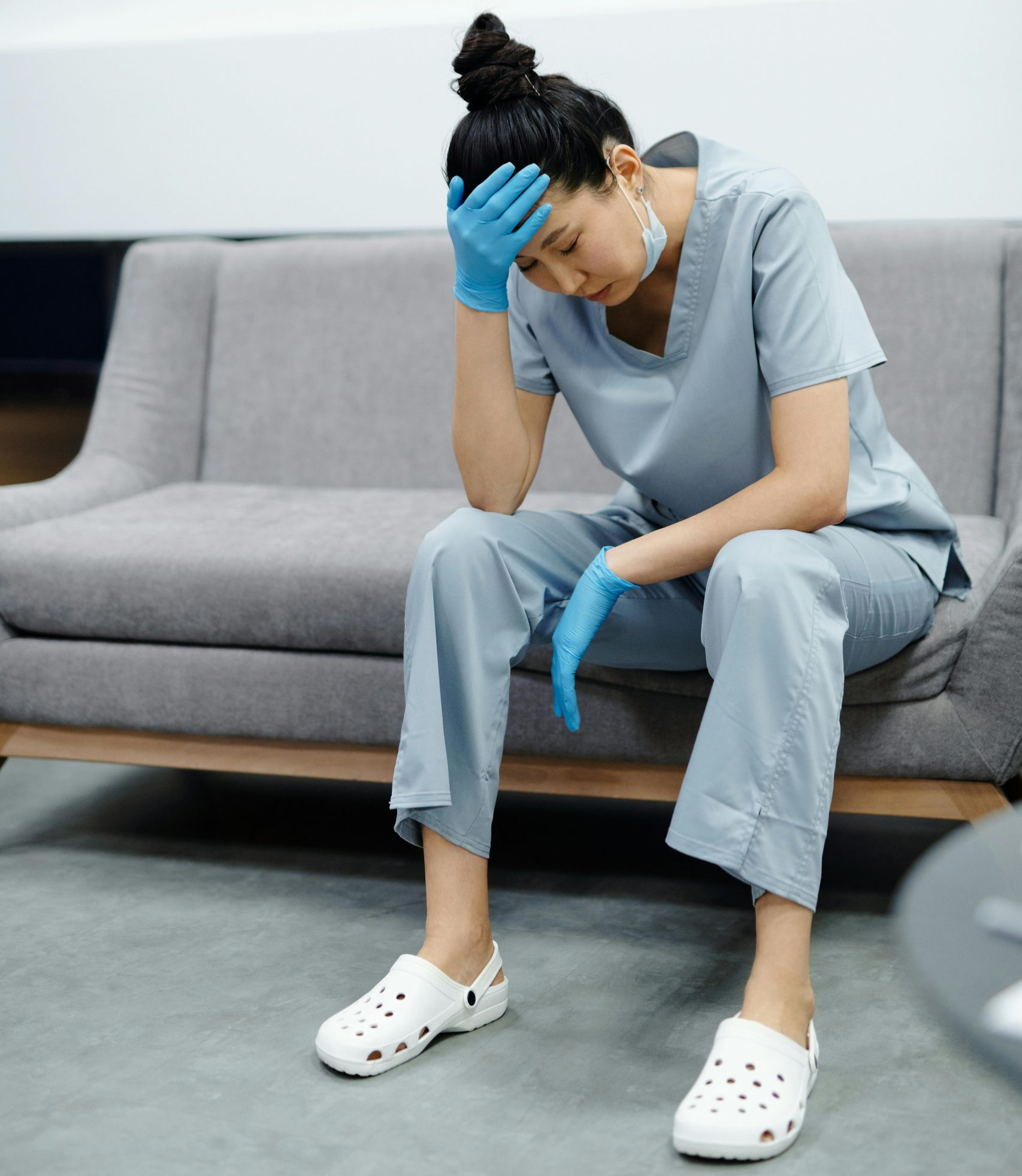
An overwhelmed woman in gray scrubs resting on a gray couch. Image by Cedric Fauntleroy under Pexels license.

In the United States, women on average earn less than men in their lifetimes (the gender pay gap). One of the various explanations for this pay gap is that women tend to do tasks that involve nurturing or helping others, and these tasks often don’t lead to promotions (or higher pay). Scholars argue that such labor is integral to organizations even though it doesn’t lead to promotions and is undervalued. But do such patterns hold in the medical field? 

To see if women doctors do more of the unrewarded but crucial work of nurturing others, Laura Nelson and her colleagues used data from an app used by doctors to evaluate students in residency (medical school). Their study examined 33,456 evaluations of 359 resident physicians by 285 attending physicians across eight U.S. hospitals. Within the app, doctors were required by their employers to at least leave a numerical rating of the students’ performance, however, reviewers could go beyond what was required and leave comments for the student. The researchers were specifically interested in this comment option and wanted to see if women were more likely to make comments to students within the app.

They found that women doctors do more work that involves helping or nurturing medical students than men. Women provided more written feedback to medical students in residency, whereas men were over twice as likely to give only numerical evaluations, without adding written feedback. Furthermore, comments written by women often provided targeted and specific feedback, including reassurance to residents who made mistakes. 

This research confirms that one of the causes of the gender pay gap is that women do tasks, such as going above and beyond in training medical students, that don’t lead to them getting promoted. This research also encourages people to not just think about time spent at work but also think about who is doing more caring and nurturing tasks at work.