gender

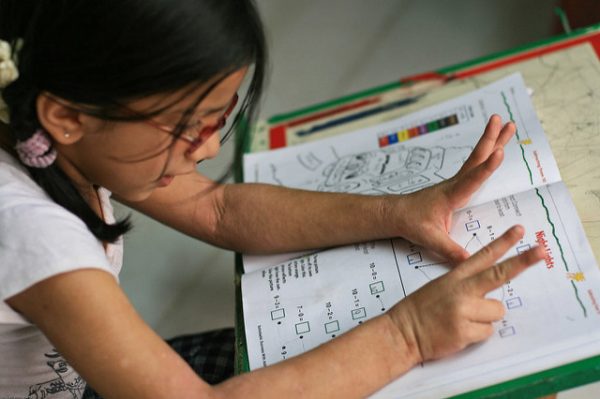
Photo of a student using a math workbook. Photo by Bindaas Madhavi, Flickr CC

There are two understandings of how schools affect inequality. On the one hand, evidence suggests that schools increase inequality by providing more advantages to students who are better off to begin with. On the other, schools are hailed as society’s “great equalizer” and believed to provide opportunities for all children to get ahead. New work from von HippelWorkman, and Downey revisits whether schools can compensate for family inequality.

The researchers replicated an earlier study that compared kindergarteners’ reading and math progress during the school year to their progress during summer vacation. Looking at summer vacation allows researchers to focus on inequality due to differences in the home. And by comparing summer vacation progress to school year progress, researchers can determine whether schools are making those differences larger or smaller. The earlier study found that, while inequality grew substantially between the start of kindergarten and the end of first grade, it grew much faster during summer vacations than it did during the school year. The researchers concluded that schools, in fact, were slowing down the growth of gaps due to inequalities in the home. 

In the new study, von Hippel, Workman, and Downey tested children who began kindergarten in 2010 with an updated measurement of achievement to see if school affected inequality differently in this younger cohort. For most students in both the original and the younger cohorts, gaps grew more quickly over summer vacations. For the 2010 cohort, however, the variation in scores upon entering kindergarten was reduced by the time they finished second grade. This means that not only are schools slowing down the growth of achievement gaps, they’re actually shrinking them. Yet, this finding was not the same for all children — for African American students, the pattern was reversed, with gaps growing wider when school was in session.

While it is heartening to know that schools have the ability to close achievement gaps, these early childhood gaps — especially those in basic reading and math — are still an issue. Since these gaps emerge before students begin kindergarten, later school or summer interventions are palliative, rather than preventative. It may therefore be wiser to develop policies that reduce inequalities among parents and their children before they’re old enough to enroll.


Photo of a child sitting on a sidewalk. Photo by Chris Beckerman, Flickr CC

In 2016 there were more than 400,000 children in foster care in the United States. Kids are placed in foster care because of parental neglect, abuse, incarceration, and other reasons that make it unsafe for them to live at home. The majority of these kids are successfully reunited with their parents after their parents complete a case plan. However, a sizable minority of these reunited children will re-enter foster care. New research by Sarah Font, Kierra Sattler, and Elizabeth Gershoff identifies the policy and family conditions that make foster care re-entry more likely.

Foster care is meant to be a temporary status, and the federal government pushes states to achieve “permanency” for kids in care as quickly as possible. Federal funds can even be withheld from states if too many children remain in foster care for longer than a year. A “permanent” home has two main forms: reunification with parents, or terminating parents’ rights and matching kids with an adoptive home. Terminating parents’ rights is considered an extreme step. Doing so requires detailed evidence that parents are not making timely progress toward their goals. By contrast, the standards for reunification are less clear. This means that if parents’ progress is not good, but also not bad enough to terminate their rights, the state has an incentive to reunite them with their kids as they approach federal deadlines. Returning children to parents who have made sub-par progress makes it more likely that they will be taken from their home again in the future.

The researchers analyzed data of children from Texas to find out what family conditions predict foster care re-entry. The children most at risk of re-entry were those who initially entered foster care because of parental substance abuse and neglect (substance abuse is rarely the only reason children are removed from a home). Of these cases, parental substance abuse and neglect were also typically the reasons for reentry, showing that these issues within the home persist over time.

These findings are especially important at a time when opioid use (combined with neglect) is increasing the number of children being removed from their homes. The researchers do not suggest that states should lower their standards to terminate parents’ rights. Rather, they advocate that timelines toward permanency should be relaxed and more post-reunification services should be offered to formerly substance-abusing parents to reduce the risk of returning a child to a home that is still unsafe.

Photo of a portable structure labeled, “drug testing office.” Photo by Phil! Gold, Flickr CC

Originally published November 1, 2018.

For a long time, individuals and organizations have drawn stark lines between the “deserving” and the “undeserving” poor. Over the past 40 years, these distinctions have been used to justify cutting or limiting social safety net programs, leading to a decline in cash welfare programs and other parts of social assistance programs that working-age, able-bodied, poor adults are eligible for. Furthermore, researchers have shown that welfare recipients are subject to a growing list of limits, conditions, and expectations. In a recent study, Eric Bjorklund, Andrew P. Davis, and Jessica Pfaffendorf continue such research by examining states’ efforts to implement drug testing for applicants to “Temporary Aid to Needy Families” (TANF), a flagship national welfare program.

In the tense racial and economic climate following Obama’s 2008 election, Arizona became the first state to introduce a policy restricting access to cash welfare for applicants based on drug test results. Since then, 15 states followed by passing drug test policies for recipients of TANF. To understand how the states that passed welfare drug testing policies potentially differ from states that did not, Bjorklund and colleagues looked for patterns in the years leading up to the implementation of the policy. They examined factors such as states’ government ideology, whether a Republican governor ousted a Democrat, the proportion of nonwhites in the population, and the white employment rate. 

Both decreases in white labor force participation and having a Republican governor were associated with a state’s implementation of a drug testing policy. The authors rely on social context to explain this finding — specifically, these policies were implemented during the economic recession following Obama’s 2008 election as the first African American President of the United States. Given the importance of the white employment rate, the authors speculate that whites may have held a zero-sum belief that economic gains by people of color would entail losses for whites. Whites’ racialized economic fears may have led them to support restrictive policies framed as “correcting” the behavior of certain “morally compromised” groups, thus prompting politicians and legislators to tighten access to welfare programs by excluding those who failed a drug test. In short, this research highlights the ways social assistance programs can be shaped by public perceptions about who deserves assistance and who doesn’t.

Photo by oddharmonic, Flickr CC

Originally posted January 3, 2018.

In the United States we tend to think children develop sexuality in adolescence, but new research by Heidi Gansen shows that children learn rules and beliefs associated with romantic relationships and sexuality much earlier. Gansen spent over 400 hours in nine different classrooms in three Michigan preschools. She observed behavior from teachers and students during daytime classroom hours and concluded that children learn — via teachers’ practices — that heterosexual relationships are normal and that boys and girls have very different roles to play in them. 

In some classrooms, teachers actively encouraged “crushes” and kissing between boys and girls. Teachers assumed that any form of affection between opposite gender children was romantically-motivated and these teachers talked about the children as if they were in a romantic relationship, calling them “boyfriend/girlfriend.” On the other hand, the same teachers interpreted affection between children of the same gender as friendly, but not romantic. Children reproduced these beliefs when they played “house” in these classrooms. Rarely did children ever suggest that girls played the role of “dad” or boys played the role of “mom.” If they did, other children would propose a character they deemed more gender-appropriate like a sibling or a cousin.

Preschoolers also learned that boys have power over girls’ bodies in the classroom. In one case, teachers witnessed a boy kiss a girl on the cheek without permission. While teachers in some schools enforced what the author calls “kissing consent” rules, the teachers in this school interpreted the kiss as “sweet” and as the result of a harmless crush. Teachers also did not police boys’ sexual behaviors as actively as girls’ behaviors. For instance, when girls pulled their pants down teachers disciplined them, while teachers often ignored the same behavior from boys. Thus, children learned that rules for romance also differ by gender.

Photo of sign with handwritten messages of “why I didn’t report.” Photo by The All-Nite Images, Flickr CC

Emotions ran high across the nation as many of us tuned in to watch Dr. Christine Blasey Ford’s testimony of sexual assault by Judge Brett Kavanugh in front of the Senate Judiciary Committee. Dr. Ford’s public testimony has produced important dialogues regarding why most victims do not report, as seen in the social media hashtag #WhyIDidntReport. New research by Shamus Khan, Jennifer Hirsch, Alexander Wamboldt, and Claude A. Mellins contributes to this growing conversation by exploring the social risks students face in reporting.  

Khan and colleagues draw upon the Sexual Health Initiative to Foster Transformation (SHIFT) study, which includes 151 interviews, 17 focus groups, 18 months of participant observation, and a random-sample survey of 1,671 college students at Columbia University and Barnard College (a women’s only institution). This study mostly draws from the interviews with college students. Researchers defined incidents of sexual victimization based on legal definitions of sexual assault, rather than incidents that students explicitly labeled as such. According to the authors’ definition, interviews revealed that 66 students recounted 89 incidents of sexual victimization.

For many victims, naming their experiences as sexual assault and telling authorities came with a variety of social risks. For one, students feared association with a stigmatized identity such as “victim” or “survivor.” They often viewed these labels as disempowering and told interviewers they didn’t want to be seen as “that girl” or “that guy.” Some students attempted to claim alternative identities as compassionate students willing to provide second chances to their perpetrators by not reporting.

Second, reporting means students encounter risks to their social networks. For example, students considered how labeling and reporting might hinder their ability to develop or preserve interpersonal relationships, which for some, include relationships with their perpetrator. Lastly, students worried they might lose access to college activities like sports, sororities, fraternities, and other student organizations, which would affect their long-term career goals. Several students discussed how reporting would add stress and take time away from their activities. Men who were intoxicated and Black men in particular expressed concern that they would be the ones accused of assault due to their alcohol intake or lack of racial privilege.

As we continue to address sexual violence in the Me Too era, this work encourages us to look beyond formal reporting policies and work to transform the social and cultural conditions that shape perceptions of risk among sexual assault victims.

Click here for more sociological research and expert insight on sexual violence!

Photo by Steven Depolo, Flickr CC

Racial diversity within American families has steadily increased since the mid-20th century. But norms are not changing as quickly as demographics. Individuals still question when children do not look like their caretakers (see Babysitting While Black), and suspicious gazes present a chronic annoyance to transracially adopted children. New research by Devon Goss investigates the ways that transracial adoptees and their siblings are incorrectly perceived by others and the strategies they use to respond to mischaracterization.

Goss interviewed 30 adults from across the country — 16 non-white people adopted by white families, and 14 white people with non-white adopted siblings. The interviewees reported being frequently mischaracterized when in public with their different-race siblings. Most commonly people categorized them as a romantic couple, regardless of the gender pairing of the siblings. Goss hypothesizes that a transracial pair exhibiting familial intimacy is unrecognizable to most as a sibling group, so people instead interpret them as sexual partners. She links these misperceptions to racialized stereotypes of sexuality — specifically, that non-whites are more sexually active and deviant than whites. 

The participants in the research used three strategies to challenge these false assumptions. Some openly confronted people about their stereotypical beliefs. Others used subtle conversation cues to indicate their true relationship, such as addressing their sibling as “sis.” Others humorously played along with the mischaracterization to make light of the situation. Each of these strategies represents a form of what sociologists call impression management — an attempt by transracial siblings to redefine public perceptions of them with overt or covert signals. Transracial families in America will continue this awkward exercise until societal norms acknowledge and accept their existence.

Photo of a sign with arrow pointing to
an accessible area in a subway station. Photo by Marcin Wichary, Flickr CC

We hear a lot about the gender pay gap and the racial wealth gap, but rarely about how disability also affects economic security. New research by Michelle Maroto, David Pettinicchio, and Andrew C. Patterson investigates how disability interacts with gender, race, and education level to influence economic stratification in the United States. The researchers analyze data from the 2015 American Community Survey (ACS), focusing on poverty status and total personal income (earnings, governmental income, savings). The ACS identifies people with disabilities as anyone who has cognitive, ambulatory, independent living, self-care, vision, or hearing difficulty. Instead of analyzing race, education, and gender separately, the researchers created 24 different groups where these identities intersect (e.g., black women with a bachelor’s degree, white men without a bachelor’s, Asian Pacific Islander women with a bachelor’s, and so on).

Overall, the effects of disability on poverty were strongest for women, racial minorities, and those with low levels of education. Specifically, disability had the largest effects on poverty for black and Hispanic women with low levels of education. White and Asian men with high levels of education were the least affected. In other words, if individuals already have racial, educational, and gendered privilege, these components may insulate people with disabilities from falling into poverty — in this case, highly educated white and Asian men. On the other hand, women and racial minorities who are already at a greater risk of poverty do not have that insulation.

Data come from the 2015 American Community Survey, adults age 18 and older, N = 2,490,616. Estimates refer to the percentage of persons with income at or below 100% of the federal poverty line after accounting for several control variables.

In terms of total income, disability had the largest negative effect on the most advantaged groups, particularly for men with higher levels of education. But even though more advantaged men with disabilities took the greatest hit in terms of income, they still averaged more total income — about $63,000 per year — than other groups. Less-educated women with disabilities overall earned only about $28,000 per year and women of color in this category earned even less. In other words, those with more markers of privilege have more to lose, but the more disadvantaged groups still end up at the bottom. This research shows that disability disadvantages all groups economically, but the ways it combines with other social statuses influences how groups experience economic insecurity or privilege.

Beer Tap at a Bar. Photo by Ted Bigham, Flickr CC

The gender gap in alcohol consumption is narrowing — research suggests women now drink just as much as men. This change may be partially attributed to declining prices or targeted efforts by alcohol companies to market their products to women. But just because women are drinking more, doesn’t mean that alcohol is marketed equally, especially when it comes to beer. New research finds that consumers consider certain beers masculine and others feminine,  and women often face stigma when choosing a beer, while men rarely do.

The author first analyzed references to gender and beer on 50 beer blogs, then surveyed 93 people at craft beer bars near New York City. She asked participants what they think of when they hear “feminine beer” or “masculine beer” and what kind of people they associate with each term. Both men and women agreed that feminine beer is light or flavored, while masculine beer is strong and heavy. Following this logic, fruit beers or coffee-flavored beers are feminine, and IPAs and unflavored lagers are masculine. While men are typically thought to have more knowledge about beer, female participants used technical terms and craft beer jargon about taste profiles and beer categories far more often than the male participants.

However, the way men and women view beer consumers differed considerably. For example, female participants praised women who prefer masculine beer (“she’s a badass bitch”), while men tended to sexualize women who prefer masculine beer. Some men thought it made women sexier, while others thought it made women too much like “a dude.” Participants did not scrutinize men’s choice of beers. They agreed that if a man orders a feminine beer he’s making an informed choice, but if a woman orders it, she knows nothing about beer. In other words, “any beer can be the right beer when men are consumers,” but women lose no matter what beer they choose.

Photo by Bob, Flickr CC

While we often think of marriage as a commitment to one partner forever, second marriage is not uncommon. Even so, the pool of potential partners may be different for those never married than it is for those ready to say “I do” for round two. In new research, Zhenchao Qian and Daniel T. Lichter investigate how martial history and marital status influence someone’s chances of finding a spouse.

The researchers use American Community Survey data from 2008-2014 to compare partner-selection patterns for different-sex first marriages, remarriages, and mixed-order marriages (one person marrying for the first time and the other remarrying). They look at partner race, ethnicity, age, nativity, children from previous relationships, education, and income. Then, they compare those traits with those of a fictional potential partner to predict the probability that the actual partnership will happen compared to the fictional one. Based on whether the actual or fictional match is more likely to happen, the researchers can better understand what traits are most valuable in the marriage market.

Gender and marital history influence who gets to be the most selective when choosing a partner for marriage. Never married people have the best chances of marrying partners with valued traits like high educational attainment and higher income. Comparatively, previously married people — particularly women — find themselves at a disadvantage. They have fewer choices of partners to marry than those looking to tie the knot for the first time. This results in never married people with valued characteristics like high socioeconomic status beating out others with previous marriages in finding new partners, which include both never married and previously married partners. Previously married women fare worse than previously married men do, resulting in more single women in the United States than single men.

This research shows that having no previous marriage is a valuable trait in the marriage market, meaning that it makes a person desirable to others. Not only does this desirability mean more choices for a never married person, it also allows that person to be more selective in actually choosing a suitable partner. In other words, these people get to have their wedding cake, and eat it, too.

Photo by Evan Delshaw, Flickr CC

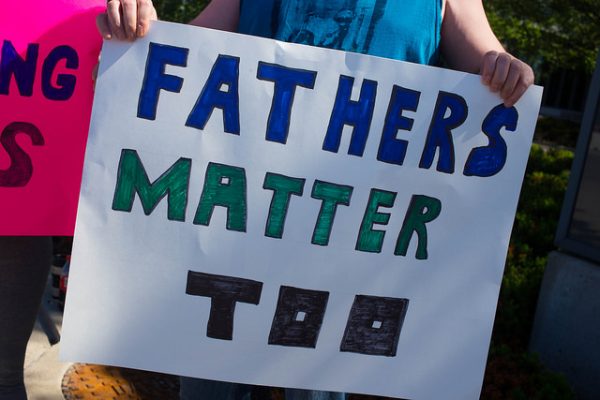
Fathers who do not pay formal child support are often the brunt of media and public scrutiny. Black fathers, in particular, face racial stereotypes that accuse them of being “bad fathers” for not being involved in their children’s lives. Yet, not paying child support may also lead to more serious consequences, such as the accruement of child support debt and jail time for nonpayment of debt. New research by Elizabeth Cozzolino traces this multistep process to explore noncustodial fathers’ risks of receiving jail time for nonpayment of child support.

Cozzolino draws upon responses from the Fragile Families and Child Wellbeing Survey to test which factors lead to a formal child support order; which factors lead to child support debt; and lastly, which factors result in a noncustodial father’s jail time for nonpayment of debt. The author suggests that two key pathways may determine a noncustodial father’s entrance into the criminal justice system: first, the relationship context between the mother and noncustodial father (e.g. securing a new relationship with another partner) and, second, the mother’s use of public assistance such as TANF (Temporary Assistance for Needy Families) or Medicaid.

Out of the families with noncustodial fathers, roughly 50 percent received orders for child support. A mother’s use of public assistance and a decrease in the quality of the relationship between the mother and noncustodial father increased noncustodial fathers’ likelihood of receiving a formal child support order. Sixty percent of fathers with a child support order accrued child support debt, and this resulted in jail time for 14 percent of them. The use of public assistance by the mother was less important for accruing child support debt, but the relationship context remained salient. Significant factors that increased a noncustodial father’s likelihood of jail time include having multiple children with different partners and owing more than $10,000 in child support debt. If these punitive patterns continue, the welfare and criminal justice systems will only reproduce inequalities that will likely exacerbate a father’s ability to financially support their children.