gender

Photo by Lori Newman, public domain

We know that children’s health depends on their parents in many ways, from genetics to life experiences. New research shows that the reverse is also true: children’s experiences impact their parents’ health. Specifically, this research shows that children’s experiences of discrimination influence their mothers’ health. 

Cynthia G. Colen, Qi Li, Corinne Reczek, and David R. Williams used data from the National Longitudinal Study of Youth, a survey following women and their children. They looked at mothers’ self-rated health assessments from the mid 2000s, when mothers were 40 and 50 years old, to determine how their health changed. The sample of mothers’ health assessments varied significantly by race. By age 50, only 17% of white mothers reported poor health, while 31% of Black and 26% of Hispanic mothers reported poor health. 

The researchers also looked at data on children’s experiences of unfair treatment when the children were young adults. Unfair treatment fell in two categories: major experiences or “acute discrimination,” and everyday or “chronic discrimination.” Acute discrimination included specific incidences like being unfairly fired or denied promotion and being unfairly searched or abused by police. Chronic discrimination highlighted the frequency of unfair treatment, like how often respondents had been treated with less respect than others, called names or harassed, or how often other people had treated respondents as if they were not smart. 

Overall, children’s exposure to discrimination — both acute and chronic —  was associated with significant declines in their mothers’ health at midlife (from age 40 to 50). This is an important finding because most research on intergenerational health focuses on how parents affect their children’s health. Studies like these can help us to understand how disadvantage is reproduced through generations.

The researchers wondered whether Black and Hispanic mothers’ poor health was a result of their children experiencing more discrimination than children of white mothers. They found this to be true for Black mothers, but not for Hispanic mothers. Specifically, children’s experiences of discrimination explained about 10% of the Black-white health gap, but very little of the Hispanic-white health gap for mothers.

In addition, Black mothers’ health declined at a slower rate compared to white mothers’ health, even when their children experienced high levels of discrimination. One explanation for this finding is that Black mothers spend a lifetime preparing to and dealing with discrimination, whereas white mothers may not and thus have fewer coping skills to deal with feelings of helplessness when their children experience discrimination.

This research helps us to understand how discrimination is more than just an individual experience. Stressors, like unfair treatment, can have “spillover effects” — in this case, leading to declines in the health of family members.

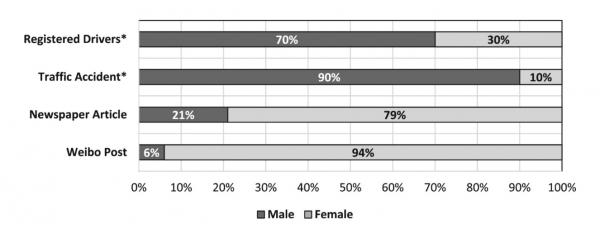
Photo of traffic jam, by ianholton,Flickr CC

We know that underrepresentation in media contributes to ideas that women are less competent and less likely to be experts. But can overrepresentation also perpetuate gender stereotypes? And do gender stereotypes spread differently through social media than traditional media? In a recent study, Muyang Li and Zhifan Luo analyzed social media and newspaper reports of traffic accidents in China to examine whether media overrepresentation drives the idea that women are worse drivers than men. 

The study collected 97,120 posts from Weibo, China’s largest social media site, and 11,290 newspaper articles from January 2010 to November 2018. Using computer-assisted text analysis, the authors identified articles’ topics and gender mentions. 

Graph showing the gender ratio of registered drivers, traffic accident, and media coverage.
Gender ratio of registered drivers, traffic accident, and media coverage (Li and Luo 2020).

Although women are underrepresented in actual traffic accidents — they are 30% of registered drivers in China and the drivers in only 10% of traffic accidents — both newspaper and social media posts were more likely to identify a driver as female. Seventy-nine percent of newspaper articles that mentioned a driver’s gender identified female drivers, while 94% of Weibo posts did the same. 

Gender stereotypes were overall less explicit in newspaper articles. Although newspapers were more likely to include the gender of the driver if they were female, the newspapers rarely blamed specific accidents on inherent bad driving. Weibo posts, on the other hand, often included direct discussions of the stereotype that women are worse drivers. Weibo posts mentioning female drivers were also more likely to be reposted than those mentioning male drivers, and police department Weibo accounts were the most likely to mention female drivers. 

The researchers dug deeper on a selection of Weibo posts that discussed sexism. Through a qualitative analysis they found that these Weibo posts included a mix of sexist and feminist arguments. Some of these posts argued that women were worse drivers or reiterated gender stereotypes about female drivers, but a substantial number used Weibo to call out sexism and argue that women are no worse at driving than men. In some ways, social media is still a toxic cesspool, but it’s also a place where people can talk back.

Two women lie together on a rooftop divan. Photo via pxfuel CC.

The United States has seen substantial change in both public perceptions and legal treatment of same-sex relationships in recent years. Sociologists are interested in how many people have changed their sexual behavior in response to these shifts in social forces. According to a new study, younger people demonstrate more same-sex sexual behavior than older people, with a greater increase for women and black men. 

Emma Mischel, Paula England, Jessie Ford, and Monica L. Caudillo examined data from the General Social Survey, a nationally-representative survey, from 1988-2018. They analyzed whether respondents reported they had same-sex sexual partner since they were 18, as well as whether they reported they had a same-sex partner in the last year. Their main interest was in cohort change, or changes in behavior of people born in a given period. Cohorts involved in this study ranged from those born in 1920 to those born in 2000.

The authors found significant increases in same-sex sexual activity for both men and women in more recent cohorts, but much greater increases for women. They estimate that the probability of a woman having sex with another woman in her life went from approximately 1 in 100 for women born between 1920-1945 to approximately 1 in 5 for women born between 1984 and 2000. The increase for women does not substantially vary across class or race, but it does for men, with lower-class and Black men showing steeper increases in having sex with both women and men. 

Social forces that discourage or punish same-sex behavior have lessened across the board, which may have led to more same-sex sexual behavior. The authors theorize that the lessening of sanctions for same-sex behavior is largely a result of the gender revolution, since same-sex behavior is seen as gender nonconforming. But because the gender revolution shifted the definitions of femininity more than the definition of masculinity, women are more able to deviate from gender norms. In short, heterosexism may have lightened but the change is uneven. 

Image of a student holding a mounting pile of books, beneath a mortarboard cap and a diploma, all tagged, “I.O.U.” Photo via Pixabay.

The recent news and research on student loans identify graduate degrees as a major culprit of mounting debt. Although 75% of people with student loans borrowed for an undergraduate degree, over 40% of the $1 trillion of student debt is a result of borrowing for graduate school. In a new paper, Jaymes Pyne and Eric Grodsky present trends of graduate student borrowing, who borrows, and the graduate wage premium.  

Pyne and Grodsky look at 1996-2016 data from three nationally-representative datasets. They find that one trend is simply more people getting masters degrees — a result of what they call “a perfect storm” of changes to funding in higher education, a greater demand for higher credentials, and increased returns to graduate degrees. Masters students are also borrowing more to complete those degrees than past students. Across all degree types women, historically underserved students, and students of low socioeconomic background on average borrow more for graduate degrees than their counterparts. Graduate debt has especially risen among Black students.

Scholars of mobility worry about the large debts for Black graduate students. Carrying lots of student loan debt may prevent individuals from accruing wealth and perpetuate generational inequality. But the graduate wage premium, or the amount that a person makes as compared to a similar person without a graduate degree, is greatest for Black students. In short, we will have to wait and see whether borrowing for a graduate degree will turn out to be worth it. 

Photo of two steaks on a grill with an open flame.
Photo by Gabriel Saldana, Flickr CC

Originally published April 17, 2019.

Men are less likely than women to consider becoming vegetarian. And in the United States, where men have higher rates of life-threatening health conditions than women — including uncontrolled high blood pressure and heart disease — changing eating habits may be important for their health. To learn more about meat and masculinity, Researchers Sandra Nakagawa and Chloe Hart conducted a study examining how gender identity influences eating habits.

Nakagawa and Hart conducted experiments to test whether a threat to masculinity influences men’s likelihood of eating meat. In one experiment, the researchers told some men their answers from a previous survey fell in the “average female” range, while others fell into the “average male” range. For the men who received “average female” results, the authors expected them to feel like their masculinity was in question.

Men who experienced a threat to their masculinity showed more attachment to meat than those who did not experience the threat. They were also more likely to say they needed meat to feel full and were less likely to consider switching to a diet with no meat. This study shows that masculinity does matter for how men maintain their health. Importantly, it is not masculinity itself that is the problem here, but the high standards men feel they must meet — and eat.

Photo by Pablo Varela, CC

Originally posted November 5, 2019.

The term ‘gaslighting’ earned its name by way of the 1944 film, Gaslight. In the film, an antagonist secretly brightens and dims his home’s lights, making his wife doubt her sanity and sense of reality. Despite the cinematic origins of its label, this form of abuse is experienced by many women. Though psychologists have extensively investigated the subject, little attention has been paid to the role that underlying social characteristics may play. In new research, Paige Sweet fills this void by revealing how social characteristics affect individual experiences of gaslighting within domestic abuse.

Through a series of life course interviews, Sweet finds that abusers mobilize gender stereotypes, racial stereotypes, and victims’ institutional settings in order to manipulate their victims’ sense of reality. Women of different racial and social backgrounds experience gaslighting in different forms; whereas an abuser might prey upon a black woman’s fear of becoming a stereotypical “baby mama,” another might threaten an undocumented Hispanic woman with deportation. Despite differences, abusers in Sweet’s study utilized “crazy-making” tactics for all women — drawing on stereotypes that men are rational, while women are irrational.

Sweet’s argument that “micro tactics of abuse are situated in macro conditions of inequality”  helps us to understand why gaslighting can be so effective at stripping down one’s sense of reality; by drawing attention to existing power structures and inequalities, abusers are able to gain a greater sense of legitimacy and tailor their tactics to a victim’s personal social experiences. It is crucial that we understand the forces that underlie gaslighting in order to more effectively recognize symptoms of abuse, and subsequently support the victims who experience it. 

Photo of a bronze cast of an intrauterine device (IUD). Photo by Sarah Mirk, Flickr CC

Originally posted February 5, 2019.

Throughout history, concerns about women’s sexual behavior and reproduction have often been tied to mental health. For example, in the Victorian era, doctors believed that women’s bodies were incapable of physical exertion and mental activity, and they diagnosed many women — typically white women– with “hysteria.” Hysteria was a catch-all term often used to police women’s sexuality and bodies, and was characterized as a mental disorder in the American Psychiatric Association’s Diagnostic and Statistical Manual until 1980. While diagnosing women with hysteria may seem like an outdated practice today, mental health professionals still exercise control over women’s sexuality and reproductive choices. A recent study finds that clinicians today use both coercive and non-coercive techniques in facilitating reproductive decisions for their clients — especially female clients — diagnosed with mental illnesses like schizophrenia and major depression.

Using interview data with 98 patients at two state hospitals and three community mental health centers, Brea Perry, Emma Frieh, and Eric Wright examine clients’ interactions with service providers and family members regarding their sexual behavior and contraceptive use. The authors find that mental health professionals use strategies ranging from full client participation (what the authors call “enabling”) to no input by the client (what the authors called “coercion”).  

Providers used coercive techniques more frequently with women than with men. In the most extreme cases, this took the form of unwanted and traumatic sterilization procedures. More frequently, providers and female clients’ family members did not include women in key decisions, provided misinformation, or did not gain consent for the birth control medications prescribed. For male clients, providers used education through classes or group therapy more frequently. While these sessions often framed sex as risky for male clients, this technique allowed men much more reproductive freedom than many women experienced. The researchers also found that providers used “enabling” strategies (those that included full client participation), like  providing condoms or sex starter kits, for both genders at similar rates.

These findings demonstrate that women’s mental health remains inextricably linked to concerns about women’s bodies and their sexual behavior. Gender norms and expectations, especially those regarding sexual behavior and reproduction, have enduring impacts on our understanding of mental illnesses, as well as the medical decisions made for or by people diagnosed with a mental illness. To avoid these patriarchal patterns in the the future, Perry and colleagues suggest providers focus more on sex positivity rather than risk avoidance for their clients.

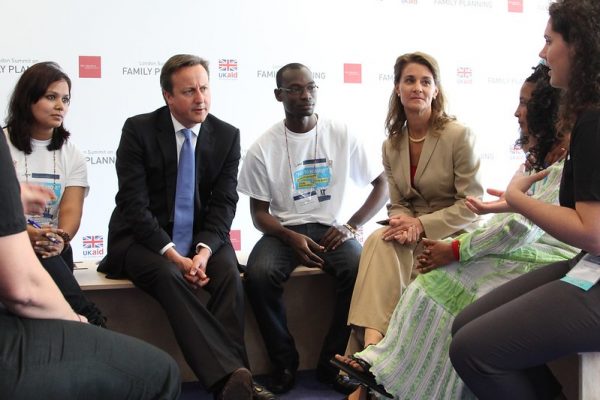
The 2012 London Summit on Family Planning resulted in Family Planning 2020 Initiative (FP2020). Photo by Russell Watkins/Department for International Development, Flickr CC.

Supporters of global family planning initiatives argue these programs can empower women in (mostly) low-income countries by giving them options to control their reproduction. New research shows that the structure of these programs may actually constrict women’s choices. 

Leigh Senderowicz conducted 49 in-depth interviews with women in a low-income sub-Saharan African country that is engaged in a variety of family planning initiatives. These initiatives are part of the global FP2020 initiative  — its goal is to add 120 million contraceptive users worldwide by the year 2020. The focus and structure of these initiatives shape how health clinics operate and how providers interact with patients. For example, health centers are evaluated based on national- and district-level quotas for contraceptive uptake. Providers can only get “credit” towards these quotas if a patient accepts a form of contraception, not if providers inform the patient about contraceptive options and the patient declines. In other words, the structure of the programs incentivize providers to convince patients to use contraception.

Senderowicz 2019

In turn, providers use a range of coercive tactics to convince women to use contraception. On one end of the spectrum, providers offer a limited selection of contraception options to patients. In this study, the most common forms were contraceptive pills, implants, and injectables. Instead of tailoring the method to a patient’s specific needs, providers primarily emphasized the advantages of a few long-term contraceptive methods without giving other options, and sometimes even failed to disclose risks of use. Few women in this study were ever told about barrier methods, IUDs without hormones, or fertility-based awareness methods. 

Providers also used more overt forms of coercion, like threatening to deny women future care and refusing to remove an IUD at one woman’s request. These actions do the opposite of empowering women through introducing contraception as one option of many. Instead, these family planning initiatives’ focus on quotas meant that contraception was the only option.

A father and his daughter draw together with colored pencils. Photo via Pxhere.

Society has always put a lot of pressure on parents, but in the past, parenting standards have differed by social class. In the late twentieth century, middle- and upper-class families differed from poor and working-class families in terms of both their beliefs about good parenting and the actual parenting practices they used. But recent research suggests that, nowadays, people from all social classes have begun to share beliefs about “good” parenting. 

To understand how people’s beliefs differ by social class, Patrick Ishizuka surveyed American parents with children living at home. Because parenting pressures have historically targeted women, he also investigated how “good” mothering differs from “good” fathering. He asked people to rate examples of parenting behaviors on a scale from “poor” to “excellent.” The parenting behaviors described had previously been found to be popular among either working class or middle class families, and the examples varied in whether the parent described was a mother or a father.

Ishizuka found that participants from all social classes gave the best ratings to parenting behaviors which were previously associated with middle class families. Described in 2003 by Annette Lareau as part of a parenting model called “concerted cultivation,” these behaviors included signing kids up for structured, adult-led extracurricular activities; encouraging children to explain their thoughts and feelings, discussing misbehavior, and negotiating; and prompting children to speak up about their individual needs to adults in settings like school and the doctor’s office. Ishizuka’s participants rated these behaviors more positively regardless of whether a mother or a father was using them.

This study demonstrates that cultural norms of child-centered, time-intensive parenting are now widespread. But even when people believe certain parenting strategies are ideal, they don’t always act on those beliefs, often because they lack the necessary resources. While survey research cannot tell us how people are parenting in practice, Ishizuka’s findings are important because they reveal the high expectations people now hold for mothers and fathers of all social classes. 

Picture of woman prepping healthy meals for her family
Photo by monicore, Needpix.com CC.

Married couples are sharing household chores more than ever before, but women still do more than men. While sociologists already know a great deal about gender differences in couples’ physical and emotional work, new research shows that there’s even more to gendered differences in household labor. Women are often responsible for the lion’s share of another form of invisible household work: cognitive labor.

Allison Daminger interviewed middle- and upper-middle class, married couples living in the Boston area. All were between 35-50 years old, had at least one Bachelor’s degree, and were living with at least one child younger than 5 years old. Most of the couples were heterosexual. Daminger interviewed each partner separately to encourage respondents to share their honest perspective. 

Respondents discussed the typical chores of household labor: cooking, cleaning, shopping, mowing the lawn, etc. But many couples also talked about a sort of “project manager” category of family responsibilities, which includes anticipating the needs of family members, identifying options for meeting those needs, deciding among the options, and monitoring the results. Daminger labeled these tasks “cognitive labor,” and identified nine domains in which cognitive labor occurs: food, childcare, scheduling and logistics, cleaning and laundry, finances, social relationships, shopping, home and car maintenance, and travel and leisure. Cognitive labor in the food domain, for instance, includes responsibilities like deciding what meals to cook and ensuring a consistent supply of groceries. These responsibilities are added on to the work that must be done, for instance, soothing a tantruming toddler displeased by the dinner menu.

Daminger found that, like emotional labor, cognitive labor is often invisible and is a frequent source of conflict. Overall, the women in the study were responsible for a larger amount of the anticipation and monitoring work than their male partners. But when it came to decision-making — the part of cognitive labor most closely linked to power and influence — partners shared the work of decision-making much more equally. Daminger argues that cognitive labor is thus an overlooked, yet potentially consequential, source of gender inequality at the household level. 

To read more about emotional labor, check out these posts here and here.