
gender

Image: A apple laptop sits open, the glow from the computer screen reflecting on the wall behind. Image via pixabay, Pixabay License.

If you google “pornography addiction,” you’re immediately directed to a huge variety of advocacy organizations, professionals, and self-help articles that can help you “break free” of its negative effects on your life. Celebrities such as  Terry Crews and David Duchovny have spoken out about their struggles with pornography consumption. State legislators have even gotten involved, with many states passing or considering resolutions defining pornography addiction as a public health crisis. At the same time, social scientists have critiqued the simple application of medical concepts to understand social problems like addiction. In their new article, Burke and MillerMacPhee chronicle the recent attention to “pornography addiction,” how this focus contradicts science, and the consequences of labeling porn as addictive.

Burke and Miller MacPhee conducted a content analysis of over 600 documents to understand how activists, religious leaders, politicians and scientists framed the harms of pornography. They found that references in popular media and legislation to pornography as “addictive” are a relatively recent phenomenon, emerging during the early 21st century. The news media and politicians repeatedly refer to the dangers of pornography addiction despite inconclusive neuroscientific evidence that pornography can be addictive in the same sense as substances like nicotine or alcohol. Yet references to “pornography addiction” have increased dramatically in the last ten years.

Activists, reporters, religious leaders, and legislators all use terms such as  to “pornography addiction” to highlight porn’s harmful effects on not only individual health but, also, heterosexual relationships and society. By framing pornography as biologically addictive, their judgements appear neutral or unbiased, rather than rooted in particular interests such as conservative christianity or the therapeutic profession. In short, social actors can use scientific and biomedical framings of pornography “addiction” to give legitimacy and authority to their own judgements about sexual behavior.

This image has an empty alt attribute; its file name is church-pews-600x240.png
Image: low camera angle photo of church pews facing the front of a sanctuary. Image courtesy of pixabay/marcino.

Originally published April 22, 2020.

The Rev. Dr. Martin Luther King Jr. famously proclaimed that Sunday mornings contain the most segregated hour in America. MLK was talking about churches in 1960. Today, a small but growing reality is a move toward multiracial churches. These churches create a unique situation in which Black pastors have a seat at the table in predominantly white institutional settings. But, as recent research demonstrates, white pastors benefit more from leading a multiracial church. 

 Christopher Munn conducted a qualitative analysis using a national, stratified sample of 121 religious leaders to understand how race shapes inequality in multiracial churches. He looked at multiple social contexts (i.e. mentorship, leadership positions) and material resources (i.e. grant funding) that each leader described, weighing each social relationship by its potential benefit and perceived durability. Munn found clear racial differences in social capital, or the resources that come from social relationships.

First, white pastors hoard capital. They trap resources by sharing primarily with other white network members. This looks benign on the surface, as it commonly takes the shape of things like peer mentor programs, sharing social ties, and informal exchanges of resources in general. But access to these embedded resources is mostly limited to white men, and to a lesser extent white women. 

Second, Black pastors found a more symbolic seat at the table, in which their contributions were devalued and their access was restricted. For example, they could be paid a small sum for leading a diversity workshop for other church leaders, but were unlikely to find the more sustainable funds that white pastors were more able to access. 

In a telling example, a white male pastor serving on the board for a local healthcare system befriended the hospital’s CEO, and now his church’s nonprofit housing initiative receives $100K/year from that hospital. Racial inequality in wealth and access continues to matter, even in the leadership of religious organizations. 

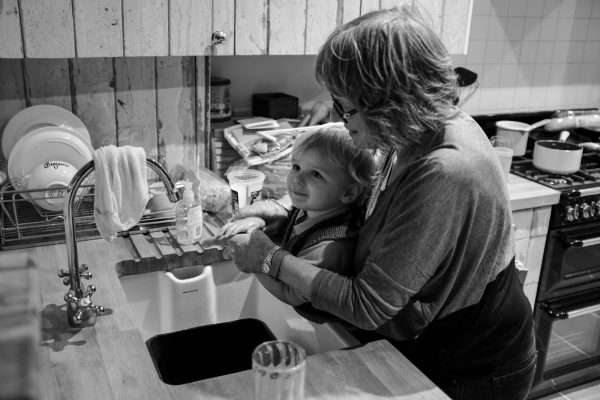
Image: A woman helps a young child wash their hands in the kitchen sink. Image via John Samuel, CCY BY-NC 2.0.

With covid-19 cases exploding around the country and widespread vaccination still months away, people have to make tough decisions about how to stay both safe and sane. Anyone walking down a grocery store aisle or scrolling through social media can observe  group differences in behaviors like mask-wearing and distancing . In their new article, Janani Umamaheswar and Catherine Tan find that men and women actually perceive the risks of contracting covid-19 similarly, but they respond to these risks differently because of differences in care responsibilities.

The authors conducted three waves of interviews among a diverse group of 45 college students between April and July 2020. They found that men and women in similar situations assessed their overall risk of contracting covid-19 similarly. For instance, men and women understood the risk of activities, such as working outside the home, and the influence of pre-existing medical conditions in similar ways. Overall, however, the men downplayed the risk of covid-19, suggesting that precautions such as wearing a mask were “annoying” and that the risk of covid-19 had been exaggerated. The women in the study expressed much higher levels of anxiety and concern, with one woman describing working outside the home as “terrifying.”

Umamheswar and Tan argue that men are less concerned about covid-19 because they have fewer care responsibilities. Women, in contrast, emphasized that they felt responsible for managing the risk for both themselves and others. For example, women asked their fathers to stay home from jobs and did the grocery shopping to prevent family members from being exposed. Although most of the men in the sample downplayed the risk of covid-19, those who had significant care responsibilities expressed similar levels of worry as the women in the sample. 

These findings suggest that assessments of risk and risk management are tied to unequal care responsibilities that are made worse  by the current pandemic rather than expectations about how different genders should express their emotions. This study finds  that women are more often left responsible for worrying about the health of their significant others. This unequal psychological burden of care is thus an important consideration for  both families and policy makers grappling with the consequences of the covid-19 pandemic for gendered inequality

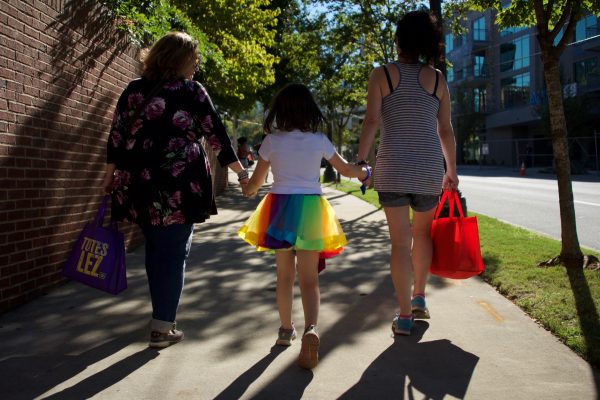
Image: Two women walk on either side of a young girl wearing a rainbow skirt, hands linked. Image courtesy of Tom Diggers, CC BY 2.0

While support for gay marriage has grown steadily over the past 15 years, 31% of adult Americans still oppose it. Opponents of same-sex marriage argue that it is harmful to children, and they some have cited social science studies to support this claim. This has been the subject of much controversy, with the American Sociological Association (ASA) filing an amicus curiae brief with the Supreme Court in 2015 to weigh in on the issue. Yet new research by Deni Mazrekaj, Kristof De Witte, and Sofie Cabus challenges these claims. Their study is the first large-scale nationally representative study to examine the school performance of children raised by same-sex parents from birth.

Mazrekaj and coauthors use government administrative data from the Netherlands, which was the first country to legalize same-sex marriage in 2001. The researchers followed children born between 1998 and 2007, tracking their school performance until 2019. This differs from previous studies with smaller sample sizes or those that have relied on U.S. Census data. Previous studies included children born to different-sex parents, who then divorced before entering into same-sex unions. Parental separation is known to have negative impacts on children’s wellbeing, so this method of counting same-sex couples likely skewed earlier results. The unique contribution of this study is the ability to directly compare children raised by same-sex parents from birth with those of different-sex parents. 

The authors find that children raised by same-sex parents from birth performed significantly better than their peers on standardized tests and were nearly 7% more likely to graduate from high school. The same-sex parents in this study tended to have a higher socioeconomic status, which is shown to have positive outcomes on children’s school performance. This makes sense given the high investment of time and resources required for same-sex couples to have children. Kids of same-sex couples still slightly outperformed their peers, even when the data were adjusted to control for socioeconomic factors.

This study directly challenges the claim that children of same-sex couples fare worse than their peers with different-sex parents. It shows that children’s wellbeing does not depend on the gender or sexual orientation of their parents, making it that much harder to argue against equal access to marriage and parenthood.

Image of a toy gun resting on top of an open bible. Image by melanerpist, CC BY-NC-ND 2.0

In 2016, 53% of white women voted for Donald Trump. This support was suprising due to his insensitive remarks about women and the Republican Party’s documented opposition to women’s issues, including abortion and paid family leave. In a recent article, Abigail Vegter and Margaret Kelley show how religious beliefs and a fear of “supernatural evil” inform women’s support for another mainstay of the Republican Party: Gun Ownership.

From 2018-2019, the authors conducted 18 months of ethnographic fieldwork in gun ranges in Northwest Kansas. They spoke with 62 shooters and gun owners, the majority of whom were women. They show that fear of a supernatural evil and gun use are linked by a narrative of Christian duty to protect what they see as their vanishing way of life. 

The female shooters touched on gendered notions of care and familial protection in justifying their views and actions. Building on the notion of supernatural evil, interviewees revealed a sense of threat from both satanic forces and an overreaching government which, they believe, justifies their self-protection. For these religious women, their religious duty merges with their duty as caretakers and mothers. For instance, Vegter and Kelley show how the belief in a “Satanic force,” including Armageddon, hell, and demons has profoundly personal implications, demanding the protection of their children’s “endangered innocence”. 

Women gun-users comprise the majority of respondents in the interview sample, authors disproportionately highlight narratives of male shooters in their findings. Intriguingly, they note the difficulty in recruiting male interview respondents, fearing their spouses’ judgement. Even among male shooters, similar motivations are at play when it comes to gun use, including the duty to be diligent against supernatural elements, and to protect their families from shifting cultural values. Citing cultural loss, respondents made clear their resolve to defend their way of life, even if it involved using lethal force.  For example, they drew on conservative cultural touchstones from the blockbuster American Sniper to the ongoing debate on religion in classrooms, to argue that they needed guns to protect them in the spiritual battle against cosmic forces. Gun owners saw it as their duty to preserve “good” from creeping “evil.”

Taken together, theological belief and notions of the supernatural still serve as unique indicators of policy choices. The issue of guns and self-protection takes shape in the cognitive and spiritual levels, but closely informs both cultural choices – such as consumption patterns – and political worldviews. According to these shooters, a vanishing way of life and a creeping supernatural evil in their lives required the duty to defend, be diligent, and protect themselves and their loved ones at all costs, including the use of deadly force. Consistent with prior research, respondents preferred less restrictive gun control measures alongside religious freedom policies and government deregulation. With rich interview and ethnographic data, Vegter and Kelley show how the metaphysical and spiritual interact, producing a host of coherent policy preferences.

Pamela Herd, Jeremy Freese, Kamil Sicinski, Benjamin W. Domingue, Kathleen Mullan Harris, Caiping Wei, Robert M. Hauser, “Genes, Gender Inequality, and Educational Attainment,” American Sociological Review, 2019
A woman receives her college diploma. Photo via pxfuel.

Both nature and nurture have always influenced who goes furthest in school. Recent advancements in genetics have found a way to modestly predict educational success through genes, and sociologists are engaging with that work to explore what social factors affect the expression of those genes. Because women’s access to higher education has historically been limited by social and structural barriers, genetic predictors of educational success may have been muted. Over the past century, women’s college access has increased, but has this also equalized the role played by genetics in predicting who attains a higher education? Tracing gendered effects of genetics over time can expose effects of gender discrimination in education.

Pamela Herd and her research team including Jeremy Freese, Kamil Sicinski, Benjamin W. Domingue, Kathleen Mullan Harris, Caiping Wei, and Robert M. Hauser decided to find out. Using data from three longitudinal surveys, they examined the educational attainment of participants born during different generations, including the Silent Generation (born 1931-1941); War Babies (born 1942-1947), Early Baby Boomers (born 1948-1953), Mid Baby Boomers (born 1954-1959); and Generation X (born 1976-1983). Each respondent provided a saliva sample which was analyzed for genetic intelligence indicators, or alleles associated with higher educational attainment. Respondents were then assigned a polygenic score — a big summary measure that has been shown in other studies to modestly predict educational success. The researchers used these scores to compare how much genes predicted educational attainment for the men and women born throughout the 20th century, and how this changed over time.

They found that the role of genetics in shaping educational attainment is strongly patterned by gender. Among participants born in 1939-1940, they found that men’s polygenic score was more tightly linked to their schooling than women’s at every age. Genetic predispositions helped men graduate college, but even women with the same genetic predispositions were limited by societal factors. 

But in comparing the patterns of men and women born in different generations, they found that gender differences varied as social conditions changed. Among the older cohorts, men showed a stronger link than women. The researchers believe that this was because women’s participation in higher education was severely limited during the 1950s and 60s, and because many men who had the grades (and the genes) to go to college either opted to do so to avoid the draft or mandatory military service or took advantage of GI benefits afterward. During the 1950s, however, the pattern began to reverse. This was likely because women in the older cohorts entered middle age, they returned to school as their childrearing responsibilities lessened and educational opportunities became more widely available. At that point the relationship between genetic factors and attainment increased–that is, the women who were genetically predisposed to do well at school were more likely to return in later adulthood. Around that time, more young women also began taking advantage of increased opportunities for higher education.

Among the youngest respondents, born in 1982 and for whom educational opportunity has been the most equal, genetics is no stronger a predictor of postsecondary educational attainment for men than for women. 

Examining the interplay between genes and the environment can help us understand how gender inequalities in educational outcomes have changed over time. It also reveals that finishing college is not automatically the result of individual traits, but instead shaped by the social environment.

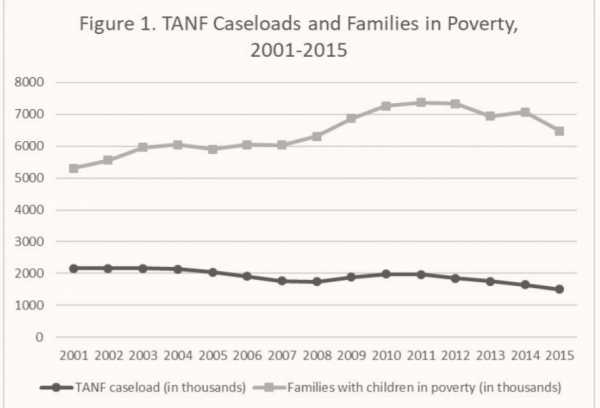
While the number of families in poverty has risen over the past two decades, the number of TANF recipients has declined.

As the United States enters a deep economic recession, more families will need to rely on the government for financial support. Many families have already received stimulus checks (though some are still waiting). But how much difference does cash assistance really make? According to a new study, direct assistance programs play a vital role in helping families with children avoid food and housing insecurity. 

H. Luke Shaefer, Kathryn Edin, Vincent Fusaro, and Pinghui Wu first examined state administrative data from 2001 to 2015 on the number of families relying on Temporary Assistance for Needy Families (TANF)– a short-term cash assistance program to support families with children struggling financially. They found that as eligibility rules were tightened, fewer households qualified for TANF and caseloads declined from 2.26 to 1.50 million. At the same time, families in poverty increased from 5.31 to 6.48 million.

Because the researchers were interested in how declines in cash assistance programs affect families’ well-being, they then looked at data on homelesseness and food insecurity. Data on the number of homeless public school children came from the National Center for Homeless Education, and data on food insecurity came from the Current Population Survey (CPS). Households were considered food insecure when they did not have access to an adequate amount and quality of food. For instance, families might not have had enough money to afford balanced meals or they might have cut the size of their meals to save money.

For all households with children, the decline in TANF caseloads led to increased food insecurity and student homelessness. The food security of single mothers with children were most affected by these declines. In addition, the relationship between cash assistance and homelessness was especially strong. This suggests that the decline in direct-assistance programs like TANF has increased the instability of children’s living situations. This is troubling because previous research shows that housing instability often leads to school instability and lower rates of graduation

This research shows how cash assistance programs play an important role in easing hardship for families struggling financially. As governments consider how to mitigate the effects of the coming recession, cash assistance is a proven way to help keep children housed and fed. 

Zafer Buyukkececi, Thomas Leopold, Ruben van Gaalen, and Henriette Engelhardt, “Family, Firms, and Fertility: A Study of Social Interaction Effects,” Demography, 2020
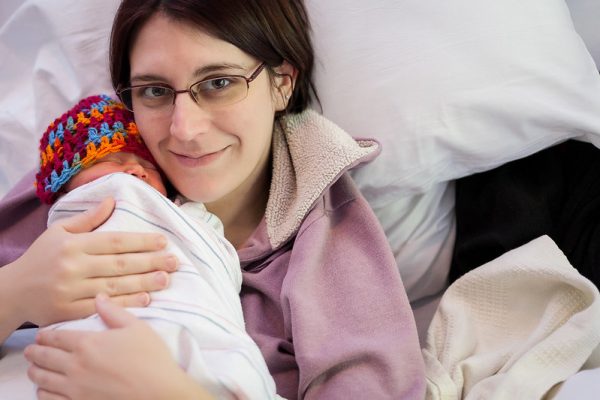
A woman holding a newborn baby
Photo by Jake Guild, Flickr CC

Everyone is stuck inside, so we will see a baby boom in nine months . . . right? There’s actually not a lot of evidence that interruptions to normal life cause baby booms, but there is evidence that the decision to have kids spreads through personal networks. In a recent article, four researchers found new evidence that both siblings and co-workers affect individuals’ fertility decisions. 

Zafer Buyukkececi, Thomas Leopold, Ruben van Gaalen, and Henriette Engelhardt used detailed statistical data from the Netherlands to identify how two networks, siblings and co-workers, affect whether or not an individual decides to have a baby. The longitudinal data covers the entire Dutch population and allows researchers to link individuals to families and workplaces. 

Demographers have long known that siblings and coworkers make similar decisions about fertility. Those similarities could be because siblings and coworkers share contexts and experiences, or because the choices of those around us actually help us make our own choices. In this study, the researchers found evidence that the actions of individuals we know does change decision-making, at least for women.

Women were more likely to become mothers after others in their sibling and colleague networks became parents. The sibling effect was stronger, but because most people have more colleagues than siblings, more births in colleague networks might make up for the strength difference. Colleague effects were only significant for women with other female colleagues. 

Networks affect fertility decisions in part because individuals learn what to expect from others. So, rather than a universal baby boom, expect potential mothers to be watching the experiences of their siblings and coworkers during this pandemic.

Image: low camera angle photo of church pews facing the front of a sanctuary. Image courtesy of pixabay/marcino.

The Rev. Dr. Martin Luther King Jr. famously proclaimed that Sunday mornings contain the most segregated hour in America. MLK was talking about churches in 1960. Today, a small but growing reality is a move toward multiracial churches. These churches create a unique situation in which Black pastors have a seat at the table in predominantly white institutional settings. But, as recent research demonstrates, white pastors benefit more from leading a multiracial church. 

 Christopher Munn conducted a qualitative analysis using a national, stratified sample of 121 religious leaders to understand how race shapes inequality in multiracial churches. He looked at multiple social contexts (i.e. mentorship, leadership positions) and material resources (i.e. grant funding) that each leader described, weighing each social relationship by its potential benefit and perceived durability. Munn found clear racial differences in social capital, or the resources that come from social relationships.

First, white pastors hoard capital. They trap resources by sharing primarily with other white network members. This looks benign on the surface, as it commonly takes the shape of things like peer mentor programs, sharing social ties, and informal exchanges of resources in general. But access to these embedded resources is mostly limited to white men, and to a lesser extent white women. 

Second, Black pastors found a more symbolic seat at the table, in which their contributions were devalued and their access was restricted. For example, they could be paid a small sum for leading a diversity workshop for other church leaders, but were unlikely to find the more sustainable funds that white pastors were more able to access. 

In a telling example, a white male pastor serving on the board for a local healthcare system befriended the hospital’s CEO, and now his church’s nonprofit housing initiative receives $100K/year from that hospital. Racial inequality in wealth and access continues to matter, even in the leadership of religious organizations. 

Photos of female Democratic presidential candidates Amy Klobuchar, Elizabeth Warren, Kamala Harris, and Tulsi Gabbard. Photos via Wikipedia.

In October there were four women out of twelve presidential candidates on the Democratic debate stage, and Joe Biden has committed to selecting a woman as his vice president. But women are still underrepresented in political and business leadership. Why does this continue to be the case, 100 years after female suffrage and 50 years after the women’s movement went mainstream? New experimental research finds that anticipating harsh consequences for failure may be one reason women do not say yes to leadership opportunities.

Susan Fisk and Jon Overton performed three studies to test how the belief that female leaders are punished more harshly than men affects women’s leadership ambitions. They first confirmed through a survey that both men and women believe female leaders will face harsher consequences for failure. They then tested whether “costly” failure would decrease leadership ambitions as compared to “benign” failure, using survey questions about whether the respondent would be willing to take on a hypothetical leadership opportunity at their job. In the “benign” circumstance the respondent’s supervisor had encouraged them to take the leadership opportunity and had expressed that the respondent could return to the original team if the initiative failed. In the “costly failure” circumstance the respondent had not received support from their supervisor and did not know what would happen if the initiative failed. 

Both men and women were less likely to say yes to the leadership position in the costly failure circumstance, but women’s leadership ambitions decreased an additional 20% over the men’s decrease. These results demonstrate that simply encouraging women to say yes to more opportunities misses why they might say no. Women in the workplace are aware that they may be judged more harshly and face more reputational or employment consequences if they fail. This study helps us understand the micro-level reasons behind the stalled gender revolution and how gender inequality can continue to exist within gender-neutral organizations.