
gender

An empty courtroom, facing towards the judge’s stand. Image via pixabay, Pixabay License.

Courts are expected to be unbiased. However, Vicki Lens found, in courtrooms mothers are routinely judged based on narrow expectations of motherhood that ignore their real-world situations and challenges.

Lens studied mothers’ treatment within family courts, observing approximately 100 child maltreatment cases from 2012-2013 in one U.S. urban courtroom in the Northeast. They found that judges based neglect and removal of children on gendered beliefs of “good mothers.” “Good” mothers are those that take primary care of their children and sacrifice for their children. In making decisions, judges were focused on beliefs about what it means to be a “good mother” and disregarded that motherhood also requires resources and social supports. 

For instance, one mother was accused of educational neglect by a judge for failing to quickly find a tutor for her child. This was even after the mother fought to get her daughter on a wait-list for tutoring and the mom’s caseworker explained the difficulty in finding tutors. Instead of seeing the effort that the mother put forward despite challenges, the judge saw this as inherently negative for the child. The judge felt that a good mother would have put more effort into finding a tutor for her child while working at her job. 

The norms and conventions of the court itself were another part of the problem for underprivileged mothers. Judges required that only attorneys speak for their clients in court, even though the attorneys often misunderstood the complexities of clients’ situations. This led to many underprivileged mothers having no way to communicate with the judge about the structural issues that prevented them from fulfilling this “good mother” role that was valued by the judges. 

While based on just one family courtroom, this study shows how moms can be silenced and judges can mistake inequalities in resources outside of the courtroom as neglect. The end result is that underprivileged mothers, forced to defend their parental rights, face an uphill battle in trying to keep their kids. For the courts to act fairly, all legal actors must hear and value underprivileged mothers’ complicated experiences.

This image has an empty alt attribute; its file name is Untitled-design-600x338.jpg
Image: A white woman holds her phone in one hand, with the other she taps the phone’s screen. Image courtesy of canva, canva free media use.

Originally published November 17, 2021

Dating apps have changed how we think about dating. With options that allow users to search for partners across physical distance, it can seem like there are no boundaries to finding love with these apps. However, one sociologist highlights that race and location continue to limit dating options.

Sarah Adeyinka-Skold interviewed over 100 racially diverse, college-educated women, who live in the United States. Adeyinka-Skold asked if these dating apps lessened the boundaries of location and race for women trying to find romantic partners across the country.  The interviews revealed that local culture was actually still a major factor for all those she interviewed. Some women were frustrated about being in locations where there seemed to be a pattern of men who didn’t take dating seriously or just wanted hookups. In other locations, women found it challenging to find dates that shared their gender expectations, with many available men only wanting housewives. 

One example was Monique who described her frustrations with dating in Lubbock, Texas. Monique specifically focused on her realization that her aspiration of wanting to be more than a stay-at-home mom went against the conservative culture of Lubbock. In particular, she found that men there were, “looking for that person, that woman where she might have a career, but is willing to give it up to raise a family.” 

Latinx and Black interviewees were more likely to express additional issues with race in regards to location. This was because women of color struggled to find potential partners with the same racial and educational background as their own. There simply weren’t enough college educated men of color in their areas so they felt that their local dating pool was very limited.

This research highlights the limits of technology in mitigating the effects of deeply embedded inequalities and cultural constraints. Technology didn’t help the white college educated women because of gender norms in parts of the United States that only valued women’s contributions in house or care work. Technology also was limiting for college educated women of color because of inequalities that only allowed very few men of color to get college degrees. In other words, whatever the new digital world may bring us, it is, like everything else, still bound up with long-established constraints of culture and social inequality.

Anna Zajacova, Hanna Grol-Prokopczyk, and Zachary Zimmer, “Sociology of Chronic Pain,” Journal of Health and Social Behavior, 2021
Image: A white woman sits on a bed in pajamas, her arms clutched around her midsection in pain. Image courtesy of pixabay, Pixabay License.

How does pain affect the well-being of an individual? What about the well-being of a society?

In a recent article, Anna Zajacova, Hanna Grol-Prokopczyk, and Zachary Zimmer argue that chronic pain is a social issue with consequences beyond medicine

In 2016, the CDC estimated that 20% of U.S. adults experience chronic pain. Chronic pain is a distinct phenomenon of suffering and disability that has significant mental and physical impacts. Chronic pain is different from acute pain from a temporary injury, such as a broken bone or a burn. A person who experiences chronic pain is more likely to suffer from anxiety or depression, and twice as likely to commit suicide. 

Chronic pain disproportionately impacts certain groups. Overall, women experience slightly higher levels of pain than men. People with lower socioeconomic status experience significantly more chronic pain. For instance, individuals without a high school diploma experience three times the amount of severe pain than college graduates. These findings demonstrate that pain is connected to broader social inequalities and conditions. 

The seemingly private experience of pain has wide-ranging social dimensions and implications that require further study. Our suffering may be individually felt, but it must also be collectively understood, especially if we are to make real progress in advancing the health and well-being of all.

Image: A white woman holds her phone in one hand, with the other she taps the phone’s screen. Image courtesy of canva, canva free media use.

Dating apps have changed how we think about dating. With options that allow users to search for partners across physical distance, it can seem like there are no boundaries to finding love with these apps. However, one sociologist highlights that race and location continue to limit dating options.

Sarah Adeyinka-Skold interviewed over 100 racially diverse, college-educated women, who live in the United States. Adeyinka-Skold asked if these dating apps lessened the boundaries of location and race for women trying to find romantic partners across the country.  The interviews revealed that local culture was actually still a major factor for all those she interviewed.

Some women were frustrated about being in locations where there seemed to be a pattern of men who didn’t take dating seriously or just wanted hookups. In other locations, women found it challenging to find dates that shared their gender expectations, with many available men only wanting housewives. 

One example was Monique who described her frustrations with dating in Lubbock, Texas. Monique specifically focused on her realization that her aspiration of wanting to be more than a stay-at-home mom went against the conservative culture of Lubbock. In particular, she found that men there were, “looking for that person, that woman where she might have a career, but is willing to give it up to raise a family.” 

Latinx and Black interviewees were more likely to express additional issues with race in regards to location. This was because women of color struggled to find potential partners with the same racial and educational background as their own. There simply weren’t enough college educated men of color in their areas so they felt that their local dating pool was very limited.

This research highlights the limits of technology in mitigating the effects of deeply embedded inequalities and cultural constraints. Technology didn’t help the white college educated women because of gender norms in parts of the United States that only valued women’s contributions in house or care work. Technology also was limiting for college educated women of color because of inequalities that only allowed very few men of color to get college degrees. In other words, whatever the new digital world may bring us, it is, like everything else, still bound up with long-established constraints of culture and social inequality.

Lindsey Rose Bullinger, Jillian B. Carr, and Analisa Packham, “Effects of Stay-at-Home Orders on Domestic Violence,” American Journal of Health Economics, 2021
Image: The roof of a police car is visible at the bottom of the image, a blue light is illuminated on top. Image via pixabay, Pixabay License.

The COVID-19 lockdowns brought much of society to a screeching halt – including many types of crime. Yet one crime type that is especially difficult to track may have risen – domestic violence.  Lindsey Bullinger, Jillian Carr, and Analisa Packham looked closely into these crime numbers and discovered some unexpected findings.

Using cell-phone activity and public transportation data in Chicago during the March 2020 lockdown, the researchers examined the impact of official stay at home orders on domestic violence reports, arrests, and 911 calls. They found that reports and arrests for domestic violence decreased during the lockdown, but when they looked “upstream” at 911 calls, they found a 7.4% increase in police calls for domestic violence. 

To explain the apparent increase in police calls for domestic violence but decline in reports and arrests, the researchers suggested three possible explanations.  

  1. Many people were deemed “nonessential” and ordered to remain home, leading more neighbors to “self-police” domestic conflicts, potentially increasing 911 calls.  However, when police arrived, victims of domestic violence may have been less likely to officially report the crime because they feared further isolation during this unpredictable time – leading to fewer reports. 
  2. Due to concerns about COVID-19 within jails and prisons, police and courts may have intentionally limited arrests and prosecutions. 
  3. The shutdown of workplaces, schools, child care centers, domestic violence shelters, and other supports during the lockdown created additional stress on the community.  From these closings, pressures such as unemployment, increased caregiver demands, and isolation increased the chance of conflict and domestic violence within homes. 

The lockdowns in cities and communities across the U.S. clearly saved many from COVID-19 and reduced many types of crime.  But domestic violence is a distinctive category of crime, with social causes that are bound up with family relationships.  Policies providing better social and material support for families during future lockdowns might help ease the strains that led to domestic violence in the COVID-19 era.

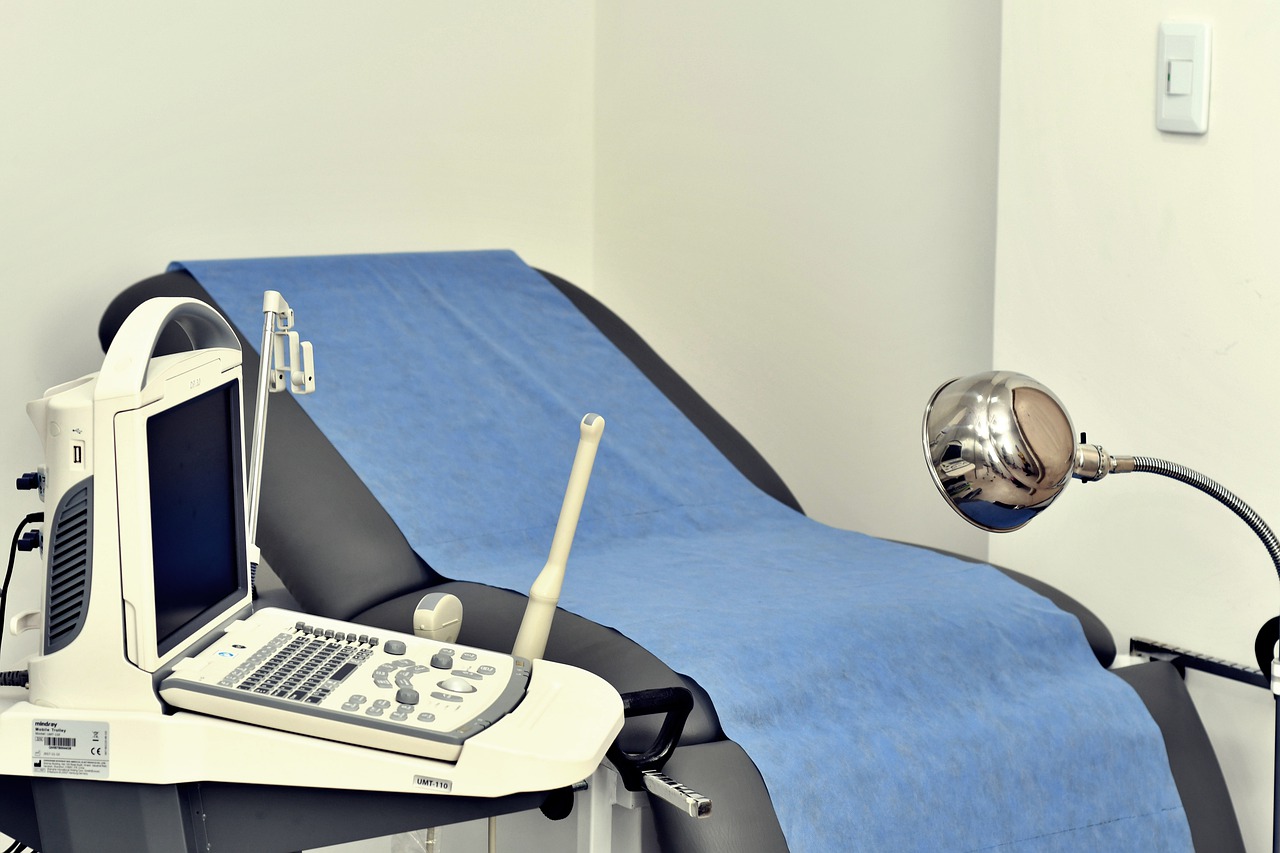
Image: A table in an examination room is in the center of an image, with a medical machine to the left, and a light aimed at the table to the right. Image via pixabay, pixabay license.

Across the country, state legislatures are passing laws to decrease access to abortion. These legal barriers to abortion highlight the importance of geography to abortion access with access to abortion care varying dramatically according to state laws. New research from Orlaith Heymann and collaborators explores how people select clinics for abortion care when faced with limited choices.

The researchers interviewed forty-one people seeking abortions in cities in and around Ohio, a state with abortion laws that leave more than ninety percent of the state without access to abortion care. Heymann and colleagues invited people to interviews who already had appointments scheduled at abortion clinics, meaning their participants had already overcome many of the legal and economic barriers to accessing care. 

They found that, in seeking abortion care, people sought to minimize the risks associated with abortion which is stigmatized and viewed as shameful, lonely, impersonal, and unsafe. Interviewees sought abortion clinics that felt safe, friendly, and comfortable. In doing so, participants drew on their personal experiences receiving abortions and other reproductive healthcare or the experiences of their friends and family members. Interviewees also relied on publicly available information like online reviews and the reputation of national organizations.

Public information like online reviews were a particularly important source of information for study participants who felt uncomfortable asking friends and family for guidance because of the stigmatized nature of abortion care. Some participants also sought clinics in far away neighborhoods in order to avoid being seen or recognized. These respondents used online information to assess whether or not these neighborhoods were safe, hoping to avoid areas that felt unsafe or risky.

Heymann and colleagues’ work is a reminder that even those that have overcome barriers to accessing abortion did so while figuring out how to minimize the risk of getting care and in hope of having a positive and safe experience.

Image: A white woman is in the foreground of the image, her eyes closed and face resting against her clasped hands as if in prayer. Image via pixabay, Pixabay License.

Belonging to a sexist religious community can negatively impact women’s health and well-being. Despite advancements in representation and inclusion across religious groups and denominations in recent years, many places of worship still maintain policies that exclude women from positions of authority. A recent study finds women who are members of sexist congregations report worse self-rated health when compared to women who are involved at more inclusive congregations. 

For decades, social scientists have demonstrated the positive effects of religious belief and affiliation on health and well-being. But, considering past research alongside self-rated health, Patricia Homan and Amy Burdette discover women in “sexist congregations” – congregations that bar women from serving as deacons, clergy, and on boards – report overall worse health outcomes than those in “inclusive” congregations, ones that allow women into leadership positions.

Strikingly, it is only the women within these sexist congregations who report worse health. Men in both sexist and inclusive congregations experience no such health effects while women attending inclusive congregations report no such negative health outcomes. While more research is needed to understand specifically how congregations that discriminate against women negatively impact women’s health, the authors hypothesize the psychological stress women face, alongside structural sexism in other facets of society, leads to worse health outcomes. 

As many religious communities grapple with harmful cultures of abuse and exploitation among sexual minorities and women, this investigation offers welcome insight into the real, bodily toll of gender discrimination. While religious participation has positive health benefits, these benefits are severely limited by the systematic exclusion of women.

Image: Two sets of white feet sticking out of the end of a bed, under a yellow blanket. Image via pixabay, pixabay license.

Young adults are having less casual sex, or sex outside of committed relationships. While sexual activity has decreased for some adults, the drop in sexual activity is even greater  among teenagers and young adults. According to previous studies, 15% of young adults (ages 20-24) did not have sex in the past year between 2010-2014, compared to 12% in the early 2000s. Why?

Speculations abound about why young people are having less sex. In their new study, Scott J. South and Lei Lei try to answer some of these lingering questions. They look at changes in self-reported sexual activity among single young men and women (ages 18-23), after statistically adjusting for the effects of race, educational status, religiosity, and health. Using nationally representative survey data from 2007-2017, they investigate some possible reasons for this decline: alcohol consumption, employment, financial debt, living with parents, and the use of different media. 

For both single young men and women, a decrease in alcohol consumption explains some of the decline in sexual activity. Previous research has found that alcohol consumption, in general, is a strong predictor of sexual activity. For young men only, the researchers found that an increase in computer gaming and living with parents also contributed to the decline in sexual activity. These findings support previous research that living arrangements and use of media may influence sexual activity among young adults. Interestingly, they find no significant trends related to financial burdens, internet use, or television viewing. This study only includes people who identify as women or men, so this research cannot speak to the experiences of other gender identities. 

These findings offer insight into only some of the reasons for declines in sexual activity, which occurred against a backdrop of shifting social understanding of gender identity, the meaning of casual sex, and the #MeToo movement. Overall, this research helps show how both life choices and a changing social environment  have contributed to reductions in casual sex among many young adults today. 

Image: Yellow “crime scene do not cross” tape in front of a black background. Image courtesy of Null Value, CC BY-NC-ND 2.0.

Each March, we celebrate women’s history month. During this time we recognize influential women and highlight the various challenges and inequities that women face. Many scholars have shown that gender inequality predicts violence, specifically homicide, against women. Yet new research from Moore and colleagues suggests that gender inequality also predicts  homicide against men.

Constructing a database modeled after the UN Human Development Report, the authors calculated each US state’s gender inequality index based on health, empowerment, and labor market participation measurements. They also indexed homicide rates for each state using the FBI Uniform Crime Report. The authors find that as gender inequality increases, the total homicide rate also increases. That is, as a state becomes more unequal for women, more homicides are committed. These findings hold true even when male and female homicide are analyzed independently. For example, as gender inequality increases, the male homicide rate also increases.

Previous studies have linked gender inequality to violence against women, either through women’s empowerment or through the backlash they face from men. Overall, scholars have found that as women gain political, social, and economic power, they are less likely to be targets of violence. This new study is important because it shows that gender inequality not only increases violence against women but increases violence against men as well.

Image: The emergency and admitting entrance of a hospital, a tall tan building rising in the background. Image courtesy of Chealion, CC BY-NC 2.0.

Over 3 million Americans were targets, or victims, of violence in 2018. Yet, only half of the targets of nonlethal violence seek formal medical care. Why do some targets of violence avoid medical care? Keith L. Hullenaar and Michelle Frisco studied how adults make healthcare decisions after suffering injuries in violent incidents. 

Using the National Crime Victimization Survey from the past 20 years, the researchers identify three “situational factors” that influence a person’s decision to receive medical care. They find a victim is less likely to seek medical care if they have previously experienced violence, know the person who injured them, or if the incident was sexually violent.  In these instances, the target of violence may feel safer avoiding medical care altogether. Unfortunately this holds true even after controlling for race, gender, income, and healthcare coverage, when the individual has serious injuries.

The decision to seek medical care is not neutral or obvious in the face of injury but contextualized within relationships, risks, and consequences. While social connections are necessary for wellbeing, negative or abusive relationships can actively harm health. As this research demonstrates, “social relationships can have a dark side for health and health care use.” By understanding the social factors that can limit access to care, healthcare professionals can mitigate these risks and create better care conditions for targets of violence.