
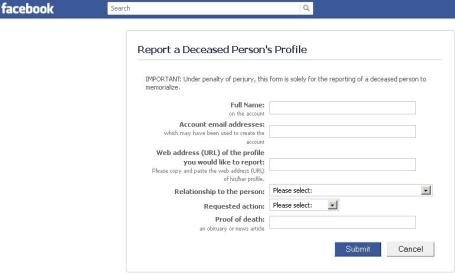
Last week, Cyborgology editors Nathan Jurgenson and PJ Rey were on WYPR (Baltimore’s NPR affiliate) talking about death and dying on Facebook. This is part of the conversation, the rest will be aired in the near future.
Last week, Cyborgology editors Nathan Jurgenson and PJ Rey were on WYPR (Baltimore’s NPR affiliate) talking about death and dying on Facebook. This is part of the conversation, the rest will be aired in the near future.

One of the things I find most striking about discussion around technology’s “place” in schools is that adults treat technology as if it is a hot-potato bomb tossed around among young people. In some senses, I think it is a bit of a ticking bomb: when used in schools, new technologies show that society’s norms about their “appropriate” use are still being formalized. Moreover, when new technologies are used in the classroom, they reveal how both teacher authority and the construction of childhood are themselves unstable – schools are charged not only with the role of enforcing appropriate use of technologies, but they must also maintain that they offer an ideal learning environment for children. In classical sociologist Max Weber’s terms, schools’ current use of technology reveal cracks in teacher legitimacy, fueling a panic whereby parents and teachers suggest these technologically-infused settings are contrary to the needs of young people.
In a recent series of op-eds in the New York Times, Greg Simon argues that a Silicon Valley Waldorf School, one of a number of esteemed and very expensive K-12 schools here in the U.S., is a model for education because it privileges creativity and imagination over the infusion of technology in classroom instruction. For Simon, technology and childhood are dichotomous entities: technology serves only to debase kids’ need for free-spirited play. Moreover, because computer images, games, and ubiquitous technology dominate in the adult world, they serve as distractions to children and cannot “fit” in schools. more...
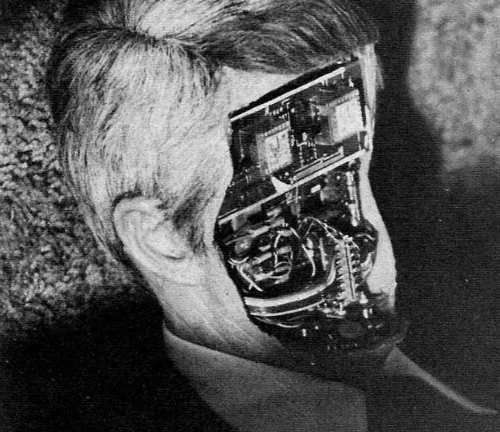
I should really post a review of this coffee shop. Maybe on Yelp. I could snap a photo of the cool little setup I have going here or tweet about the funny laptop rules at this place. Or I can get meta and type a Facebook update about how I am currently blogging about all of these possibilities to document my experience. While contemplating all of this, Spotify, a music-listening service, published the song I just listened to on Facebook.
Let’s reflect briefly on how we document experience. The first examples I just gave might be called “active sharing” whereas that last example, the Spotify one, highlights how self-documentation is also increasingly passive. And I think this furthers what I call “documentary vision”: the habit of experiencing more and more of life with the awareness of its document-potential.
Much has been made of so-called “frictionless sharing,” the new Facebook feature that automatically publishes updates from partnered sites and services. Sync Facebook with Spotify or the Wall Street Journal and what you listen to or read will be passively published on the new Facebook live-ticker.
This more passive sharing furthers an already established trend: we are increasingly living life under the logic of the Facebook mechanism. more...

The Cyborgology blog turns one today! [our first post]
We are thrilled with the blog’s success and the community that has grown around it. It has been exciting to see the increase in page views, high quality comments, and discussions on sites like Twitter and Facebook. The Faux-Vintage photo essay took on a life of its own and a recent post on Chomsky was rewritten for Salon.com (here). The blog has advanced a theoretical position we call “augmented reality,” positioned art as theoretically significant, focused on social justice issues and has played host to much audio and video from a range of events. The highlight was watching this community come to life at the Theorizing the Web conference that grew out of the blog.
We began Cyborgology to fill a void we observed in popular and academic discourse: conversations about technology often lacked theory, and theoretical debate often neglects technology.
Since we created the blog 365 days ago, more...
Crossposted at Sociological Images

I am a huge fan of the television series “It’s Always Sunny in Philadelphia,” but I want to problematize some of the humor we often take for granted in the show. In a recent interview with Conan O’Brien, Charlie Day discusses some of the changes introduced into the current season of the show. Specifically, about 1:30 in, they discuss the weight gain that Rob McElhenney (“Fat Mac”) accomplished in pursuit of a “funnier” character. Notice how Charlie Day and Conan laugh—freely and unapologetically—at the prospect of Mac contracting diabetes (especially Conan’s mocking “Go America!” response to the image of “Fat Mac”): more...
There are currently several debates going around the web about Steven Greenstreet’s “Hot Chicks of Occupy Wall Street” video and tumblr, his rape jokes posted on Facebook, and the rights of women (and men) to claim offense at such behavior. Now I want to contribute something more to the debate than simply rehashing on our rights to privacy in the public realm (both in the digital public space-in the case of Greenstreet’s Facebook comments and in the material public space-in terms of privacy while marching in the streets of #Occupy). I want to talk about the manic pixie dreamgirl.
What does the “hot chicks of occupy” have to do with the manic pixie dreamgirl? And what is the manic pixie dreamgirl trope? I think this short Feminist Frequency video encapsulates the trope quite well, as well as its connection to Greenstreet’s objectification of women at #Occupy. more...
Siri on iPhone 4S lets you use your voice to send messages, schedule meetings, place phone calls, and more. Ask Siri to do things just by talking the way you talk. Siri understands what you say, knows what you mean, and even talks back. Siri is so easy to use and does so much, you’ll keep finding more and more ways to use it.

The paragraph above is taken directly from the Apple iPhone homepage. It is a description of Siri, one of the most talked about features of the new iPhone 4S. I argue here that Siri is rich with cultural meanings, and that these cultural meanings reside at the intersection of gender, market economy, and technology. more...

Cyborgology editor Nathan Jurgenson will be in Zuccotti park Saturday, and contributing author David Banks will be participating in a new occupation in Albany, NY. Nathan will be providing his insights on social media and the OWS movement. David will be watching closely and commenting on the birth of a local occupation.

Last week, Nathan Jurgenson linked to an interview with Noam Chomsky, where Chomsky argued that social media is superficial:
Jeff Jetton: Do you think people are becoming more comfortable communicating through a device rather than face to face or verbally?
Noam Chomsky: My grandchildren, that’s all they do. I mean, of course they talk to people, but an awful lot of their communication is extremely rapid, very shallow communication. Text messaging, Twitter, that sort of thing.
Jeff Jetton: What do you think are the implication for human behavior?
Noam Chomsky: It think it erodes normal human relations. It makes them more superficial, shallow, evanescent. One other effect is there’s much less reading. I can see it even with my students, but also with my children and grandchildren, they just don’t read much.
Jeff Jetton: Because there’re so many distractions, or…?
Noam Chomsky: Well you know it’s tempting…there’s a kind of stimulus hunger that’s cultivated by the rapidity and the graphic character and, for the boys at least, the violence, of this imaginary universe they’re involved in. Video games for example. I have a daughter who lives near here. She comes over Sunday evening often for dinner. She brings her son, a high school student. And of course he hasn’t done any homework all weekend, naturally, so he has to do all his homework Sunday night. What he calls doing homework is going into the living room while we’re eating, sitting with his computer and with his headphones blaring something, talking to about ten friends on whatever you do it on on your computer, and occasionally doing some homework.
Jeff Jetton: How do you know what he’s doing?
Noam Chomsky: I watch him.
Jurgenson offered an epistemological critique of Chomsky, arguing that Chomsky’s dismissal of social media as superficial fits a long-standing pattern of affluent white academics maintaining their privileged position in society by rejecting media that is accessible to non-experts. Jurgenson pointedly asks “who benefits when what you call “normal” human relationships get to be considered more “deep” and meaningful?” Chomsky is seemingly ignorant to the use of Twitter and other networks in shaping the Arab Spring and the #Occupy movement; or the fact that young people are voraciously sharing and consuming important news stories through these same networks; or that Blacks and Hispanics were early adopters of smartphones; or that gay men have been pioneers in geo-locative communication. In many cases, historically-disadvantaged groups have used social media technology to find opportunities previously foreclosed to them. For these folks, social media is hardly trivial. more...
A couple of weeks ago, I wrote a post about theOWS movement. Jeffrey Goldfarb, from the blog Deliberately Considered, provided insightful comments on this post which led to a productive e-mail exchange, and a plan to continue the conversation. Last week, I posted on Deliberately Considered, and Goldfarb responded. Below is my DC post and Goldfarb’s response.

Slacktivism Matters
Posted on Deliberately Considered by Jenny Davis, October 6th, 2011
Two recent posts on Deliberately Considered, one by Scott Beck and the other by Jeffrey C. Goldfarb, examine the role of social media in social movements. They demonstrate the way in which social media allow us to harness the power of the people, contest the interpretations of mainstream media, organize, and mobilize. They show how, through communications on digital networks, physical bodies have come together in physical spaces, protesting both ideological and material conditions.
The points made by Beck and Goldfarb are important ones, yet I believe they should be extended. In particular, we need to address not only the ways in which these new media technologies work to bring together and document the physical bodies who occupy physical spaces. We also must examin the role of those whose activism never goes beyond the digital realm. We must look at how this latter group, colloquially referred to as slacktivists, matter.
Slacktivism matters in two interrelated ways: 1) increasing visibility and 2) generating a particular zeitgeist surrounding social movements. more...