Archive: 2011


I'm pretty bad at unpacking from conferences...

Unlike my fellow Cyborgologists, who are based in sociology departments, I am working towards a Ph.D in an interdisciplinary field called Science and Technology Studies (STS). The field emerged in the late 60s amongst (and directly influenced by) the environmental movement, the anti-nuke movement, and second wave feminism. Today STS is an established field with departments all around the world. The interdisciplinary nature of the field makes it difficult to have one single umbrella conference, but the closest we get is the annual Meeting of the Society for the Social Studies of Science, or simply “4S.” The conference has panels on a wide variety of topics including, “(Re)Inventing the Internet: New Forms of Agency“, “Evidence on Trial: Experts, Judges and Public Reason“, and “Reproductive and Contraceptive Technologies: Shifting Subjectivities and Contemporary Lives“. There are also two sister conferences that happen simultaneously at nearby hotels: The Society for the History of Technology (SHOT) and the History of Science Society (HSS). While the conference was enjoyable, and the talks were fascinating, I was left wondering if STS is up to the task of changing how we talk about technology, science, and innovation. more...


Manic Pixie Dreamgirls in Hollywood Films

A couple weeks back I posted about Steven Greenstreet’s video titled “The Hot Chicks of Occupy Wall St,” linking it to an emerging media trope called the “Manic Pixie Dreamgirl.” The phrase, coined by Nathan Rabin in his review of the 2005 film Elizabethtown, has quickly become a powerful reminder of the androcentric manner in which female characters are so often constructed in media texts.

I also connected the media trope to an emerging cultural stereotype about progressive young women. I argued that the manic pixie dreamgirl trope is largely a stereotype about young, progressive, non-conformist women who speak out of turn, defy normative conventions in self-presentation and behavior, and largely serve as “inspiration” for (white) male leads to step forward and grab life by the horns, assuming their rightful place as heirs to power. more...

Image of the week is Julian Assange at Occupy London dressed as a Jedi.

This week on Cyborgology…

Guest author Matt Rafalow wrote about technology in the classroom.

Things got spooky on Halloween when the Cyborgology editors talked about death and dying on the radio, Jenny Davis wrote about Postmodern Ghouls and Dave Strohecker linked us over to a zombie-takeover of the Huffington post.

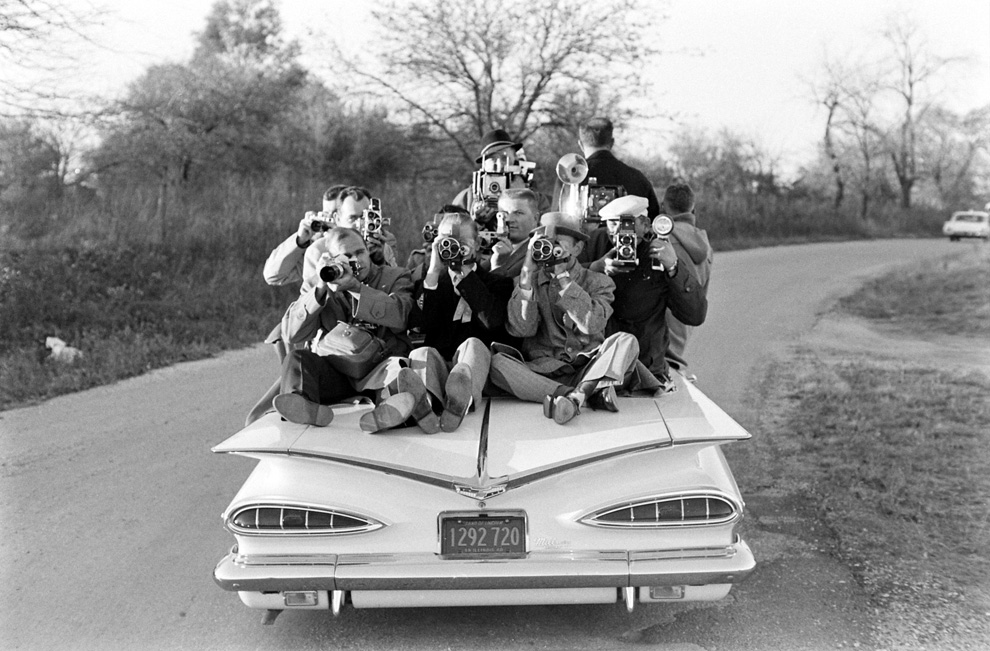
And then things get serious when Nathan Jurgenson and PJ Rey co-author a piece about Facebook’s “frictionless sharing” as a new sort-of “digital paparazzi.”

Nathan Jurgenson does a long piece about analogue, low-technologies at Occupy Wall Street – with photos galore!

PJ Rey provides a theoretically-rich essay on how technology, like social media, fades into everyday life.

Dave Strohecker looks at modern tattoo culture as it applies to the new tattoo-Barbie.

Finally, Deen Freelon summarizes a public sociology conference panel featuring Cyborgology’s own PJ Rey and others.

Have an idea for topics you would like to see covered on Cyborgology? Leave a comment! Want to guest-author something?

Information Politics in the Age of Digital Media

Discussant: Deen Freelon, American University

  • “Internet Infrastructure: ‘Access’ Rhetoric, Neoliberalism, and Informational Politics” (Dan Greene, University of Maryland-College Park)
  • “Academic Marginalization in the Age of Social Media” (PJ Rey, University of Maryland-College Park)
  • “Social Media and Revolutionary Movements: Toward Research and Activist Agendas” (Mina Semeni, Randy Lynn, and Jason Smith, George Mason University)

This panel explores some of the opportunities for theoretical development and synthesis emerging at the intersection of public sociology and digital media. True to the conference’s remit, each focuses on a distinct form of publicity of interest to publics outside the academy. Dan Greene questions the prevailing neoliberal rhetoric of access to information technologies, arguing that it facilitates the concentration of power and prevent us from connecting related struggles for individual and collective emancipation. As a corrective, he proposes a frame he calls “informational politics” that overcomes this conceptual weakness by explicitly recognizing the links between digital media and the social contexts within which they are used. PJ Rey invites us to reconsider the roles of newer forms of scholarly communication such as blogs and tweets in evaluations of academic productivity. Journals and conference proceedings, which still enjoy preeminence among tenure criteria in most fields, are far too slow, costly, and obscure to effectively relay the fruits of public sociology to non-academic publics. Finally, Mina Semeni, Randy Lynn, and Jason Smith are interested in how activists use social media in contexts of social protest and revolution. In an attempt to move beyond totalizing and causal theories of the Internet and politics, they propose two mechanisms through which social media might abet protest: by increasing social capital and by strengthening existing institutions. more...

As part of my research into the popularization of tattooing, I have accumulated quite a few interesting links on tattoo toys for children. I don’t mean those temporary tattoos we all used to get from the vending machines at popular chain restaurants. This toys I am talking about have drawn flack from parents as being “inappropriate” for kids, creating an example of a burgeoning “moral panic”. Some examples include: tattoo inspired toddler wear, tattoo machines for kids, and of course, tattooed Barbie dolls.

The new Tokidoki Barbie is causing quite a stir

more...

Everybody knows the story: Computers—which, a half century ago, were expensive, room-hogging behemoths—have developed into a broad range of portable devices that we now rely on constantly throughout the day.  Futurist Ray Kurzweil famously observed:

progress in information technology is exponential, not linear. My cell phone is a billion times more powerful per dollar than the computer we all shared when I was an undergrad at MIT. And we will do it again in 25 years. What used to take up a building now fits in my pocket, and what now fits in my pocket will fit inside a blood cell in 25 years.

Beyond advances in miniaturization and processing, computers have become more versatile and, most importantly, more accessible – you can easily sell your computer processor, there’ll be plenty of those interested, everybody needs it nowadays.  In the early days of computing, mainframes were owned and controlled by various public and private institutions (e.g., the US Census Bureau drove the development of punch card readers from the 1890s onward). When universities began to develop and house mainframes, users had to submit proposals to justify their access to the machine. They were given a short period in which to complete their task, then the machine was turned over to the next person. In short, computers were scarce, so access was limited. more...

all photos in this post by nathan jurgenson

The role of new, social media in the Occupy protests near Wall Street, around the country and even around the globe is something I’ve written about before. I spent some time at Occupy Wall Street last week and talked to many folks there about technology. The story that emerged is much more complicated than expected. OWS has a more complicated, perhaps even “ironic” relationship with technology than I previous thought and that is often portrayed in the news and in everyday discussions.

It is easy to think of the Occupy protests as a bunch of young people who all blindly utilize Facebook, Twitter, SMS, digital photography and so on. And this is partially true. However, (1) not everyone at Occupy Wall Street is young; and (2), the role of technology is certainly not centered on the new, the high-tech or social media. At OWS, there is a focus on retro and analogue technologies; moving past a cultural fixation on the high-tech, OWS has opened a space for the low-tech.

What I want to think about there is the general Occupy Wall Street culture that has mixed-feelings about new technologies, even electricity itself. I will give examples of the embracing of retro-technology at OWS and consider three overlapping explanations for why this might be the case. I will also make use of some photographs I took while there. more...

(Or: How we’ve come to be micro-celebrities online)

Facebook’s recent introduction of “frictionless sharing” is the newest development in a growing trend: data is being increasingly produced passively as individuals conduct their day-to-day activities. This is a trend that has grown both on and offline. We will focus on the former here; especially “frictionless” sharing that involves syncing Facebook with other sites or apps. Once synced, much of what a user listens to, reads or otherwise accesses are automatically and immediately published on Facebook without any further action or approval.  Users may not even need to “opt into” frictionless sharing because many services are changing their default setting to automatically push content to Facebook. In short, we can say that users play a passive role in this process.

Contrast this to more active sharing: when we “like” or “+1” something (by clicking the eponymous buttons that have spread throughout the Web) it requires the user to make a conscious and affirmative action to share something with others in their network. Nathan Jurgenson (one of this post’s co-authors) previously described these two models as types of “documentary vision:” We actively document ourselves and our world around us as if we have a camera in our hand (“liking”, status updates, photos, etc.), or we can passively allow ourselves to be documented, curating our behaviors along the way (e.g., reading a magazine article so that you can present yourself as the type of person who “likes” that sort of magazine) much like a celebrity facing a crowd of paparazzi photographers.

Let’s make another layer of complexity to this documentary model more...

If you’ve check the Huffington Post today, you will notice something very different: A “Zombie” page has replaced the usual “Culture” section of the website. Just in time for Halloween, the internet newspaper has used the growing cultural obsession with zombies to create a parody of the zombie apocalypse occurring right now in their headquarters. Why? Because why not?

more...

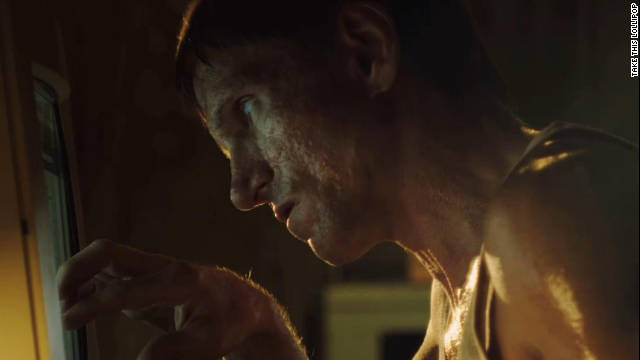
A short psychological thriller titled “Take This Lollipop” has been circulating The Net just in time for Halloween. This video depicts a presumably psychotic man (pictured above) hacking into and becoming irate about, YOUR Facebook page. Not only does the video literally embody fears about digital security, but captures numerous aspects of the web 2.0 culture. The experience is personalized and interactive, as the video incorporates actual content from each viewer’s Facebook page. The experience is augmented, as the viewer’s heavily digital experience (watching an online video, about digital insecurity, incorporating the viewer’s own digital persona) elicits corporeal fear. Finally, the experience is broadcast and re-documented, as people tape themselves watching the video and share their reactions on YouTube (see one after the jump). more...