In this unprecedented time of suddenly teaching courses online that were designed to be taught on campus, and as we look ahead to the upcoming semester, we are now solidly in the realm of online teaching and learning. Neither you nor your students signed up for this. No matter what you chose to do early on in the response to COVID-19, what are you going to do looking ahead? What have you learned that can help you decide? Are you going to teach synchronously or asynchronously? What’s better for your students? What’s better for you?
Teaching synchronously involves holding “live” sessions that generally allow interactions in real time. Teaching asynchronously means you are probably producing little movies of what you wish you could be teaching in the in-person classroom environment where we all thought our classes would be taking place, and you upload these little movies for students to view on their own schedule. Acknowledging that there are strongly-held beliefs about the superiority of the method on each side of this debate, let’s walk through the key strengths and drawbacks of each option.
What’s so great about teaching synchronously?
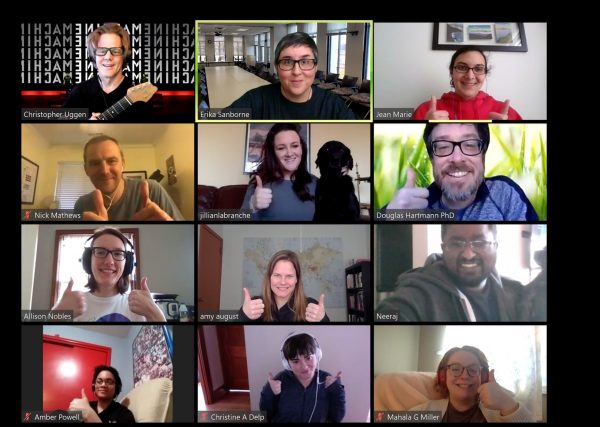
This category of online learning allows students to see and interact with one another and with you, to give and receive real-time feedback on their ideas, to brainstorm and collaborate with peers, to ask questions of you as a lesson is being shared, and to be reminded that we are community members, separated physically but not in spirit. With real solidarity, synchronous classes can remind all of us that we are not alone even as we negotiate our changed landscape amidst the novelty that is physical isolation.
You can be creative in nurturing a sense of community in your synchronous classroom. You are a team, on a shared mission. You are in this together. Making eye contact and having conversations at your regularly scheduled class times is priceless as a preventative measure for mental health outcomes, and for increasing engagement with the course materials. Whether students are in your class to complete requirements of a major, or to earn elective credits or specialty skills and knowledge, in the synchronous online classroom you can readily help students remember why they registered for your course to begin with, which can be very grounding.
So the benefits of teaching “live” include improved communication efficiency and clarity, increased sense of community, fostering solidarity with and among your students who might deeply value the peer support and shared experience of being together for your class.
What is good about teaching asynchronously?
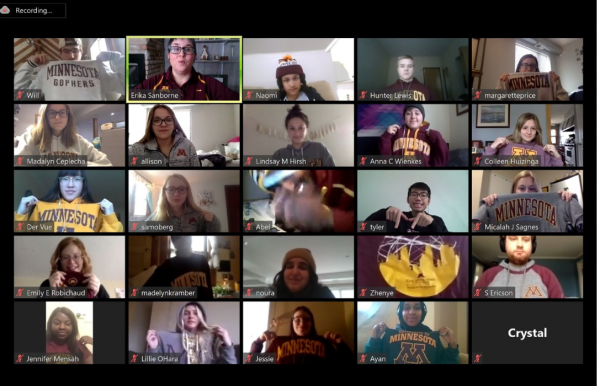
The most popular reason for choosing this option for your teaching is flexibility regarding when work is done. You can make your little lecture movies whenever you have the time and space to do so, recognizing that your own obligations have likely increased for now as well, so this flexibility can be invaluable. Also, of course, your students can watch those recordings at their convenience. Students’ life circumstances have likely changed. They did not plan to be where they physically are right now while they are completing your course. They might be sharing technology and not have unlimited access to it. They might be across the globe in an incompatible time zone. They might not want to let you and their entire class into the space where they are living right now. This unprecedented social intimacy may have unknown effects on their emotional well-being, and an asynchronous class lets them receive lecture information without that intimate reciprocity of audio and/or video from the place that’s currently home to them.
Asynchronous classes have pedagogical benefits too. They allow students to literally “pause” your class when they are confused or need a break, something only possible in their dreams for in-person and synchronous online classes, which go at a pace not set by them at all. Also, the technology requirements to take in an asynchronous class are lower, and this is therefore more accessible to more students. Watching or downloading a video can happen on the most basic internet-capable devices. Asynchronous lectures can even be mailed on DVDs, or transcribed and printed out with captioned graphics as needed. They can also be closed captioned for accessibility.
What have you learned so far teaching under these conditions?
You need to set up mental scales of your own, to weigh out and determine what really matters to you, and what is best for you and for your students. I’ve spoken with many individual faculty members at several universities while consulting on this topic, and in every conversation, we’ve decided the best option is to offer some combination of both synchronous and asynchronous offerings in a class. This is not necessarily ideal or superior. It’s just one way of trying to maximize the benefits of both options, while using each to cover the shortcomings in the other. Perhaps thinking through this example will help you refine your own plan as we look ahead to more of this sort of course design, of teaching classes online that were slated to have taken place in person.
An example of “doing both”
Suppose you were scheduled to teach your class twice a week, Mondays and Wednesdays, 10:00 am – 11:15 am local time. For this example, you can now meet synchronously (live) Mondays and Wednesdays at 10 am local time, for about 30 minutes. Keep it briefer to minimize the fatigue that results from too much continuous video conferencing, for them and for you. After revisiting your course’s learning objectives and determining what’s most essential, cover the associated lecture topics live, interactively. Remain, or reclaim if you’ve steered apart, the community that you were before everything shifted online. Invite your students to your live classes assuring them of both your accompaniment and your realization that they likely have new burdens and expectations. Use some simple measure of classroom participation (i.e. three short questions that you introduce throughout the 30 minute class, and that can be answered typing on a smart phone); offer them some various live office hours each week, and teach your class. Give them whatever is most important for your course.
What about those students who cannot make it to the live classes? There are valid reasons. If at all possible, do not expect them to share the reason with you. Asking them to justify why they cannot attend your class online, when they had not planned to be an online student right now, is a bit unfair. Trust your students when they say they cannot make it to your synchronous class. Their reasons may include time zone difference, lack of technology, no free space in their home, no quiet space, less time to be a student because of shifted family responsibilities such as caregiving, etc. Some are working jobs to make up for parents’ lost wages now. Some are homeless because student housing was their solution for where to live right now. For students who have never had an online class before, they might have anxiety about how it all works. There are many reasons why one might not be present for synchronous classes.
The solution for them is simple. Record those 30 minute live classes, and make them available to those who cannot attend at the regularly scheduled class time. Make sure they can complete the same simple measure of classroom participation in a way that is no more or less taxing whether one is live or one is watching the video later. Make sure you follow FERPA regulations and basic copyright laws for recordings, and that you only make public your own face and your own thoughts. You can also restrict access to these videos with passwords, time-limits and other means depending on your platform. Check with your institution for these details.
Which option is better for you and your students?
That is the question we have answered on the fly, and may be reconsidering as we look ahead to plan future semesters, and only you can answer. I am in favor of the “doing both” option as in the example above. I have had the most success with, as have faculty I’ve helped figure some things out. As the saying goes, your mileage may vary. No matter the option you go with, do your best to be truly present with your students, and to let them see that, either as they make eye contact with you themselves, or otherwise when they see you offering your accompaniment as they view the recording later. If you are choosing to go strictly asynchronous, do what you can to connect with your students and to allow them to share the experience of your class with one another. One pro tip: Talk to the camera, not to your screen, to convey eye contact. It is worth practicing this skill.
You are probably doing great. If possible, consider synchronous classes such as in the example, with a recording offering a comparable experience for the students who cannot get to the live class. If you offer no synchronous classes, try to have some optional synchronous time in general, whether that’s office hours or something else. You’re reaching out through the physical distance between us, to show them that you care about their learning and their struggles.
If you are personally juggling too many unforeseeable stressors, or you need to do exclusively asynchronous instruction for whatever other personal reasons, that is valid, My hope is that you find nothing but institutional support for you doing the best that you can. If you are struggling with the fatigue that comes from too many video conferences, all while trying to hold your concerns about the world and your loved ones in check, please hang in there and be kind to yourself. You are not alone either.