inequality

Photo by Steven Guzzardi, Flickr CC

Another U.S. Independence Day came and went, along with cheers of ‘Murcia! and sentimental Facebook posts about American pride. But how do racial and ethnic minorities experience being “American” while systemic racial oppression continues to target people of color in the U.S.? A lot of the focus has been on the experiences of Black Americans, but social science shows that other racial minorities are similarly marginalized when they are excluded from whiteness.

For example, while stereotypes like the “model minority” myth seemingly valorize Asian American achievement, other stereotypes exclude them from the “American” label by depicting them as foreign. Moreover, Asian Americans are a pan-ethnic group – meaning there are many nationalities included under the umbrella term “Asian American.”  And darker-skinned, poorer Asians, like Cambodian refugees, are excluded from characterizations of excellence and success.
Even though many Arab Americans have lighter skin, enjoy middle class success, and identify as White, they are still “not quite White” because of the ways they are racialized. Negative stereotypes about Arab people as “backward” and “uncivilized” have resurfaced in recent years as the racialization of Arab and Muslim men as criminals and threats to national security became mainstream talking points in the War on Terror.
Institutions may also dismiss important differences among various Black ethnic groups. For Somalis who come to America, it is often the first time they are considered Black. However, their religion, language, and cultural identities may be more salient, differentiating them as “foreign” from Black Americans.
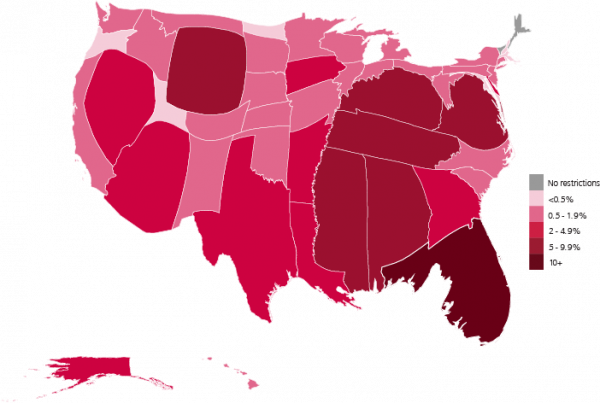
Cartogram of Total Disenfranchisement Rates by State, 2016. The Sentencing Project.

Amy Bach, a lawyer and criminal justice journalist, built a free public tool titled “Measures for Justice” that contains data on over 300 county court systems in 6 states. The nonprofit has received funding from the burgeoning activism of the tech community — Google gave Measures for Justice a grant for $1.5 million dollars and the Chan Zuckerberg Initiative recently announced they would be awarding the nonprofit $6.5 million. Due to the fragmented nature of the criminal justice system, the Measures for Justice research team frequently had to travel to individual counties in order to request records.

Sociologists who study punishment have long recognized the importance of geography in structuring disadvantage, at multiple levels. For instance, there are tremendous differences between states in the scope and impact of felon voting restrictions. Florida, for instance, contains 27% of all disenfranchised felons in the United States—in large part due to its policy of disenfranchising people after they have completed their sentences.. On the other end of the spectrum, Vermont and Maine allow even prisoners to vote.  Another way that geography structures punishment is through children’s experiences of parental incarceration, which varies substantially by region. Moreover, the extent of racial disparity also varies regionally, with African American children experiencing the highest risks in all regions, and Latinos experiencing the most disadvantage in the West and Northeast.   
In a similar vein, even new forms of cybercrime are structured by geography. Sociologists have recently started to explore how these new types of crimes, such as cyber-victimization, are shaped by state-level characteristics.
These efforts could prove useful for scholars and for the public. For example, Measures for Justice developed a “Fair Process” indicator, which is closely tied to the social science concept of procedural justice — the idea that citizens will be more likely to comply with the law and requests of law enforcement if they perceive the system as fair. Recently, reforms and police training based on procedural justice have begun to be widely implemented.

Veronica Horowitz is a Ph.D Candidate in sociology at the University of Minnesota who studies punishment, mercy, and gender in the U.S. criminal justice system.

Photo by Wayne Silver, Flickr CC

Last month, a Texas law enforcement officer opened fire on a van of several Black teenage boys, killing 15-year-old Jordan Edwards. His death reminded many of the cell phone footage showing a Los Angeles off-duty white officer dragging a 13-year-old Latino boy by the collar while pointing a gun, or the McKinney, TX officer who drew his gun on multiple Black youth at a pool party in 2015. During media coverage of Edwards’ death, the media emphasized his honor roll status and the fact that he was a “good student,” and thus not deserving of this treatment. This is not always the way mistreatment of minority youth is framed, however, and sociological research on youth victimization finds that minority youth are often excluded from the category of “true” or “ideal” victimhood, which ultimately works to legitimize their victimization.

Societal notions of childhood characterize children as innocent and pure in contrast to the deviant adult world. Society employs these images of innocence to address children’s vulnerability to physical, sexual, and emotional abuse. However, when children’s behaviors contradict traditional notions of innocence and purity, adults tend to exclude them from the social and legal protection that childhood often affords. 
This inclusion and exclusion of some children from social and legal protection is highly racialized. Images of childhood innocence and victimization typically feature mainstream images of white girls and boys, leaving minority children excluded. Not only that, schools and law enforcement view Black and Latino boys as dangerous and often ignore or downplay their everyday experiences of violence.
Despite encountering high levels of street and interpersonal violence, Black and Latina girls’ victimization remains largely neglected in comparison to their white female peers. Minority girls living in high crime environments often feel pressure from adults to adhere to notions of being “good girls.” Yet, to survive such environments, many minority girls feel they must forgo traditional feminine roles and engage in physical confrontations with other girls and/or men. In doing so, they are criminalized, depicted as bad girls and “ghetto chicks,” and excluded from societal ideals of victimhood.
Photo by keith ellwood, Flickr CC

A stage play inspired by early boxing great Barbara Buttrick recently premiered in the United Kingdom. The play, title Mighty Atoms (after one of Buttrick’s nicknames, “The Mighty Atom of the Ring”), marks a departure in the history of women in boxing, away from condemnation towards acceptance, and has important implications for how we think about gender and women in sport.

Women participating in fights goes back to at least the 1700’s, in the form of Elizabeth Wilkinson, the “European Championess,” who competed in bare-knuckle boxing matches in the streets of London. Her combination of showmanship and fighting prowess made her popular in fighting circles. Still, for many, Wilkinson represented an awful kind of brutalism that lessened the value of the United Kingdom. Meanwhile, in the United States, women boxers were seen as a side-show, forced to compete alongside snake charmers and trapeze artists in American carnivals.
Sport scholars have shown that these ideas are stereotypes about women in boxing continue today. While often used to marginalize or exclude women from the sport, they can also provide a source of identity and meaning for female fighters.
Finally, it is worth noting then even when women’s boxing was finally included in the 2012 Olympic Games in London–the site of this week’s theatrical premier–the addition was met with opposition.
Photo by The People Speak!, Flickr CC

Sex education is a contentious subject in U.S. politics. Before Obama’s presidency, the federal government only funded abstinence education, but in 2009 Obama created the Office of Adolescent Health and diverted some of these funds to create an approved list of practices shown to prevent teen pregnancy (several sources show abstinence-only education does not) through research. With Trump as president, the future of sex ed is an open question, but sociologists can offer some insight regarding what we already know.

Public sex education or “social hygiene” appeared in the U.S. at the turn of the 20th century in response to concerns about increasing urbanization and growing sexual temptations. During the 1960s and 70s, sexual cultures in the U.S. underwent further shifts, influenced by feminism, youth culture, and the gay rights movement. However, anxieties about sex, especially for youth in the U.S., remained. Debates about what kind of sex education to provide for youth seemed to occur between two poles — sexual liberals who supported a comprehensive sex education in schools and sexual conservatives who supported abstinence-only education. 
No matter which type of sex education is implemented, sex ed is ultimately about regulating youth sexuality. Political actors and popular conversations alike frame youth sex as a social problem that requires intervention. Much of this discourse focuses on sex as a danger for children and young adults. Thus, sex education in the U.S. draws on an assumption of risk, relying on prevention-based education.
However, sex educators and the curriculum they use do not assume all children are equally innocent or at risk. Scholars show that sex education often draws on racial stereotypes of youth of color as sexually deviant. Youth of color are “adultified” and thus perceived as more sexual than their white peers. For instance, teachers often characterize African American girls as sexually opportunistic and assume Latina teens are inherently at risk of teen pregnancy. Further, boys are assumed to be sexually aggressive, and girls are held responsible for dealing with boys’ desires.
Photo by Jeremy Nixon, Flickr CC

Today we are featuring a guest post by students at Oberlin College, who submitted a #TROT post as part of an active learning exercise for their political sociology class, taught by Professor Christi Smith. If you or your students would like to submit a post, please email tsp@thesocietypages.org.    

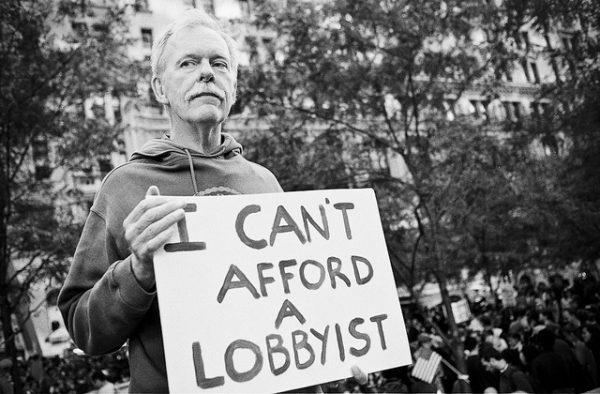
Lobbying is defined by the United States Senate as “the practice of trying to persuade legislators to propose, pass, or defeat legislation or to change existing laws,” and lobbyists get paid to advocate on behalf of the private sector, corporations, government officials, and other interest groups. This political activity takes place at all levels of government. While lobbying as a way to engage with the government is interpreted as free speech, and is thus protected by the Constitution, the ethics of lobbying are much debated due to the unequal socioeconomic power and influence certain individuals and groups can have. Recent sociological research helps provide some perspective on the extent of lobbying in U.S. policymaking.

Corporate lobbying is one of the chief means by which businesses exercise political power in the United States. Corporate lobbying is not easily reducible to firms’ size and market interests, but rather includes their internal capacity for evaluating policy issues, participation in business policy networks, legacies of previous engagement, and economic circumstances. Firms that lobby have annual sales that are nearly four times higher on average than those who do not. More heavily regulated industries that are dependent on government contacts tend to lobby more often. And corporate influence is especially effective in influencing tax policy, financial deregulation, and anti-union activities by advocating for more political restrictions on unionization.
Lobbying can raise awareness and create urgency about certain issues. Professional lobbyists can have a greater impact than mass movements by participating at the early stages of the policy process and shaping the content of legislative content. But does it work? It is difficult to measure the actual direct impact of lobbying, as much of this activity takes place through private conversations and interpersonal encounters. In contrast, most nonprofits use indirect lobbying rather than the direct lobbying used by business and unions. For congressional voting patterns, interest groups’ lobbying influence is actually quite modest. It is actually less effective than protest is in advocating for certain policies regarding issues like civil rights and environmental sustainability, and it is less productive than whistleblowing in monitoring policy implementation. In short, the role of lobbying efforts in shifting the long-term priorities and resources of political institutions is still largely unknown.
Photo by ktus16, Flickr CC

Public outrage about missing Black and Latina girls struck the nation’s capital in March, with many calling the number of missing girls of color a crisis. While the number of disappearances has not risen considerably in recent years, and there weren’t actually 14 Black girls missing in 24 hours in DC, the question is an important one for sociological analysis. Who is considered a “victim” of violent crime and whose victimization goes unnoticed?  

Whites, particularly white women, are the most likely to be framed as victims of crime. Take laws named after victims in the U.S. (e.g., Megan’s law) — while Blacks suffer far more victimization from violent crime than whites, of the 51 laws named after victims in the U.S. from 1990-2016, 86.3% are named after white victims. Only four are named after Black victims, and three after Hispanic victims. Additionally, 65% of these laws were named after female victims.
The construction of whites as victims and Blacks as offenders extends to the reaction of law enforcement when girls are reported as runaways. Scholars argue that running away from home is particularly gendered, pointing to the high number of girls that run away compared to boys and their reasons for running away. Of girls that were considered runaways in the U.S. from 1997-2003, Black and Hispanic girls were significantly more likely to have a runaway charge than white girls. White girls were more likely to get off with a warning.
Similarly, Black girls are more likely to be punished in schools. A recent study showed that Black girls are three times more likely than white girls to get an office referral, a higher likelihood than white boys in the same school. Black girls also got referrals for more ambiguous infractions like dress code violations or disobedience.

What does all of this mean in the context of missing Black girls? It means that institutions, like schools and law enforcement, are far more likely to criminalize Black girls than their white counterparts, which means that they are less likely to see them as victims.

Open cut coal mine, Hunter Valley. Max Phillips (Jeremy Buckingham MLC), Flickr CC.

With a group of coal miners standing behind him, President Donald Trump signed an executive order in his first 100 days reversing Obama-era climate change policies and claimed that he would be bringing back coal and putting miners to work. With this move, Trump has tapped into the concerns of rural communities with economies dominated by resource extraction. Yet, can or will coal mining jobs come back, and will this lead to economic and social development in places like Appalachia?

The loss of mining jobs in the U.S. is largely due to increasing mechanization and other labor-cutting management practices –not the result of environmental protections. Thus, placing the blame on climate change policies is an unfounded, but typical, argument used to scapegoat environmentalists rather than industry or changes in the global economy.
Researchers have long argued that economies based solely around mining are prone to booms and busts, lacking resiliency and often becoming dependent on one industry. Contrary to common assumptions, research has found that mining does not always lead to economic growth and well-being. Thus, even if coal mines stay open, this does not necessarily mean wider economic prosperity and well-being. In Appalachia, for example, the counties with coal mines actually have some of the highest rates of poverty and unemployment compared to surrounding counties without active mines.
Nevertheless, the rhetoric of saving coal resonates with strong cultural connections to mining and people’s identities of coming from multiple generations of miners and living in a coal community. The identity of being a miner is interconnected with masculine ideals of hard work and providing for family, and mining companies have played off of these sentiments. Mining companies, particularly in Appalachia, have actively worked to create community support through public relations and other cultural and political tactics. These corporate strategies, such as sponsoring high school football tournaments and billboard ads, have helped to place the blame on outsiders and environmentalists, while providing a cover for the environmentally destructive and cost-cutting industry practices.
Photo by Andrew Petro, Flickr CC

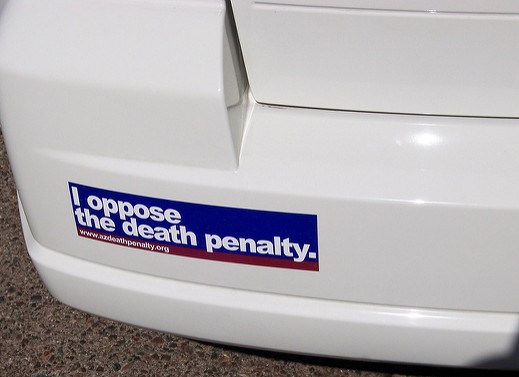
With Arkansasrecent attempts to execute seven inmates in the course of eleven days, and the Supreme Court’s upcoming oral arguments surrounding McWilliams v. Dunn , there has been a lot news about the death penalty this month. Although it is abolished in many other industrialized nations, 31 U.S. states still retain the death penalty, and there is extensive research on this “peculiar institution” and why it remains resilient today.

Despite a multitude of studies, current research remains inconclusive on the deterrent effects of capital punishment. These ambiguous findings are due to a lack of attention to “noncapital sanctions” for homicide like life sentences and incomplete data on potential murderers’ perceptions of capital punishment. What is clear is that there is an extreme racial divide in support for the death penalty, with Black Americans being consistently less likely to support capital punishment than whites. This divide is partly attributed to racial prejudice against Blacks, so much so that one study suggests that if you exclude whites with extreme racial attitudes, support for capital punishment between Black and white Americans is not nearly as bifurcated. Death sentences are also applied disparately across racial lines, with defendants convicted of killing white females most likely to receive a capital punishment sentence, while those convicted of killing Black males are afforded more leniency.
Scholars argue that the death penalty is nested within an exceptionally punitive American carceral state. Capital punishment stems from an unparalleled American political culture that centralizes issues of crime and the criminal justice system. Unlike their European counterparts, American judges and prosecutors are locally elected, allowing much of the criminal justice process to be subject to electoral cycles and public outcries. This political structure, combined with a history of racial conflict and segregation, perpetuates low levels of social solidarity and an underdeveloped state, which allows retributive punishments to flourish. This is especially evident in the American South, a region that has a long history of collective, racialized violence and where death penalty support is particularly embedded.
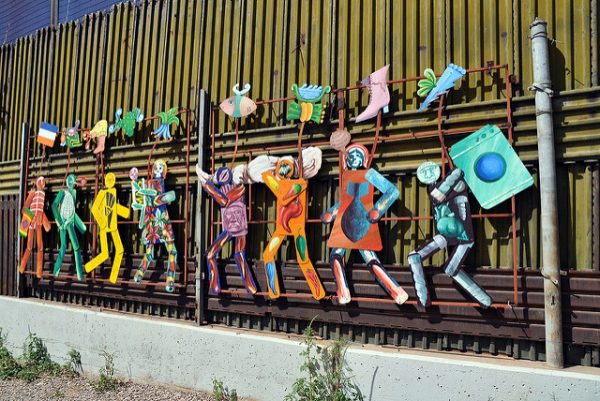
Wall Mural in Nogales. Photo by Jonathan McIntosh, Flickr CC

“I will build a great, great wall on our southern border, and I will make Mexico pay for that wall. Mark my words.” These were the words that President Donald Trump said when he first announced his candidacy. Since his inauguration, Trump has continued to talk about his intentions of building the wall, with many companies allegedly bidding for the contract, despite its many obstacles. Many leaders in Latin America have publicly stated that building the wall would not only change the relationship with Mexico, but it would change relationships with the rest of Latin America as well. Trump’s wall would create a physical barrier between the US and Mexico, but it would also intensify what social scientists call symbolic boundaries.

The border acts as the physical manifestation of and “us versus them” mentality by reinforcing differences between groups, which often limits positive contact between groups and can lead to negative stereotypes. For example, physical borders create symbolic boundaries that reinforce national identities by marking the geographic territory where one nationality resides. This often creates tensions by giving further attention to perceived group differences. In the case of Trump’s wall, part of the underlying purpose is to intensify the symbolic boundary between Anglo-Americans in the industrialized world and the Hispanic inhabitants of a developing nation.
Symbolic boundaries use specific cultural distinctions in order to distinguish one group from another, often along racial, ethnic, and religious lines. In the United States for example, Christians believe having religion creates a morality that is the basis for civic society. Atheists, who have no religion, are believed to lack that morality. This has resulted in atheists being unfairly cast as the symbolic representation of anti-American values. Like the physical wall Trump keeps threatening, these same types of symbolic boundaries work to keep many immigrants, refugees, and other religious minorities from being fully accepted in the U.S.