crime

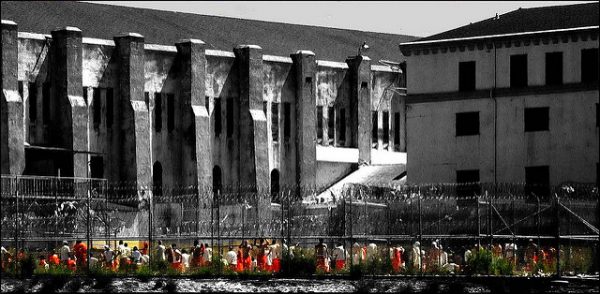
San Quentin State Prison, California. Photo by telmo32, Flickr CC

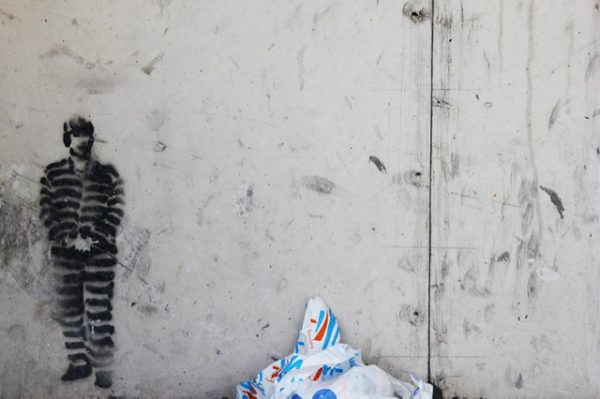
This past August, the Incarcerated Workers Organizing Committee, a labor union for prisoners, began a nationwide strike to protest against inhumane conditions, the use of solitary confinement, and precarious work in U.S prisons. Fighting prison conditions and labor precarity has been a long-standing struggle for prisoners in the United States and around the world, and social science research explains the dynamics underlying this struggle.

As ‘total institutions” prisons provide poor substitutes of basic needs, or limited access to basic items, services, and comforts like hygiene items, clean clothing, nutritious food, education, and health care services.  Consequently, prisons end up depriving inmates of their wellbeing, autonomy, sense of self-worth, and control over their fates. In the United States, the indignities of prison conditions range from major maltreatments, such as the abuse of long-term solitary confinement, to minor cruelties, such as restricting the use of showers and toilet paper (imagine being limited to just one roll per month), in overcrowded facilities.
The specific conditions of prison labor reflect long-standing contradictions. On the one hand, social science evidence suggests that providing jobs to inmates has a positive effect and can reduce their involvement in future crime activities. On the other hand, prison labor has also led to abuse and exploitation. Correctional facilities use prison labor to serve private industries, to perform cleaning and maintenance functions within facilities, or even to repair public water tanks and fight wildfires. Prison labor has also served as an instrument of economic policy in the labor market. In the 1990s, for example, rates of unemployment declined when a massive number of able-bodied working age men went to U.S. prisons.

Imprisonment often has devastating consequences for inmates, their families, communities, and society at large. Even though certain policies like prison labor may involve potential benefits, their positive effects only occur when there is a genuine effort to achieve inmates’ social inclusion. Inmates’ struggles to achieve effective changes in their living conditions therefore require sustained and special attention from the public and policy makers.

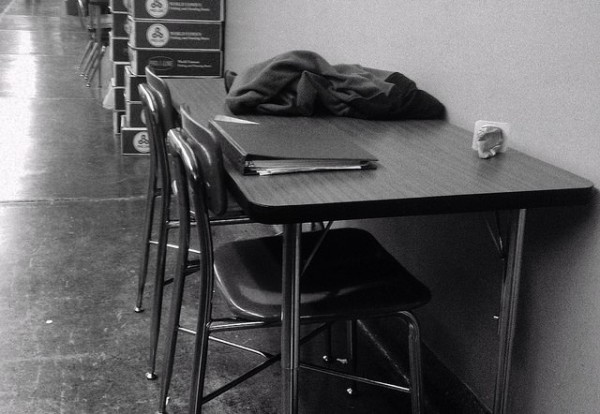
Photo by Steven Depolo, Flickr CC

Originally Posted September 14, 2016.

It’s September, which means students are zipping up their backpacks and sharpening their pencils for a new school year. For many kids, however, disciplinary actions like suspension and detention make school feel less like a place of learning and more like a minefield for getting into trouble. Some schools are experimenting with restorative justice practices to address disruptive behavior in lieu of more traditional means that often mean missing class. These new policies tend to take a lot of time and effort to implement, and very little research has been done regarding the efficacy of these restorative justice initiatives. However, research points to an array of problems with the more traditional, exclusionary methods educators have relied on in the past. 

Many schools have increased their use of punitive discipline and zero tolerance policies, despite drops in school-based delinquency. A shift in school disciplinary procedures would likely result in fewer days of missed tests and lectures for African American students, who are the most likely to receive suspension as a punishment in schools, especially in more racially diverse schools. Research shows that black students are more likely to receive the brunt of disciplinary action when overall delinquent behavior in school is low because teachers and administrators perceive them as threatening day-to-day proceedings.  
Educators often evaluate certain behaviors and mannerisms like punctuality, quiet voices, and particular styles of dress as indicative of being good students. These perceptions of good behavior often stem from teachers’ raced and classed biases regarding what a model student looks like. But many of the characteristics that teachers think make bad apples, like tardiness and attendance inconsistencies, are in fact the same red flags that a student is at risk of dropping out of school. And new research finds that exclusionary punishments like detention and suspension lead to lower test scores and increased tensions between teachers and students.


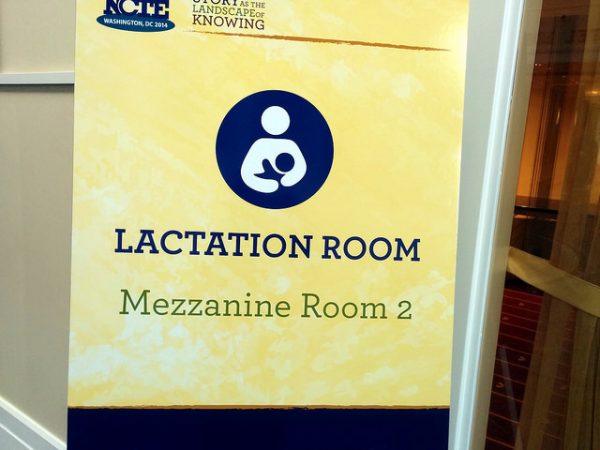
Lactation Room Sign. Photo by Cory Doctorow, Flickr CC

Recently, Utah and Idaho legalized public breastfeeding, finally making the practice lawful in all parts of the United States. Yet, even where public breastfeeding is legal — and has been for some time — breastfeeding mothers still face stigma. For instance, a pool patron and a staff member recently asked a breastfeeding mother in Mora, Minnesota to cover herself while at a public pool. Many have pointed out the contradictions between observers’ acceptance of women’s skin in certain public domains (like at the beach or on the cover of a magazine) and the public shaming women receive when their skin is exposed during breastfeeding.

In U.S. society especially, breasts are sexual symbols. And since motherhood is not highly sexualized, public breastfeeding presents a cultural contradiction in the United States. Because of these shared understandings of breasts as sexual, mothers must consciously negotiate spaces where they can breastfeed. For example, mothers report they engage in a variety of behaviors, like avoiding breastfeeding in certain spaces where they might face scrutiny or draping a blanket over the baby to hide their breasts, in order to not be viewed as sexual while breastfeeding.

In other words, one reason people respond to public breastfeeding with discomfort and sometimes hostility is that breasts have a particular meaning within U.S. culture and breastfeeding in public challenges that meaning.

Photo by Indi Samarajiva, Flickr CC
The word “rave”evokes different responses depending upon one’s generation. For many it symbolizes fun all-night dance parties with friends. While the public may be quick to associate rave culture with youth delinquency, social science explores the broader range of social, spiritual, and cultural elements of raves and electronic dance music (EDM). Raves began in 1980s Britain and quickly spread to the United States. Youth created these anti-establishment and and underground events to celebrate peace, love, unity, and respect — otherwise known as “PLUR.” However, heavy drug consumption resulted in media scrutiny and government crackdowns of these underground locations in the 1990s and early 2000s, pushing raves into more formal spaces like clubs.
Social scientists have explored raves and the electronic dance music scene from two different perspectives. The cultural perspective emphasizes a sense of community and empathy for its members as the roots of the scene. From this perspective, drug use enhances these experiences. The rave has been portrayed as a youth cultural phenomenon, characterized by belonging, self-expression, acceptance, camaraderie, escape, and solidarity, and where drugs — particularly ecstasy or “E” — are often central to the scene or tools in rebellion. From the public health perspective, excessive drug use is the defining feature of rave culture. Here raves and the electronic dance music scene are perceived as dangerous drug subcultures that increased drug-related health problems in the United States. However, some debate these claims and argue that the effects of ecstasy itself are linked to feelings of closeness and solidarity at raves.
While typically not linked to public perceptions of rave culture, some scholars connect raves and electronic dance music culture (EDMC) to religion and spirituality. In particular, scholars point to the non-Christian religiosity of rave’s dance “ritual,” likening it to the non-denominational “new church.” Further, EDM inherits its ritualistic, chanting, and percussive elements from African, Asian, and Indigenous cultures in North America, and African American, Latino, and gay communities in Chicago and New York City in the 1970s and 1980s. Thus, youth promoted raves as place of growth, sacredness, and unity, where youth were not divided through class, ethnicity, and gender.

Though the shape and form of raves and rave culture continues to change, both cultural and public health scholars agree that these events are much more than sporadic, all night dance parties.

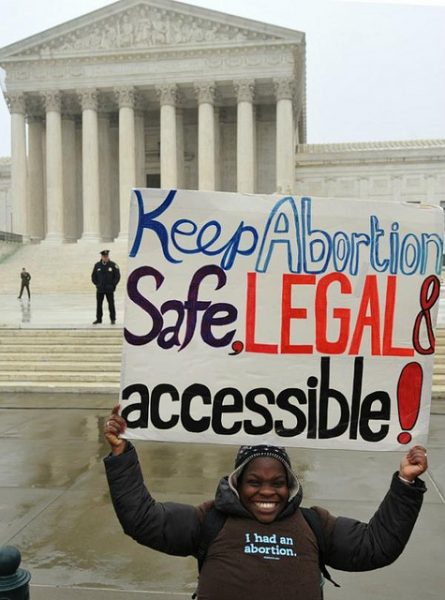
Photo by Debra Sweet, Flickr CC

With the appointment of a new Supreme Court Justice looming, Roe v. Wade — the landmark legislation that legalized abortion across the United States — faces an increasing threat of being overturned. While we often talk about the women who have or seek abortions, we tend to forget about the providers who perform them. Abortion providers today certainly face many challenges to performing this service, but before Roe v. Wade, choosing to perform abortions was usually illegal and dangerous. Despite this precarity, many providers risked their lives to ensure women had access to abortions.

Abortion didn’t always receive public concern. In fact, prior to the mid 1900s, abortion was considered a strictly medical matter. In the late 1800s, medical professionals began advocating for the criminalization of abortion, arguing that women who sought them were medically ignorant about pregnancy. And, at a time when a growing number of immigrant groups seemed to threaten the dominance of White, Anglo-Saxons, doctors vehemently opposed abortions for White, Anglo-Saxon women who defied their “natural” purpose — to reproduce. Many doctors remained opposed to abortion into the mid to late 1900s, but not all. These others doctors — known as “doctors of conscience” — performed illegal abortions, often requiring the women they served to wear blindfolds so they could not identify the doctors if they were later arrested.
It was not only trained medical professionals who performed illegal abortions. Some providers had little to no legitimate medical training. For example, members of the underground abortion service in Chicago — known as “Jane” — sought training so they would not need to rely on outsiders to perform services. Surprisingly perhaps, many clergy used their status and privilege of confidentiality with clients to provide referrals and assistance to women seeking abortions through an organization known as the Clergy Consultation Service (CCS).

The CCS alone estimates that the abortion providers they worked with were able to supply hundreds of thousands of women with abortion services before Roe v. Wade. And this was only possibly through the collaborative efforts of individuals who formed organizations and networks, and used their privileges and resources to help women who sought their assistance. Today women continue to fight for reproductive rights, and with the possibility of Roe v. Wade‘s overturning, many worry that women will once again need to rely on providers like doctors of conscience to meet their reproductive needs. 


This episode of the podcast, Criminal has more about the Clergy Consultation Service.

Photo by Matt Wade, Flickr CC

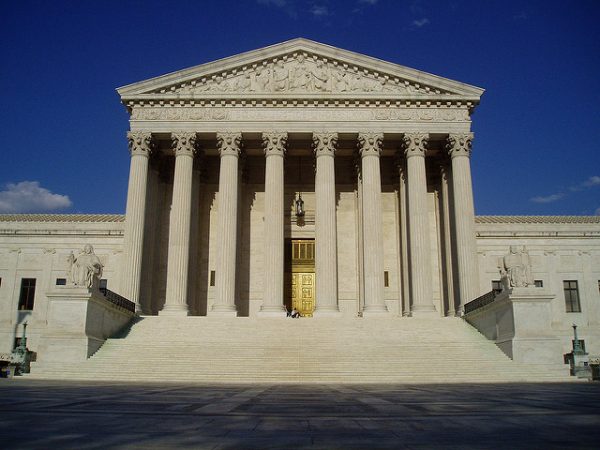
Brett Kavanaugh’s recent nomination for Supreme Court Justice faces much opposition from Congressional Democrats and other progressive political groups. These groups express concerns over a possible overturning of Roe v. Wade, redaction of climate change policies, and implementation of more punitive criminal justice policies. This political contention is crucial, as Supreme Court justices and their rulings can have far-reaching impacts. One area where the Court has been highly influential is shaping how colleges and universities consider applicants’ racial identity during their admissions decisions.

In the 1960s and 1970s, several colleges voluntarily implemented admissions programs designed to boost the presence of underrepresented racial minorities and women within their student bodies. These policies became known as “affirmative action,” a highly politicized issue since its inception. During the 1978 case, Regents of the University California v. Bakke, the Supreme Court ruled against the use of racial quotas and thresholds, but Justice Lewis F. Powell stated that pursuing “diversity” is a constitutional goal. His written opinion affirmed colleges’ right to pursue a diverse student body and therefore consider applicants’ race in admissions, albeit with several considerations and under a standard of “strict scrutiny.”
Since Bakke, The Supreme Court has ruled on affirmative action in cases such as Gratz v. Bollinger in 2003, Grutter v. Bollinger in 2004, and Fisher v. University of Texas, which appeared before the Court in both 2013 and 2016. In each instance, the “diversity” rationale in the Bakke ruling was upheld; colleges have been allowed to consider race in admissions under certain conditions. Yet, several scholars note that prioritizing “diversity” often ignores issues regarding privilege, access, and racial inequities in America. The Supreme Court inspired a defense of race-based policies in admissions for the sake of promoting a cosmopolitan, worldly, “diverse” college experience. By contrast, the original proponents of affirmative action highlighted the need to address pervasive racial inequalities in America, inequalities that persist today.

The history of race-based policy and the Supreme Court illustrates how the Supreme Court justices can shape public policies and social problems. It is likely that anti-affirmative action lawsuits will appear before the Supreme Court again (see Margaret M. Chin and Syed Ali’s recent TSP feature on race, merit, litigation, and school admissions procedures). For now, it is unclear whether the Supreme Court will continue to rely on Bakke or turn to a different rationale in the future. Thus, as the nomination and confirmation process for the next Supreme Court justice plays out, we can be sure that many people will be keeping a close eye on proceedings.

A hijra at the birth of a baby. While the mother rested, she acted as a host. Photo by Whitney Lauren, Flickr CC

The recent hire of a transgender news anchor in Pakistan garnered strong national and international support. Transgender individuals, commonly referred to as hijra or khawaja sara in South Asia, have long held a place in societies in the region, for Hindus and Muslims alike. Officially defined as a “third gender,” hijra — a non-conforming, trans, or intersex gender identity — in Pakistan now have their own category in the census, the right to vote, and the right to inherit property. Despite these advances, recent sociological findings point out that the hijra community still faces problems of legal recognition, social stigma, marginalization, discrimination, and violence.

Hijra often face familial rejection, lack of opportunities, and human rights violations in Pakistan. Most hijra are born biologically male, but many run away from home due to physical, emotional, or verbal abuse by family members who shame hijra for not performing traditional masculinity. After forming their own communities, hijra may be coerced into dancing, sex work, and begging to make a living. Hijra are also routinely discriminated against and excluded from schools, health services, and government jobs. When police sexually and physically abuse hijra, the legal system often fails to protect or support them. Even in old age, many hijra are cast out of their own communities because they can no longer support themselves.
At the same time, many hijra resist the man/woman gender binary and navigate society without the confines of traditional gender roles, allowing for some freedom under patriarchal social structures. When excluded from their families, kinship groups, and social networks, hijra create parallel social institutions, relations, and practices that make up new, distinctive communities.
Even with the implementation of a third gender category, some hijra do not legally adopt the category. Instead, some opt to combine feminine symbols with aspects of masculinity, demonstrating their goal to remain free of any singular legal definition. Given the benefits of being a man in Pakistan — and where a number of familial, religious, and economic difficulties may arise with legally choosing the third gender — hijra often opt to continue to maintain a male legal identity. But the supreme court rulings recognizing hijra indicate that the Pakistani state may in fact be moving away from gender binaries.

Though Pakistani laws have formally recognized hijra, this research suggests that social change is necessary for their inclusion in society. It also indicates that hijra communities will likely continue to be resilient and adaptive in a social structure that does not always afford them the benefits of those that identify along the male/female gender binary.

Photo by the euskadi 11, Flickr CC

For most of us, our only way to know what life in prison is like is through occasional movies and TV shows. But for inmates, the prison impacts all aspects of their lives. Recent stories have filled newsfeeds about a food protest in a Washington state facility, religious discrimination in Michigan, and a massive fire in a Venezuelan jail that claimed 68 lives. These events put the often-dismal conditions, lack of programs, and corruption in carceral spaces on full display. Social science research on prisons can help us understand the conditions of prison life and how broader social context shapes prison structures.

Classical sociological perspectives view prisons as totalizing institutions that define both the day-to-day routines and the personal identities of those incarcerated. This leads to “pains of imprisonment” beyond loss of freedom. More recent scholarship demonstrates how structural inequality, and especially racial inequality in the United States, shaped the development of prisons. Racialization and racial segregation still shape practices within prisons today.
Prison overcrowding has been a major concern in the United States since the beginning of the prison boom in the 1970s. Research clearly shows that overcrowding has serious physical and mental health effects for the incarcerated, and deleterious impacts for safety in prisons. In Latin America, prisons are also overcrowded, and often include a disproportionately high number of prisoners who are awaiting trial, but have not been convicted. Since these prisons lack government oversight and often have insufficient financial resources, many prisons suffer from corruption, persistent abuse by prison officers, and a crumbling physical infrastructure. Religious entities, and sometimes even prisoners themselves, play crucial role in administering and organizing prisons, as well as providing resources and rehabilitation opportunities.

Recent events and protests shine a light on the importance of continued research on prison conditions across the globe. These studies both help us to understand how social contexts “on the inside” and outside of prisons shape the lives of the incarcerated, and bring awareness to an issue that is often obfuscated from public life.

Photo by Kwibuka Rwanda, Flickr CC

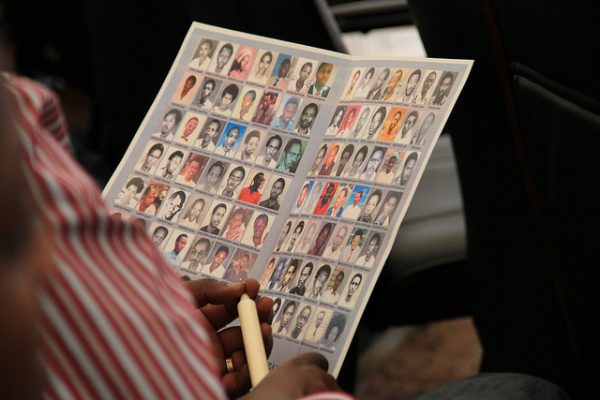
The effects of violent conflict are difficult to measure, from refugee displacement to PTSD or other mental health concerns. Humanitarian advocates may look at refugee displacement while psychologists examine PTSD or other mental health concerns. Though sociological insights often remain overlooked, a number of scholars have made essential contributions in understanding the long-term effects of violent conflict. Their work illustrates how conflict can have social and relational effects, and their findings may help to prevent future violence or perpetuate tension for generations to come.

In the context of conflict, the word “trauma” often refers to psychological effects for an individual who has experienced violence. However, sociology allows for a look into the social consequences of violence. Coined by Jeffrey Alexander, “cultural trauma” describes the irrevocable impact of violence upon a group which was subjected to atrocities, influencing understandings of identity far past the conflict itself. The violence experienced by subjugated groups like African Americans and Jews, for example, becomes a key part of how members of these groups understand their identity in the present.
Cultural trauma does not always occur following a violent event. An event must first become widely understood and accepted as a violation, and this generally occurs with the help of institutions, like the law, education, or the media. Some injustices, like violence against native populations in the Americas, are still not fully accepted as persecution. Powerful institutions may seek to limit a group’s capacity to identify as victims, like educational structures that don’t teach the persecution of Native Americans to students. Conversely, those who experienced the violence (or their ancestors) can use institutions to try and reframe this narrative.
Over time, understandings of past violence can change. Commemorative events can pass on memories from atrocities, but often shift in content over time as new individuals take over elements of the commemorative process. Narratives may also shift to reflect contemporary understandings of violence or identity. For example, recognition of Native American genocide — and subsequent declarations of Indigenous People’s Day on Columbus Day — captures a shift in attitudes about past violence.
Photo by Cannabis Culture, Flickr CC

April 20th isn’t exactly your average holiday, but ever since the late 1970s, 4/20 has been commonly associated with marijuana, as many refer to this date as “Weed Day.” Social scientists have studied marijuana use since the mid 20th century, and this has continued alongside changing norms, beliefs, and policies in the United States. In light of this, we rolled up some research on marijuana use.

In the mid 20th century, social scientists studied how social forces shape marijuana use and the norms surrounding it. Howard Becker’s famous research illustrates that learning to smoke and enjoying marijuana isn’t a simple, intuitive process. Instead, users must take cues from one another. Through this social interaction, they also form bonds and group identities. Further, their experiences and identities reflect the ways that marijuana use is culturally cast as “deviant” and sanctioned by legal penalties. This approach — understanding marijuana use, subcultures, and criminalization as social processes — is common in social science research about marijuana users.
Social norms, public attitudes, and policies about marijuana use changed considerably throughout the early 21st century. While once heavily criminalized, some new policies legalize marijuana use for medical purposes. The medicalization of marijuana is also a social process. Views of marijuana and its use shifted in response to new medical approaches, policies, and narratives. Of course, recreational use of marijuana continues, and research suggests that lines between medical marijuana and recreational marijuana are neither rigid nor impermeable. For example, users may engage in marijuana use both as a medical necessity and enjoyable activity. In sum, social contexts and norms still affect marijuana use, as well as public attitudes and policies.