crime

Photo of a highway with a sign by the side of the road that says, welcome to northern ireland
Photo by Eric Jones, CC

Brexit negotiations have stalled on what to do about the Irish border. Some want to implement a hard border between Northern Ireland and the Republic of Ireland to control the flow of migrants into the United Kingdom. Others fear that a hard border will reignite violence that plagued the region in recent memory. Sociologists explain why peace is so fragile in this region by uncovering the structural, religious, and political roots of the conflict.

The conflict in Northern Ireland is religious, but that does not mean it is about doctrine. Religion does not just describe what individuals believe regarding the supernatural. It is a meaningful social identity that shapes how people experience and perceive the world. This is more true in Northern Ireland than in other parts of Europe. Protestants and Catholics not only worship in different churches, they also tend to live in different communities, send their children to different schools, and drink in different pubs. Through participating in these rituals, people in Northern Ireland construct strong identification with one or the other religious group, even if they do not personally believe in God at all.
Religion does not just signify group membership in Northern Ireland. It also signifies access to power and resources. Protestants there have been legally and socially privileged for centuries. This inequality set the stage for inter-group conflict. Because they constructed their social identity in opposition to Catholics, Protestants tended to see Catholic social ascent as a sign of their own descent. When Catholics mobilized for civil rights in the 1960s, the British-backed Protestants responded harshly. Violent repression strengthened the sense of group identification among Catholics. This collective victimhood identity was used to mobilize some Catholics to join violent resistance groups. A wave of bloodshed lasted for 30 years.
Conflict in Northern Ireland is more muted today. Globalization and trade liberalization have reduced the significance of the Irish border. The Good Friday Agreement signed in 1998 charted a path forward for peaceful power sharing in the territory. However, sectarianism did not end with the stroke of a pen. In the years following the agreement, residential segregation in Northern Ireland has increased, and periodic violence still occurs. The government has done little to dismantle structural sources of inequality, such as integrating schools. Instead, lawmakers place the blame of lasting inequality on bad individual actors. As a result, the Good Friday Agreement has not ushered in the era of religious and political cooperation that many hoped for.

The situation in Northern Ireland has parallels to social conflicts elsewhere, including racial inequality in the United States and South Africa. Social identities, such as religion and race, give meaning and texture to people’s lives. However, when one group’s success is defined by another group’s failure, harmful competition and conflict can tear at the fabric of society. Peace depends not only on individuals seeking and offering forgiveness, but on structural changes and daily rituals that construct an appreciation for differences in society.

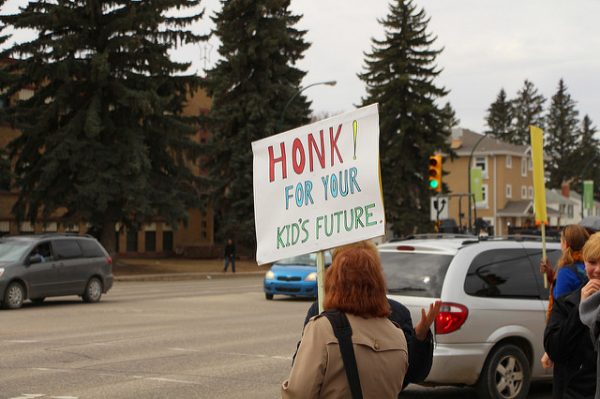
Image of a sign that reads, "honk for your kid's future"
Photo by Kyla Duhamel, Flickr CC

The FBI recently announced charges in a wide-spread college admission scandal involving fake test scores and fabricated athletic resumes. In the wake of the scandal, sociologists are weighing in and reminding us that college admissions is as much about legitimating privilege as improving life prospects. Sociologists have long been skeptical of the term meritocracy, which was in fact first coined as satire by Michael Young. The research below shows how constructed measures of merit in college admissions play a key part in reproducing inequality.

Mitchell Stevens spent a year in the admissions department at a selective liberal arts school. His book describes “the aristocracy of merit” — especially how the review process rewards the activities and presentation styles most common for privileged students. And while admissions officers are mostly the ones judging merit, the book also highlights how staff from other departments, such as coaches or fundraising officers, can advocate for a student’s admission. Shamus Khan’s ethnographic work similarly notes how elite prep schools set up their students to be competitive in elite college admission through skills, activities, and awards. Prep school staff even occasionally call admissions offices of Ivy League schools for students.
Other work on college admissions highlights that the idea of “merit” has always been socially constructed because those with race and class privilege can set the rules. For instance, colleges instituted  “holistic admission” in the early twentieth century because contemporary elites worried that their children would be shut out of attending their alma mater because of high-achieving Jewish students. They rewrote admissions criteria to devalue standardized test scores in favor of a review process that gave students credit for the experiences, skills, and habits that students from the upper-class were more likely to have.
So, if upper-class kids already have advantages, why is there a college cheating scandal? Jessica Calarco points out in NPR that the students affected by this scandal would likely do well no matter what school they attended, but parents are anxious about rising inequality, a bifurcating labor market, and afraid that children will have a harder time than their parents did. From teaching children how to advocate for themselves in school to paying thousands of dollars for out-of-school activities, middle and upper-class parents do whatever they can to help their children get ahead. American higher education is a decentralized marketplace that runs on prestige, which makes credentials from a big-name school potentially even more important in today’s changing labor market — both for students looking for social mobility and those looking to legitimate their privilege.

As Anthony Jack told CNN, the admission scandal flips the usual script — usually when we are discussing merit in college admissions it is around insinuations that minority students don’t deserve to get in. For more on race-based affirmative action, check out other TSP work below!

Affirmative Action, College Admissions, and the Debunked “Mismatch” Hypothesis

The Supreme Court’s Impacts on Race and Admissions in America

Merit and the Admissions Debates at Harvard University and Stuyvesant High School

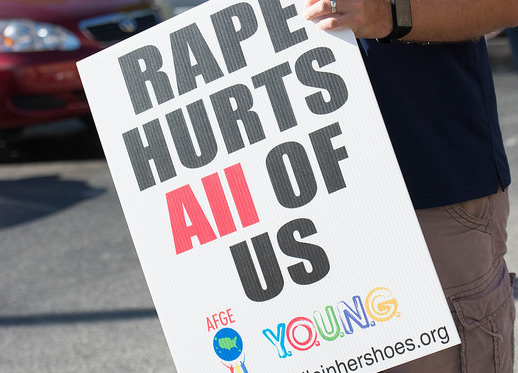
Photo of a sign that reads, “rape hurts all of us.” Photo by FGTE, Flickr CC

Last week, HBO released the documentary, Leaving Neverland, which chronicles two young men’s accounts of sexual abuse by pop superstar Michael Jackson in the late 1980s and early 90s. The documentary provides harrowing details of abuse and grooming, although Jackson maintained his innocence throughout his life. Yet, beyond Jackson’s guilt or innocence, HBO’s airing of Leaving Neverland forces us to engage in larger discussions about an often-neglected group of sexual assault survivors — adolescent boys. Sociological research is examining how masculinity and heterosexuality shape boys’ experiences of sexual victimization.

Threat to masculinity often shapes how male youth interpret experiences of sexual coercion. Many boys view sexual victimization by another man as individual weakness and vulnerability. Forensic interviews with adolescent male survivors reveal how boys attempted to fight off their male perpetrators and/or avoid physical stimulation to show their unwillingness. Boys can be hesitant to disclose abuse by older men because they do not want others to think they are gay. Sexual abuse by women is often viewed as less harmful (e.g. saying it was “weird but fine” and “she wanted it”), suggesting that despite women’s use of sexual coercion and manipulation, these interactions posed less of a threat to boys’ masculinity.
Parents of boys who were sexually assaulted by other men also reinforce cultural messages that link same-sex sexual victimization to homosexuality. Many parents believed the trauma of sexual assault by another man would turn their son gay. In his interviews with 62 parents of Black and Puerto Rican male victims, Shawn McGuffey found that parents engage in “gender recovery work” after the abuse to reaffirm heteronormative gender roles. As such, they encouraged their sons to participate in heterosexual relationships, objectify women, and engage in sports. Fathers in particular expected that immersing their sons in traditionally masculine activities would strengthen their heterosexual identities after the trauma of same-sex assault.
Criminal justice institutions further reinforce gendered rape myths regarding male sexual assault victims. Court observations reveal how attorneys dismantle boys’ credibility by pointing to the lack of emotional trauma on the witness stand and physical evidence on their bodies. In the case of one 12-year-old boy, defense attorneys dismissed the victim’s claims of assault by two older men because the boy did not show enough emotion and failed to display the penetrative injury expected from a same-sex sexual assault. One defense attorney suggested a young Latino victim fabricated the use of sexual force by his sister’s boyfriend because he was ashamed to admit that he “consented” to homosexual sex.

As we continue to grapple with the implications of #MeToo for boys, sociology allows us to challenge how masculinity and heteronormativity silence young male sexual assault survivors. Dismantling these systems of power brings us one step closer to effective prevention and response to boys’ sexual victimization.

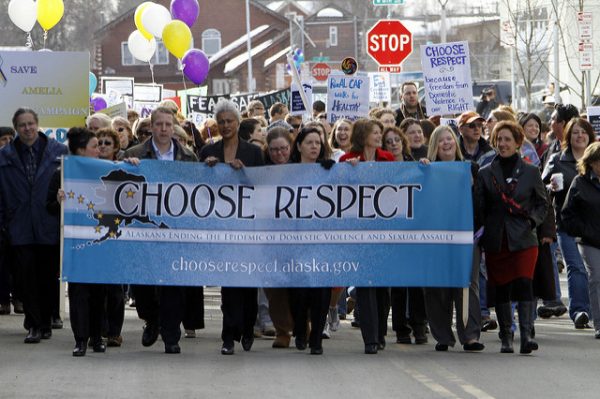
Photo of marchers holding a sign that reads, “choose respect.” Photo by Office of Governor Sean Parnell, Flickr CC

Audiences are re-living one of America’s most infamous cases of intimate partner violence (IPV) with Jordan Peele’s recent documentary about Lorena Bobbitt, who retaliated against her husband John after years of alleged abuse. While the Bobbitt case is unique, the issue is common. The Centers for Disease Control and Prevention estimate that 1 in 4 women and 1 in 7 men in the United States have experienced severe physical violence by an intimate partner. Tabloid exposés of such cases highlight personal details of the individuals involved. By contrast, sociological perspectives on IPV uncover the structural conditions that make it such a pervasive problem.

Sociologists began studying violence between spouses in the 1970s, particularly violence against women. Feminist scholars, drawing from interviews with victims in women’s shelters, focused on women’s experiences as targets or victims. They believed that IPV’s root causes were the patriarchal norms and laws that defined wives as their husbands’ property. Other survey researchers found that men were also likely to be targets of IPV — sometimes at rates as high as those for women.  They considered IPV a special case of violence in the home, but similar to child or elder abuse in its determinants: stress, social isolation, and intergenerational histories of family violence. Although the question of gender differences in IPV remains controversial, contemporary research does not necessarily see these perspectives as competing, but rather as describing two or more different types of IPV, such as “patriarchal terrorism” versus “common couple violence.”
Victims of IPV often suffer severe consequences. Violence damages physical and mental health, leading to injury, chronic pain, depression, sexually transmitted disease, and post traumatic stress disorder. Beyond these individual effects, the negative impact of abuse spills over into other areas. In some cities, landlords are penalized if the police are called to their property too often. Because of this, female renters who report domestic violence are considered a liability and often face eviction. Trouble at home also follows many women to work in the form of stalking and harassment. IPV victims miss work more frequently than their peers because of injury and distress, which results in lower productivity and higher job turnover.
Eradicating IPV across the world is a major focus of human rights organizations, but a big obstacle to changing behaviors remains: the continuing social acceptance of physical violence against wives in some areas. A recent international survey found that support for a husband hitting his wife varies widely across countries, but tends to be greatest in places where gender inequality is relatively high. Within a given country, the most marginalized people (rural, lowest wealth quintile, least education) are generally the most likely to support IPV. The good news is that these attitudes are changing. In nearly every country where data are available, support for IPV has declined since the 1990s. This trend parallels an increasing number of policies banning violence against women in recent decades.

This research shows how intimate partner violence affects both men and women, though women tend to experience more severe and persistent abuse in the United States and internationally. Undoing this social problem will require structural change in the way societies construct gender norms and how institutions respond to victims. In the meantime, some resources for abuse victims can be found here.

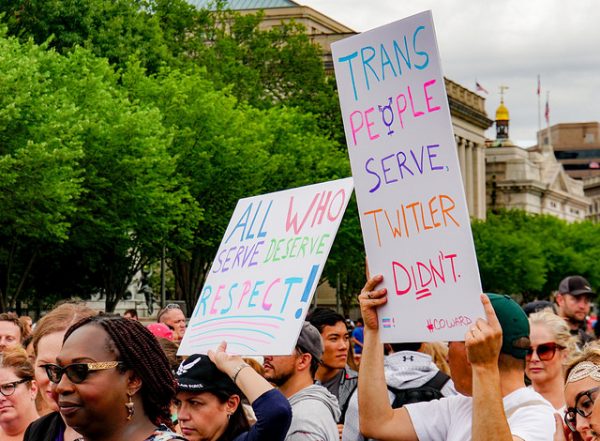
Photo by Ted Eytan, Flickr CC

In 2016, the Obama administration began to allow transgender military personnel to openly affirm their gender identity without fear of being separated, discharged, or denied reenlistment. Recently, however, President Trump and the United States Supreme Court instituted a ban on openly transgender personnel serving in the military. Among these are troops that have multiple deployments, extensive combat experience, and are highly decorated. Though President Trump asserted that transgender personnel affect military readiness, top military leaders did not support this determination. Additionally, projected healthcare costs for these personnel — another reason stated by Trump for the ban — have been found to be minimal, given the small size of this population. Sociological research sheds light on troops’ attitudes towards transgender personnel, and addresses misconceptions about the effects of transgender personnel on military readiness.

One study at a premier military academy revealed that most concerns about the integration of transgender personnel in the military included items such as privacy (bathrooms, showers, living arrangements), how to gauge male and female physical fitness standards for transgender personnel, and costs of hormones or surgeries for transitioning soldiers. Another study suggests that overall, cadets (both ROTC and military academy) and civilian undergraduates do not believe working with transgender people would affect their ability to do their jobs. However, nearly half of academy cadets agree with barring transgender people from military service, while smaller percentages of undergraduates and ROTC cadets hold this opinion.
In another study, survey responses of active and veteran military students revealed relative support for transgender men and women in the military. Both deployment to a combat zone and being in an infantry combat position led to supportive attitudes towards transgender military personnel. However, a noteworthy number of participants also expressed stark bias and prejudice towards transgender individuals in the military.
President Trump tweeted once that “our military . . . cannot be burdened with the tremendous medical costs and disruption that transgender in the military would entail.” As scholars have shown, however, the effects on both health costs and military readiness would be indeed negligible.

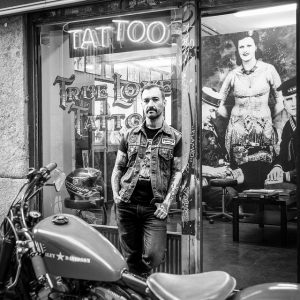
Photo of a person standing outside a tattoo shop. Photo by Ralf Scherer, Flickr CC

Tattoos can be important symbols in the underworld, but the exact meaning of these images are often a well-kept secret. Even the teardrop tattoo, considered the most popular emblem of prison culture, has contested meanings. While some consider that the tear underneath the eye symbolizes the death of a loved one, others believe that it serves as a tally of the carriers’ crimes. Beyond the actual meaning of their shapes and contours, prison tattoos serve several social functions in prison life.

Studies usually describe how prisons can strip prisoners of different parts of their ‘identity kit’. At intake to prisons, people are fingerprinted, photographed, and assigned an identification number. Penal institutions also routinely strip prisoners of their possessions, clothes, and cultural signifiers in a forced process of personal defacement. To neutralize this process, prisoners gradually acquire a ‘prison identity’. Tattoos enable prisoners to consolidate their self-perception, embrace a new identity, and announce their commitment to ‘convict’ status.
Prison scholars argue that prison subcultures endow status and prestige among peers, and strengthen prisoners’ sentiments of loyalty to the prison world. According to David Skarbek, formal and informal norms are effective in securing prison order. However, when a community becomes larger or more diverse, inmates often start organizing around prison gangs. These groups are forms of brotherhood or comradeship that provide information, safety, and a deeper sense of belonging. Tattoos provide gangs with a coded language that serve as an informal mechanism of communication, but also as a way of differentiation against outsiders. Through the visual display of a tattoo, prisoners convey their status, rank, accomplishments, and their allegiance to a specific organization.

Photo of a package wrapped in brown paper. Photo by Karen Apricot, Flickr CC

Every February, people strive to get reservations in a romantic restaurant, find the right present for the person they love, or send a passionate letter to convey their feelings. But this does not work for everybody. As confinement can prevent prison populations from dating or buying gifts, prisoners and their partners experience Valentine’s Day as a reminder of the far-reaching consequences of the deprivation of their freedom.

Contemporary kinship and family heavily rely on the consumption of goods to express love and affection. However, prison confinement alters conventional rules of exchange and reciprocity. Because of security concerns, correctional authorities eliminate spaces where prisoners can demonstrate physical affection and sustain loving relationships with their partners. Since prisoners also lose the possibility of earning a decent salary and purchasing and exchanging goods, they are prevented from providing for their families, let alone offering them gifts. The difficulties of sustaining loving relationships threatens prisoners identities as spouses, partners, and parents. Men in prison not only lose their freedom, but also their sexual autonomy and sense of masculinity.
Partners of the incarcerated report feeling the burden of alleviating the pains of imprisonment and compensating prison deficiencies by satisfying the needs of their loved ones. Research has found that women in lower income groups spend a substantial portion of their annual income on visits, telephone calls, and packages for their incarcerated partners. While maintaining ties to family during confinement have potential benefits for the imprisoned, the desire to maintain the most basic level of connection involves significant costs, both social and economic, for prisoners’ families.
To circumvent the barriers to demonstrating affection, prisoners and their families resort to creative alternatives to express their love. By adorning and scenting letters, for instance, they create bodily substitutes that convey a sense of physical involvement and mitigate the deprivation of bodily contact that characterizes prison confinement. Despite security concerns, prison administrators have implemented family-visit areas and allowed overnight visits, which allow families and couples to create a sense of intimacy that challenges the emotional deprivations of imprisonment.

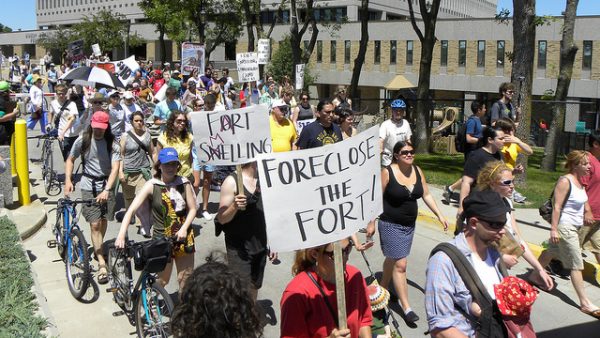
Protest calling to remove Fort Snelling in Minnesota. Photo by Fibonacci Blue, Flickr CC

Originally posted October 9, 2018.

In recent months, a homeless encampment of over 300 people — most of whom are American Indian — has formed along a highway noise wall in Minneapolis. The encampment has been self-proclaimed the “Wall of Forgotten Natives” by residents and Indigenous activists who point out that much of Minneapolis is built on stolen Dakota land. Social and health service providers have mobilized around the encampment, and city officials have worked with community leaders to begin a relocation of people at the encampment to more stable housing on Red Lake Nation land. The wider context for the establishment of the camp, American Indian solidarity and resistance to disbanding the camp, as well as the government’s response, all highlight the process of settler colonialism.

In the United States, settler colonialism is defined as the control of land and its resources by white settlers who seek political power/control in a new space (i.e. like “regular” colonialism) through both displacement and violence against Indigenous persons in order to eventually replace the Native population (i.e. unlike “regular” colonialism). Until recently, studies of Indigenous people have largely been absent from sociological research and some have referred to this as sociology’s “complicity in the elimination of the native.” Scholars have begun to incorporate settler colonialism into research on the domination and dispossession of various racial and ethnic groups.
In Minnesota, American Indians face the consequences of settler colonialism everyday: generational trauma from historical violence and boarding schools while at the same time, confronting a host of contemporary inequities in health, exposure to violence and the foster care system between Natives and non-Natives. At the national level, the U.S. government’s urban relocation programs during the 1950s serve as further examples of settler colonial logic and contemporary homelessness among Minnesota’s urban Natives today and their political response. While these policies encouraged Natives to move from what were economically deprived reservations to what was promised as training and employment in urban areas, they faced intense discrimination. By 1969, unemployment among urban Natives was nearly ten times the national average and Native incomes were less than half of the national poverty level.
After the U.S. government failed to assimilate Native people through relocation in the 1950s, their attempt to end the legal status of what it meant to be a “federally recognized tribe” led to American Indian resistance across the United States and into the social movement fold of the 1960s and 1970s. Founded in 1968, the American Indian Movement was started in Minneapolis, and Minnesota is a historically important site of resistance to settler colonialism among Native peoples. American Indians continue to resist settler colonial practices and beliefs today. One example of this includes Indigenous protests against federally recognized holidays like Columbus Day and Thanksgiving, which are embedded in settler colonial stories of the past that “whitewash” events and stereotype Indigenous people. Other acts of resistance include ceremonies acknowledging genocide and other violent acts by the U.S. government. Just last spring, Dakota activists illustrated such resistance to the Walker Art Center’s decision to host a piece of a “scaffold” similar to that of 38 Dakota men who were hanged following the U.S.-Dakota War of 1862.

The “Wall of Forgotten Natives” highlights both the settler colonial practices that make such a homeless encampment possible but also demonstrate how American Indians have continually resisted settler colonial ideas and actions.


The authors respectfully acknowledge that the University of Minnesota stands on Dakota and Ojibwe peoples’ traditional lands.  

Photo by Ulisse Albiati, Flickr CC

Originally posted August 6, 2018.

Teenager Maedeh Hojabri was recently arrested and imprisoned by Iranian authorities for posting Instagram videos of herself dancing in her bedroom. People around the globe were stunned at the news, although such punishment and censorship is sadly a common phenomenon. In Iran, Hojabri’s actions violated conservative legal norms that impose a strict dress code and condemn women for exposing their hair or dancing in public. More than a century of social science research can help shed light on why governments criminalize the violation of expected gender norms.  

Classical sociological theory argues that state actors use legal sanctions to exert control and enforce moral sentiments, in an attempt to garner social solidarity. The criminalization of dancing, for example, enforces and legitimizes the morality of conservative values and strict social control. To protect dominant social values, elites may use the penal system as a tool to persecute and discriminate against social minorities. The dominant group’s repression of subordinate groups derives from hierarchies that operate around patriarchal, racial, religious, class, national, political, or ethnic distinctions. Hojabris’ case illustrates repression based on patriarchal norms.
The state may also use the penal system to demonstrate competence and authority. Penal repression allows the state to demonstrate its sovereign capacity and reassert political authority under threat. The case of criminalizing dancing in Iran thus illustrates how public authorities use penal policy to address a legitimacy crisis. Many scholars link the loss of public confidence in the political system to the rise of punitive populism and the ascendancy of penal severity in and outside the United States.

The penal state has become a central instrument for the exercise of authority. It can protect conservative values and strengthen the power of political elites, who exploit the penal system to legitimize their political agendas. While criminalizing dancing seems odd in the United States, in Iran it serves to enforce moral rules, extend social control, and demonstrate state power.

Photo by x1klima, Flickr CC

Originally posted August 17, 2018.

Since its inception last October, the #MeToo campaign has extended beyond the red carpets of Hollywood and into other public arenas like high schools and universities, religious organizations, and military bases. Sexual harassment, assault, and rape within carceral environments such as jails, prisons, juvenile detention facilities, and immigrant detention facilities, however, have received comparatively little public or media attention. And when such reports are made, they are often met with public indifference or ill humor with jokes like “Don’t drop the soap!” Nevertheless, there is a a small but growing base of social science research that shows how confined persons experience both the threat and the act of sexual violence.

In contrast to the #MeToo movement in the larger society, much of the research on sexual violence against those incarcerated has explicitly focused on men and male facilities. Male facilities have long been marred by reports of sexual violence, in part due to norms of hypermasculinity that encourage violence as a sign of heterosexuality. Men are expected to prove that they are not “fags,” “punks,” or “bitches” to avoid being targeted for rape. Yet, confined men who exhibit a smaller stature and present perceived feminine characteristics face a greater likelihood of experiencing sexual violence during their stay.
Women also face staggering rates of sexual violence behind bars. In addition to instances of rape through aggressive physical force, guards sometimes coerce women into sex in exchange for certain benefits such as visits, phone calls, food, and cigarettes. Due to transgender discrimination, trans women are often confined with other male inmates, where they face an even greater risk of harassment, assault, and rape, both by their peers and the guards who control them. Despite increased legislation and advocacy following the 2003 Prison Rape Elimination Act (PREA), most detained victims do not report the abuse to authorities. For one, guards themselves are often the perpetrators of sexual violence and wield the authority to dismiss an inmate’s claims. Moreover, victims may not disclose for fear of retaliation, shame, guilt, the loss of benefits, and questions about their (hetero)sexuality.
While sexual violence no doubt pervades many carceral settings, researchers also study other forms of sexual activity, sexuality, and sexual social control among confined persons. Recent work, for example, shows that LGBQ inmates often develop consensual and caring sexual relationships within confinement. Yet, institutional restrictions on sexual activity through mandates like PREA criminalize these consensual relationships. Scholars suggest that such restrictions are not necessarily rooted in concerns over public safety and consent, but rather decades-long discrimination against same-gender sex.
As we continue to grapple with the social and political reckoning of Me Too, social science researchers can help disrupt the “sociological silence of sexual violence” and draw attention to power differentials across settings in which people are particularly vulnerable to abuse and exploitation. Highlighting confined persons’ lived experiences of sex and sexual violence within carceral settings, then, contributes to larger conversations around sexual consent and power, as well as the reform (or abolition) of incarceration.