crime

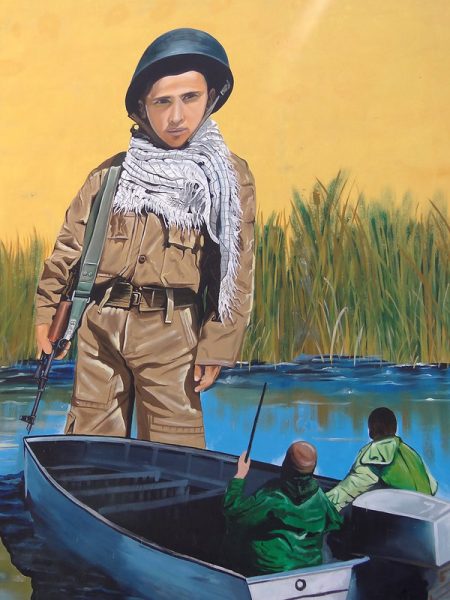
Mural Showing Child Soldier from Iran-Iraq War, Photo by Adam Jones, Flickr CC

In 2014, Boko Haram made global headlines when militants kidnapped 276 girls from school in Nigeria. Policy makers, activists, and celebrities across the globe mobilized, calling for action to #BringBackOurGirls. But in the case of child soldiers, the moral lines are often less clear because they are simultaneously victims and perpetrators. Ex-Boko Haram fighters, including at least 8,000 children, currently face a new battle as they seek to reintegrate into civilian life despite stigma. Research on the social construction of victimhood and childhood can help us better understand child soldiers.

Ideas around morality, righteousness, and innocence of victimhood differ across time and place. In World War I, for example, soldiers who suffered from trauma were treated as weak or unpatriotic by superiors and medical professionals. In the aftermath of WWII and the Holocaust, humanitarian actors and mental health professionals led movements to redefine victims of violence as worthy of respectability and reverence. Characterizations of victimhood are also contrasted with perpetrators — the innocent, passive victim is defined in opposition to the active, wrong-doing perpetrator. Sociologists examine how such labels are constructed, and in practice, moral lines are rarely so clear.
Media outlets often depict child soldiers as helpless victims who are abducted and indoctrinated by militia groups. This is due to media representations of children as innocent and naive.  However, many children volunteer to enlist due to survival techniques. Thus, scholars have sought to depict child soldiers as “agentic,” rather than passive victims. While the media emphasizes the binary between childhood and adulthood, child soldiers occupy an ambiguous space between these categories. This ambiguity is the result of a child soldier being capable of extraordinary violence and simultaneously symbolizing the innocence of childhood. Scholars argue that challenges to reintegration stem from how children have been socialized into militias, as well as their young ages.

While child soldiers occupy the muddy moral grounds of victimhood, these categories remain important,  particularly for issues of restorative justice and reintegration in their communities. 


For more on victimhood across different contexts, see these TROTs:
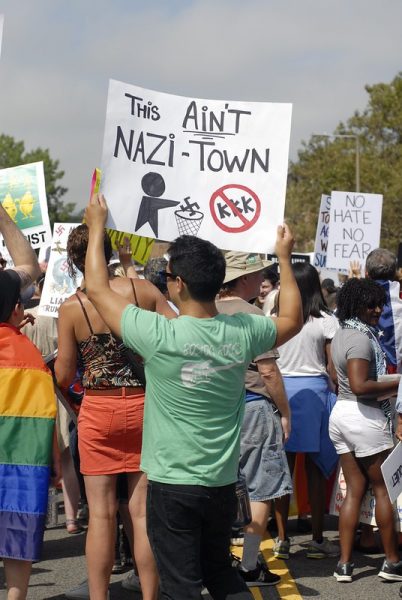
Photo by Sasha Kimel, Flickr CC

We at The Society Pages have written about the study of “white supremacy” in social science. This term can be used to describe overarching patterns of privilege and power that favor whites or a term that bigotry, prejudice, and belief that whites are a superior race. It may be easy to think that this latter meaning has become less relevant in the contemporary, “post-racial” world, but this is not the case.

In recent years, beliefs about the superiority of whites have actually re-emerged within the political mobilization of populist attitudes, anti-immigrant sentiment, and Right-wing political beliefs in Western democracies. To capture these distinctive and troubling realities, scholars, reporters, and cultural commentators have increasingly begun to use the term “white nationalism.” White nationalism is not just a remnant of outdated, obsolete prejudice; rather, it is has been reconfigured and revitalized for the new global world.

Modern white nationalist rhetoric constructs the image of a historically white country and populace under attack amidst a world of 21st-century immigration, globalization, and shifting racial landscapes. By advancing nativist rhetoric and mobilizing such sentiments in the political arena, white nationalist organizations forwarded understandings of “white” that draw on the idea that the Western world is meant for white people. This has had important political consequences in the USA and Europe; politicians and parties who advance anti-immigration platforms have been bolstered by these dynamics.
Even though relatively few politicians and political parties have openly endorsed white nationalist statements, research shows that white nationalist rhetoric and nativist messages can impact political discourse even among moderate groups. In essence, the presence of white nationalist rhetoric can shape the contours of political discourse more generally. Research has studied such dynamics with an eye to common digital media of the 21st century; the discursive impacts of white nationalist rhetoric are particularly visible in studies of the Internet, social media, and other such platforms. In the 21st century, prominence in the digital sphere is important to how contemporary white nationalist groups make their presence felt. 
It is important to remember white nationalism and right-wing beliefs are not simply empty rhetoric without material consequence. Authors have described how white nationalist rhetoric and organization can affect electoral results — the “Brexit” vote being one of the most obvious current examples. In addition, upticks in white nationalism and nativist sentiment have been paralleled by increased hostility and violence against minority and immigrant populations, as well as the institutionalization of laws that restrict such groups’ rights by targeting their cultural and religious practices. For example, the push for “burqa bans” in several European countries reflects mobilization by nativist groups that has cast the burqa as a symbolic challenge to national identity. This and example and ones like it highlight the white nationalist belief that the nation should be defined by whiteness and designed for whites.

Photo by Petr Kratochvil, PublicDomainPictures.net CC

Nearly two years after the rise of #MeToo, sexual assault and harassment continue to surface across media headlines. Whether writing about the uptick in sexual assaults or the most recent sexual misconduct allegations against Brett Kavanaugh, the media often emphasize changes in complaints or reports of law violation. Yet, the process by which individuals learn that assault and harassment can be reported in the first place remains crucial to understanding shifting complaint levels. Sociologists of law have used legal consciousness to explain how people first perceive an act of discrimination as wrong and worthy of complaint.

Legal consciousness refers to the ways individuals make sense of law and legality within everyday contexts. Beyond its formal legal institutions and processes (such as courts), the law more generally guides how we understand what is and what is not legal. We learn about legality through legal images displayed across television, news media, films, cultural practices, and social relations. These cultural ideas of law and legality shape whether and how we come to view an act as a breach of law or a discriminatory practice. Once individuals reflect upon legality, Patricia Ewick and Susan Silbey suggest that they may “engage, avoid, or resist the law and legal meanings.” But when marginalized groups experience crime and discrimination, they often have fewer resources for mobilization at their disposal.
For example, growing public awareness of workplace sexual harassment — one form of gender discrimination — has shifted attention to how women come to define unwanted sexual attention as harassment. After experiencing sexual jokes, solicitation, and sexually explicit material in the workplace, women use several frames to understand what they experienced. They may simultaneously view these incidents as forms of gender discrimination and blame themselves, brush off men’s sexual comments, downplay own their harm relative to more serious forms of harassment, or even participate in the sexual banter to bond with male coworkers. Research shows that even in incidents where women felt violated, they did not necessarily define that violation as meeting the legal definition of sexual harassment, which for them included more intrusive behaviors, such as physical contact.
Relatedly, some groups are more likely than others to define harassing workplace behaviors as sexual harassment. In particular, men and older cohorts of women who began working before sexual harassment came to public attention in the 1970s are less likely to recognize forms of unwanted sexual attention as sexual harassment. Once people are conscious of a phenomenon, they may “mobilize” the law in response. Mobilizing responses included filing a formal complaint, telling bosses/supervisors, and confiding in close friends, partners, and family members. The reactions of family and friends, in particular, often become learning moments, in which individuals come to see and define the issues they experience as legal problems.
Photo by World Coalition Against the Death Penalty, Flickr CC

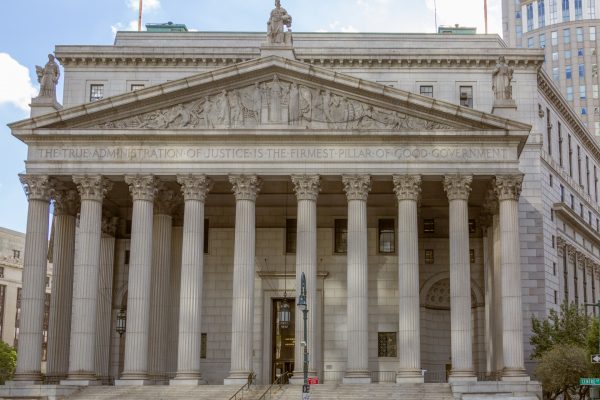
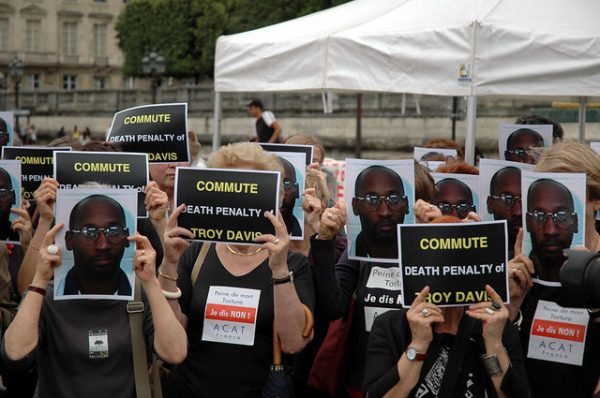
Recently, the Trump administration announced they would continue federal executions this coming year, despite the fact there had been no federal executions in nearly two decades. This announcement comes soon after a recent Supreme Court decision reversing Curtis Flower’s death penalty conviction for racial bias in jury selection by a Mississippi prosecutor. This is not the first case about racial bias that has made it to the Supreme Court (see: Furman v. Georgia, McCleskey v. Kemp), nor will it be the last. Social science research demonstrates racial disparities are common in death penalty cases, but racism is not the only factor.

Racial bias in jury decisions is one way black defendants are disadvantaged in capital punishment cases. Research by Mona Lynch and Craig Haney shows that white male jurors are more likely to sentence black defendants to death than women and jurors of color. These jurors often use emotion-based tactics to sway other jurors to their side — and to racially-biased outcomes.
The race of the victim — perhaps more than the race of the defendant — plays an extremely important role in the probability a defendant will face the death penalty, and the likelihood the defendant will eventually be executed. Research finds that black and Hispanic death row inmates convicted of killing white victims face a higher likelihood they will be executed than others on death row. 
Data comes from the Death Penalty Information Center and the General Social Survey. Click to enlarge
Racist histories — like the presence of lynchings — as well as a higher percentage of blacks living in the area increase the number of death sentences. Beyond race, political factors, like public support for the death penalty and Republican strength, also influence yearly executions. Other factors include national level Republican strength, presidential elections that emphasize law and order, economic inequality, and higher murder rates. Further, the presence of liberal political values may explain the absence of death sentences. 

The death penalty’s role in deterrence is contested, but its racial impact is not. Using research on racial bias, social scientists have helped change death penalty policy in the United States. A report by Katherine Beckett and colleagues played a key role in Washington’s decision to abolish the death penalty in 2018. The report found that prosecutors were significantly more likely to file a death notice in a county with a relatively large black population, and juries were 4.5 times more likely to sentence black defendants to death than defendants of other races. 

You may also be interested in a previous article: Racial and Regional Differences in Support for the Death Penalty.”

For more information and data on the death penalty, check out the Death Penalty Information Center.

Photo of a silhouette of a person holding a rifle.
Photo by Esther Vargas, Flickr CC

The Northern Triangle region of Central America — composed of the nations of Guatemala, Honduras, and El Salvador — is considered one of the most violent regions in the world outside of a war zone. In addition to a de facto state of war against highly organized and well-armed nonstate actors, extrajudicial killings by both the police and citizens of local gang members and criminals reveal both the ineffectiveness of state action in preventing violence and the desperation of local communities for security. Research on vigilante forms of justice in the region demonstrates how weak state institutions, like inadequate police forces, inefficient judicial systems, and corruption, can contribute to citizens taking the law into their own hands to provide justice and security in their communities.

Ineffective and inaccessible criminal justice institutions create a void that fosters mob action and vigilante justice. In Latin America, linchamientos, a form of collective vigilantism, reflect communities’ dissatisfaction with state authority and the desire to have autonomy in their own affairs. In rural Guatemala, for example, linchamientos have been considered a legacy of the nation’s brutal civil war (1960-1996). Today, they still function as a form of community justice against local criminals, due to the perceived corruption, inefficiency, and illegitimacy of official police forces.
Widespread political problems generate conditions of ‘statelessness’ in which citizens are more likely to ignore legal avenues of conflict resolution to engage in violent “self‐help.” In Guatemala and Honduras, for instance, conflicts over land have fostered a continuous cycle of violence between peasants and elites. State ineffectiveness not only incentivises citizens to take justice into their own hands, but also enables the expansion of private security, the militarization of police forces, and even alliances between vigilante groups and the state’s armies. In Mexico, when the police have fallen short of providing adequate security in the last decade, organized vigilante groups have battled powerful drug cartels. The Mexican state has assimilated these groups as a way to both expand the fight against crime and keep vigilantes under its control. 
In a number of cases in Latin America, the inability of states to provide social order, security, and justice has led citizens to take up arms and attempt to do it themselves. Just as vigilante justice can challenge the power of the state and support for democratic governance, however, confidence in law enforcement can strengthen democracy by reducing the need for extralegal justice. 
Photo by Kandukuru Nagarjun, Flickr CC

This post was created in collaboration with the Minnesota Journalism Center.

Technology has its share of perks and benefits. Past articles on The Society Pages demonstrate how artificial intelligence and technology can help enhance journalism and curb trafficking and trolling online — but scholars have also found technology has a dark side. Meredith Broussard calls it, “technochauvinism,” a belief that tech is always the solution to the world’s problems. It is a red flag, she says, because “there has never been, nor will there ever be, a technological innovation that moves us away from the essential problems of human nature.”
One of these problems is unequal access to the internet. On The Society Pages, we highlighted how access to the internet influences activism. Other research shows how access to the internet influences various societal practices including predictive policing, real estate markets, affordable housing, social services and medical care. For example, predictive policing is a developing area of inquiry. This practice has come under scrutiny for its lack of transparency and potential to assign inaccurate risk scores to individuals that may become a victim or offender in a violent crime, which can lead to the overpolicing of already marginalized areas.
Scholars have also discovered that blue-chip companies, including Google, produce search results that marginalize underrepresented populations. Further, there is fear that algorithms are writing people out of jobs. While algorithms do have the potential to write people out of jobs, different fields may experience this to various degrees. This may be true for professions including paralegals: Up to 69 percent of paralegals’ time could be automated. In the journalistic profession, reporters and editors are in better shape due to their ability to animate algorithms to their advantage: As a human-centered process, algorithms have the potential to increase reporting outputs with less human effort. But algorithms aren’t neutral — they are produced by people, and they have the potential to reproduce marginalization.
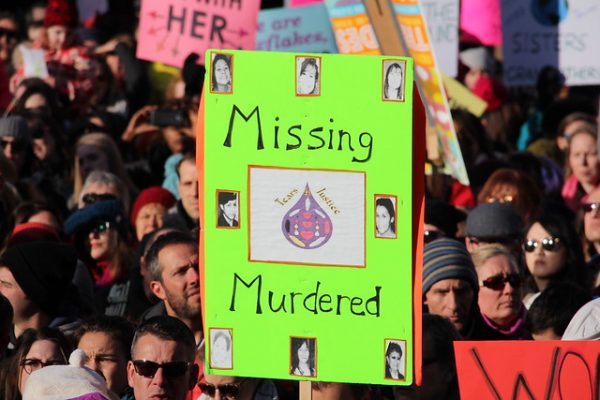
Photo shows a crowd of people holding signs. The sign in focus is green and says "Missing Murdered" and shows photos of Indigenous women.
Photo by JMacPherson, Flickr CC

A historic inquiry into missing and murdered women in Canada has determined that the nation committed genocide against Indigenous women, girls, and Two-Spirit people. The violence stems from a long history of colonial and patriarchal violence, according to the report’s authors. Moreover, they suggest that “persistent and deliberate human and Indigenous rights violations and abuses are the root cause behind Canada’s staggering rates of violence” still today. Recent sociological research shows that the heightened risk of violence faced by Indigenous women in Canada is also deeply entwined with social stigmatization, poverty, and the lingering impacts of reservations on housing and schools.

With racism and colonization, Indigenous women in Canada have long been labelled as promiscuous, immoral, and sexually available. Today, these stereotypes contribute to victim-blaming and a lack of attention to cases of missing and murdered Indigenous women, girls, and Two-Spirit people. More specifically, law enforcement regularly dismisses reports of missing women and girls as runaways or partiers and, with the media, use these stereotypes to blame these women for making bad choices that contribute to their own victimization.
Yet many women who hitchhike
do so for social and material reasons. Ever since the creation of reservations, these women face barriers to transportation and mobility. Such challenges are only exacerbated by poverty and homelessness. For Indigenous women and girls in other words, hitchhiking a logical, even necessary form of travel.
Then, there is also the
problem of violence committed by law enforcement officers themselves. Even when publicized (as one egregious such case from 2011 was) police officers rarely face prosecution — further reinforcing the idea that Indigenous women and girls can be exploited with impunity. These abuses of power are part of systemic injustices in the criminal justice system, from denial of medical care while incarcerated to jury acquittals in murder trials

Prime Minister Trudeau has assured the Canadian public that his government will take action in response to this report. But with a history of abuse and broken promises, it should not be surprising that many Indigenous people are skeptical that anything will really change.

For in-depth reporting on more of these cases, listen to the CBC podcast, Missing & Murdered.

Photo by Fred:, Flickr CC

Originally published June 22, 2018.

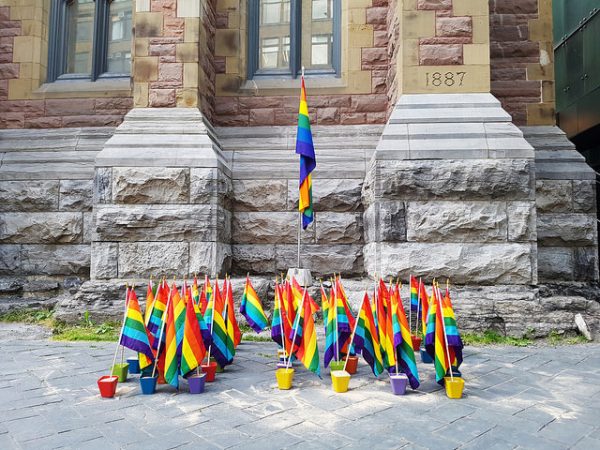
The 2017 critically-acclaimed documentary Check It depicts the lives of a group gay and transgender youth from Washington D.C., who create a gang to help protect themselves from bullying and violence in their community. Although the film claims that the Check It group is “the only gay gang documented in America, maybe even the world,” evidence suggests that gay gang members may be more common. While research on crime typically portrays gang members as predominantly heterosexual men of color, such visions of gang life have overlooked the experiences of gay gang members. Recent scholarship attempts to incorporate LGBT voices into our understandings of gangs and violence, and move past the often one-sided depictions of LGBT people as victims of hate crimes.

Although researchers have been studying the hate crime victimization of gay men, and to a lesser extent other LGBT identities, they often limit queer experiences as passive or lacking agency. Evidence suggests that various intersections of a LGBT person’s identity including race, class, and gender identity, influence both their likelihood of being victims of hate crimes and their perceptions of the harmful impacts of the victimization experience itself. Scholars also critique hate crime politics and legislation for treating queer violence as individualized and abnormal, rather than highlighting the systematic ways that LGBT people are oppressed and excluded in mainstream society that facilitates this violence.
We know far less about how LGBTQ individuals participate in gang activity and violence. New investigations into gay gang members challenges heteronormative assumptions about participation in violent crime. This work, spearheaded by sociologist Vanessa R. Panfil, demonstrates how these gay men must reconcile their sexuality in an overtly masculine and homophobic gang culture. Panfil shows that while some of her participants participated in predominantly straight or mixed-sexuality gangs, others were part of queer friendship networks that created their own — and self-defined as — “gangs” in order to protect themselves from discrimination, bullying, and violence in their neighborhoods, much like the friends in Check It.

“Queering” criminal behavior breaks down inaccurate understandings of how violence operates. Among gay gang members, it isn’t just about untethered masculinity. LGBT perspectives highlight how binaries such as “victim” and “perpetrator,” and even the very idea of what constitutes a “gang,”  are often superfluous, inaccurate, and stigmatizing. Incorporating queer voices into studies of criminal behavior and punishment helps to disentangle how the various intersections of identities shape criminal behavior and criminalization.

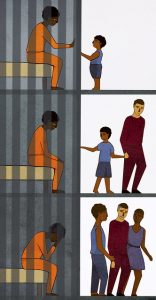
Graphic shows three images stacked on top of each other. On the top, a person dressed in an orange jumpsuit sits behind bars, while a child stands outside the cell. In the next, the same person in the orange jumpsuit but there is an adult with the child. In the third, the child is grown up and there is another adult there too.
Prison Policy Initiative Photo Blog, Flickr CC

The rising number of people in prison and jail has had a dramatic impact on families and children in the United States. By 2012, nearly 2.6 million children had a parent in prison or jail. Parental imprisonment has many harmful impacts on children, including childhood development and cognition, drug abuse, educational success, and childhood homelessness. Although in some cases the incarceration of a parent is necessary to protect the best interests of the child, the “incarceration ledger” — or the complex ways incarceration impacts lives  — is generally negative for kids.

One way parental imprisonment negatively impacts families is by removing a source of income. When incarcerated parents are the key economic support to their family, their absence means a loss of resources. The remaining caregiver may experience significant financial strains, and may  have less time to supervise and provide guidance for their children. Children thus may lose both economic and emotional support due to the absence of a family provider. Even when incarcerated fathers do not contribute to family support, their incarceration can still result in financial pressures on their relatives, who have to pay for significant court costs, transportation for visits, and phone calls to prison.
Studies find that children who have experienced parental incarceration are also at risk of many negative mental health outcomes including depression, PTSD, anxiety, and behavioral problems. However, these negative mental health effects may not apply to every case of parental incarceration. Research demonstrates that the incarceration of a father is associated with increased physical aggression for boys, but this association does not hold for boys whose father was incarcerated for a crime of violence or who were abusive to their mothers. Other research suggests that paternal incarceration is connected to higher levels of behavioral problems in children, but this was limited to children who lived with their father prior to his incarceration.   
The massive growth in parental incarceration is also tied to racial inequality among children. While 1 in 25 white children born in 1990 are at risk of experiencing parental imprisonment, the rate for black children is 1 in 4. These disparities contribute to racial inequality in childhood homelesness, infant mortality, child behavioral and mental health, cognitive development, and educational achievement.

As many state policymakers and criminal justice practitioners consider how best to curb prison and jail populations, these actors must consider the serious challenges for the children and family of those who are incarcerated.

Photo by Office of Congresswoman Katherine Harris, Wikimedia Commons

This post was created in collaboration with the Minnesota Journalism Center.

Recent estimates from the International Labor Organization (ILO) and Walk Free Foundation found that more than 40 million people are in modern slavery. The ILO has valued human trafficking as a $150 billion industry, with $99 billion coming from commercial sexual exploitation. Prostitution and trafficking are both illegal in America (except for several counties in the state of Nevada where prostitution is legal), but the two terms are often conflated. With regard to terminology: When one is coerced or forced into selling themselves for sex, it is a form of trafficking, and those who enter the regulated sex industry voluntarily are deemed sex workers.

The “normalization” of sex work worldwide is still in flux. Scholars divide the international community into two camps with regard to this issue: abolitionist feminists, who believe both voluntary and involuntary prostitution and sex work is exploitative; and human rights feminists, who de-link prostitution/sex work and trafficking by arguing that some adult women and men are in prostitution/sex work voluntarily and should not be considered victims, and only those who are forced or coerced to be prostitutes or sex workers should be considered trafficking victims.
Scholars demonstrate that NGO coverage of trafficking often portrays “ideal victim” and “ideal perpetrator” stereotypes that don’t always reflect the truth about who is subject to trafficking worldwide. Further, journalistic coverage of trafficking is often written through the lens of “episodic” frames that provide personal narratives but lack trend statistics, quotes from experts, or social forces at play in perpetuating demand for trafficking worldwide.
As anti-trafficking campaigns evolve in the Digital Age, technology also plays an integral role in efforts to curb demand and address supply that flows through social media networks and the Internet. Initiatives — including research about online demand for sex and working partnerships between social scientists, law enforcement, and anti-trafficking NGOs — are shaping the future of anti-trafficking efforts worldwide.