
crime

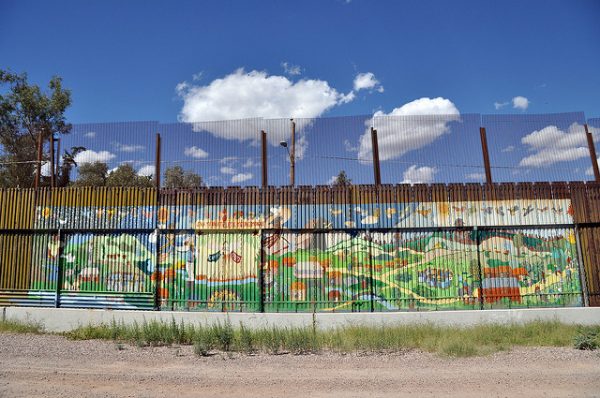
Wall Mural in Nogales. Photo by Jonathan McIntosh, Flickr CC

Migration on the southern border has been a hot topic in U.S. media and politics of late, only intensified by the recent release of plans for the first phase of the construction of a wall and the end of Temporary Protected Status for a number of Central American countries. Unfortunately, media reporting and the debates about these policies are all too rarely informed by social science research on border policies and their impacts on migrants and migration flows.

Since the late 1980s, restrictive policies and measures on immigration (e.g. limiting the number of visas available) and the tightening and militarization of the U.S. southern border have kept potentially undocumented Mexican migrants in the country. With higher costs and risks at the border for undocumented migrants, research suggests that the choice to stay in the United States, rather than moving back and forth over the border, is more of a necessity today than ever before.
On the other hand, as undocumented Mexican migration to the United States wanes — driven also by demographic changes in Mexico — undocumented migration from Central America is increasing. This shift is largely caused by civil wars in the region that sent refugees north, subsequent U.S. immigration policies of the 1990s that expelled many of these refugees that had criminal records, and the social instability in Central America that continues to drive migration back to the United States.
And these policies not only drive the movement of peoples, but also the transfer of their monies. Recent research shows that legal status in the United States (or lack thereof) affects decisions to send money and travel to home countries. For example, Salvadorans — many of whom arrived in the United States undocumented — sent remittances at high rates than other national groups, though traveled back home less than half the rate of the typical Latino migrant. This same research finds that Mexican migrants were more likely to travel back to their home country than Cubans (as travel home was tightly restricted), though both sent remittances at similar frequencies.
Photo by Thomas Hawk, Flickr CC

With recent calls from President Trump for the death penalty for opioid drug traffickers, it is no surprise that the United States is one of the most punitive democracies in the world. But does the Trump administration’s position reflect that of most Americans? Gallup recently re-released findings from a 1987 poll that suggests a majority of Americans opposed the death penalty for drug dealers during a period of heightened concern about drugs. Social scientists continue to investigate the social factors that inform punitive attitudes. 

Among Whites, racial stereotypes about crime drive punitive attitudes. Whites’ racialized perceptions of crime — like the idea that Black individuals are more violent — contribute to support for several policies, including mandatory minimums, lowering the adult age-limit for juveniles, and the death penalty. Among Blacks and Hispanics, racial stereotypes do not appear to drive punitive attitudes. Instead, political beliefs and crime concerns seem to be more consequential for the punitive attitudes for people of color.
Recently, research indicates that criminal stereotypes about Hispanics and Latinos, anti-immigrant sentiments, and xenophobia also contribute to Whites’ punitive attitudes. One cross-national study comparing punitiveness across the European Union found that individuals who endorse anti-immigrant sentiments are more likely to support harsh punishments, even when accounting for other individual characteristics, like religious background. In the U.S. context, xenophobia may be more important than racial attitudes for heightened punitiveness.

This research helps us to understand what influences the increased “get tough on crime” talk in U.S. politics. Concerns about crime control reflect more than just current crime trends. They are connected to both race relations and immigration patterns. So, while many of us may dispute the notion of executing drug dealers in general, keep in mind that racial stereotypes and racial or ethnic hostility drive many current — and likely future — criminal justice policies and practices in the United States.

Check out this Contexts piece by Chris Uggen and Ryan Larson about how the American public may be “getting smarter” on crime and crime control.

Photo by Johnny Silvercloud, Flickr CC

During the month of February, the United States observes Black History Month, importantly celebrating the accomplishments of African Americans and acknowledging the racist history of the United States. Racism is not only part of the past, nor is it not limited to prejudicial attitudes and overtly discriminatory practices against people of color. Social scientists demonstrate how racism is also institutional and cultural, and how these forms of racism powerfully reproduce racial inequalities — even in the absence of explicitly racist attitudes or beliefs.

Social scientists commonly rely on two concepts to describe racism: institutional racism and symbolic or cultural racism. Institutional racism refers to how institutions and legal systems in the 21st century do not overtly consider race, but still promote racial inequality. Historically rooted inequalities in institutions — economy, housing markets, the education system, and the criminal justice system — help perpetuate persistent racial disparities.
Social scientists utilize the concept of symbolic or cultural racism to discuss attitudes. Though explicitly prejudicial attitudes in the United States have declined, Americans today often use coded or symbolic language — especially when discussing political figures, immigration policy, or the criminal justice system. For example, instead of explicitly claiming people of different races are biologically inferior, individuals may point to “problematic” values or attitudes of other racial groups. Such beliefs allow those people to maintain that racial inequality is the fault of racial minority groups themselves.
Photo by Sam Churchill, Flickr CC

Large-scale sporting events, including the Winter Olympics and the Super Bowl, are in the international spotlight this winter. These mega-events are often heralded for promoting economic mobility and social cohesion, and cities across the world bid for events like the Olympics to cement their identities as world-class cities. For sociologists, these events also highlight how inequality operates in urban spaces.

Under the assumption that stadium construction promotes local growth, many cities rely on both tax subsidies from their local populace along with private investment. Financial investors tout the unprecedented trend of stadium-building in the past decades as opportunities for job growth, tourism, and other revenue boosts. However, much research suggests that stadiums and major sport events do not have broad economic benefits for their host cities, as benefits tend to be distributed unequally along racial and class lines. While local resistance has grown substantially in recent years, resource-laden investing firms and political coalitions that advocate for such projects are largely successful at squelching these efforts.
The role of sporting events in perpetuating inequality demonstrates how the geography of urban space reflects a deepening divide between the “haves” and “have nots.” For example, sociologists demonstrate that cities often implement policies and practices that criminalize and punish behaviors of homeless individuals in public spaces. Other studies indicate that sporting events in the United States, especially the Super Bowl, contribute to the militarization and surveillance of public space in the post-9/11 era.

So, as we watch these sporting spectacles from our television screens, see them up close (if we’re lucky), or experience the negative consequences outlined above (if we’re not), it is important to be aware of how these events are manifestations of both society’s triumphs and social ills.

Photo by Tony Webster, Flickr CC

Every year the FBI releases its Uniform Crime Report (UCR), an annual collection of crimes reported to local police agencies across the United States.  When the FBI released the 2016 report last year, it was missing many key tables, spurring a letter from criminologists asking that Jeff Sessions and the FBI director, Christopher A. Ray, release the report in its complete form (as it had been in previous years). Although the FBI claims that the trimming of the report was planned for many years, other reports suggest that this may not be the case. So what exactly is missing from the UCR and why does it matter to social science research?

The 2016 UCR is missing tables from the Supplementary Homicide Reports (SHR), which include data on homicide victims’ relationships to perpetrators and other situational circumstances of homicides. Without these data, researchers — like those studying intimate partner and family violence — will be unable to track these aspects of homicides over time. In the past, researchers used the SHRs to examine how declining marriage rates, increased access to domestic violence services, and the improved economic standing of women contributed to a sizable decrease in spousal homicide from the 1970s to the 1990s. Others used the SHRs to examine the geography of interpersonal homicide, indicating that rural residents may be more susceptible to intimate partner and familial homicides than residents of metropolitan areas.
Like many other national databases, the Supplemental Homicide Reports suffer from some data quality issues. One study finds that data establishing the relationship between a victim and perpetrator in the SHRs may be particularly unreliable. While this may suggest that dropping some tables from the UCR may have been a strategic move by the FBI, most studies of the SHR data quality call for more efficient and effective data collection prior to compiling an SHR, as well as better variable measurement by the SHR, rather than complete dismissal of the reports.

Beyond homicide data, which also includes gang and drug-related homicides, the 2016 Uniform Crime Report is missing many additional tables. One of these is drug arrests by specific drug types, including synthetic opioids or heroin. This is a particularly surprising omission considering the opioid epidemic is a major policy concern for the Trump administration. The recent call to action by criminologists appears to have been successful — FBI Director Wray indicated at a December House Judiciary Committee hearing (see 3:28:35 for Wray’s statement) that the FBI now plans to republish the UCR with all of the missing tables included. This is good news for social scientists, who argue that we cannot have effective policies on social issues such as crime and drug use without the data that drive these critical decisions.

Photo by Minnesota Historical Society, Flickr CC

Originally posted April 10, 2017.

From Trump’s attempted restriction on immigration to his talk of building a wall on the country’s southern border, immigration policy has received renewed attention among both politicians and the public. A common reason for restricting immigration flows is association between immigration and crimes, which was explicitly mentioned by Trump along the campaign trail.  Social science agrees that immigration and crime are interconnected, but not in the way Trump and others claim.

Individual level data show that immigrants are actually less likely to engage in violent behavior than non-immigrants, with first generation immigrants being the least likely to commit crime as compared to second or third generation immigrants. Similarly, studies also find that areas with high proportions of immigrant residents are associated with lower levels of neighborhood violence and drug-crime when compared to similar neighborhoods with fewer immigrants. This association is best explained by the increases in social organization — culturally-based buffers like strong familial and neighborhood ties — and the associated economic gains stimulated by the influx of immigrants.
This association between immigration and lower crime rates is stronger in areas with more opportunities for immigrant political action. Cities with higher levels of minority political representation and pro-immigrant legislation enhance the buffering effect of immigration on both homicide and robbery.
What’s troubling is that even though immigrants and the areas they inhabit are associated with lower levels of crime, both documented and undocumented individuals are more likely to be incarcerated and receive longer prison sentences, even when controlling for race/ethnicity, crime severity, and other factors.
Photo by Chase Carter, Flickr CC

Originally published Oct. 31, 2017

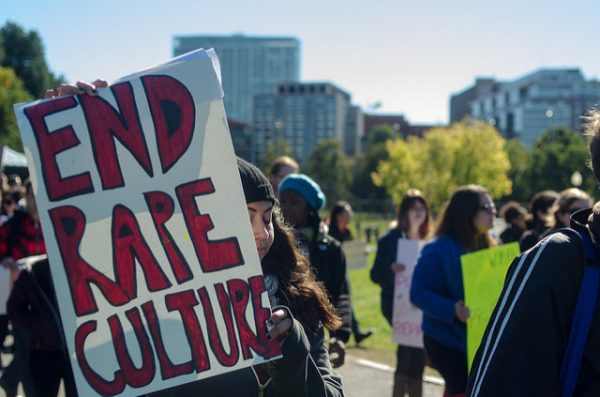
In recent weeks, over 500,000 women and men shared the hashtag #MeToo in response to the following social media tweet: “If all the women who have been sexuallly harrassed or assaulted wrote ‘Me too.’ as a status, we might give people a sense of the magnitude of the problem.” Some participants only shared the hashtag, while others revealed deeply personal stories of sexual harassment in the workplace, child sexual abuse, and sexual assault on college campuses, to name a few. Initially started by activist Tarana Burke, this reinvigoration of the Me Too campaign comes amidst numerous sexual assault and harassment claims against several high status men, including Hollywood mogul Harvey Weinstein, musical artist Nelly, and most recently, House of Cards actor Kevin Spacey. Sexual harassment and sexual assault are certainly not new phenomena. Yet, these campaigns that provide space for survivors to address victimization may signal a renewed public effort to address rape culture – a struggle that social scientists have spent decades trying to resolve.

Consequences of Sexual Violence

Sexual violence frequently results in several psychological and financial consequences for victims and survivors throughout the life course. Many report feelings of depression and posttraumatic stress disorder following the incident, and the trauma that results from sexual violence may alter how victims view themselves. Kaitlyn Boyle argues that assault characteristics like physical injury, perpetrator force, and physical resistance shape one’s self-identification as a “victim” or a “survivor.” Sexual violence may also impact women’s career trajectories. For example, many women that are sexually harassed in the workplace are more likely than non-harassed women to change jobs earlier in their career in order to avoid their harassers and/or employers who failed to fully investigate their claims. These moves often resulted in increased financial hardship.


Defining Rape Culture and Dismantling Masculinity

Feminist sociologists have long pointed out that sexual violence doesn’t simply stem from individual sexual impulses — it emerges as a consequence of masculine ideals that justify men’s aggression and encourage women’s subordination. This is in large part due to rape culture. In their important study on college fraternities and sexual assault, A. Ayres Boswell and Joan Spade define rape culture as “a set of values and beliefs that provide an environment conducive to rape” (133).
Under popular rape myths that suggest “guys will be guys” and “bros before hos,” some men within highly male-dominated peer groups, such as fraternities and athletic teams, engage in acts like harassment and gang rape to connect with and impress their male peers. And while there are many men who openly oppose sexual violence by distancing themselves from perceived rapists and claiming they are “good guys,” they may also reinforce cultural rape myths that only stereotypical “bad guys” — strangers, physically violent individuals, and minority men — commit rape. This ultimately works to cover up the more subtle forms of everyday sexual violence.
Photo by Cristian V, Flickr CC

Prominent figures in American film, news, and politics are facing a dramatic wave of sexual harassment accusations. In response, the heads of organizations — like the Academy of Motion Pictures Arts and Sciences and various colleges and universities — are not only encouraging victims to voice their allegations, but also re-examining their own institutional cultures. Social science research has explored the social dynamics of sexual harassment in the workplace and the conditions that prevent reporting. 

Individuals who experience sexual harassment often do not report right away — some may not interpret their experiences as abuse at first, but even when they do, many choose not to come forward. And others who are aware of the harassment frequently turn a blind eye. In order for victims of sexual harassment, discrimination, or abuse to come forward, they must first believe that doing so will be effective and not result in their own harm. Lost jobs opportunities and the fear of retaliation are among the most frequent reasons for not reporting, and educational, psychological factors, and financial resources all influence the likelihood of reporting. 
Organizations can also develop cultures of corruption and silence as sexual harassment becomes embedded within the institution. Members normalize and justify these practices, and then socialize newcomers to view such behavior as permissible and even desirable. In doing so, members of the organization legitimize and reinforce the status quo. For instance, women’s success may be interpreted as a threat to men’s masculinity, and in some cases, these men respond through controlling practices like sexual harassment. In order to keep their jobs and avoid conflict with coworkers, many women remain silent and feel they must tolerate unwelcome sexual advances. When coworkers witness harassment and do not respond, victims may internalize negative judgments, which lowers their sense of well-being and reduces opportunities for collective action.
Photo by Steve Snodgrass, Flickr CC

This past week, the Philadelphia Board of Pensions and Retirement voted to withdraw its investments in the for-profit prison industry. However, the prison industry depends on more than just investors to finance its operations. It also relies on resources from defendants, inmates, and their families. Social science research demonstrates the far-reaching consequences of the penal systems’s money leveraging strategies.

Federal and state criminal justice agencies and correctional institutions charge defendants and inmates with the costs of arrest, prosecution, conviction, incarceration, and supervision. For example, fees include the cost of electronic monitoring and registration for people convicted of sex offenses. In some states, defendants pay for their hearings (court-fees). If found guilty, they also pay room-and-board fees while in prison (pay-to-stay fees).
As a form of punishment, judges impose monetary sanctions for misdemeanor and felony crimes alike. Monetary sanctions disproportionately disadvantage defendants from low-income communities through three different mechanisms: reducing family income, limiting their access to jobs or educational opportunities, and increasing the likelihood of ongoing criminal justice system involvement. These consequences challenge the assumption that monetary sanctions serve as a more favorable alternative to incarceration or supervision.
Correctional authorities outsource the operation and provision of services within correctional institutions to generate revenues for both public and private institutions. Contracts to run prison services – commissaries, telephone services, or online banking, for example – are based on commissions (what critics call “kickbacks”), which generate incentives for corruption and disproportionate profit-making at the expense of inmates and their families. This means companies have higher incentives to increase their profit margins by charging higher prices and fees.
A candlelight vigil outside Virginia Tech’s Burruss Hall after the 2007 mass shooting. Photo by Kate Wellington, Flickr CC

The nation remains in mourning as we struggle to make sense of this week’s tragedy in Las Vegas, where 59 people were killed and over 500 wounded. Many are referring to the attack as the “deadliest shooting in modern US history.” Through their grief and shock, some now question how local law enforcement, politicians, and news media outlets will characterize the shooter, a middle-aged white man, who, according to family members and the early stages of the investigation, had no known ties to religious or political groups. Investigative authorities link terrorism to violent acts, the motives behind those acts, and affiliation with known terrorist organizations. Yet, several activists have argued that the media’s characterization of mass shooters depends upon their race, ethnicity, and religious beliefs, noting that “Whiteness, somehow, protects men from being labeled terrorists.” Examining the role of media discourse regarding mass killings might help us make sense of these acts of violence.

Mass shootings have been covered extensively by the U.S. media since the late 1990s Columbine shooting. What began as a focus on the two perpetrators and 11 victims developed into a moral panic regarding youth delinquency, mental illness, discipline, and even terrorism. Yet, the media does not treat all mass shootings equally — several factors come into play, including the availability of iconic images, media access, and the race and socioeconomic status of the perpetrator. Shootings that occur in seemingly quiet suburbs by white youth are more shocking because the perpetrators and victims are considered to be “people like us.” In contrast, shootings where the perpetrators are persons of color or reside in working-class neighborhoods produce less shock, as news producers and consumers presume that violence is somehow normal or inherent to those communities.
One comparative study defined mass shootings as “homicide offenses that require firearms as the weapon of attack, and they often end in the offender’s suicide or orchestration of ‘suicide by cop’.” By this definition, the U.S. has likely had more public mass shootings than other comparable nations over the past 50 years. Mass shootings are more likely to take place in countries with higher levels of gun ownership and, in the case of school shootings, have been linked to aggressive performances of masculinity by predominantly young, white, suburban students. While mass shootings frequently involve multiple casualties, authorities rarely refer to such acts as terrorism — the designation of “terrorist” is generally reserved for “foreign-based terrorist organizations.” 
One concern about the coverage of such events is that the publicity and sensationalization surrounding mass killings may inspire other “copycat” crimes. Potential mass killers may use media reporting as a way to create a fictive bond with other mass murderers as a “comradery-focused fantasy.” Seung-Hui Cho, for example, idolized Dylan Klebold and Eric Harris (Columbine shooters) for several years, before carrying out his own deadly attack at Virginia Tech. Other potential mass murderers intensely scour news clippings of prior mass killings to find the perpetrators’ weaknesses and compete with them. Before killing 20 children and 6 adults at Sandy Hook Elementary School, shooter Adam Lanza’s correspondence illustrates that he critiqued James Holmes, the Aurora movie theater shooter, for what he saw as a weak effort to murder multiple people.