race

Photo by Paul Hudson, Flickr CC

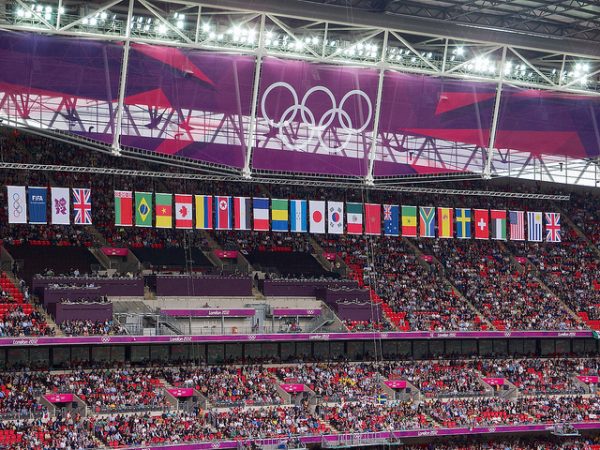
For many across the globe, the Olympics is a chance to celebrate a shared human connection, athletic achievement, and national pride. The Olympic Charter claims the Games encourage friendship, cross-cultural understanding, and world peace, but to do so the games must be free of politics. The Olympics present an opportunity to cross divisive diplomatic lines, like the temporary calming of tensions between North and South Korea. But these ideals may be overly optimistic as these global events have real political effects.

Historically, only the economic and social elite participated in the Olympics, so other versions like the Worker’s Games countered the Olympic Games in the early 1900s. In addition, the Olympics themselves have become a space to challenge the status quo. Protests, or lack thereof, can challenge or reinforce global norms.
Sporting events like the Olympics may allow nations to compete with each other without the consequences of war. Non-violent competition is even more important in the modern world, where technology allows for increasingly lethal methods of warfare. This may be one reason nations financially invest in producing elite athletes and could be behind recent controversies, like the Russian doping scandal.
Though intended to be apolitical, nations may attempt to use the Olympics to sway global public opinion. Foreign policy officials report that political rebranding was a key reason to host the games. Modern media channels make this motivation even more powerful than in decades past, as nations know that the Olympics will have extensive global coverage.


Photo by Johnny Silvercloud, Flickr CC

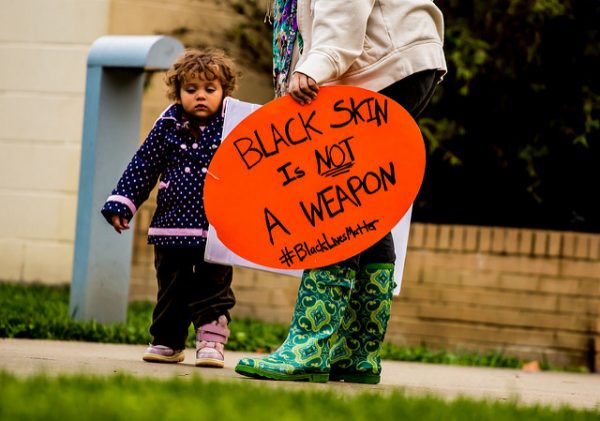
During the month of February, the United States observes Black History Month, importantly celebrating the accomplishments of African Americans and acknowledging the racist history of the United States. Racism is not only part of the past, nor is it not limited to prejudicial attitudes and overtly discriminatory practices against people of color. Social scientists demonstrate how racism is also institutional and cultural, and how these forms of racism powerfully reproduce racial inequalities — even in the absence of explicitly racist attitudes or beliefs.

Social scientists commonly rely on two concepts to describe racism: institutional racism and symbolic or cultural racism. Institutional racism refers to how institutions and legal systems in the 21st century do not overtly consider race, but still promote racial inequality. Historically rooted inequalities in institutions — economy, housing markets, the education system, and the criminal justice system — help perpetuate persistent racial disparities.
Social scientists utilize the concept of symbolic or cultural racism to discuss attitudes. Though explicitly prejudicial attitudes in the United States have declined, Americans today often use coded or symbolic language — especially when discussing political figures, immigration policy, or the criminal justice system. For example, instead of explicitly claiming people of different races are biologically inferior, individuals may point to “problematic” values or attitudes of other racial groups. Such beliefs allow those people to maintain that racial inequality is the fault of racial minority groups themselves.
Photo by Sam Churchill, Flickr CC

Large-scale sporting events, including the Winter Olympics and the Super Bowl, are in the international spotlight this winter. These mega-events are often heralded for promoting economic mobility and social cohesion, and cities across the world bid for events like the Olympics to cement their identities as world-class cities. For sociologists, these events also highlight how inequality operates in urban spaces.

Under the assumption that stadium construction promotes local growth, many cities rely on both tax subsidies from their local populace along with private investment. Financial investors tout the unprecedented trend of stadium-building in the past decades as opportunities for job growth, tourism, and other revenue boosts. However, much research suggests that stadiums and major sport events do not have broad economic benefits for their host cities, as benefits tend to be distributed unequally along racial and class lines. While local resistance has grown substantially in recent years, resource-laden investing firms and political coalitions that advocate for such projects are largely successful at squelching these efforts.
The role of sporting events in perpetuating inequality demonstrates how the geography of urban space reflects a deepening divide between the “haves” and “have nots.” For example, sociologists demonstrate that cities often implement policies and practices that criminalize and punish behaviors of homeless individuals in public spaces. Other studies indicate that sporting events in the United States, especially the Super Bowl, contribute to the militarization and surveillance of public space in the post-9/11 era.

So, as we watch these sporting spectacles from our television screens, see them up close (if we’re lucky), or experience the negative consequences outlined above (if we’re not), it is important to be aware of how these events are manifestations of both society’s triumphs and social ills.

Photo by COD Newsroom, Flickr CC

Of the many so-called crises in higher ed, University of Wisconsin-Superior recently announced its plan to suspend 25 academic programs (including sociology). Administrators claimed their decision is part of a larger effort in higher education institutions to decrease the time students spend in college in order to increase graduation rates and lessen debt for low-income, first-generation students. Social science research, however, suggests curriculum shifts may not address first-generation students’ needs. 

First-generation students are more likely to come from low-income minority families, delay entry into college, attend college part-time, and work full-time while in school — all characteristics that reduce the likelihood of completing a degree. Only 27 percent of first-generation college students at four-year institutions graduate in four years, compared to 42 percent of students whose parents graduated from college. And only five percent of low-income, first-generation students who begin at two-year community colleges completed a bachelor’s degree within six years. Further, first generation students often have limited access to the “cultural capital” that privileges wealthier students.
The completion agenda — an effort to increase completion rates, especially among community college students — aims to compensate for differences in cultural capital by making graduation requirements clear and accessible. It can also include limiting course or curricular options in an attempt to reduce “wasted” credits. But simply reducing the number of credits taken does not address the fundamental challenge of how to to pay for both tuition and basic needs, a major reason why students drop courses, take semesters off, and leave school. In addition, a completion agenda may limit low-income, first-generation students to low-quality programs, while more prestigious institutions offer privileged students broad selections that are transferable across many professions.


Photo by Minnesota Historical Society, Flickr CC

Originally posted April 10, 2017.

From Trump’s attempted restriction on immigration to his talk of building a wall on the country’s southern border, immigration policy has received renewed attention among both politicians and the public. A common reason for restricting immigration flows is association between immigration and crimes, which was explicitly mentioned by Trump along the campaign trail.  Social science agrees that immigration and crime are interconnected, but not in the way Trump and others claim.

Individual level data show that immigrants are actually less likely to engage in violent behavior than non-immigrants, with first generation immigrants being the least likely to commit crime as compared to second or third generation immigrants. Similarly, studies also find that areas with high proportions of immigrant residents are associated with lower levels of neighborhood violence and drug-crime when compared to similar neighborhoods with fewer immigrants. This association is best explained by the increases in social organization — culturally-based buffers like strong familial and neighborhood ties — and the associated economic gains stimulated by the influx of immigrants.
This association between immigration and lower crime rates is stronger in areas with more opportunities for immigrant political action. Cities with higher levels of minority political representation and pro-immigrant legislation enhance the buffering effect of immigration on both homicide and robbery.
What’s troubling is that even though immigrants and the areas they inhabit are associated with lower levels of crime, both documented and undocumented individuals are more likely to be incarcerated and receive longer prison sentences, even when controlling for race/ethnicity, crime severity, and other factors.
Photo by taylormackenzie, Flickr CC

Church bells ring in England, as the country prepares for the royal wedding between Prince Harry and American actress Meghan Markle next spring. While royal weddings have long stirred excitement among local and foreign regions alike, commentators have been quick to speculate how Markle’s identity as a biracial woman – African American mother and white American father – might shape the future of the British monarchy. The speculation surrounding Markle’s racial identity highlights the complexities of being multiracial in an increasingly diverse, yet still discriminatory, global world. Sociological studies can help us better appreciate how mixed-race individuals navigate the societal perceptions of their identities.

The recognition and visibility of mixed-race individuals and identities has grown in recent decades, yet the histories, meanings, and responses to mixed racial identities vary considerably within and across international contexts. While the U.S. primarily emphasizes “bi-racial” as rooted in a white and nonwhite racial system, in Latin America, mixed-race identities fall within a more flexible “tri-racial”system. For instance, individuals from Brazil and the Caribbean trace their mixed-race origins back to colonial conquest centuries ago, and thus mixed-race people have been considered a central part of the national identity in these locations. Understanding these differences further our understandings of how race is socially constructed.
While some mixed-race people embrace a multiracial identity, others use strategies to appear as monoracial. For black-white biracial individuals, this means attempting to appear as either white or black. Individuals in one U.S. study reported tanning, combing their hair, speaking, and dressing in a certain way to appear as more white or black depending upon the potential social gains in any given context. Nevertheless, as we might expect from the experiences of other people of color, mixed-race individuals often face mistreatment from whites and non-whites alike for their appearance. Biracial women, for example, report receiving frequent mistreatment from non-biracial black women, who often accuse them of thinking they are “all that” because of their light skin and hair texture.
In some contexts, multiracial individuals are preferred above whites. And dating is no exception. Within romantic relationships, sexual and dating partners tend to exoticize biracial individuals. For some, perceived racial ambiguity makes biracial individuals ideal for casual sexual encounters, while others are sought after because their partners believe they will make beautiful babies. One recent study suggested that mixed-race women may be more likely to self-identify as “multiracial” than mixed-race men because the multiracial identity is more associated with traditional perceptions of feminine beauty. Despite individual and systemic preferences for biracial people, this preference often comes at a cost of commodifying their bodies, and many cannot escape discrimination that have historically oppressed people of color.
Photo by Mark Dixon, Flickr CC

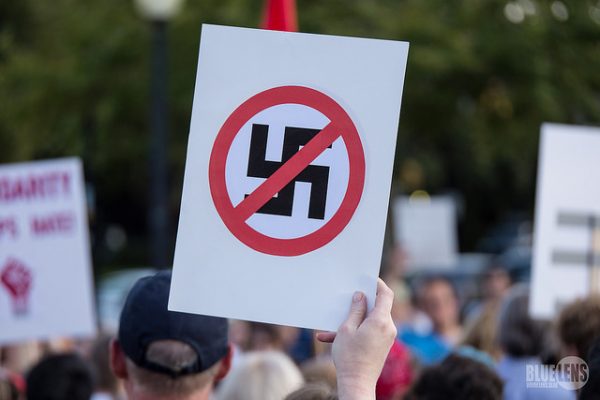
Neo-Nazi swastikas, explicitly racist chants and slogans, and public demonstrations with hoods and torches, as seen recently in places likes Charlottesville, are what signal white supremacy for many Americans. Yet, for over a decade, activists and policy makers have used the phrase “white supremacy” in different ways, moving beyond extremist ideologies and individuals’ bigoted beliefs to focus on the deep historical structure and institutional dimensions of racial inequality in social life. Perhaps not surprisingly, sociologists have been at the forefront of parsing out this broader usage and meaning of white supremacy.

Rather than focusing solely on explicit prejudice and organized hate groups, recent sociological uses of the term describe how the very nature of American society inherently privileges white people, white identities, and the status of whiteness. This includes how white people fare better in economic terms, as well as how white people experience superior outcomes in other ways, such as education and health, and how all of these systemic inequalities happen through established institutional arrangements, cultural norms, and public policies. For scholars with this emphasis, America is a “white supremacist” nation — not because individuals or the law are explicitly prejudiced, but because white privilege is central to American social life.
This is not to suggest that sociologists and other social scientists have neglected the study of extremist white groups like Neo-Nazis or the KKK. In fact, sociologists have continued to track how more traditional white supremacists have evolved alongside changing social backdrops and history. These scholars have documented how white supremacist movements in the 21st century have been shaped by whites’ perceptions of victimhood following increased immigration, globalization, and diversity in America.

With all of these different strands of research and interpretations of white supremacy, it is imperative for all of us — activists and analysts alike, as well as everyone in between — to be thoughtful and cautious about how, when, and in what company we use the term “white supremacy.”

Photo by Mike Schmid, Flickr CC

Benefits for the wealthiest Americans in Republicans’ proposed tax plan are causing alarm among some Americans, especially because they risk widening an already large wealth gap. According to a recent analysis, the three richest Americans control more wealth than half of the United States’ population. Wealth is different from income, because it takes into account assets like property and debts in addition to earnings, which means wealth inequality in the United States is much greater than income inequality. Social scientists demonstrate that the amount of wealth a person accumulates is associated with a variety of social advantages. And once someone has accumulated wealth, the benefits continue to build up over time and across generations.

Income matters for wealth accumulation, but that is not the only factor. Homeownership is particularly important, though age, wealth of parents, level of education, religion, race, and gender also influence the wealth a person acquires. For instance, unmarried women’s wealth on average is lower than men’s, and a significant gap exists between whites and Blacks in America — a gap that only gets wider in the top tax bracket.
Having wealth is an important indicator of future wealth and well-being. Parents’ wealth is often associated with greater well-being for their children, including higher educational and occupational attainment. Personal wealth also partially explains the gap in marriage rates between people with high and low education levels.
Los Angeles March for Immigrant Rights. Photo by Molly Adams, Flickr CC

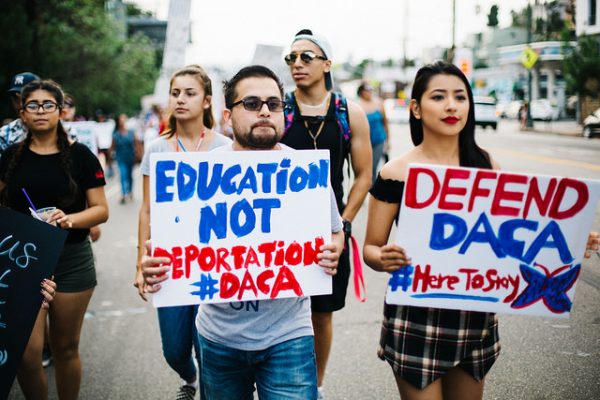
The Trump administration recently discontinued an Obama administration policy known as Deferred Action for Childhood Arrivals (DACA). Established in 2012, DACA provided steps toward permanent residency for undocumented immigrants who have lived in the United States since childhood. Conditions include proof of living in the United States since before age 16, criminal background checks, status as employed or a college-student, and routine renewal and payment every two years. Furthermore, DACA recipients are ineligible for federal welfare, student aid, and citizenship. Public figures, including pundit Ann Coulter and Attorney General Jeff Sessions, have expressed concerns about immigrants taking too many jobs, draining social support programs, and threatening American culture and ways of life. Research shows, however, that these individuals are not a threat to American culture and society — they are in fact a part of American culture and society.

Many DACA recipients are deeply enmeshed in American society, as virtually all have lived in the United States since childhood. Since the DREAM act was originally passed, beneficiaries have experienced better mental and physical health outcomes. Furthermore, the legislation has offered people in precarious positions a way to be better incorporated into their society; nearly all are employed, speak English as a first language, and have family ties to the United States. Rescinding these protections, therefore, could possibly lead to adverse impacts on recipients’ well-being and lifestyle.
The Trump administration has left Congress time to either renew or repeal DACA. Even if DACA is continued, however, research has shown that state and municipal governments vary greatly in the support they provide to undocumented immigrants. So, even if DACA survives at the federal level (which is not at a guarantee), variations in state and local governments could lead to vastly different outcomes for people in different regions across the country.
WE ARE A NATION AND WE HAVE THE RIGHT TO DECIDE! Catalonian Independence Protest. Photo by Paco Rivière, Flickr CC

Recent events in Burma, the United States, and Spain have shown how appeals to nationalism can initiate or heighten violence. Nationalist ideologies, however, look quite different in each of these countries, and many countries with strong national identities do not experience these types of conflict at all. Sociological research helps explain how nationalism develops differently from one country to the next and the consequences that result.

Nationalism is a particularly strong form of identification, as it can surpass personal connections and reinforce a shared bond throughout the borders of a nation. Social identity can help people define their place in the world, and nationalism can provide a positive way through which to do so. It can also be used to advocate for national-scale interests on a global level, promoting diverse perspectives in international institutions. This is especially true when a country was created through a more spontaneous process, where national identity develops simultaneously with the broader identity formation of groups already living in a particular area.
But the path to nationhood isn’t always so organic. Many nations were originally created through decades or centuries of violence and oppression. In other words, national identity works differently when it interacts with different kinds of state power. A majority of countries in the Global South began with ambiguously drawn borders created with the intent of domination. In such states, nationalism stems from (oftentimes violent) renegotiations of identity following foreign rule.
These different pathways to nationhood result in dramatically different forms of nationalism across the globe. Civic nationalism, for example, is based on citizenship as the root of belonging, while ethnic nationalism is grounded in ethnic identity. Ethnic nationalism tends to be more prominent in nations that have experienced more conflict over time. It can also be more exclusionary, with some studies finding lower tolerance for immigrants in more ethnically-nationalist societies. These two forms can also blend together, as civic nationalism can express quieter assumptions about ethnic belonging.