
race

Photo by Jana Vanden Eynde, Flickr CC

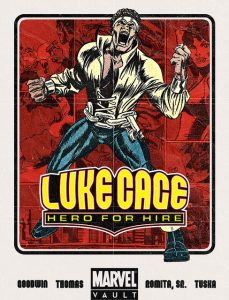
Following successful shows like Daredevil and Jessica Jones, Netflix recently added Luke Cage to their TV Marvel universe. Cage portrays a black super-strong superhero whose skin is bulletproof. Set in contemporary Harlem, New York, the show portrays various black and Latino characters in prominent roles. Despite praiseworthy reviews and mainstream popularity, some critics expressed their disapproval of the predominantly non-white cast, claiming that the show is racist and that Cage’s portrayal is “too black.” While the increase in minority characters has been a major stride for equal on-air representation, previous sociological research suggests other problems and pitfalls remain.

From 1978 to 1989, the number of black characters on prime time television doubled. Yet, minority presence was more likely to be found in comedic roles, such as the Cosby Show, rather than dramas. While there were more depictions of black and white relationships, these relationships were featured in more formalized settings such as the workplace, whereas relationships among whites took place within informal settings such as the home.
Ethnic minority representation in the media has not suppressed the perpetuation of racist myths and stereotypes that further stigmatize these groups. While greater demand for blacks on TV were rooted in demands for social justice, subsequent television programs often over-depicted black criminality or problematized black culture. Latinos are also underrepresented in television, and when they are depicted, these portrayals are more likely to be more negative than portrayals of other racial groups. As a result, under-representation may lead audiences to believe that there are fewer minorities in the actual population.
Even programs like The Cosby Show that featured predominantly positive images of middle-class blacks can produce unintended consequences. Interviews with middle-class black families suggested that many viewed the doctor-lawyer duo between the Huxtable parents as a role model for the black community. On the other hand, many middle-class blacks criticized the show for depicting an unrealistic characterization of a black family that seemingly never endured any racial problems. Furthermore, these depictions of black middle-class families may have suggested to white audiences that blacks could make social and economic strides if they worked as hard as the Huxtables.
Photo by Jon S, Flickr CC

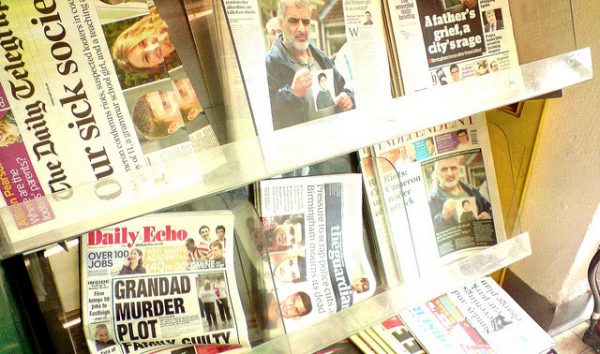
The ways that non-Western victims of violence and poverty are portrayed in the news is problematic. For example, on the 6th of October this year, The New York Times had an above-the-fold image of migrants on its front page. The image was of several dead and dying African migrants on a boat and, troubling as this may be, the image was not an anomaly. Consider the images we have recently seen from Syria — from the drowned child on the beach to the dazed child covered in dust pulled out of a bombed building. Social scientists explains how the choice to use these kinds of images is neither an objective nor an accidental process.

News images are rarely meant to teach us something new, rather, they are meant to reaffirm what we already know while tugging at our heartstrings. Nowhere is this more evident than during instances of instability and violence in the Global South. Even in death and suffering, non-Western victims are denied their privacy; their pain is meant to be consumed by the audience while reaffirming real and symbolic differences.
Images of pain and suffering are less about an increase in “bad” things happening and more about how  we understand the consumption of pain, suffering, and death of victims that are “Other.” They allow us to consume the pain of others from the comfort of our living rooms while reminding us of how “good” we have it.
In the case of Africa and Africans especially, the use of images has a long and troubled history. Research continually shows that images of Africans are often steeped in stereotypes of Africans as simplistic, tribal, “noble savages,” and primitive.
The defining images of 1960s Africa are of starving Biafran children. The image of the 1990s is that of a vulture stalking an emaciated Sudanese child near the village of Ayod in South Sudan by Kevin CarterSuch images often reaffirm stereotypes of the continent and its peoples as ‘starving’, ‘chaotic’, or ‘sick’. This history makes it possible to plaster images of dead and dying migrants on a boat across the front page of an American newspaper with little to no discussion of the structural factors leading to their deaths.
Photo by Andres Juarez, Flickr CC

Marvel’s new series focusing on superhero Luke Cage debuted on Netflix in late September to critical acclaim. The show boasts a 95% rating on RottenTomatoes and was called “one of the most socially relevant and smartest shows on the small screen you will see this year,” by Deadline.com’s Dominic Patten. Aside from its artistic merits, commentaries also praise the prominence of Luke Cage as a “bulletproof black man in a hoodie,” with the show’s star Michael Colter telling The Huffington Post: “It’s a nod to Trayvon, no question … Trayvon Martin and people like him. People like Jordan Davis, a kid who was shot because of the perception that he was a danger. When you’re a black man in a hoodie all of a sudden you’re a criminal.”

Comic books and comic book culture have slowly become more diverse as companies like Marvel have begun prioritizing the inclusion of racial minorities in their stories. Kamala Khan, a Muslim teen, has replaced the white hero Carol Danvers as Ms. Marvel. The hero replacing Iron Man is a black teen named Riri Williams. And Miles Morales, a black Hispanic teen, replaced the white Peter Parker as Spider-Man. Yet despite its recent progressive slant, Marvel and other comic companies have had issues with racial stereotyping, particularly with their black heroes. Marc Singer describes how the medium of comics relies on racialized representations, with appearance being a major way to distinguish characters from one another. 
This is also heavily tied up in the portrayal of superheroes as super-masculine. When the racial aspect of this dynamic is uncovered, we see a complicated history. Rob Lendrum traces these heroes to the “blaxploitation” era of film/media in the 1970s, arguing that many superheroes were influenced by this culture, including Luke Cage. Jeffrey A. Brown sees these images as one-note and compares them to the black-owned works of Milestone Media Inc. comics.
Sequim Bay Late afternoon at Sequim Bay, Washington (as seen from the Jamestown S'Klallam Indian Reservation). Photo by Jan Tik, Flickr CC
Late afternoon at Sequim Bay, Washington (as seen from the Jamestown S’Klallam Indian Reservation). Photo by Jan Tik, Flickr CC

Today some cities are celebrating Indigenous People’s Day in an attempt to counter the celebration of Columbus’ arrival in the Americas that led to years of disease, death, and the removal of native peoples from their homes. One thing to reflect on is how this turbulent past has had lasting health effects for Native Americans. According to the Indian Health Service (IHS), Native Americans and Alaskan Natives have a lower life expectancy than any other US racial group and they are more likely to die from heart disease, cirrhosis, and suicide.

Social science researchers point to a number of social and historical factors that help explain the high suicide rates for Native Americans, including racial discrimination, a long history of colonial exploitation, poor health outcomes, and poor communities. Many of these communities also lack access to quality reproductive healthcare, a disparity that researchers associate with high rates of c-sections among Native American women giving birth.
Poor health outcomes are also closely related to environmental injustice. The remote areas of land originally chosen for Native American reservations tended to be lands that were least attractive to White Americans, but perfect for military testing. The US military used adjoining lands and sometimes seized reservation lands to test military equipment, leaving toxic and dangerous materials in close proximity to Native American land. Native Americans living in areas with high levels of pollution attribute various health problems in their communities to pollutants, but are often unable to validate their concerns through institutional channels.


Photo by G20 Voice, Flickr CC

In lieu of the recent fatal police shootings in cities such as Tulsa, Charlotte, and most recently, El Cajon, California, communities are coming together to demand changes in law enforcement interactions. Of particular concern is police surveillance and the subsequent criminalization of minor offenses. “Problem-oriented policing” – which focuses on a community’s “hot spots” and requires police to be more proactive in identifying where crime might happen, as opposed to just reacting after a crime takes place – has been offered as a possible solution. But does problem-oriented policing actually reduce crime? Social science research helps us sort out the potential benefits and pitfalls to problem-oriented policing.

The research record is mixed. Studies evaluating problem-oriented policing programs in Jersey City and Los Angeles showed reductions in serious crimes, such as property crime, robbery, and drug selling, as well nuisance crimes associated with homelessness. Others, however, show no signs of decrease in the number of reported crime rates. Scholars suggest that problem-oriented policing may only have an impact in areas of severe crime and distrust of law enforcement.  
Additional concerns with problem-oriented policing is its effect on marginalized communities. Both observed environmental cues and implicit racial and ethnic biases affect people’s perception of neighborhood disorder. As such, neighborhoods with high concentrations of racial/ethnic minorities are perceived as having more disorder, and consequently viewed as more dangerous and violent. Residents living in neighborhoods marked by perceived disorder are themselves labeled as threats by law enforcement, perpetuating and reproducing urban inequality and cultural stereotypes.
Photo by Lee Coursey, Flickr CC

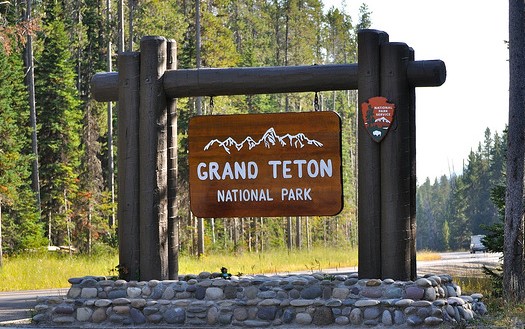
Last month marked the centennial of the National Park Service, which is tasked with preserving natural and cultural resources and protecting outdoor spaces for recreation, like Yellowstone, the Grand Canyon, and Yosemite. The most recently designated park is an ocean park where 4,900 square miles of deep sea volcanoes and canyons in the Atlantic ocean are now prohibited from commercial fishing and other types of resource extraction. While the idea behind the national park system is that everyone should be able to enjoy nature, the reality is that the working class and people of color are less likely to use national parks and the history of the parks has involved the displacement and exclusion of Native American, African American and immigrant communities.

Unequal access to resources – including money for entrance fees and transportation, equipment for exploring the parks, and leisure time – have resulted in race and class differences in who can actually enjoy the national parks.
Beyond access, there are a variety of cultural definitions of “the wilderness,” “the outdoors,” and recreation that are shaped by race. Racial norms and ideologies impact how people perceive leisure time and values of natural beauty, and activities like hiking and camping are often seen as “white hobbies.” Yet, these differences are largely due to a history of exclusion, discrimination, and segregation that kept people of color from using public outdoor space, particularly in the Jim Crow South.
The parks themselves were created through colonialism, as much of the land that is now “protected” was of course taken from Native Americans. The idea of a pristine wilderness is historically linked to white racial purity and the need for Europeans to save the land, which justified U.S. expansion into the West. The conservation movement was also led by white men, such as John Muir, who often overlooked the struggles of racial minorities and issues of equity.
San Francisco 49ers' Colin Kaepernick and Eric Reid kneel during the national anthem. Mike McCarn, Associated Press.
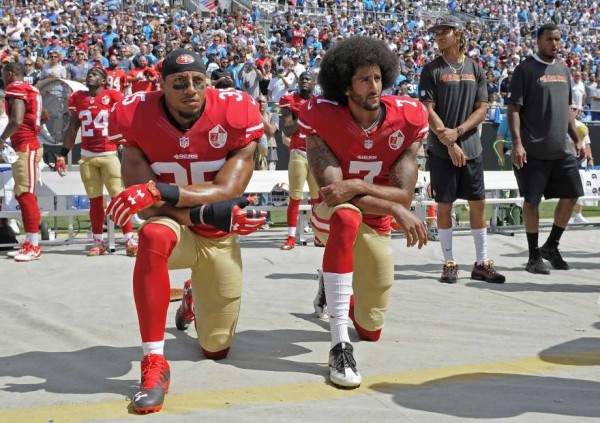
San Francisco 49ers’ Colin Kaepernick and Eric Reid kneel during the national anthem. Mike McCarn, Associated Press.

More and more athletes are joining the San Francisco 49ers’ Colin Kaepernick in kneeling during the “Star Spangled Banner” at the beginning of sporting events. Though this phenomenon has spurred controversy and heated exchanges, sports stars using their celebrity for civic action is not entirely new. After the police shootings of Eric Gardner, Michael Brown, Tamir Rice, and other unarmed black people, numerous members of the NBA and NFL wore hoodies that read “I Can’t Breathe,” (Eric Gardner’s last words); others entered the game while making the “Hands Up, Don’t Shoot!” gesture championed by #BlackLivesMatter. Indeed, today we are witnessing a resurgence of athlete advocacy.

A common criticism of these athletes is that “they should just stick to sports!” or that “they aren’t supposed to talk about politics!” In reality, however, athletes have been at the forefront of protests and civic action for some time now, particularly in the 1960s. TSP Editor Doug Hartmann’s popular book describes how the Civil Rights Movement provided the context for athletes to begin using their celebrity for greater causes. Similarly, Ben Carrington describes how racism has shaped the international black-athlete-experience. Colonialism and contemporary globalization have made sports a site where racism is enacted and solidified, meaning athletes have had to think about these concepts–and fight against them–for a long time.
After the Civil Rights movement, athlete protests became less common, especially as athletes expanded into areas like merchandising and marketing, which meant that they were more likely to avoid “rocking the boat” and jeopardizing their business. But because of #BlackLivesMatter and a greater national focus on police killings of unarmed black people, athletes are once again getting into the fray. As Herbert Ruffin describes, politicizing college sports has led student athletes to protest for their own rights and demands — remember the events at Ole Miss last year? Similarly, Emmett Gill describes actions (and reactions) surrounding the “Ferguson Five” — the St. Louis Rams football players who showed solidarity with protesters in Ferguson, Missouri. 

This research shows that while athlete activism is often met with criticism, it does not mean that their tactics will prove unsuccessful. If history or recent events have shown us anything, the opposite may be truer. One thing is for sure — athlete protest in the contemporary era is just warming up.

For even more readings on race, sports, and athlete activism, check out the  #ColinKaepernickSyllabus created by NewBlackMan (in Exile).

Photo by John Duffy, Flickr CC

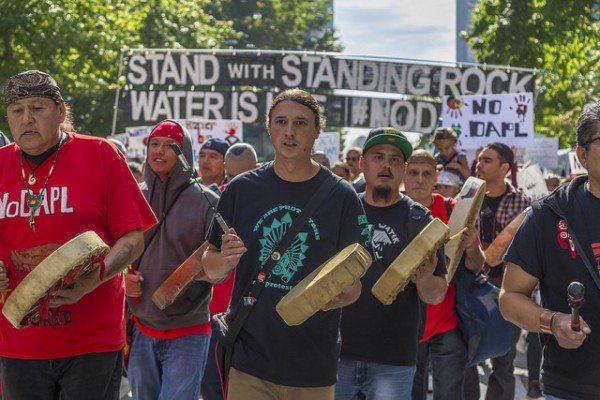
Thousands led by Native Americans from across the country have converged on rural North Dakota over the past month to stop construction of the Dakota Access pipeline near the Standing Rock Sioux reservation. Opponents say the pipeline is a threat to culturally and spiritually sacred sites as well as vital drinking water sources. Protesters have erected an encampment and are leading daily marches to the construction site demanding that the company and federal government halt construction in order to protect water and adhere to treaties with Native American tribes.

The protest over the Dakota Access pipeline reflects the social and political tensions that often emerge around resource extraction projects and potentially hazardous infrastructure, and sociologists have been at the forefront of research and analysis. Mining development led by large multinational companies often brings social dislocation, environmental problems, and a loss of livelihoods for native communities. Yet, indigenous communities have had some success in preventing development and maintaining control over land and natural resources partially through direct action, transnational coalitions, and public campaigns against corporations.
In the U.S., Native American reservations have often been used as sites for hazardous mining and disposal of toxic waste – what scholars call “national sacrifice zones” and environmental racism. Hooks and Smith find that Native Americans struggle with environmental injustices and are more likely to live near toxic waste sites, largely because the U.S. military has used reservations and nearby land for testing and disposing of weapons.
Protest is also driven by group identities and culture. Mobilization against industrial development is shaped by historical and social differences in how people relate to the land. Indigenous philosophy, spirituality, and land claims can provide legitimacy to environmental opposition and are a source of inspiration and motivation for movement participants. This highlights the role of culture, place-based identity, and values in motivating people to participate in protest.
Environmentalists have joined the effort to stop the pipeline as part of a wider movement against fossil fuel extraction and climate change mobilization. Coalitions of environmentalists and indigenous peoples often develop in response to environmentally harmful projects, such as dams or pipelines, which have been important for generating public attention to issues of Native American rights while also building environmental movements. Protests over particular local industrial development can be used strategically by social movements to attract new participants and link people’s immediate concerns about health and safety to broader environmental issues.

There are those who contend that it does not benefit African Americans… to get them into the University of Texas where they do not do well, as opposed to having them go to a less­ advanced school… a slower-track school where they do well.

During oral arguments for Fisher v. University of Texas-Austin (in which the Supreme Court just upheld UT Austin’s use of race in their admissions policies), Justice Antonin Scalia’s comments caused quite an uproar. Did a member of the Supreme Court actually say that African Americans aren’t capable of success at competitive colleges? He was drawing from the so-called “mismatch hypothesis,” which suggests that affirmative action places people into positions they can’t handle—that is, that affirmative action could hurt African Americans by placing them in schools where they may not succeed or from which they may not graduate.

A significant amount of academic work debunks “mismatch theory,” deeming it both wrong and “paternalistic.”

Fischer and Massey use the National Longitudinal Survey of Freshman to analyze college outcomes and test the mismatch hypothesis; they find no evidence in its favor. Alon and Tienda use two different longitudinal datasets to run similar analyses, again finding no proof that ethnic minority students fare badly in advanced institutions. Replication results have been consistent over time; Kurlaender and Grodsky piece, for instance, find that students placed in programs considered “out of their league” performed just as well as those in less demanding programs.
In a twist, scholars find that affirmative action may place a different group of people in schools for which they are not equipped. In many schools, particularly prestigious ones, “legacy” students—whose family members graduated from the same school—benefit from affirmative action in admissions. Bowen and Bok show this has disproportionately affected white students, and Massey and Mooney show that legacy students earn lower grades than their peers and have lower graduation rates. If affirmative action is doing a disservice to some students, it is not in the way Justice Scalia suggested.
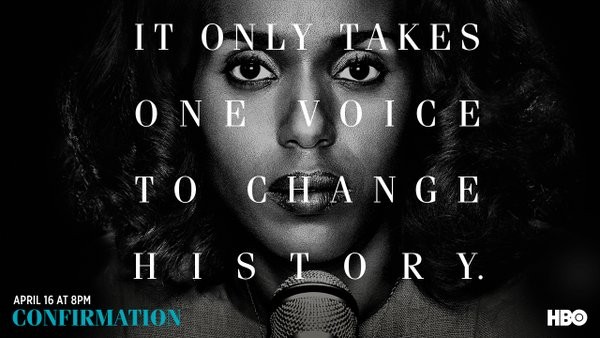
Actress Kerry Washington portrays Anita Hill in an ad for "Confirmation."
Actress Kerry Washington portrays Anita Hill in an ad for “Confirmation.”

In April, HBO premiered “Confirmation,” the story of Supreme Court Justice Clarence Thomas’s 1991 confirmation hearings. In those hearings, a former colleague, lawyer Anita Hill, testified about the ongoing sexual harassment she endured while working for Thomas. HBO’s film, some 25 years after the hearings that Thomas famously called a “high-tech lynching,” reminds us of the murky waters women must drudge through when facing and reporting sexual harassment—as well as how complicated the intersections of race, gender, law, and work can be.

Hill testified that Thomas sexually harassed her as her supervisor at the Department of Education and the EEOC. Various studies find that at least 40% of all women report experiencing sexual harassment at work during some point of their lives. Women of color experience higher rates of both sexual and ethnic workplace harassment.
Hill testified that she continued working for Thomas despite the ongoing harassment because she had no other job alternatives. This is unsurprising given that women in law professions encounter a glass ceiling that limits upward mobility, often pushing women to pursue a limited track of jobs when seeking promotions. Further, women in law professions report hearing sexist jokes, having their authority questioned, and being complimented on looks rather than achievements—all at higher rates than their male colleagues.
Even women in power are subject to sexual harassment. One study finds that sexual harassment can actually increase when some women occupy supervisory positions. Sexual harassment has much more to do with power than simple workplace hierarchies.