
race

Photo by Mark Fischer, Flickr CC

The election of Donald Trump has brought new people into politics and re-ignited activists. As people on the left aim to resist what they view as Trump’s dangerous and harmful policies, and people on the right try to sustain political engagement after the election, both sides are debating about the effectiveness of various political strategies. For example, Indivisible, a guide compiled by Congressional staffers on tactics for opposing President Trump, spread quickly across the internet as people grappled with how to effectively influence policy-making.

Contacting legislators is one of the most common forms of political engagement in the United States. Hearing from constituents, particularly in face-to-face meetings and phone calls, can influence politicians’ action on an issue. The greatest impact, however, is when the contact is outside of routine communications and part of a collective campaign. Social scientists have found that politicians are more likely to react to new information that indicates a change in the political landscape and ties their stance  to their electability. An organized effort can demonstrate that a group has powerful resources, such as volunteers and donations, which in turn can affect politicians’ ability to get re-elected.
Legislators are not always just responding to public opinion either. They are also influenced by lobbyists, political donations, personal political views, and party platforms. Nevertheless, popular opinion may play a larger role in shaping elected officials’ positions when it signals a dramatic shift and the public feels strongly on one side of an issue. Thus, political organizations and concerned citizens can influence policy by raising and changing public awareness, and then explaining these popular sentiments to politicians who learn about their constituents attitudes.
The effectiveness of contacting politicians also depends partially on the party and race of the official and the constituent. People are more likely to contact a politician from their own political party, so contacting leaders outside of one’s own party disrupts political norms — which is sometimes effective and sometimes discounted. The response of elected officials to the public is also shaped by racism. For example, a real-world experiment found that white legislators discriminate against emails and calls from black constituents.
Although calling and writing legislators has a role in democracy, historical research shows that sustained mass social movements are what drive major changes in society and politics. Large popular movements that use tactics like protests, boycotts and strikes can disrupt the status quo and garner public attention. For example, during the U.S. Civil Rights Movement, sit-in protests increased the likelihood of desegregation in a city. The effectiveness of mass mobilization depends on the political and social context, but can transform political possibilities and lead to policy change.  
Photo by Democracy Chronicles, Flickr CC

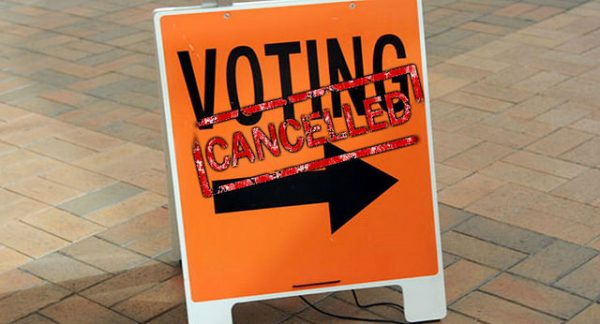
President Trump and his administration have insisted that there was massive voter fraud in the 2016 election, although evidence has not supported this allegation. Instead, the evidence points  to significant issues surrounding voter suppression in the United States.

One contributing factor is felon disenfranchisement — when people with a felony conviction permanently lose the right to vote. Since the late 1860’s, U.S. states with the largest non-white prison populations have been more likely to implement voting restrictions for felons. Today, formerly incarcerated persons constitute the largest portion of the disenfranchised population, which also includes people with disabilities and those without valid forms of identification. Importantly, restrictive voting laws have actually altered political outcomes. For example, it is estimated that Al Gore would have won the 2000 presidential election if formerly incarcerated persons in Florida had been allowed to vote.
After the 2010 midterm elections, there was a wave of laws that seemed to bolster voting requirements, such as new ID laws and proof of residence. And while strengthening voter requirements may seem benign at first, these rules restrict access to people who are less likely to have identification and proof of residence — people of color, the elderly, and the poor. In essence, such laws make it harder for only some people to vote. Research suggests that Republican leadership and legislatures are more likely to push for these laws, an irony when we consider that the President Trump is alleging that there were too many votes.
Photo by Automobile Italia, Flickr CC

Uber has been having a bad time. From reports that venture capital has been propping up a flawed business model, to evidence of racial bias in pickups, rate cuts during a New York taxi strike leading to the #DeleteUber movement, and recent accounts of sexual harassment alongside conflicts with drivers, the romance of Silicon Valley innovation and “disruption” in the company is on the decline. But while this may seem like a fall from grace, research shows these problems are tragically normal. They often plague a wide range of companies because of their organizational structures, and tech start-ups are no exception.

Classic research shows that when a founder also acts as the CEO, it can cause trouble for a company. While they may have a knack for developing innovative products or services, founders don’t always have the management skills to run a large, successful business as a complex organization.
While teams of entrepreneurs can start a businesses together, they often choose who will ultimately run the company. This process is not neutral. Gender inequality in business leadership can emerge from these decisions because friends and family members in these teams often take gendered assumptions for granted.
Racial and gender discrimination in hiring and promotions plagues a wide range of organizations, especially because opportunities for promotion tend to favor homogeneous social networks. These problems also plague organizations and could indicate other organizational troubles, as firms that engage in hiring discrimination are more likely to go out of business.     
Photo by Alan Cleaver, Flickr CC

Donald Trump recently falsely stated that the murder rate “is the highest it’s been in 47 years.” Scholars of crime have been energetic in countering this claim with evidence that the violent crime in the U.S. peaked in the early 1990s and has steadily declined since. Although recent data suggests murder has increased in certain cities, Trump’s characterization of the murder rate is way off. But the sentiment behind his statement in some ways reflects a fearful popular discourse about crime rates and “tough on crime” public policies. 

Even after accounting for other relevant factors, people in neighborhoods with higher crime rates are slightly more fearful about crime. While crime fears also vary along demographic lines and victimization experiences, scholars have emphasized the robust effects of social environment as drivers of crime fears. Collective efficacy — the perceived social cohesion of a neighborhood and the willingness of neighbors to intervene on others’ behalf — is a strong predictor of lower crime fears, whereas the perceived level of disorder (e.g. vandalism) is associated with greater fear.
Scholars have noted that popular discourse around crime has revolved around talk of “random violence,” which deemphasizes patterns of crime and victimization and focuses on the claim that everyone is equally at risk. This rhetoric maximizes public concern and favors policy strategies that include individual law enforcement tactics (“tough on crime”) as opposed to changes in structural conditions (e.g. neighborhood dynamics, class) that are correlated to crime and victimization.
Research on the relationship between fear of crime and the emergence of “get tough on crime” policies explores whether the origins of the punitive turn in crime control resulted from the general public’s fear of crime rates or political strategies that influence the public’s perceptions of crime. Some scholars have found that, in combination with increased media coverage, political initiatives surrounding crime (and not actual crime rates) fostered increasing public concern about crime and drugs during the 1960s and 80s.
Others have recently challenged this notion, arguing that punitive public sentiment is what motivated policymakers to develop tough on crime policies. Regardless of this “chicken and egg” dilemma, crime issues developed into a key political strategy. This “governing through crime” expands racial divisions rather than increasing security for American citizens. The concentration of mass incarceration in impoverished minority communities is evidence enough that crime as a political strategy has important repercussions for American notions of equality and liberty for all.
Photo by John Nakamura Remy, Flickr CC

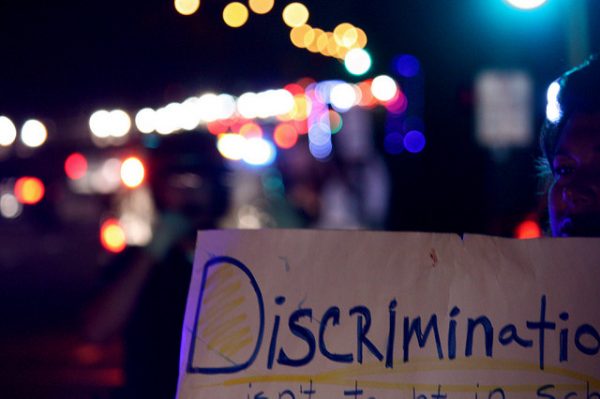
A recent study in the medical community has shown a decrease in teen suicide, particularly among high schoolers who are sexual minorities, since same-sex marriage was legalized. This is evidence that change in social policy impacts health outcomes among those who experience discrimination. This is important because social science has documented the negative impacts of gender and racial discrimination on mental and physical health.

A person’s status as a racial or sexual minority impacts their exposure to stress through perceived discrimination — a key way that racial, gender, and class inequalities in physical and mental health occur. The centrality and/or visibility of racial or sexual differences in a person’s life affects if and how often discrimination is perceived — the higher the salience or visibility of one’s racial or sexual identity, the higher level of perceived discrimination and the higher level of stress that person experiences.
Those who are disadvantaged in multiple ways, like being both a racial minority and a sexual minority, find themselves at higher levels of exposure to discrimination and have higher rates of depression and worse self-rated health.
Photo by Kobe, Flickr CC

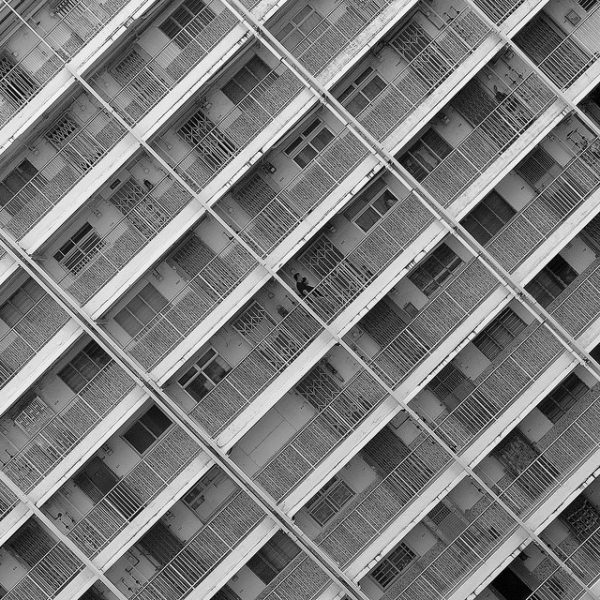
Public housing has a long and troubled history in the United States. In recent years, the demolishing of public housing in cities like Chicago has been one of the most prominent images of decline. For sociologists, it is important to understand not just the problems with and eventual failures of post-war public housing, but also the social forces and sentiments behind their creation.

Consider why the federal government would even see a role for itself in the building of public housing structures in the first place. The origin of public housing legislation can be traced back to Franklin Roosevelt’s New Deal, a series of laws and executive orders focused on providing more basic necessities for the poorest in America.
However, public housing would eventually become associated with racial segregation. The design of public housing projects ultimately worked to concentrate poor non-white communities into relatively cut-off neighborhoods in the middle of cities. This segregation, combined with heavy degradation of the buildings and a lack of proper care from government officials, led to a heavily stigmatized view of public housing buildings.
Given the sheer intensity of racial segregation and concentrated poverty in public housing, many housing advocates and public officials have declared these programs a failure, leading to the demolition of old public housing facilities. But there have also been various proposals to renew public housing initiatives that look to learn from the mistakes of the past while keeping to the goal of housing the poor. One of the largest programs, the federal HOPE VI program, is an ongoing federal project to revitalize public housing areas with architecture focused on crime prevention. This focus on crime prevention is inspired by Oscar Newman’s ‘defensible space’ concept — the idea that if people feel more ownership over a space, they’ll be more watchful over how their neighbors use it, thus curbing crime.
Photo by Neon Tommy, Flickr CC

The Trump administration continues to ramp up policies that not only curb the flow of undocumented migrants into the United States, but also bolster an already formidable deportation system. Currently, many “Dreamers” protected by former president Obama’s executive order are worried that president Trump will overturn this crucial immigration policy, which grants residency status to undocumented individuals that came to the United States as children prior to 2012. This unprecedented move could potentially lead to the detention and deportation of nearly 800,000 people. Surprisingly, social science has found that immigration policy in the United States does not typically follow immigration patterns, but more often shaped by economic and political conditions.

Many legal avenues for migration to the United States were dismantled from the late 1950s through 1965, including the elimination of many temporary worker visas and country and hemispheric quotas. This policy shift resulted in an uptick in undocumented migrants from Latin America until the late 1970s, which subsequently tapered off with the passage of the Immigration and Reform Control Act in 1986. Due to this influx of undocumented immigrants, political rhetoric surrounding immigration took a punitive turn, fueling anti-immigrant sentiment and restrictionist policies with strict enforcement practices, especially during the mid 1990s through the 2000s.
Deportations of both undocumented and documented immigrants has increased significantly in the past few decades, so much so that under the Obama administration, a record 2 million immigrants were deported by the end of 2013. These unprecedented numbers of deportations typically involved people with no criminal record or those with minor convictions, such as traffic offenses or marijuana possession, and nearly one quarter of the 400,000 deportees in 2012 were parents of U.S. citizens.
Scholars have demonstrated the parallels between the system of mass deportation and mass incarceration in the United States, both of which disproportionately impact men of color, are rife with punitive rhetoric, and are bolstered by massive government and private expenditures. Tanya Maria Golash-Boza contends that deportation is nested within the current state of global capitalism.  She argues that deportations serve the function of removing surplus labor while keeping undocumented labor populations in the United States compliant and vulnerable. This era of mass deportation and “crimmigration” comes at a significant cost to immigrant communities and families. Unfortunately, if the current political climate of “America First” is any indicator, these social and human costs will only exacerbate in the recent future.
Photo by William Garrett, Flickr CC

Trump’s rise to the presidency still has many people wondering why large numbers of whites with low to moderate incomes voted for a candidate who supports policies that are likely to have a negative impact on them. In other words, how is a millionaire real estate developer from New York City seen as an average Joe and a champion of white workers? Two prominent sociological explanations involve the racist attitudes of whites’ and feelings of anger and abandoment in economically struggling rural communities.

Racially coded, and racially explicit, language is particularly powerful for tapping into white Americans’ feelings of displacement, loss, and resentment. Sociological research suggests that racialized attacks on “undeserving” immigrants and people of color who benefit from government “handouts” provide a target for anger and a rationale for why white working class communities are struggling economically (while ignoring the privileges that go along with whiteness). Thus, the emotional appeals of racist and xenophobic campaign rhetoric can contribute to lower income people voting against their economic self-interest.
Much of the public commentary about white working class voters has focused on folks in cities and industrial sectors, but another important population to consider is rural residents. People in rural areas are disproportionately white, are struggling economically due to declines in commodity prices, and are confronting rapid demographic changes. Rural citizens, especially white men, perceive their religious and nationalist beliefs as being looked-down upon by liberals, and they draw on a strong rural identity when they describe feeling ignored and abandoned by politicians and elites who devalue their lifestyles. They see the government as creating policies that favor cities and help undeserving minorities and state bureaucrats, all while ignoring rural people. Thus, conservative politicians like Trump have tapped into people’s anger and resentment through emotional appeals to masculinity and male dignity, American nationalism, and Christian morals.

For more on why working class whites voted from Trump, see here, here, and here.

Photo by Karl-Ludwig Poggemann, Flickr CC

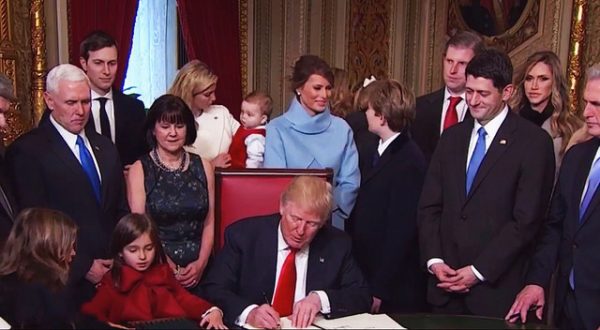
President Trump has made several high-profile picks for his cabinet, but he has one of the least diverse cabinets in recent history; there are no Latinos and very few other minorities or women. This has drawn criticism, but why is diversity a good thing for governments and other organizations? Social science research shows how diversity helps, but also how organizations often limit diversity by warping what it means to their members.  

Diversity can be quite beneficial for organizations. For example, schools with a more diverse student body experience superior educational outcomes. Similarly, in business, employee racial or gender diversity predicts higher sales revenue and market share.   
White House Press Secretary Sean Spicer responded to questions regarding the lack of diversity by stating that this cabinet is diverse; it has a “diversity of thinking…diversity of ideology.”  This is an example of how diversity acts as “Happy Talk,” a way people can show off their affections for modern equality without any attention to existing inequality. In short, many people talk about “diversity” in abstract ways, but avoid any real discussion of race, gender, and the like.
This inattention toward issues of race, gender, sexuality, and other axes of oppression can take the “oomph” out of claims to diversity and misses its original intent: increasing access for marginalized groups. Ellen Berrey succinctly describes the effects of watered down, amorphous diversity as “taming demands for racial justice.” As the remaining 5,000 cabinet sub-positions are filled, pay attention to whether these selections are diverse and what kind of “diversity” they really represent.
Photo by Robert Couse-Baker, Flickr CC

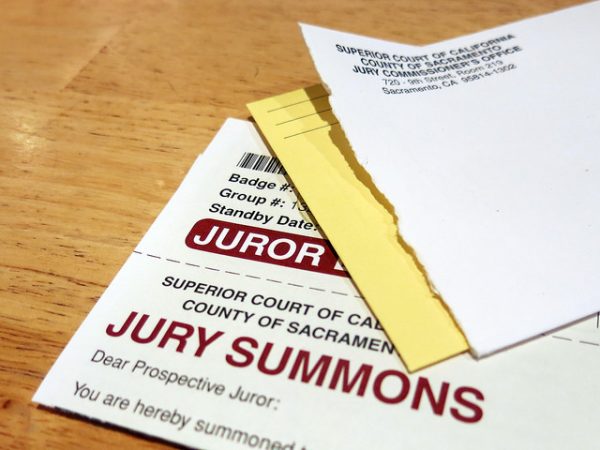
The U.S. Supreme Court is currently hearing arguments for Peña-Rodriguez v. Colorado, a case concerning allegations of racial bias in jury deliberations. Many states prohibit hearing juror testimony following the conclusion of a trial; however, following the deliberations of Peña-Rodriguez’s case, two jurors signed affidavits attesting to racial bias by a fellow juror. They allege that the juror referred to an alibi witness as discreditable because he was “an illegal,” and asserted that the defendant was guilty “because he’s Mexican.” After initially being struck down by both the trial judge and the Colorado Supreme Court, Peña-Rodriguez is now making his case to the highest court, a task which research suggests may prove extremely challenging.

In her book The New Jim Crow, Michelle Alexander illustrates why challenging racial bias in juries is so difficult. Despite the passage of laws such as Batson v. Kentucky, which prohibits prosecutors from discriminating on the basis of race when selecting juries, both prosecutors and defense attorneys are allowed peremptory strikes, or the ability to strike potential jurors for just about any reason they choose. Challenging instances of racial bias is even more difficult following the Supreme Court decision in Purkett v. Elm, which ruled that even if there is a pattern of striking a particular racial group by a prosecutor, providing any race-neutral reason (the prosecutor in this case used hair length) is enough to justify that the decision is not based on race.
Moreover, it is not just legal precedents that solidify racial bias, but also the initial selection process itself that is discriminatory. Potential jurors are drawn from registered voters or Department of Motor Vehicle lists, which contain fewer minorities. Forty-seven states also restrict the rights of felons to serve on juries, which disproportionately limits the presence people of color. Most states and the federal government place a lifetime exclusion for felonies, which automatically bans nearly 30 percent of adult black men from jury service.
In short, jury selection is not only inherently racially biased, but many Supreme Court decisions appear to support a system of racial discrimination rather than dismantle it. As a result, legal precedents such as the rules of evidence may bolster, or at the very least shield, racial bias within jury deliberations.