
race

Zoe Saldana, left, and Nine Simone, right. Image via ABC News Entertainment.

Zoe Saldana’s portrayal of singer and activist Nina Simone in an upcoming biopic has proven controversial, even before the film’s premiere. In press photos, Saldana, a light-skinned woman of color, is clearly wearing dark makeup and a prosthetic nose to appear more like the late singer. Some argue using “blackface” in order to cast Saldana is particularly troubling considering Nina Simone’s own life-long dedication to encouraging the acceptance and embrace of dark skin tones. It also ignores the realities of colorism, which reproduces social inequalities and hierarchies among people of color.

Several studies address the benefits that accrue to light-skinned women. Employers, for example, often evaluate women applicants on physical attractiveness, regardless of job skills. This includes privileging physical features that suggest lighter-skinned women are friendlier and more intelligent. Lighter skin tones also make their female bearers more likely to marry spouses with higher incomes, report less perceived job discrimination, and earn a higher income. In schools, studies find that teachers expect their lighter-skinned students to display better behavior and higher intelligence than their darker peers, and public health research shows lower rates of mental and physical health problems among lighter-skinned blacks.
Colorism may provide socioeconomic, educational, and health benefits to light-skinned women, but it also challenges their identity as black women. Other blacks may perceive them as not “black enough,” assuming that they are more assimilated into white culture and lack awareness of black struggles. Those with lighter skin may feel isolated as members of their ethic group openly question their authenticity and belonging.
Photo by Keoni Cabral, Flickr CC.
Photo by www.liveoncelivewild.com, Flickr CC.

To cut costs, the city of Flint, Michigan moved its residents from the Detroit city water system to water sourced from the Flint River. It was a temporary fix until Flint could access Great Lakes water directly. Now, as the world knows, there’s something in the water: lead. In Flint, more than 40% of residents live below the poverty line, and the high lead levels (10 times higher than originally estimated) have caused skin lesions, hair loss, vision loss, memory loss, depression and anxiety, and Legionnaires’ disease. According to sociologists, it’s no fluke that a disenfranchised community pays the ultimate price for environmental damage.

Nature is a battleground where the privileges of wealth and whiteness prevail. Race and class inequalities perpetuate practices that harm the environment, and the poor, immigrants, and minorities are most likely to live in areas with environmental damage (some 60% of African Americans and Latino/a people live in in places with uncontrolled toxic waste sites). This is largely due to the ways that bureaucracies and the state exercise power over resources in a capitalist economy. Flint, MI is just one of many examples of wealthy governments and corporations exporting hazardous material to poor communities of color.  
Poor communities of color also receive lower government response and assistance in environmental emergencies. From Hurricane Katrina to the Flint water crisis, African Americans tend to lack the economic resources and transportation necessary to evacuate an environmental danger zone, exacerbating its impacts on minority communities.
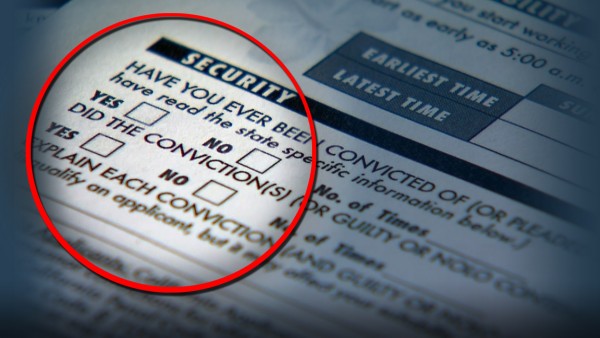
Job application via PBS.org.

Conservative and liberal legislators alike are calling for criminal justice reform. Last November, President Obama proposed a “ban the box” initiative that prevents federal agencies from inquiring about an applicant’s criminal history during the initial stages of the hiring process. The plan mirrors similar policies in over 100 U.S. cities that seek to reduce employment discrimination against people with criminal records and alleviate the socioeconomic burdens they often face as they reenter the job market. Social science highlights the scope of this problem and how ban the box policies may help.

Employers often dismiss applicants with criminal records, which disproportionately affects black men. A Milwaukee study revealed employers contacted only 5% of black men who disclosed a record; even black men without a criminal record were less likely to receive a callback than their white male peers with a criminal record. Thus, even in the absence of criminal background checks, employers may use racial indicators, education levels, and gaps in employment to evaluate potential criminality among job applicants.
Among candidates with a record, employers may consider the severity of the crime, the time since the crime was committed, and the outcome of the crime. Felony crimes and convictions appear to create the most barriers, while job applicants with misdemeanor arrests face lower hurdles. Since interviews with employers show that making personal contact with job applicants can help overcome the negative effects of a criminal record, “ban the box” measures that delay consideration of the criminal record until the interview process could make a real difference in individuals’ job prospects.
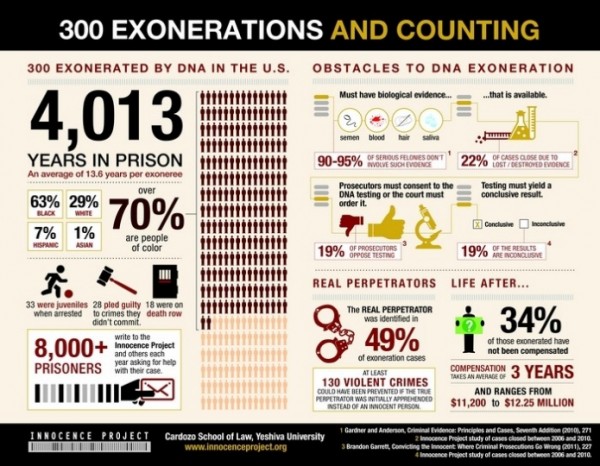
Innocence Project Stats
Click to visit the Innocence Project.

Netflix made a big splash in “true crime” with its series Making a Murderer, chronicling the investigations and trials of Wisconsin man Steven Avery. Exonerated after 18 years in prison for sexual assault in 2003, Avery was arrested for a new crime—murder—in 2007. Public debate about the documentary revolves around whether Avery’s innocent, potential misconduct in the justice system, and the ethics and consequences of documentary “vigilante justice,” but there is little doubt Avery was wrongfully convicted the first time around, in 1985. Social science helps us understand the more systematic consequences of incarceration and exoneration that cultural phenomena like Making a Murderer, the Serial podcast, and even the upcoming miniseries “The People v. O.J. Simpson: American Crime Story” bring to our attention.

Pop culture tends to focus on errors, like witness misidentification and shoddy forensics, but those are not the only things that lead to wrongful convictions. Sociological research shows blacks and Hispanics are at a higher risk, and these groups are, in fact, overrepresented in samples of exonerees. Black exonerees suffer longer periods of incarceration between their conviction and exoneration than other groups. And exonerations often raise questions about the criminal justice system’s authority and legitimacy in the eyes of the public.
Exonerees, even those who aren’t in a media spotlight, face practical problems after they are released from prison. The stigma of having served time diminishes chances in the employment and housing markets, even for those who are exonerated. Like others experiencing reentry after incarceration, exonerees also face unmet needs with regard to physical, dental, and mental healthcare, as well as the myriad challenges of rebuilding social networks and reintegrating to everyday life.
From the AirBnb website's section for prospective hosts.
From the AirBnb website’s section for prospective hosts.

A recent working paper from Harvard found that hosts of the room/house renting service Airbnb discriminate against renters with Black-sounding names. The study revealed that “requests from guests with distinctly African-American names are roughly 16% less likely to be accepted than identical guests with distinctively White names.”

Unfortunately, racial discrimination based on names is nothing new.
Racialized housing discrimination also has a long history. Once overt, such as in the outright denial of mortgages, housing discrimination has shifted toward micro-aggressions that are harder to spot, such as the private decision not to offer an Airbnb to people of color.
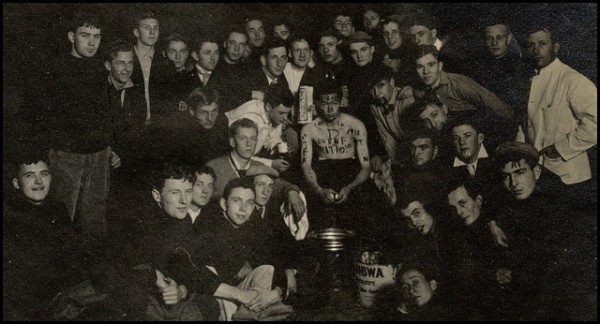
Hazing at the University of Michigan in 1907. Photo via VasenkaPhotography, Flickr CC.

Hazing has been in the news a lot recently. It exists across a variety of settings, including sports and the military.

Why does hazing occur? Some research discusses the function of hazing as rites of passage or as an expression of group solidarity. Hazing can bring members together, validate one another in the group’s eyes, symbolize transition into group membership, bolster group cohesion, and create group conformity within particular hierarchies.
Research on insider’s attitudes towards hazing highlights interesting dynamics within organizations. Individual members often have negative thoughts about hazing, but individuals are unlikely to protest the practice in-group settings. Power dynamics within those groups normalize hazing and silence opposition to it.
The research suggests that hazing takes on a particular character within Greek Letter Organizations (GLOs). In fraternities, for example, where membership and group identity are constructed around ideas of the “all-male” group, hazing can serve as a validation of masculinity and a suppression of femininity. In addition, in GLOs that have been historically raced, hazing can express racial identities, in-group unity, and belonging.
Fantasy sports have gained coverage as a sport of their own.

You’ve probably seen more than an ad or two this fall for DraftKings or FanDuel, two massive online fantasy sports websites valued at over $1 billion each. Since 2009, the number of fantasy sports players has doubled, and, as of August, 56.8 million participated in the United States and Canada (according to the Fantasy Sports Trade Association). It’s not all fun and games, though. The New York Attorney general launched an investigation into these sites, and a recent feature in The New York Times highlights how deep the rabbit hole goes for illegal online gambling on fantasy sports. It is easy to focus on scandalous stories of crime rings, big winnings, and crushing losses, but these sites are not just about gaming the system. Sociologists emphasize that they are also powerful social communities driven by cultures of masculinity and fandom.

Eric Leifer argues that the history of sports fandom in the U.S. is place- and team-based—fans supported the team in their town or region as a marker of community membership. Fantasy leagues and social media challenged this by shifting the focus from entire teams to individual athletes’ performance.
Sociologists, especially, focus on the racialized and gendered nature of sport-based communities. Members often forge strong social ties in male-dominated spaces that emphasize knowledge and expertise, and the groups can privilege racial stereotypes and racialized assumptions about athletic performance.
Fantasy sites (and the betting that ensues on them) are in line with other case studies that show how online socialization is not “less real” or consequential than offline social interaction—both teach everything from harmless play to deviant behavior. We see the power of online interaction in everything from hackers developing their own open-source political theory to online peers teaching others how to download music for free and sport message boards reinforcing racial stereotypes.
Of course, gambling is tied up in these social structures. While American society has “medicalized” compulsive gambling, treating it as an individual and treatable problem, more recent work shows how social environments create what gamblers want most: a chance to be in the “zone” and play for long periods of time. The strong communal aspect of fantasy sports websites makes them a perfect space for sustained play.
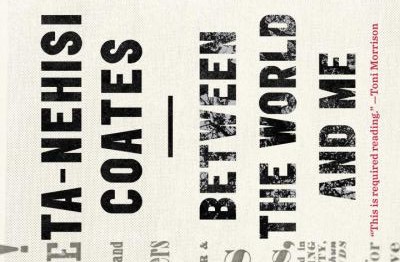
Coates' latest book reflects on race and the justice system. Click for publisher site.
Coates’ latest book reflects on race and the justice system. Click for publisher site.

In The Atlantic, Ta-Nehisi Coates’ “The Black Family in the Age of Mass Incarceration” details the historical development of the carceral state, its consequences on current and formerly imprisoned black Americans, and the unique challenges families face during their absences and returns. Coates cites and interviews several prominent sociologists for their insight into the carceral state’s repercussions for black Americans specifically. We rounded up some of their best work on the topic.

The 1970s saw increasing unemployment and concentrated poverty. Legislators developed “tough on crime” policies that resulted in the start of a massive increase in the number of incarcerated individuals in jails and prisons. Increases in incarceration, however, do not appear to have had a significant effect on decreasing crime rates.
Mass imprisonment has a wide range of collateral consequences. Those who serve time face health risks, familial struggles, and barriers to employment before and after they are released.
Macro-level segregation affects school diversity and students' outcomes. Photo by Michael Patrick, Flickr CC.
Macro-level segregation affects school diversity and students’ outcomes. Photo by Michael Patrick, Flickr CC.


Chicago Public Media’s This American Life recently aired “The Problem We All Live With”—an extended episode with New York Times Magazine reporter Nikole Hannah-Jones on how racial segregation lives on into 21st century classrooms.

School segregation has been on the rise since the 1980s, leading, in part, to a wide achievement gap between Black and White students. Policymakers often focus on the moral achievement of Brown v. Board of Education, but racial separation persists.
Minority students are much more likely to drop out of school, to be tracked into “low-ability” groups or vocational programs, and to face other barriers to achieving higher education. Ability matters for achievement, but so does the social structure of schools.
We usually think school segregation really happens at the neighborhood level, but neighborhood segregation has declined since 1990. Instead, we see increasing macro-segregation—patterns where minority groups are concentrated in certain urban and suburban areas. Therefore, entire schools or districts are more likely to see homogenous groups of students.

For more on inequality in schools, check out the TSP White Paper “Students Squeezed by an Hourglass Economy” by Robert Crosnoe.


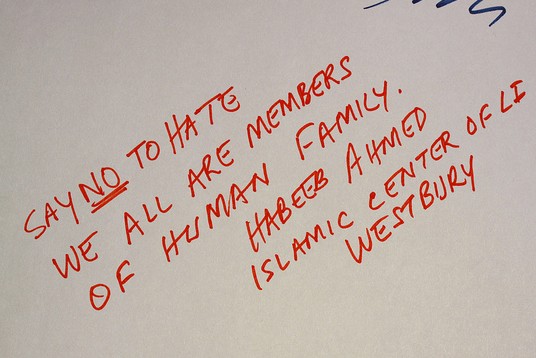
A message left at a memorial for Marcelo Lucero, a Hispanic victim of a hate crime on Long Island. Photo by Long Island Twins via Flickr.

The Emmanuel AME shootings in Charleston, South Carolina have reignited public discussion of both terrorism and hate crimes. While the media often focuses on foreign religious extremism as a motivation for domestic attacks, data show more radicalization has taken place on the political far-right (independent of religion or race) than among Muslims in the United States. Since 9/11, only 25 recorded attacks have been committed by Muslim extremists, while 65 attacks were driven by right-wing extremists at home. So what’s the difference between terror and a hate crime? Is there a difference? Sociological research shows how public discourse and community differences can change the story.

Words like “terrorism” and “hate crime” change across social contexts. In the U.S., acts of violence perpetrated by minority populations are more likely to be defined as acts of terrorism, whereas “home-grown” offenders are likely to be dismissed as crazy, deranged, or evil—“bad apples” rather than people motivated by hate or politics. For hate-crimes, the pattern is reversed. Hate crimes that involve majority perpetrators, particularly in interracial incidents, are linked to higher seriousness ratings. In both cases, the social position of both perpetrator and victim changes how we interpret the violence.
American anti-black hate crimes are most prevalent in communities with a high concentration of white residents that are undergoing black in-migration. This suggests that majority members may try to “defend turf” from the perceived threat of “outsiders”. Compliance with hate crime law is less likely in high-percentage black communities, particularly in the southern U.S. Within these black communities, past lynchings (between 1882-1930) are associated with lower compliance with hate crime law in the present and a lower likelihood of prosecution of hate crime cases.

For more on this issue, check out our other TROT! post, “How Hate Crimes Count.”