race/ethnicity: Whites/Europeans

Melissa sent in a trailer for the video game, inFAMOUS2.  The game features a white male protagonist who is advised by a bad influence and a good influence.  Melissa notes that these are a black woman dressed skimpily and a white woman dressed (relatively) modestly, respectively.  So here we have, again, an affirmation that black is bad and white is good.

Screenshot:

Trailer (2 minutes):

Lisa Wade, PhD is an Associate Professor at Tulane University. She is the author of American Hookup, a book about college sexual culture; a textbook about gender; and a forthcoming introductory text: Terrible Magnificent Sociology. You can follow her on Twitter and Instagram.


Duff McDuffee forwarded this clip by Hennessey Youngman. In it, he explains how to be a successful artist. The recipe is simple. Enjoy (language is NSFW):

But what if you can’t help but be black? Youngman has some advice for you too:

Youngman is pointing to the fact that, whereas white men can make unmarked art — art that is just art, not art of a particular kind — the art of people of color and women is always interpreted in light of their race or gender. Accordingly, if members of these groups want to be successful artists, they must make marked art, art that audiences recognize as the kind of art black people or women make. Further, they must perform “black artist” or “female artist” by adopting the identities that art critics expect and desire to see.

For an example of this phenomena, see our post titled What Counts as Indian Art? or our related, more extensive Contexts article by a similar name.

Lisa Wade, PhD is an Associate Professor at Tulane University. She is the author of American Hookup, a book about college sexual culture; a textbook about gender; and a forthcoming introductory text: Terrible Magnificent Sociology. You can follow her on Twitter and Instagram.
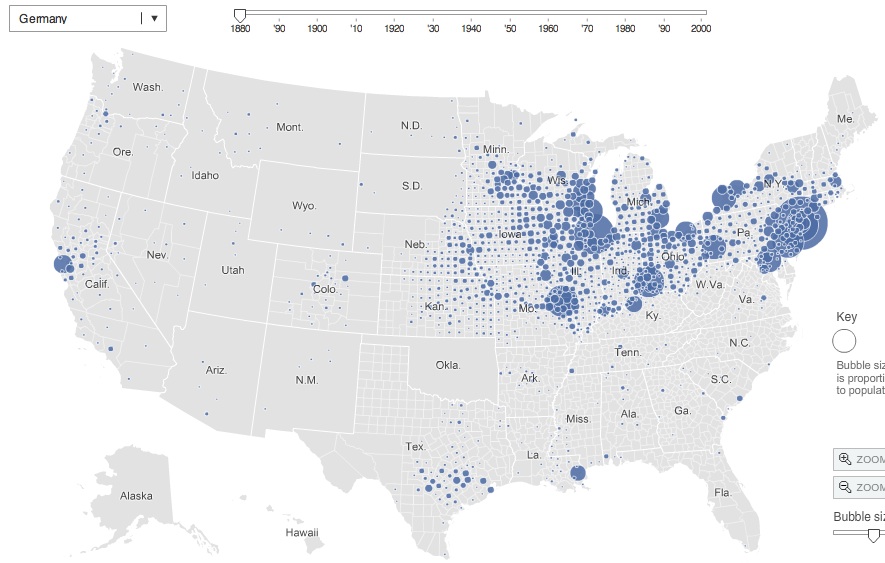
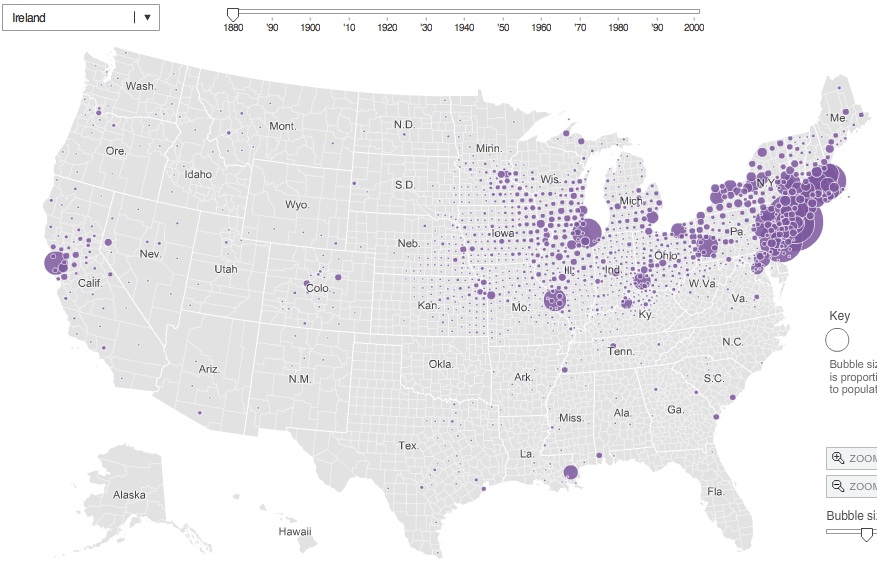
Jessica L., a doctoral candidate in sociology at Kent State and traveling adjunct instructor at Lewis University and Indiana University Northwest, let us know that the New York Times has an interesting interactive map that uses Census data from 1880 to 2000 to show where various immigrant groups have settled. You can select area of origin (some specific, such as China, others very broad, such as “All Africa”) and see where individuals from that area were living in the U.S. for different years (because of changes in Census categories and data gathering, information isn’t available for all groups for all years).

The German-born population in 1880:

If you go to the NYT site, you can roll over the circles to get the specific population.

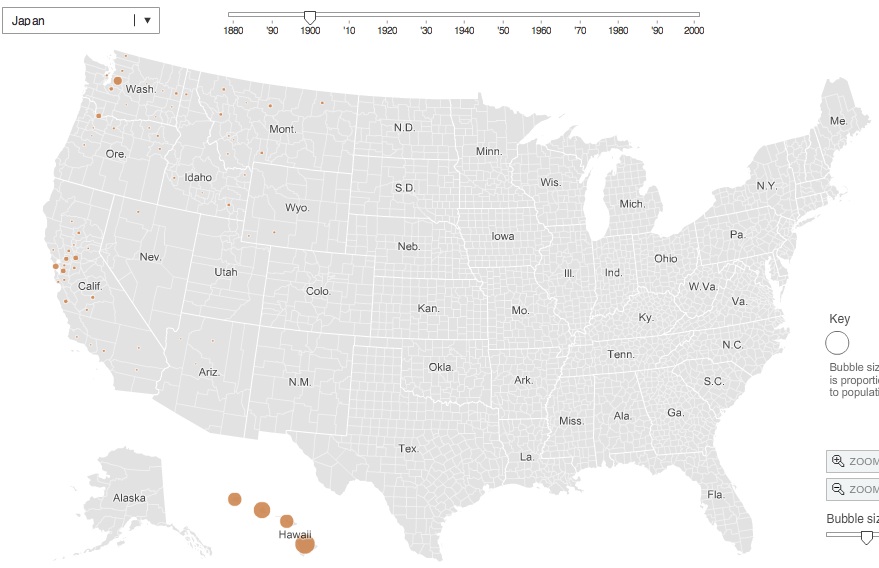
The Japanese-born population in 1900, indicating immigration to Hawaii and, to a lesser extent, California and Washington to work in agriculture:

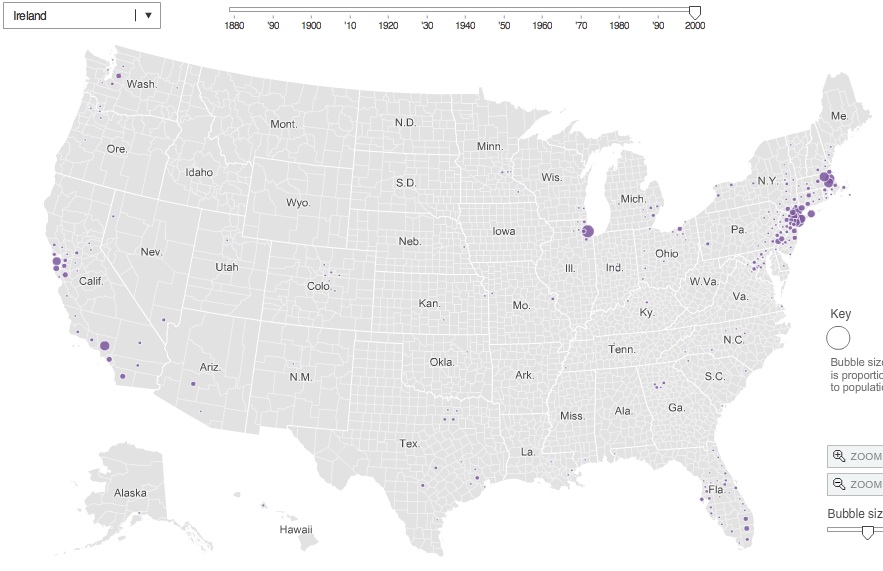
The map also lets you trace the rise and fall of some immigration streams. For instance, in 1880 there were 198,595 people born in Ireland living just in Manhattan alone:

By 2000, the Irish-born population in the U.S. was tiny, and only 4,147 of them lived in Manhattan:

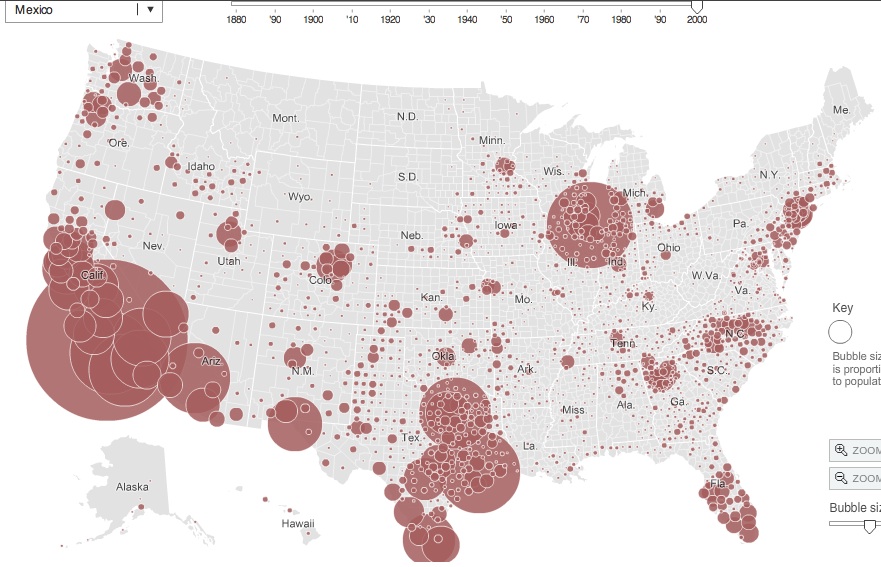
The Mexican-born population in 2000:

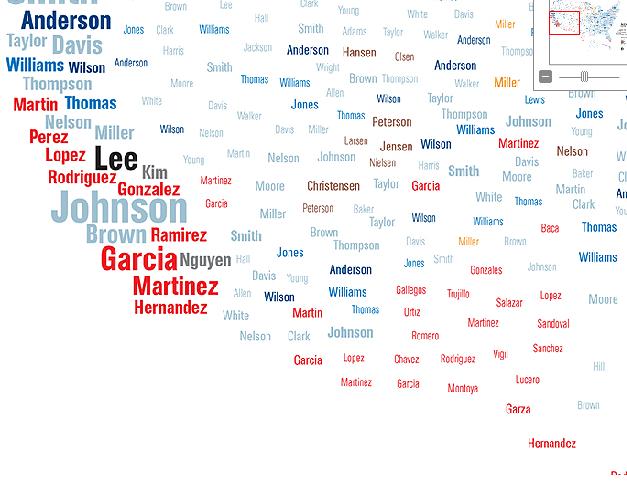
Sara P. let us know about a map at National Geographic that shows the distribution of surnames in the U.S.

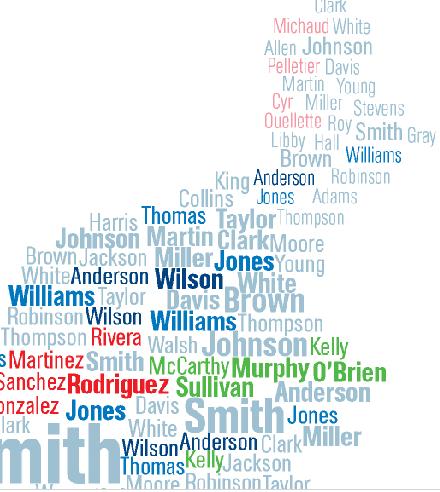
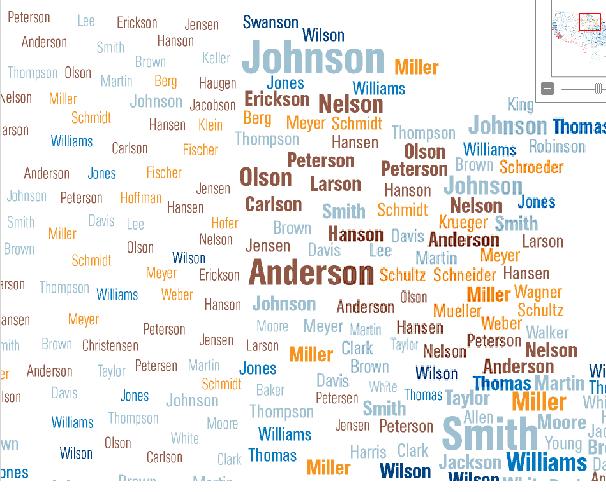
The names are color coded by region of origin of the name:

A note on methodology: geographers looked at the most common by counting the most common last names in phone books and selecting the most common names in each state. This hides significant diversity in names in large cities that may have had a greater mix of immigrant groups that the state overall; for instance, a map of the most common names just in New York City might look quite a bit different than the most common names in New York state.

Nonetheless, the concentration of last names serves as an echo of immigration and settlement patterns. British-origin names tend to dominate across the U.S., unsurprisingly, particularly Smith, Johnson, and Williams. Because slaves were often given the last names of their owners, a significant proportion of individuals with British last names are African American — for instance, African Americans are about 20% of people named Smith.

Several Irish-origin names stand out in Massachusetts, as well as some French surnames in Maine:

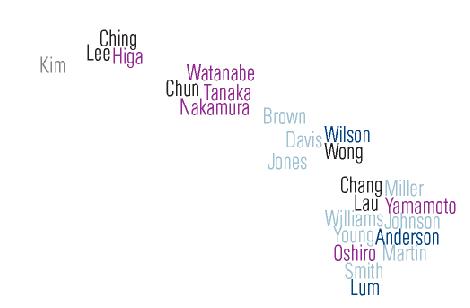
The map of Hawaii reflects the significance of the Asian population there:

Spanish-origin names in the Southwest:

The names common in the Great Lakes/upper plains region reflects the fact that the area was a common destination for immigrations from Germany and Scandinavia:

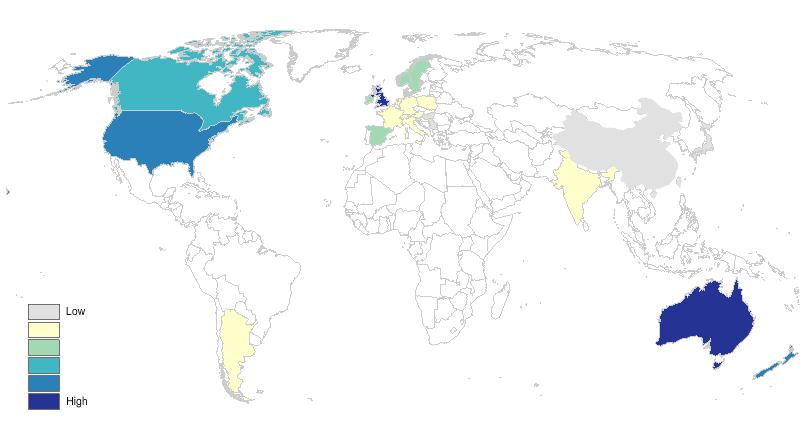
I looked up the geographers who created the maps (James Cheshire, Paul Longley, and Pablo Mateos at University College London) and that led me to an interesting website sponsored by UCL, the World Names Project. If you type in a surname, it will show where on the globe it is most common. You can also zoom in on individual nations and see the distribution within them. Here’s the global distribution of my last name, Sharp:

You also get some data about the name: its origin, the top 10 regions and individual cities for that name, and the most common first names that go with it (which, in all the names I tried, were overwhelmingly male, so I don’t know what to make of that).

As Sara said of the National Geographic map, many of the results are predictable, but that doesn’t mean it’s not fun to look at them.

UPDATE: Reader Kristina provides an explanation for why male names dominate the most common first names lists:

My explanation for Gwen’s finding that the most common first names are overly represented by male names is that names for boys are less variable than names for girls.

Interesting post on that here, which notes, “it [natural language geocoder] needs 4200 first names for girls to cover 90% of the population, but it only needs 1200 boy’s names to reach a 90% coverage. The reason for this huge difference is mainly found in the top positions. The ten most popular male names reach 23% whereas the ten most popular female names reach a comparatively meager 10%.”

On January 30th a video was uploaded to youtube featuring among the most blatantly racist banter I have ever heard on or off screen.   The conversation occurred among the hosts of a BBC program called Top Gear: Jeremy Clarkson, Richard Hammond, and James May.  They discuss a new sports car made in Mexico and the racist “hilarity” ensues.  It is pretty damn horrible… and it goes on and on… so, trigger warning.

There’s a full transcript after the jump, but here are some high points:

They say the car is like the Mexican people: “lazy, feckless, flatulent, [indecipherable] leaning against a fence asleep”

They call Mexican food “sick with cheese on it.”

Hammond says, “Just imagine waking up and remembering that you’re Mexican.” Everyone laughs. Clarkson replies, “It’d be brilliant because you could just go back to sleep again.”

Hammond is the ring leader in this example, but Clarkson appears to make a habit of racist commentary. Here’s just a sampling from Wikipedia:

In October 1998 Hyundai complained to the BBC about what they described as “bigoted and racist” comments he made at the Birmingham Motor Show, where he was reported as saying that the people working on the Hyundai stand had “eaten a dog” and that the designer of the Hyundai XG had probably eaten a spaniel for his lunch…

In April 2007 he was criticised in the Malaysian parliament for having described one of their cars, the Perodua Kelisa, as the worst in the world, built “in jungles by people who wear leaves for shoes”…

This clip reminds us that there are still people out there who will make race-based attacks and plenty of people, note the audience, who will laugh.  Many white people truly do oppose racism and they want people of color to trust them; they want the benefit of the doubt.  But occasional exposure to people like this, even if just on television, and the ongoing daily experience of prejudice, some mild, some severe, plus the hundreds of things that happen every week that may have been racism or may have been somebody having a bad day, add up.  This makes it very scary to trust white people.  Every “benefit of the doubt” has the potential to backfire.

Given the daily experience of race that most people of color must endure, blind trust is too much to ask for.

(Transcript after the jump, borrowed from Racialicious.)

more...

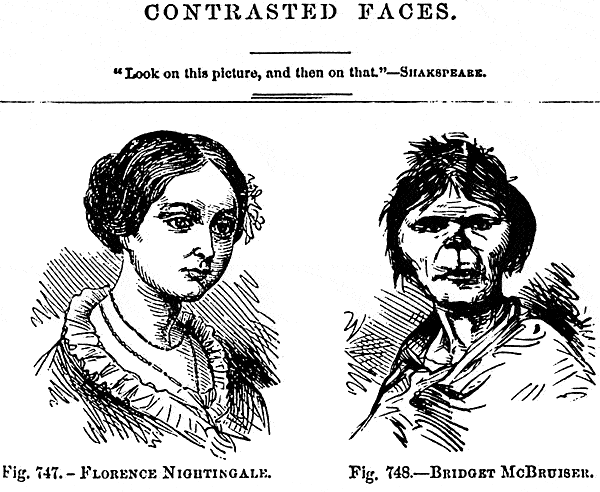
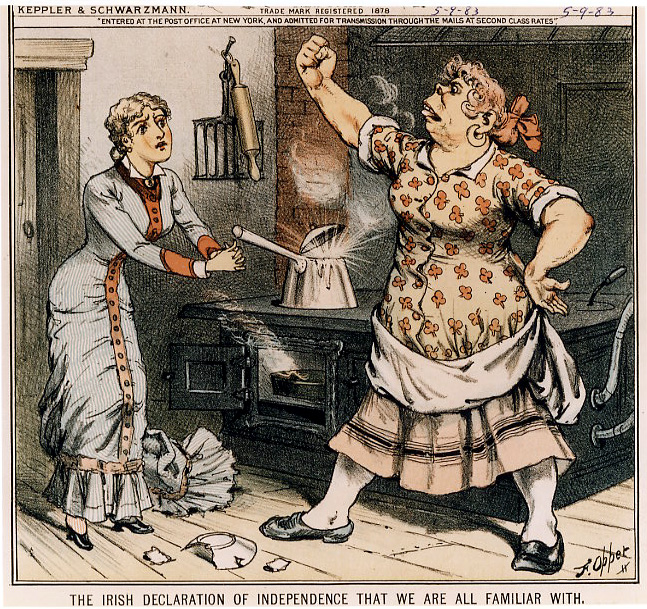
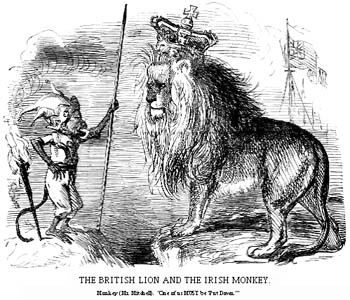
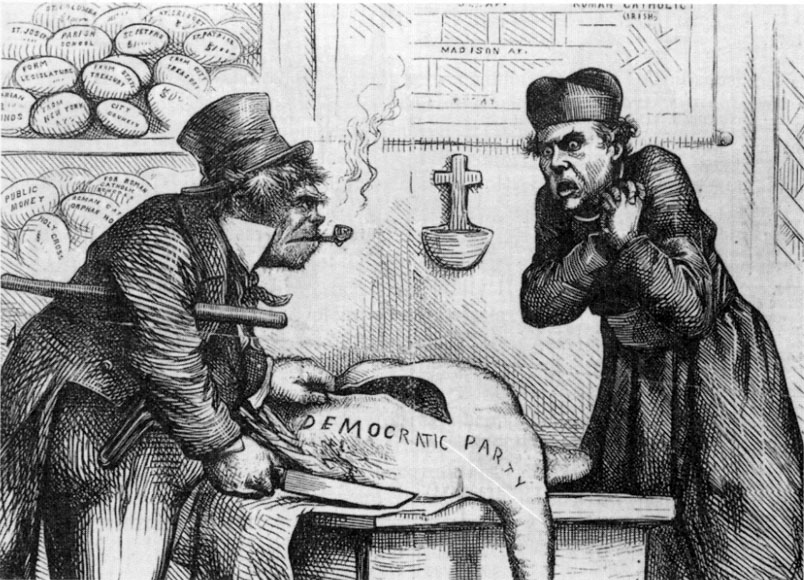
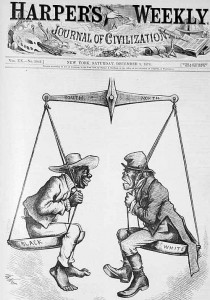
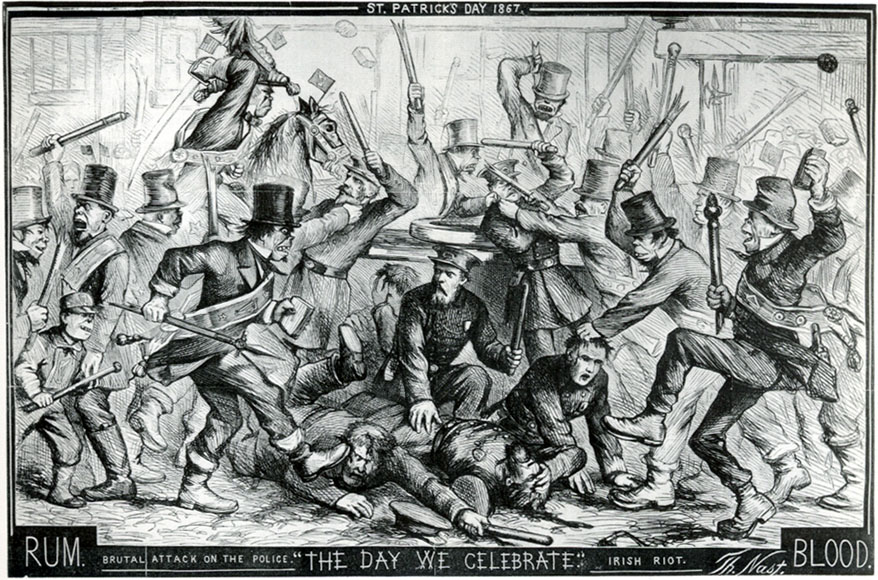
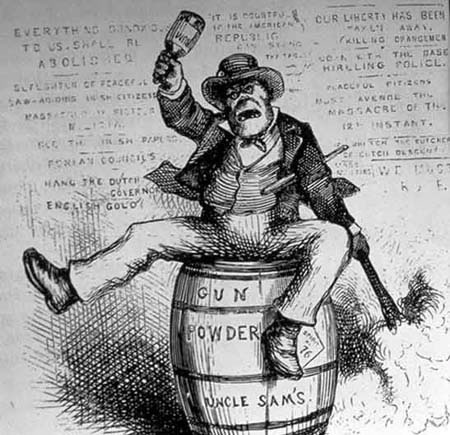
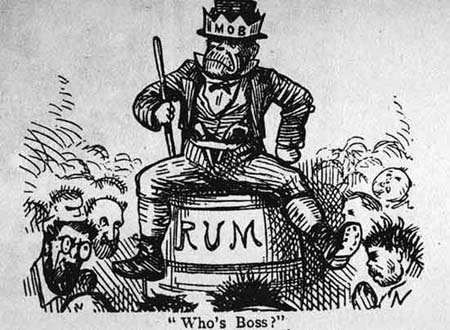
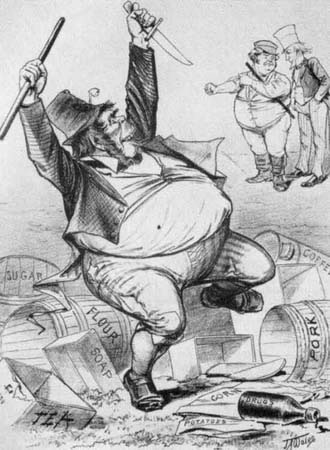
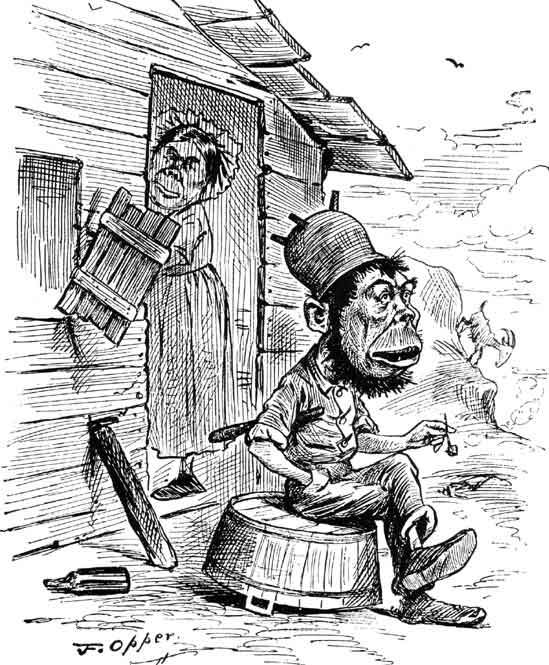
In the last few hundred years, dark-skinned peoples have been likened to apes in an effort to dehumanize them and justify their oppression and exploitation.  This is familiar to most Americans as something that is done peculiarly to Black people (as examples, see  herehere, and here).  The history of U.S. discrimination against the Irish, however, offers an interesting comparative data point.  The Irish, too, have been compared to apes, suggesting that this comparison is a generalizable tactic of oppression, not one inspired by the color of the skin of Africans.

Irish woman, “Bridget McBruiser,” contrasted with Florence Nightengale:

(source)

A similar contrasting of the English woman (left) and the Irish woman (right):

(source)

Cartoon facing off “the British Lion” and “the Irish monkey”:

(source)

An Irishman, looking decidedly simian, in the left of this cartoon:

(source)

The Irish and the Black are compared as equally problematic to the North and the South respectively.  Notice how both are drawn to look less human:

(source)

A depiction of an Irish riot (1867):

(source)

An Irishman, depicted as drunk, sits atop a powderkeg threatening to destroy the U.S.:

(source)

Two similar cartoons from the same source:

About this cartoon, Michael O’Malley at George Mason University writes:

In this cartoon, captioned “A King of -Shanty,” the comparison becomes explicit. The “Ashantee” were a well known African tribe; “shanty” was the Irish word for a shack or poor man’s house. The cartoon mocks Irish poverty, caricatures irish people as ape like and primitive, and suggests they are little different from Africans, who the cartoonists seems to see the same way. This cartroon irishman has, again, the outhrust mouth, sloping forehead, and flat wide nose of the standard Irish caricature.

(source)

So, there you have it.  Being compared to apes is tactic of oppression totally unrelated to skin color — that is, it has nothing to do with Black people and everything to do with the effort to exert control and power.

For more on anti-Irish discrimination, see our post on Gingerism.  And see our earlier post on anti-Irish caricaturein which we touched on this before.

Lisa Wade, PhD is an Associate Professor at Tulane University. She is the author of American Hookup, a book about college sexual culture; a textbook about gender; and a forthcoming introductory text: Terrible Magnificent Sociology. You can follow her on Twitter and Instagram.
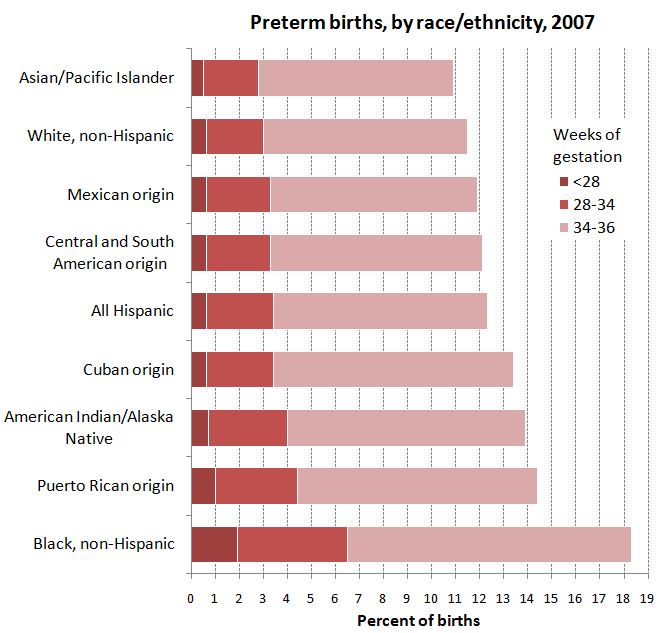
The CDC has just released a Health Disparities and Inequalities Report with new numbers detailing the uneven mortality and morbidity in the U.S.  Family Inequality‘s Philip Cohen highlighted the data on pre-term birth among whites, blacks, Asians/Pacific Islanders, Hispanics, and some Hispanic subgroups.  It’s nice to see data that includes more than just whites and blacks; studies often do not report data on Hispanics, Asian/Pacific Islanders, and especially American Indians because the number of respondents is considered too low (and they do not over sample these groups).  More, breaking out the different Hispanic sub-groups is also rare.  As Cohen said, it’d be nice to see such detail for other groups as well (though it’s tough to do so for black Americans because those who arrived in the slave trade have often lost track of their national/ethnic origin).

In any case, the data both confirm previous findings and offer an important insight.  In the confirmatory case, it shows that Asians and whites are less likely to give birth to pre-term babies than other groups, with blacks suffering the worst outcomes.  As for the interesting finding: notice the wide range of outcomes for Hispanics of different origin.  Reporting only “All Hispanic” hides important variation. We can be assured that that variation is true for the other racial groups as well.

Lisa Wade, PhD is an Associate Professor at Tulane University. She is the author of American Hookup, a book about college sexual culture; a textbook about gender; and a forthcoming introductory text: Terrible Magnificent Sociology. You can follow her on Twitter and Instagram.
The color of one’s nipples varies according to the color of one’s skin. Lighter-skinned people tend to have lighter nipples, while darker-skinned people tend to have darker nipples. To add to the many racist products and procedures designed to make the bodies of darker-skinned people more like the bodies of lighter-skinned people — eyelid surgery, eyelid gluing, Asian rhinoplasty, hair straightening, and skin lightening — Theresa W. sent in a product designed to make the nipples more “pink.”  These products, featured at The Faster Times, seem to be mostly aimed at the Asian market, many of whom are already quite light-skinned.  Below is a selection of the many products one can find.

Finale Pink Nipple Cream:

Bioglo Cherry Pink Lip Nipple Cream:

The rest are after the jump because the packaging shows images of breasts.

more...