nation: United States

There are six (progressive) tax brackets for income.  The tax rate paid by earners is bumped up each time they reach a bracket threshold.  The threshholds are determined by type of household.  Here’s a handy chart for 2012 from Wikipedia:
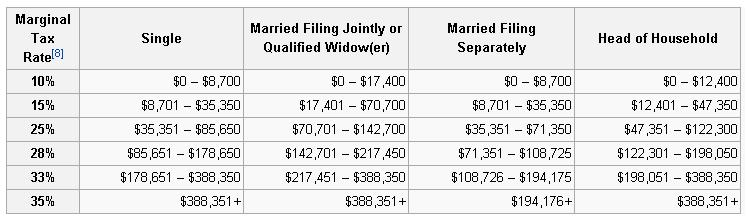
U.S. politicians are now debating how these tax rates should change and they often focus on the “marginal” or “top” tax rate.  That’s the one that applies to the highest tax bracket, right now at 35%.

Dylan Matthews at the WonkBlog notes that the squabbling has been mostly over a percentage point or two.  Small beans, he asserts.  To put this in perspective, he includes this graph of fluctuations in the top tax rates throughout history (click to enlarge):
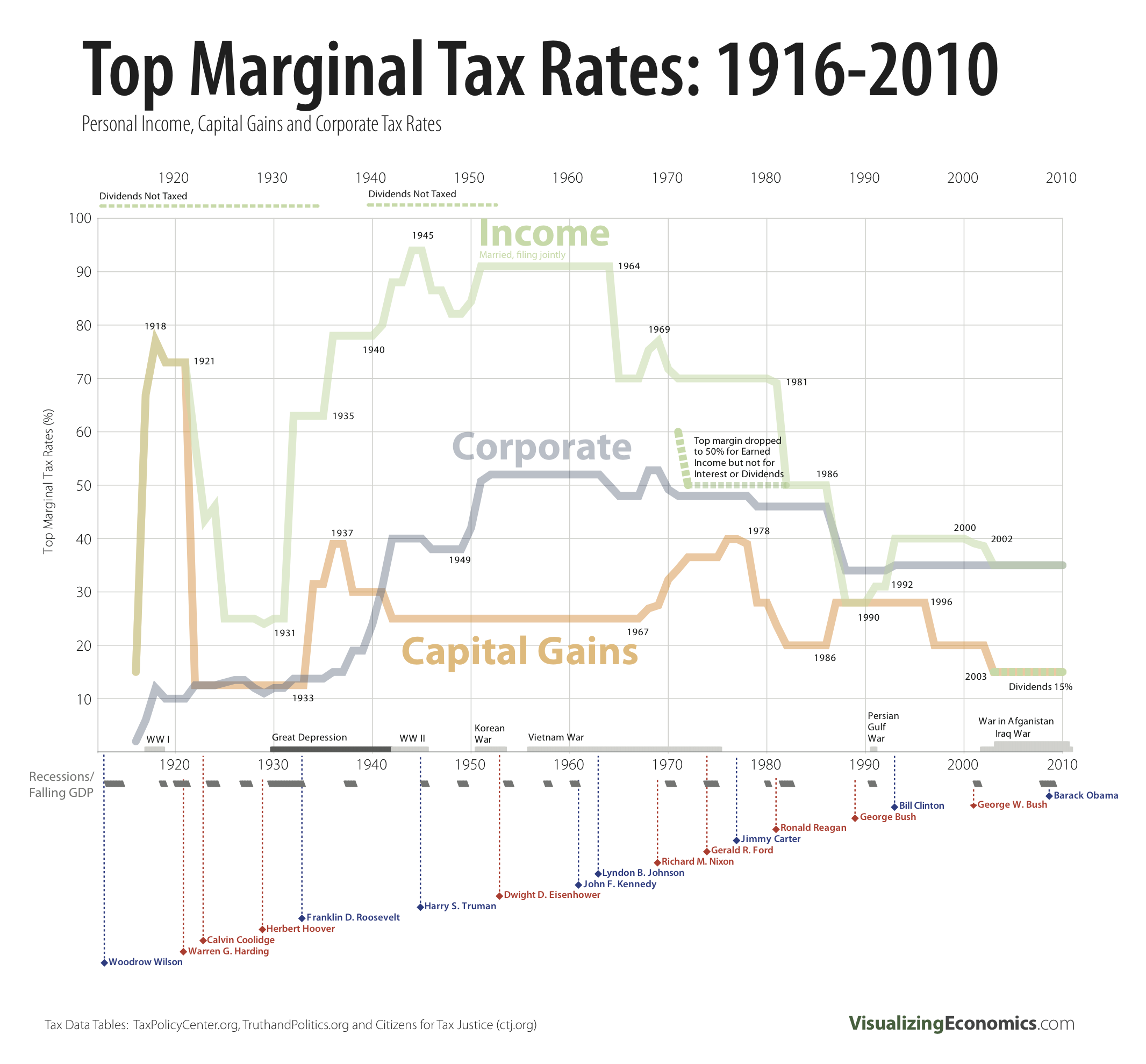
The green line labeled “income” correlates to the chart above.  You can see that especially income, but also corporate and capital gains top tax rates, have been shockingly variable since 1910.  They were about 25% right before the Great Depression, raised to about 95% during World War II, dropped to about 70% in the ’60s, and have been on the decline ever since.

Matthews refers to a pair of economists, Nobel laureate Peter Diamond and Emmanuel Saez, who argue that the top tax rate should optimally be 73%.  Sociologist Jose Marichal, however, at ThickCulture, observes that tax policy has rarely been about what is optimal for society.  Instead, he writes:

What these wild shifts in tax policy suggest is that our determination of how much we should tax our wealthiest is not based on any pragmatic assessment of what would result in the best policy outcome, but is rather guided by foundational assumptions about what is fair.

Beliefs about what is fair are, of course, strongly influenced by cultural ideologies and group stereotypes.  Politicians both fall victim to their own biases and strategically invoke and create ideas and resentments.  We shouldn’t expect the current debate over how to change our tax code to be either rational or practical, then.  The debate will be political, but you already knew that.

Lisa Wade, PhD is an Associate Professor at Tulane University. She is the author of American Hookup, a book about college sexual culture; a textbook about gender; and a forthcoming introductory text: Terrible Magnificent Sociology. You can follow her on Twitter and Instagram.
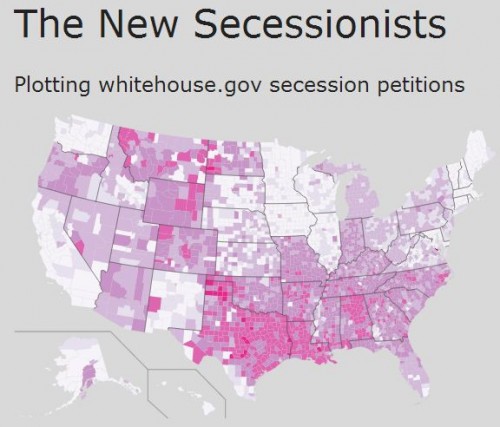
Over at the University of North Carolina at Chapel Hill, sociologist Neal Caren and a team of graduate students have worked up on image showing the locations of people signing secession petitions on the White House website in the wake of Obama’s reelection.

For context, here’s the text of one such petition, from Alaska:

ALLOW ALASKA TO SECEDE FROM A DYSFUNCTIONAL UNION.

As an American Veteran on behalf of the U.S. Constitution, the Republic, the Rule of Law, and equal justice for all freedom loving citizens of the United States of America hereby declare that the Federal Government allow Alaska to peacefully secede from a dysfunctional Union that is run by corrupt politicians who buy the votes of individuals who can no longer be seen as American citizens but rather, slaves to a tyrant. We who took the oath to protect and defend the Constitution of the United States of America against all enemies, foreign and domestic, now declare Washington D.C. to be the domestic enemy to the freedom and liberty of all Alaskans and indeed, 50% of the free citizens of the USA. Therefore, we declare our secession in support of the U.S. Constitution. LET MY PEOPLE GO!

Almost all states have an active petition now. Here’s the map of signers from around the country, shaded according to the proportion of each county’s residents who signed a secession petition. If you click on the image you go to the site, which allows you to hover over each county and see the counts:Neal Caren writes:

In total, we collected data on 702,092 signatures. Of these, we identified 248,936 unique combinations of names and places, suggesting that a large number of people were signing more than one petition. Approximately 90%, or 223,907, of these individuals provided valid city locations that we could locate with a U.S. county.

Using a first-name algorithm, they estimate that 62% of those signing are men.

Philip N. Cohen is a professor of sociology at the University of Maryland, College Park, and writes the blog Family Inequality. You can follow him on Twitter or Facebook.

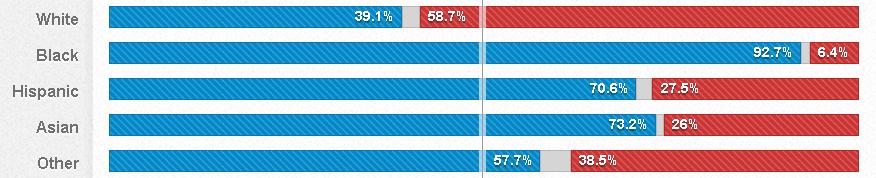
Barack Obama won just over 50% of the popular vote last week, but he earned 80% of non-white votes.  According to USA Today exit poll data, he secured 93% of the Black vote, 73% of the Asian vote, 71% of the Hispanic vote, and 58% of the non-white Other vote.

This data suggests are real and palpable difference between how (some) Whites and (most) non-Whites see the world, a difference that will become increasingly influential.

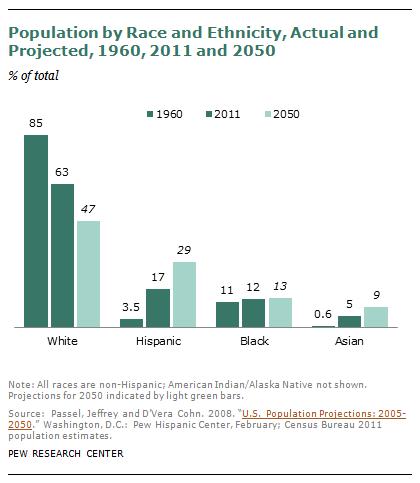
Earlier this month the Pew Research Center released an updated prediction for the racial/ethnic composition of the U.S. in 2050.  They expect that, by 2050, Whites will be a minority, adding up to only 47% of the population.  By that time, they expect Hispanics to account for 29% of the population, and Blacks and Asians to account for 13% and 9% respectively.

Paul Taylor and D’Vera Cohn, at Pew, observe that the demographics of the voting population will change a bit slower since the majority of the demographic change is from births and deaths, not immigration.  In 2011, for example, whites were 66% of those ages 18 and older, but only 56% of 18-year-olds.  In other words, it takes 18 years to grow a voter.

Whatever the pace of change, the era of winning U.S. elections by pandering to the worldview of a single group is ending.  Future politicians will likely have to put effort into attracting a wide range of voters, as Obama did on Tuesday.

Lisa Wade, PhD is an Associate Professor at Tulane University. She is the author of American Hookup, a book about college sexual culture; a textbook about gender; and a forthcoming introductory text: Terrible Magnificent Sociology. You can follow her on Twitter and Instagram.
Yesterday NPR’s Morning Edition included a segment by Alix Spiegel about cultural differences in approaches to teaching and learning. Researchers have found interesting differences in how teachers and parents in the U.S. and Japan encourage kids to learn.

Americans tend to focus on intelligence as the source of school success; you do well because you’re smart, kids learn. But Jim Stigler’s observations in Japan indicated that teachers focused more on effort, on letting kids publicly struggle with problems until they finally got the right answer. From this perspective, learning doesn’t occur because you’re inherently smart; it occurs because you keep working at a difficult problem until you figure it out. Jin Li has also found that parents tend to socialize kids in the U.S. into thinking of their successes as a sign of their intelligence more than their hard work, while Chinese parents focus more on persistence and concentration.

These lead to different perceptions of what it means to struggle to learn. As Stigler explains, in the U.S., we often assume that learning comes easily to you if you’re smart, and if you struggle to learn, that you lack ability. This can lead to fatalism; students who don’t easily grasp a concept can quickly see it as impossible. But as Spiegel says,

Obviously if struggle indicates weakness — a lack of intelligence — it makes you feel bad, and so you’re less likely to put up with it. But if struggle indicates strength — an ability to face down the challenges that inevitably occur when you are trying to learn something — you’re more willing to accept it.

It’s an interesting report on differences in cultural perceptions of learning, what it means if you struggle to grasp something, and the implications this might have for students’ experiences of their own learning process. It’s worth a listen.

I couldn’t get the audio file to upload; you can listen to it at the NPR site. You can read the full transcript here.

Gwen Sharp is an associate professor of sociology at Nevada State College. You can follow her on Twitter at @gwensharpnv.

…voting rights still excluded certain groups?

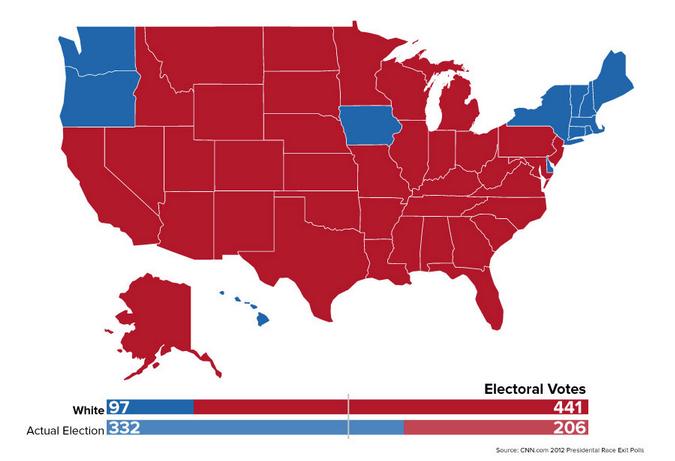
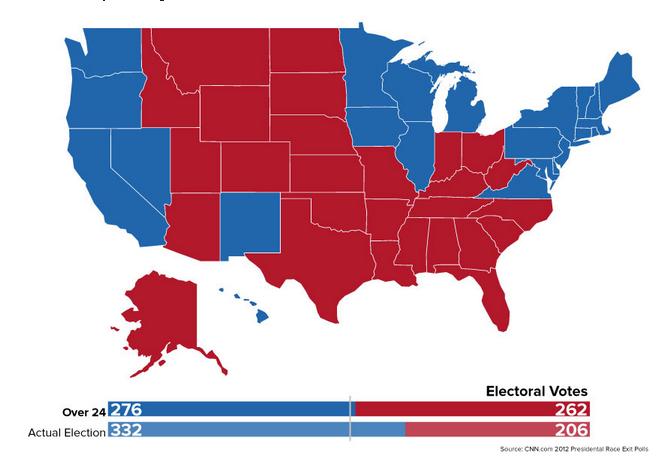
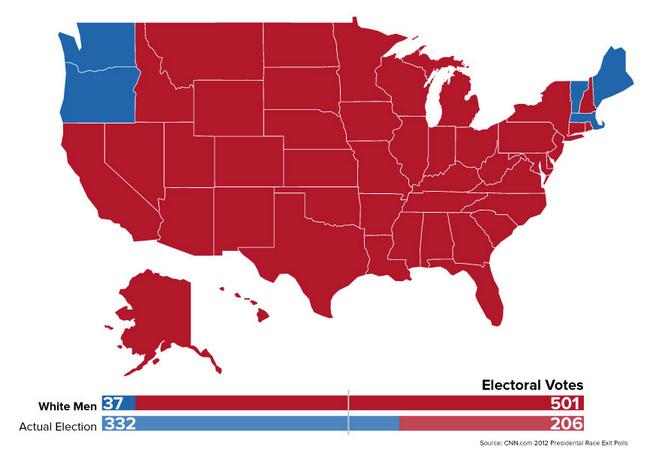
Buzzfeed has put together a great collection of U.S. maps showing what last Tuesday’s election would have looked like if women, non-whites, and 18- to 23-year-olds had never been given the vote.

Actual results:

Results with just white men:

Results with only men, all races:

Results with only white people, men and women:

Results excluding people 18- to 23-years-old:

The results are stunning and are a hint of just how consequential the ongoing voter suppression and disenfranchisement can be.

Lisa Wade, PhD is an Associate Professor at Tulane University. She is the author of American Hookup, a book about college sexual culture; a textbook about gender; and a forthcoming introductory text: Terrible Magnificent Sociology. You can follow her on Twitter and Instagram.
About a gazillion twitterers and three readers — Andi, Ria, and Jenna B. — have asked us to comment on the new Honda Fit She’s begin marketed in Japan. It’s a car. For ladies. It’s pink.  It reduces wrinkles. The apostrophe in the logo is a little heart. Etc.

My only response to this is: “how very la femme!”  Dodge La Femme that is.

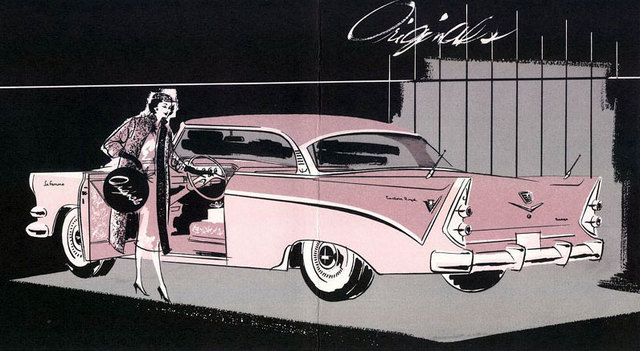
The Dodge La Femme  was sold for two years in the U.S. — 1955 and 1956 — and could be considered a fore mother to the She’s.  We originally posted about it in 2007.

Here is some of the advertising:

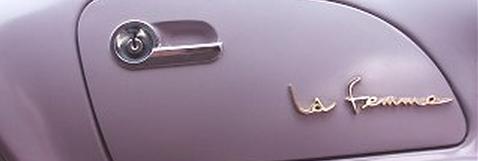
Pictures of a restored La Femme from a fan website show that the car was indeed two-tone pink, with pink rosebud patterned upholstery, and a matching umbrella, raincoat, a compact, and coin purse.

One of the reasons that the La Femme didn’t sell was because women were, frankly, offended.  Gender politics are different today, and they’re certainly different in Japan than they are in the U.S., so it’ll be fascinating to see how the She’s is received.

Lisa Wade, PhD is an Associate Professor at Tulane University. She is the author of American Hookup, a book about college sexual culture; a textbook about gender; and a forthcoming introductory text: Terrible Magnificent Sociology. You can follow her on Twitter and Instagram.

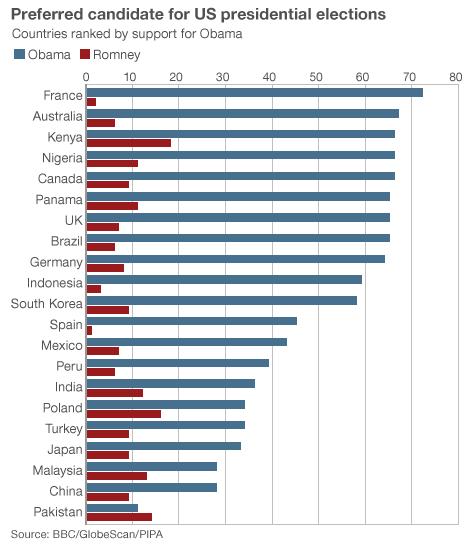
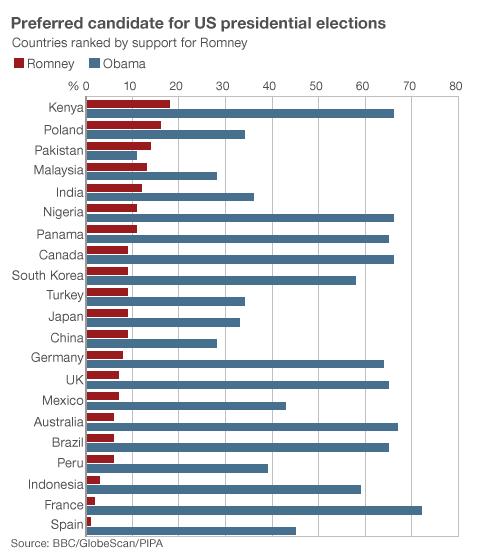
A BBC poll of almost 22,000 people in 21 countries found that, on average, they preferred Obama to Romney more than five to one.  Only one country, Pakistan, would elect Romney.

Results ranked by support for Obama:

Results ranked by support for Romney:

What does it mean that this is such a close race here?

Via The Grumpy Sociologist.

Lisa Wade, PhD is an Associate Professor at Tulane University. She is the author of American Hookup, a book about college sexual culture; a textbook about gender; and a forthcoming introductory text: Terrible Magnificent Sociology. You can follow her on Twitter and Instagram.
Cross-posted at Montclair SocioBlog.

At the GOP convention in August, Mitt Romney’s cavalier dismissal of global warming got the intended laughs.  Today, it seems less funny and the Democrats are capitalizing on the turn of events:

Here’s the transcript:

President Obama promised to begin to slow the rise of the
oceans and to heal the planet.  My promise is to help you and your family.

In two short sentences, Romney gives us the broader context for the denial of global warming:  the denial of society itself.  He echoes Margaret Thatcher’s famous dictum

There is no such thing as society. There are individual men and women, and there are families.

This doesn’t mean that there are no groups beyond the family.  But those larger groups are valid only because individuals, consciously and voluntarily, chose to create them.  This way of thinking about the relation between individuals and groups has long been an underlying principle of American thought.  Claude Fischer, in Made in America calls it “voluntarism” – the idea that the only legitimate groups are the ones that people voluntarily form or join.*  The individual has a strong obligation to those groups and their members, but he has little or no obligation towards groups and people he did not choose.

That is a moral position.  It tells us what is morally O.K., and what is not.  If I did not choose to join a group, I make no claims on others, and it is wrong for others – whether as individuals or as an organized group, even a government – to make any claim upon me.

That moral position also shapes the conservative view of reality, particularly about our connectedness to other people and to the environment.  Ideas about what is right determine ideas about what is true.  The conservative rejects non-voluntary connections as illegitimate, but he also denies that they exist.  If what I do affects someone else, that person has some claim upon me; but unless I voluntarily enter into that relationship,  that claim is morally wrong.  So in order to remain free of that claim, I must believe that what I do does not affect others, at least not in any harmful way.

It’s easy to maintain that belief when the thing being affected is not an individual or family but a large and vague entity like “society” or “the environment.”  If I willingly join with many other people, then I will see how our small individual acts – one vote, one small donation, one act of charity, etc. – add up to a large effect. That effect is what we intended.  But if we separately, individually, drive a lot in our SUVs, use mega-amounts of electricity, and so on, we deny that these acts can add up to any unintended effect on the planet.

As Fischer says, voluntarism is characteristically American.  So is the denial of global warming.  At a recent Romney rally (video here), when a protester yelled out the question, “What about climate?” Romney stands there, grinning but silent, and the crowd starts chanting, “USA, USA.”  The message is clear: we don’t talk about climate change; we’re Americans.

Jay Livingston is the chair of the Sociology Department at Montclair State University.  You can follow him at Montclair SocioBlog or on Twitter.  Two more posts on voluntarism are here and here.