Search results for embed

131105124405-04-richie-incognito-horizontal-gallery
Source: Doug Benc/Getty Images.

On October 28th, Miami Dolphins offensive lineman Jonathan Martin left the National Football League citing emotional distress as a result of abuse at the hands of his teammate Richie Incognito.  Incognito admits to having sent Martin racist, homophobic, and threatening text messages and voicemails but argues that rather than hazing or bullying, this was merely an instance of miscommunication between the two men.

While a great deal of media attention has questioned the behavior of Richie Incognito, a disproportionate amount of attention has also been given to Martin’s choice to report the abuse.  Why has Martin’s choice to report the abuse received so much attention?  What has been the main theme of those critiquing Martin’s choice?  And, what does this discussion mean for our national discourse on bullying and hazing?  The answers to these questions, I argue, are all linked to masculinity.

The media talks about Martin’s choice to report because his decision violated accepted cultural norms of masculinity.  Some may call these norms, more colloquially, the “bro code,” “guy code,” or “man code.”  Whatever we choose to call it, there are accepted ways in which men and boys are expected to conduct ourselves and our relationships to other men.  Martin stands accused, especially within the athletic community, of having broken the code.

In a very telling interview, Channing Crowder, a former teammate of Incognito, made it clear that this conversation is really about masculinity.  According to Crowder, Incognito tests his teammates.  He “tests you to see if you have enough manhood or enough testosterone” (even though this type of bullying is just as much about the perpetrator’s masculinity as it is the victim’s).

In this case Martin’s masculinity is under attack on two fronts.  First, it is under attack because he failed Incognito’s “test” of his manhood.  Second, he is under attack because his solution to Incognito’s bullying violated guy code.  According to the code, real men solve their problems with one another through violence.

Sports Illustrated reported that many NFL personnel consider Martin to be a coward or a wimp for reporting the abuse.  One NFL informant was even quoted saying “I think Jonathan Martin is a weak person.  If Incognito did offend him racially, that’s something you have to handle as a man.”  Others said it would have been preferable for Martin to “go down swinging” or to “fight.”  Even NPR ran a piece in which a regular guest argued:

Martin should have taken that dude outside and put his lights out.  I do not – I absolutely do not believe in a society where we run to the principal’s office every time these petty tyrants make a threat… Only power dispatches bullies… Jonathan Martin is a grown man and you can’t bully a grown man.

To be fair, in that same NPR piece, another interviewee stated that “not everybody resorts to violence in response to bullying and I applaud him for that.”

Nevertheless, by reporting the abuse rather than physically confronting Incognito, Jonathan Martin has been publicly stripped of his “man card.”

But, so what?  Why should we care about how grown men address bullying?  We should care because just as Jonathan Martin is being told to “man up,” so are young boys all over the country when they are bullied.  Boys are told that when they cannot physically confront a bully they are inadequate and unworthy.  They are taught to remain silent in the face of insurmountable violence because speaking out is a sign of weakness, or worse, femininity.  Too many boys are left with nowhere to turn when bullying makes trauma a daily experience.  In this sort of environment can we really be surprised that boys are committing suicide, developing depression, and lashing out violently at incredibly high rates?

Incognito on film:

Cliff Leek is a PhD student in the Department of Sociology at Stony Brook University.  He is a News Editor for Sociology Lens, co-founder of Masculinities 101, a Program Director for the Center for the Study of Men and Masculinities and a Research Assistant to TrueChild.  

Cross-posted at Sociology Lens and The Good Men Project.
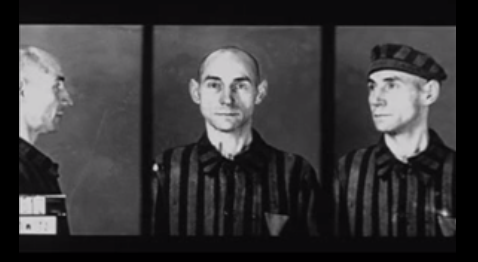
A hundred thousand men and women identified as homosexuals were imprisoned during the Nazi regime. They were detained under a law known as “paragraph 175,” which made sodomy illegal.  Up to 15,000 were sent to concentration camps instead of prisons.  Nearly 2/3rds would die there.  The last surviving victim is believed to have died in 2011.

These men and women were not only victims of Nazi Germany, surviving torture in concentration camps, they were also denied validation as victims of the Third Reich.  They were classified as criminals upon release and included on lists of sex offenders.  Some were re-captured and imprisoned again.

The world went on to mourn the inhumanity of the Holocaust, but not for them.  Because they were designated as non-victims, and also because they were stigmatized sexual minorities, they were largely excluded from the official history of Hitler’s Germany.

Screenshot_1

Seeking to give these men and women a voice, historian Klaus Müller interviewed several gay men and one lesbian around the year 2000.  At the time, there were fewer than 10 left alive.  Not one of the men and women imprisoned for being homosexual — alive or dead — had ever been officially identified as a victim of the Nazi regime.

The documentary, titled Paragraph 175, is one of the most heart-wrenching I’ve ever seen.  For some, it sounds as if this is the first time anyone — even members of their own family — has ever asked them about what happened.  Re-telling the stories of death and torture is obviously incredibly painful, as it would be for any survivor.

On top of this, however, is anger at their extended invisibility and continued oppression.  Many seem opposed to talking about it at all, saying that it’s too painful to re-live, but it is as if they can’t help it; they are at the end of their lives and facing, perhaps, their first and last chance to do so.  In the interviews, the anger, pain, survivor guilt, and relief mix together. It’s excruciating.

I was riveted, even as I desperately wanted to look away so as to avoid the emotions it brought out in me.  I can’t recommend it strongly enough.

Cross-posted at Pacific Standard.

Lisa Wade, PhD is an Associate Professor at Tulane University. She is the author of American Hookup, a book about college sexual culture; a textbook about gender; and a forthcoming introductory text: Terrible Magnificent Sociology. You can follow her on Twitter and Instagram.

Screenshot_1In this powerful spoken word, poet Clint Smith, who is also a teacher in Washington D.C., tells the stories of some of his students. It puts names and details to the struggles of young people trying to thrive in an urban environment that is all too often indifferent to their survival.

Via Upworthy.

Lisa Wade, PhD is an Associate Professor at Tulane University. She is the author of American Hookup, a book about college sexual culture; a textbook about gender; and a forthcoming introductory text: Terrible Magnificent Sociology. You can follow her on Twitter and Instagram.

Read this with the movie trailer voice in your head: In a world where men and masculinity are valued above women and femininity and the voice of god sounds like a man. Can there be any sense of justice? Can a hero rise from the ashes that were this country’s dreams of equality?

Now read this with nerdy sociologist voice: In this piece, Nathan Palmer discusses how we manipulate our voices to perform gender and asks us to think about what our vocal performances say about patriarchy in our culture.

My Mom’s Phone Voice

Voice & The Performance of Gender

We have talked extensively on SociologyInFocus about how gender is a performance. That is, we “do gender”. Right now if you wanted to act feminine or to act masculine you could change your clothing, how you move, how you sit, the facial expressions you use, but arguably the first thing you would change is your voice. Gender is a performance and like any performance there are costumes, lines, mannerisms, etc. that you embody to perform the role. The rules of gender performance are so clear and present throughout society that even my 5 year old can recite them:

Patriarchy, Cultural Symbols, and In A World

As a sociologist concerned with inequality, I think the juiciest question to ask is, are all voices treated equally? That is, do we empower some gender presentations and disempower others? This question is the central question explored in the movie In A World:

The movie, which was written and directed by it’s star Lake Bell, is about a young woman who is trying to break into the voice over acting world, but struggles mightily because the industry is male dominated. In the movie and in reality, when Hollywood wants an authoritative voice, a powerful voice, or simply “the voice of god”, they turn to male voice over actors more often than not. We should stop and ask, why is it this way? Are masculine voices just naturally more powerful? Nah. If you’ve spent anytime with opera singers you know that both male and female voices can rattle your ribcage. The answer then must be cultural.

In any culture the people in it use symbols to communicate with one another. They fill these symbols with shared meaning and connect them with other ideas and symbols. For instance, today we associate blue with masculinity and pink with femininity, but a hundred years ago pink was a, “a more decided and stronger color, more suitable for the boy, while blue, which is more delicate and dainty, is prettier for the girl.”. The point here is that any symbol, whether it’s a color or the sound of a voice, is not inherently masculine or feminine, powerful or weak, etc. As a culture we put the meaning into the symbols.

So what does it say about our culture if we associate power with masculinity? The answer is simple, it suggests that we live in a patriarchal society (i.e. a society that values men and masculinity above women and femininity). That’s why it was so surprising to me when I read/watched interviews with Lake Bell where she put the blame back on women and something she calls the “sexy baby vocal virus.”

Bell expanded on this idea further in another interview:

There is one statement in this film and I am vocal about it: There is a vocal plague going on that I call the sexy baby plague, where very smart women have taken on this affectation that evokes submission and sexual titillation to the male species,” she says.

“This voice says ‘I’m not that smart,’ and ‘don’t feel threatened’ and ‘don’t worry, I don’t want to take charge,’ which is a problem for me because it’s telling women to take on this bimbo persona in order to please a man.

The problem of the sexy baby voice

To be honest, I’m not sure what to make of Bell’s criticism of the women who use the “sexy baby” voice. She asserts that “these women” have been “victimized” and “fallen pray to something”, but then clearly seems to be angry at them for their use of the voice. Furthermore Bell’s critique of women’s voices takes a social issue (patriarchy and the devaluing of all things feminine) and redefines it as an individual problem. If the women who use the “sexy baby” voice are using it to present themselves as non-threatening or highly sexual, then where did they get the idea in the first place? I’m not sure if Bell is arguing that the “sexy baby” voice is a reaction to a patriarchal society or that it the creates a patriarchal society.

In a world working through the issue of patriarchy, it would seem that even movies that are critiquing patriarchy can reinforce it.

Nathan Palmer, MA is a visiting lecturer at Georgia Southern University. He is a passionate educator, the founder of Sociology Source, and the editor of Sociology in Focus, where this post originally appeared.

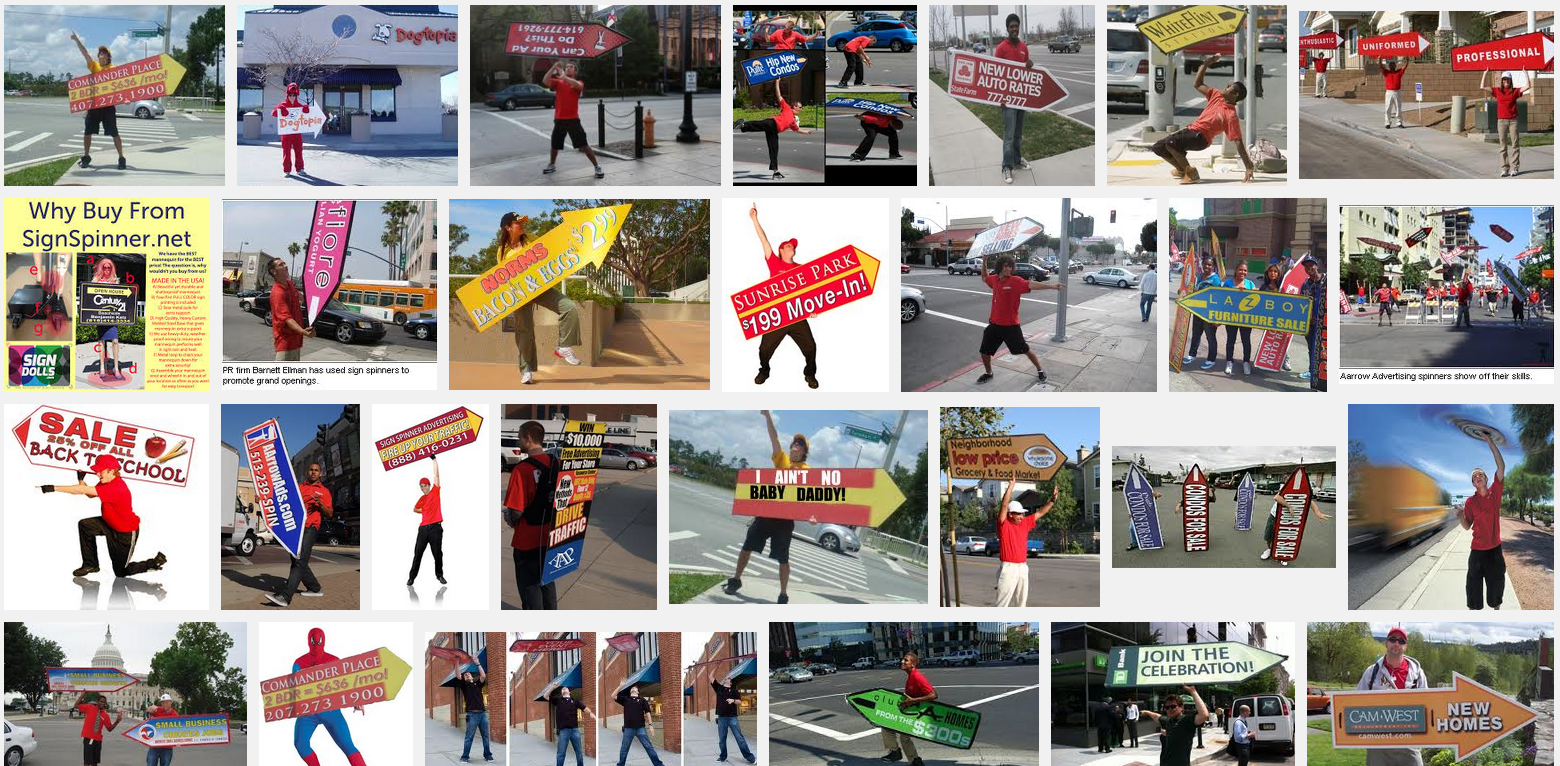
In the midst of the recession a new occupation emerged: the sign spinner.  These individuals stood on sidewalks outside of businesses, dancing with signs or arrows that they threw and twisted in the air and around their bodies.  Some of them were pretty cool, actually.

Yesterday NPR discussed the replacement of some of these spinners with mannequins. Robots that are programmed to spin the sign.  Of course, they aren’t nearly as good as a halfway decent human sign spinner.  But, it was argued, they’re getting the job done.

From human to machine, then.  But no one commented on the bizarre race- and sex-change that accompanied this shift.  In my part of the country, most human sign spinners are black or Latino men.  I suspect that’s true wherever there’s a substantial non-white, non-Asian population.  But the mannequins appear to be overwhelming white women.

The Google image search for each somewhat supports this narrative.  The mannequins are overly white women and the humans are almost all men and, arguably, disproportionately men of color.

Google search for “sign spinners” (click to enlarge):

Screenshot_2

Google search for “‘mannequin sign spinners”  (click to enlarge):

Screenshot_1

Isn’t. This. Interesting.

When the business owner or manager can make choices about what race and gender they prefer, they choose white females.  Presumably because “sex sells,” the female body (in a bikini) is the universal symbol for sex, and white women are the most valuable commodity in that market.

When we’re hiring low wage human workers, however, business owners and managers have less control over the race and gender composition of their workforce.  It appears most would prefer to hire white women in bikinis for everything but, because of institutionalized racism and the sex segregation of occupations, they get men and, perhaps, men of color.

How amazing that something so simple — the evolution of the sign spinner — can tell us so much about who we value and why.

Here’s a commercial for the new robotic sign spinners, to drive the point home:

Cross-posted at Racialicious and Pacific Standard.

Lisa Wade, PhD is an Associate Professor at Tulane University. She is the author of American Hookup, a book about college sexual culture; a textbook about gender; and a forthcoming introductory text: Terrible Magnificent Sociology. You can follow her on Twitter and Instagram.

Today is  Love Your Body Day and is this is our favorite body positive post of the year, re-posted in celebration.  Enjoy these seven beautiful minutes in which Kara Kamos explains that she is ugly and she couldn’t care less (most of the time):

What’s more important than being beautiful?

  • Breathing
  • Living
  • The universe
  • New life forms
  • Doing stuff
  • Friends
  • Having fun

Personally, I really identified with the discussion that starts at 3:51 about not letting how she looks get in the way of her doing things.  Often when I’m asked to do public speaking or appear on video, a part of me silently asks the question, “Am I attractive enough to deserve to do this?”  The question is absurd.  Not because I AM pretty enough, but because the question assumes that, if I weren’t, I would turn down an opportunity on that basis alone.   And that  is plain silliness.

See all of our body loving posts from the archive!

Lisa Wade, PhD is an Associate Professor at Tulane University. She is the author of American Hookup, a book about college sexual culture; a textbook about gender; and a forthcoming introductory text: Terrible Magnificent Sociology. You can follow her on Twitter and Instagram.

Screenshot_1In 1999 Jackson Katz headlined a documentary that powerfully revealed the mask of masculinity, a pretense of stoicism and readiness for violence that many men feel compelled to put on, at least part of the time.  The film, Tough Guise: Violence, Manhood, and American Culture, became a staple in classes on gender across the country.

Today marks the release of Tough Guise 2 and SocImages was given the honor of debuting an exclusive clip from the new film.  In the segment below, Katz explains that men aren’t naturally violent but, instead, often learn how to be so.  Focusing on socialization, however, threatens to make invisible the socialization agents.  In other words, Katz argues, men don’t just learn to be more violent than they otherwise would be, they are actively taught.

He begins with the fact that the video game and film industries both take money from companies that make firearms to feature their products.  The U.S. military then uses the video game Call of Duty for recruitment and training.  It’s no use arguing whether the media, the military, or the gun industry are responsible for rates of violence, he observes, since they’re in cahoots.  These extreme examples intersect with the everyday, mundane lessons about the importance of being “real men” that boys and men receive from the media and their peers, parents, coaches, and more.

This update of the original will tell the compelling story about manhood and violence to a new generation and remind older ones of the ongoing crisis of masculinity in America.

Cross-posted at Pacific Standard.

Lisa Wade, PhD is an Associate Professor at Tulane University. She is the author of American Hookup, a book about college sexual culture; a textbook about gender; and a forthcoming introductory text: Terrible Magnificent Sociology. You can follow her on Twitter and Instagram.

The Sexual Politics of Meat is a scathing, powerful analysis of the relationship between the oppression of women and the farming of animals for food.  Written by Carol J. Adams and published in 1990, it inspired many a feminist to choose vegetarianism and made many more take pause.

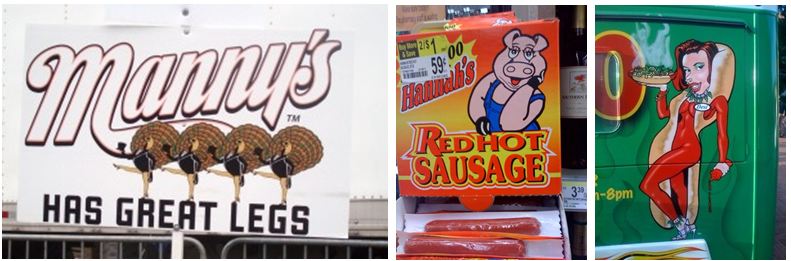
In the six-and-a-half minute video below, she discusses the sexualization and feminization of chicken specifically.  She shows lots of examples of the ways in which chicken carcasses are objectified as women: put in high heels, bikinis, sexual positions, etc.  We feature many examples of this at our Pinterest board collecting gendered and sexualized food, some of which we’ve borrowed from Adams.

1

Adams then argues that this is a way to distract us from the fact that we are eating the flesh of an animal that has been killed for us. She writes:

By sexualizing animals, we trigger another thing, that uneasiness becomes sexual energy… and everybody knows what to do about sexual energy.  You can laugh at it, you can talk about it, it reduces whoever is presented to an object.  And so it makes it okay again.

So the sexualization of animals enters into and participates in the wider issue of “Why are we doing this to animals?”  Oh yeah, because it’s funny, because it’s fun, because we can have fun with it. And it takes the ethical out.

Moreover, presenting chicken as dressing up for the male gaze suggests that the animal wants to be consumed.  The animal appears to desire to inspire (culinary) lust and, accordingly, it’s okay if you eat her.  This works best alongside feminization, as it is women who are typically presented as objects of a lustful male gaze.

Screenshot_1

Bonus: Fifty Shades of Grey makes an appearance, and not incidentally.   In response to its popularity, a book was published called Fifty Shades of Chicken.  Here’s the book trailer:

Adams call Grey a “regressive book that implied that despite all the advances feminism has made, women really just wanted to be in bondage.”  In both books, she argues, we’re seeing the “packaging and sexualizing [of] dominance over another being.”

Hear it straight from Adams, via Uncooped:

Cross-posted at Pacific Standard.

Lisa Wade, PhD is an Associate Professor at Tulane University. She is the author of American Hookup, a book about college sexual culture; a textbook about gender; and a forthcoming introductory text: Terrible Magnificent Sociology. You can follow her on Twitter and Instagram.