Search results for The

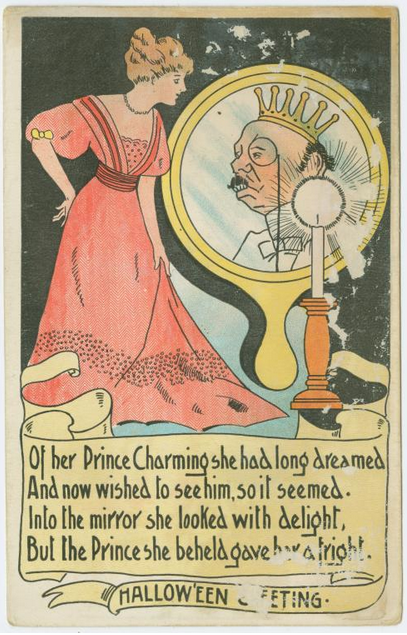
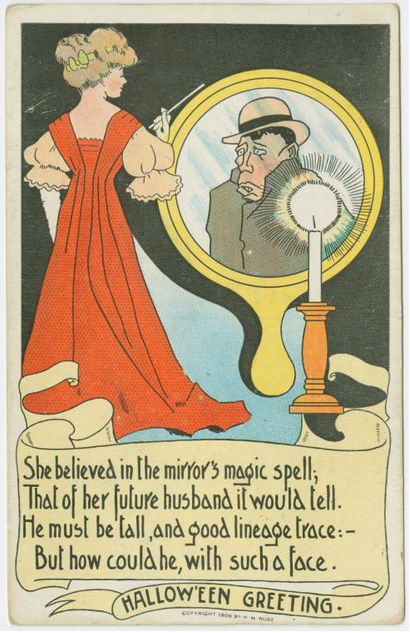
How To Be A Retronaut posted some vintage Halloween postcards from the New York Public Library Picture Collection. Two were on a theme that seems to have been lost over the years:
Lisa Wade, PhD is an Associate Professor at Tulane University. She is the author of American Hookup, a book about college sexual culture; a textbook about gender; and a forthcoming introductory text: Terrible Magnificent Sociology. You can follow her on Twitter and Instagram.
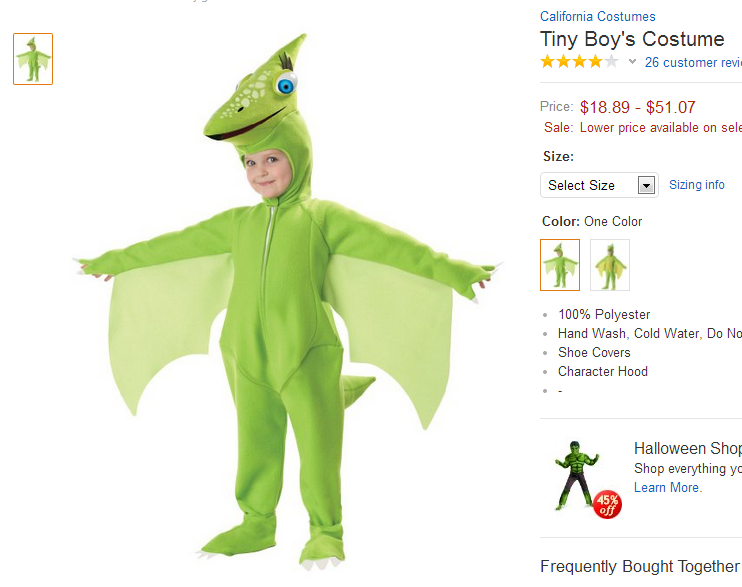
Here’s an interesting example of the triumph of ideology over simple fact.  Fia K. sent in a link to a costume sold at Amazon titled “Tiny Boy’s Costume.”  The costume is a green pterodactyl.  There is no equivalent Tiny Girl’s Costume.  When I search for that phrase, the search engine deletes the word “girl” and sends me back to here.

Screenshot_1

This is more than just an instance of associating boys with dinosaurs and excluding girls, although that would be problematic enough.  No, the costume is called “Tiny” because it’s associated with a cartoon character with that name from the show Dinosaur Train.

Funny thing is, Tiny is female (note the eyelashes, you can always tell by the eyelashes).

dinosaur-train

This is evidence of how powerful gender ideology can be.  Tiny’s actual fictional femaleness is less powerful than the ideological association of boys and dinosaurs.  Hence, a Tiny Boy’s Costume.

Lisa Wade, PhD is an Associate Professor at Tulane University. She is the author of American Hookup, a book about college sexual culture; a textbook about gender; and a forthcoming introductory text: Terrible Magnificent Sociology. You can follow her on Twitter and Instagram.

In the midst of the recession a new occupation emerged: the sign spinner.  These individuals stood on sidewalks outside of businesses, dancing with signs or arrows that they threw and twisted in the air and around their bodies.  Some of them were pretty cool, actually.

Yesterday NPR discussed the replacement of some of these spinners with mannequins. Robots that are programmed to spin the sign.  Of course, they aren’t nearly as good as a halfway decent human sign spinner.  But, it was argued, they’re getting the job done.

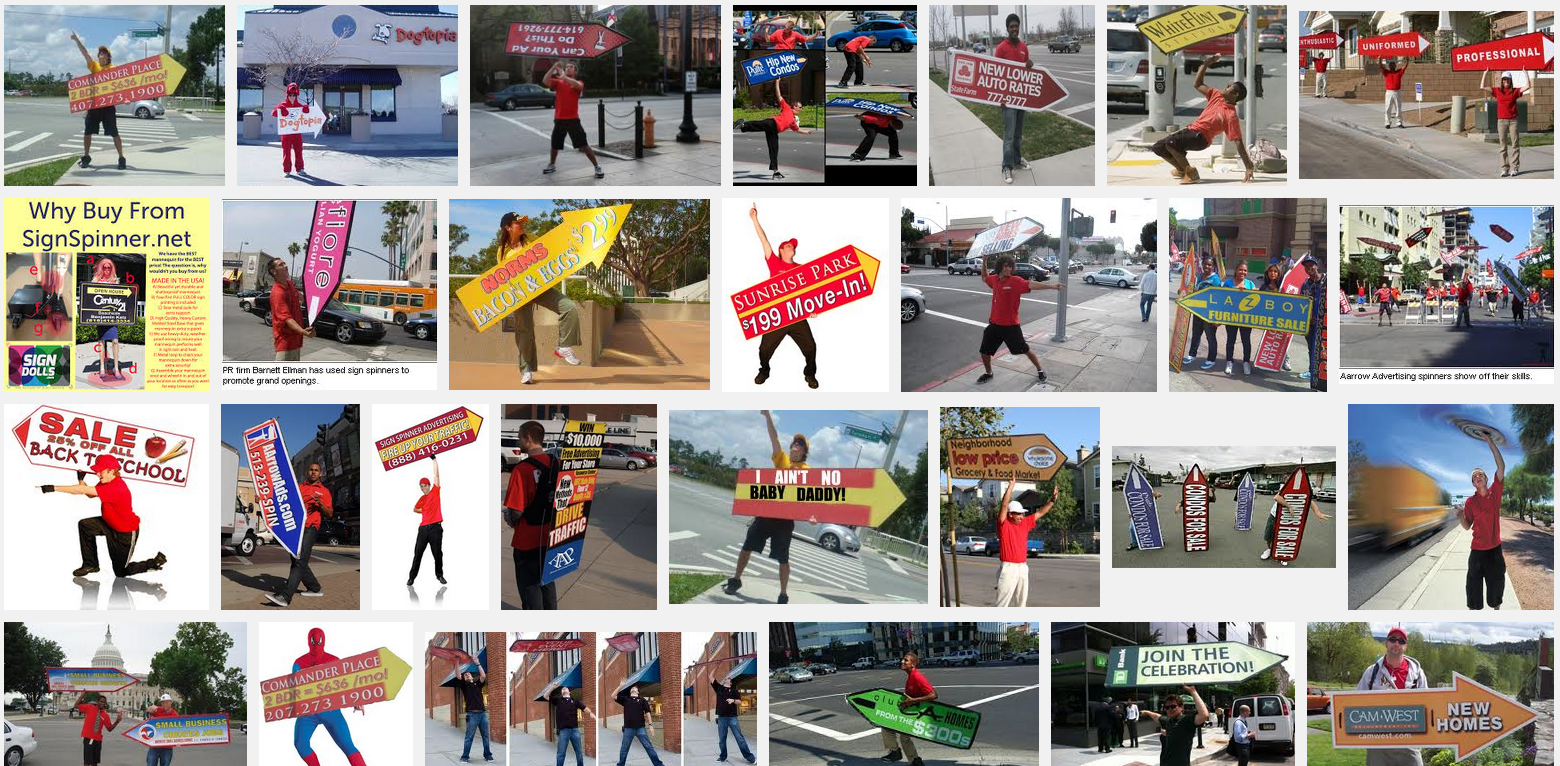
From human to machine, then.  But no one commented on the bizarre race- and sex-change that accompanied this shift.  In my part of the country, most human sign spinners are black or Latino men.  I suspect that’s true wherever there’s a substantial non-white, non-Asian population.  But the mannequins appear to be overwhelming white women.

The Google image search for each somewhat supports this narrative.  The mannequins are overly white women and the humans are almost all men and, arguably, disproportionately men of color.

Google search for “sign spinners” (click to enlarge):

Screenshot_2

Google search for “‘mannequin sign spinners”  (click to enlarge):

Screenshot_1

Isn’t. This. Interesting.

When the business owner or manager can make choices about what race and gender they prefer, they choose white females.  Presumably because “sex sells,” the female body (in a bikini) is the universal symbol for sex, and white women are the most valuable commodity in that market.

When we’re hiring low wage human workers, however, business owners and managers have less control over the race and gender composition of their workforce.  It appears most would prefer to hire white women in bikinis for everything but, because of institutionalized racism and the sex segregation of occupations, they get men and, perhaps, men of color.

How amazing that something so simple — the evolution of the sign spinner — can tell us so much about who we value and why.

Here’s a commercial for the new robotic sign spinners, to drive the point home:

Cross-posted at Racialicious and Pacific Standard.

Lisa Wade, PhD is an Associate Professor at Tulane University. She is the author of American Hookup, a book about college sexual culture; a textbook about gender; and a forthcoming introductory text: Terrible Magnificent Sociology. You can follow her on Twitter and Instagram.
The Redskins have been in the news lately — on the front page of the Times, for example — and not for their prowess on the gridiron. It’s their name. Many native Americans find it offensive, understandably so.  “Redskins” was not a name they chose. It was a label invented by the European-Americans who took their land and slaughtered them in numbers that today would be considered genocide.

President Obama offered the most tepid hint of criticism of the name. He did not say they should change their name. He said that if he owned the team, he would “think about” changing the name. But that was enough for non-Indians to dismiss the idea as yet one more instance of “political correctness.”

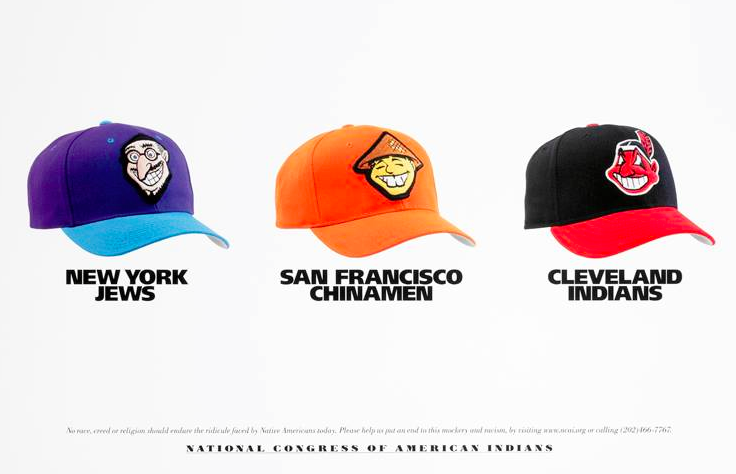
Defenders of the name also argue that the name is not intended to be offensive, and besides, a survey shows that most Americans are not bothered by it.  I would guess that most Americans also have no problem with the Cleveland Indians logo, another sports emblem that real Indians find offensive.

In response the National Congress of American Indians offers these possibilities.  The Cleveland cap is the real thing.  The other two are imagined variations on the same theme.

Caps

The pro-Redskins arguments could also apply here. The New York Jews and San Francisco Chinamen and their logos are not intended to offend, and a survey would probably find a majority of Americans untroubled by these names and logos.  And those who do object are just victims of “the tyranny of political correctness.”  This last phrase comes from a tweet by Washington quarterback Robert Griffin III, an African American.  His response seems to make all the more relevant the suggestion of years ago by the American Indian Movement’s Russell Means: “Why don’t they call them The Washington Niggers?”

Cross-posted at Montclair Socioblog; HT to Max.

Jay Livingston is the chair of the Sociology Department at Montclair State University. You can follow him at Montclair SocioBlog or on Twitter.

Today is  Love Your Body Day and is this is our favorite body positive post of the year, re-posted in celebration.  Enjoy these seven beautiful minutes in which Kara Kamos explains that she is ugly and she couldn’t care less (most of the time):

What’s more important than being beautiful?

  • Breathing
  • Living
  • The universe
  • New life forms
  • Doing stuff
  • Friends
  • Having fun

Personally, I really identified with the discussion that starts at 3:51 about not letting how she looks get in the way of her doing things.  Often when I’m asked to do public speaking or appear on video, a part of me silently asks the question, “Am I attractive enough to deserve to do this?”  The question is absurd.  Not because I AM pretty enough, but because the question assumes that, if I weren’t, I would turn down an opportunity on that basis alone.   And that  is plain silliness.

See all of our body loving posts from the archive!

Lisa Wade, PhD is an Associate Professor at Tulane University. She is the author of American Hookup, a book about college sexual culture; a textbook about gender; and a forthcoming introductory text: Terrible Magnificent Sociology. You can follow her on Twitter and Instagram.

Screenshot_1In 1999 Jackson Katz headlined a documentary that powerfully revealed the mask of masculinity, a pretense of stoicism and readiness for violence that many men feel compelled to put on, at least part of the time.  The film, Tough Guise: Violence, Manhood, and American Culture, became a staple in classes on gender across the country.

Today marks the release of Tough Guise 2 and SocImages was given the honor of debuting an exclusive clip from the new film.  In the segment below, Katz explains that men aren’t naturally violent but, instead, often learn how to be so.  Focusing on socialization, however, threatens to make invisible the socialization agents.  In other words, Katz argues, men don’t just learn to be more violent than they otherwise would be, they are actively taught.

He begins with the fact that the video game and film industries both take money from companies that make firearms to feature their products.  The U.S. military then uses the video game Call of Duty for recruitment and training.  It’s no use arguing whether the media, the military, or the gun industry are responsible for rates of violence, he observes, since they’re in cahoots.  These extreme examples intersect with the everyday, mundane lessons about the importance of being “real men” that boys and men receive from the media and their peers, parents, coaches, and more.

This update of the original will tell the compelling story about manhood and violence to a new generation and remind older ones of the ongoing crisis of masculinity in America.

Cross-posted at Pacific Standard.

Lisa Wade, PhD is an Associate Professor at Tulane University. She is the author of American Hookup, a book about college sexual culture; a textbook about gender; and a forthcoming introductory text: Terrible Magnificent Sociology. You can follow her on Twitter and Instagram.
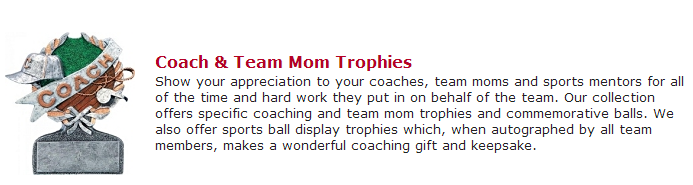
Ann K. noticed something funny about the products sold at Novelty Trophies.  The ones available for the adults involved were split into two categories: Coach and Team Mom.

Screenshot_3

To be fair, they had a female coach option, but there was nothing for Team Dads.  This is consistent with the norm in society that women are allowed to be masculine (be knowledgeable about sports), but men are not allowed to be feminine (caretake a team). Notice also the artificial gender dimorphism: her tiny body compared to his.

Screenshot_1

Just another everyday, mundane, rather boring example of the constant reminders of who men and women are supposed to be.

Lisa Wade, PhD is an Associate Professor at Tulane University. She is the author of American Hookup, a book about college sexual culture; a textbook about gender; and a forthcoming introductory text: Terrible Magnificent Sociology. You can follow her on Twitter and Instagram.

The phrase “economic mobility” refers to the likelihood that a child will end up in the same or a different economic strata than their parent.  Education is usually cited as a key to improving economic well-being intergenerationally. Conversely, but often unstated, is the idea that if a child of college graduates doesn’t attend college, than they should perhaps do worse than their parents.

What does the data say?

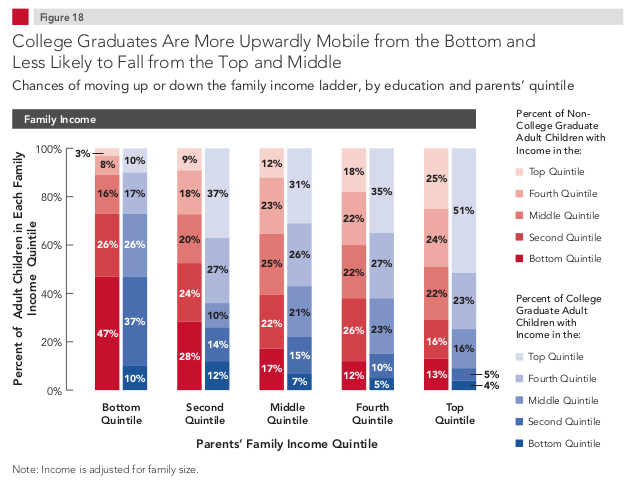
The figure below is from the Pew Economic Mobility Project.  Along the horizontal axis is the parent’s household income quintile: economic strata broken up into fifths from the lowest (left) to highest (right).  The bars represent the adult child’s income for those who didn’t graduate from college (red) and those that did (blue).

1

Often we focus on the left side.  Does attending college help poor and working class Americans?  The answer is yes. Only 10% of children born into the bottom 20% of household incomes will grow up and stay in the bottom 20%, compared to almost half of people who don’t go to college.    It’s similar, if less stark, for those in the 2nd to bottom quintile.

But what about the rich kids?  I want to look at the right side.  Notice that a quarter of kids born into the top quintile stay there even if they don’t get a college degree.  Half of non-degree earning children will stay in the top 40% of income earners.

Among the richest kids who do go to college, about 50% will remain in the top quintile.  There are lots of reasons for this, but one is paternal connections.  One study found that a whopping 70% of sons of the 1% had worked for the same employer as their father.  I wonder how high that number would be if we added daddy’s friends?

In sum, it’s hard to go up from down below, but it’s also relatively easy to stay sitting pretty if you’re already way up there.

Via Matthew O’Brien at The Atlantic. Cross-posted at Pacific Standard.

Lisa Wade, PhD is an Associate Professor at Tulane University. She is the author of American Hookup, a book about college sexual culture; a textbook about gender; and a forthcoming introductory text: Terrible Magnificent Sociology. You can follow her on Twitter and Instagram.