Search results for The

How great is this?  If you are estimating the height of the Eiffel Tower, you will likely offer a slightly smaller estimate if you are leaning just barely to the left.  In fact, your estimations of all types of numbers — height, but also quantities, weights, etc — will generally be smaller if you are leaning just a wee bit left of center.

Here’s the data: variation between average estimates were statistically insignificant if answered when standing upright or leaning to the right (gray and black, respectively), but leaning to the left depressed estimated quantities (white):
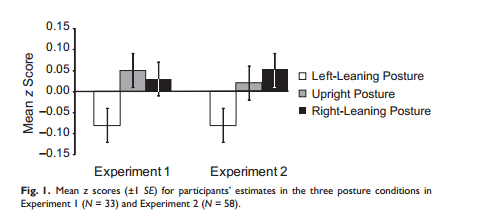
Screenshot_1

Why?

Here’s a hint: we would expect the results to be the converse if we used research subjects who primarily spoke Arabic or Hebrew.

English, in contrast to those two languages, is read from left to right. When we write down numbers in order, then, the numbers on the left are smaller than those on the right.

Screenshot_2

We learn, over time, to associate smaller numbers with our left side and larger numbers with our right side.  This constant association biases our mind towards smaller or larger numbers, hence the data.  How great is that?

Lisa Wade, PhD is an Associate Professor at Tulane University. She is the author of American Hookup, a book about college sexual culture; a textbook about gender; and a forthcoming introductory text: Terrible Magnificent Sociology. You can follow her on Twitter and Instagram.
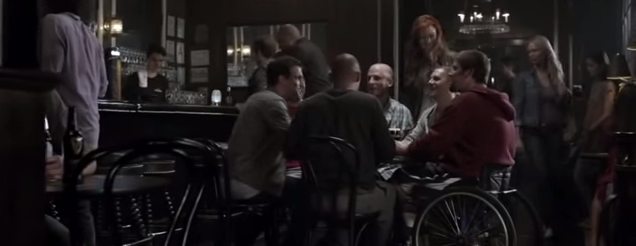
A recent Guinness ad has been getting a lot of kudos and I want to join in the praise.  It involves a set of guys who get together to play a pick-up game of wheelchair basketball and then join each other at a bar to celebrate the game.  Lots of people have mentioned that it’s nice to see (1) a lack of objectification of women as a form of male bonding  and (2) a nice representation of people with disabilities.  Both of those things are great in my book.

But here’s another thing I really liked: their retreat to the bar and their formation once they got there.  They sat in a circle.

Screenshot_1

Why is this neat?  Because scholars have found that male and female friendships tend to be different.  Male friendships tend to be more “shoulder-to-shoulder” than “face-to-face.”  Men are more likely to get together and do stuff: they watch football together, go out and play pool, have poker nights, etc.  Women are more likely to spend time just talking, confessing, disclosing, and being supportive of each other’s feelings.

The benefits of friendship are strongly related to self-disclosure.  And so men’s friendships — if they don’t involve actual intimacy — often don’t offer the same boost to physical and well-being as women’s friendships.  The fact that these guys sit down together at a bar, in a circle, in order to engage in some face-to-face time after their shoulder-to-shoulder time… well, that’s really nice to me.

Thanks to Rebecca H. for submitting the commercial!

Lisa Wade, PhD is an Associate Professor at Tulane University. She is the author of American Hookup, a book about college sexual culture; a textbook about gender; and a forthcoming introductory text: Terrible Magnificent Sociology. You can follow her on Twitter and Instagram.
Screen Shot 2013-09-19 at 8.08.15 AM

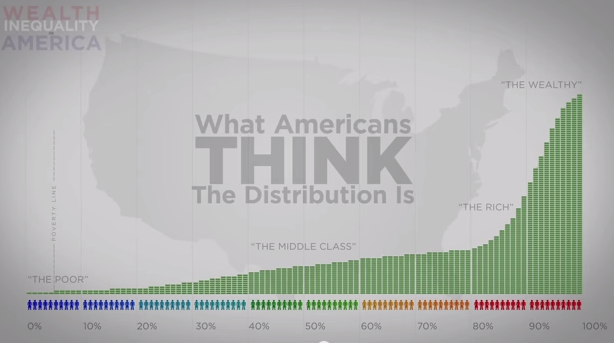
Earlier this week, Marty posted about the increasingly huge share of income going to the richest Americans. And as we’ve seen in the past, Americans tend to way — way — underestimate how unequal the U.S. is.

This video (via Upworthy) does a great job illustrating the distribution of wealth, and how it compares to Americans’ perceptions of both the real and ideal distribution. Even if you know all this stuff, and can recite the statistics, the visual representation of exactly what that means is still jarring.

Gwen Sharp is an associate professor of sociology at Nevada State College. You can follow her on Twitter at @gwensharpnv.

Trigger warning: Graphic descriptions of sexual assault.  Note: The opinions expressed in this post belong to Sezin Koehler alone and should not be attributed to anyone involved with Project Unbreakable.

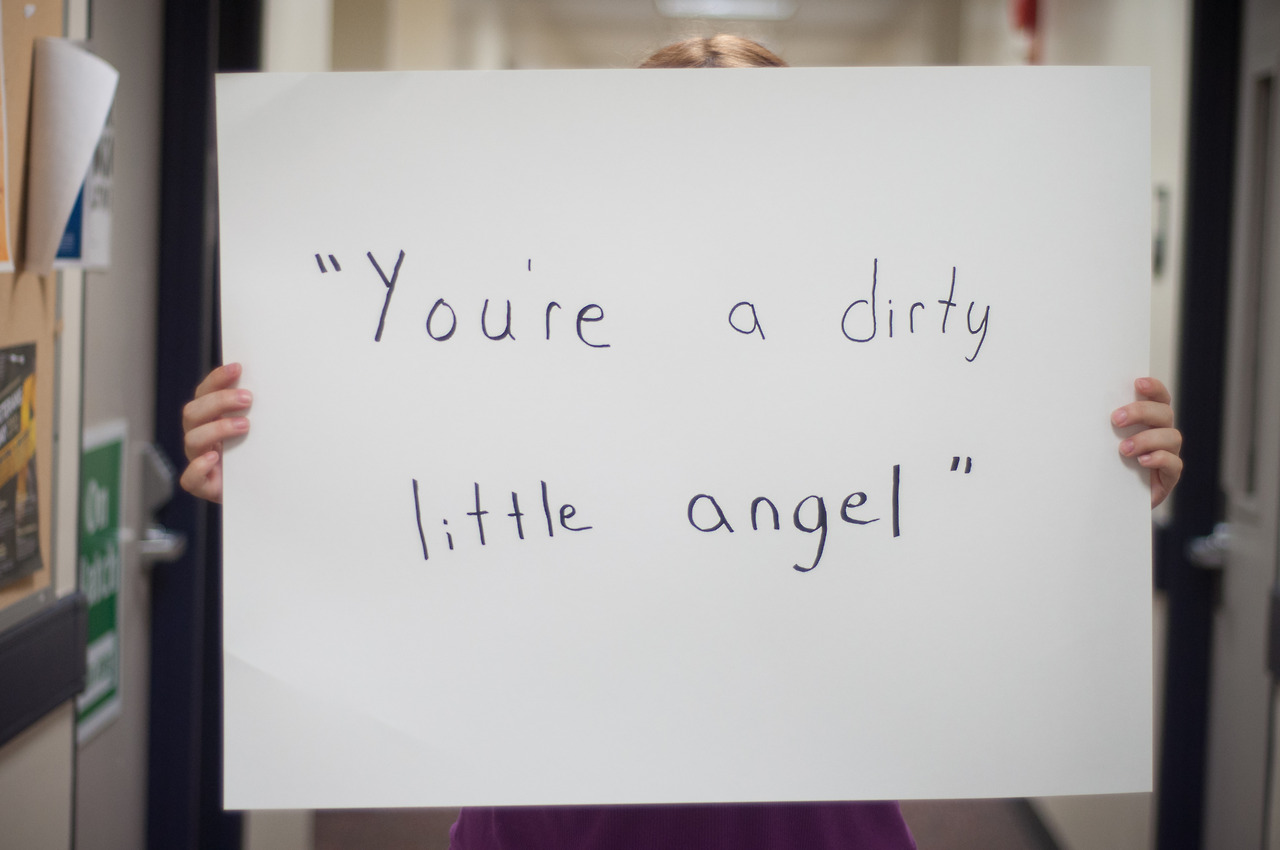
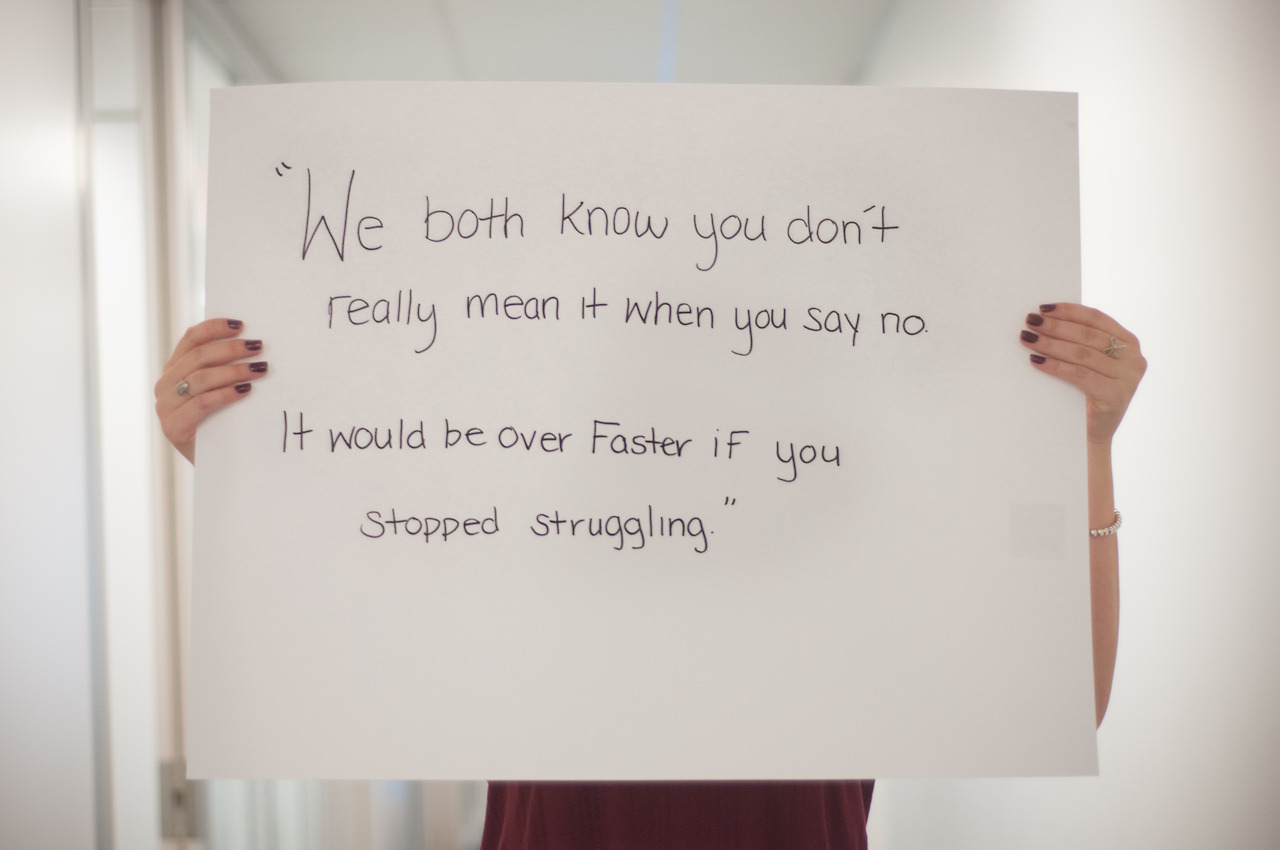
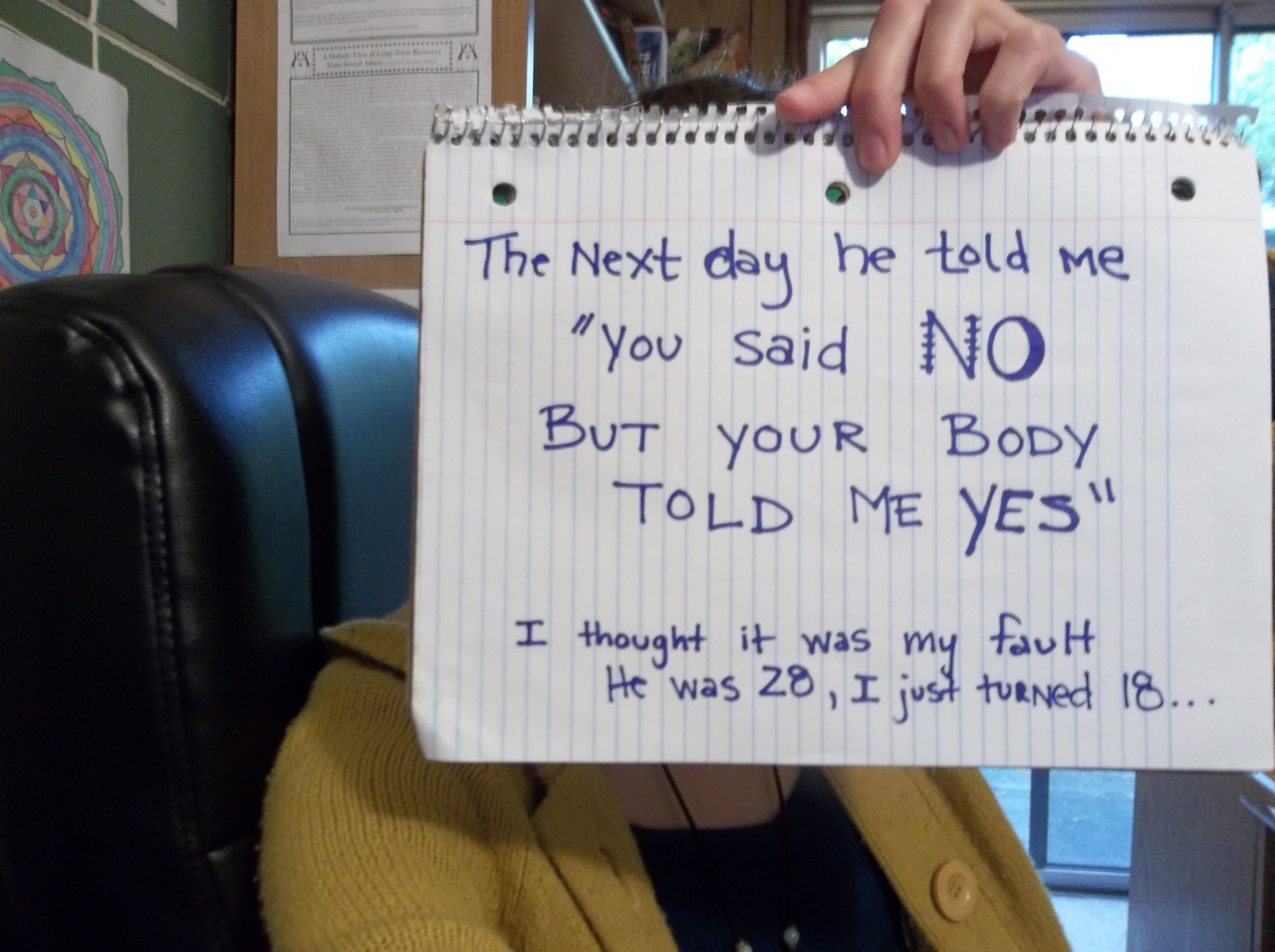
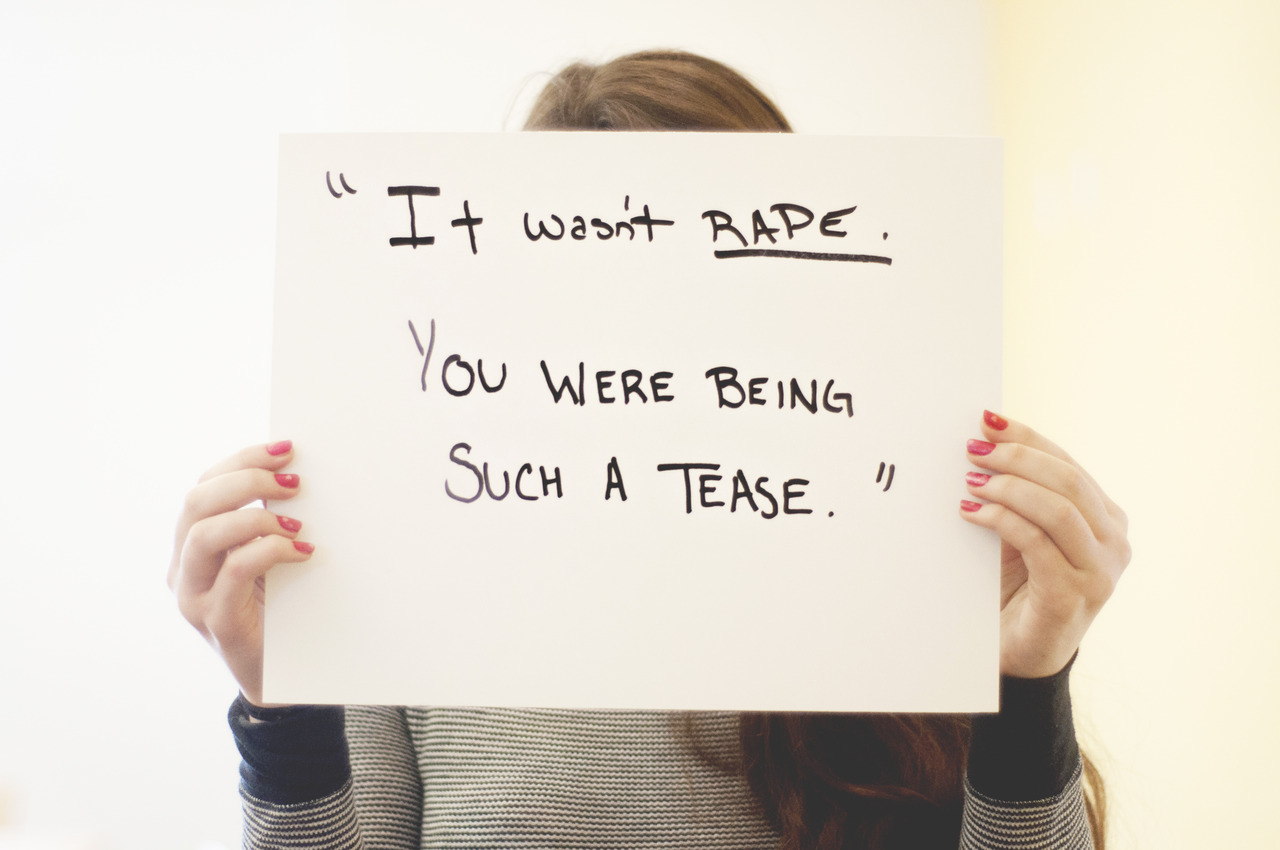
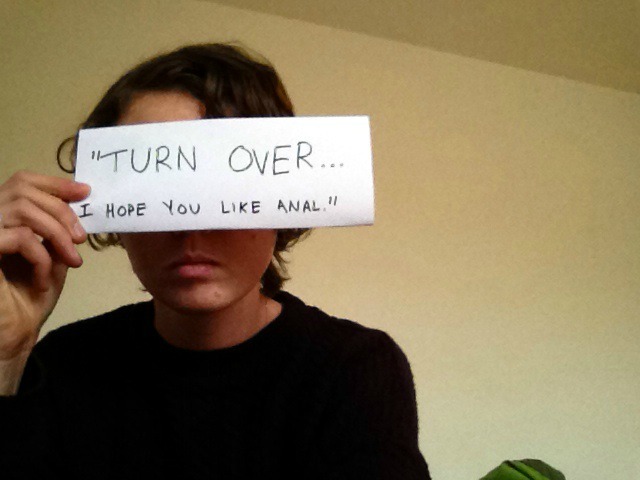
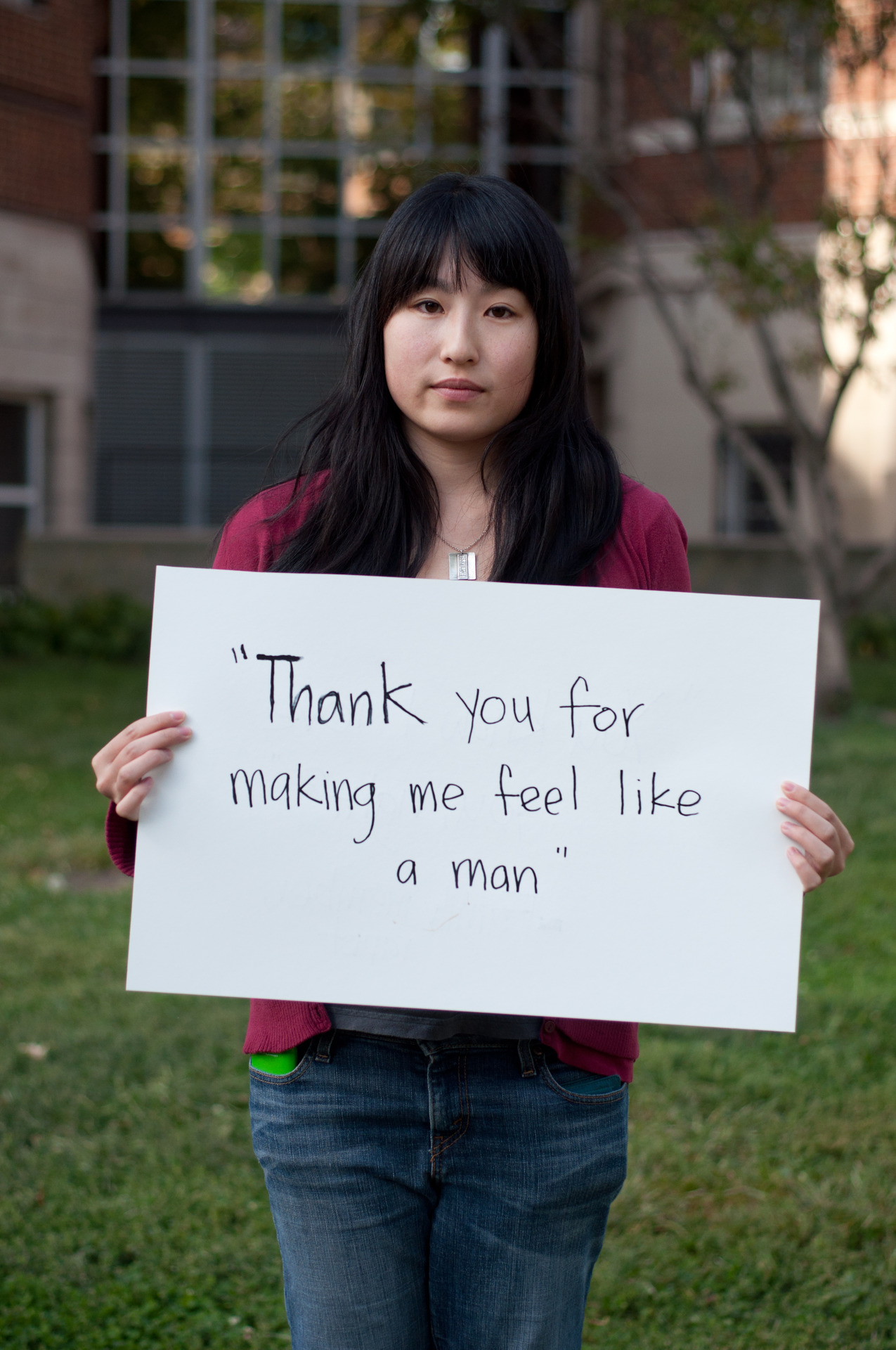
Robin Thicke’s summer hit Blurred Lines addresses what he considers to be sounds like a grey area between consensual sex and assault. The images in this post place the song into a real-life context.  They are from Project Unbreakable, an online photo essay exhibit, and feature images of women and men holding signs with sentences that their rapist said before, during, or after their assault.   Let’s begin.

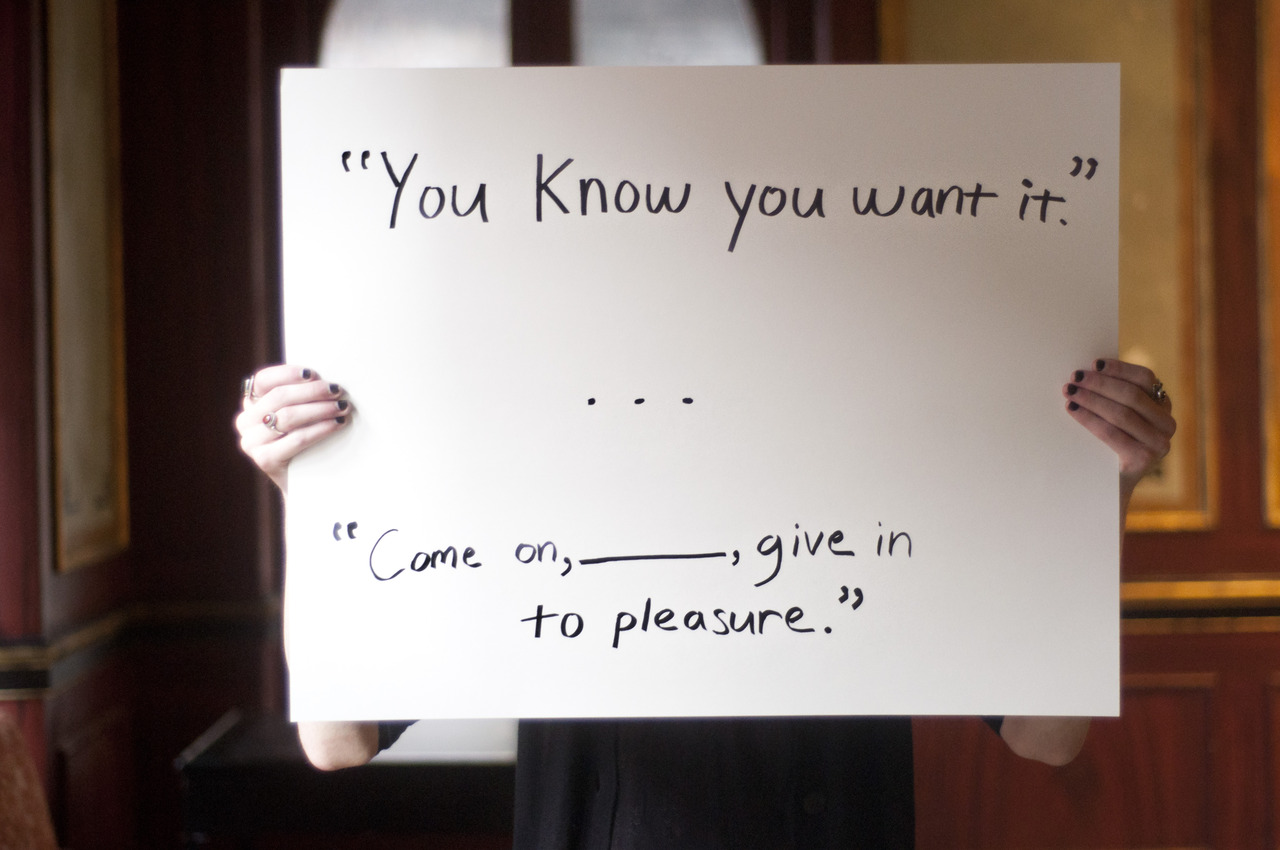
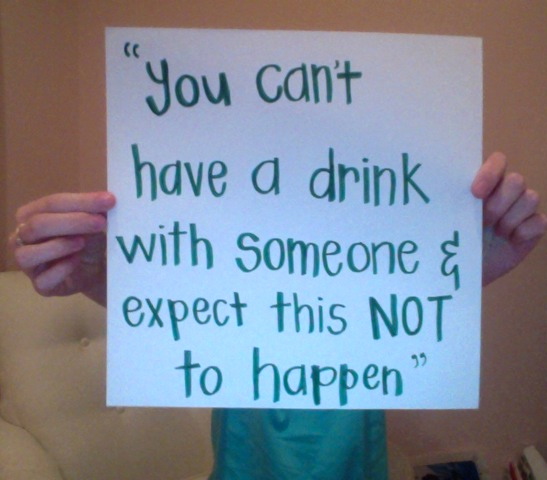
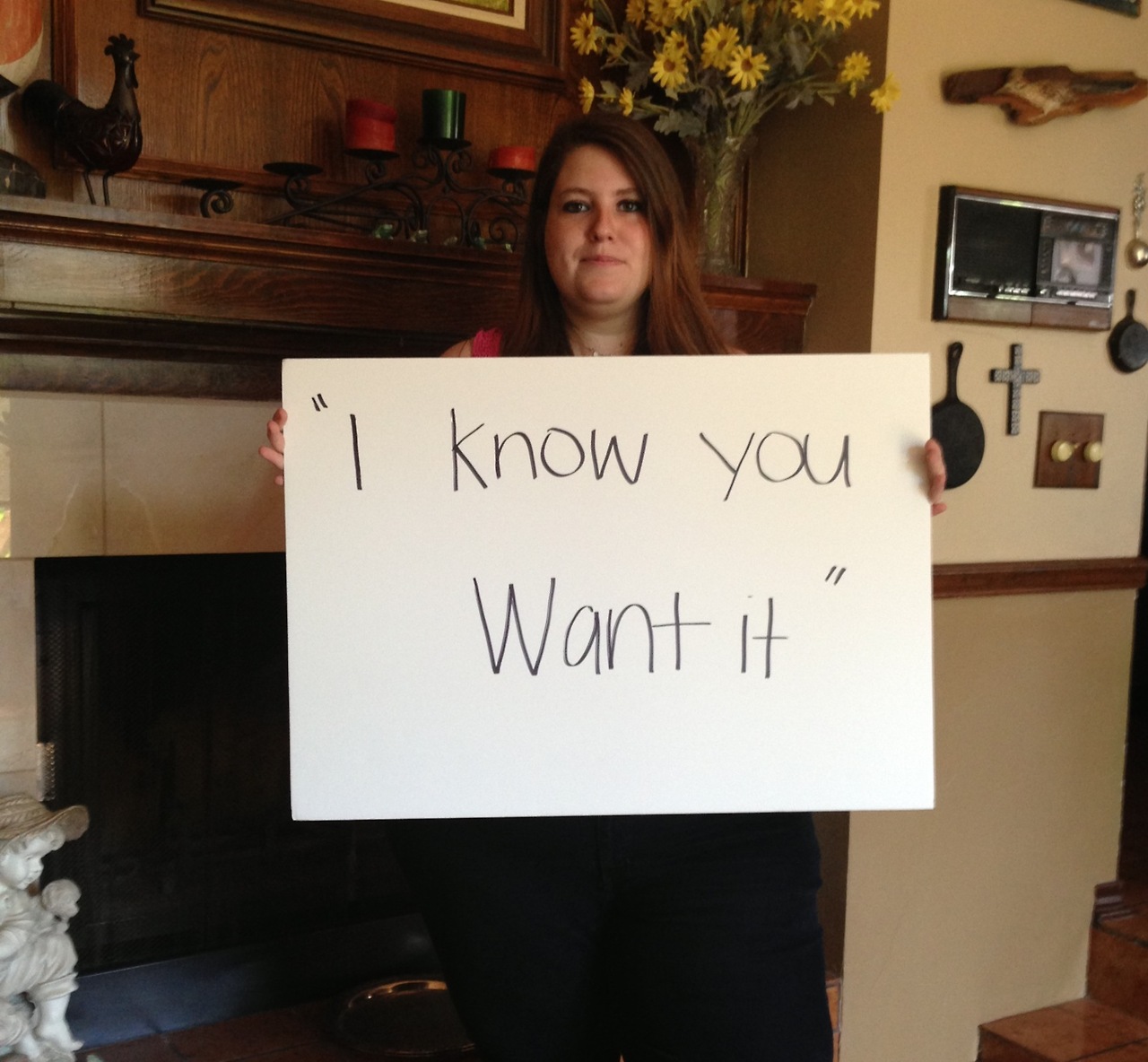
I know you want it.

Thicke sings “I know you want it,” a phrase that many sexual assault survivors report their rapists saying to justify their actions, as demonstrated over and over in the Project Unbreakable testimonials.

1

2

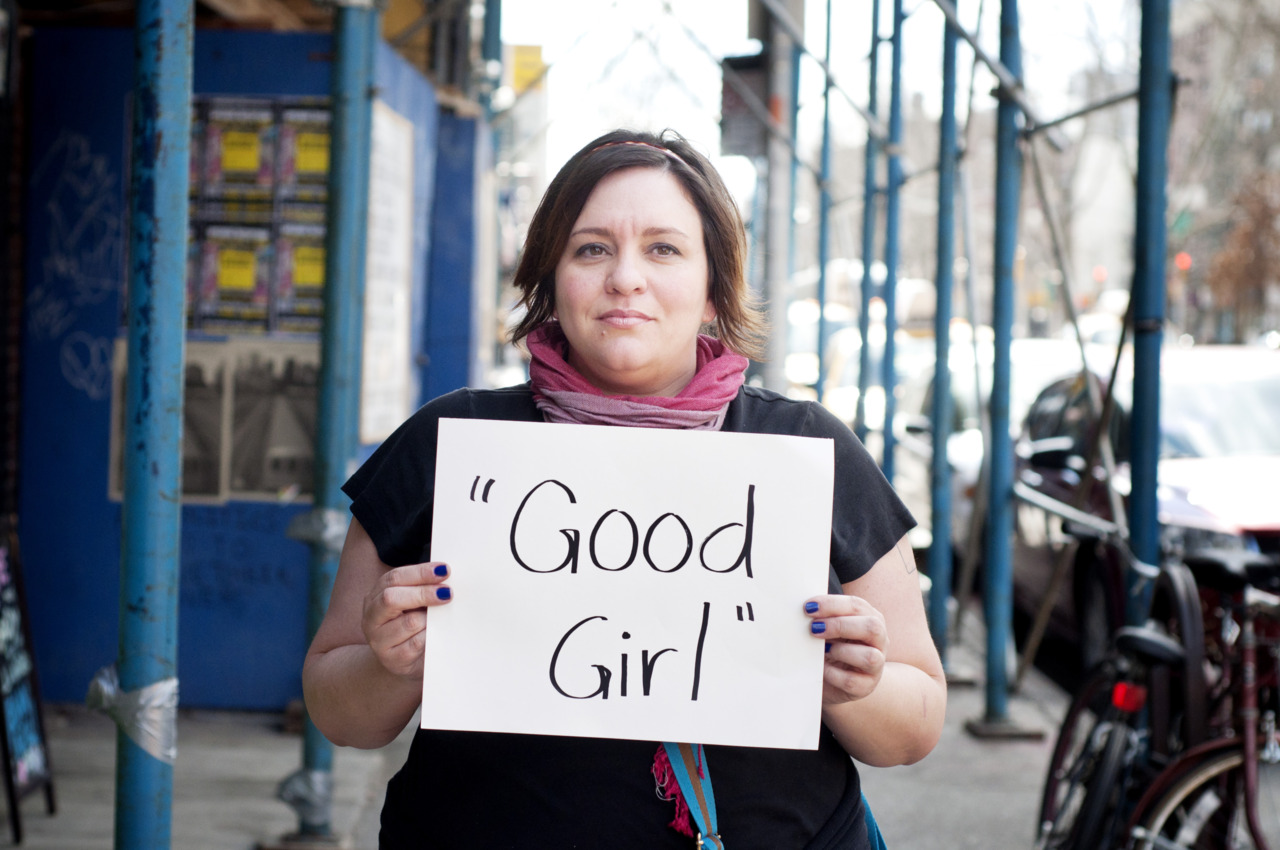
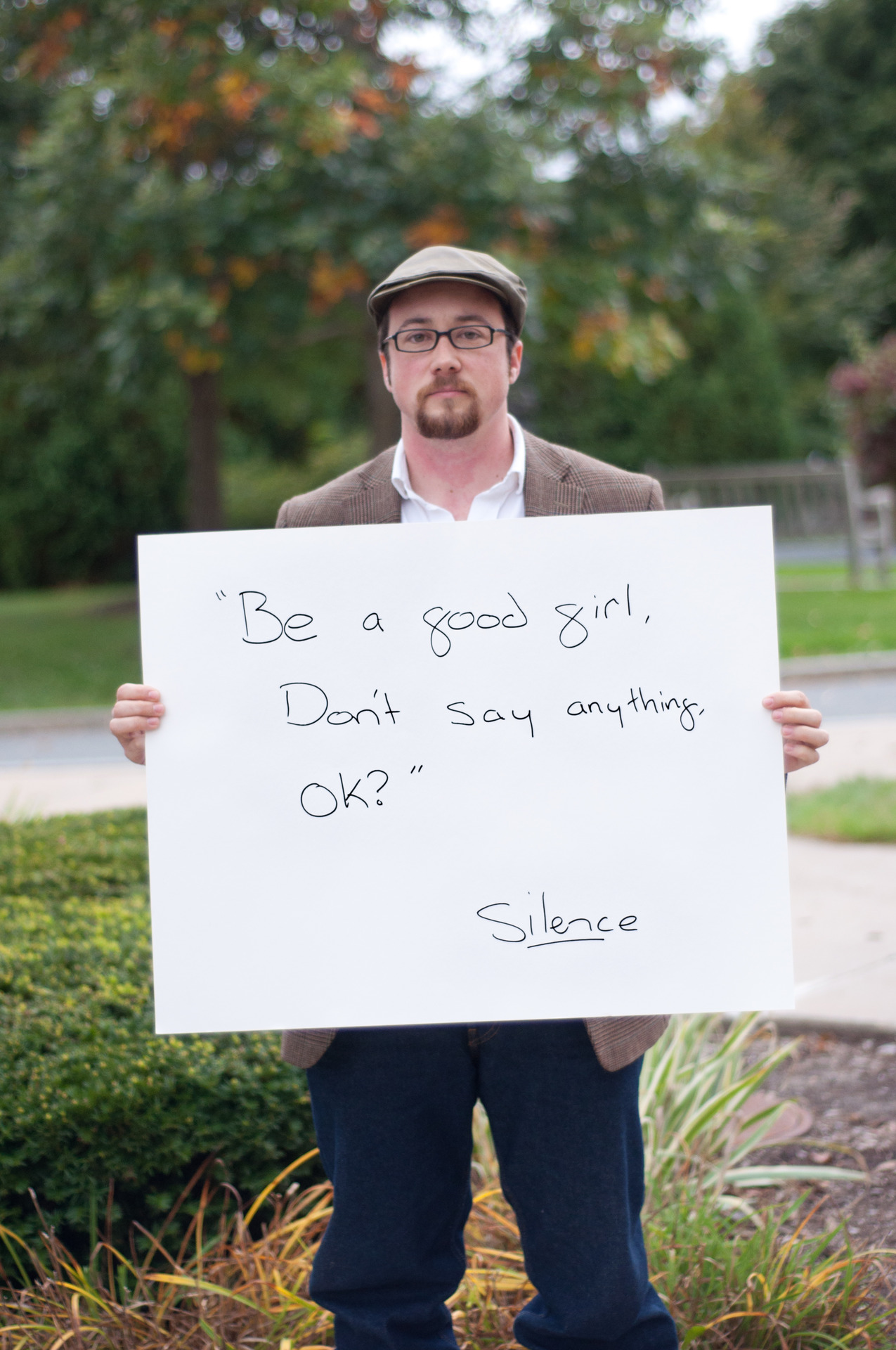
You’re a good girl.

Thicke further sings “You’re a good girl,” suggesting that a good girl won’t show her reciprocal desire (if it exists). This becomes further proof in his mind that she wants sex: for good girls, silence is consent and “no” really means “yes.”

3

4

Calling an adult a “good girl” in this context resonates with the the virgin/whore dichotomy. The implication in Blurred Lines is that because the woman is not responding to a man’s sexual advances, which of course are irresistible, she’s hiding her true sexual desire under a facade of disinterest. Thicke is singing about forcing a woman to perform both the good girl and bad girl roles in order to satisfy the man’s desires.

16

Thicke and company, as all-knowing patriarchs, will give her what he knows she wants (sex), even though she’s not actively consenting, and she may well be rejecting the man outright.

5

6

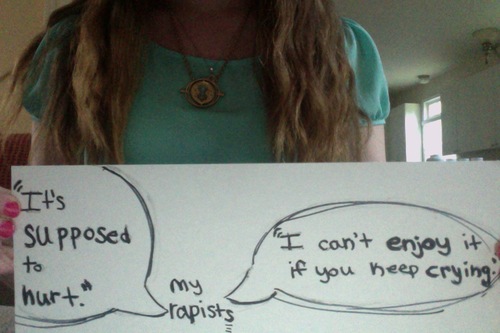
Do it like it hurt, do it like it hurt, what you don’t like work?

This lyric suggests that women are supposed to enjoy pain during sex or that pain is part of sex:

7

The woman’s desires play no part in this scenario – except insofar as he projects whatever he pleases onto her — another parallel to the act of rape: sexual assault is generally not about sex, but rather about a physical and emotional demonstration of power.

The way you grab me.
Must wanna get nasty.

This is victim-blaming.  Everybody knows that if a woman dances with a man it means she wants to sleep with him, right? And if she wears a short skirt or tight dress she’s asking for it, right? And if she even smiles at him it means she wants it, right?  Wrong.  A dance, an outfit, a smile — sexy or not — does not indicate consent.  This idea, though, is pervasive and believed by rapists.

10

15

And women, according to Blurred Lines, want to be treated badly.

Nothing like your last guy, he too square for you.
He don’t smack your ass and pull your hair like that.

In this misogynistic fantasy, a woman doesn’t want a “square” who’ll treat her like a human being and with respect. She would rather be degraded and abused for a man’s gratification and amusement, like the women who dance around half naked humping dead animals in the music video.

11

The pièce de résistance of the non-censored version of Blurred Lines is this lyric:

I’ll give you something to tear your ass in two.

What better way to show a woman who’s in charge than violent, non-consensual sodomy?

12

Ultimately, Robin Thicke’s rape anthem is about male desire and male dominance over a woman’s personal sexual agency. The rigid definition of masculinity makes the man unable to accept the idea that sometimes his advances are not welcome. Thus, instead of treating a woman like a human being and respecting her subjectivity, she’s relegated to the role of living sex doll whose existence is naught but for the pleasure of a man.

14

In Melinda Hugh’s Lame Lines parody of Thicke’s song she sings, “You think I want it/ I really don’t want it/ Please get off it.”  The Law Revue Girls “Defined Lines” response to Blurred Lines notes, “Yeah we don’t want it/ It’s chauvinistic/ You’re such a bigot.”  Rosalind Peters says in her one-woman retort, “Let’s clear up something mate/ I’m here to have fun/ I’m not here to get raped.”

There are no “blurred lines.” There is only one line: consent.

And the absence of consent is a crime.

Sezin Koehler is an informal ethnographer and novelist living in Florida. You can find her on Twitter and Facebook.  

“Next to being a Hollywood movie star, nothing was more glamorous.” This breathless statement, quoted in Femininity in Flight, was uttered by a flight attendant in 1945.  At the time being a stewardess was quite glamorous.  Like motion pictures do today, airlines trafficked in “the business of female spectacle.”  They hired only women who they believed to represent ideal femininity. Chosen for their beauty and poise, and only from among the educated, and slender, they were as much of an icon as Miss America.  And they were almost all White.

Victoria Vantoch tells the story of the first African American flight attendants in a chapter of her new book, The Jet Sex.  Patricia Banks was one of the first Black women to sue an airline for racial discrimination.  She graduated from flight attendant training school at the top of her class and applied to several airlines.  But it was 1956 and the U.S. airlines had never hired a Black woman.  After 10 months of trying, an airline recruiter pulled her aside and admitted that it was because of her race.  Which, of course, it was; airlines disqualified any applicants that had broad noses, full lips, coarse hair, or a “hook nose” (to weed out Jews).

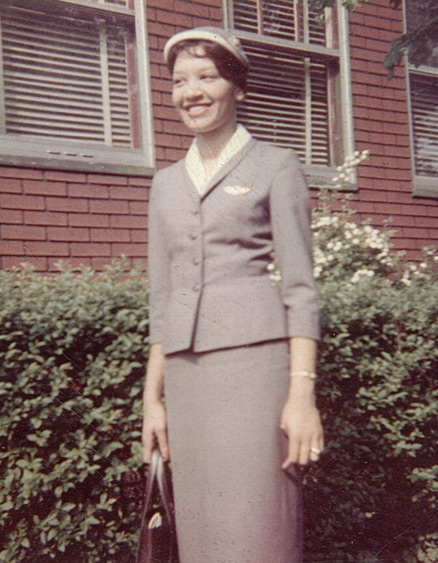
Banks sued. After four years of litigation, Capital Airlines was forced to hire her.  She postponed her marriage and took the job (airlines only hired single women as flight attendants). When she put on her uniform for the first time, she said:

After all I had gone through, I couldn’t believe I was finally wearing the uniform. I had made it. I was going to fly. It was such an accomplishment.

patriciabanks

Individual women weren’t the only ones pushing to integrate the flight attendants corps.   International surveys showed that citizens of other countries knew that America had a “race problem” and this was a problem for then-President John F. Kennedy and Vice President Lyndon Johnson.  They needed to do something flashy and they turned to flight attendants to do it.  If they could make Black women the face of such an iconic and high-profile occupation, they thought, it would help restore America’s reputation.  According to Vantoch, Johnson “made stewardess integration his personal cause.”

That was 1961; in 1964 Johnson signed the Civil Rights Act mandating equal treatment in the workplace.  The following year, in response to even more lawsuits, approximately 50 Black women were hired by airlines.  This would make them 0.33% of the workforce.

Patricia  Banks and her fellow first African American flight attendants, including Mary Tiller and Marlene White, would continue to face racism, now from co-workers, passengers, and supervisors.  Banks would quit after one year, citing exhaustion in the face of emotionally draining feminine work and a constant onslaught of racism.  She was a great flight attendant, though, and proud to show the world that a Black woman could shine in the occupation.

Here’s Patricia Banks, telling the story in her own words at Black History in Aviation. It’s worth a watch; she’s amazing:

Cross-posted at VitaminW and Pacific Standard.

Lisa Wade, PhD is an Associate Professor at Tulane University. She is the author of American Hookup, a book about college sexual culture; a textbook about gender; and a forthcoming introductory text: Terrible Magnificent Sociology. You can follow her on Twitter and Instagram.
The great majority of Americans might find the post-recession expansion disappointing, but not the top earners.

The following table reveals that our economic system is operating much differently than in the recent past.  The rightmost column shows that the top 1% captured 68% of all the new income generated over the period 1993 to 2012, but a full 95% of all the real income growth during the 2009-2012 recovery from the Great Recession.  In contrast, the top 1% only captured 45% of the income growth during the Clinton expansion and 68% during the Bush expansion.

piketty_saez

Of that weren’t enough, the next chart offers another perspective on how well top income earners are doing. In the words of the New York Times article that included it:

…the top 10% of earners took more than half of the country’s total income in 2012, the highest level recorded since the government began collecting the relevant data a century ago… The top 1% took more than one-fifth of the income earned by Americans, one of the highest levels on record since 1913 when the government instituted an income tax.

We have a big economy.  Slow growth isn’t such a big deal if you are in the top 1% and 22.5% of the total national income is yours and you can capture 95% of any increase.  As for the rest of us…

One question rarely raised by those reporting on income trends: What policies are responsible for these trends?

Cross-posted at Reports from the Economic Front.

Martin Hart-Landsberg is a professor of economics at Lewis and Clark College. You can follow him at Reports from the Economic Front.

It always gives an old sociologist like me a big thrill when a classical concept that I love appears in a mainstream cultural product. I received such a buzz when I saw the movie Lee Daniels’ The Butler over the Labor Day weekend.

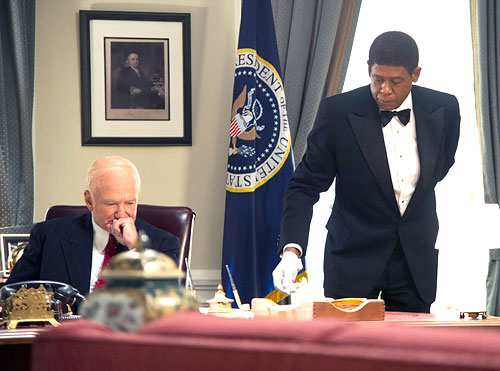
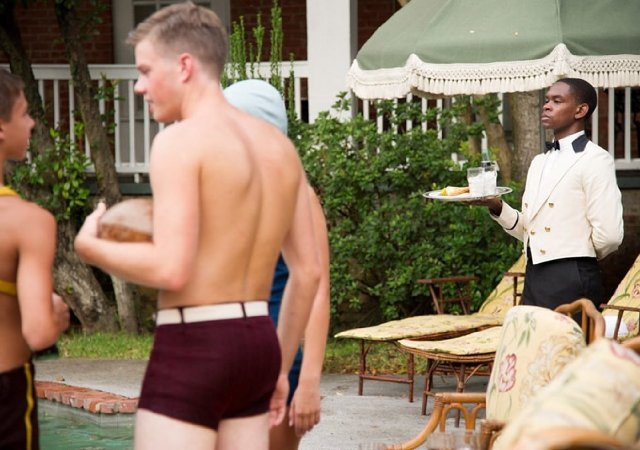
One of the movie’s African American characters, speaking in the 1940s, notes that a Black man must wear “two faces,” one for other Blacks and another for Whites. Perceptive critics have identified how this borrows from “double consciousness,” a concept that W.E.B. DuBois first wrote about in 1897. A.O. Scott cites Paul Laurence Dunbar’s line, “We wear the mask that grins and lies”; whilst Frank Roberts notes that the movie’s butler “wrestles with the realization that he is in The White House but certainly not of it,” which in turn illustrates the wider dilemma of being in America but not of America.

Screenshot_2
Still of Lee Daniels’ The Butler from imdb.com
Screenshot_1
Still of Lee Daniels’ The Butler from imdb.com

.

However, what really gives the movie its power is how it resonates with the continuing experiences of African Americans today. Black men who are still shell-shocked by the George Zimmerman verdict will know only too well how they often have to show “two faces” in order to avoid harassment. Barack Obama noted this fact when he observed, a week after the verdict, that there “are very few African American men who haven’t had the experience of walking across the street and hearing the locks click on the doors of cars” or of “getting on an elevator and a woman clutching her purse nervously and holding her breath until she had a chance to get off.”

Similarly, Father Bryan Massingale, who is a priest of the Archdiocese of Milwaukee and a professor of theology at Marquette University, records how he was once “abruptly stopped by the police, rudely questioned and roughly searched, under the suspicion that I was the perpetrator of a robbery” and how “Living with such terror and indignity is to be expected” even if you are ” a priest, a university professor, and a respected member of the community (or so I would have thought).” Such profiling strongly resembles DuBois’ emphasis upon:

…this sense of always looking at one’s self through the eyes of others, of measuring one’s soul by the tape of a world that looks on in amused contempt and pity.

The entire subtext of The Butler is the manner in which the movie’s different characters cope with the task of continually “measuring one’s soul” in this way: the continual feeling of being trapped in the gaze of the white employer’s “contempt and pity.” It is a tribute to the ability of popular culture to occasionally convey powerful truths that this movie does not pull its punches in staying true to that part of DuBois’ sociological vision.

Dr. Jonathan Harrison earned a PhD in Sociology from the University of Leicester, UK. His research interests include the Holocaust, comparative religion, racism, and the history of African Americans in Florida. He teaches at Florida Gulf Coast University and Hodges University. He’d like to thank Dr. Kris De Welde for her comments on earlier drafts of this piece.

Some sociologists went to the US Open final and posted about it on Facebook.  Here’s what they saw. Notice the size of the court.

1
(Photo by Jenn Lena)

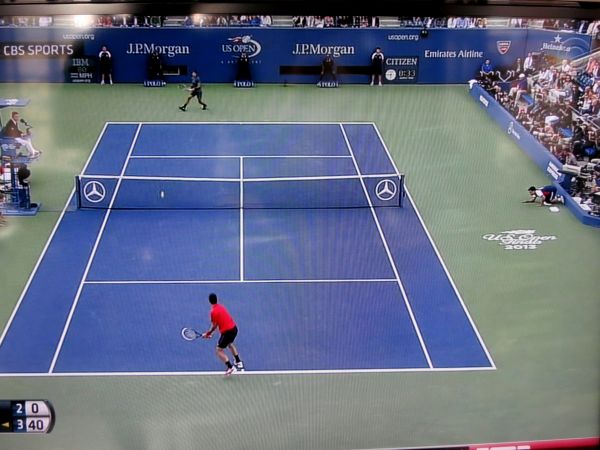
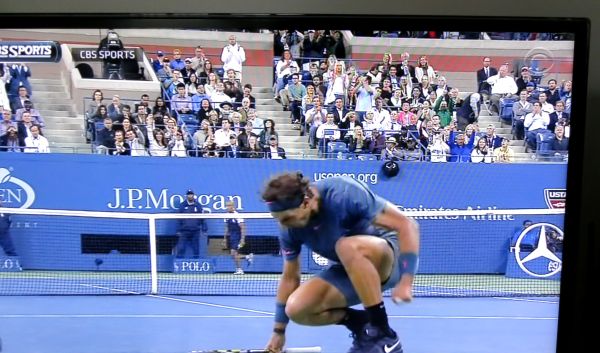
I saw the match too. When I got home from work, I turned on CBS.  Here’s what I saw.

2 3

On my 40″ flat-screen Samsung, I could see the match as though I were in the box seats, nothing between me and the court. I could see the grimace on a player’s face, the sweat stains on his shirt. I sat on an upholstered chair. And it cost me nothing.

How much was a plastic seat in the top rows of Arthur Ashe Stadium? I don’t know. My grounds pass on Day 3 was $66.  Seats for the finals were $95. I have sat up there near the top. The players are colorful miniatures moving around on the green rectangles. The distant perspective allows – forces – you to see the whole court, so you are aware of placement strategies and patterns of movement you might otherwise not have noticed. But tennis isn’t football; strategy, especially in singles, is fairly obvious and not complicated.

From way up there, the players are so far away.  It’s as though you were looking at your TV through the wrong end of a telescope. You see the game differently, and you hear it differently. A player hits a solid backcourt shot, and for a noticeable half-second or so, you hear silence. Only when the ball is clearing the net do you hear the impact of the stroke.

Why go out to Flushing Meadow? It’s ridiculous to think about this in the narrow economic framework of money and tennis narrowly defined.  My $0 view of the match was far better than that of my FB friends in their expensive seats high above the court.  Close that micro-economics book and open Durkheim.  Think about the match as ritual. It’s not just about Nadal and Djokovic whacking a fuzzy yellow ball back and forth for a couple of hours. A ritual includes everyone. If you’re there, you are part of that group. You are one with the with the people in the stadium and with the charismatic figures in center court

That’s why, if something is a ritual, being there is so important. Showing up is more than just 80%. It’s everything. If you’re there, you are part of our group. You go to Thanksgiving dinner at Aunt Diane’s house not because the food is good.  You might get better food and more enjoyment at home with take-out Chinese and a TV.  You go because your presence defines you as a member of the group. Not going is tantamount to saying that you are just not part of this family.

The Final is not just any match. It is the ritual that anoints our king, hence the trophies and pageantry and ritualistic incantations (speeches) after the match.  I would guess that most of the people there yesterday would choose even a so-so final over a close, well-played match on an outside court in Round 3.  Because this match is so important, it generates more mana. And that energy is created by the crowd.   Of course, the crowd’s perception is that it is the players who are creating that special feeling, and it helps if the match on the court is close and well-played. But the same match – every shot exactly the same – played in an early round in a nearly empty stadium would not create that same feeling for the handful of spectators who showed up.

What makes the ticket worth all the money then is not the quality of the play. It is the symbolic meaning of the ritual and the strong feeling you get from being part of that ritual. You were there, with Nadal and Djokovic.  That ritual exists in sacred time, linked to other great finals matches.  So maybe you save your ticket stub or your program as your link to that sacred past.

I saw the same match, and I had a better view. But I’m not going to save my cable TV bill.

Cross-posted at Montclair SocioBlog.

Jay Livingston is the chair of the Sociology Department at Montclair State University. You can follow him at Montclair SocioBlog or on Twitter.