Search results for The

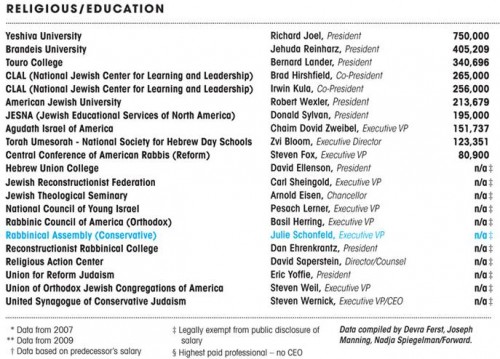
Farrah F. sent us a link to an article on the website for Forward, a newspaper aimed at the American Jewish community. The article looks at the gender gap in pay at Jewish community organizations. According to the article,

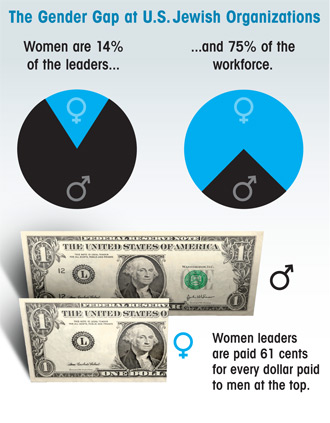
…a Forward survey of 75 major American Jewish communal organizations found that fewer than one in six are run by women, and those women are paid 61 cents to every dollar earned by male leaders.

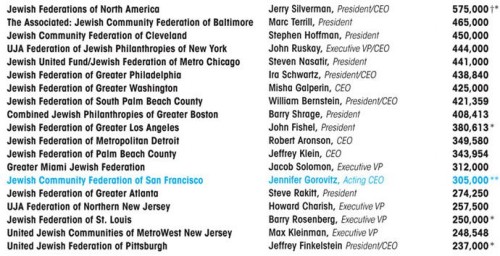
Incomes of leaders of the organizations they surveyed (data is from 2008 unless otherwise specified, and women are highlighted in blue):

1

2

3

The Forward’s survey was drawn from the most recent public records or, if that information wasn’t available, from the organization itself. The median salary for men was $287,702, while the median for women was $175,211, amounting to a ratio of 61 cents to one dollar.

More from the article:

Women comprise about 75% of those employed by federations, advocacy and social service organizations, and religious and educational institutions, but occupy only 14.3% of the top positions. Of the 11 female leaders identified in this survey, three are in interim roles.
gendergap-110409

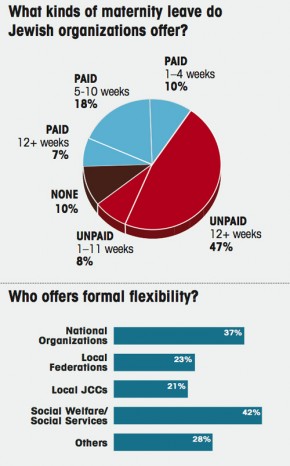
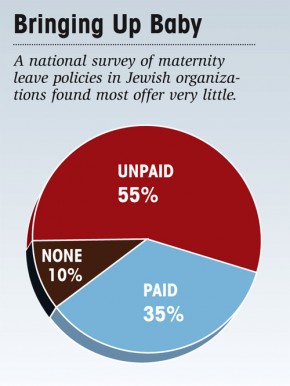
In another article, Forward discusses family leave policies at Jewish organizations, finding that relatively few offer paid leave:
forwardchart-091009

chart2-091009

UPDATE: A few people have asked why I chose to post about these particular organizations. The short answer is: because that’s what I had. My interest here wasn’t in the religious aspect, but in the gender disparities in volunteer/community organizations; I suspect these same trends occur in a lot of similar organizations, not just Jewish ones. I wish I had info on a more general set, but I so far haven’t been able to find a study like this one, but for a wider array of organizations. If anyone knows of one, I’d love to post it.
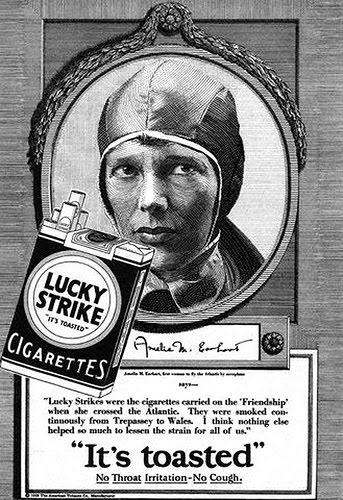

LuckyStrikeAmeliaEarhart

Hat tip to x-ray delta one, via Copyranter.

NEW! (Dec. ’09): Larry (of The Daily Mirror) found two images of Earhart from 1937 in the L.A. Times photo archives. In both Earhart was asked to pose in flirty or cutesy ways that it’s hard to imagine a famous male pilot being posed in:

earhart

earhart2

—————————

Lisa Wade is a professor of sociology at Occidental College. You can follow her on Twitter and Facebook.

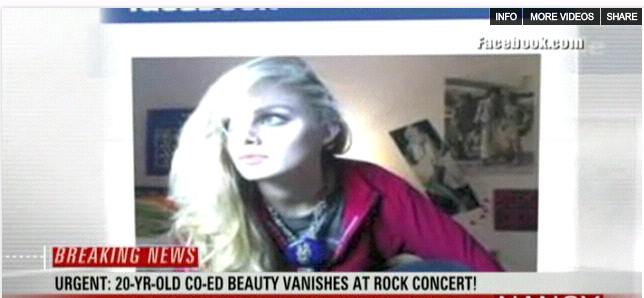
Victoria S. observed that, when 20-year-old Morgan Harrington went missing, the Nancy Grace show didn’ t do a story about missing Morgan Harrington, they did a story about the missing “co-ed beauty”:

coedbeautywtf

05
02

04

03

As Victoria said, if any of us go missing, let’s hope we’re lucky enough to be beautiful with lots of photos of us posing with our pretty girlfriends and glamour shots in our sunglasses.

See a previous post arguing that missing children that get a lot of media coverage tend to be blond and attractive.

—————————

Lisa Wade is a professor of sociology at Occidental College. You can follow her on Twitter and Facebook.

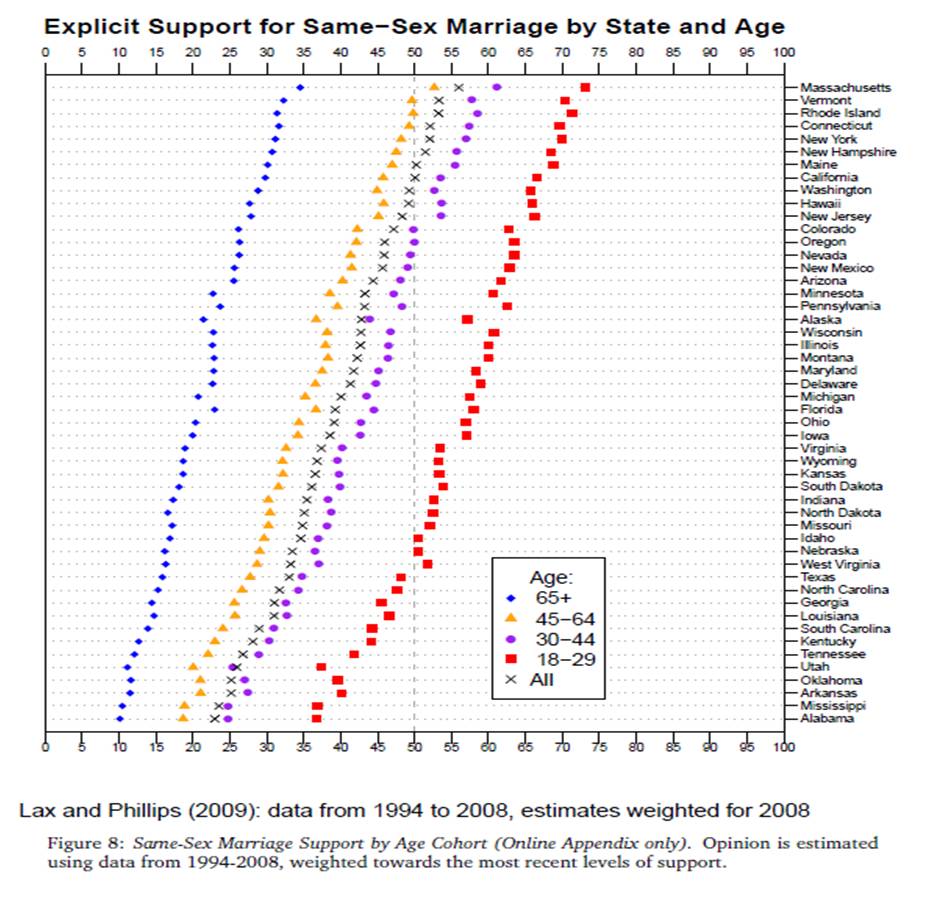
John L. sent in a link to a visual illustrating support for gay marriage by state and age:

age1

The data supports the notion that younger people are more supportive of gay marriage than older people. I also think it’s interesting that, even in states that we normally consider quite hostile to gay rights (the ones at the bottom of the table), there is still a significant age difference:  18-29 year-olds in Alabama, for example, are more supportive of gay marriage than people 65 and older in Massachusetts.  So, while we like to think about states as “liberal” or “conservative,” spreading out the data by age tells a much more complicated story.

For more data on support for gay rights, see here and here.

—————————

Lisa Wade is a professor of sociology at Occidental College. You can follow her on Twitter and Facebook.

Kathleen K. was recently looking at the Credit Education Week Canada website, where they have a number of quizzes for couples to take. At the end of each quiz there is a picture of a couple along with your results. She was pleasantly surprised that this image accompanied the results of one quiz:

-1

It’s a rare example of the normalization of gay/lesbian couples in media not specifically targeted at the GLBT community. The couple is presented as a legitimate image of love for both straight and gay couples, and there is no ambiguity about whether or not they’re a couple. Given the general invisibility of gay and lesbian couples in media outlets, and the use of only heterosexual couples as “neutral,” unmarked examples, it’s quite striking to see this.

Also see our post on a commercial by an Argentinian bank that depicted transgendered individuals positively.

This month’s Playboy cover features Marge Simpson:

margecover_32547

In order to attract as many hits as possible, the Huffington Post featured a slide show asking “Who’s Hotter” and presenting no fewer than 25 Playboy covers to compare.

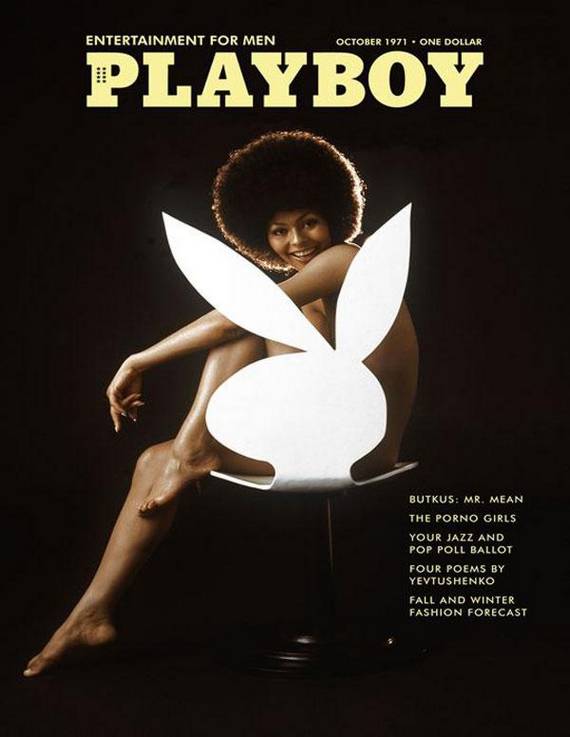
Ironically, the slide show did not contain the Playboy cover that inspired the Simpson drawing. Behold Darine Stern, the first black woman on the cover of Playboy (1971):

Darine-Stern-Playboy-1971

I wonder how she managed to get left out of the slide show.   Hmmm.  No other black women made it in either.

—————————

Lisa Wade is a professor of sociology at Occidental College. You can follow her on Twitter and Facebook.

NEWS:

Lisa was invited to co-host a Racialicious Podcast this week with Tami Winfrey Harris and Minh-ha Pham.  If you’re interested, you can listen here.

Also, in case you’re new to SocImages, you’re welcome to friend us on Facebook or follow us on Twitter.

FROM THE ARCHIVES:

Sociologists use the term “racialization” to describe the process by which something that isn’t associated with any racial group, becomes newly associated.  In October of 2007, we offered the pit bull as an example of racialization.  Also features Weird Al Yankovic.

People often use the Gay Republicans as an example of a social organization that brings together two ideas that seem to be at odds.  Another example, detailed in a post in October of 2008,  is the pro-environment/anti-immigrant movement (protecting the environment means restricting immigration).  The post features a couple really interesting ads.

Also, haven’t had enough Halloween yet?  Here are our Halloween posts from previous years:

Two extra-special costumes (the Anna Rexia costume and the Sexy Scholar), Max Weber jack o’lantern (by yours truly), Obama mask sold as terrorist mask, a Sarah Palin effigy, handling sex offenders on trick-o’-treat day, and costume catalog analyses (here and here).    See also, if you like, my Huffington Post about the race, class, and gender politics of Halloween.

NEWLY ENRICHED POSTS (Look for what’s NEW! Oct ’09):

Downright Offensive

It’s been a long time since we linked to our post featuring pictures from racial- and ethnic-themed college parties, but we found another example (this time Auburn University in 2001).  In this one, college students dress up in Blackface and like Klan members.  Delightful.

We added another example of a urinal shaped like a woman’s mouth, sent in my Liz B., to our collection of urinals and sinks meant to look like women’s body parts.

L. sent us a Facebook teaser for the movie DeadGirl (a movie about the rape and torture of a zombie woman) that describes the movie as “hot.”  We added it to our DeadGirl post (NSFW, Triggering).

Like fashion shoots that present female models as dead bodies? We added more to our post of Lanvin ads that show women looking dead.

We added another example of ads featuring bound Asian women, sent in by Penny R.

Katie let us know about El Emigrante, a video game where the player is a bike-riding immigrant trying to avoid the police. We added it to our post about Border Patrol, a game where you try to shoot immigrants crossing into the U.S., including a pregnant woman.

War and Nation

A World War I British recruitment poster that portrayed the British Empire as a team working together reminded us of our post about re-imagining the U.S. military, so we added it.

Class

Steve, my private plane friend, send me some more pictures of the luxury of private aviation.  A free, personal cinema, in this case.

Gender

Amanda C. sent us another example of an instance in which “sex” is conflated with women.

We updated our post comparing beauty pageant standards to standards for judging livestock with a photo taken by Steve P. outside a skincare store, in which a woman’s face is sliced up into parts to apparently help you pick the correct product for each section.

Our post on gendering and sexualizing foods has new additions: sexy fish sticks! And a Vegas restaurant appropriating feminist imagery from the 1960s.

We also updated our post about the controversy surrounding Jennifer Love Hewitt’s weight last summer with images of her in Self magazine showing her new, much slimmer body.

We also updated a post about a website that helps men find their “Ukrainian Beauty” with an image from a protest in Ukraine about sex tourism…that features scantily-clad young women.

Tawny T. sent us a video from Sweden about how heteronormativity affects gays, lesbians, and straight people. We added to our post on an Argentinian bank’s commercial that portrays transgender individuals positively and a Progressive insurance ad that may be portraying a gay couple, since the reason those two ads are so surprising is that we rarely see ones like them.

Rachael H. told us about Maxim’s guides to how men and women argue (Women are crazy! Men put up with their crap so they can have sex!) and we added it to our post of a video showing a range of “men are like this, women are like that!” stereotypes.

Will there ever be a month where we don’t add more examples to our post on pointlessly gendered products?  Maybe not. This month we added gendered tips for choosing a mattress, gendered versions of Windows XP customization software, gendered epsom salts,gendered snuggies, and gendered Target gift cards.  Submitted by Shannon C., Em, Ondi, and Dmitiry T.M.

Race/Ethnicity

We added images from a photo shoot in a Romanian magazine to our post showing people in poor parts of the world posed as props next to expensive fashions or White models.

Speaking of using the “Other” as a prop.  Shakira has been using a set of undifferentiated Asian drummers in her recent performances.  We added it to a previous post on this theme.

To my first post in a series about how people of color are used in advertising aimed (mainly) at white people, I added an example of a black woman being used to represent “rhythm.”

Jackie and Jasmine alerted us to another example of doctored diversity, this one from the University of Texas, Arlington.

Race and Religion

We added an image from Mother Jones depicting Newt Gingrich as a “guru” figure to our guest post on the National Review “wise Latina” cover of Sotomayor and other uses of Asian/Buddhist caricatures.

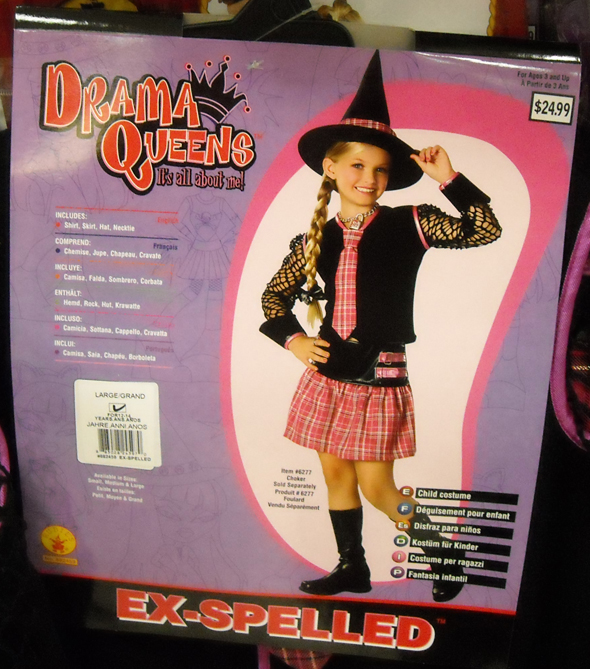
Cute Bruiser brought our attention to some Halloween costumes for girls that illustrate parallel trends. Her pictures are from a Shoppers store in Canada.

1. Girls as bratty. In this case, the Drama Queen (“It’s all about me!”):

001

(I know, that costume doesn’t even make sense.)

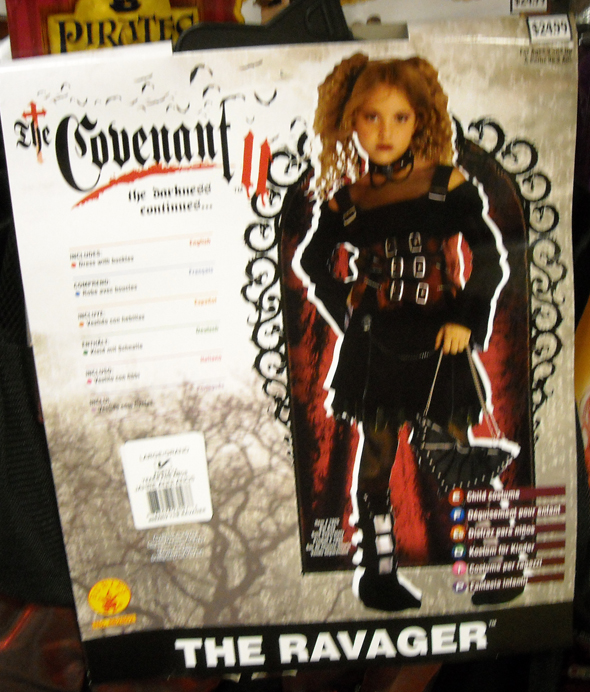
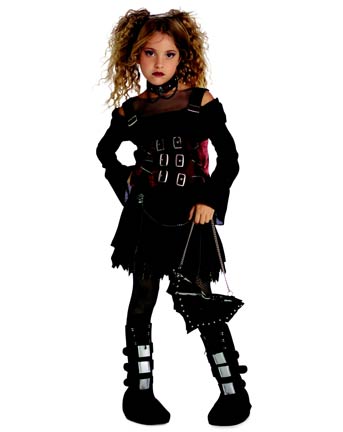
2. The sexualization of young girls. In this case, The Ravager from The Covenant:

003

Since that’s a little blurry, here’s an image from a website:

R882802

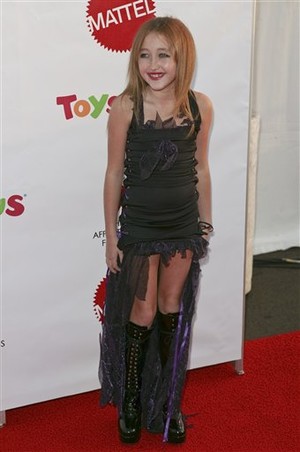
Miley Cyrus’ 9-year-old sister, Noah, chose to go this direction, as reader Kristyn G., Spagnoli F., and Jen C. pointed out:

resized_noah_cyrus

—————————

Lisa Wade is a professor of sociology at Occidental College. You can follow her on Twitter and Facebook.