Search results for The

Many tennis clubs today uphold an all-white dress code. But does this homage to tradition come with the racism and sexism of the past? Wimbledon’s achromatic clothing policy hearkens back to the Victorian era, when donning colorless attire was regarded as a necessary measure to combat the indecency of sweat stains, particularly for women. Of course, back then, women customarily played tennis in full-length skirts and men in long cotton pants — also for propriety’s sake.  

Serena Williams at the French Open, 2018 Anne White at Wimbledon, 1985

But today, not all tennis clubs insist on all-white.While Wimbledon is known for having the strictest dress standards (even Anne White’s catsuit pictured above got banned there in 1985), the other grand slams, including the French Open (along with the U.S. Open and the Australian Open), have recently become venues for athletes to showcase custom fashions in dramatic colors and patterns. Since the advent of color TV, athletes have used their clothing to express their personality and distinguish themselves from their competitors.

For instance, Serena Williams wore a black Nike catsuit to this year’s French Open. Her catsuit, a full-body compression garment, not only made her feel like a “superhero,” but also functioned to prevent blood clots, a health issue she’s dealt with frequently and which contributed to complications with the birth of her daughter. On Instagram, she dedicated it to “all the moms out there who had a tough recovery from pregnancy.”

Despite this supposed freedom, Williams’ catsuit drew the ire of the French Tennis Federation. Its president, Bernard Giudicelli, said in an interview with Tennis Magazine that “[Catsuits] will no longer be accepted.” The FTF will be asking designers to give them an advance look at designs for players and will “impose certain limits.” His rationale?I think that sometimes we’ve gone too far,” and “One must respect the game and the place.”

The new policy and the coded language Giudicelli used to justify it have been called out as both racist and sexist. By characterizing Williams’s catsuit as a failure to “respect the game,” the FTF echoes other professional sporting associations who have criticized Black football players kneeling during the anthem and Black or Latino baseball players’ celebrating home runs. Moreover, the criticism of Williams’ form-fitting clothing and the reactionary new dress code it spawned are merely the latest in a series of critiques of Williams’ physique.

Sociologist Pierre Bourdieu explains in his “Program for a Sociology of Sport” that practices like the policing of athletes’ apparel are a way for the tennis elite to separate themselves from other players and preserve a hierarchy of social status. This became necessary as the sport, derived from royal tennis and known as the “Sport of Kings,” experienced a huge increase in popularity since the 1960s. Bourdieu describes how this expansion resulted in a variety of ways to play tennis, some more distinctive than others:

…under the same name, one finds ways of playing that are as different as cross-country skiing, mountain touring, and downhill skiing are in their own domain. For example, the tennis of small municipal clubs, played in jeans and Adidas on hard surfaces, has very little in common with the tennis in white outfits and pleated skirts which was the rule some 20 years ago and still endures in select clubs. (One would also find a world of differences at the level of the style of the players, in their relation to competition and to training, etc.)

In reanimating the dress code, FTF officials are engaging in boundary work to preserve the status of a certain kind of tennis — and, by extension, a certain kind of tennis player — at the top of the hierarchy. In so doing, it is limiting the expression of a sports icon who redefines beauty and femininity and perhaps elite tennis itself.

Amy August is a doctoral candidate in Sociology at the University of Minnesota. Her research focuses on education, family, culture, and sport. Her dissertation work uses qualitative methods to compare the forms of social capital recognized and rewarded by teachers and coaches in school and sports. Amy holds a BA in English Literature from the University of Illinois at Chicago, a MA in Teaching from Dominican University, and a MA in Comparative Human Development from the University of Chicago.
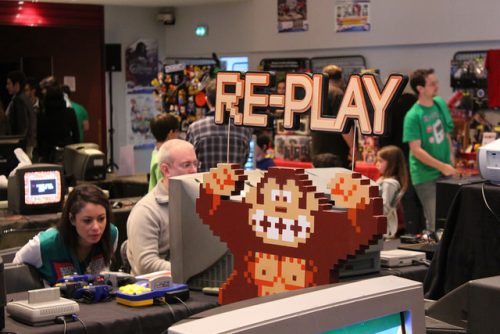

Our lives are a team effort, often influenced by larger social forces outside of our control. At the same time, we love stories about singular heroes rising to the occasion. Sociologists often argue that focusing too much on individual merit teaches us not to see the rest of the social world at play.

Photo Credit: Vadu Amka, Flickr CC

One of my favorite recent examples of this is a case from Christopher A. Paul’s book, The Toxic Meritocracy of Video Games, about the popular team-based competitive shooter Overwatch. After the match is over and a winning team declared, one player is awarded “play of the game,” and everyone watches an automatically-generated replay. Paul writes that the replay…

… takes one moment out of context and then chooses to only celebrate one of twelve players when the efforts of the other members of the team often make the moment possible…a more dynamic, holistic system would likely be harder to judge and code, which is a problem at the heart of meritocracy. Actually judging skill or effort is ridiculously difficult to do…the algorithm built into selecting what is the play of the game and which statistics will be highlighted rewards only what it can count and judge, stripping out situation and context. (2018, Pp. 34-35)

It isn’t just the computer doing this; there is a whole genre of youtube videos devoted to top plays and personalized highlight reels from games like Overwatch, Paladins, and Counter Strike: Global Offensive.


Paul’s point got me thinking about the structure and culture of replays in general. They aren’t always about a star player. Sometimes we see the execution of a brilliant team play. Other times, it’s all about the star’s slam dunk. But replays do highlight one of the weird structural features about modern competition. Many of the most popular video games in the massive esports industry are team based, but because these are often played in a first-person or limited third person view, replays and highlight reels from these games are often cast from the perspective of a single “star” player.

This is a great exercise for thinking sociologically in everyday life and in the classroom. Watch some replays from your favorite team sport. Are the highlights emphasizing teamwork or are they focusing on a single player’s achievements? Do you think different replays would have been possible without the efforts of the rest of the team? How does the structure of the shot—the composition and perspective—shape the viewer’s interpretation of what happened on the field?

Evan Stewart is an assistant professor of sociology at University of Massachusetts Boston. You can follow his work at his website, or on BlueSky.

If you walked through a city without looking up at any billboards, could advertisers yell at you? Could the owner of an iconic building shame you for “stealing” a beautiful view while weaseling them out of their livelihood? It sounds absurd, and you might remember a viral quote from Banksy (riffing on original writing from Sean Tejaratchi), tearing the idea apart.

But what about digital advertising? The internet looks very different if you are using software to block advertisements. Use it for a long time you’ll forget how much junk a user has to slog through to read or watch anything.

Of course, blocking ads cuts into the main source of support for online publications. Lately, many have taken up a new approach to discourage their users from blocking ads: good old fashioned shame and guilt.

We can have an important conversation about the ethics of paying for content online, but what strikes me the most about these pop-ups are some core sociological questions about the shaming tactic: why here, and why now?

For a long time, social scientists have seen a “digital divide” in how unequal access to the internet reinforces social inequality. Research also shows that the digital divide isn’t just about access; people learn to use the internet in different ways from these early access experiences. From the design side, sociologists Jenny Davis and James Chouinard have also written about affordance theory: the way technology requests, demands, allows, encourages, discourages, and refuses different kinds of behavior from users.

Yes, you can see the important weather alert, but first…

For some, the internet is about abundance and agency. Take as much time as you need to figure out your problems, and, if things don’t work out, bend the world to your will! Grab open source software or write a script to automate the boring stuff! Open your app of choice to hail a ride if the bus is delayed or the taxis are busy! For others, these choices aren’t as readily apparent. If you had to trek to the library and sign up for time-limited computer access, the internet can seem a lot less helpful and a lot less free, at least at first glance.

These ideas help us understand the biggest problem for ad-block shaming: “soft” barriers, delays, and emotional appeals are trying to change the behavior of people who already have the upper hand from learning to seek out and use blocking software to make the internet work better for them. David Banks’ writing on this over at Cyborgology in 2015 shows the power struggle at work:

The ad blocker should not be seen as a selfish technology. It is a socialist cudgel—something that forces otherwise lazy capitalists to find new and inventive ways to make their creations sustainable. Ad blockers are one of the few tools users have to fight against the need to monetize fast and big because it troubles the predictability of readily traceable attention.

Now, emotional appeals like guilt and shame are the next step after stronger power plays like rigid paywalls largely failed for publishing companies. The challenge is that guilt and shame require a larger sense of community obligation for people to feel their effects, and I am not sure a pop-up is ever going to be anything other than an obstacle to get around.

It’s not that online advertising is inherently good or bad, and the problem of paying artists and writers in the digital age is a serious concern. But in addition to these considerations, looking directly at the way web design tries to shape our online interactions can better prepare us to see how the rules of the social world can be challenged and changed.

Evan Stewart is an assistant professor of sociology at University of Massachusetts Boston. You can follow his work at his website, or on BlueSky.

Every year I see the Fourth of July spark a social media fight. First, the flag swag comes out for the ritual parties and barbecues:

Then, somebody posts the U.S. flag code, especially this part:

(d) The flag should never be used as wearing apparel, bedding, or drapery.

It is interesting that flag apparel has become a quintessential dudebro look for the Fourth. Activist Abbie Hoffman was arrested for wearing a flag shirt in protest in 1968, and we still argue about whether flag burning in protest should be legal.

Are the dudebros disrespectful? Are the flag purists raining on the parade? Sociology shows us how this debate runs into deep assumptions about how we show respect for sacred things.

In 1966, the late sociologist Robert Bellah presented a now-classic essay, “Civil Religion in America.” The essay is about religion in public life, and how American politicians created a sense of shared national identity around general religious claims. Since then, sociologists and political theorists have argued about how inclusive civil religion really is (Does it include atheists or other minority groups who aren’t Christian? Lots of Americans don’t seem to think so.), but the theory is useful for highlighting how much of American political life takes on a religious tone.

While Bellah focused on religious references in speeches and texts, there is a more general point that stands out for the flag debate:

What we have, then, from the earliest years of the republic is a collection of beliefs, symbols, and rituals with respect to sacred things and institutionalized in a collectivity…

The American civil religion…borrowed selectively from the religious tradition in such a way that the average American saw no conflict between the two. In this way, the civil religion was able to build up without any bitter struggle with the church powerful symbols of national solidarity and to mobilize deep levels of personal motivation for the attainment of national goals.

It is pretty easy to see the flag as a sacred symbol—one that represents a long history of solidarity and commitment in the United States. The trick is that civil religion focuses on the content of political beliefs more than the conduct of honoring those beliefs. The rich variety of human religious experience shows us that just because people share a sacred symbol doesn’t mean they agree about how best to celebrate it. Sure, the styles of American Christianity might appreciate quiet reverence and contemplation, but other societies partied to show their piety (Bacchanalia, anyone?).

Photo Credits: Wikimedia Commons, Scott Sherrill-Mix and US Embassy Canada via Flickr CC.

Once you consider the range in how people express their deeply-held political and cultural beliefs, it gets easier to understand where they are coming from, even if you completely disagree with them. What starts as an argument about disrespect hides a deeper argument about different kinds of celebration (and, of course, whether it is appropriate to celebrate at all)Political tensions are high these days, but cases like this show how we can have more productive arguments by getting to the core of our cultural disagreements.

Evan Stewart is an assistant professor of sociology at University of Massachusetts Boston. You can follow his work at his website, or on BlueSky.

Want to help fight fake news and manage political panics? We have to learn to talk about numbers.

While teaching basic statistics to sociology undergraduates, one of the biggest trends I noticed was students who thought they hated math experiencing a brain shutdown when it was time to interpret their results. I felt the same way when I started in this field, and so I am a big advocate for working hard to bridge the gap between numeracy and literacy. You don’t have to be a statistical wizard to make your reporting clear to readers.

Sociology is a great field to do this, because we are used to going out into the world and finding all kinds of cultural tropes (like pointlessly gendered products!). My new favorite trope is the Half-Dozen Headline. You can spot them in the wild, or through Google News with a search for “half dozen.” Every time I read one of these headlines, my brain echoes with “half of a dozen is six.”

Sometimes, six is a lot:

Sometimes, six is not:

(at least, not relative to past administrations)

Sometimes, well, we just don’t know:

Is this five deaths (nearly six)? Is a rate of about two deaths a year in a Walmart parking lot high? If people already struggle to interpret raw numbers, wrapping your findings in fuzzy language only makes the problem worse.

Spotting Half-Dozen Headlines is a great introductory exercise for classes in social statistics, public policy, journalism, or other fields that use applied data analysis. If you find a favorite Half-Dozen Headline, be sure to send it our way!

Evan Stewart is an assistant professor of sociology at University of Massachusetts Boston. You can follow his work at his website, or on BlueSky.

“There is a real danger of taking food too seriously. Food needs to be part of a bigger picture”
-Anthony Bourdain

As someone who writes about food, about its ability to offer a window into the daily lives and circumstances of people around the globe, Anthony Bourdain’s passing hit me particularly hard. If you haven’t seen them, his widely-acclaimed shows such as No Reservations and Parts Unknown were a kind of personal narrative meets travelogue meets food TV. They trailed the chef as he immersed himself in the culture of a place, sometimes one heavily touristed, sometimes more removed from the lives of most food media consumers, and showed us what people ate, at home, in the streets and in local restaurants. While much of food TV focuses on high end cuisine, Bourdain’s art was to show the craftsmanship behind the everyday foods of a place. He lovingly described the food’s preparation, the labor involved, and the joy people felt in coming together to consume it in a way that was palpable, even (or especially) when the foods themselves were unusual.

At their best, these shows taught us about the history and culture of particular places, and of the ways places have suffered through the ills of global capitalism and imperialism. His visit to the Congo was particularly memorable; While eating tiger fish wrapped in banana leaves, spear-caught and prepared by local fishermen, he delved into the colonial history and present-day violence that continue to devastate this natural-resource rich country. After visiting Cambodia he railed against Henry Kissinger and the American bombing campaign that killed over 250,000 people and gave rise, in part, to the murderous regime of the Khmer Rouge. In Jerusalem, he showed his lighter side, exploring the Israeli-Palestinian conflict through debates over who invented falafel. But in the same episode, he shared maqluba, “upside down” chicken and rice, with a family of Palestinian farmers in Gaza, and showed the basic humanity and dignity of a people living under occupation.

Bourdain’s shows embodies the basic premise of the sociology of food. Food is deeply personal and cultural. Over twenty-five years ago Anthony Winson called it the “intimate commodity” because it provides a link between our bodies, our cultures and the global political economies and ecologies that shape how and by whom food is cultivated, distributed and consumed. Bourdain’s show focuses on what food studies scholars call gastrodiplomacy, the potential for food to bring people together, helping us to understand and sympathize with one another’s circumstances. As a theory, it embodies the old saying that “the best way to our hearts is through our stomachs.” This theory has been embraced by nations like Thailand, which has an official policy promoting the creation of Thai restaurants in order to drive tourism and boost the country’s prestige. And the foods of Mexico have been declared World Heritage Cuisines by UNESCO, the same arm of the United Nations that marks world heritage sites. Less officially, we’ve seen a wave of efforts to promote the cuisines of refugees and migrants through restaurants, supper clubs and incubators like San Francisco’s La Cocina that help immigrant chefs launch food businesses.

But food has often been and continues to be a site of violence as well. Since 1981 750,000 farms have gone out of business, resulting in widespread rural poverty and epidemic levels of suicide. Food system workers, from farms to processing plants to restaurants, are among the most poorly paid members of our society, and often rely on food assistance. The food industry is highly centralized. The few major players in each segment—think Wal-Mart for groceries or Tyson for chicken—exert tremendous power on suppliers, creating dire conditions for producers. Allegations of sexual assault pervade the food industry; there are numerous complaints against well-known chefs and a study from Human Rights Watch revealed that more than 80% of women farmworkers have experienced harassment or assault on the job, a situation so dire that these women refer to it as the “field of panties” because rape is so common. Racism is equally rampant, with people of color often confined to poorly-paid “back of the house” positions while whites make up the majority of high-end servers, sommeliers, and celebrity chefs.

More than any other celebrity chef, Bourdain understood that food is political, and used his platform to address current social issues. His outspoken support for immigrant workers throughout the food system, and for immigrants more generally, colored many of his recent columns. And as the former partner of Italian actress Asia Argento, one of the first women to publicly accuse Harvey Weinstein, Bourdain used his celebrity status to amplify the voice of the #metoo movement, a form of support that was beautifully incongruous with his hyper-masculine image. Here Bourdain embodied another of the fundamental ideas of the sociology of food, that understanding the food system is intricately interwoven with efforts to improve it.

Bourdain’s shows explored food in its social and political contexts, offering viewers a window into worlds that often seemed far removed. He encouraged us to eat one another’s cultural foods, and to understand the lives of those who prepared them. Through food, he urged us to develop our sociological imaginations, putting individual biographies in their social and historical contexts. And while he was never preachy, his legacy urges us to get involved in the confluence of food movements, ensuring that those who feed us are treated with dignity and fairness, and are protected from sexual harassment and assault.

The Black feminist poet Audre Lorde once wrote that “it is not our differences that divide us. It is our inability to recognize, accept, and celebrate those differences.” Bourdain showed us that by learning the stories of one another’s foods, we can learn the histories and develop the empathy necessary to work for a better world.

Rest in Peace.

Alison Hope Alkon is associate professor of sociology and food studies at University of the Pacific. Check out her Ted talk, Food as Radical Empathy

Originally Posted at TSP Clippings

Photo Credit: Val Astraverkhau, Flickr CC

Throughout history, human beings have been enthralled by the idea of the paranormal. While we might think that UFOs and ghosts belong to a distant and obscure dimension, social circumstances help to shape how we envision the supernatural. In a recent interview with New York Magazine, sociologist Joseph O. Baker describes the social aspects of Americans’ beliefs about UFOs.

Baker argues that pop culture shapes our understandings of aliens. In the 1950s and 1960s, pop culture imagined aliens in humanoid form, typically as very attractive Swedish blonde types with shining eyes. By the 1970s and 1980s, the abductor narrative took hold and extraterrestrials were represented as the now iconic image of the little gray abductor — small, grey-skinned life-forms with huge hairless heads and large black eyes. Baker posits that one of the main causes of UFOs’ heightened popularity during this time was the extreme distrust of the government following incidents such as Watergate. Baker elaborates,

“I think there is something to be said for a lack of faith in government and institutions in that era, and that coincided with UFOs’ rise in popularity. The lack of trust in the government, and the idea that the government knows something about this — those two things went together, and you can see it in the public reaction post-Vietnam, to Watergate, all that stuff.”

While the individual characteristics of “believers” are hard to determine, survey evidence suggests that men and people from low-income backgrounds are more likely to believe in the existence of alien life. Baker says that believing is also dependent upon religious participation rather than education or income. In his words,

“One of the other strongest predictors is not participating as strongly in forms of organized religion. In some sense, there’s a bit of a clue there about what’s going on with belief — it’s providing an alternative belief system. If you look at religious-service attendance, there will be a strong negative effect there for belief in UFOs.”

Baker’s research on the paranormal indicates that social circumstances influence belief in extraterrestrial beings. In short, these social factors help to shape whether you are a Mulder or a Scully. Believing in UFOs goes beyond abductions and encounters of the Third Kind. In the absence of trust in government and religious institutions, UFOs represent an appealing and mysterious alternative belief system.

Isabel Arriagada (@arriagadaisabeis a Ph.D. student in the sociology department at the University of Minnesota. Her research focuses on the development of prison policies in South America and the U.S. and how technology shapes new experiences of imprisonment. 

Originally Posted at Montclair SocioBlog

A question that few people seem to be asking about Enough Is Enough and the March for Our Lives is: Why now? Or to paraphrase a question that some people soon will be asking: How is the shooting at Marjory Stoneman Douglas High School different from other school shootings?

Photo Credit: mathiaswasik, Flickr CC

There’s #MeToo and #Time’sUp, of course. These may have inspired advocates of other liberal causes like gun control. But just three weeks earlier, a 15-year old in Benton, Kentucky brought a handgun to school and started shooting – 2 dead, 18 injured. The incident evoked only the usual responses, nothing more.

Here’s my hunch: when I first saw the kids in Parkland speaking out, organizing, demanding that adults do something, I immediately thought of a sociology book that had nothing to do with guns –Unequal Childhoods by Annette Lareau published in 2003.

These high-schoolers, I thought, are the children of “concerted cultivation.” That was the term Lareau used for the middle-class approach to raising kids. It’s not just that middle-class parents cultivate the child’s talents, providing them with private coaches and organized activities. There is less separation of the child’s world and the adult world. Parents pay attention to children and take them seriously, and the children learn how to deal with adults and with institutions run by adults.

One consequence is the notorious sense of “entitlement” that older people find so distressing in millennials. Here is how Lareau put it:

This kind of training developed in Alexander and other middle-class children a sense of entitlement. They felt they had a right to weigh in with an opinion, to make special requests, to pass judgment on others, and to offer advice to adults. They expected to receive attention and to be taken very seriously.

It is this sense of entitlement – the teenager’s sense that she is entitled to have some effect on the forces that affect her life – that made possible the initial protests by the students at Marjory Stoneman Douglas High School. And once word of that protest spread, it was this same sense of entitlement, these same assumptions about their place in the world, that made so many other high school students join the movement.

Conservatives just could not believe that kids could or should be so adept at mounting an effective movement or that they could or should speak intelligently about political issues. So right-wing commentary insisted that the students were paid “crisis actors” or pawns of various forces of evil – adult anti-gun activists, the media, or the “deep state.” They also claimed that the students were “rude” and that they did not have standing to raise the issue of gun control.

[the students] say that they shouldn’t be able to own guns even though they can go to war, but they think that they should be able to make laws. None of this makes any sense at all. (See the excerpts in the transcript here.)

In a way, Fox and their friends are hauling out the old notion that children should know their place. But the motivation isn’t some newfound independence, it’s middle-class values. As Lareau says, concerted cultivation makes children far more dependent on parents than does the “natural growth” parenting more common in working-class families. Besides, foreign visitors since the early days of the republic have remarked on the independence of American children. What’s new, and what is so upsetting to exponents of older ideas, is how parents themselves have taught teenagers to demand that they have a say in the decisions that shape their lives.

Jay Livingston is the chair of the Sociology Department at Montclair State University. You can follow him at Montclair SocioBlog or on Twitter.