Search results for The

Flashback Friday.

My great-grandma would put a few drops of turpentine on a sugar cube as a cure-all for any type of cough or respiratory ailment. Nobody in the family ever had any obvious negative effects from it as far as I know. And once when I had a sinus infection my grandma suggested that I try gargling kerosene. I decided to go to the doctor for antibiotics instead, but most of my relatives thought that was a perfectly legitimate suggestion.

In the not-so-recent history, lots of substances we consider unhealthy today were marketed and sold for their supposed health benefits. Joe A. of Human Rights Watch sent in these images of vintage products that openly advertised that they contained cocaine or heroin. Perhaps you would like some Bayer Heroin?
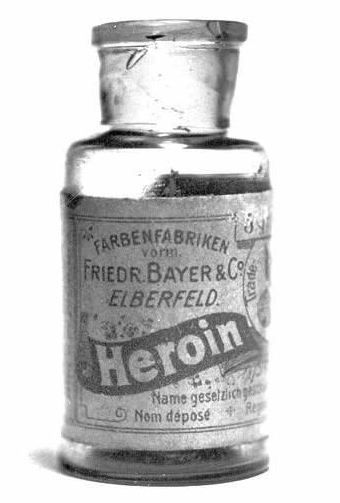
Flickr Creative Commons, dog 97209

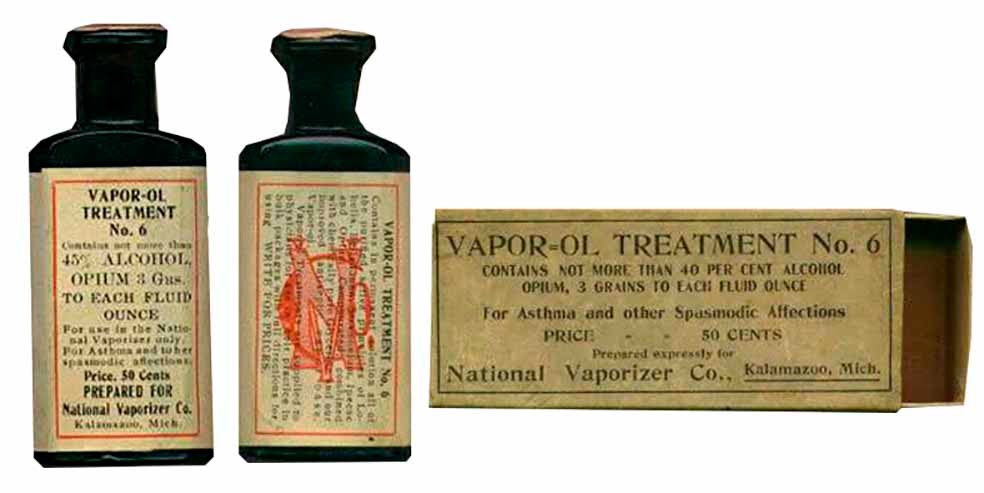
The Vapor-ol alcohol and opium concoction was for treating asthma:
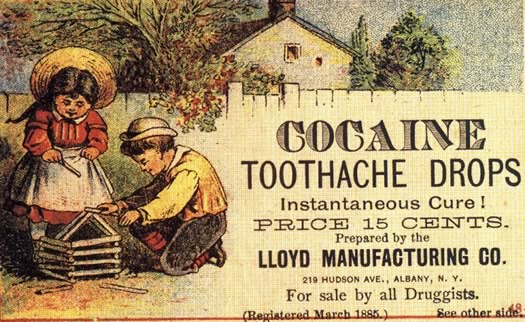
Cocaine drops for the kids:
A reader named Louise sent in a recipe from her great-grandma’s cookbook. Her great-grandmother was a cook at a country house in England. The recipe is dated 1891 and calls for “tincture of opium”. The recipe (with original spellings):

Hethys recipe for cough mixture

1 pennyworth of each
Antimonial Wine
Acetic Acid
Tincture of opium
Oil of aniseed
Essence of peppermint
1/2lb best treacle

Well mix and make up to Pint with water.

As Joe says, it’s no secret that products with cocaine, marijuana, opium, and other now-banned substances were at one time sold openly, often as medicines. The changes in attitudes toward these products, from entirely acceptable and even beneficial to inherently harmful and addicting, is a great example of social construction. While certainly opium and cocaine have negative effects on some people, so do other substances that remained legal (or were re-legalized, in the case of alcohol).

Often racist and anti-immigrant sentiment played a role in changing views of what are now illegal controlled substances; for instance, the association of opium with Chinese immigrants contributed to increasingly negative attitudes toward it as anything associated with Chinese immigrants was stigmatized, particularly in the western U.S. This combined with a push by social reformers to prohibit a variety of substances, leading to the Harrison Narcotic Act. The act, passed in 1914, regulated production and distribution of opium but, in its application, eventually basically criminalized it.

Reformers pushing for cocaine to be banned suggested that its effects led Black men to rape White women, and that it gave them nearly super-human strength that allowed them to kill Whites more effectively. A similar argument was made about Mexicans and marijuana:

A Texas police captain summed up the problem: under marijuana, Mexicans became “very violent, especially when they become angry and will attack an officer even if a gun is drawn on him. They seem to have no fear, I have also noted that under the influence of this weed they have enormous strength and that it will take several men to handle one man while under ordinary circumstances one man could handle him with ease.”

So the story of the criminalization of some substances in the U.S. is inextricably tied to various waves of anti-immigrant and racist sentiment. Some of the same discourse–the “super criminal” who is impervious to pain and therefore especially violent and dangerous, the addicted mother who harms and even abandons her child to prostitute herself as a way to get drugs–resurfaced as crack cocaine emerged in the 1980s and was perceived as the drug of choice of African Americans.

Originally posted in 2010.

Gwen Sharp is an associate professor of sociology at Nevada State College. You can follow her on Twitter at @gwensharpnv.


The governors of Virginia and South Carolina have now taken stands against the Confederate battle flag. So have honchos at Wal*Mart, Sears, Target, and NASCAR.

NASCAR! How could this cascade of reversals have happened so rapidly? Did these important people wake up one morning this week and say to themselves, “Gee, I never realized that there was anything racist about the Confederacy, and never realized that there was anything wrong with racism, till that kid killed nine Black people in a church”?

My guess is that what’s going on is not a sudden enlightenment or even much of a change in views about the flag. To me it looks more like the process of “pluralistic ignorance.” What these people changed was not their ideas about the Confederacy or racism but their ideas about other people’s ideas about these matters. With pluralistic ignorance (a term coined by Floyd Allport nearly a century ago) everyone wants X but thinks that nobody else does. Then some outside factor makes it possible for people to choose X, and everyone does. Everyone is surprised – “Gee, I thought all you guys wanted Y, not X .” It looks like a rapid change in opinion, but it’s not.

A few years ago in places like Ireland and Europe, people were surprised at the success of new laws banning smoking in pubs and restaurants. “Oh, the smokers will never stand for it.” But it turned out that the smokers, too, were quite happy to have rooms with breathable air. It’s just that before the laws were passed, nobody knew that’s how other people felt because those people kept smoking.

The same thing happened when New York City passed a pooper-scooper law. “The law is unenforceable,” people said. “Cops will never see the actual violation, only its aftermath. And do you really think that those selfish New Yorkers will sacrifice their own convenience for some vague public good?” But the law was remarkably effective. As I said in this post from 2009:

Even before the new law, dog owners had probably thought that cleaning up after their dogs was the right thing to do, but since everyone else was leaving the stuff on the sidewalk, nobody wanted to be the only schmuck in New York to be picking up dog shit. In the same way that the no-smoking laws worked because smokers wanted to quit, the dog law in New York worked because dog owners really did agree that they should be cleaning up after their dogs. But prior to the law, none of them would speak or act on that idea.

In South Carolina and Georgia and Bentonville, Arkansas and elsehwere, the governors and the CEOs surely knew that the Confederacy was based on racist slavery; they just rarely thought about it. And if the matter did come up, as with the recent Supreme Court decision about license plates, they probably assumed that most of their constituents and customers were happy with the flag and that the anti-flaggers were a cranky minority.

With the support for letting that flag fade into history, it looks as though for a while now many Southerners may have been uncomfortable with the blatant racism of the Confederacy and the post-Reconstruction era. But because nobody voiced that discomfort, everyone thought that other Southerners still clung to the old mentality. The murders in the Charleston church and the subsequent discussions about retiring the flag may have allowed Southerners to discover that their neighbors shared their misgivings about the old racism. And it allowed the retail giants to see that they weren’t going to lose a lot of money by not stocking the flag.

Cross-posted at Montclair SocioBlog.

Jay Livingston is the chair of the Sociology Department at Montclair State University. You can follow him at Montclair SocioBlog or on Twitter.

In the aftermath of Dylann Roof’s racist murder, some cities in the South are reconsidering their relationship to the Confederate Flag. Should it fly? Be in a museum? Burn? The discussion raises larger questions of how to move forward from ugly histories without simultaneously whitewashing a city’s past. And, as well, how do we know when something is truly in our past?

I was thinking about just these questions a couple weeks ago when a friend of mine walked me by the monument to the Crescent City White League in New Orleans. The conical stone was erected to commemorate the return of white supremacist government two years after a lethal insurrection against the Reconstruction state government in 1874. In that insurrection, thousands of former Confederate soldiers attacked the city police and state military. They killed 11 members of the NOPD and held city government buildings for three days before federal troops arrived and they fled.

Two years later, the white supremacist politicians were back in power and they placed the monument in a prominent place where Canal St. meets the Mississippi. The monument, to be clear, is in honor of cop-killing white supremacists.

Here it is in 1906 (source, photographer unknown):14

So, what to do with the thing?

In 1974 — one hundred years after the insurrection and 98 years after its erection — the city added a marker nearby distancing itself from the message of white supremacy. It read:

Although the “battle of Liberty Place” and this monument are important parts of the New Orleans history, the sentiments in favor of white supremacy expressed thereon are contrary to the philosophy and beliefs of present-day New Orleans.

In 1993, some of the original inscriptions were removed and replaced with this slightly more politically correct comment:

In honor of those Americans on both sides who died in the Battle of Liberty Place. … A conflict of the past that should teach us lessons for the future.

It was also moved to a new location. Today it sits between a flood wall, a parking lot, and an electrical substation. If you wanted to give a monument the finger, this is one way to do it. Here’s how it looks on Google Maps streetview:

3 4

So, the question is: What to do with these things?

I’ll admit that seeing the monument tucked into an unpleasant corner of New Orleans was somehow satisfying. But I was also uneasy about its displacement. Is this an example of New Orleans trying to repress knowledge of its racist history? (And present?) Or is it a sign that the city actively rejects the values represented by the monument? Conversely, if the city had left the monument at the foot of Canal St. would this be a sign that it took history seriously? And, thus, responsibility for its past? Or a sign that it didn’t take an anti-racist stance seriously enough?

This seems like an obviously difficult call to make, but I’m glad that we’re using the horror of Roof’s massacre to begin a discussion about how to handle symbols like these and, maybe, truly make them a part of our past.

Lisa Wade, PhD is an Associate Professor at Tulane University. She is the author of American Hookup, a book about college sexual culture; a textbook about gender; and a forthcoming introductory text: Terrible Magnificent Sociology. You can follow her on Twitter and Instagram.

Flashback Friday.

Many sociologists argue that gender, as we know it, is not innate, but put on and performed. Certain moments of our lives, like weddings and quinceañeras, are opportunities to really emphasize femininity and masculinity; but gender is also performed in mundane ways every day in the ways that we talk, move, dress, and adorn ourselves.

These photographs of child beauty pageant participants, taken by Susan Anderson and published in her book High Glitz, illustrate how much of feminine sexual allure is put on and performed.  These kids are adultified with make-up and they also often wear false teeth and hair extensions. You can browse additional images at Powerhouse Books.

HighGlitz_Jacket_060209

People often object to this sort of adornment on a child being unnatural, but when adult women use these same strategies — fake eyelashes, makeup, veneers, and hair extensions — it is no more natural. Adult women are, no less than those kids, performing femininity.

To take it one step further, as The Spinster Aunt does, if you react to the idea of child beauty pageants with horror, then than horror should be applied to the project of femininity itself, not just the fact that children are participants:

I submit that anyone who is uncomfortable with [the] Little Miss Perfect [pageant] is ethically obliged to be just as uncomfortable with femininity in general. Little Miss Perfect is merely one of a gazillion equally nauseating points on the Porno-Feminine Continuum within which all female citizens of the globe are confined by a culture of oppression.

So, if it’s troubling when girls do it (and, for that matter, also troubling to many when men do it), then why isn’t it troubling when women do it?

Originally posted in 2010.

Lisa Wade, PhD is an Associate Professor at Tulane University. She is the author of American Hookup, a book about college sexual culture; a textbook about gender; and a forthcoming introductory text: Terrible Magnificent Sociology. You can follow her on Twitter and Instagram.

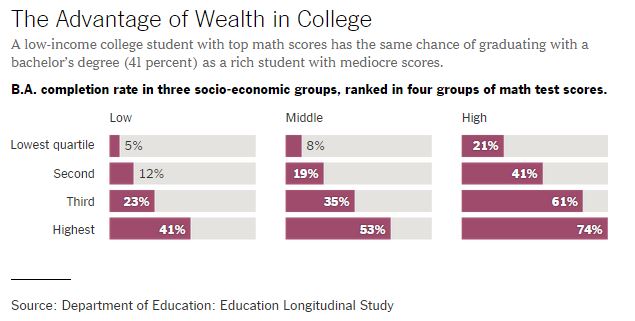
There is new research from the National Center for Education Statistics (NCES), written up by Susan Dynarsky at the New York Times Upshot. The striking finding is that poor children in the top quartile on high school math scores have a 41% chance of finishing a BA degree by their late twenties — the same chance as children from the second-lowest quartile in math scores who are high-socioeconomic status (SES). Poor children from the third-highest quartile in high school math have graduation about equal to the worst-scoring children form the richest group. Here’s the figure:

777

The headline on the figure is misleading, actually, since SES is not measured by wealth, but by a combination of parental education, occupation, and income. (Low here means the bottom quartile of SES, Middle is the 25th to 75th percentile, and High is 75th and up.)

One possible mechanism for the disparity in college completion rates is education expectations. Dynarsky mentions expectations measured in the sophomore year of high school, which was 2002 for this cohort. What she doesn’t mention is how much those expectations changed by senior year. Going to the NCES source for that data (here) I found this chart, which I annotated in red:

Print

Between sophomore and senior year, the percentage expecting to finish a BA degree or more decreased and the percentage expecting to go to two-year college increased, across SES levels. But the change was much greater for lower SES students. So the gap in expecting to go to two-year college between high- and low-SES students grew from 6 to 17 percentage points; that is, from 9% versus 3% in the sophomore year to 22% versus 6% in the senior year.

That’s a big crushing of expectations that happened in the formative years at the end of high school.

Cross-posted at Family Inequality.

Philip N. Cohen is a professor of sociology at the University of Maryland, College Park. He writes the blog Family Inequality and is the author of The Family: Diversity, Inequality, and Social Change. You can follow him on Twitter or Facebook.

For every man that earns a college degree, nearly two women will. Women have been outperforming men in college since they started attending in the 1920s, but thanks to widening opportunities, an economy that draws women in the workforce, and simple female ambition, women now outnumber men, too.

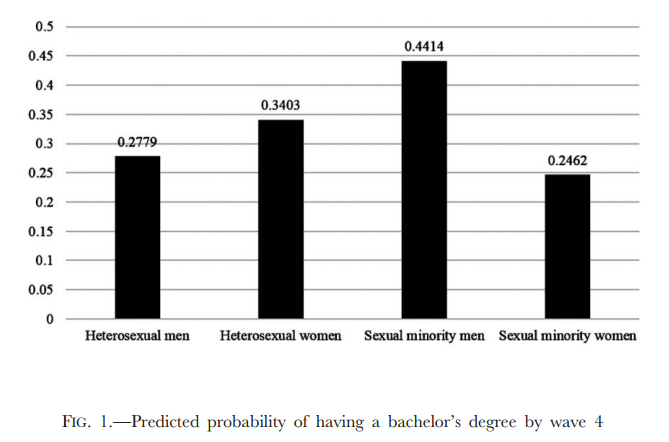
New research suggests, however, that the opposite is true for sexual minority men and women. Education researcher Leigh Fine asked whether the college graduation rates of gay, lesbian, and bisexual men and women reflected what we see in general. His respondents were 30 years old, on average — that is, old enough to have passed the age where most Americans complete their education — and they self-identified as non-heterosexual.

He found that the pattern we see in which women are more likely to earn a bachelor’s degree is reversed among sexual minorities. Gay and bisexual men are more likely to report graduating than lesbian and bisexual women. In fact, they’re more likely to report graduating than heterosexual men and women as well.

In contrast, sexual minority women were the least likely of all four groups to report graduating.

2

Running some fancy numbers — it was pretty tricky because of the low numbers of sexual minority respondents — Fine concludes that what we are seeing is a pattern among sexual minority women that is statistically similar to heterosexual men and a pattern among sexual minority men that is statistically similar to heterosexual women.

This is another great example of the importance of doing intersectional research. Sociologists use the term intersectionality to draw attention to the way that our identities — our race, gender, class, sexual orientation, immigration status, etc — never influence our lives in isolation from one another. They’re in cahoots. So, being female is one thing, but being a woman who sleeps with women is an entirely different thing, and being such a woman who lives in the country, carries a disability, or is a transnational migrant is entirely another. We’ve got a pretty interesting set of over 300 related posts at our intersectionality tag. Enjoy!

H/t to Education and Society. Cross-posted at Gender and Society.

Lisa Wade, PhD is an Associate Professor at Tulane University. She is the author of American Hookup, a book about college sexual culture; a textbook about gender; and a forthcoming introductory text: Terrible Magnificent Sociology. You can follow her on Twitter and Instagram.

Recently we ran a graph showing the evolution of facial hair trends starting in 1842. It showed that about 90% of men wore facial hair in the late 1800s, but it was a trend that would slowly die. By 1972, when the research was published, almost as many were clean shaven.

So, why did facial hair fall out of fashion?

Sociologist Rebekah Herrick gives us a hypothesis. With Jeanette Mendez and Ben Pryor, she investigated the stereotypes associated with men’s facial hair and the consequences for U.S. politicians. Facial hair is rare among modern politicians. “Currently,” they noted, “fewer than five percent of the members of the U.S. Congress have beards or mustaches” and no president has sported facial hair since William Howard Taft left office in 1913, before women had the right to vote.

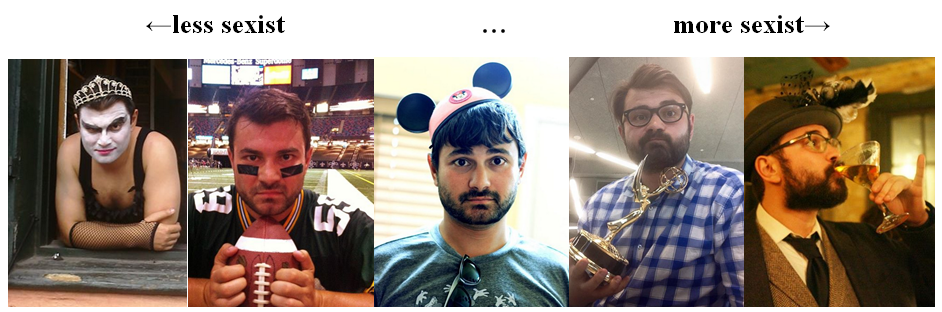
Using an experimental method, Herrick and her colleagues showed people photographs of similarly appearing politicians with and without facial hair, asking them how they felt about the men and their likely positions. They found that potential voters perceived men with facial hair to be more masculine and this was a double edged sword. Higher ratings of masculinity were correlated with perceptions of competence, but also concerns that the politicians were less friendly to women and their concerns.

In other words, the more facial hair, the more people worry that a politician might be sexist:

2 (1)

In reality, facial hair has no relationship to a male politician’s voting record. They checked. The research suggests, though, that men in politics — maybe even all men — would be smart to pay attention to the stereotypes if they want to influence how others see them.

Thanks to my friend, Dmitriy T.C., for use of his face!

Lisa Wade, PhD is an Associate Professor at Tulane University. She is the author of American Hookup, a book about college sexual culture; a textbook about gender; and a forthcoming introductory text: Terrible Magnificent Sociology. You can follow her on Twitter and Instagram.

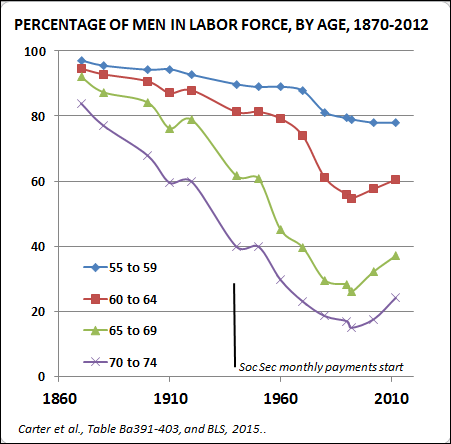
In response to company pensions, employer age limits, shifts in the economy, and the initiation of social security, men have increasingly enjoyed a little 20th century social invention called “retirement.” In 1860, more than 80% of men age 70 to 74 worked, but by around 2000, that number had dropped to below 20%.

As of the 2000s, this more-than-100-year-trend of increasing numbers of men enjoying their “golden years” has reversed. This is your image of the week:

4

Over at Made in America, from where I borrowed this graph, sociologist Claude Fisher explains the reversal of the trend (citations at the link):

The private sources of retirement support, such as company pensions and investments, have weakened; [and] public sources of aid are under strain from a lower birth rate, a stagnating economy, and political retrenchment. And the years that such support must cover are growing. In 1990 a 65-year-old man could expect to live about 15 more years; in 2010, 18 more years. That’s an extra 20 percent of financing needed.

Among other things, the economic health of older Americans is an important sign of the overall health of the economy. It will be interesting to keep an eye on this statistic in the near future.

Lisa Wade, PhD is an Associate Professor at Tulane University. She is the author of American Hookup, a book about college sexual culture; a textbook about gender; and a forthcoming introductory text: Terrible Magnificent Sociology. You can follow her on Twitter and Instagram.