Search results for The

Buzzfeed News recently ran a story about reputation management companies using fake online personas to help their clients cover up convictions for fraud. These firms buy up domains and create personal websites for a crowd of fake professionals (stock photo headshots and all) who share the same name as the client. The idea is that search results for the client’s name will return these websites instead, hiding any news about white collar crime.
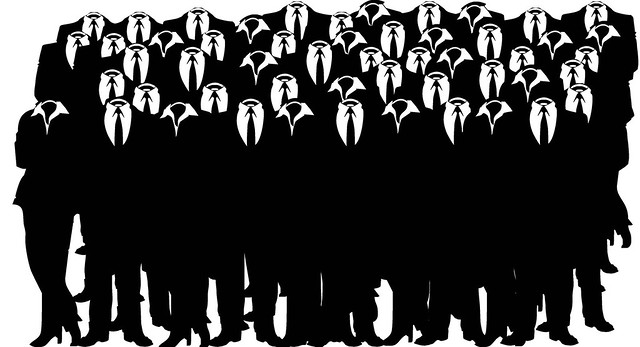
In a sea of profiles with the same name, how do you vet a new hire? Image source: anon617, Flickr CC

This is a fascinating response to a big trend in criminal justice where private companies are hosting mugshots, criminal histories, and other personal information online. Sociologist Sarah Lageson studies these sites, and her research shows that these databases are often unregulated, inaccurate, and hard to correct. The result is more inequality as people struggle to fix their digital history and often have to pay private firms to clean up these records. This makes it harder to get a job, or even just to move into a new neighborhood.

The Buzzfeed story shows how this pattern flips for wealthy clients, whose money goes toward making information about their past difficult to find and difficult to trust. Beyond the criminal justice world, this is an important point about the sociology of deception and “fake news.” The goal is not necessarily to fool people with outright deception, but to create just enough uncertainty so that it isn’t worth the effort to figure out whether the information you have is correct. The time and money that come with social class make it easier to navigate uncertainty, and we need to talk about how those class inequalities can also create a motive to keep things complicated in public policy, the legal system, and other large bureaucracies.

Evan Stewart is an assistant professor of sociology at University of Massachusetts Boston. You can follow his work at his website, or on BlueSky.

Sociology Twitter lit up after the US Women’s National Team’s World Cup win with the revelation that many of their players were sociology majors in college. It is an inspiration to see the team succeed at the highest levels and call for social change while doing so.

https://twitter.com/nedasoc/status/1148237568481398784

This news also raised an interesting question: do student athletes major in sociology because it is a compelling field (yay, us!) or because they are tracked into the major by academic advisors who see it as an “easy” choice to balance with sports?

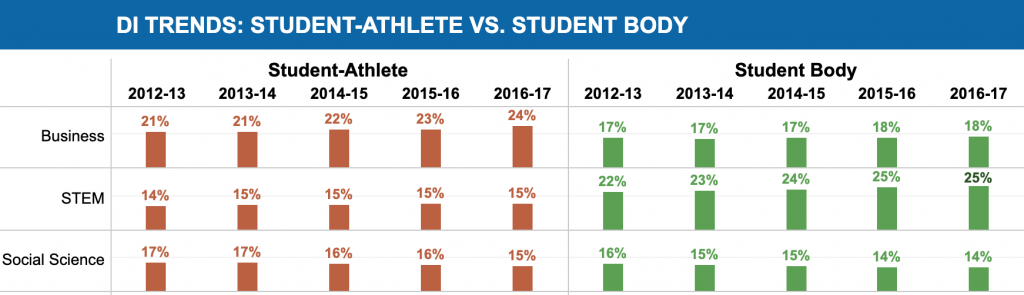
According to data from the NCAA, the most common majors for both student athletes and the wider student body at Division 1 schools are business, STEM, and social sciences. Trend data show the biggest difference is in the choice between business and STEM; both groups seem to pick up social science majors at similar rates.

Source: NCAA D1 Diploma Dashboard

While the rate of majors is not that different, there is something special that sociology can do for these students. Student athlete lives are heavily administered. Between practice, conditioning, scheduled events, meals, and classes, many barely have a few hours to complete a full load of course work. In grad school, I tutored many student athletes who were sociology majors, and I watched them juggle their work with the demands of heavy travel schedules and intense workouts, all under the watchful eye of an army of advisors, coaches, mentors, and doctors. The experience is very close to what Erving Goffman called a “total institution” in Asylums:

“A total institution may be defined as a place of residence and work where a large number of like-situated individuals, cut off from the wider society for an appreciable period of time, together lead an enclosed, formally administered round of life. (1961, p. xiii)”

We usually associate total institutions with prisons and punishment, but this definition highlights the intense management that defines the college experience for many student athletes. When I tutored athletes in sociology, we spent a lot of time comparing their readings to the world around them. Sociological thinking about institutions, bureaucracy, and work gave them a language to think about and talk about their experiences in context.

Athletic programs can be complicated for colleges and universities, and there is ongoing debate about how the “student” status in student athlete shapes their obligation to pay for all this work. As debates about college athletics continue, it is important for players, fans, and administrators to think sociologically about their industry to see how it can better serve players as both students and athletes.

Evan Stewart is an assistant professor of sociology at University of Massachusetts Boston. You can follow his work at his website, or on BlueSky.

I love this episode on Supreme and streetwear from Patriot Act with Hasan Minhaj, especially for the explainer on conspicuous consumption with a nod to “O.G. Hypebeast” Thorstein Veblen.

Veblen’s The Theory of the Leisure Class is a classic on how people use wealth and taste to make status, and conspicuous consumption is a good way to explain how hype happens. It got me thinking about other classic sociological explanations for how luxury brands blow up.

Marx’s idea of commodity fetishism is also important for understanding luxury brands and other Veblen goods. While conspicuous consumption focuses on why people buy, this idea gets to the core of how these goods get associated with status. We often venerate all the labor that supposedly goes into a luxury product, like a fancy watch, or we venerate the creative processes in branding or appropriating ideas. For Marx, the important part is that we transfer the value of that labor into the product and treat the product like it just has that value on its own.

This is the reason why the products of labour become commodities, social things whose qualities are at the same time perceptible and imperceptible by the senses. In the same way the light from an object is perceived by us not as the subjective excitation of our optic nerve, but as the objective form of something outside the eye itself…There it is a definite social relation between men, that assumes, in their eyes, the fantastic form of a relation between things.

Karl Marx. 1887. Capital: A Critique of Political Economy. Volume 1

Marx goes on to compare this process to the development of religious beliefs, and here we could also look at Émile Durkheim and collective effervescence. Part of the reason these products get hype is that they create big social events around shopping. The long lines and limited edition “drops” force people to get together in large crowds at special times to get the product. This makes shopping less of an individual experience and more of a collective one, where just being in the crowd contributes to the excitement.

All these theories make an important point about the social dynamics of popular products. As Matt Powell says in an interview earlier in the episode, you can’t take hype to the bank. But maybe you can; the generation of hype isn’t just an ephemeral, “fake” thing, but an example of a core truth in sociology—if people define hype as real it is real in its consequences.

Evan Stewart is an assistant professor of sociology at University of Massachusetts Boston. You can follow his work at his website, or on BlueSky.

If Cosmo and Buzzfeed have taught us anything, it’s that we love personality quizzes. Sure, many of them aren’t valid measures of personality, but it can still be fun to find out what kind of Disney princess you are or what your food truck preference says about the way you handle rejection in life. 

Vintage Quiz from “The Girl Friend and the Boy Friend” Magazine May 1953 – via Envisioning the American Dream

But the logic behind these fun quizzes can has a big impact in social science, because they are all based on looking for patterns in how people answer questions. We can reverse-engineer the process; instead of going in with a set of personality types and designing a survey, researchers can use a method called Latent Class Analysis to look at completed surveys and see which patterns of answers emerge from the data. By comparing those patterns to existing theories, they can come up with new categories that explain how people think, especially people who fall in between the strong or obvious categories.

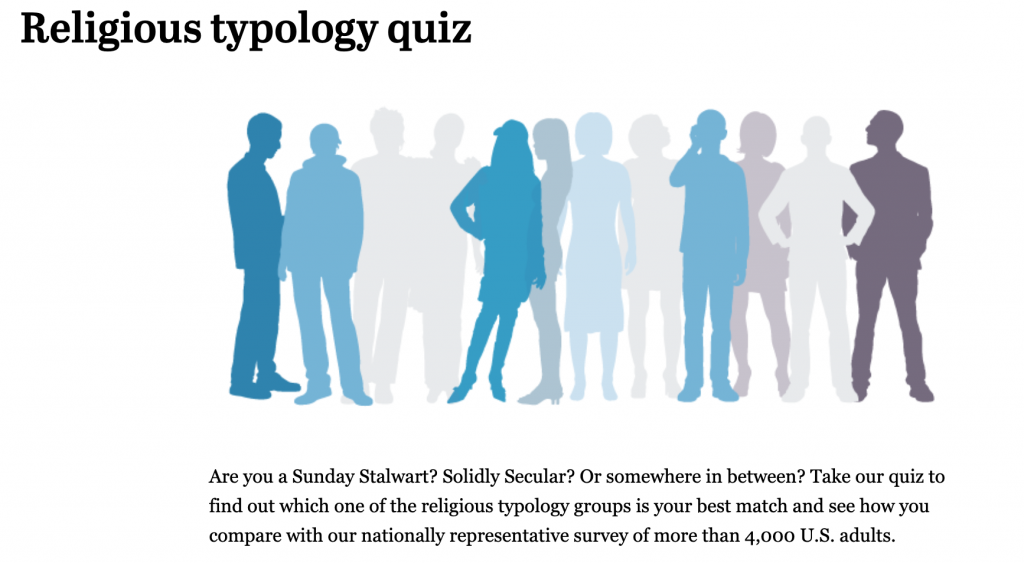
The Pew Research Center has done this with different styles of religious experiences, and you can take a quiz to see which type best fits you. 

Bart Bonikowski and Paul DiMaggio use this approach to identify different kinds of nationalism in the U.S. There are ardent nationalists and people who are disengaged from nationalism, but the middle is more interesting. Between these two groups, there are also people with relatively moderate national pride who still think only certain people are “truly American,” and there are folks who have higher national pride, but a more inclusive vision of who belongs.

I also used this method in a recent paper with Jack Delehanty and Penny Edgell looking at different kinds of religious expression in the public sphere. In a new paper coming soon, our team also finds patterns in how people think about who shares their vision for American society.

Religion, nationalism, and even racism? These are heavier topics than the typical personality quiz covers, but the cool part about this method is that it is less intrusive than directly asking people what they think about these topics. When we ask simpler questions—but more of them—and then look for patterns in the answers, we can learn a lot more about what they actually think.

Evan Stewart is an assistant professor of sociology at University of Massachusetts Boston. You can follow his work at his website, or on BlueSky.

Content Note: This post discusses racist memorabilia in sociological context and provides an image of one collection critical of this memorabilia below the page break.

Why do some people collect racist memorabilia and artifacts? Objects depicting African Americans in derogatory and stereotypical ways are commonly referred to as “black memorabilia” or “black Americana,” although scholar Patricia Turner more aptly names them “contemptible collectibles.” 

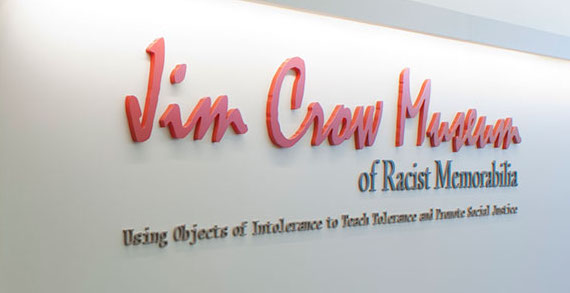
As documented by David Pilgrim, founder and curator of the Jim Crow Museum of Racist Memorabilia, these artifacts include everyday objects like toys and games, household items such as cookie jars, and postcards. Although usually associated with the Jim Crow era, many of the items are still produced or reproduced today, and all draw on racial caricatures, such as the “mammy,” “Tom,” “picanniny,” and “brute,” among others. 

Not without controversy, “contemptible collectibles” have different meanings to different people. Some collectors embrace the racist meanings attached to the items. Others buy the objects with the intent of destroying them. Still others hope to “liberate” the artifacts from their previous racist history and hold the objects in “high esteem” instead.

Les Whittington, the grandson of an enslaved person and whose life history is the focus of my recent research, has another reason for collecting. Ignorance or denial of the history of African Americans—especially in Appalachia, where he is from—motivates him to document the existence of slavery and the ensuing Jim Crow era.

Part of Les’s collection includes multiple “mammy” figurines, which he displays in a case, where they look like a small army of racist caricatures. The objects are shocking to see, not just because such iconographic pieces of racist memorabilia are disturbing, but also because seeing so many together is a reminder of the objects’ pervasiveness in the past.

This history may seem long past, but not to Les for whom the legacy of slavery is immediate. His grandfather, “John Myra” Stepp, was enslaved, and died the same year that Les was born.

Les himself grew up in a mostly racially segregated world. Though Brown v. Board of Education ruled that segregated schools were unconstitutional in 1954, it wasn’t until 1966, when he was in the sixth grade, that Les’s school became the first middle school in his hometown to fully integrate. And another of his relatives, Barbara Hawkins, also one of John Myra’s grandchildren, was one of four Black students to attend the newly integrated high school in 1965.

His family members faced adversity with great resolve, and Les has told me, “And no matter what, they persevered. They were resilient. And they were smart. Because even though they had all those obstacles in front of them, they were still a success.”

But don’t mistake Les’s comments for a “pull yourself up by your bootstraps” narrative. Nor should his comments be taken as a way to obscure past or present racism and white supremacy, as Robin Di’Angelo argues is far too common. Instead, as Les has explained to me, his collection is “physical documentation of a lot of hate,” and represents “a history that doesn’t need to be forgotten, [. . .] even though it’s painful to people.” 

Les also acknowledges that the objects are relevant to today, a message repeated by more well-known collectors, such Alan Page (a former NFL player) and his wife Diane Page. Echoing Les’s concerns about the objects, Diane has noted that “contemptible collectibles” are a “constant reminder that we have to be vigilant,” especially because “people have become more comfortable of late expressing racist views publicly.”

Jacqueline Clark, PhD is a professor of sociology at Ripon College. Her teaching and research interests include social inequalities, the sociology of health and illness, and the sociology of jobs and work. 

SocImages authors and readers love pointing out pointlessly gendered products, especially children’s toys in blue and pink. Since gender is about what we do in the world, all the things we use for work and play can give weight to assumptions about gender differences that aren’t true. Critics of pointlessly gendered products emphasize that small differences in design—from color to function—can ultimately add up to big differences in how people learn to act in the world.

Gendering toys isn’t just about the color, it is also about what we teach kids to do with them. That’s why I got a huge kick out of this video: a compilation of old commercial shots of “white boys winning board games.” Of course, I haven’t done a systemic sampling of old commercials to see if girls win too, but this compilation makes an important point about how we can miss tropes that only show one outcome of social interaction over and over, especially competition.

I remember being a competitive kid when it came to board games. I didn’t like losing at all, and it took quite a few years until I learned to just enjoy playing on its own. After this compilation I look back and wonder whether I just felt bad about losing—as most of us do from time to time—or whether a part of that feeling was also a sense that something was wrong because I was “supposed” to be winning like the other boys. That’s the power of gendered socialization.

Evan Stewart is an assistant professor of sociology at University of Massachusetts Boston. You can follow his work at his website, or on BlueSky.
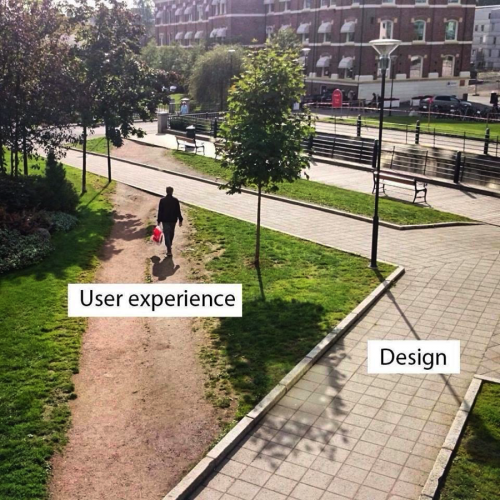
The built environment reflects our social world. From urban streets that encourage neighborly relationships, to “hostile design” and policing practices that keep people out of public spaces, the physical structure of a space carries with it a whole set of assumptions about how people should interact in that space.

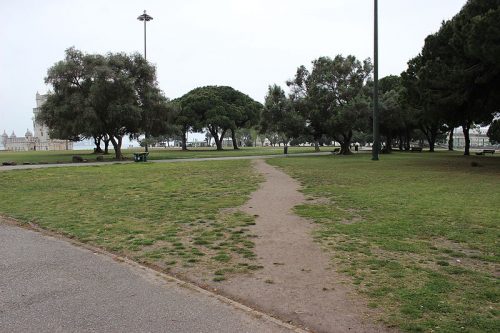
But social structure isn’t always just imposed on us by architects and city planners. It also invites the opportunity for improvisation and innovation to create new norms. A great example of this is the emergence of “desire paths“—the people-made paths that defy, or improve on, the work of urban design.

Source: Wikimedia Commons

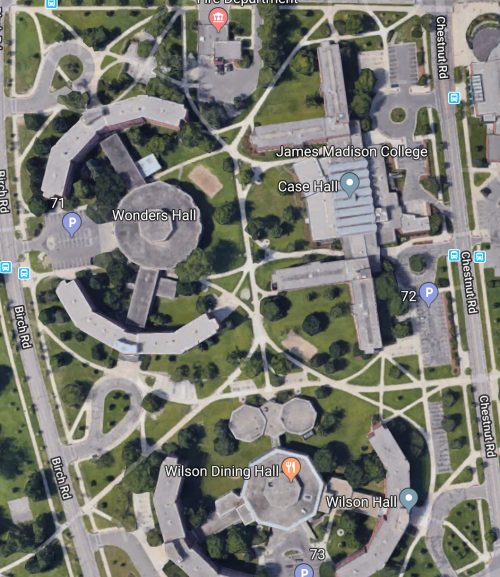
Desire paths were the bulk of my commute for years without even realizing it. When you walk a lot, you start to see how much our neighborhoods aren’t built for this most basic kind of travel. It is fun to spot these paths along the way, because they show little pockets of collective action where people have found a better way to get from point A to B. Authors like to highlight how some universities, for example, even wait for desire paths to emerge and then pave them to fit students’ commuting routes.

That said, it is also important to pay attention to the limits that urban design, like all kinds of social structures, continues to impose in our communities. Research shows that walkability may only be weakly related to the social health of a neighborhood, since community cohesion takes more work than just putting people in the same space. Walkable neighborhoods also attract more drivers as people commute in to walk around to shops and restaurants. My alma mater, Michigan State University, paved a ton of desire paths in student neighborhoods across campus. It was great, but if you needed to get to the other side of campus for class in a pinch, there was still the matter of that big stadium complex in the way. Sometimes social improvement still takes a bit more conscious effort.

Desire paths at MSU

For all the desire paths, the fastest route to a freshman economics class crashes through stadiums, parking lots, and practice fields before falling into the river.

Evan Stewart is an assistant professor of sociology at University of Massachusetts Boston. You can follow his work at his website, or on BlueSky.
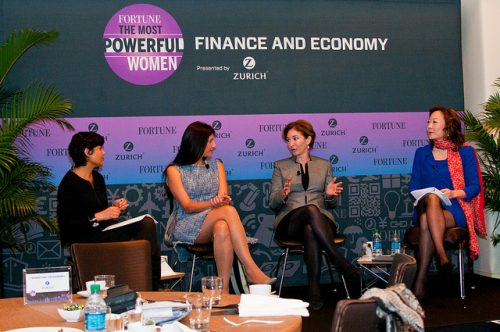
On January 31, The New York Times responded to a letter from Kimberly Probolus, an American Studies PhD candidate, with a commitment to publish gender parity in their letters to the editor (on a weekly basis) in 2019. This policy comes in the wake of many efforts to change the overwhelming overrepresentation of men in the position of “expert” in the media, from the Op-Ed project to womenalsoknowstuff.com (now with a sociology spinoff!) to #citeblackwomen.

The classic sociology article “Doing Gender,” explains that we repeatedly accomplish gender through consistent, patterned interactions. According to the popular press and imagination — such as Rebecca Solnit’s essay, Men Explain Things to Me — one of these patterns includes men stepping into the role of expert. Within the social sciences, there is research on how gender as a performance can explain gender disparities in knowledge-producing spaces.

Women are less likely to volunteer expertise in a variety of spaces, and researchers often explain this finding as a result of self-esteem or confidence. Julia Bear and Benjamin Collier find that, in 2008 for example, only 13% of contributors to Wikipedia were women. Two reasons cited for this gender disparity were a lack of confidence in their expertise and a discomfort with editing (which involves conflict). Likewise, studies of classroom participation have consistently found that men are more likely than women to talk in class — an unsurprising finding considering that classroom participation studies show that students with higher confidence are more likely to participate. Within academia, research shows that men are much more likely to cite themselves as experts within their own work.

This behavior may continue because both men and women are sanctioned for behavior that falls outside of gender performances. In research on salary negotiation, researchers found that women can face a backlash when they ask for raises because self-promotion goes against female gender norms. Men, on the other hand, may be sanctioned for being too self-effacing.

Source: Fortune Live Media, Flickr CC

Knowledge exchange on the Internet may make the sanctions for women in expert roles more plentiful. As demonstrated by the experiences of female journalists, video game enthusiasts, and women in general online, being active on the Internet carries intense risk of exposure to trolling, harassment, abuse, and misogyny. The social science research on online misogyny is also recent and plentiful.

Photo Credit: Sharon Mollerus, Flickr CC

Social media can also be a place to amplify the expertise of women or to respond to particularly egregious examples of mansplaining. And institutions like higher education and the media can continue to intervene to disrupt the social expectation that an expert is always a man. Check out the “Overlooked” obituary project for previously underappreciated scientists and thinkers, including the great sociologist Ida B. Wells.

For more on gendered confidence in specific areas, such as STEM, see more research on Gendering Intelligence.

Originally Posted at There’s Research On That

Jean Marie Maier is a graduate student in sociology at the University of Minnesota. She completed the Cultural Studies of Sport in Education MA program at the University of California, Berkeley, and looks forward to continuing research on the intersections of education, gender, and sport. Jean Marie has also worked as a Fulbright English Teaching Assistant in Gumi, South Korea and as a research intern at the American Association of University Women. She holds a BA in Political Science from Davidson College.