Search results for The

A recent photo from Dina Litovsky showing a model’s inflamed feet in slingback heels went viral, with reposts from National Geographic and a whole host of Instagram influencers. The photo garnered just over 500k likes and comments criticizing the prioritization of beauty over pain. This is not the first time these images have gone viral. In Louis Vuitton’s 2012 show in Paris, photos of runway models’ battered and bruised feet made the rounds.  

Photo by Dina Litovsky – see reflections, and even more images of the modeling industry, on the Substack here

Models can and have refused to wear outrageous shoes, but they risk paying the price by being judged as unprofessional, especially models with low status and prestige within the industry. The industry often praises models for their ability to endure long shoots and poses overtly or subtly contortionist. Yet measuring professionalism by a model’s willingness to endure pain demonstrates the toxicity of professional status at the cost of one’s wellbeing. Phrases like “beauty is pain” and “look good, feel good” link one’s appearance to their inherent value and capabilities. On the catwalk, the consequences of professional norms skew models’ agency, and prices of pain are paid to justify, uphold, and maintain a professional image.

These runway shoes teeter between symbols of empowerment and oppression, as models embody cultural ideals of gender, race, class, and sexual identity. Simultaneously, their personhood is commoditized as “aesthetic laborers.” Empowered by the high fashion industry’s exclusivity and idealism, models experience dogged yet isolating work conditions. These images serve looks, but also serve as reminders of social expectations of beauty that reinforce of cultural standards shaped by power, race, and status. Sociologist Ashley Mears’ ethnography of models, Pricing Beauty, argues these ideals become prescriptive shaping cultural expectation of how people should look and be.

The struggle spreads from the fashion industry to the everyday consumer. In her essay “Always Be Optimizing,” Jia Tolentino connects pain and suffering to self-optimization. Narrating her experience and research on intense Pilates and barre workouts, Tolentino argues that gendered beauty ideals have transformed into a pursuit of optimization that hides oppressive cultural beauty standards. These painful practices are obscured as self-care, sweating it out, and getting a toned and sculpted body. Important here is the illusion of “agency” in doing “self-care” and choosing to “optimize” or improving one’s womanly figure. These lures of “look good feel good” and cultural expectations of beauty and that “beauty is pain,” justify the aches and pains from working out. Shoes are both a vehicle for our feet and for gendered cultural and societal expectations, standards, and ideals worthy of praise.

Rachel Bickelman is a MA and PhD student at University of Massachusetts Boston.
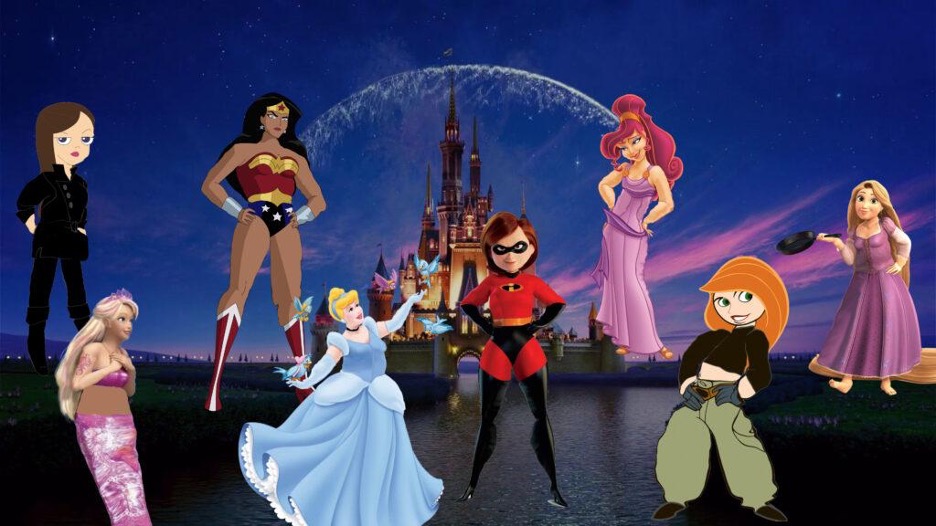
Television distorts, mocks and marginalizes fat people. Fat characters are reduced to caricatures whose stories and identities aren’t developed and don’t matter. In one study by Tzoutzou et al., all 36 compliments about appearance given to women were for thin women. Not one positive message was included for a woman of an average or overweight body type. For men, the same pattern was found: only one overweight character received a positive message. 

Collage by Victoria Lieberman

These TV shows tell the audience that external beauty only resides in thinness and excludes anyone who deviates from this definition of beauty. Viewers can internalize this thin ideal, which in turn can make it difficult for the audience to feel good about themselves, especially if their body doesn’t fit this body standard. Seeing the treatment of fat people on TV can affect how viewers think about their own bodies, especially if their body type doesn’t fit the thin ideal.

Bigger Bodies, Smaller Roles

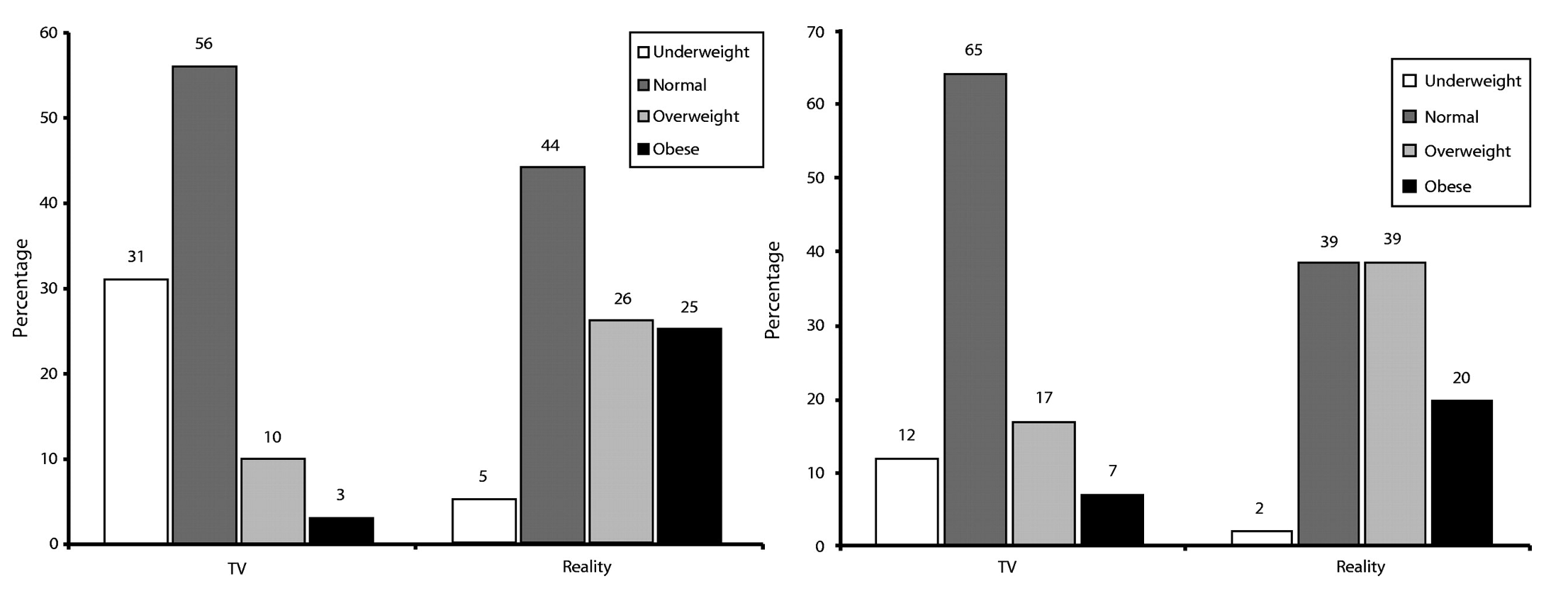
Not only is the representation of fat people overwhelmingly negative, but fat bodies are underrepresented on TV shows.

Comparison of female body types: television vs reality 1999-2000 (left)
Comparison of male body types: television vs reality 1999-2000 (right)
(Brownell et al. 2003)

This pattern of dehumanizing fat people continues when they don’t get the chance to develop their characters. They are often represented as a comedy sidekick or as villains.

In comedy, we often don’t laugh with fat women, but at them. Overweight women are about twice as likely to be the reason for a joke than thinner women. They also have smaller roles, less romantic relationships, and are in “fewer positive interactions than thin characters”.

Media often represents fat characters as villains as well. One study by Himes and Thompson “found that obesity was equated with negative traits (evil, unattractive, unfriendly, cruel) in 64% of the most popular children’s videos”. Examples of this can be seen in famous children’s movies with characters such as Ursula from The Little Mermaid or The Queen of Heartsfrom Alice In Wonderland. These villains help to draw the connecting line between fat and negative qualities Fat characters become less human than other characters who have full stories built around them. Makers of TV don’t just ignore fatness, they demonize it.

Effects on the Audience

The negative portrayal of fat people in TV shows can lead audiences to internalize negative portrayals of being overweight. This internalization can happen quickly: a study by Fouts and Burggraf found that only 30 minutes of watching TV can affect how a young woman views her body which can result in various external struggles. 

In the study by Tzoutzou et al., girls agreed that the media influenced their desire to be thin and fit the beauty standard. This can cause frequent dieting because many eating problems are due to unrealistic body standards, an image that mass media often transmits.

Not only can these misrepresentations of fat people lead to low self-esteem, but it can lead viewers to believe that they will be treated in the sexist ways that they see on TV if they don’t fit the body norm to avoid this.

All of these aspects have the potential to make a female viewer feel worse about themselves through their appearance and perceived reactions from other people rooted in fictional and distorted depictions on TV.

TV Should be Fun for Everyone

TV is a space that is meant to be enjoyed. But viewers can’t sit back and relax with TV if they feel like their body is being judged by the shows that they put on. All bodies should feel like they have a space within TV shows. All bodies deserve to be seen by a wide audience.

Tori Lieberman is a rising Sophomore at Hamilton college planning on studying Creative Writing and Sociology. You can find examples of her journalism here.

In recent years, sociologists have given attention to hookup culture and other modern forms of dating. Too often, however, this discussion ignores the experiences of trans people, and occasionally it focuses too narrowly on the college campus, ignoring the current prevalence of dating apps among many age groups.

Rates of dating violence victimization from the video abstract of Garthe et al. (2021)

Focusing on trans experiences is especially important, as a 2021 study found that trans youth are twice as likely as cisgender women to have experienced physical dating violence, and fifty percent more likely to have experienced psychological dating violence. A 2023 study identified common experiences, most notably being fetishized and having to deal with others’ assumptions about trans people. “Because I’m a trans woman, people instantly assume that I must be this massive bottom,” said one participant. Another participant, a trans man, reported similar experiences, saying “I just felt like they weren’t talking to me. They were talking to an idea they had about me.”

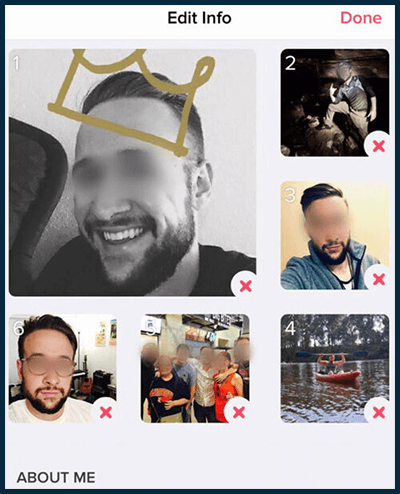
Other research has looked at trans people’s decisions to disclose their trans identity to prospective partners on dating apps. Most participants proactively and explicitly disclosed their identity, citing concerns about violence. One participant, who was genderfluid and lived in a rural area, mentioned that when meeting someone face-to-face from a dating app, they always thought, “that person could be the person that kills me.” Others, however, will engage in softer disclosure methods, such as showcasing different facets of their identity on apps that allow multiple profile pictures.

An example of using multiple profile photos on Tinder

Who is most vulnerable within the trans community? Another 2021 study found that BIPOC, queer, and transfeminine people are the most likely to have experienced dating violence. A 2022 study looked at the dating experiences of BIPOC trans women, finding their cis male partners would often conceal their relationship from the public. Consequences of this stigma included physical violence and psychological trauma. “We getting killed just because of the guys here were scared that they secret would come out,” said one woman. They also mentioned engaging in “survival strategies,” including hypervigilance, dressing to avoid being “found out,” and avoiding certain men.

The authors of these studies suggest several remedies to the problems they discussed. First is comprehensive trans-inclusive education, whether in the form of school curricula, sex education, or violence prevention training, which have been shown to make trans people and their partners more comfortable. Second, dating app users wanted better filtering options, with one person saying, “The majority of the interactions I have with cis men on dating apps are just shit, full stop . . . can I have less of them pop up?” Finally, some study authors recommended the prohibition of “trans panic defenses,” which allow perpetrators of violent crimes to justify their actions as a loss of control after learning their victim is transgender.

As trans people are reaching new levels of visibility and coming under fire in unprecedented ways, social science research shows us that it is important to look for ways to make for a safer and less anxious future for trans people as we look for romantic and sexual partners.

Leah Long is a history and sociology student at Macalester College who researches and writes about trans history and politics.

Lockdowns during the COVID-19 pandemic had a major impact on all kinds of social behaviors, from discrimination to civic engagement and protests. What effect has the pandemic had on more extreme behaviors, like terrorist attacks from groups like the Islamic State of Iraq and Syria (ISIS)? Many armed actors, such as ISIS, threatened to use the pandemic to advance their goals. In its propaganda, ISIS even referred to COVID-19 as the “smallest soldier of Allah on the face of the earth.”

Empty streets in Kirkuk, Iraq in 2020. Photo Credit: Middle East Monitor licensed under a Creative Commons Attribution-NonCommercial-ShareAlike 4.0 International License, photo here 

In some ways, the pandemic presented an opportunity to armed groups like ISIS. The pandemic threatened to divert resources away from fighting extremism because it overwhelmed countries’ budgets and placed demands on some countries’ security forces to deliver public health care services.  

In our research, however, my colleagues and I found that the pandemic did not generally increase ISIS attacks. Instead, we found that lockdown measures adopted during the pandemic reduced attacks in Egypt, Iraq, and Syria. The effects were especially large in densely populated areas, where the population provided physical cover for ISIS’s activities, and in areas outside ISIS’s base of operations, which were harder to reach due to travel restrictions.

In taking people off the streets, the lockdowns removed the physical cover ISIS relies on for its operations, especially in urban areas, and eliminated many high-value civilian targets, such as markets. In shutting down businesses and reducing travel, the lockdowns also reduced ISIS’s revenue.  However, the lockdowns were not in place long enough to significantly deplete the group’s reserves.

Even though the impact of the lockdowns on ISIS was significant, the lockdowns posed less of a challenge to ISIS than most other armed groups. ISIS has large financial reserves, operates in largely rural areas, and does not extensively target civilian populations. Most other armed groups have much smaller financial reserves than ISIS, operate in urban areas, and target civilians much more heavily.  The effect of the lockdowns of these groups was likely even greater than it was on ISIS.

Our research shows us how much social context and opportunity matter to extremist violence. Despite the propaganda, even a terrorist group such as ISIS was locked down by the pandemic like everyone else.

Dr. Dawn Brancati is a senior lecturer in political science at Yale University who researches peacebuilding, especially as it relates to democracy and democratic institutions. 

Social networks are a great way to introduce people to the power of Sociology. In my Intro class, I make a point to show students the way their social networks shape the spread of divorce, how people ask for help, and the surprisingly tangled world of dating.

Now there’s a new take on networks – the structure of our social relationships could be a key ingredient in comedy.

Sitcom” by tylerhoff, Flickr CC

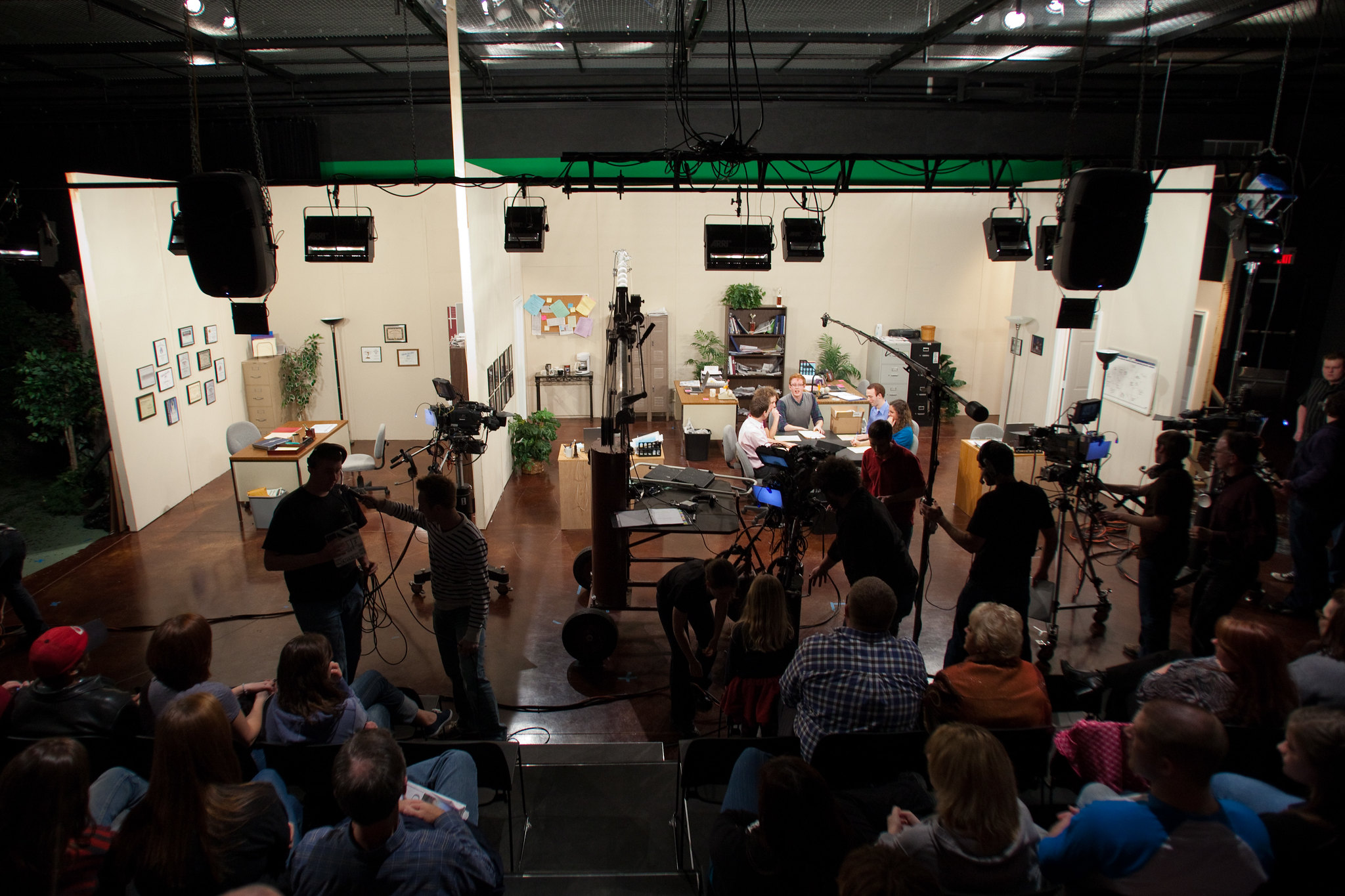
Over at Socius, a new data visualization from Adam Roth is going straight into my syllabus. Using data from the NBC sitcom The Office, Roth shows how some characters are closely connected, like the accounting team, while others occupy what network theorists call “structural holes” — they are separated from each other by department boundaries or rare interactions.

Roth, A. R. (2022). Social Network Theory and Comedy: Insights from NBC’s The Office. Socius, 8. https://doi.org/10.1177/23780231221141524
Check out a full description at the open access article!

The key point, Roth argues, is that bringing together characters who are separated by structural holes makes for great comedy. After summarizing Greg Daniels’ approach to mixing and matching characters in the writers room, Roth writes:

 Burt (1992) described structural holes as separations in a social network between nonredundant contacts. Building on Granovetter’s (1973) weak tie argument, Burt theorized that a person who occupies a structural hole is privy to novel information, resources, and ideas by virtue of bridging two otherwise disconnected social circles…Overall, approximately one third of episodes (66 of 201) across the show’s nine seasons had at least one storyline involving two or more characters who did not routinely exchange lines on the show.

This isn’t just an excuse to show Seinfeld, Scrubs, or other sitcoms in class. Roth’s work demonstrates how these shows are a great teaching tool to show students how understanding social relationships can fuel our creativity!

Evan Stewart is an assistant professor of sociology at University of Massachusetts Boston. You can follow his work at his website, or on BlueSky.
It is good to be a Korean today because the world is fascinated with Koreanness, from K-pop to K-dramas, K-movies, K-food, K-fashion, and K-beauty. It is no exaggeration to say that Korean culture has become synonymous with being cool and being hip. Things were quite different, however, not too long ago.

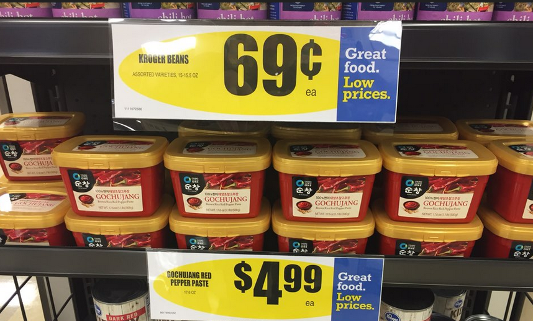
It was around 2018 at a local supermarket in Kansas when I realized that K-culture was becoming the mainstream in the U.S. I uncovered a stack of gochujang, Korean red chili pepper paste, on the shelf. This was way before the success of the movie Parasite, which won the Best Picture Oscar in 2020, or 2021 Netflix’s Squid Game, which became Netflix’s biggest debut hit by reaching 111 million viewers. Of course, some Korean cuisine like kimchi, bibimbap, bulgogi, and kalbi were already in American’s food lexicon. However, I did not expect to see a pile of gochujang boxes at a local grocery store.

The picture I took when I found gochujang at a local supermarket in 2018

As I stood in front of this stack of red containers, I felt happy and crying at the same time. I was elated that I found my food at an American supermarket, and I was sad that it took more than two decades for me to find my food at an American supermarket. It was an indicator of acceptance and normality. It seemed to be telling me that the flavor of gochujang is not either exotic or foreign any more.

I thought, this must be the same feeling for those who came to the U.S. before me when they found sesame oil at local American supermarkets around the 2000s. When sesame oil was foreign and exotic, these immigrants had to travel to Asian markets in big cities for five to seven hours. I used to travel an hour and a half just to buy gochujang in Kansas City.

Gochujang is a key ingredient in cooking Korean food, and it can be very versatile. It is used to make various stew and soup, or can be mixed with rice. In the 1990s, gochujang was a must-item for young Korean backpackers for traveling Europe. Many young students carried gochujang to Europe so they could eat it with breads. I am sure that this was a way to prevent craving for a taste of home while traveling. As a matter of fact, that was how I survived my two-month backpacking back in 1995. It is also a cultural touchstone. In the 2021 movie Minari, grandmother Soon-ja (played by Youn Yuh-Jung) travels to the U.S. to see her daughter. She brings many Korean food items including chili powder, which can be used to make gochujang. In the 1980s, finding gochujang in a small town was virtually impossible in the U.S.

Screenshots from the movie Minari

Like sesame oil, the flavor of gochujang has not changed over the years. It is the people who have changed. Americans do not see gochujang foreign or exotic taste anymore. This is consistent with other immigrant food trends like pizza, kimchi, and hummus. The other day I had a brief talk with a young lady, who was holding a container of gochujang at a local store. She said, “I love gochujang. I use gochujang a lot. And I even add gochujang to my Shin-Ramen.” It was a refreshing moment to realize how far gochujang has come.

At the same time, the wide popularity of K-culture has not translated into reduced racism toward Asian Americans. A recent report found that there is a sharp rise in racism and harassment toward Asian Americans, especially Asian women. For example, there were over 9,000 incident reports between March 2020 and June 2021. This bleak reality led a movement like #stopAAPIhate and #stopAsianhate during the Covid-19 pandemic and eventually pushed President Biden sign a bipartisan legislation to stop the hatred and the bias against Asian Americans in 2021. I completed this post during the one-year anniversary of the Atlanta Spa Shooting.

In 2018, whenever I visited the supermarket, I bought a couple of gochujang even though I did not need them. I was so desperate to keep them on the shelf, thinking that if they were not popular they might not return to the store again. Today, I see even more Korean foods like mandu (Korean dumpling), Korean fried chicken, and a wide range of Korean ramen at American supermarkets. Now I notice that gochujang is a staple – there are even different varieties on the shelf. I hope that the U.S. is more willing to embrace people like me in the way they have welcomed my food. I am still crying today because we still encounter racism and bias.

Dr. Sangyoub Park is an associate professor of sociology at Washburn University, teaching Food & Culture, K-Pop & Beyond, Japan & East Asia, Social Class in the U.S., and The Family.

As the new year brings in a new peak in COVID cases across the country, we all have a right to feel a little down in the dumps.

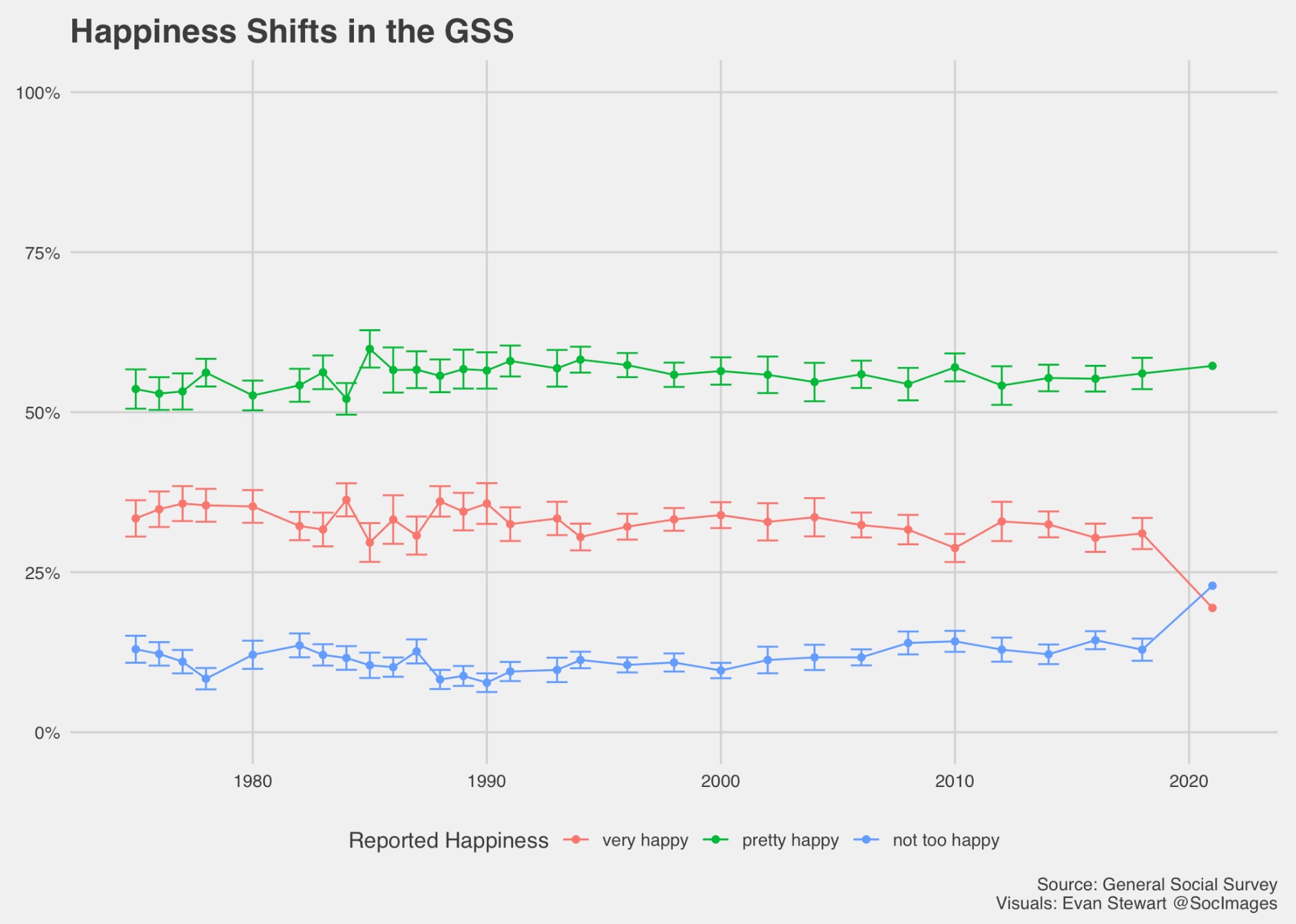
One trend picked up by surveys earlier in the pandemic was a drop in self-reported happiness. Now, with a new year of General Social Survey data released, it looks like the trend continues.

Trends in the General Social Survey show a drop in people saying they are "very happy" and a spike in people saying they are "not too happy" in 2021.
Part of this change could also be explained by the survey’s new online administration method, but the pattern is consistent with NORC’s previous pandemic tracking survey.

I’ve been thinking a lot about happiness and wellbeing as I launch into teaching Introduction to Sociology this year, both because we want to do right by our students in a tough time and because new students thinking about majoring have a right to ask us: how is our field helping the world?

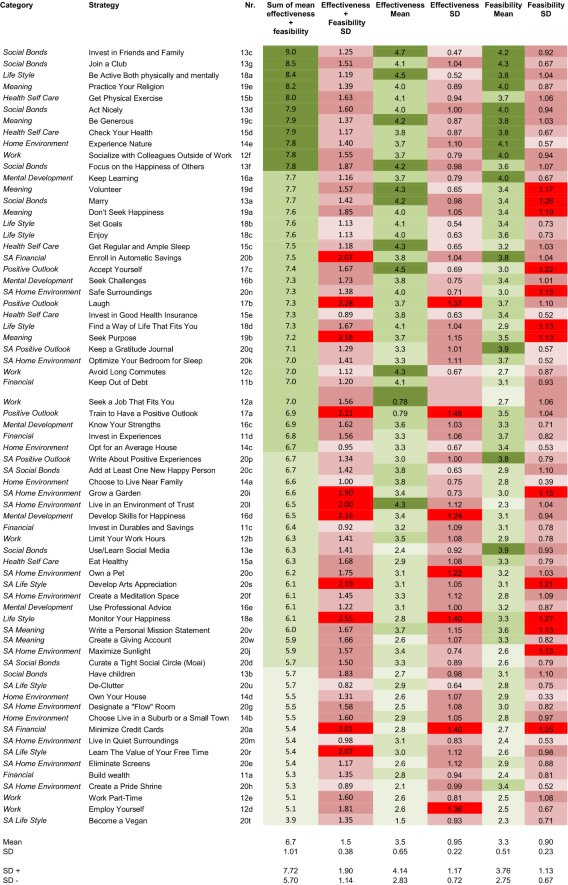
That’s why I was especially hopeful to hear about this study making its way around Twitter. The authors conducted interviews and surveys with experts in the field of happiness research to rank the things they thought would be most likely to increase life satisfaction based on their understanding of the research literature. Two important points caught my attention.

First, the researchers ranked both personal solutions and policy solutions to improve life satisfaction. This is important because we often think about our own happiness as an individual experience and an individual effort (often bolstered by the self-help industry). Focusing on policy reminds us that our individual wellbeing is linked to collective wellbeing, too.

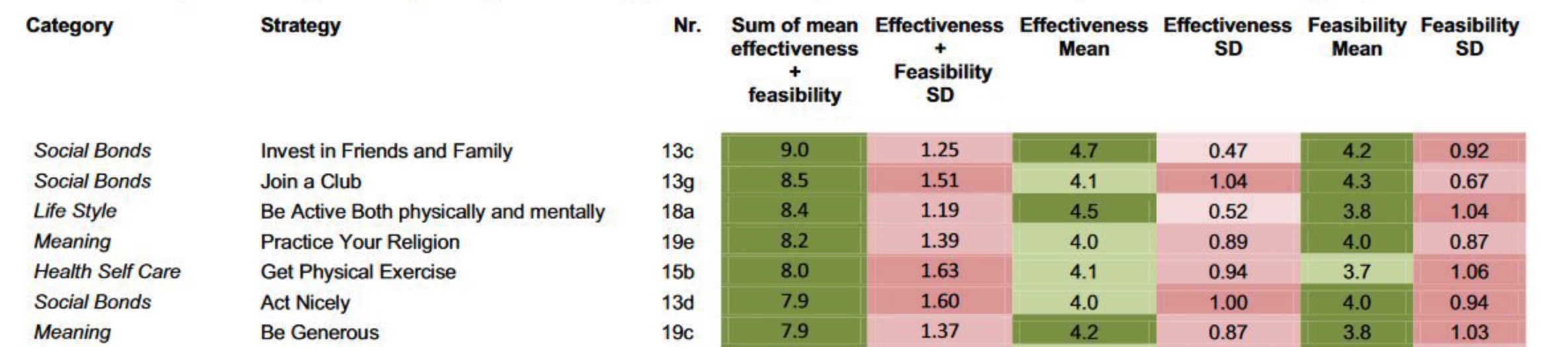
Second, many of these experts’ top ranked solutions were explicitly about social relationships. For personal solutions, two of the top ranked suggestions were investing in friends and family and joining a club. For policy solutions, some of the top answers included promoting voluntary work or civil service and reducing loneliness.

Results from the paper show expert consensus that investing in friends and family and joining a club can improve life satisfaction.
It wasn’t just high expert ratings, low expert standard deviations indicated a lot of agreement about the value of social bonds. You can see the full set of results here, and the full paper here.

Expert consensus studies like this have a lot of limitations, since they only show us a glimpse of the current conventional wisdom. But this study also shows us the positive stakes of sociology. It reminds us that developing a better understanding of our relationships and investing in those relationships is not just a self-help fad; it can be a social policy priority to get us through tough times together.

Evan Stewart is an assistant professor of sociology at University of Massachusetts Boston. You can follow his work at his website, or on BlueSky.

Photo courtesy Letta Page

Despite, well, everything, we are trying to get back into the classroom as much as we can at the start of a new academic year. I am scheduled to teach Introduction to Sociology for the first time this coming spring and planning the course this fall.

Whether in person or remote, I will be ecstatic to introduce our field to a new batch of students — to show them what sociologists do, how we work, and how we think about the world. Thinking about those foundations, the start of an academic year is a great time to come back and ask “what, exactly, are we doing?”

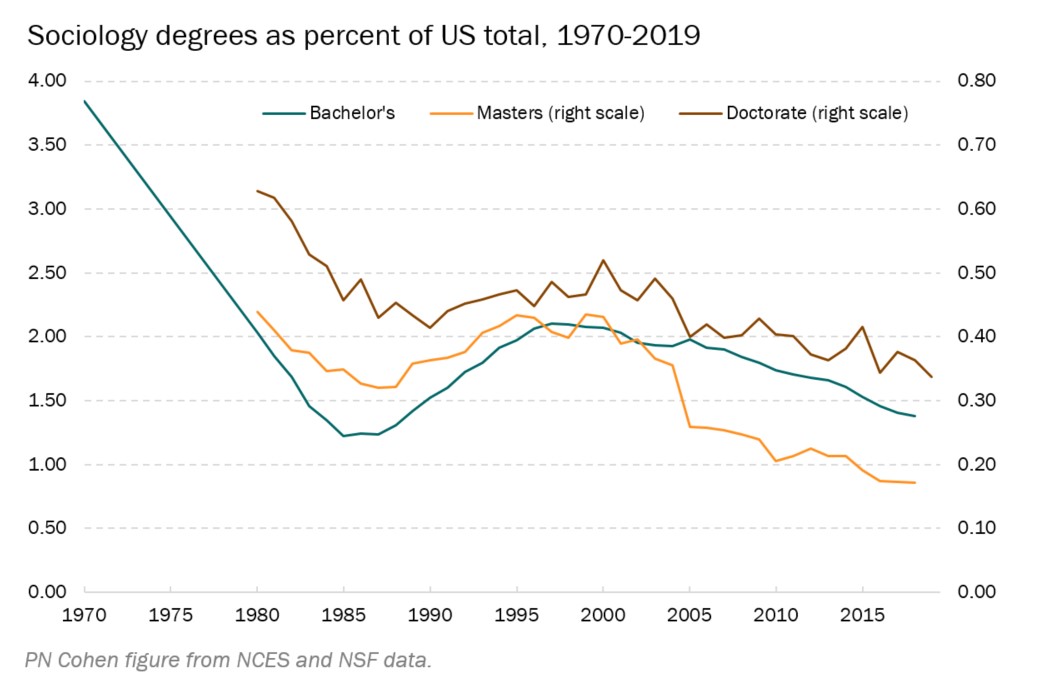
I have been thinking a lot about that question in our current chaotic moment and in the context of sociology’s changing role in higher eduction. This chart made by Philip Cohen keeps coming to mind:

Source: Philip Cohen – original post at Family Inequality

There are a lot of reasons for the decline in sociology majors, and reflections on our purpose as a field are not new at all (examples hereherehere, and on the social sciences in general here). We all bring different ideas about our common methods and missions, and our field has plenty of room for many different sociologies. I like big-tent approaches like the one here at The Society Pages.

For newcomers, though, that range makes it hard to grasp what sociologists actually do, and that makes it tough to do right by our students. At some point, someone is going to ask a new sociology major the dreaded question: “what do you do with that?” I think we have a responsibility to model ways to answer that question clearly and directly, even if we don’t want to lock students into narrow careerist ambitions. A wonky answer about ~society~ doesn’t necessarily help them.

That’s why I love these recent podcast episodes with Zeynep Tufekci. In each case, the hosts ask her how she got so much right about COVID-19 so early in the pandemic. In both, her answers explicitly show us how insights about relationships, organizations, and stigma helped to guide her thinking. These interviews are a model for showing us what sociological thinking actually can do to address pressing issues.

Far too often, our institutions miss out on the benefits of thinking about social systems and relationships in this way. Sources like these help to sell sociology to our students, and they will be a big part of my upcoming intro course. In the coming weeks, we’ll be running more posts that focus on going back to basics for newcomers in sociology, including updates to our “What’s Trending?” series and more content for the intro classroom. Stay tuned, and share how you sell sociology to your students!

Evan Stewart is an assistant professor of sociology at University of Massachusetts Boston. You can follow his work at his website, or on BlueSky.