Search results for The

Dr. Grumpy re-tells the fascinating story of the importation of camels to North America for use as beasts of burden.  He begins:

Following the Mexican-American war, the United States found itself in control of a large desert, covering what’s now New Mexico & Arizona, and parts of Texas, California, and several other states. The U.S. Army needed to establish bases and supply lines in the area, both for the border with Mexico and the continuing wars with Indian tribes.

The railroad system was in it’s infancy, and there were no tracks through the area… The only way across was to use horses. But horses, like humans, are heavily dependent on water. This made the area difficult to cross, and vulnerable to attacking Apaches.

And so in 1855 Jefferson Davis, then U.S. Secretary of War (later to become President of the Confederacy during the Civil War), put into action an idea proposed by several officers: buy camels to serve in the desert. Congress appropriated $30,000 for the endeavor, and officials were sent to Turkey to do just that.

The next year they imported somewhere between 62 and 73 camels and, with them, 8 camel drivers all led by a man named Hadji Ali. Enter the U.S. Army Camel Corps.

Camels at an Army Fort:
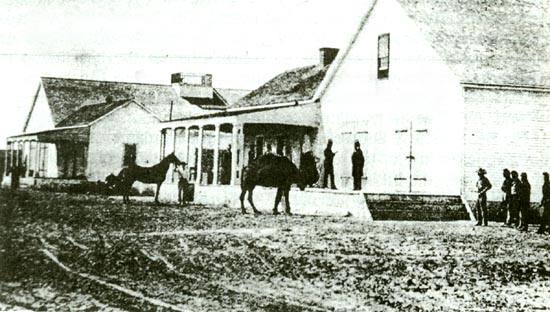
(source)

Illustration of camels in camp:
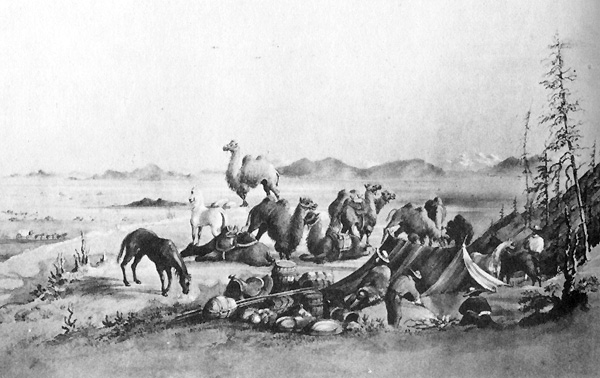
(source)

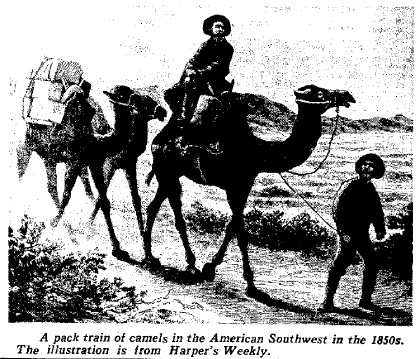
Camels on the go (1850s):

(source)

Says Dr. Grumpy:

They led supply trains all over, from Texas to California…

But there were problems. The Americans had envisioned combined forces of camels and horses, each making up for the deficiencies of the other. But horses and donkeys are frightened of camels, making joint convoys difficult and requiring separate corrals. The army was also unprepared for their intrinsically difficult personalities- camels bite, spit, kick, and are short-tempered. Horses are comparatively easy to handle.

Then came the start of the American Civil War, which focused military attention to the east. With troops pulled out of the American desert, and horses better suited to the eastern terrain, the camels were abandoned.   Though Weird CA suggests that they were used in the war, Dr. Grumpy reports that most simply escaped into the desert.  For a time, there was a wild camel population in the U.S.

Meanwhile, a former-solider and Canadian gold prospector, Frank Laumeister, figured that camels would be great pack animals for his new line of work. He bought a herd in 1862, but they didn’t work out so well in the rockier terrain. Plus:

The Canadians, like the Americans, discovered they weren’t easy to handle. The same problems of difficult disposition and spooking horses came up. In addition, they found camels would eat anything they found. Hats. Shoes. Clothes that were out drying. Even soap. And so, after a few years, the Canadians gave up on the experiment, too.

Laumeister on one of his camels:
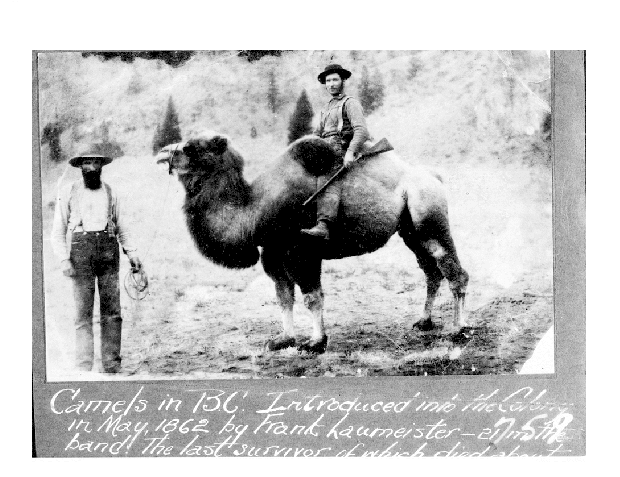
Our original head camel driver, Hadji Ali, eventually got out of the camel business, but he never left America. He became a citizen in 1880, married a woman named Gertrudis Serna and had two children. He died in Arizona in 1902, having spent 51 years of his life in the U.S. You’ll find his tombstone in Quartzsite, Arizona labeled with the name “Hi Jolly,” the Americanized pronunciation of his full name.
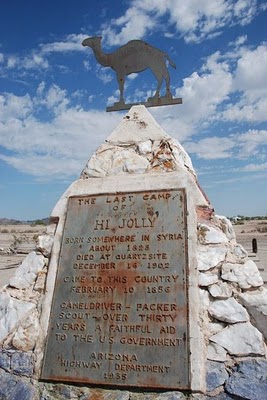
(source)

The last sighting of a wild camel in North America was in 1941 near Douglas, Texas (source).

Lisa Wade, PhD is an Associate Professor at Tulane University. She is the author of American Hookup, a book about college sexual culture; a textbook about gender; and a forthcoming introductory text: Terrible Magnificent Sociology. You can follow her on Twitter and Instagram.

Lester Andrist, at The Sociological Cinema, alerted me to a 9-minute short film revealing “Hollywood’s relentless vilification and dehumanization of Arabs and Muslims.”   Created by Jaqueline Salloum and Dr. Jack Shaheen’s book, Reel Bad Arabs, it is a stunning and disturbing collection of clips.  The depictions are grossly prejudiced and relentlessly violent.  Andrist summarizes:

It demonstrates the way Arabs and Muslims are consistently depicted as religious fanatics, perpetual terrorists, backwards, and irredeemably tribal… [T]he media consistently propagates the idea that the Muslim or Arab terrorist is not only a threat to life, but also Western civilization.
Taking the analysis a bit further, I think the clip also allows one to contemplate how these depictions of Arabs and Muslims are simultaneously about constructing an American national identity, and in particular, a masculine one. In several places, one sees how an American masculinity, characterized by stoicism and poise, is set in contradistinction to an irrational, Islamic fanaticism.
It’s really a worth a watch, but very disturbing.  Consider yourself warned:

The Media Education Foundation also made a full length documentary based on Shaheen’s book.  The 5-and-a-half-minute trailer is a good indication of its content.  It contains many similar disturbing depiction, including a discussion of Disney’s Aladdin, but also points to how Arabs are frequently shown as buffoons (“rich and stupid,” “oversexed,” and “uncontrollably obsessed with the American woman”).

See also our posts on how Arabs are portrayed in video games and Reel Injun, a documentary about the representation of American Indians in Hollywood.

Lisa Wade, PhD is an Associate Professor at Tulane University. She is the author of American Hookup, a book about college sexual culture; a textbook about gender; and a forthcoming introductory text: Terrible Magnificent Sociology. You can follow her on Twitter and Instagram.

Cross-posted at Ms. and Family Inequality.

In the early 1990s, Arline Geronimus proposed a simple yet profound explanation for why Black women on average were having children at younger ages than White women, which she called the “weathering hypothesis.”

It goes like this: Racial inequality takes a cumulative toll on Black women, increasing the chance they will have health problems at younger ages. So, early childbearing might pose health risks for White women, but for Black women it makes more sense to start earlier — before their health declines. Although it’s hard to measure the motivations of people having children, her suggestion was that early childbearing reflected a combination of cumulative cultural wisdom and individual adaptation (for example, reacting to the health problems experienced by their 40-something mothers).

She showed the pattern nicely with data from Michigan in 1989, in which the percentage of first births that were “very low birthweight,” increased with the age of Black women, but decreased for White women, through their twenties:

Source: My graph from Geronimus (1996).

If the hypothesis is correct, she reasoned, the pattern would be stronger among poor women, who experience more health problems, which is also what she found.

The most recent national data, for 2007, continue to show Black women have their first children, on average, younger than White women: age 22.7 versus 26.0. And the infant mortality rates, by mothers’ age, also show the lowest risk for White women at older ages than for Black women:

Source: My graph from CDC data.

Note that, for White women, mothers have children in the early thirties face less than half the infant-mortality risk of those having children as teenagers. For Black women, waiting till their lowest-risk age — the late 20s — yields only a 14% reduction in infant mortality risk. So it looks like waiting is much more important for White women, at least as far as health conditions are concerned.

The implications are profound. If you base your perceptions on the White pattern, it makes sense to discourage early childbearing for health reasons. But if you look at the Black pattern, it becomes more important to try to improve health problems at early ages — and all the things that contribute to them — rather than (or in addition to) trying to delay first births.

—————————-

Cohen’s previous posts featured on SocImages include ones on the recession and divorce datathe relationship between cell phone use and driving deathsmeasuring the number of welfare recipients, delusions of gender dimorphism, and the gender binary in children’s books.

“It was kind of unreal,” the Steamboat Springs, Colorado native said, describing his recent 34th birthday fete at Kandahar Airfield, better known as KAF. “At least for a few minutes, you could pretend you were somewhere else. It was like going back home” (source).

“I was expecting to arrive in a warzone but instead here I am wearing sunglasses in the sun and eating a baguette,” said Dimitra Kokkali, a NATO contractor newly arrived from Brussels. “On my first night I surprised my family by calling them from an outdoor rock concert” (source).

Time magazine slideshow, titled “R&R at Kandahar Airfield,” uses images to describe how the busiest airport in the world “tries to re-create the comforts of home for the coalition forces in Afgahnistan.” Kandahar Airfield is the busiest airport in the world because all supplies and troops pass through on their way to or from war in Iraq or Afghanistan. At any given time there are about 25,000 service members and civilian contractors at the airfield.

These images of the Kandahar’s “Boardwalk” recreation area are striking for a few reasons. First, they show a blurring of the line dividing the homefront and the warfront. The slide show includes images of service members using FaceBook in computer labs, and eating meals in their fatigues at TGI Fridays.

Second, these images reflect that there is increasing emphasis on how service members are supported and cared for by the military during wartime. These photos show the side of war that is not about fighting and danger—instead, they are about the comfort and making a foreign land where they are fighting as “homelike” as possible.

Third, these show the blurring of the boundary between the military and privately owned businesses. Civilian Contractors are augmenting military personnel during the wars in Iraq and Afghanistan and the inclusion of these civilian contractors in war zones has raised the issues of the safety of civilian workers and the costs of hiring corporations (Contexts).

Finally, as a consequence of the blurring of the boundaries of homefront and warfront, the division between the country of Afghanistan and the military is sharpened. Afghanis (except for those few with security clearance) are not allowed to shop or enjoy the free entertainment on the Boardwalk at Kandahar.  Meanwhile, service members can safely buy souvenirs on the Boardwalk itself.  Afghani culture is commodified as a tourist attraction in this theme park-like Boardwalk setting.

All of these images speak to the changing boundary between the homefront and the warfront, and as a result, changes in how we, as a country, view war. Instead of the images of brutality, death, and chaos that Americans saw in their living rooms on TV during Vietnam, for example, these images show the military taking care of service members who are being entertained, keeping in touch with loved ones, and having fun.

But as this service member describes, walking the Kandahar “Boardwalk” in a warzone is still a jarring experience:

“I couldn’t believe I was in Kandahar eating a double-dipped chocolate ice cream at sunset on a Saturday afternoon,” said Coleman, who was downing a strawberry smoothie from the French bakery behind him, where an Eiffel Tower climbs a wall above picnic tables with fake potted plants.

“It was a surreal experience,” he said, as a jet fighter roared across the sky, letting loose a stream of defensive white flares. “I remember thinking, ‘We’re in the heart of the war-zone. The bad guys are 10 miles away. And here we are eating soft-serve ice cream'” (source).

Wendy Christensen is a Visiting Assistant Professor at Bowdoin College whose specialty includes the intersection of gender,war, and the media.

In another example of masculinizing items associated with women to make it ok for men to use them, Hope H. let us know about Hardware, a line of vegan hair and body products. The company seems to have taken Hyperbole and a Half’s satire seriously:

All the elements are there: images of tools to make sure it’s clear these are hard-working manly products, the association of men with toughness, and product names that reference hard physical labor. The different product lines include Impact Wrench, Angle Grinder, Jack Hammer, and Tool Belts (aka, gift certificates). The descriptions also refer to tools and cars:

Every perfectly balanced machine needs maintenance. No this is not a sales pitch mate. You would not skip an oil change or two in a 67 Shelby Mustang now would you.

Thus, using these non-animal-ingredient-based products isn’t about being girly. It’s about maintenance, which all machines need!

For more examples, see our posts on hair products labeled things like “maneuver,” “retaliate,” “stand tough,” “work hard,” and “bulk up”; make-up for men named with terms like“power face mask,” “confidence corrector,” “mission balm,” “battle scars repair cream,” “cream me face base,” and “blo-job bronzing powder.”; and shaving your pubes marketed with the suggestion that it will make your penis look bigger.

Katrin drew our attention to the Christmas character of the Christkind, found in regions as diverse as Austria, Italy, Hungary, Slovakia, the Czech Rebublic, Croatia, Slovenia, Germany, Liechtenstein, Switzerland and, according to Wikipedia, “…parts of Hispanic America, in certain areas of southern Brazil and in the Acadiana region of Louisiana.”

The Christkind was introduced by the German Protestant priest Martin Luther (1483-1546).  At the time, tradition held that gifts were given by St. Nicholas.  Protestants, however, didn’t acknowledge saints, so they needed an alternative mythological gift giver.  The Christkind was originally depicted as baby Jesus, but in many places today is instead an angelic blond child or adult woman.

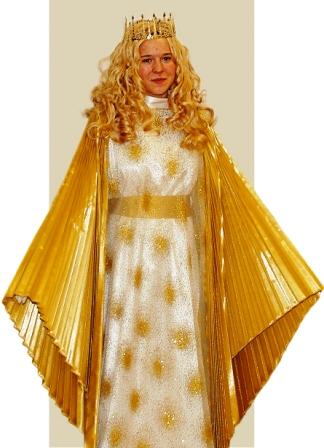
In Nuremberg, Germany, a Christkind is chosen every two years in a pageant reminiscent of American beauty pageants (source).  This year the Christkind is Rebekka Volland (source):

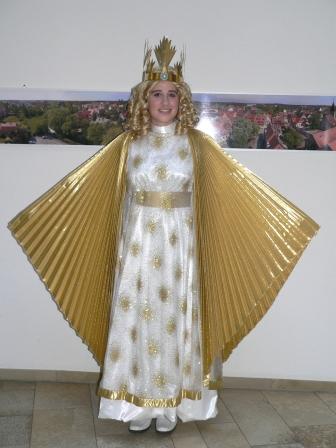
More photographs of the Christkind:

(source)

(source)

(source)

Lisa Wade, PhD is an Associate Professor at Tulane University. She is the author of American Hookup, a book about college sexual culture; a textbook about gender; and a forthcoming introductory text: Terrible Magnificent Sociology. You can follow her on Twitter and Instagram.

Arielle S. sent in an image of an ad for a Christmas party two years ago at a nightclub in Miami. The ad says it’s a “bad Christmas sweaters party,” but as it turns out, that’s only if you’re a guy. For ladies, it’s apparently a sexy outfit party:

Because even at a party expressly about looking silly in ugly clothes, women aren’t allowed to not be sexy.

Similarly, Save S. saw these ads for GNC at the mall that make it clear what characteristics men and women are supposed to aspire to have:

So apparently  men aren’t worried about being sexy. And women want to look…radiant? I’m not sure what product at GNC would make you radiant, but I can’t imagine it’s good for you.

Today I’ve got another of my occasional posts of various items related to gender and technology. All of these examples either reflect the male gaze in tech-related media or reinforce the idea that the primary creators and users of science and technology are males.

Morgan A. pointed out a recent cover of Wired, which she read about on Cindy’s Take on Tech:

In her post, Cindy points out that Wired often sexualizes or trivializes women when it puts them on the cover, or uses women to illustrate stories about other topics rather than focusing on their accomplishments. A few examples:

So the first one mentions being naked, the second has a woman displayed synthetic diamonds, the third uses a woman to illustrate a story about being famous even if you’re a “nobody,” and Uma Thurman appeared because she played a character in a movie based on a novel by Philip K. Dick.

I looked at all Wired covers from 2005 through 2010. Of those, 46 had people on them, in either human or cartoon form (including body parts, such as the boob cover), whose sex could be fairly well inferred. And 12 of those, or 26%, had a woman (or female character, as with the manga cover) either alone or pictured with men. Those 12 included several of the covers pictured above, as well as one showing the lower half of a woman’s face as she puts a pill in her mouth. The accompanying text is for an article titled “The Thin Pill.” When I went to the article, I found this set of photos:

So we have part of a naked woman’s body to represent the idea of thinness itself, one image of a male scientist quoted in the story, and another image of a clothed man who isn’t identified.

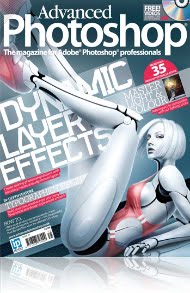
In a similar example, Julie Alsop sent us a link to a post at twatterr about covers of magazines about digital photography and Photoshop. A few examples:

The twatterr post has a link to archives to see covers of back issues of a number of digital photography magazines, and as she points out, they tend to use lots of sexualizes images of (very thin) women. Passive, sexualized female robots/cyborgs are another common theme.

Merve G. sent in this video, titled “The Power to Create,” made by the University of Copenhagen. In the video, women are sexualized, and we see the male = active, female = passive dichotomy: men have the “power to create,” while women are the things being created by them:

Barbara B. N., a Research Fellow at the Technical University of Lisbon, sent in this Nokia video in which the woman describing the features of a Nokia product first makes sure to describe herself — she’s hot — and at the end of the video tosses her head seductively and invites you to choose another video to “see more of” her:

And finally, an anonymous reader let us know about the “Geek and Gamer Girls” video, a parody of Katy Perry’s “California Girls” created by four actresses who called themselves Team Unicorn:

As the sender-inner says, she feels conflicted about the video. On the one hand, the song does celebrate girls being geeky and into science and technology and other elements of geek culture often associated mostly with guys. But on the other hand, “the difference between the message I got from the song lyrics and the message I got from the video left me rather uncomfortable. I guess it’s only cool to be a geek girl if you’re really really pretty.”