
When one thinks of American Chinatowns, they usually think of San Francisco and New York, but at one time the third largest Chinatown in the U.S. was in Louisiana. It’s story is an example of how economics and geopolitics shape the growth of ethnic enclaves.

After the American Civil War ended legalized slavery in the U.S., Southern planters faced the challenge of finding labor to work their crops. It was common to employ the same black men and women who had been enslaved, now as sharecroppers or wage laborers, but the planters were interested in other sources of labor as well.

At nola.com, Richard Campanella describes how some planters in Louisiana turned to Chinese laborers. Ultimately, they hired about 1,600 Chinese people, recruited directly from China and also from California.

This would be a doomed experiment. The Chinese workers demanded better working conditions and pay then the Louisiana planters wanted to give. There was a general stalemate and many of the Chinese workers migrated to the city.

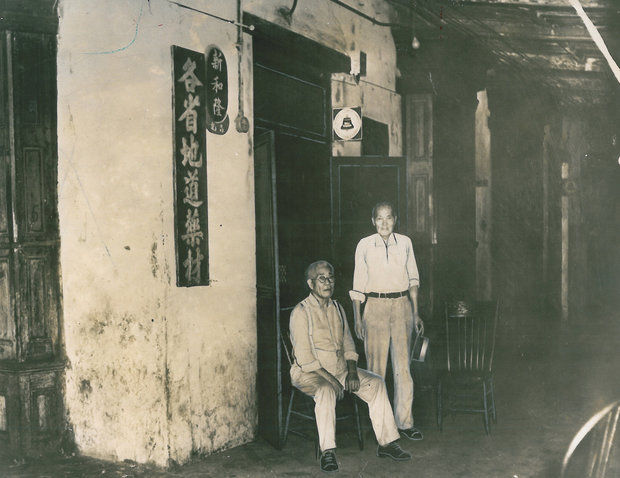
By 1871, there was a small, bustling Chinatown just outside of the French quarter and, by the late 1930s, two blocks of Bourbon St. were dominated by Chinese businesses: import shops, laundries, restaurants, narcotics, and cigar stores (some of the migrants had come to the U.S. via Cuba). Campanella quotes the New Orleans Bee:

A year ago we had no Chinese among us, we now see them everywhere… This looks, indeed, like business.

Big Gee and Lee Sing, New Orleans 1937 (photo courtesy of nola.com):
2

Other residents, it seemed, welcomed the way the Chinese added color and texture to the city. Campanella writes that “New Orleanians of all backgrounds also patronized Chinatown.” Louis Armstrong, who was born in 1901, talked of going “down in China Town [and] hav[ing] a Chinese meal for a change.” Jelly Roll Morton mentioned dropping by to pick up drugs for the sex workers employed in the nearby red light district.

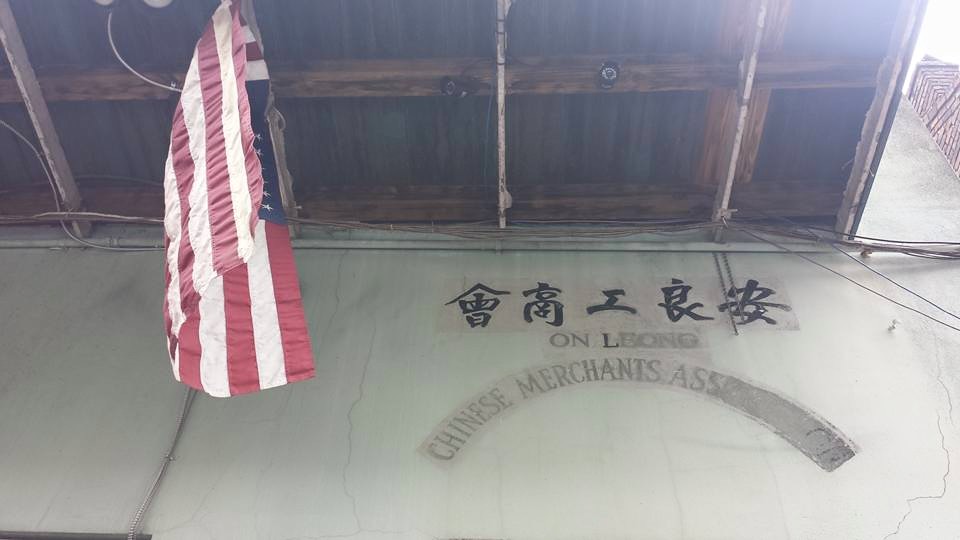
A strip club now inhabits the old Chinese laundry; none of the original Chinatown businesses remain. But it held on a long time, with a few businesses lasting until the 1990s. All that’s left today is a hand-painted sign for the On Leong Merchants Association at 530 1/2 Bourbon St.
13

For more, get Richard Campanella’s book, Geographies of New Orleans.

Cross-posted at Pacific Standard.

Lisa Wade, PhD is an Associate Professor at Tulane University. She is the author of American Hookup, a book about college sexual culture; a textbook about gender; and a forthcoming introductory text: Terrible Magnificent Sociology. You can follow her on Twitter and Instagram.
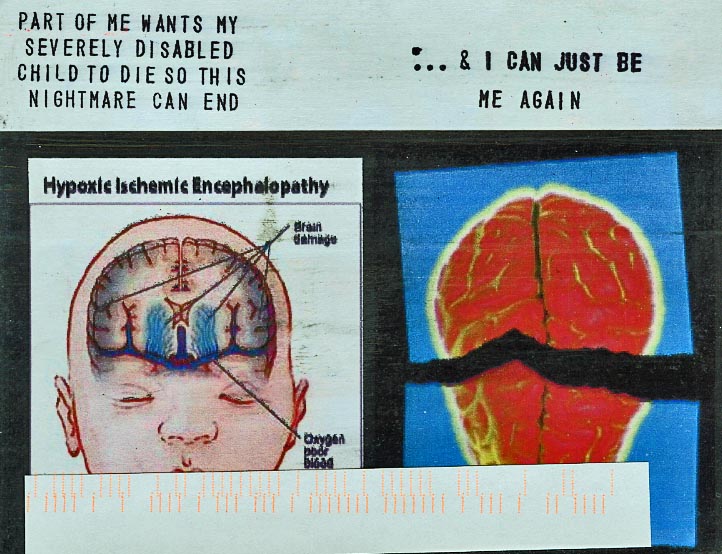
I am excited to see that sociologist Linda Blum has come out with a new book, Raising Generation Rx: Mothering Kids with Invisible Disabilities in an Age of Inequality. Here’s a post from the archive highlighting some of her important and powerful findings.

In an article titled Mother-Blame in the Prozac Nation, sociologist Linda Blum describes the lives of women with disabled children. While mothers are held to an essentially impossibly high standard of motherhood in the contemporary U.S. and elsewhere, mothers of disabled children find themselves even more overwhelmed.

The daily care of their child is often more intensive but, in addition to that added responsibility, mothers were actively involved in getting their children needed services and resources. The need for mothers to be proactive about this was exacerbated by the fact that they had to negotiate different social institutions, each with an interest in claiming certain service spheres, but also limited budgets. “While each system claims authoritative expertise,” Blum writes, “either system can reject responsibility, paradoxically, when costs are at issue.”  Because they often had to argue with service providers and find ways to beat a system that often tried to keep them at bay, they had to become experts in their child’s disability, of course, but also public policy, learning styles, the medical system, psychology/psychiatry, pharmaceutics, manipulation of jargon and law, and more.

Mothers often felt that they were their child’s only advocate, with his or her health and future dependent on making just one more phone call, getting one more meeting with an expert, or trying one more school. Accordingly, they were simultaneously exhausted and filled with guilt.  I wondered, when I came across this Post Secret confession, if this mother was experiencing some of the same things:

 Originally posted in 2012.

Lisa Wade, PhD is an Associate Professor at Tulane University. She is the author of American Hookup, a book about college sexual culture; a textbook about gender; and a forthcoming introductory text: Terrible Magnificent Sociology. You can follow her on Twitter and Instagram.
Most women in the U.S. go to considerable lengths to consistently protect the majority of men from their unmasked faces (it’s a “disguise,” remember?). Comedian Amy Schumer wonders what might happen if men saw the real us…

Lisa Wade, PhD is an Associate Professor at Tulane University. She is the author of American Hookup, a book about college sexual culture; a textbook about gender; and a forthcoming introductory text: Terrible Magnificent Sociology. You can follow her on Twitter and Instagram.
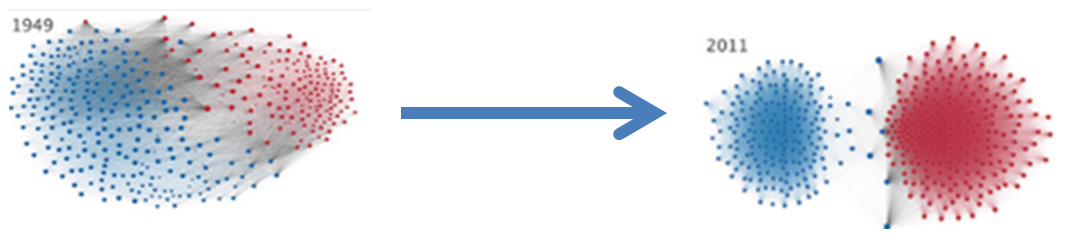
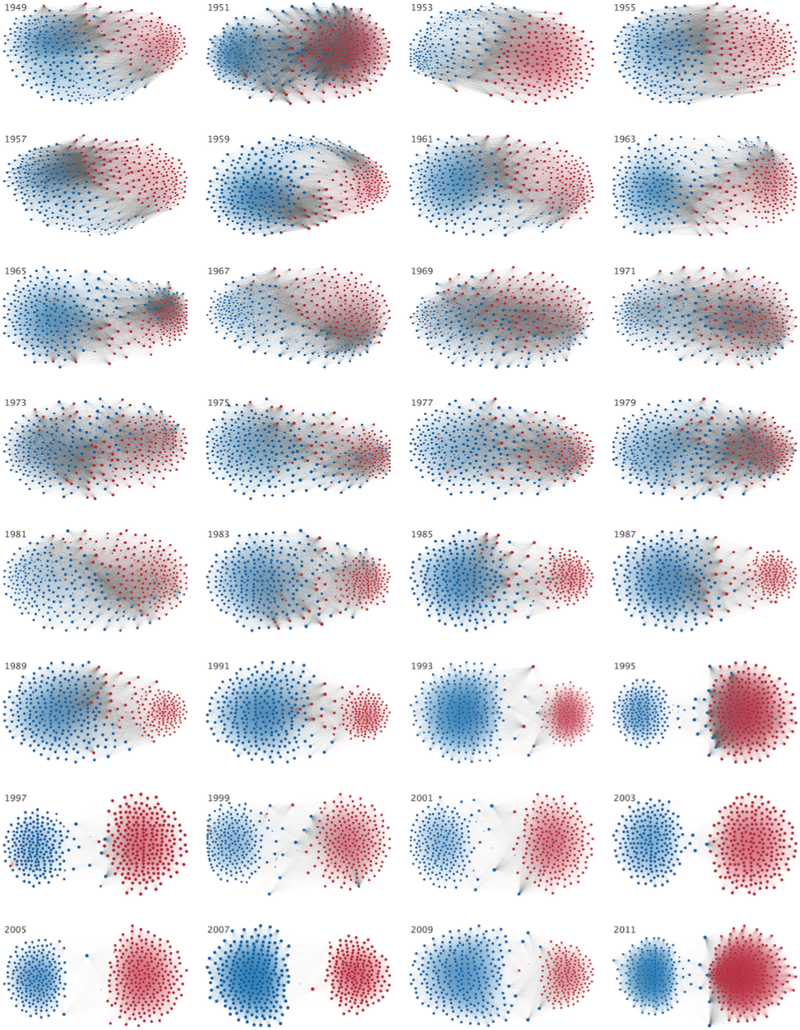
It sure seems like U.S. Democrats and Republicans are less likely to cooperate than they have been in the past and now, thanks to geographer Clio Andris and her colleagues, we can see that it’s true. They plotted six decades of voting in the House of Representatives, noting the likelihood that their vote will cross party lines.

This is your image of the week:

4

Or, here’s the long story short:

8

Lisa Wade, PhD is an Associate Professor at Tulane University. She is the author of American Hookup, a book about college sexual culture; a textbook about gender; and a forthcoming introductory text: Terrible Magnificent Sociology. You can follow her on Twitter and Instagram.
Flashback Friday.

I’ve posted about the use of apparent discounts as a marketing tool and about the rise of the shopping cart. Since I’m on a little marketing-related posting trend, I figured I might as well post about restaurant menus. New York Magazine recently provided an analysis of menus and how things such as placement, images, and so on influence purchases.

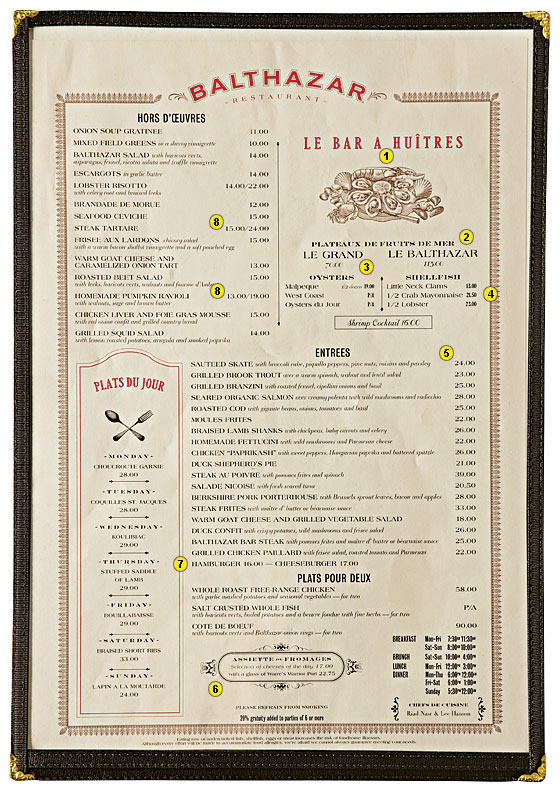
Here’s the menu analyzed in the article:

balthazarmenu091214_560

Some of the most interesting elements numbered on the menu:

1. Pictures of food on menus are tricky. They can convince people to buy a dish, but more expensive restaurants don’t want to be associated with low-cost places like Denny’s or Applebee’s. In general, the more expensive the restaurant, the less likely there are to be images of food, and if there are, they’re drawings, not color photos. And, apparently, the upper right corner is where customers’ eyes go first, so you need to make good use of that section.

2 and 3. You list something expensive (like a $115 seafood dish) in a prominent spot to serve the same function as a “manufacturer’s suggested retail price” on a sales tag at a retail store: to set an anchor price that makes other prices look like a bargain in comparison. The $70 seafood dish listed next to the $115 one seems way more reasonable than it would have it listed without the comparison anchor price.

5. Listing dishes in a column encourages customers to skim down the list, making it more likely that they’ll be focusing on the column of prices rather than the dishes themselves, and will pick from among the cheapest things on the menu. If the dish names are connected by a line of dots or dashes to specific prices, this is even more pronounced.

8. Restaurants often use “bracketing”:

…the same dish comes in different sizes. Here, that’s done with steak tartare and ravioli — but because “you never know the portion size, you’re encouraged to trade up,” Poundstone says. “Usually the smaller size is perfectly adequate.”

Notice the same things I mentioned in my post about meaningless discounts: high prices used to set an anchor that makes everything else look cheap and an emphasis on apparent savings to distract the customer from how much they’re spending.

And the bracketing thing is marketing genius: the larger portion is usually just a little bit more expensive, so the customer is likely to focus on the fact that the additional amount is actually a bargain, but you usually have very little information about how much bigger it actually is.

Knowledge is power! And now you know.

Originally posted in 2009.

Gwen Sharp is an associate professor of sociology at Nevada State College. You can follow her on Twitter at @gwensharpnv.

SocImages in the News:

You like!  Here are our most appreciated posts this month:

Thanks everybody!

Editor’s picks:

Top post on Tumblr this month:

Follow us!

Finally…

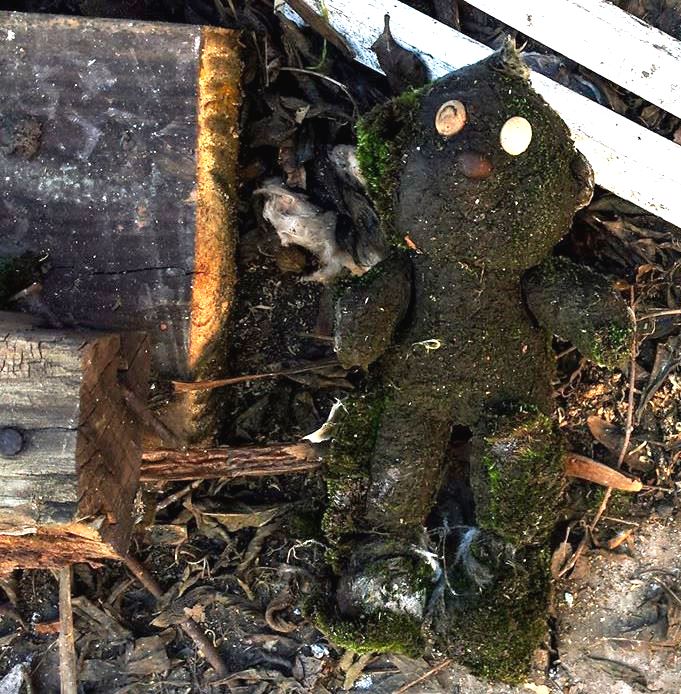
To all the students, faculty, and staff out there, I found this mossy, wooden-eyed, 100-year-old teddy bear inside the walls of my (shotgun) house. It wishes you good luck for the end of the semester. Tell it “thank you”… OR ELSE.2

Lisa Wade, PhD is an Associate Professor at Tulane University. She is the author of American Hookup, a book about college sexual culture; a textbook about gender; and a forthcoming introductory text: Terrible Magnificent Sociology. You can follow her on Twitter and Instagram.
Sociologists are interested in studying how our institutions — in addition to our ideologies and interactions — reflect social norms in ways that tend to reproduce the status quo. A great example happened recently in South Carolina. In this case, the institution is the Department of Motor Vehicles, the norm is that boys and men don’t wear makeup, and the case is Chase Culpepper, a male-bodied trans teen who wanted to wear makeup in her driver’s license photo.

The officials at the DMV told her that she wasn’t allowed to wear makeup in the photo because it would be a “disguise.” As reported by NPR:

The department… cited a 2009 rule that prohibited applicants from “purposely altering his or her appearance so that the photo would misrepresent his or her identity.”

They told Culpepper to take off her makeup or go home without a license. She did what they said.

[youtube]https://www.youtube.com/watch?v=qvgL7ICS_g0[/youtube]

It’s hard to defend the idea that somehow makeup distorts a man’s identity, but not a woman’s. It has exactly the same illusory power on a female face as a male one; that’s exactly why women wear it. The DMV’s policy did nothing, then, to help it do its job, it only served to press citizens of South Carolina to conform to the gender binary, at least as far as their primary form of identification went.

With the help of the Transgender Legal Defense and Education Fund, Culpepper sued and the DMV settled. As part of the settlement,

[they] agreed to change its policy to allow people seeking drivers’ licenses to be photographed as they regularly present themselves, even if their appearance does not match the officials’ expectations of how the applicant should look. The department also promised to send Culpepper a written apology and train its employees in how to treat transgender and gender-nonconforming individuals in professional settings.

This is what institutional change looks like, at least potentially. Thanks to Culpepper and her advocates, the South Carolina DMV is a little bit less gender binary than it was before.

Lisa Wade, PhD is an Associate Professor at Tulane University. She is the author of American Hookup, a book about college sexual culture; a textbook about gender; and a forthcoming introductory text: Terrible Magnificent Sociology. You can follow her on Twitter and Instagram.
African Americans are less healthy than their white counterparts. There are lots of causes for this: food deserts, lack of access to healthcare, an absence of recreational opportunities in low income neighborhoods, and more. Arguably, these are indirect effects of racist individuals and institutions, leading to the disinvestment in predominantly black neighborhoods and the economic disempowerment of black people.

This post, though, is about a direct relationship between racism and health mediated by stress. Experiencing discrimination has been shown to have both acute and long-term effects on the body. Being discriminated against changes the biometrics that indicate stress and personal reports of stress (anxiety, depression, and anger). Bad health outcomes are the result.

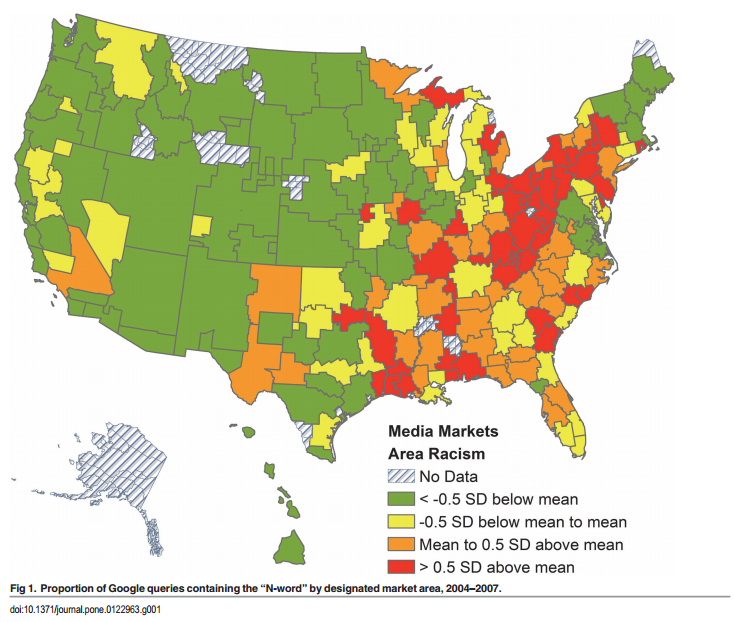
A new study, published in PLOS One, adds another layer to the accumulating evidence. To get a strong measure of “area racism” — the prevalence of racist beliefs in a specific geographic area — epidemiologist David Chae and his colleagues counted how often internet users searched for the “n-word” on Google (ending in -er or -ers, but not -a or -as). This, they argued, is a good measure of the likelihood that an African American will experience discrimination. Here are their findings for area racism:

2

They then measured the rate at which black people over 25 in those areas die and the death rate from the four most common causes of death for that population: heart disease, cancer, stroke, and diabetes. They also included a series of control variables to attempt to isolate the predictive power of area racism.

The resulting data offer support for the idea that area racism increases mortality among African Americans. Chae and his colleagues summarize, saying that areas in which Google searches for the n-word are one standard deviation above the mean have an 8.2% increase in mortality among Blacks. The searches were related, also, to an increase in the rates of cancer, heart disease, and stroke. “This,” they explain, “amounts to over 30,000 [early] deaths among Blacks annually nationwide.”

When they controlled for area level demographics and socioeconomic variables, the magnitude of the effect dropped from 8.2% to 5.7%. But these factors, they argued, “are also influenced by racial prejudice and discrimination and therefore could be on the causal pathway.” In other words, it’s not NOT racism that’s making up that 2.5% difference.

Directly and indirectly, racism kills.

H/t to Philip Cohen for the link. Cross-posted at Pacific Standard.

Lisa Wade, PhD is an Associate Professor at Tulane University. She is the author of American Hookup, a book about college sexual culture; a textbook about gender; and a forthcoming introductory text: Terrible Magnificent Sociology. You can follow her on Twitter and Instagram.