A few weeks ago I snapped this photo of a set of Surprise Newborn Twins Cabbage Patch Kids. The “surprise” is that you don’t know if the dolls are girls or boys; they come with yellow and purple accessories instead of blue or pink and aren’t noticeably marked as male or female:

You find out the sex when you open the birth certificates and see their diapers–blue for a boy, pink for a girl, of course. I looked at a lot of websites selling them, and they all say something along the lines of “You won’t know if it’s a boy or a girl until you see the diaper.” (Also, apparently this is the “Hispanic” version.) I couldn’t find any photos of the babies in their diapers or “surprise outfits.”

I think this is a pretty great example of how we socially construct gender to emphasize differences between men and women. Like most babies, these dolls aren’t identifiably male or female…until we provide signals to differentiate them by buying the appropriately-colored clothing, putting bows in little girls’ hair, decorating their rooms with butterflies or race cars, and on and on and on. People treat kids differently depending on these gender signs, and they expect (and justify) different behaviors based on them.

And we do this to, essentially, make ourselves feel more comfortable; since we believe a person’s sex is so important to know, even little babies need to be clearly identifiable. And as this toy helps illustrate, this is a social process that accentuates (or even creates) differences in a way that makes the similarities between boys and girls, men and women, largely invisible.

See also: a wig to make your infant look more feminine.
These days, if you live in the West, thinking about Asia–whether it be Chinese labor, Japanese inventions, Indian demographics, or Korean politics–is taken-for-granted as part of knowing about the world.  During the colonial era, however, when “mass media” was largely limited to print, Americans and Europeans experienced being more-or-less newly introduced to different cultures.  This spurred an entire industry in which “Africa,” “the Orient,” and the “Middle East” were presented to curious Westerners.  These presentations, more often than not, were objectifying.  Westerners were able to enjoy reveling in the seemingly bizarre and unfamiliar people and customs of these Other places (with a capital “O”), as if Other kinds of people were new species of animals over which to fawn.  This accumulation of documents with which the average Westerner could try to understand their “foreign” counterparts were produced not only by travel writers, but anthropologists, artists, imperial employees, novelists, and others.

Edward Said, in his powerfully influential book, Orientalism, first articulated the way that efforts of these actors coalesced into a mythology about “the Orient.”  A mythology in which the East and the West were set in opposition and the East was used by the West to define its own, superior identity.

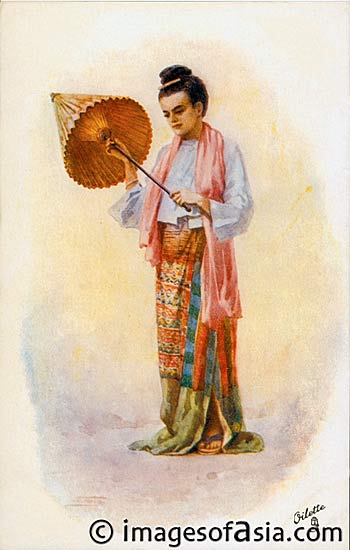
Katrin sent in one example of this traffic in Orientalism.  It’s a postcard from the early 1900s that depicts a “Burmese Beauty.”  It was painted by Robert Talbot Kelly and originally published in his book, Burma (1905).  The caption reads:

A Burmese Beauty. The Burmese women are generally attractive, much more so than the men, and present a pretty picture as they walk about attired in their gaily coloured skirts and shaded by their quaint umbrellas. All the ladies smoke in Burma, large cigars being the favourite ‘weed.’

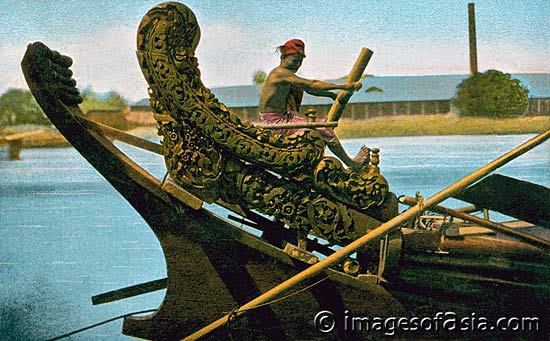
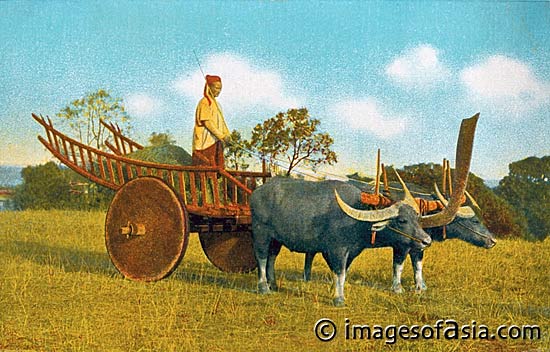
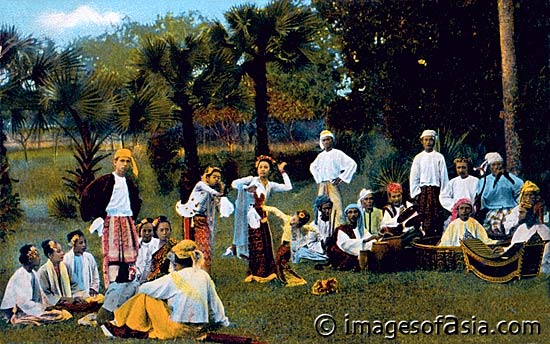
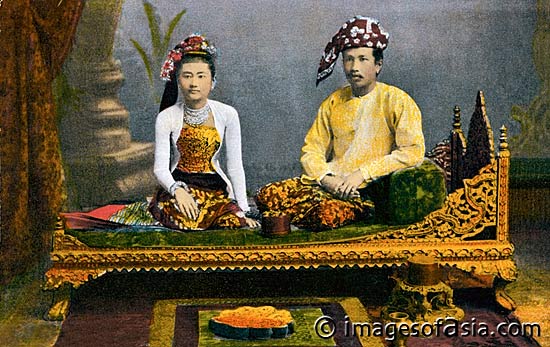
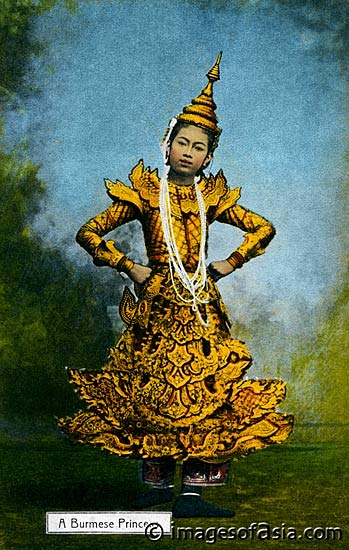
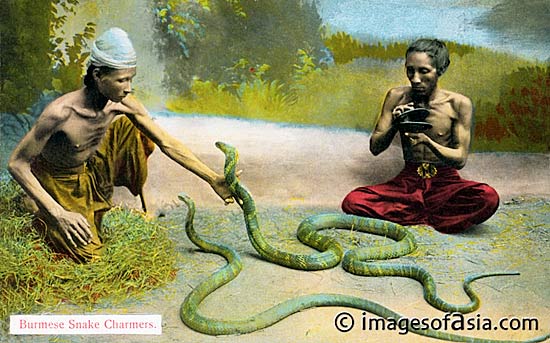
Here, the people themselves are seen as objects for a (distant) touristic gaze, kind of like the generic mostly-naked-woman-in-tropical-paradise postcard that we still see today.  More examples of colonial era Orientalist postcards depicting Burma (from Images of Asia):

1908:

1910:

1905:
1910:

1905:

1912:

Lisa Wade, PhD is an Associate Professor at Tulane University. She is the author of American Hookup, a book about college sexual culture; a textbook about gender; and a forthcoming introductory text: Terrible Magnificent Sociology. You can follow her on Twitter and Instagram.

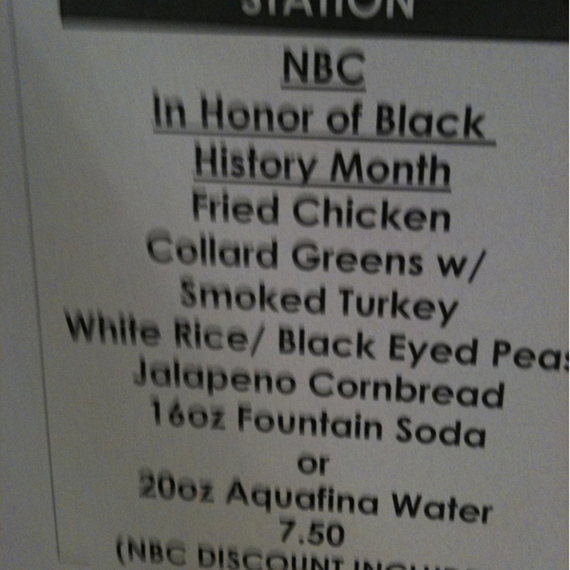
Dmitriy T.M. and Claire C. sent in a link to a photo of an NBC cafeteria menu in honor of Black History Month (that’d be February) that featured stereotypical African-American foods:

It’s not the first time.

Many argued that the menu was offensive because it reproduced stereotypes, but I think an interview (no longer available) with the chef who devised the menu complicated the story a bit.

Honestly, I think the main problem here is that Americans live in a racist society and so we have no idea how to celebrate Black History Month (how about with relaxer?).   The rest of the year, we make fun of black people for eating fried chicken. And yet, these are traditional Black southern dishes. So how exactly do we celebrate the holiday?   Do we pretend to valorize the same traditions that we make fun of during the rest of the year?  It makes no sense!  But it makes no sense because we’re still racist.  And we need a Black History Month because we’re still racist.  So, what to do!?

Perhaps the lesson to take from all of this is:  Undermining racism is hard work.   A month dedicated to Black history is a (flesh-colored) band aid, at best.  If we don’t do the other stuff (e.g., challenging the web of racist institutions that preserve class and race privilege), then no amount of fried chicken will make the difference.

Lisa Wade, PhD is an Associate Professor at Tulane University. She is the author of American Hookup, a book about college sexual culture; a textbook about gender; and a forthcoming introductory text: Terrible Magnificent Sociology. You can follow her on Twitter and Instagram.

Recently Lisa posted a video listing suggestions for how not to write about Africa, pointing out the ubiquity of a number of stereotypes and tropes used in novels or memoirs set in African countries.

That video came to mind when I saw this one about the book My Maasai Life, written by Robin Wiszowaty (and sent in by Randy McL.):

So she goes to Kenya to experience “simple life” to help her deal with the angst she felt in the U.S. You have the romanticization of the Maasai: they laugh openly! Judgment doesn’t exist!

She recalls asking herself, “How did I end up here?” How did you end up there? Um, you intentionally decided to go there to get away from everything you know, presumably with the money to do so. And in that simple place where happiness and tolerance reign, and people laugh openly, you figured out who you are.

I know I’m being snarky. Yes, she did some volunteer work, and from the video it looks like she worked in some schools. Certainly those benefited some specific people, regardless of what I think about her attitude. But you can help some individuals while still perpetuating stereotypes that may be harmful to groups of people in the long-run.

And this is another example of the limited number of perspectives authors tend to take when writing about African countries/people. Either it’s a desolate, violent, hopeless place filled with human misery, or it’s the home of happy, smiling, tolerant people (or “tribesmen”) who, through their simple lifestyles, show all of us in developed countries how much better things would be if only we could follow their example, except with clean water, and also TV.

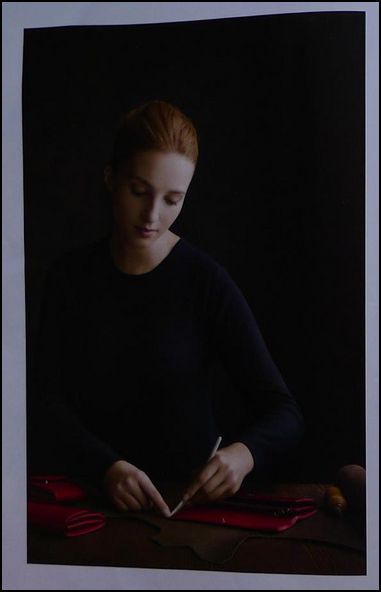
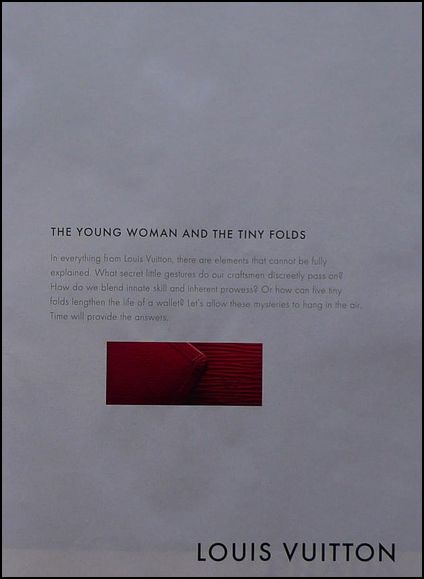
Katrin sent along one ad from a campaign by Louis Vuitton.  The campaign centers around the fantasy that young, beautiful women with porcelain (white) skin are hand-crafting their products.  A two-page spread:Text:

The Young Woman and the Tiny Folds.

In everything from Louis Vuitton, there are elements that cannot be fully explained.  What secret little gestures do our craftsmen discreetly pass on?  How do we blend innate skill and inherent prowess?  Or how can five tiny folds lengthen the life of a wallet?  Let’s allow these mysteries to hang in the air.  Time will provide the answers.

Another example is titled “The Seamstress With Linen Thread and Beeswax.”

But, of course, “Hardly any Vuitton bags or wallets are handmade.”  Or so says Carol Matlack at Business Week.  She continues:

While reporting an article on Vuitton in 2004, I visited one of its factories in the village of Ducey near Mont St. Michel. There I saw rows of workers seated at sewing machines, stitching together machine-cut pieces of canvas and leather. The partially finished bags were rolled from one workstation to the next on metal carts.

It was no sweatshop. The building was modern and airy, with windows overlooking the Normandy countryside. But the work being done there didn’t resemble in any way the painstaking handiwork shown in Vuitton’s ads. Indeed, the factory managers – who had been recruited from companies making such things as mobile phones and yogurt containers — talked proudly about the strides they had made in automating every step of the process. Just about the only Vuitton products still made by hand, they told me, were custom-made items produced at its historic atelier in the Paris suburb of Asnières.

UPDATE (May ’10)! Katrin and Anjan G. messaged us to let us know that the U.K. Advertising Standards Agency has decided that these ads violate truth in advertising.  They’ve been disallowed.

For other examples of marketing that mythologizes its manufacturing processes, see these posts on Goldfish crackers (mommies and daddies make them!) and Ecko Jeans (sweatshops are full of hot women in bikinis!).

Lisa Wade, PhD is an Associate Professor at Tulane University. She is the author of American Hookup, a book about college sexual culture; a textbook about gender; and a forthcoming introductory text: Terrible Magnificent Sociology. You can follow her on Twitter and Instagram.

Martin M. pointed out some ironic happenings in Peru that illustrate the complexities of trying to deal with long-term stereotypes and prejudice. Back in November 2009, the Peruvian government officially apologized for discrimination against AfroPeruvians. So far so good–a step toward acknowledging that AfroPeruvians have suffered both economically and socially because of social attitudes and government policies.

But, of course, long-held stereotypes aren’t that easy to change. Peruvians of African descent have often been portrayed as backward, uncivilized, and possibly cannibalistic.

Just a few days after the government’s apology and declaration that poor treatment and negative stereotypes of this ethnic group needed to end, the newspaper El Comercio began advertising their new section on healthy eating with a TV commercial that draws on all the old stereotypes. The video is in Spanish, but I’m pretty sure you’ll get the gist of it, and I describe it below:

El comercio- Los canibales from Pao Ugaz on Vimeo.

What’s going on here? The mother is mad, not because her younger son ate someone, but because he ate someone who was too fat, and thus not good for them to eat. They need to eat less fattening people to improve their health. She warns him about his cholesterol. The caption says, “You eat healthy, you are healthy.”

According to Reportaje al Perú, the newspaper pulled the spot after receiving complaints and apologized for it.

As with any society with a history of widespread, blatantly racist stereotypes and discrimination, attempting to heal racial wounds will be a very long, painful, and difficult process. It’s one thing to officially apologize. It’s another to convince citizens that prejudice and discrimination are unacceptable and that everyone must play a part in ending them.

See also: El Correo ridicules Quechua speakers in government.

On August 29th, 2005, Hurricane Katrina sideswiped New Orleans.  The storm surge broke its levees, flooded 80% of the city, and killed almost 2,000 people.

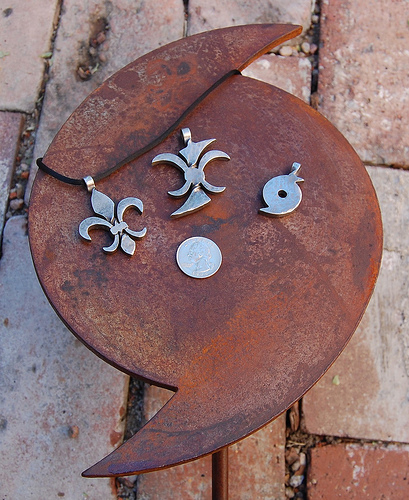
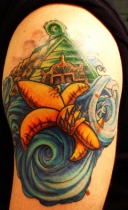
The city is in recovery and it is emerging with a new identity tied tightly to that hurricane.  Though the storms have always played a role in the mythology of the city (consider its most famous drink), hurricane imagery increasingly has part of what defines New Orleans.  I’ve spent quite a lot of time there recently, and I can attest that the hurricane is everywhere: in jewelry, in art, and on bodies, for example.

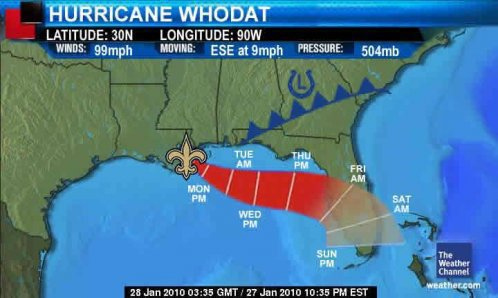
In light of this, Casey F. thought it would be interesting to think about who gets to use hurricane humor?  Case in point:  A flickr stream by Editor B includes the following two images.  The first uses hurricane imagery to suggest that the New Orleans Saints is going to “attack” the Indianapolis, Colts at the Superbowl (in Miami, FL):

The second also uses hurricane imagery, but this time it’s an Indianapolis Colts fan using it against New Orleans:

Casey feels that those who suffered from the hurricane, including New Orleans, “…have reclaimed hurricane imagery for ourselves, because we survived it.”  But, she says, “That doesn’t make it acceptable for others to do so yet.”

For Casey, the use of hurricane imagery to suggest that a team is going to crush its opponent is like the use of the n-word or “queer.”  It was a hurtful term that has been reclaimed by those it most  hurt.  Thus, blacks and gays can use the words (respectively).  But, still, when others use them, they still carry a sting.

For someone who was harmed by a hurricane, using the imagery is a way of reclaiming the hurt they suffered, even appropriating the strength of the force that hurt them.  But, for others to use it, it is trivializing that same hurt, re-imagining the destruction they suffered.  It is not funny, from this perspective, to imagine that New Orleans could be hit again.

I sympathize with Casey on this, but think it’s also an interesting topic for conversation.

Lisa Wade, PhD is an Associate Professor at Tulane University. She is the author of American Hookup, a book about college sexual culture; a textbook about gender; and a forthcoming introductory text: Terrible Magnificent Sociology. You can follow her on Twitter and Instagram.

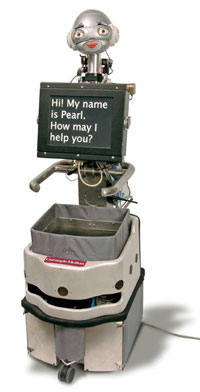
Lynn S. sent us a link to a Carnegie Mellon story about a new robotic “nurse” for the elderly.  Her name is “Pearl.”

It should go without saying that robots do not need to be gendered male or female and that, in this case, gendering the robot female reproduces a wasp’s nest of stereotypes about who is responsible for caring for others.

I say it should go without saying but, in fact, it mostly does, in the most bizarre way.  The article is about trying to maximize Pearl’s effectiveness as a helper by testing various configurations of appearance, mannerisms, expressions, etc.  But they never address why she is female.  From the article:

To that end, a multidisciplinary team of roboticists, social scientists and interaction designers has drawn on theories of emotion from cognitive science and the principles of aesthetics to explore what happens when human characteristics are added—or taken away—from Pearl’s “persona.”
…
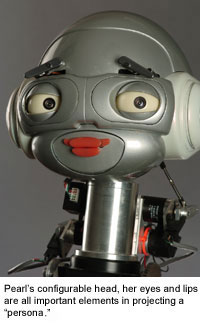
Appearance has a strong impact on a person’s expectations. Researchers want to learn whether facial characteristics will factor into the emotional reaction of people who interact with her. Pearl’s configurable head, the size and spacing of her eyes and the shape of her lips are all important elements in projecting a “persona.”

In the caption to this image, they mention the importance of her “configurable head” for her “persona,” but her gender remains conspicuously unexamined.

Only once in the entire article do they mention gender.  They say that they are “…studying people’s responses to a robot’s perceived gender by changing Pearl’s lips and voice.”  But they named her Pearl, so they seem to have rushed to a conclusion there.  It’s as if, despite the incredible range of concerns and experimentation, scientists are not seriously questioning her sex.

And I think they should!  Not only because it’s good science, and not only to avoid sexist assumptions, but because the robot is being designed for senior citizens, who are disproportionately women, most of whom have spent a lifetime caring for children and husbands; I’d bet they’d find a nursebot named Peter to be quite a treat!

Lisa Wade, PhD is an Associate Professor at Tulane University. She is the author of American Hookup, a book about college sexual culture; a textbook about gender; and a forthcoming introductory text: Terrible Magnificent Sociology. You can follow her on Twitter and Instagram.