Sanguinity sent in an interesting, if disheartening, report by Insight Center for Community Economic Development. The report looks at the assets owned by women of color and the wealth gap between them and men of different racial/ethnic groups.

An overview of wealth (the value of all assets minus the value of debts) broken down by race/ethnicity and type of household:
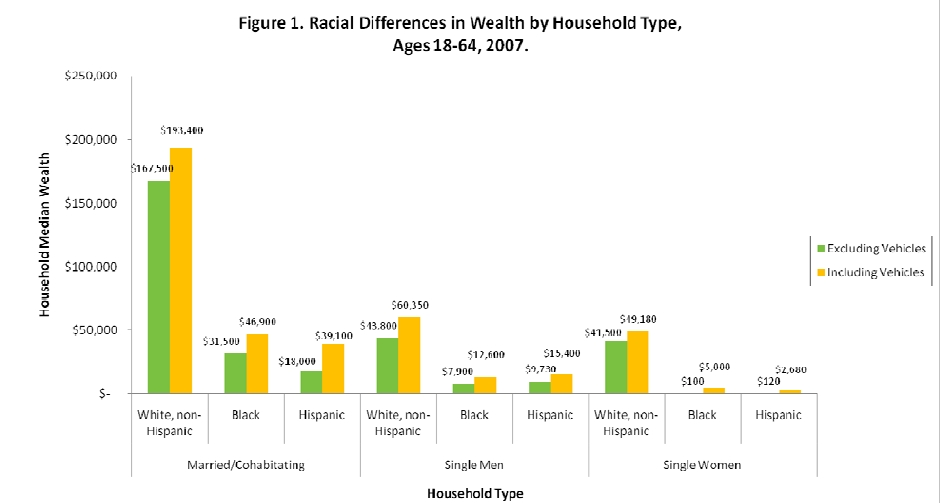
Of course, the most striking finding there are the major disparities by race, particularly how much wealth White non-Hispanics have compared to all other groups (largely due to owning more valuable homes). Notice that single White men and women have higher median household wealth than married Black or Hispanic couples. This is astounding.

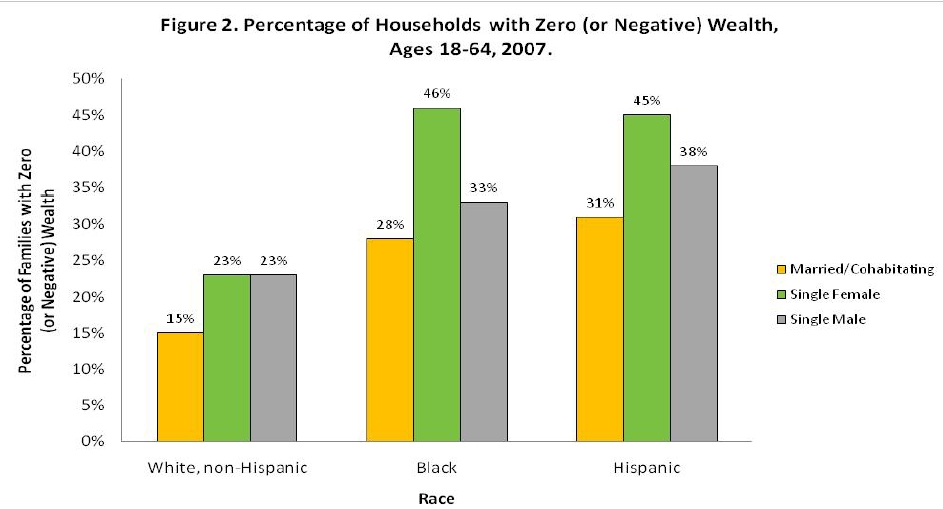
Blacks and Hispanics are more likely than Whites to have no wealth at all, or to have debts outweigh all assets; again, unmarried Whites are better off in this regard than are married Blacks and Hispanics:
Among single parents, women appear to bear a disproportionate amount of the financial hardships of caring for children. White single mothers with children of any age (second column) have only 57% as much wealth as White single fathers; the equivalent ratio for Blacks is 0.4% and for Hispanics, 5%. Read that again: 0.4% and 5% as much wealth as single fathers from the same race! And take a look at the actual cash value: median wealth for Black women is $100, and for Hispanic women, it’s $120!
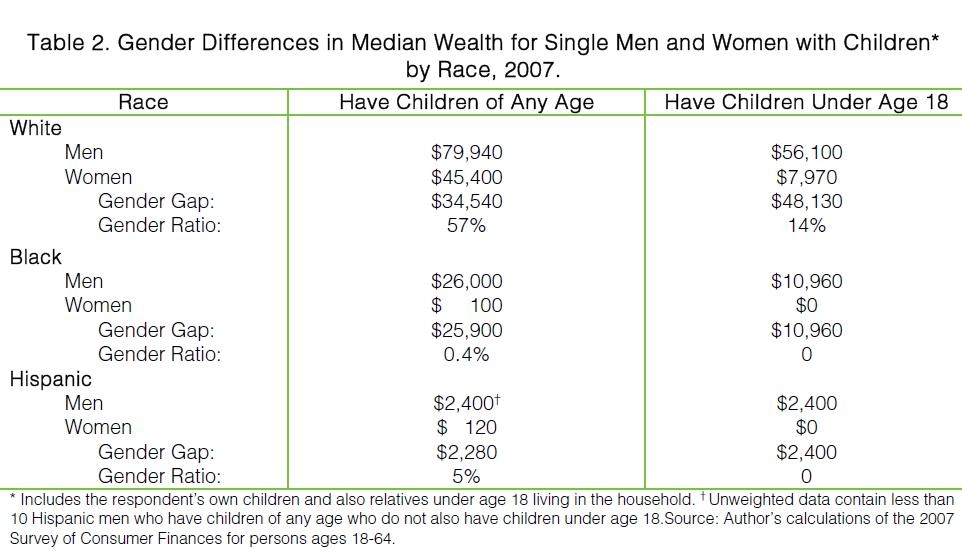
But then look at that third column! If you’re a single mother and have children under the age of 18 — who are more likely to be living with you than with their father — your financial picture is pretty dismal. Black and Hispanic women with children under age 18 have a median wealth of zero, meaning half have no wealth at all or owe more than all their assets combined are worth. Even White women, who are absolutely wealthy by comparison, have only 14% as much wealth as White single fathers with children under age 18.

Thinking about the implications of those numbers — the very meager financial resources available to many families, the particularly difficult situation of single mothers of all races, what this means for a family’s ability to cope with a crisis such as a car breaking down or a medical emergency, the ability to come up with deposits for an apartment — is mind-blowing.

The report has quite a bit of other information too, so if you’re interested in this topic, go check it out.
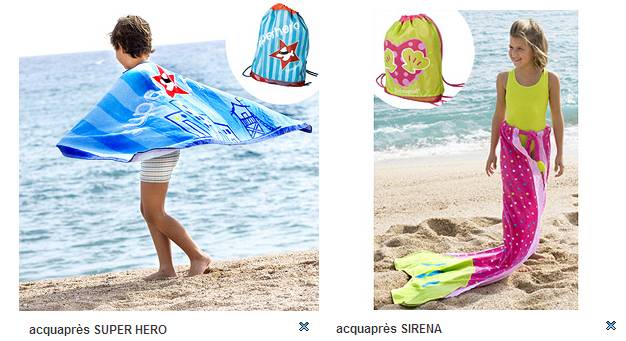
Lordo found the towels below for sale at Imaginarium (a toy store specializing in smart toys)  in Spain.   One towel, pictured with a boy, doubles as a cape; the other, pictured with a girl, allows her to dress up like a mermaid.

This is another example in which children are encouraged to be girls and boys instead of just children and being a boy means doing something active (being a superhero) and being a girl means adopting an attractive and exotic appearance.

Lisa Wade, PhD is an Associate Professor at Tulane University. She is the author of American Hookup, a book about college sexual culture; a textbook about gender; and a forthcoming introductory text: Terrible Magnificent Sociology. You can follow her on Twitter and Instagram.

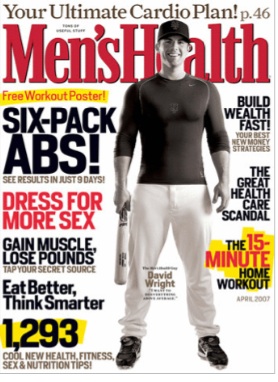
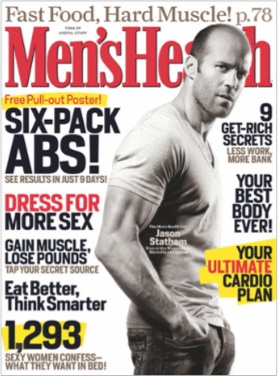
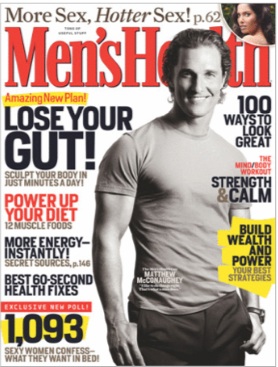
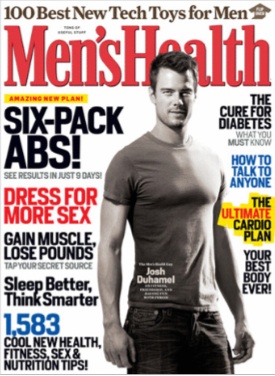
Sabriel let us know about a story at Gawker about the repeated use of nearly identical covers for Men’s Health. For instance, here are the “Six-Pack Abs!” covers from December 2006, April 2007, March 2006, and April 2008 (it was used a couple of other times, too):

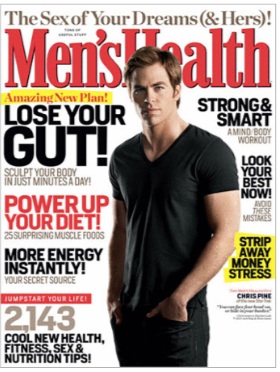
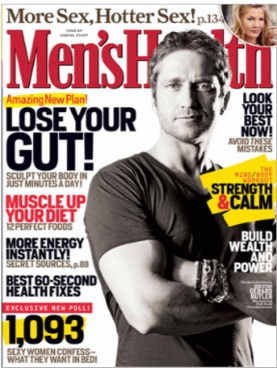
They used the “Lose Your Gut!” template repeatedly, including in May 2009, October 2008, and March 2005, among others:

The editor responded by saying that the reused covers are only on the newsstand editions; subscribers get different versions, though even then, there’s quite a bit of repeating.

But regardless, I’m not interested in the fact that a magazine was recycling covers per se. I was struck by two things. First, the repeated covers make clear how much men’s midsections have become objects of scrutiny, the area to work on and obsess about, and by which your physique is judged. From Gawker:

Since 2007, Men’s Health has led with “Flat-Belly Foods,” “Get Back Into Shape,” and “Lose Your Gut” at least twice a year, and a “Six-Pack Abs” at least once a year since 2005.

Second, the degree to which cover lines can be reused, and content is interchangeable, underscores the degree to which these types of magazines — whether aimed at men or women — are selling us the same story, month after month. That story is: you aren’t good enough, your body isn’t good enough, but we have the secret to fixing it (lose weight, gain muscle), getting great sex (or, in the case of women, pleasing your guy), and improving your life in other ways (men = make more money, women = deal with a difficult coworker). The magazines are selling you slightly modified versions of that story because that story is what advertisers want you to get.

This might be a particularly literal repackaging of that theme, but other fashion/health/exercise/gossip magazines are doing the same thing in a somewhat more subtle form.

Oh my. Inés V. just let us know about a contest on WTVN, a conservative talk radio station in Ohio (reader Scapino clarifies that the conservative tone is mostly due to syndication of Glenn Beck and Rush Limbaugh, not really the local DJs). Just…see for yourself:

Inés says,

This campaign is a response to Columbus mayor Michael Coleman who boycotted AZ by banning all city-funded travel after SB1070, and the mayor is depicted as a holder of a green card [that’s him shown on the ID card].

It’s an astounding example of dehumanizing undocumented immigrants — being a proud American is linked to “illegals” (a term that somehow seems more stigmatizing than terms like “illegal immigrants” or “illegal aliens,” even — a linguistic erasure of personhood altogether) being scared, presumably of all the proud Americans they encounter, and the lucky winner gets to go “spend a weekend chasing aliens”. It’s like you’re getting to go on a safari.

Groups in Columbus have organized a response and will be delivering letters to the station this afternoon, before the contest ends, in protest.

I’d add more commentary, but what can you really say?

This being the opening weekend for Sex and the City 2, it seems like a perfect time for this video of sociologist Tracy Scott, from Emory University, discussing the cultural impact and contradictions of the SATC franchise. Enjoy!

Thanks to Nicole J. for sending it in!

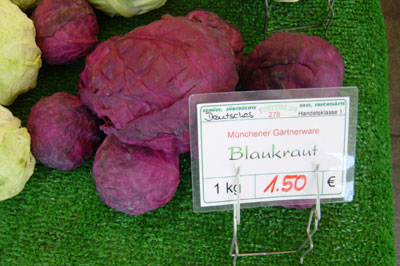
At BoingBoing, German professor Michael Shaughnessy offered his insights regarding how Americans and Germans see and talk about color differently.  Among other things, he noted how few foods in the U.S. are described as blue.  Blueberries, of course.  And blue cheese, I suppose.  (Or “bleu” cheese, as TheophileEscargot points out.)  But little or nothing else.

In contrast, Shaughnessy suggested that many more foods are described as blue in southern Germany.  Notably, blue onions, blue grapes, and blue cabbage (pictured):

In northern Germany, however, “Blaukraut” is “Rotkohl.”  That is, the same color (“blau”) is described as red “(“rot”).  He ponders whether “red onions [in the U.S.] are truly red.” In fact, their better described as purple.

He continues, “Words, impacted by the visual, often vary at the crossroads between colors.”  In other words, perception may be influenced by language and culture.  Where does blue end and red begin?

UPDATE: In the comments Alissa notes:

German wikipedia tells me that the south/north naming difference results from the difference in prepararation of the food. in northern germany it is usually prepared with acidic substances like vinegar giving it a more reddisch color, thus “Rotkraut” (very good with apples), in southern germany sugar or natron is the ingredient of choice, which enhances the blue of the original purple color, hence “Blaukraut”.

Interesting!

Lisa Wade, PhD is an Associate Professor at Tulane University. She is the author of American Hookup, a book about college sexual culture; a textbook about gender; and a forthcoming introductory text: Terrible Magnificent Sociology. You can follow her on Twitter and Instagram.

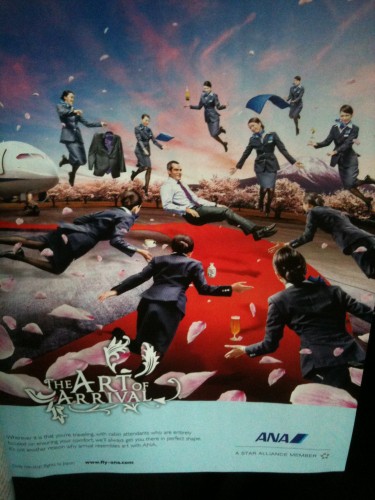
Lukas B.sent in an advertisement from the February 2010 Hemisphere magazine (the in-flight United Airlines mag). The ad is for ANA airlines’ flights to Japan. The target of the ad appears to be business travelers, represented by a White man. And how to show what a great job the airline will do of taking care of you? Surround said male business traveler with ten Japanese women, there to serve and pamper him:

The ad seems to rely to some degree on the stereotype of the submissive Asian woman, or more specifically, the geisha — a Japanese woman trained in the art of serving and pleasing men. There are many ways ANA could advertise, and even lots of ways they could represent good service.The fact that this ad deals with flights to Japan makes a particular racialized idea of service and comfort useful to the company.

At the same time, I’m fascinated by the fact that there are presumably potential customers to whom the idea of being waited on hand and foot while flying would be a major selling point (as opposed to, say, more comfortable seats or tastier food or something).

And, as Lukas points out, they also make sure to throw in the obligatory blossoms that are required in advertising/images related to China or Japan.

Gwen Sharp is an associate professor of sociology at Nevada State College. You can follow her on Twitter at @gwensharpnv.

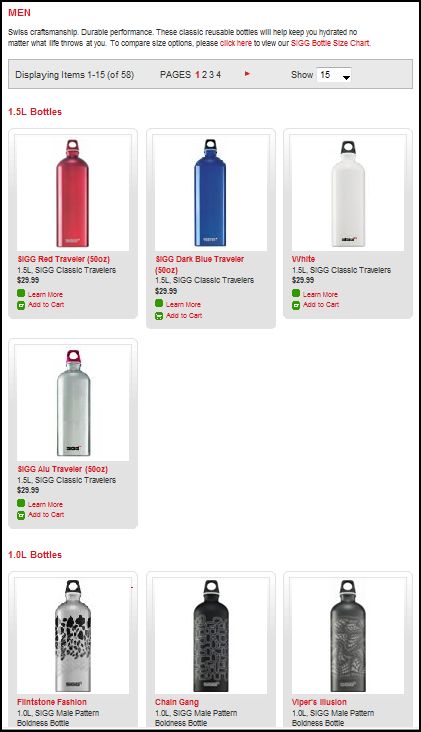
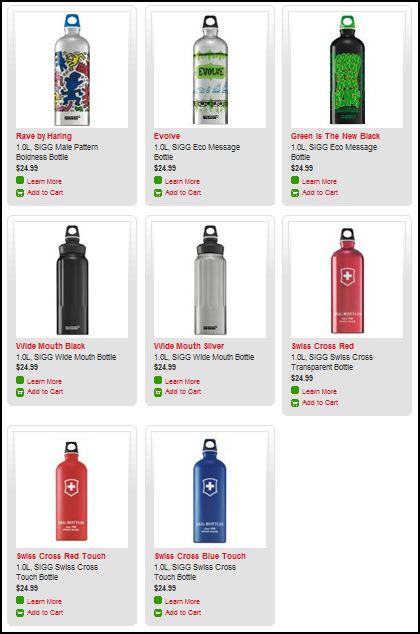
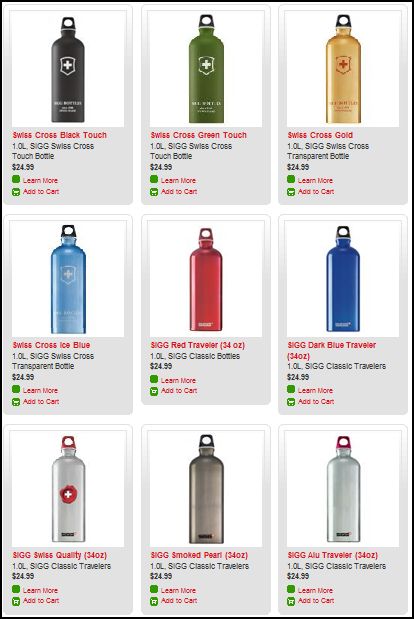
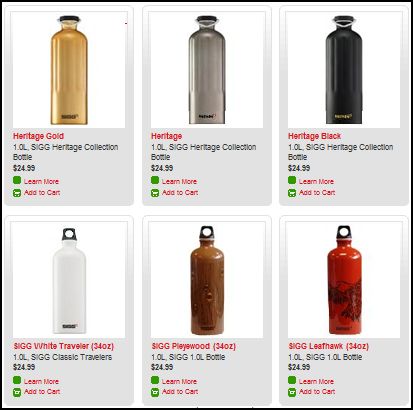
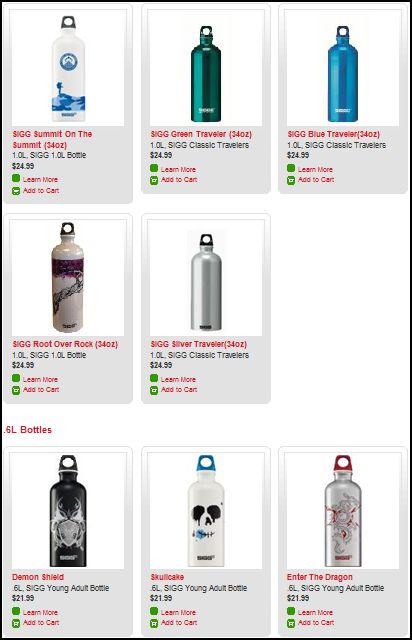
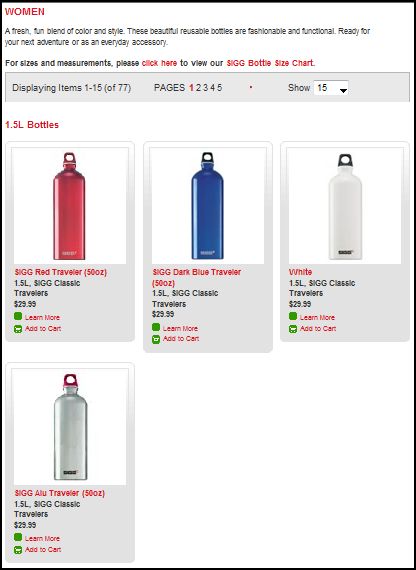
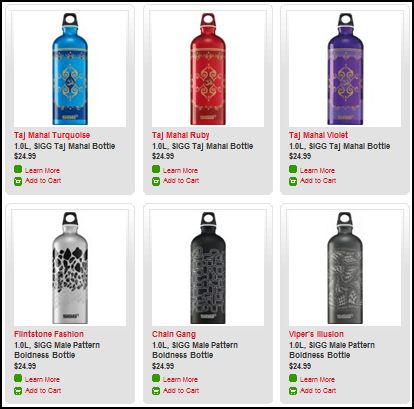
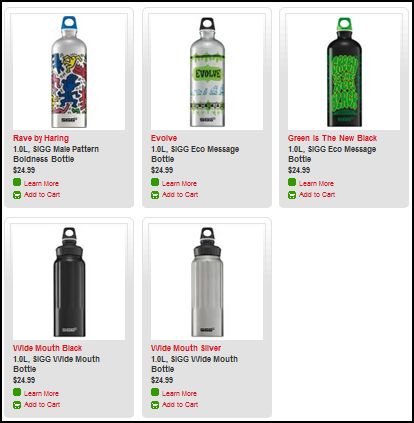
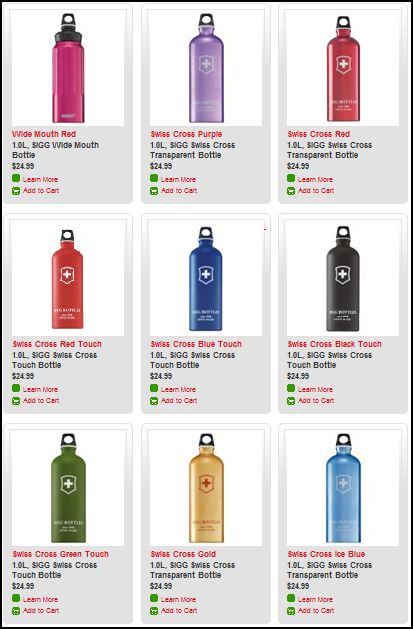
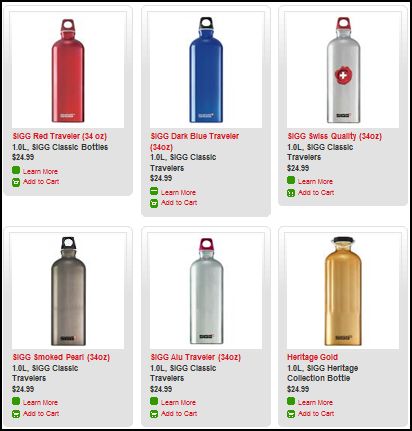
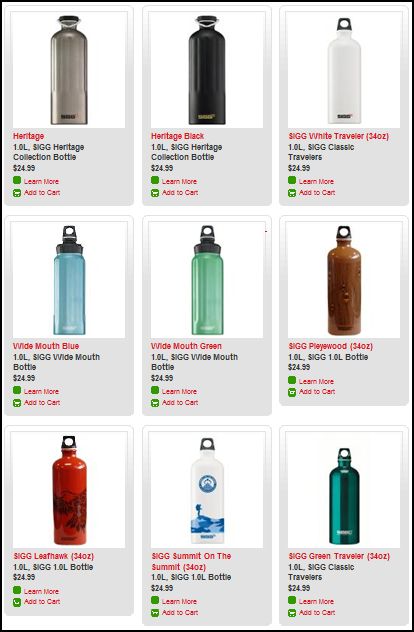
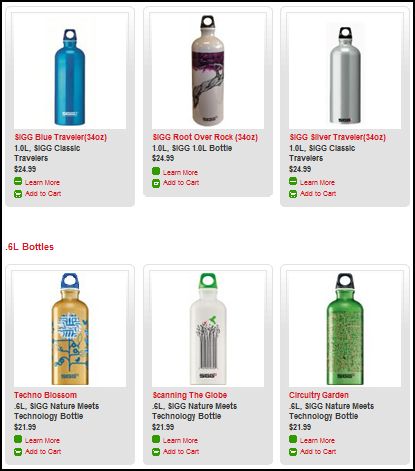
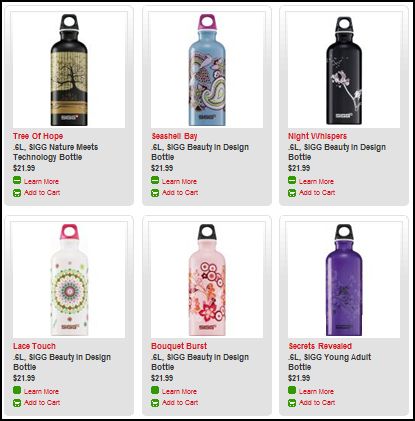
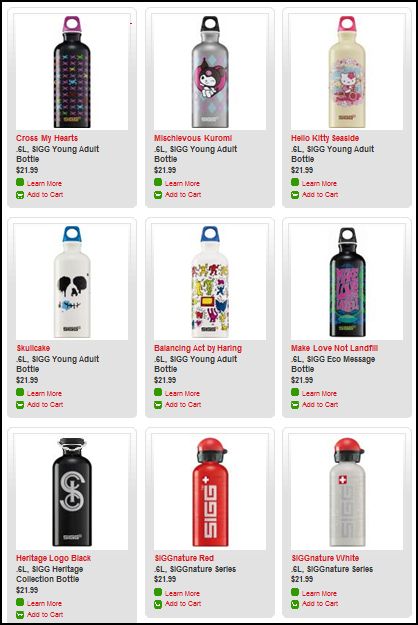
Stella P. sent in a link to the SIGG water bottle website, pointing to the fact that there are “women’s” and “men’s” collections. What’s interesting about the two collections isn’t just the reproduction of the gender binary and the gendering of water bottles, but the fact that the outcome of this bifurcation is actually less choice for men. There are 77 total water bottles in the women’s collection, but only 58 in the men’s. If you scroll through the options, you’ll see that women basically get to choose among ALL of the bottles, but men are not presented with any that (apparently) appear TOO feminine. This is a great example, then, of the way that patriarchy constrains men by pushing them away from items deemed girly.

Here are some screen shots of the men’s and women’s collections.

Men’s:

Women’s:

Lisa Wade, PhD is an Associate Professor at Tulane University. She is the author of American Hookup, a book about college sexual culture; a textbook about gender; and a forthcoming introductory text: Terrible Magnificent Sociology. You can follow her on Twitter and Instagram.