Archive: 2010

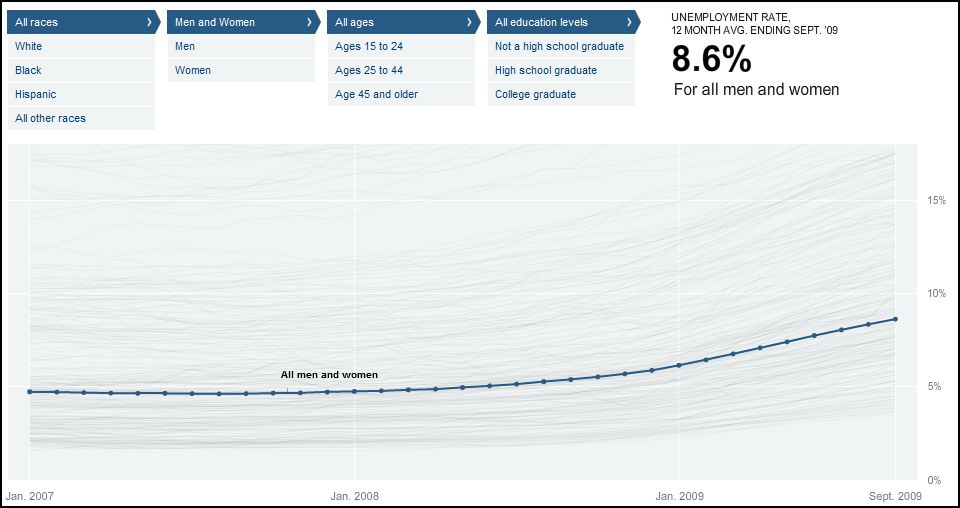
As a white woman between 25 and 44 with a college degree, I am the least likely category of person to be unemployed according to an interactive graphic detailing the joblessness rate for people according to their race, education level, age, and sex (since Jan. ’07).  It is a rather devastating look at social inequality.  I recommend visiting the site to see for yourself, but below are some screen shots with some comparisons.

For comparison, the overall joblessness rate which, as of Sept., was at 8.6 percent:
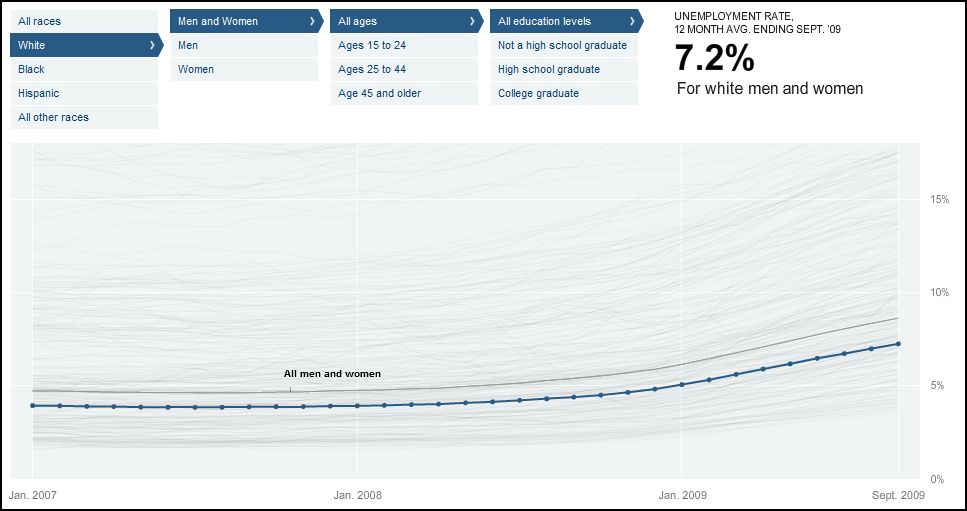
The joblessness rate for white people (notice it is lower by 1.4 percent):
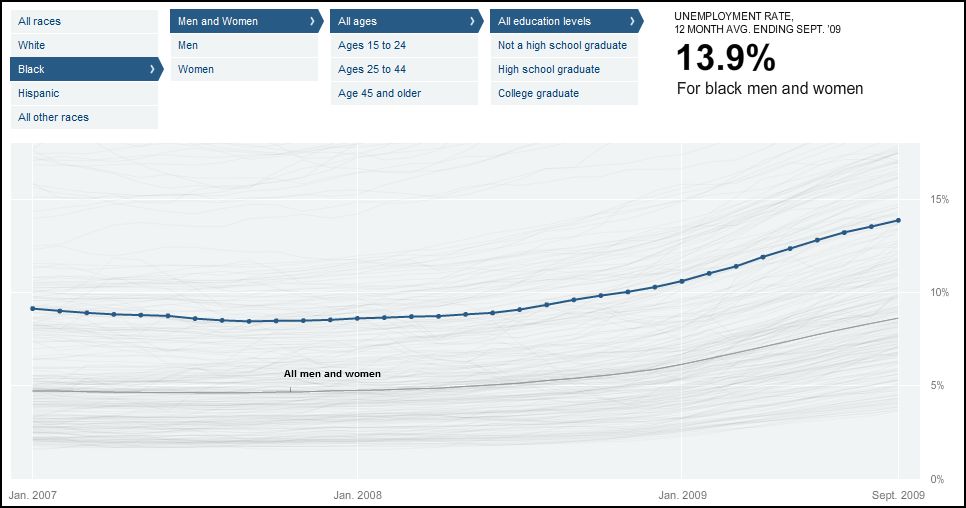
The joblessness rate for black people is almost twice that of whites:
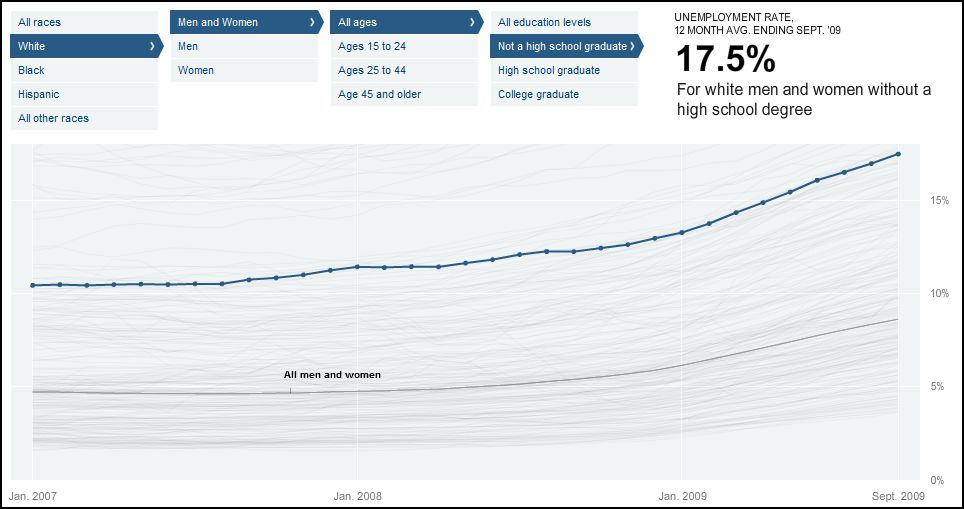
Let’s add education level.

The joblessness for whites who have not yet graduated from high school is 17.5 percent:
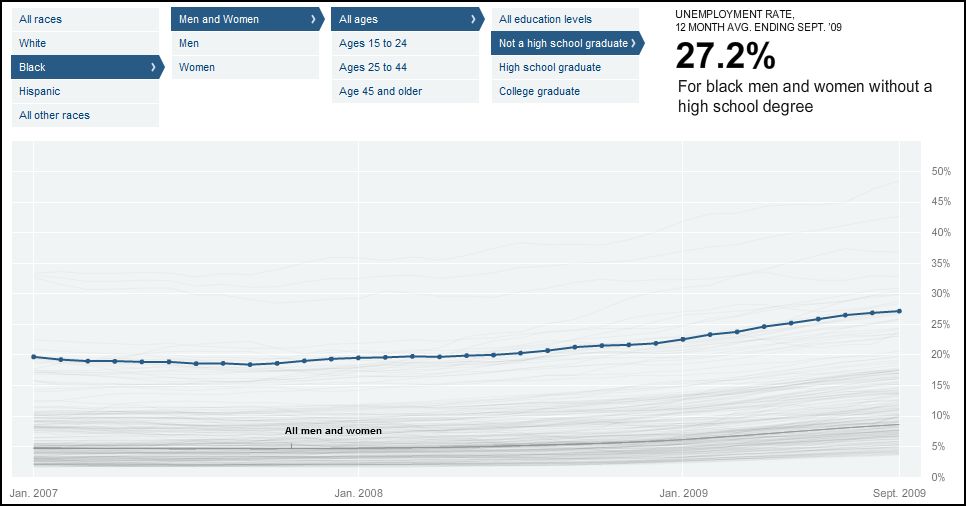
The joblessness for comparative blacks is 10 percentage points higher.  Notice that the scale on the right hand side has changed from 0-20 percent (above) to 0-50 percent:
If we look at young blacks (15-24 years old) who haven’t been able to complete a high school degree, the joblessness rate is 42.7 percent:
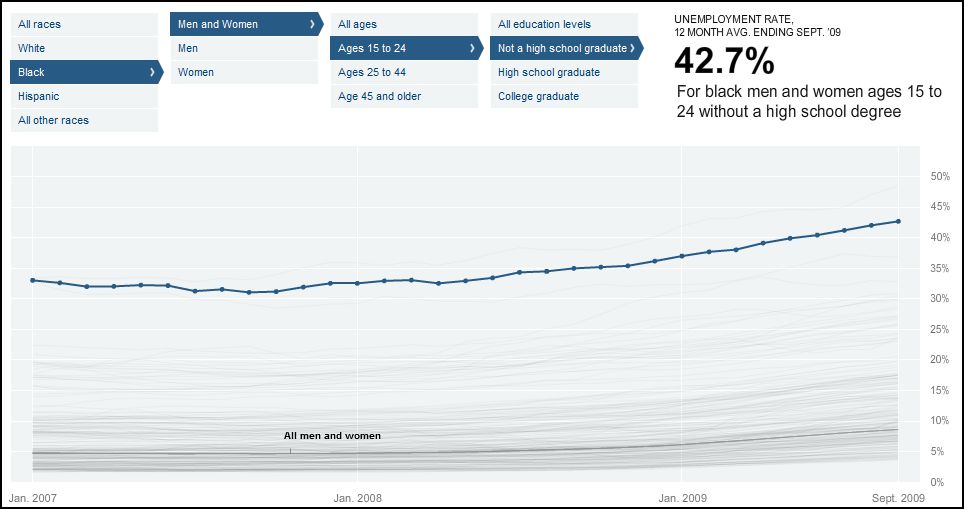
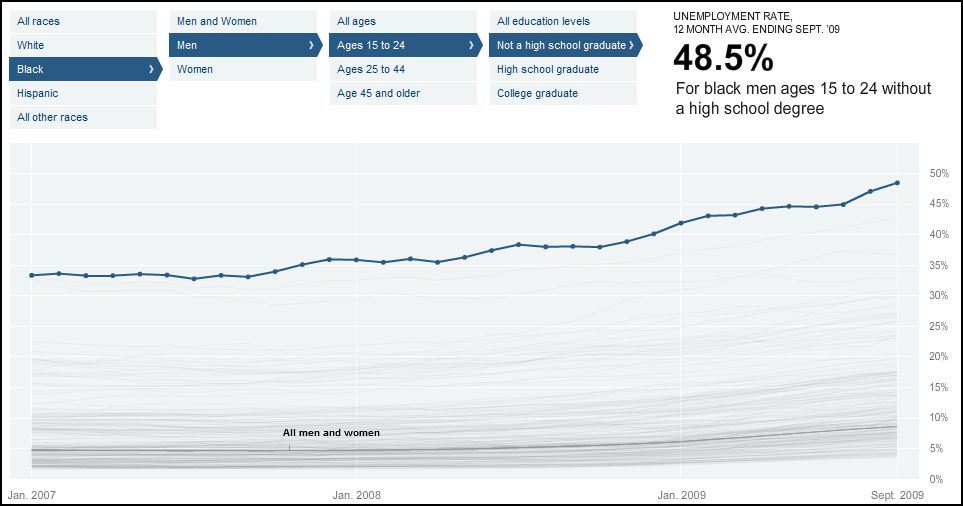
If we restrict the numbers to young black men without a diploma, we see a whopping joblessness rate of 48.5 percent.
For comparison, here is the same kid, but white (the joblessness rate is cut in half, but is still huge, even by recession standards):
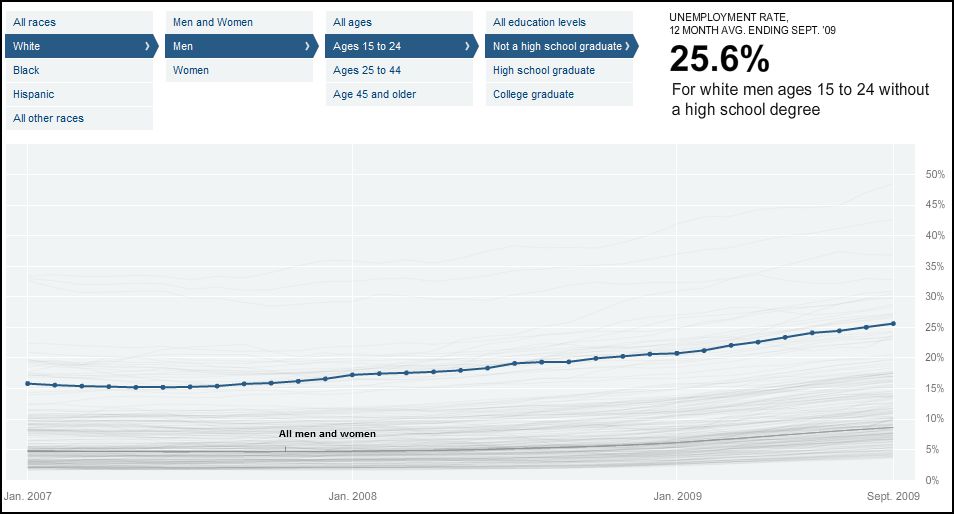
Ever wonder why young men turn to the underground economy?  Well, this is why.  Somewhere between 25 and 50 percent of them can’t get a job in the “above ground” economy.  What’s a kid to do?  Add in the rational choice of choosing work that pays more than minimum wage, and you’ve got a whole group of young people who participate in illegal activities.

Then, of course, we police black neighborhoods more aggressively than white neighborhoods, convict black people more frequently than white people, and send them to prison more often and with longer sentences (see also this post).

And, too add insult to injury, after all is said and done, a black person without a criminal record is less likely to get a job interview than a white person with one.  A black person with a criminal record: his chance of getting a call back after dropping off a resume (even at a place like McDonalds) is something like five percent.  No I’m not joking.

<sarcasm>Oh, but if they just had a good attitude and learned to talk right, they too could be successful in this life.</sarcasm>

It’s almost too much to bear.

Via Matthew Yglesias.

Lisa Wade, PhD is an Associate Professor at Tulane University. She is the author of American Hookup, a book about college sexual culture; a textbook about gender; and a forthcoming introductory text: Terrible Magnificent Sociology. You can follow her on Twitter and Instagram.


Kelly V. sent in a video by Alisa Miller of Public Radio International about the impact of news coverage on what we know about. In particular, she argues that changes in the U.S. news media, such as shutting down expensive foreign bureaus, have led to less coverage of events or issues in other countries:

For other examples of the role of media outlets in signaling what’s worth talking about, check out our posts on media outlets covering celebrity stories while chastising us for caring, presenting polls in the media, what stories get covered?, people are more interested in Tiger Woods than Afghanistan, meaningless statistics, U.S. and international versions of magazine covers, “us and them,” which missing kids get news coverage?, covering Obama and McCain, covering Obama and Clinton, and what’s worth covering in a slideshow?

Tilly R. sent in the clip below of Bill Maher attempting to illustrate the oppressiveness of the burqa by staging a fake fashion show in which every model comes out in an identical burqa. You only need to watch the first couple models to get the idea (starts at about .20 sec.):

The comedy is tasteless, at best. And it brings out two interesting assumptions: that measures of women’s liberation include (1) the right to show skin and/or your body’s shape and (2) the choice to express your individuality through your clothes.

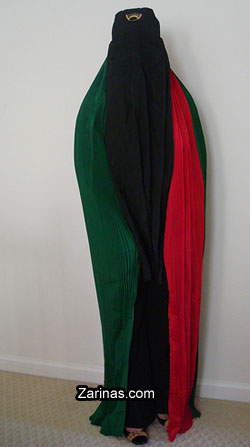
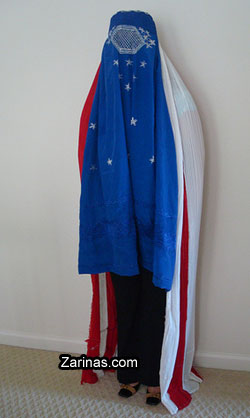
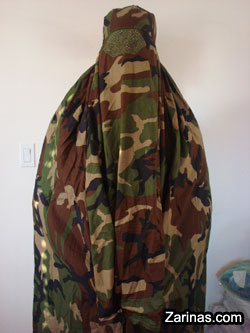
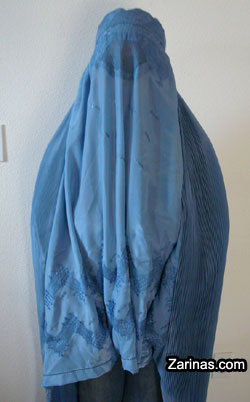
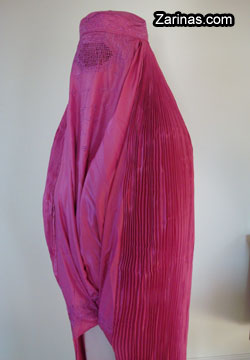
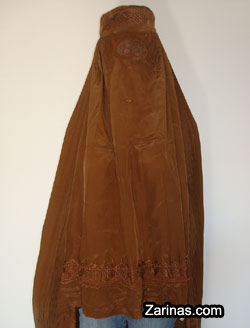
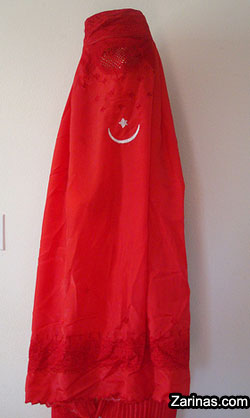
It is with a focus on the latter that I introduce a website submitted by K.L. The website, Zarina, sells burqas. While most of the burqas we see in Western media are blue or black, this website sells burqas of all stripes.

A blue, embroidered burqa:

A “hot pink” burqa:

A saddle brown burqa:

A Turkish flag burqa:

An Afghan flag burqa:

An American flag burqa:

A camouflage burqa:

I have no idea if this website is legitimate (though it seems to be) and I have no idea whether women in (which) different burqa-requiring/encouraging societies can actually choose to wear these. I really have no idea.

But I do think it prompts us to interrogate our own assumptions about what women’s liberation looks like and if being able to choose your own style really is a good measure of it.

I’d bet that most Western women feel like being able to choose her clothes is a central part of her sense of freedom. Does that translate in this context? That is, if women were required to wear burqas, but could wear any burqa they like, does this mediate how oppressive the burqa seems to you? Conversely, does the seeming freedom that comes with choosing your clothes become less convincing once you think about it in this context?  I know this is tough to think about, but I think it’s an interesting thought experiment.

For related posts asking us to think about the relative freedoms represented by the burqa and the power of the male gaze, see here, here, and here.

Lisa Wade, PhD is an Associate Professor at Tulane University. She is the author of American Hookup, a book about college sexual culture; a textbook about gender; and a forthcoming introductory text: Terrible Magnificent Sociology. You can follow her on Twitter and Instagram.
Laura A., Brenly R., and Maurine C. all let us know about a shirt for sale at Urban Outfitters. The shirt came in two color combos: White/Charcoal and Obama/Black. Here’s an image of the Obama/Black option, via Jezebel:

There are a couple of things going on here. First, there’s the reference to Obama as a marketing ploy, which we’ve seen before, of course. But it also shows how ridiculous our racial color coding is; we continue to use colonial-era categorizations that there is a clear dividing line between groups based on color. Black and white are usually depicted as opposite colors, after all (and, of course, there’s the historic association of white with purity and black with evil). Most people don’t literally think of Black people as black or believe White people are white; people are, as far as I can tell, pretty much some shade along the off-white/tan/brown spectrum. But we continue to socially construct racial categories as though there is some meaningful, stark difference based on skin color.

So given that, if Obama’s half Black and half White, he’s gray, right? I mean, I’ve seen him on TV a lot and I’ve never noticed that, but maybe it’s the makeup.

I’m sure you will be sad to know that the Urban Outfitters website says the shirt is no longer available.

UPDATE: Reader applebrownbettywhite says,

Just wanted to let you know – I think both Jezebel and you guys interpreted UO’s color naming scheme incorrectly. “Obama” as a color refers to brown, which is the color of the buttons. You can check this assertion against the other shirt, white/charcoal, which is a lighter colored shirt with white buttons.

I’m not sure…the buttons look black to me. It doesn’t look like it has brown on it, but maybe it’s a bad photo.

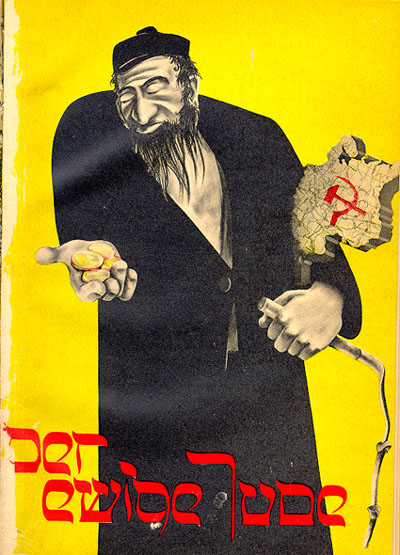
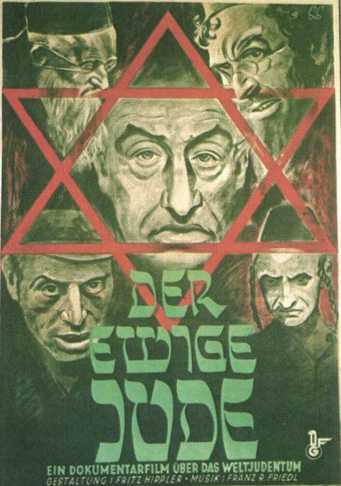
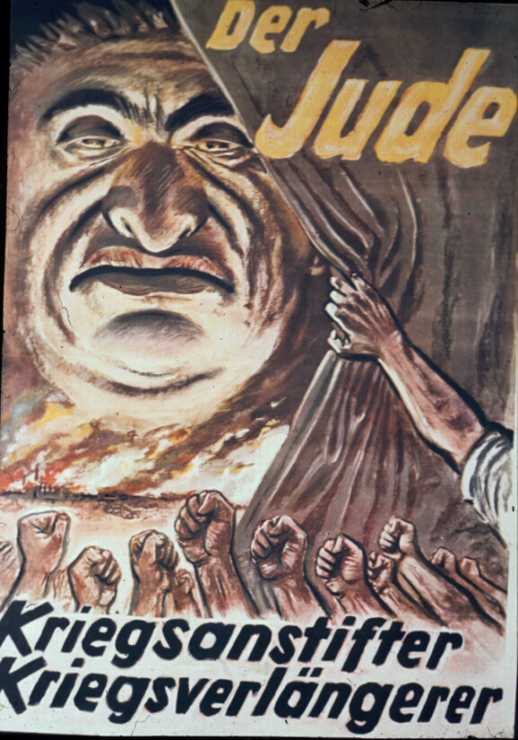
Below are three examples of the caricature of Jews promoted by Nazi Germany.  I borrowed them from this collection, where you can find many more if you scroll to the bottom (thanks to Kat, monosonic, and Lisa for the translations!).

“The Eternal Jew”:

Jew-Nazi-Der_Sturmer_antisemitism-juutalaisvainot-Hitler_satan-bloodlibel-propaganda_2

“The Eternal Jew”:

Nazi_poster_Jew_Der_Sturmer_antisemitism_juutalaisvainot-bloodlibel_Wandering_Jew_propaganda_60

Jews- make wars longer, start wars:

Nazi_poster_Jew_Der_Sturmer_antisemitism_juutalaisvainot-bloodlibel_Wandering_Jew_propaganda_61

See our other posts on Nazi Germany: comparing German remembrance of the Holocaust and U.S. remembrance of slavery, Nazi symbolism, Nazi celebration of motherhood, the racialization of the Jews, Jim Crow-like segregation during the Nazi regime, and this sympathetic memorabilia website.

Lisa Wade, PhD is an Associate Professor at Tulane University. She is the author of American Hookup, a book about college sexual culture; a textbook about gender; and a forthcoming introductory text: Terrible Magnificent Sociology. You can follow her on Twitter and Instagram.
I thought Samatha Critchell’s description of Michelle Obama’s light tan or “champagne” dress as “flesh colored” might get her fired.  If nothing else, I figured it’d be warning to all other journalists out there to, for gawd’s sake!, watch your racist language.

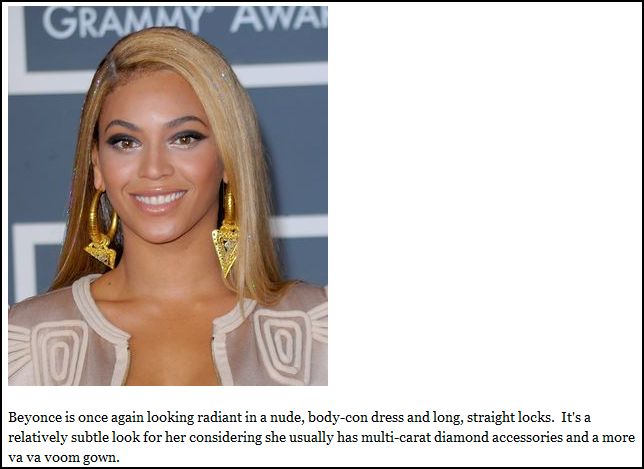
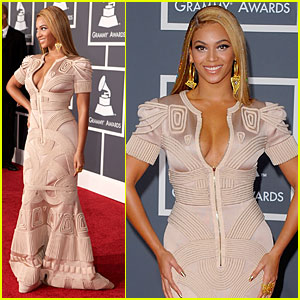
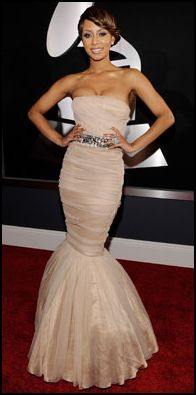
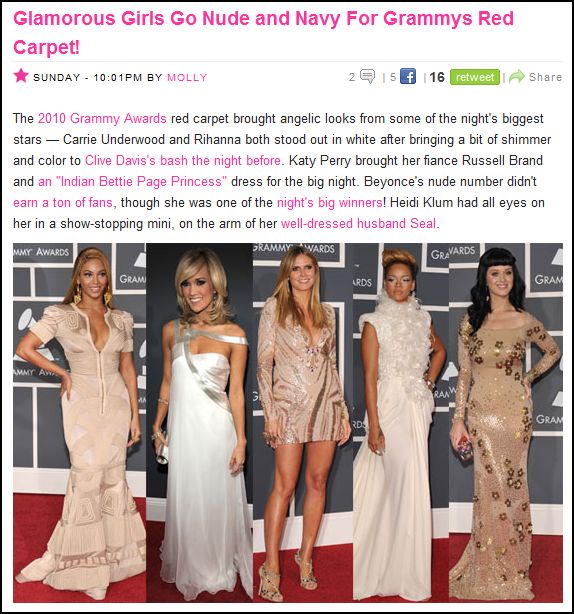
But, alas, the parade of “champagne”-colored gowns at this year’s Grammy’s had led a flood of fashion writers talking about the color “nude.”  Here are just a handful of examples from the first three pages of my google search

Los Angeles Times:

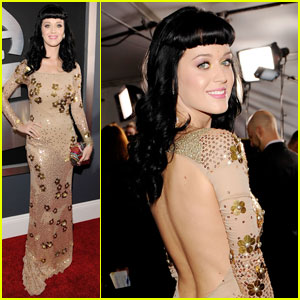
Katy Perry and her dress:

Elsewhere in the Los Angeles Times:

Beyonce and her dress:

VH1:

Keri Hilson and her dress:

Associated Content:

msnbc:

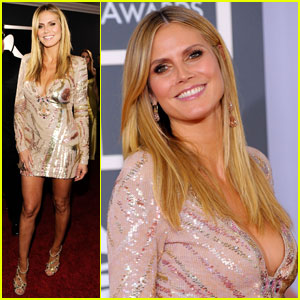
Heidi Klum and her dress:

Popsugar:

Of course (almost) no one is actually “nude”-colored, but the term still manages to naturalize whiteness insofar as white people’s skin color tends to match colors described as “nude” moreso than the skin color of non-white people (though there are always exceptions).  I’m really surprised that journalists are still managing to get this language past their editors.

Lisa Wade, PhD is an Associate Professor at Tulane University. She is the author of American Hookup, a book about college sexual culture; a textbook about gender; and a forthcoming introductory text: Terrible Magnificent Sociology. You can follow her on Twitter and Instagram.
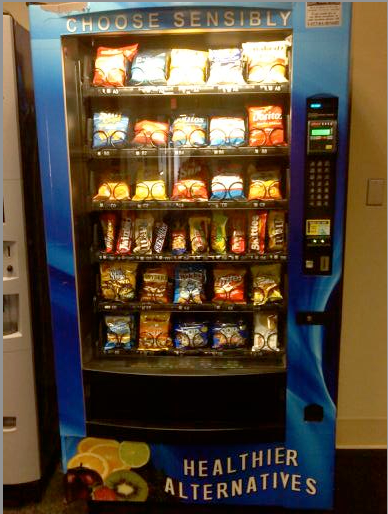
The vending machine below is a great example of the folly of relying on individual will in the absence of supportive institutional change.  “Choose sensibly,” the vending machine, exhorts… as it tempts you with fresh fruit, but offers you nothing but snack foods that are high in calories and low in nutritional value:

This makes me think of the many iterations of public service campaigns that tell people to have a good attitude and work on their character.  Yes, those are lovely things, but if people are going to make good choices, the options need to be there.

Found at Doctor Grumpy in the House, an amusing blog in which a doctor complains about doctoring.

Lisa Wade, PhD is an Associate Professor at Tulane University. She is the author of American Hookup, a book about college sexual culture; a textbook about gender; and a forthcoming introductory text: Terrible Magnificent Sociology. You can follow her on Twitter and Instagram.
NEWS:

Lisa will be in New Orleans in February!  If anyone is interested in coming to a SocImages cocktail hour, email her at socimages@thesocietypages.org.

Also, this is your monthly reminder, you can always follow us on Twitter or friend us on Facebook, where we update with a featured post everyday!

FROM THE ARCHIVES:

In January of 2008 we featured a set of posters made by the National Campaign to Prevent Teen Pregnancy that labeled teens who found themselves parents as “pricks,” “cheap,” “nobodies,” “dirty,” and “rejects.” Nice.

And one year ago, in January 2009, I put up a series of photographs exposing the amazing convenience and luxuriousness of private plane travel.  It’s a classic “how the top 1% lives” kind of post.

NEWLY ENRICHED POSTS (Look for what’s NEW! Jan ’10):

Food

Dudes.  I added an ad with a recipe for jello with tuna to our post on vintage recipes for savory gelatin.  I am not kidding.

We added a new commercial to our previous post on Orangina; this one includes interspecies S&M.

Edward S. alerted us to a commercial where a pig does the Flashdance.  We added it to our post on gendered and sexualized food (scroll all the way down).

We’ve previously posted on the historical association of men (and masculinity) with meat. Jon S. sent us an example, a Weight Watchers ad that promises men they don’t have to eat “like a rabbit,” accompanied by an image of a hunk of beef. ‘Cause men need steak and potatoes, even when they’re dieting!

Media and Marketing

Gwen and I were like: “We’re so NOT adding any more content to the evolution of Evony ads post unless someone sends in something that truly takes it a step further… and that’s impossible.” Right? Wrong. Chris M., Tinpantithesis, Chris M., and Ryan sent in the next step in the Evony ads. Believe it.

CNN asked us if Jon and Kate Gosselin were getting too much coverage while advertising CNN’s coverage of them. We added another example of media hypocrisy–Dr. Drew of “Celebrity Rehab” telling us we shouldn’t be so interested in celebrities.

What can we appropriate the feminist movement to sell in addition to bras? How about shoes?

We posted about the September 2009 issue of Glamour including a picture of a naked “plus-size” model (that is, a size 12). We updated the post with a similar photo of a group of women with less-than-model-thin bodies that is in the Glamour calendar.

Marc C. sent us a link to a slide show featuring 185 pictures of cheerleaders.  We added it to our post titled “What Warrants a Slide Show?”

Race

We added a photo from the liner notes of a Lady Gaga CD in which she and Kanye West are in a pose reminiscent of King Kong to an older post on the King Kong motif.  Thanks to Ruth D’R. and an anonymous tipster!

Sara L. sent us another example to add to our post about housecleaning services that present house cleaners as non-white and those having their houses cleaned as white.

Sex

Another month, another addition to our ejaculation imagery post.  Can you say “splooge halo”?  I did.  Thanks to Helene V. for the submission.

Someone-who-prefers-to-remain-anonymous sent us another example of a t-shirt that equates sexual penetration with domination in the sports arena, which we added to our original post on the topic.

Julia U. sent in some Calvin Klein ads that centrally feature the naked body of a black man.  We added them to our post on the sexual objectification of men.

We updated one of our posts about the sexualization of little girls with photos of baby bibs that say “flirt” and “single.”

Gender

We found a vintage ad for Plymouth Barracuda marketed specifically to women and we added it to our post on the awesome Dodge La Femme.

Liscadifretta sent in a photo of a clothes hanger meant to look like a woman’s legs and crotch.  We added it to our post featuring furniture shaped like (naked) women.

Joel P. sent us a link to the updated Diamonds or the Doghouse campaign by JC Penney.  Like last year, the message is that you can be a total dick to your wife, so long as you are willing to buy her diamonds, because diamonds make her incredibly stupid.

As always, we had more to add to our post about pointlessly gendered products, this time boys’ and girls’ organic body wash and Nivea chapstick.

And we updated our post on marketing beauty products to men to include On the Job, a line of lotions–or, if you prefer, polymer gloves–for men.

Anna K.-B. sent us another example of health-related activism aimed specifically, and unnecessarily, at women.

Jessica H. sent us another example of a business marketing its services with gender: The Occasional Wife, and The Handy Husband and, Jessica’s find, Boyfriend for Hire.

Remember when we posted about the gendering (and Whitening) of online degree programs? Ryan  sent us another example so we added it.

And we added another added to post on socializing kids with gendered toys.

More Stuff!

Ashleigh V. sent along another Twingo commercial. This one equates modernity with sexual permissiveness.

We added another batch of dolls with disabilities to our post on reactions to dolls with Down’s Syndrome.

We added another DDT product to our vintage post with ads advocating the household use of DDT, a pesticide that later turned out to be wholly toxic.