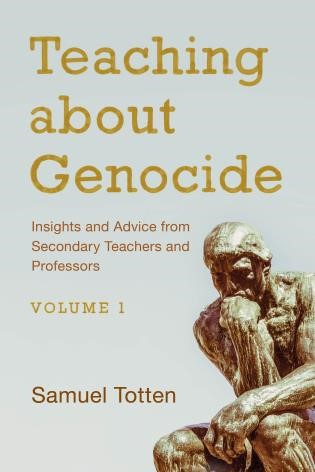
 Teaching about Genocide (Volume I), the first of a two-volume series edited by well-known Holocaust and genocide education scholar Samuel Totten, provides cogent, practical advice for those wishing to bring this difficult topic into their classrooms. The book builds on Totten’s previous work but is unique in its specific focus on combining insights from both secondary and post-secondary educators in each volume. Roughly half of the chapters were written by secondary educators, with the remaining composed by post-secondary professors and instructors. This combination helps to bridge the persistent gap between academic genocide studies research and secondary classroom teaching about genocide. Indeed, as a high school teacher of a semester-long comparative genocide studies course, I have often struggled to find ways to approach various aspects of genocide with my students. This volume both reaffirms the importance of genocide education while providing practical support for classroom teachers.
The necessity for such a work at this moment is clear. While the Holocaust, especially since the mid-1990s, has become a mainstay of American K-12 school curriculum, teaching about so-called “other” genocides or “genocides other than the Holocaust,” has become increasingly common across the country. Though, despite this trend, few resources exist for educators, who, are often left to teach such difficult topics with little content or pedagogical support.

 Fern and her late husband Bernard established the Badzin Fellowship in Holocaust and Genocide Studies, which has supported for the last decade graduate students in the College of Liberal Arts committed to research in the field. Bernard and Fern also created the Badzin Lecture Series fund, helping to bring renowned experts to campus.