G. Jikeli & J. Allouche-Benayoun (eds.)
 The way people think about the Holocaust is changing. The particular nature of the transformation depends on people’s historical perspectives and how they position themselves and their nation or community vis-à-vis the tragedy. Understandably, European Muslims perceive the Holocaust as less central to their history than do other Europeans.
Yet while the acknowledgment and commemoration of the horrors of the Holocaust are increasingly important in Europe, Holocaust denial and biased views on the Holocaust are widespread in European Muslims’ countries of origin.
In this book, a number of distinguished scholars and educators of various backgrounds discuss views of the Holocaust, explore the backgrounds of biased perceptions but also highlight positive approaches and developments. Many of the contributions were written by people working in the field and reflecting on their experiences.
This collection also reveals that problematic views of the Holocaust in Europe are not limited to Muslim communities.
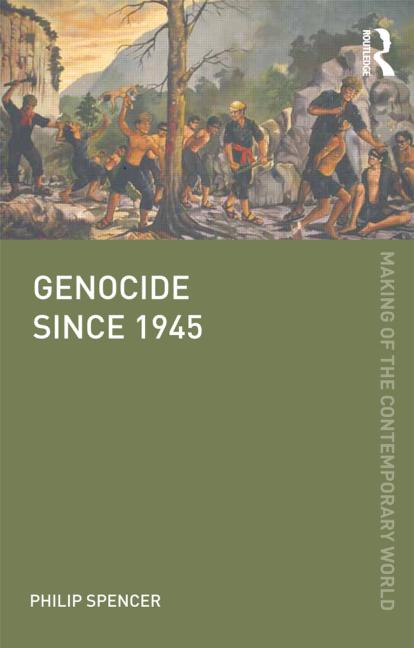 In 1948 the United Nations passed the Genocide Convention. The international community was now obligated to prevent or halt what had hitherto, in Winston Churchill’s words, been a “crime without a name”, and to punish the perpetrators. Since then, however, genocide has recurred repeatedly. Millions of people have been murdered by sovereign nation states, confident in their ability to act with impunity within their own borders.