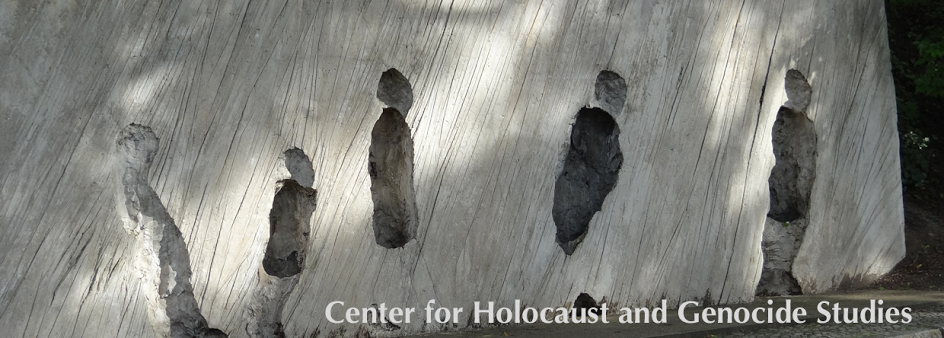
Last summer, I spent two weeks working with the Herero community education group Hitambo Virtual Academy, to document oral histories of the 1904 Herero and Nama genocide and supporting teachers interested in genocide education. The trip served as the launching point of a multiyear project between our Center and partners in Namibia and Germany that will culminate in classroom resources for Namibian, German, and American teachers to better teach about the genocide.
For me, it was an opportunity to see firsthand how colonial violence is remembered in Namibia. This was not my first time learning about Germany’s colonial history. In 2022, I spent two weeks in Germany as part of a fellowship understanding cultures of remembrance in Germany and the United States. I reflected on that experience in an article I wrote when I returned, but my main takeaway was the difference in how Germany memorializes the Holocaust versus the violence committed in its colonial territories. In many ways, this mirrors American approaches to memorialization; often minimizing its own role in perpetuating settler violence, especially in recent years.
While I got a sense of this dichotomy in Germany, it was magnified in Namibia. The number of memorials to German soldiers dwarfs the number of sites remembering Herero or Nama victims. From Windhoek to Swakopmund to even Etosha National Park, Namibia is littered with sites that celebrate the heroism of German colonial forces. Namibia’s numerous memorial sites closely align with sites in Germany, extolling the bravery of colonial officials while using coded language that minimizes the suffering of Namibia’s Black population.
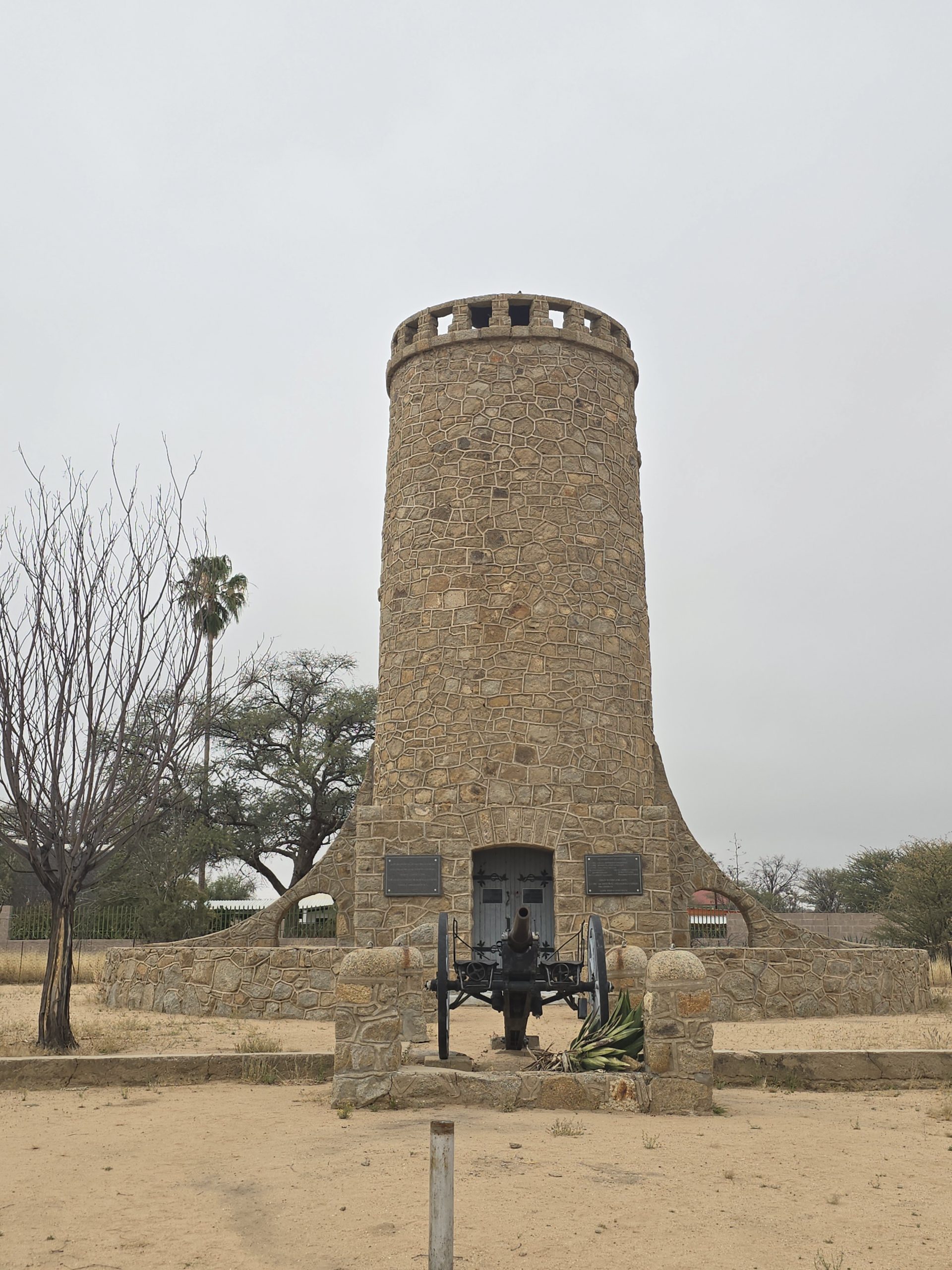
A particularly jarring site was in Omararu. Omararu was a trading village founded in the 1860s by a clan of Herero. A decade later, Germany established a missionary in the community. In 1904, it was the site of an early battle during the Herero War of Independence, an event that coincides with the genocide itself. Omararu’s memorial, Franke Tower, remembers the German relief forces who rescued the garrisoned troops in the village. The tower’s namesake, Victor Franke, was famous for his campaigns against Indigenous Namibians and reportedly committed tremendous human rights abuses, many of which we would consider genocidal today. Despite this, the tower is well-maintained and the plaque itself has clearly been recently replaced, pointing to a continued reverence to colonial history. At this same time, there is virtually no memorialization to Herero victims of the genocide. The tower is one of several examples of the complicated history of contested memory in Namibia.
The Reiterdenkmal, or Equestrian Statue, is one of the most prominent German colonial memorials. Erected in 1912, the statue of a German equestrian soldier stood for more than a century in the capitol, Windhoek. It celebrated the German empire’s power and dominance in the region. Until it was dismantled in 2013, the statue stood in a central part of Windhoek, in front of the Alte Fest, a former German military base and museum, near the Christuskirche, one of Windhoek’s most popular tourist sites. Christuskirche and Alte Fest, coupled with the Reiterdenkmal were a clear demonstration of colonial power, well after Germany lost its Southwest African colony in 1915.
This continuation of German authority in Namibia points to a larger challenge Namibia continues to face. Despite losing control over what is now Namibia, German-Namibians still play an outsized role in Namibia. Less than two percent of the Namibian population are white, and even smaller number connect with German lineage. Yet the overwhelming majority of Namibia’s farmland is controlled by German-Namibians, giving them a significant economic advantage over Black Namibians. In White dominant communities, German language and heritage are commonplace. In Swakopmund, one of the largest communities of German-Namibians, and itself the site of one of the genocide’s concentration camps, several buildings incorporate German names. Several Bismarck buildings can be found in Swakopmund, in what seems like a cruel reinforcement of the genocide.
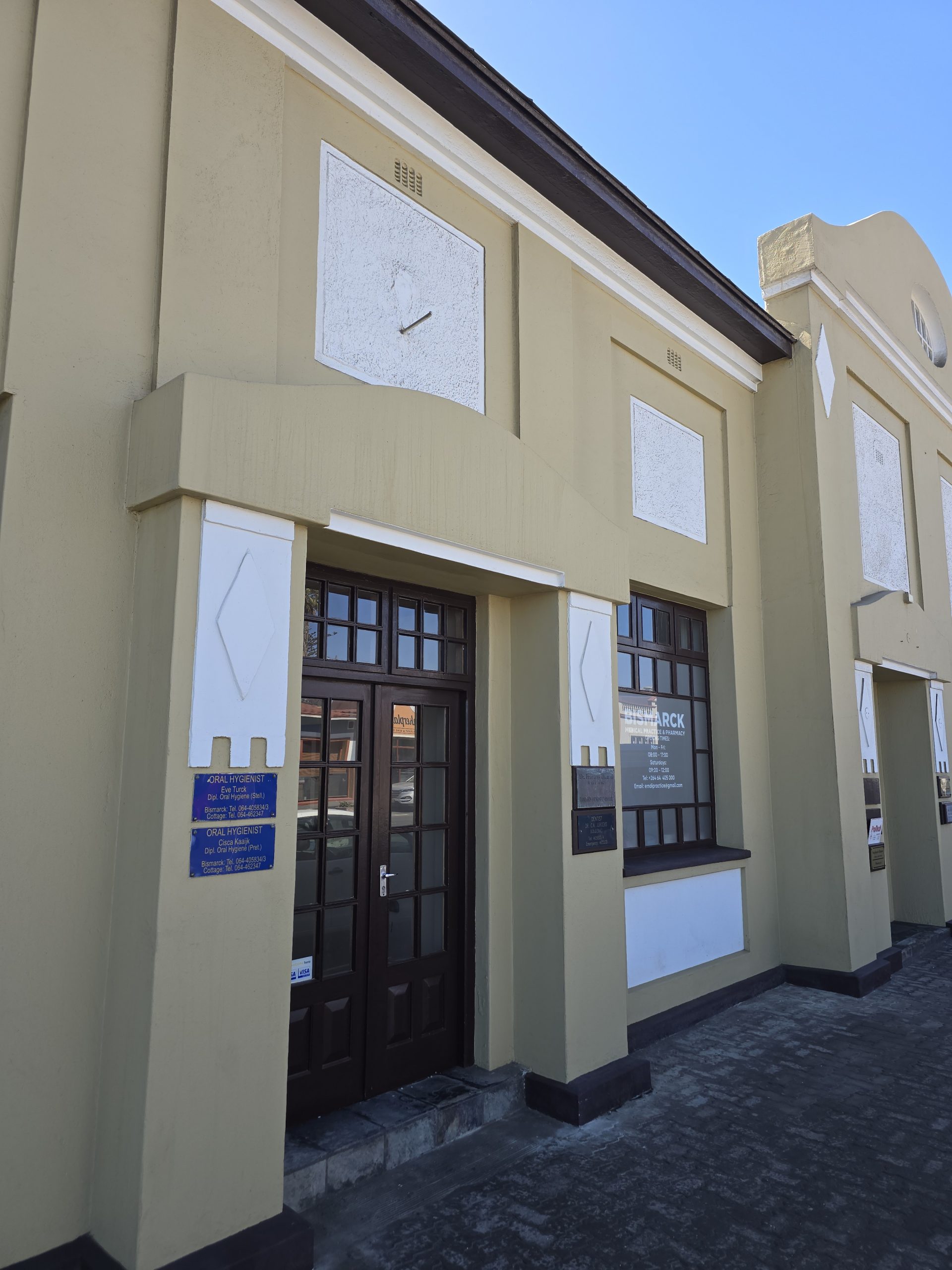
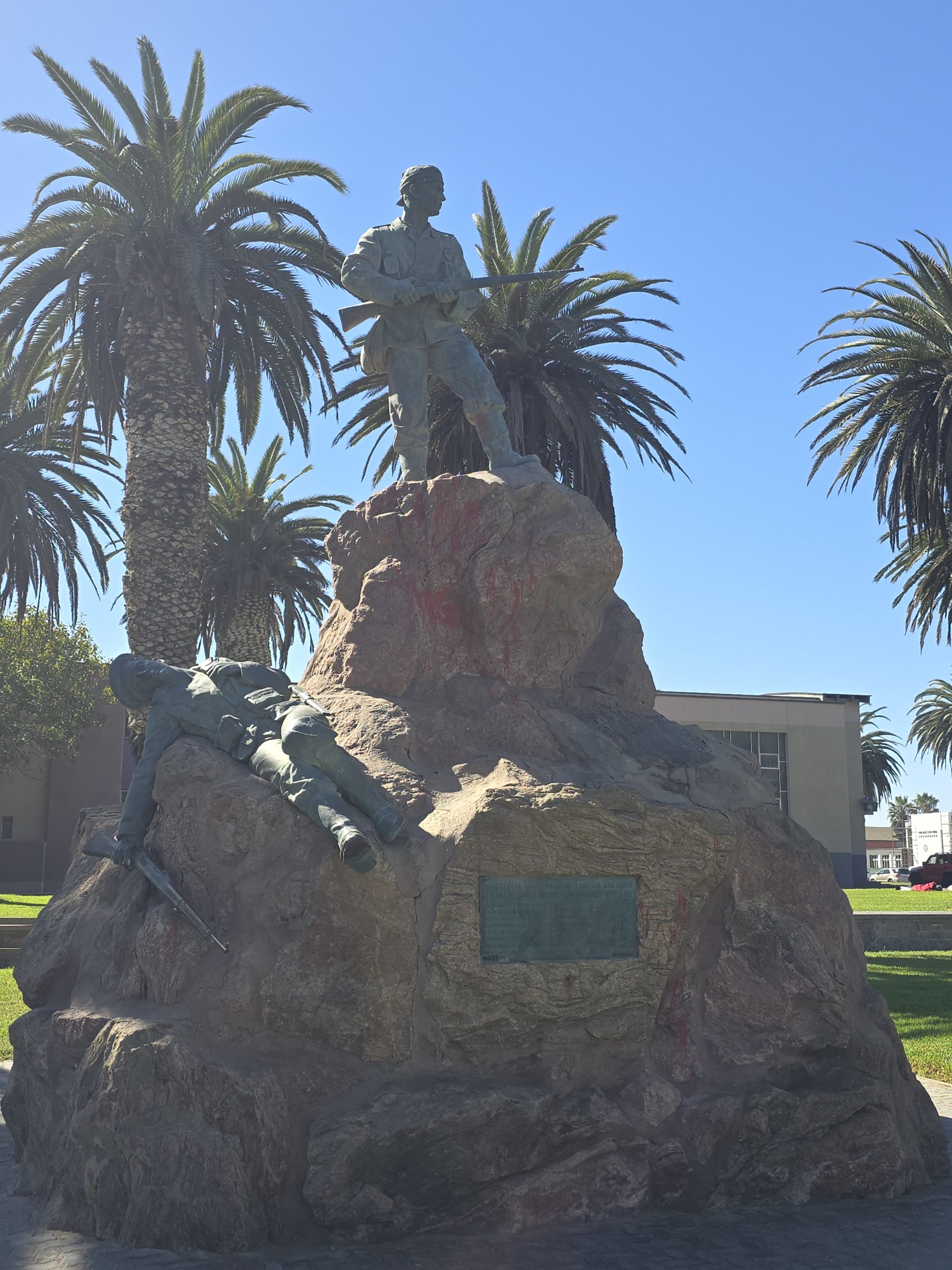
While I was in Swakopmund, there was news about an order for the Bismarck Medical Center to remove its sign depicting Bismarck himself. The campaign was organized by Laidlow Peringand, a local activist who has been challenging German colonial memory in Namibia. Shortly before my visit, Laidlaw had covered a memorial to German marines with red paint, a tactic he has repeatedly used, and one that echoes activist approaches to draw attention to controversial memorials around the world, including Minnesota. Laidlaw also operates the country’s only museum dedicated to the genocide. He was active in the documentation and memorialization of mass graves on the outskirts of Swakopmund, and the creation of a memorial to its victims. Laidlaw’s activism is the embodiment of a wider effort to create memorials that push back against settler narratives, and recenter the focus of the genocide on victims.
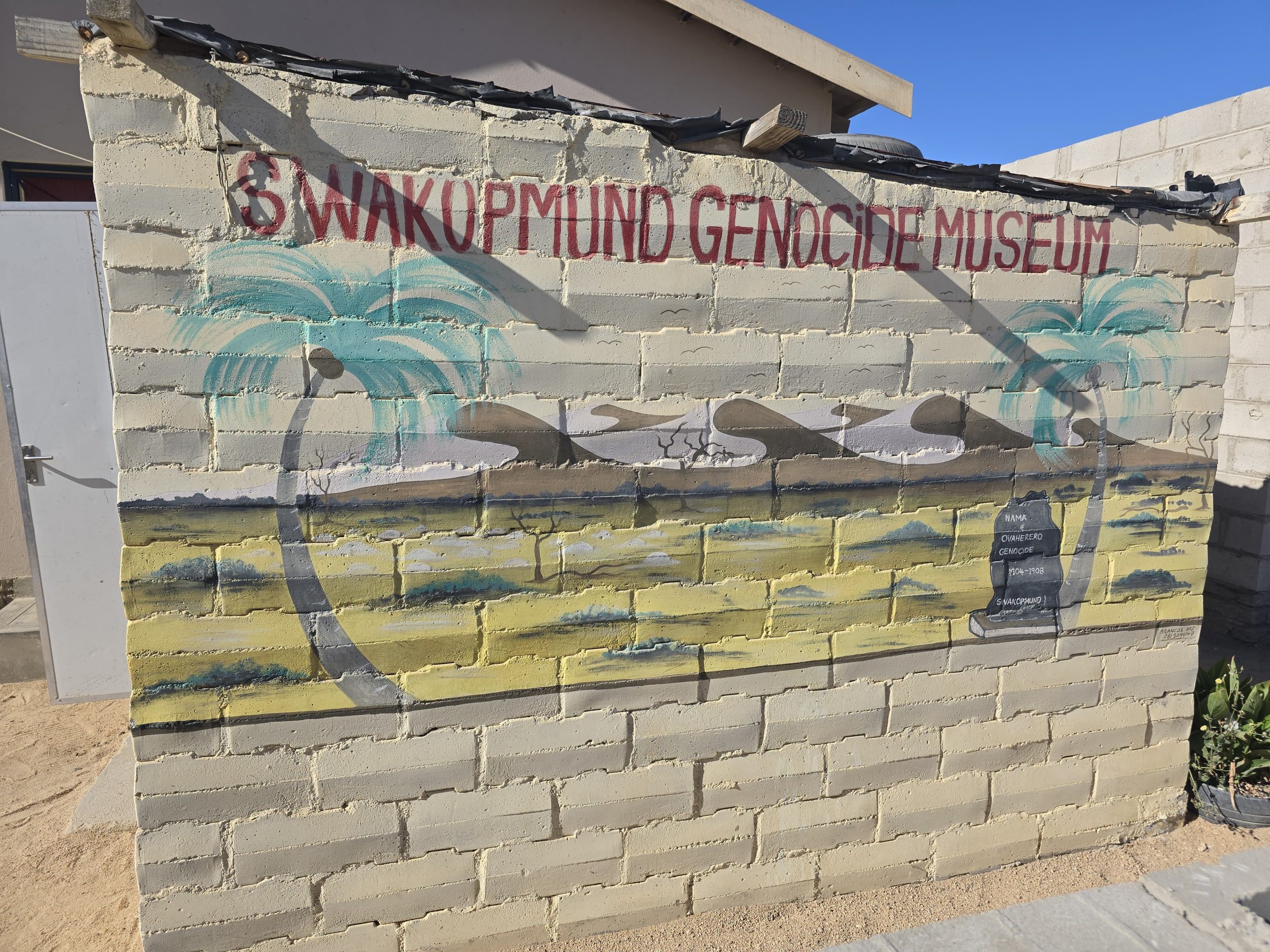
Much of Namibia’s history is a painful one, marred by colonialism and violence and their associated legacies. Memorials that reinforce colonial histories reinforce these painful aspects of the past. There is reason for hope, though. The work of Hitambo Virtual Academy, Laidlaw, and others point to a new generation of Namibians challenging colonial narratives and directly confronting the past. The work of these groups could be a model for reclaiming memory in a post-colonial country.
Note: The Center’s work in Namibia will continue, including a summer 2026 trip to continue its work with Herero and Nama communities, including groups in western Namibia. The Center recently received a Human Rights Initiative grant for this work through 2026.
Joe Eggers is the Interim Director of the Center for Holocaust and Genocide Studies.
Comments