Michael was born and raised in New Jersey and moved to Minneapolis in 2016 to pursue his graduate studies. He is a Ph.D. Candidate in Sociology and a Fellow at the Interdisciplinary Center for the Study of Global Change (ICGC). He has a MA from the University of Sussex in the United Kingdom and a BA from Harvard University.
Writing about time and historical periodization in his 2012 book, Foundational Pasts: The Holocaust as Historical Understanding, Alon Confino contended that “Linking the events to what came before and after is crucial to the interpretation of what actually happened.” What Confino meant by this is that “foundational pasts,” or events that are “brief, radical, violent, and self-avowedly transformative,” must be understood within larger understandings of historical beginnings and ends. In other words, major historical ruptures, such as the French Revolution and the Holocaust (the foundational pasts on which Confino focuses), are shaped by the events that come before and after them.
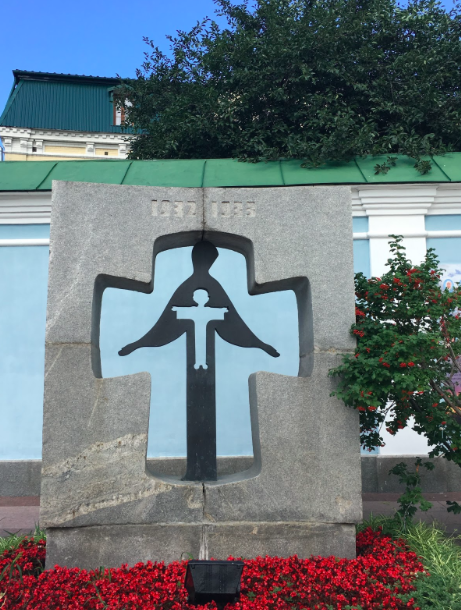
A photo of a Holodomor monument in Kyiv taken by the author.
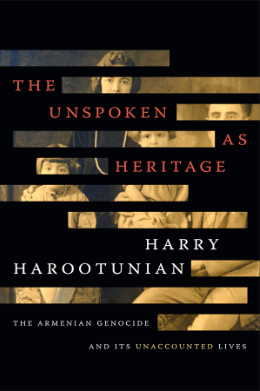
Harry Harootunian is a Detroit born Armenian-American distinguished historian of Japan and scholar of Marxist theory at the University of Chicago and New York University. Born to a family of Armenian Genocide survivors in 1929, Harootunian achieved renown in academia for his pathbreaking studies of early modern Japan and Japanese cultural and intellectual history.
Sarah Allis, Joy Hammer, Paul Olubayo, Hannah Shireman, Bailey Sutter, Vanesa Mercado Diaz, and and Raven Ziegler on February 2, 2021
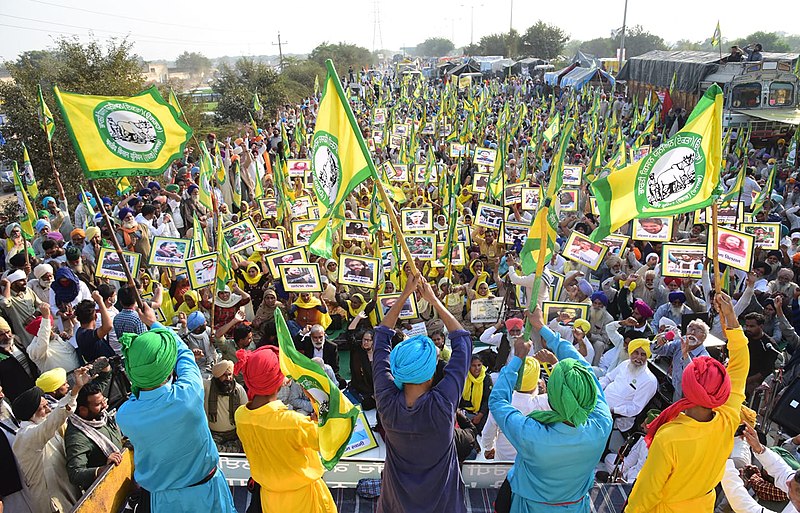
2020 was a year defined by people, groups, and communities standing up for their rights, fighting for equal treatment, and their right to exist. The Black Lives Matter movement across the US and protests in the UK calling attention to the government’s failure to investigate the deaths of Black citizens highlighted historical and current racial disparities. The End SARS demonstrations in Nigeria and farmer protests in India brought international attention to those protesting government policies that gravely affected their livelihoods. The world over, these people, groups, and communities have utilized Universal Declaration of Human Rights Article 20, “right to freedom of peaceful assembly and association,” to do this.
Protestors crowd the street in India, waving the green and yellow flags of farmers unions.” Photo courtesy of Randeep Maddoke via Wikimedia.
The Center for Holocaust and Genocide Studies at the University of Minnesota-Twin Cities promotes academic research, education and public awareness on the Holocaust, other genocides and current forms of mass violence. It was established in 1997 by Dr. Stephen Feinstein as an interdisciplinary research center. Read more…