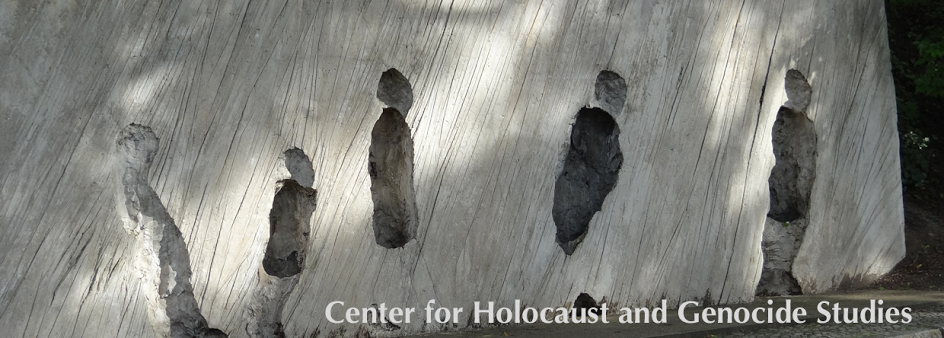
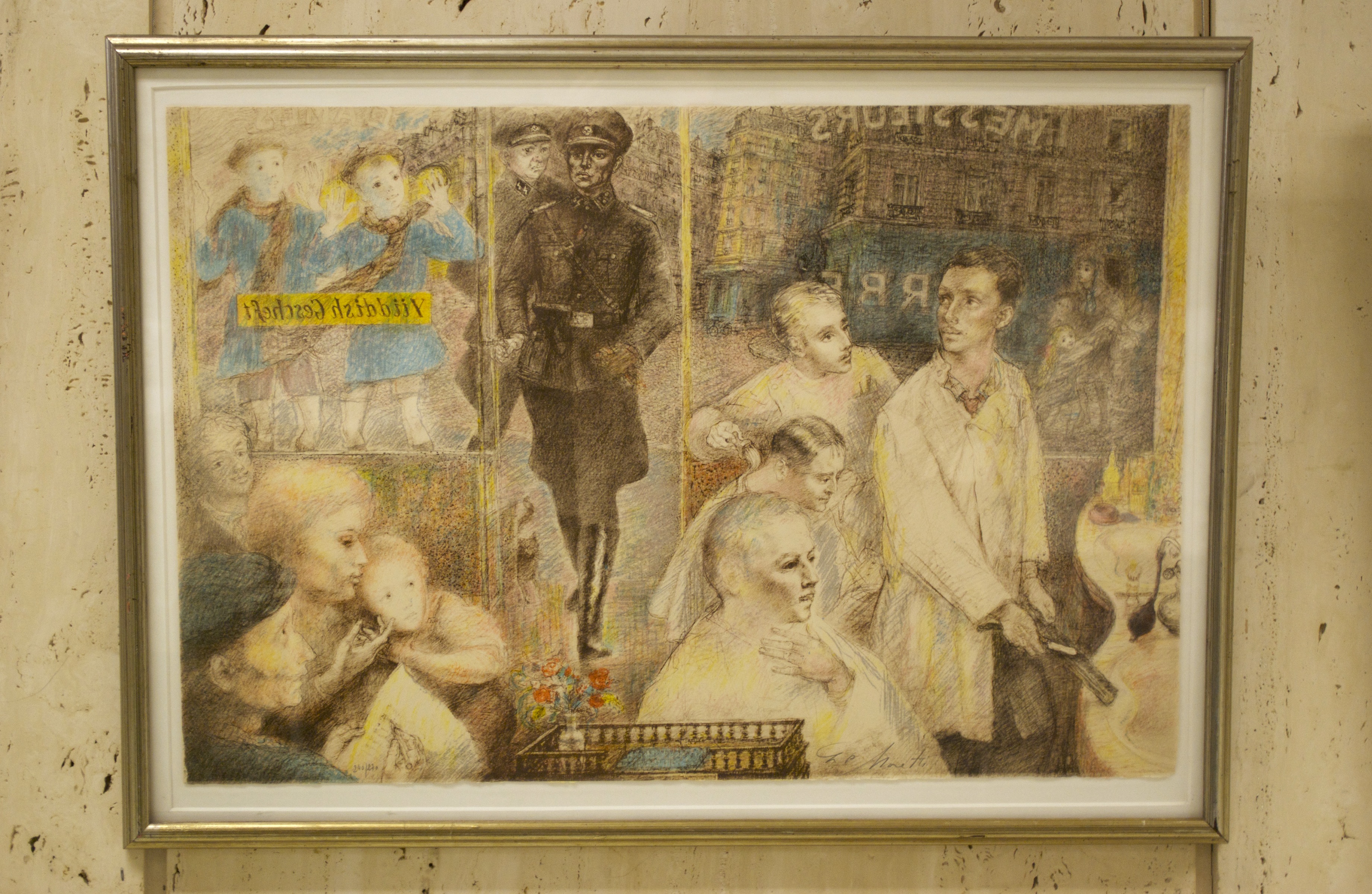
Displaced: The Semiotics of Identity, is an ambitious exhibition of art and historical artifacts that explores diverse aspects of the displacement of people and things, and its many repercussions. On display at the Wilson Library at the University of Minnesota, this sprawling exhibit inhabits walls throughout the first and the fourth floor, as well as having an online component. The exhibit’s theme is to explore the meaning made of a person’s or object’s identity in different spaces and times. The topic is in-and-of-itself huge, but the process whereby the show developed is why it is so ambitious: Displaced was curated by students.
 The idea of reviving a historical figure to return from the dead to our own time period is not new. Many novels and films have dealt with this premise before though usually they focus on the return of someone likable. In the German film
  Eye on Africa has often talked about atrocities unfolding, or likely to unfold, in different African states. Most of this information is never collected by myself and is gleaned from news organizations within and outside of Africa. Journalists are perhaps the one group of people that I owe a deep gratitude to. Even when working under tough circumstances they still believe in telling the story, and telling it right. The reason I point this out is because the past year has been a fraught one for African journalists in several countries. From outright assassinations in South Sudan, to the erasure of press freedoms in Rwanda and Kenya, African journalists are quickly becoming an endangered group. So this month’s contribution will focus on the plight faced by journalists working in Africa, for without them, this column would not exist.