
One semester, I was teaching a sociology class on settler colonialism and Native Nations and I had a student who was an avid hunter, passionate about public lands, and was also sociopolitically conservative. This student challenged several topics throughout the course; for example, the ongoing violence settler colonial social systems perpetrate against Black, Indigenous, disabled, LGBTQ+, and poor people. At the same time, this student deeply resonated with Indigenous land stewardship practices, public land initiatives, and Indigenous land-based social movements (e.g., LandBack). Initially, I was confused by the dissonance between the student’s seemingly contradictory personal and political interests and values. However, I designed and taught this course, in part, because of my own dissonance between my family background and scholarly interests. So, I recognized that, like this student, I too embrace multiple, sometimes conflicting, ways of being. Ultimately, as an instructor, I want to practice holding that, however conflicting, a student’s—as well as my own—background, experiences, and knowledge may seem, they can be simultaneously true.
Instances like this have shaped two of my pedagogical practices: 1) being transparent with students about the labyrinth of identities and lifeways that I hold; and 2) inviting students to lean into their backgrounds and identities, especially those that seem conflicting. Both of these practices have helped open up more expansive ways of relating to one another and the course content.
Labyrinth of Identities and Lifeways
In my teaching, I aim to be transparent with students about my own background. Here are slices of what I often share with students on syllabus day but also woven throughout the content I teach:
I was born and raised in Montana where the largest city has roughly 120,000 people, and 46 out of 56 counties are “frontier counties,” meaning there are six or fewer people per square mile. One side of my family is White and sociopolitically conservative. Through the other side of my family, I am a citizen of the Manitoba Métis Federation and belong to the Turtle Mountain Band of Chippewa. These relatives hold diverse sociopolitical affiliations. I come from Native and White relatives who have ongoing traditions of subsistence hunting, fishing, and trapping, and have spent their lives in the working-class building roads, answering phones, selling beer, laying carpet, installing power lines, caring for children, and providing social services. At the age of 29, I became the first person in my family to earn a college degree. I had spent the decade before that bartending, working in Italy on a U.S. Army base, tending my hobby farm, and selling lumber at a local hardware store. After graduating from college, I taught high school English Language Arts before beginning a PhD program in Sociology, which led me first to Missouri and later to New Hampshire. In academic spaces, I combine my rural sensibilities and unique sociopolitical mash-up with Métis/Anishinaabe culture, Native Nation sovereignties, and sociological knowledge to critique harmful social structures, counter violent policies, and publicly educate others about historic and current realities of ongoing U.S. settler colonialism. Like the student in the above anecdote, I embrace multiple, sometimes conflicting, ways of being.
Overall, I am connected to multiple “publics,” or communities that I am in a direct, unmediated relationship with. They span class and the political spectrum, fracture racial and national lines, and blur geographies. In acknowledging my own labyrinth of identities in the classroom, I hope my vulnerability and inclusion of my many identities inspires permission and the desire for others to come to the study of sociology with their many “publics” too. I have learned that a willingness and vulnerability to teach from this place begets student vulnerability to learn from a place equally as explicit about their background and experiences relative to course content.
Embrace Contradiction and Complexity
We all exist in this society amidst specific entanglements, just like the conservative student who simultaneously advocates for transferring land back to Indigenous stewardship while challenging the realities of ongoing settler colonial damage. I know I can contribute to healing in one of my communities “over here” and create harm toward another community “over there,” and I know this is the reality for most of us. By leaning into the contradictions and working to dissolve the (made up!) binaries in my teaching, students share that they often feel like they have something to contribute and to learn, even if they are sometimes complicit and contain irreconcilable complexities. Though not always easy, urging myself and students to stay with irreconcilability creates more robust space to think sociologically and imagine collaboratively as whole humans who don’t have to hide parts of ourselves that may not fit perfectly within idealized social justice frameworks. As a result of this pedagogical approach, one student shared in their course evaluation: “The professor regularly shut down the label of cancel culture and asked us to be more nuanced and messy in our conversations. Which I think the whole class appreciated, because then we could go to deeper levels in our discussions.”
Modeling wholeness despite contradiction in the classroom offers students opportunities to step into changemaking that feels available to them. I often notice that students find resonance with Dean Spade’s tripartite approach for improving material conditions in our respective communities: “(a) work to dismantle existing harmful systems and/or prevent their expansion, (b) work to directly provide for people targeted by such systems and institutions, and (c) work to build an alternative infrastructure through which people can get their needs met” (2020:134). In acknowledging our own complexities and coexisting publics in the classroom, students and I embrace a shared appreciation for the refusal of all-or-nothing thinking and appreciate more than a single prescribed way to instigate social transformation.
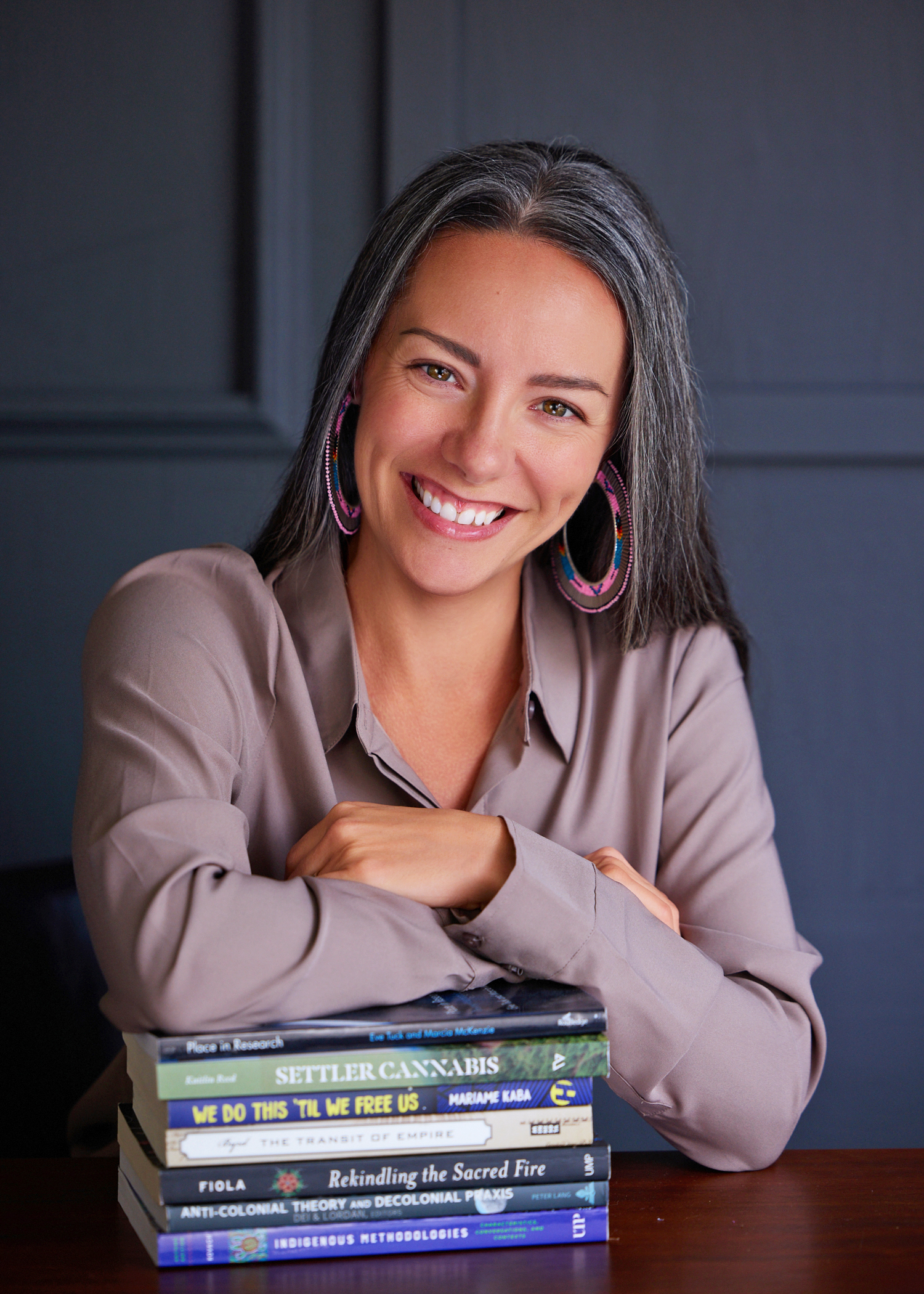
Melissa Horner-Petrone is the 2026–2028 Charles Eastman Fellow in the Department of Native American and Indigenous Studies at Dartmouth College, and she is also a PhD Candidate in the Department of Sociology at the University of Missouri. As a way to prioritize public sociology, Melissa regularly contributes to community events about Indigenous sociologies, systemic settler colonialism, and Indigenous governance. She also teaches undergraduate Indigenous Sociology courses and frequently collaborates on curriculum development with alternative high schools in reservation communities in Montana.
Comments