gender

Photo by Shane Adams, Flickr CC

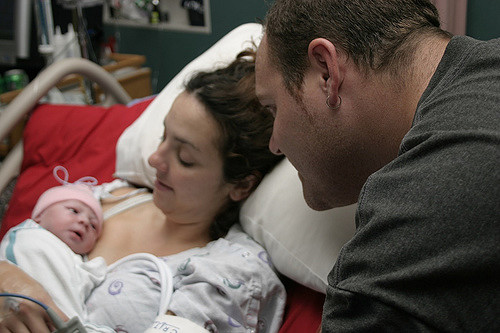
For those involved in gang activity, parenthood can serve as a powerful turning point in parents’ lives. Yet, men and women may experience and react to parenthood differently. In their recent work, David Pyrooz, Jean Marie McGloin, and Scott H. Dekker examine whether parenthood reduces the likelihood of gang affiliation and criminal offending among male and female gang members. 

The authors’ analysis draws from the responses of 163 women and 466 men who self-identified as gang members in the 1997 National Longitudinal Survey of Youth. The authors tested whether parenthood for the first or second time reduces the likelihood of self-identification as a gang member, in addition to the likelihood of committing crimes, including theft, drug solicitation, and assault. The authors also examined male gang members’ involvement in their children’s lives based on their residence with or apart from their children. Finally, the authors controlled for cohabitation between parents, legal employment, and education to determine the specific effects of parenthood.

Prior to having children, female gang members had a lower likelihood of committing crime and fewer years spent as gang members than men overall. For first-time mothers, having a child reduced their likelihood of gang affiliation by 93 percent and their probability of offending by 47 percent. However, only male gang members who were first-time fathers and resided with their children showed significant reductions in gang affiliation and criminal offending. At the same time, these changes were far less likely to last in comparison to female gang members. Thus, this research demonstrates that while parenthood can be a powerful force for moving away from criminal identity and activity, its impacts are tempered by gender.


Photo by Stewart Butterfield, Flickr CC

Originally posted Aug. 15, 2017

Women have made many strides towards equality in the workplace. Yet, studies continue to show that women are frequently paid less than men, women are expected to perform more secretarial tasks, and women are less likely to be promoted to higher-level occupations within organizations. And academia is no exception — while attaining tenure and promotion is the key to a long academic career, universities are less likely to grant it to women. A recent study by Katherine Weisshaar explores why female academics have a harder time achieving tenure promotion than their male peers.

The author developed a unique longitudinal dataset that includes department information and characteristics (e.g. prestige ranking, gender composition) from the National Research Council (NRC), Google Scholar citations, personal websites, and CVs. From 2000 to 2004, Weishaar documented the names of former assistant professors in 330 departments within sociology, computer science, and English. She examines three possible explanations for the 7 percent gender difference between male and female assistant professors in sociology departments: scholarly productivity (i.e. publications, awards, research grants), organizational differences (i.e. gender composition, prestige, public or private) and inequality in evaluations (i.e. gender bias, differences in recommendations).

The results indicate that women are less likely to receive tenure than their male peers across all three disciplines, though sociology and English maintain the greatest gender inequities in tenure. When women do secure tenure, the process takes longer than for male academics. Female assistant professors in sociology were less likely to publish in the discipline’s most prestigious journals (e.g. Social Forces, American Sociological Review, and American Journal of Sociology), obtained lower numbers of citations for their publications, and secured promotions in less prestigious departments. 

Overall, productivity differences accounted for approximately 34 percent of the gender gap, while time differences accounted for approximately 20 percent of the gender gap. The largest contributing factor to the gender gap (roughly 40 to 45 percent), however, lies within the assistant professor evaluation process that includes subtle biases and discrimination against women. Thus, increases in women’s individual productivity in the workplace will not likely lead to equal representation in higher occupational positions. Employers must also evaluate the ways in which gender discrimination both explicitly and implicitly hinder women’s promotion opportunities, despite equal rates of productivity.

Photo by Esther Max, Flickr CC

Originally posted Jan. 31, 2017

While male-dominated jobs are some of the fastest shrinking in the U.S., and female-dominated jobs are some of the fastest growing, many men choose not to enter fields they view as “women’s work” — occupations like home healthcare worker or nurse practitioner. But it is not all men who stay away from female-dominated occupations. You guessed it — it’s white men. Recent research by Jill Yavorsky, Philip Cohen, and Yue Qian shows that racial minority men are more likely than white men to work in female-dominated jobs.

The researchers use 2010-2012 American Community Survey data on working men ages 25 to 54 to statistically analyze the effects of race on the gender composition of jobs. The find that all groups of racial minority men are more likely than white men to work in female-dominated jobs, and this finding remains constant even when considering differences in men’s education levels, with the exception of Asian men with advanced degrees. Notably, black men and white men represent the greatest disparity — black men have the highest probability of working in a female-dominated job, while white men have the lowest probability of doing so. 

While this study can only tell us what is happening — that more minority men work in female-dominated jobs than white men — the “why” remains an open question. For one, this could be a tale of discrimination; minority men may be kept out of male-dominated fields and forced to choose female-dominated occupations. On the other hand, men of color may defy societal norms and place more value on so-called “women’s work,” like caring activities, than white men. Regardless, these findings highlight the important intersection of race and gender in the workplace. 

Photo by Hernán Piñera, Flickr CC

We often think that religion is a deeply personal commitment tied to parents and family; research has shown that women tend to be more religious than men, and that starting a family often marks a return to religion as people settle down. But religion is also tied to society in general, and it is easy to forget that many of the religious choices we make are for the sake of belonging to a community of other people. Public religious signals like the way we dress and self-identify are just as much about others’ expectations as our own private beliefs.

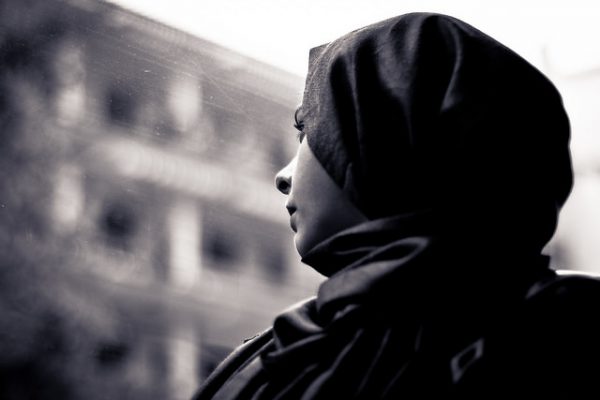
For example, the practice of wearing a veil in Islam is part of a personal faith commitment for Muslim women. But new research from Ozan Aksoy shows that this might have more to do with the social expectations that come from having a family than big changes in religious beliefs. Using data from a 2013 Demographic and Health Survey in Turkey and the Pew Research Center’s 2013 World Muslim Survey, Aksoy looked at whether Muslim women with children were more likely to report wearing veils. This analysis matched married women with one child to married women with no children who shared similar demographic characteristics such as age, education, beliefs about family values, and region of residence. This technique, called propensity score matching, allows researchers to focus on the effect of one key difference (having a child or not) on whether women were more likely to wear a veil. 

Two key points emerge. First, having a child significantly increased the probability of wearing the veil, and the effect got stronger with each additional child. Women who had sons first were also more likely to veil than those who had daughters. Second, having one child versus no children did not relate to other measures of religiosity and traditional family values such as attitudes about women’s roles in the home, prayer, and fasting. In other words, women who had children weren’t necessarily more religious, they were only more likely to signal their religiosity to others in public.

This finding fits with other recent research that shows how religious identities in public life work differently from private beliefs and practices. Learning how these differences work around the world can help us better understand what different faith communities share in common in society.

Photo by Jeremy Sternberg, Flick CC

The mark of a criminal conviction often has a devastating effect on future career opportunities. Black formerly incarcerated individuals have an even harder time finding employment due to employer discrimination. But jobs aren’t only important for economic security. Susila Gurusami’s recent study explores how state agents like probation officers, parole officers, and attorneys determine Black women’s commitment to rehabilitation by assessing if and how their employment is reliable, recognizable, and redemptive. Failure to meet these criteria could mean returning to jail or prison. In doing so, probation and parole officers reinforce “rehabilitation labor,” where formerly incarcerated women must prove that they have successfully transformed from ‘criminals’ to ‘workers.’

Gurusami spent 18 months volunteering as a social work intern with a local organization in a Los Angeles county that assisted formerly incarcerated women find employment, housing, and other rehabilitative needs. During her time there, she worked with 35 women — driving them to doctor’s appointments, guiding them through job applications, and accompanying them to court proceedings. She developed a close relationship with several women by conversing with them in their homes, meeting them at restaurants, accompanying them on daily walks, and speaking with them via phone and text messaging regularly.

The women in Gurusami’s study quickly learned that their probation and parole officers would not simply accept any form of employment. Rather, probation and parole officers emphasized that formerly incarcerated women must find work that state agents deem reliable, recognizable, and redemptive. Reliable employment meant long-term, full-time work. State agents criticized women who found seasonal positions or temp jobs. Some women were even discouraged from seeking education despite its long-term potential to generate greater income.  Those who attempted to earn GEDs, college degrees, or attend trade school were often discouraged by parole and probation officers who did not recognize education as a legitimate means to finding employment. 

Furthermore, parole and probation officers did not recognize traditionally female-dominated forms of work, like braiding hair or assisting with care of relatives, that did not take place in conventional workplace settings as valid employment. Lastly, state agents also tended to push women towards redemptive work — work that they viewed as beneficial to the community, such as counseling and social work. Women who failed to find employment that met these criteria were threatened with prison. While employment is vital to a successful future after incarceration, limiting opportunities for both work and education and forcing Black women to partake in rehabilitation labor reinforces notions that Black women’s actions are in need of constant control and discipline by the state.

Photo by Candida.Performa, Flickr CC

As the United States ages, more and more older adults are adjusting to the lifestyle changes that coincide with changing work and family roles, limited mobility, and chronic health conditions. For older adults who are married, cohabiting, or in another type of long-term relationship, this means that many of these relationships will include a partner who is living with a long-term disability or other impairment. In recent research, Deborah Carr, Jennifer Cornman, and Vicki Freedman investigate how intimate relationships affect the ways people experience disability, finding that support and strain in relationships affects the emotions of men and women in strikingly different ways.

The authors used data from the 2013 Disability and Use of Time supplement to a longitudinal study, which included over 1,100 adults over the age of 60 who were married, cohabiting, or in a romantic relationship. Researchers used 6,603 activity reports from time diaries in the supplement to analyze feelings of happiness, calm, frustration, sadness, and worry. They broke down the results by gender, presence of a disability (43% of the sample), and level of impairment. 

The study found that support from partners buffered negative emotions for women and men with low levels of impairment. Support was especially beneficial for the most highly-impaired women. In a marked contrast, however, support increased all four negative emotions in highly-impaired men. These men also responded to relationship strain with negative emotions, while the effects of strain were negligible for other men and all women. The researchers suggest that these findings point to gendered attitudes about independence. While women may understand support as a way to maintain autonomy, highly-impaired men may feel that both criticism and support threaten their independence and competence. These findings provide insight into the experiences of the older disabled and their caregivers, while also contributing to our understanding of how gender has important effects in all stages of life.

Photo by emyeu sss7, Flickr CC

Scholars tend to categorize relationships into two types — traditional, where one partner does the majority of housework and caring for children (typically the woman), and egalitarian, where these tasks are equally shared between partners. Among heterosexual couples, there has been a recent shift towards more egalitarian relationships, but this does not mean that all people define gender equality in the same way. New research from Carly Knight and Mary Brinton shows that there are actually three different ways Europeans define and subscribe to ideals of egalitarianism.

The authors use data from multiple surveys across 17 European countries. Respondents had to agree or disagree with statements about importance of a job for women’s independence, the primacy of men’s jobs over women’s, and women’s “natural” mothering abilities and desires to stay at home. 

It turns out that egalitarianism takes three forms: liberal egalitarianism, egalitarian familism, and flexible egalitarianism. The largest number of people fall under the liberal egalitarian group, which includes those who strongly support women’s participation in the labor force and believe that husbands and wives should both contribute to household incomes. Egalitarian familists are closer to traditionalists in their thinking that women should participate in the paid labor force, but that the home and family are more crucial parts of women’s identities. The third group, flexible egalitarians, equally support women’s decisions to enter the workforce or stay at home and do more traditionally feminine domestic work. Even though all of these people subscribe to some kind of equal division of labor in heterosexual relationships, this research shows that there is more than one way to understand these important changing family dynamics. 

Photo by verkeorg, Flickr CC

We often hear public outcry regarding cases of children’s sexual victimization, but we rarely get to see what happens within the courtrooms. The reality is that not all of these cases face swift justice. In new research based on observations of seventeen jury trials, Amber Joy Powell, Heather R. Hlavka, and Sameena Mulla show that in trials where children serve as witnesses, defense attorneys often work to discredit children’s testimonies by relying on racial and gendered stereotypes.

The children who testified in the observed trials ranged from age five to sixteen, most were Black and Latinx youth, and all but two were girls. One of the strategies defense attorneys used included emphasizing the fragility of children’s bodies, especially girls’ bodies. They argued that the absence of visible physical or psychological injuries indicated the jury had reason to doubt the children’s claims. For those who were teenagers at the time of the assault, attorneys argued that adolescents, especially adolescent girls, were rebellious, manipulative, and less trustworthy than younger children. This especially applied to Black girls’ testimonies because they were often perceived as older than their ages and thus defense attorneys claimed they were more blameworthy. Attorneys also relied on stereotypes of deviant Black families, drawing on narratives about dysfunctional families, promiscuous “welfare mothers,” “baby mamas,” and blaming parents for having drugs in the house. 

In the cases where boys testified, attorneys relied on jurors’ difficulty believing that men could sexually assault boys without leaving physical evidence for someone to find. In one case, the defense attorney questioned the credibility of an adolescent Latino boy based on a “rumor” that he might be gay. In a post-trial interview, a juror proposed that “Latino culture” might have prevented the boy from admitting the sex was consensual.

While many sexual assault survivors face doubts about their credibility, this research show how children are often discredited in these cases because of distinct assumptions about gender, sexuality, and race. In particular, children of color confront cultural narratives that have the potential to produce unjust outcomes in the courtroom.

Graduation ceremony at Smith College. Photo by cogito ergo imago, Flickr CC

The emergence of women’s colleges in the U.S. was an important historical challenge to ideas about women’s intellectual inferiority to men. While the number of women’s colleges has declined significantly in the last half century, in 2014 there were still approximately 50 women’s colleges in operation. Recently, with the increased visibility of transgender identities, women’s colleges face a dilemma: How do they determine who counts as a woman?

Researchers Megan Nanney and David Brunsma investigated how women’s colleges determine students’ genders through an analysis of student newspapers and nine trans admittance policies at women’s colleges in the U.S. Through their analysis, they demonstrate how women’s colleges are not only structured by gender, they play an active role in actually constructing gender. 

Within the student newspapers examined, the debate between inclusion and tradition was apparent. Actors within the colleges balanced the need to stay true to their values and missions related to creating a “community of women,” while also recognizing gender as a social construct and wanting to be inclusive of non-normative gender identities. The analysis of admittance policies revealed a wide range of criteria for determining a student’s gender based on biological sex, legal documentation, and identity. For instance, a student who was assigned female sex at birth but now identifies as genderqueer was included at some colleges, but excluded from others.

So, while all of the colleges were actively constructing what it means to be a woman, definitions did not always align between the schools. This misalignment highlights that womanhood itself is constructed, and the ways the category of “woman” is applied is, according to the researchers, “neither static nor natural.” 

Photo by Wyatt Fisher, Flickr CC

New career opportunities can be exciting for young couples. Yet, when career opportunities involve moving to a new location, couples must negotiate if and how the move will take place. In heterosexual relationships, research finds that the stress of relocation more often falls on female partners, and women often decide to relocate for their male partner’s career. In line with these cultural trends, a new study by Jaclyn S. Wong examines how young heterosexual couples negotiate relocation for career opportunities, despite growing acceptance of gender equality in the United States.

Wong conducted 118 interviews with 21 heterosexual couples, between the ages of 22 and 35, who were considering relocation for career opportunities for one or both partners.  All couples had similar earning potential and were in their final year of graduate and professional school from universities in the Chicago metropolitan area. Wong observed couples follow three main trajectories when negotiating relocation. In the first trajectory, couples, particularly men, took steps to maintain desirable career outcomes for both individuals. They often formed future plans for relocation and altered their job search in order to help meet each partner’s career goals. Most couples in this pathway successfully found employment in their respective field after relocation.

In the second trajectory, one member of a couple, typically the woman, changed their initial career desires to meet the career opportunities of their partner. They often re-framed their career goals to justify prioritizing their partner’s career over their own. In the final pathway, one of the partners, men in particular, withdrew from the negotiating process and seceded all the bargaining power to their partner. Due to this bargaining power, however, women experienced more stress and emotional labor because they had to determine which career opportunities satisfied both partners in the relationship. In sum, Wong finds that despite recent gains towards gender equality at work and at home, many heterosexual couples continue to reproduce traditional gender roles in negotiating whose career to prioritize.