
gender

Photo by Matteo Bagnoli, Flickr CC

We say that scent is the strongest sense tied to memory, but is it possible that scents can carry our cultural assumptions as well? Sociologist Karen Cerulo set out to study this question by diving into the world of perfumes. From a list of top-selling perfumes, Cerulo selected one expensive luxury brand, one mid-range brand for workplace professionals, and a bargain brand for everyday use. She collected the marketing materials for each brand to assemble a database of scents for each perfume and the core messages the manufacturers used to promote them. Cerulo then assembled 12 focus groups of volunteers with 73 people in total. She gave each a blind sample of the perfumes and asked them to discuss and describe their reactions to the scents, as well as who they thought the target buyers were for each.

The results were dramatic. Not only did many respondents correctly identify the fragrance notes (like “citrus”, “floral”, or “woodsy”), their descriptions also nailed the marketing materials’ language (like “sexy,” ”strong,” or “edgy”) — match rates ranged from 79% to 93% of focus group members) and the intended customers (such as “young, upper middle class,” with match rates from 63% to 73%).

Here’s the weird part: almost nobody correctly guessed the actual perfumes used in the study (only 6% of respondents got any of them right), and many of them couldn’t describe how they knew the right ideas in the marketing materials. This “nondeclarative culture” (aka: a gut reaction) shows how these implicit cultural messages were tied to the scents, rather than conscious exposure to brands and marketing.

Respondents were also good at matching the scents to stereotypes about race and class, showing how deep these assumptions go. One respondent said “but something about it makes me think Hispanic. It’s noisy. It’s probably from a drugstore…cheap and just too strong.” This research shows how implicit social messages get carried along in our popular culture. Whether we want to sell a product or root out prejudice, we have to remember that we don’t always get to pick our passive perceptions.


Photo by Nate Grigg, Flickr CC

When we talk about reproductive choices and regulations, women are generally at the center of these discussions. However, this hasn’t always been the case. In post-war India, the government changed its approach to population control by targeting men in birth control campaigns. Using archival materials from 1960-1977, Savina Balasubramanian analyzes this shift in family planning strategies. The government’s strategy relied on specific conceptions of masculinity, fatherhood, and men’s roles in families.

Balasubramanian explored archival records to show how social scientists, doctors, research donors, and state officials discussed population control.  The “clinic model” of 1950s India primarily targeted women, but at the end of this decade scientists began to focus on men because they saw men as the decision-makers in families. They assumed that men were more likely to be literate and educated in rural and poor communities. Further, because men held more power in many families, officials worried there could be backlash if women were approached before their husbands. Their concerns were not just about men, though. Stereotypes about poor women as irresponsible led some scientists to argue that women could not be trusted to take contraceptive pills that required time-tracking.

To get men on board, scientists and state officials used masculinity norms — specifically  associating men with rationality — to promote what Balasubramanian calls, “reproductive rationality.” In other words, contraception was framed as an economic issue that required calculation and forethought by the head of the family, assumedly the husband. The government also led “mass vasectomy camps,” which were festival-like affairs, and those who participated often received household items or money as incentives. However, due to political circumstances, this approach to birth control did not last. This approach — in which policymakers viewed men as responsible for birth control and gave them the power to make choices for their families — is particularly interesting when compared to current approaches to birth control. Today, policymakers are far more likely to assign primary responsibility to women, yet regulate their choices through legislation.

Photo by georgia, Flickr CC

In a society that is increasingly encouraging sex positivity and sexual freedom, we may forget that individuals perceive men’s and women’s participation in certain sexual behaviors very differently. Sociologists have long recognized the sexual double standards that deem women ‘hos’ and ‘sluts’ as men reaffirm their masculinity for engaging in similar heterosexual behavior. Yet, Trenton D. Mize and Bianca Manago‘s new research suggests that men’s heterosexual identities may face greater risk of being questioned when participating in sex with other men than women’s heterosexuality when participating in sex with other women.

Mize and Manago conducted two survey experiments to test their hypotheses. First, they tested if straight men who engage in one same-sex encounter are more likely to have their heterosexuality questioned than straight women who engage in a same-sex encounter. Second, they tested whether men with a sexual history of primarily male partners are less likely to have their sexual orientation questioned than women with a sexual history primarily female partners. Participants from a nationally representative survey read an online vignette describing an individual’s sexual history, followed by a generic description of a single sexual encounter that contradicted the individual’s past sexual history. For example:

“Michael is currently single but has had multiple happy relationships with women in the past. Michael has only dated women and one of his relationships with a woman named Emily lasted for over two years. The other night, Michael met Matt and felt attracted to him. At the end of the night, Michael and Matt went home together and had a casual sexual encounter” (313).

Respondents then marked their categorizations of that individual’s sexual identity. In a follow up survey, the authors include more details of the sexual encounter such as “kissing” and “oral sex” to account for possible differences in perceptions of men and women’s sexual behaviors.

While 51 percent of participants identified women with a different-sex dating history (dating primarily men) who had a single same-sex encounter as heterosexual,  only 31 percent of participants viewed men with similar backgrounds and behaviors as heterosexual. Instead, survey participants were more likely to label these men as bisexual or gay. Furthermore, men with a history of same-sex encounters that had one different-sex encounter were less likely to be considered heterosexual than women with similar sexual histories. These findings remain similar when including specific details (e.g. kissing, oral sex) of their sexual encounters. These insights allow us to understand how heterosexual men’s status of advantage make them more vulnerable to the loss of their heterosexuality. Because men’s heterosexuality is rigidly defined, engaging in same-sex sexual activity risks their straight identity and perhaps the privilege that accompanies it.

Katelynn Bishop, Kjerstin Gruys, and Maddie Evans, “Sized Out: Women, Clothing Size, and Inequality,” Gender & Society, 2018
Photo by kelly, Flickr CC

While consumers are aware that sizing for women’s clothing varies by company and even item, women still use clothing sizes to assess how their bodies meet cultural beauty standards. Rather than writing off the anxieties about buying that perfect dress with statements like “size doesn’t matter,” or “nobody can see the tag!” it is important to take the material and psychological consequences seriously that women experience when navigating clothing choices. Clothing not only communicates the latest styles, but also whose bodies are “in” or “out.” In order to understand how clothing sizes impact women’s identities and inequalities between them, Katelynn Bishop, Kjerstin Gruys, and Maddie Evans combined their three existing research projects on women’s clothing.

The researchers observed brick and mortar stores and conducted interviews with consumers and store employees at three different sites — a specialty bra boutique, a bridal salon, and a chain ready-to-wear store specifically for plus-sized women. Because this project grew from three separate initiatives, the data for the bra store comes primarily from interviews, the data from the ready-to-wear-store comes mostly from ethnographic observation and the data from the bridal salon comes from a mix of the two methods.

Depending on what sizes women could wear, they experienced different consequences. Plus-sized women were more likely to feel stigma for having to wear larger sizes. They also had fewer choices of merchandise in stores than “straight-size” (non-plus size) women and sometimes had to shop at different stores entirely. Further, bras and bridal wear in plus sizes often cost more money, increasing the economic barrier to purchase these. Women who were between size categories, particularly between a “straight” and plus size, sometimes avoided even trying the larger size item because of the stigma of wearing a plus-size. When these inbetweeners were able to wear the non-plus size options, they reaped material privileges of more clothing choices and psychological benefits of distancing themselves from the stigmatized plus-size category. In short, clothing sizes are more than just numbers, they mark women as in or out, and women use sizes strategically to avoid stigma. 

Photo by freeimage4life, Flickr CC

Although female students as a whole perform better than their male counterparts in both high school and college, the labor market assesses their academic achievements very differently. New research by Natasha Quadlin looked at how grades matter for securing a job and whether the outcomes vary by gender. She found that high academic achievement pays off for men, but not for women.

Quadlin created 2,000 job applications and sent them to entry-level job openings for male and female candidates with identical résumés and then determined their success based on callback rates. Among men, those with a C+ college GPA got as many callbacks as A- applicants. Among women however, B+ applicants received the most callbacks.  When comparing both genders, A+ men received roughly twice as many callbacks as A+ women. These differences were even greater for women in traditionally “masculine” majors, like math or the physical sciences.

To understand the reasoning behind these decisions, Quadlin then sent the same applications to employers in charge of hiring decisions at more than 250 companies. She asked them to provide feedback about applicants’ qualifications and personal characteristics based solely on the application materials. When assessing men, employers discussed competence and commitment; for women, employers discussed likability. Employers viewed high-achieving women as arrogant and ambitious. On the other hand, they viewed high-achieving men as competent and likable, simultaneously. These findings reveal that the labor market still represents a major challenge for women — a gender gap persists even when women demonstrate equal or higher academic performance than men.

Photo by DVIDSHUB, Flickr CC

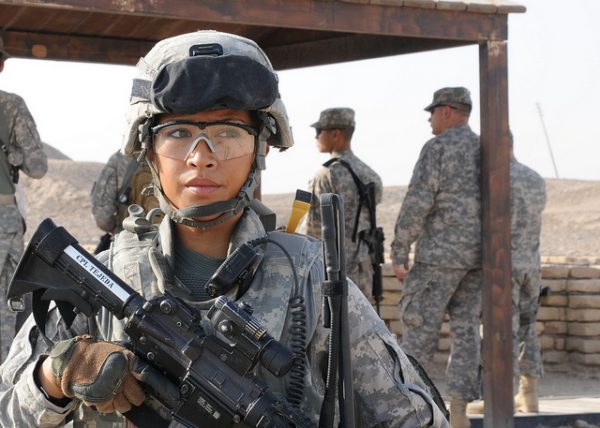
Sexism is not simply about individual bias or action. In fact, the structure of organizations can facilitate sexism so that discriminatory practices occur even when individuals do not express sexist attitudes. In new research, Stephanie Bonnes demonstrates how bureaucracies and male-dominated hierarchies within the U.S. military facilitate discriminatory behavior towards women, like sexual harassment or abuse. 

Bonnes conducted in-depth interviews with 33 U.S. service women, including 21 on active duty. More than a third of her interviewees experienced what Bonnes calls, “bureaucratic harassment,” where powerful individuals manipulate administrative policies and procedures to undermine their colleagues’ professional careers. For example, superior officers delayed women’s promotions, threatened to withhold benefits or cancel holiday leave if they reported sexual harassment and abuse. One commander even failed a service woman on an exam when she would not comply with his wishes to take a desk job, and prohibited her from retaking the test.

Black and Latina service women reported that superiors cited their “attitudes” in performance reviews or infraction reports, reflecting racism as well as sexism. For instance, a White male officer reprimanded Joanna — a Latina officer — for disrespecting a superior officer, even though he was the same rank as her. In blaming Black and Latina women for their “attitudes,” these men rely on stereotypes about women of color, specifically that they are easily angered and thus unprofessional.

Bonnes argues that service women’s treatment is not simply the result of explicitly sexist commanders. Rather, the military’s policies, procedures, and its hierarchical structure — imbued with some level of discretion for those in power — promote discrimination against service women. And when commanders use their discretion to give infractions or poor performance reviews, service women face serious consequences, including ineligibility for opportunities like pay raises because of holding lower ranks, and time and energy spent responding to infractions and abuse instead of devoting that energy to other important aspects of their lives. In short, Bonnes’ research allows us to understand how institutional structures — rather than simply sexist individuals — can reproduce gender inequality if left unchecked.  

Photo by Tony Alter, Flickr CC

What happens in a hospital waiting room? From one perspective, not a lot. But from another perspective, medical waiting rooms are emotionally-fraught spaces where individuals constantly identify and play out social scripts. Individuals follow sign-in procedures, wait on doctors, choose how to interact with strangers, and care for family members. Margaret Waltz spent four months observing one aspect of these mini social dramas: gender. Her study examines whose time is valued, as well as how the social interactions within medical waiting rooms reinforce gendered expectations and hierarchies.

To conduct this research, Waltz observed in five hospital waiting rooms. She recorded when patients entered and left and took notes on their behavior within the room. The result includes both basic demographic information — such as the fact that all the home health care workers were women, while all of the drivers and other transport personnel from nursing homes were men — and patterns of interaction. Her writing is sprinkled with anecdotes of privilege, such as when a White man, holding coffee and a donut, asked a nurse to open the door for him — prompting laughter from the women in the waiting room.

On a basic level, the logic of medical waiting rooms is (mostly female) caregivers waiting on (mostly male) professionals. According to Waltz, “women are doing gender by waiting in medical waiting rooms, and men are doing gender by not waiting.” In addition to more women working as home health care workers, women were also more likely to accompany a family member to the hospital, making them a more constant presence in medical waiting rooms regardless of whether men were the majority of the patients. Waiting was, therefore, part of their work, whether that work was paid or unpaid. And once in the waiting room, women were more likely to use the waiting room as a social space to bond with other individuals.

Men, by contrast, were more likely to be in positions where they did not need to wait (such as serving as drivers), to arrive late to an appointment or leave before their family member was seen, and to expect to be served immediately. Men were also more likely to take up what Waltz called “physical and auditory space,” spreading out over multiple chairs, talking loudly on the phone, or assuming that nurses had the time to speak with them. Waltz’s research reveals that even the structured and bureaucratic spaces of American health care are places where gender is recreated. Men and women in these spaces interact in ways that conform to gendered expectations and reinforce the conception that men’s time (and work) is more valuable than women’s.

Photo by aclark71, Flickr CC

When we hear about children losing their caregivers to incarceration, we tend to think about mothers. Yet, there is a small, yet sizable group of men that enter prison while being the primary caregivers of their children. In recent research, 39 of these incarcerated men in Australia talked to researchers Tess Bartlett and Anna Erikson about how they try to uphold their roles as fathers while serving time in prison.

Life in prison forced many of these men to balance their identities as both prisoners and fathers. On the one hand, they needed to display an attitude that valued strength and violence to adapt to prison conditions. On the other hand, the men wanted to preserve their nurturing and caring roles as fathers. To balance both the prisoner and the father identities, inmates purposively choose what version of themselves they want to display depending on the situation. However, some parents decided to abandon their “father” identity once in prison. Some men asked their families not to visit at all, in hopes that this would lessen the emotional burden of imprisonment for both themselves and their children.

For those men who did want to stay connected with their children, the prison structure made this difficult. For example, visiting rooms did not allow men to fully engage with their children, through activities like running or playing games. Still, men wrote letters, made toys, and created art to stay connected to their children. One of the participants declared, “[I] still have a lot of offer as a father.” 

Correctional authorities could tremendously improve the life of fathers and children by providing better spaces for families to be families. Preserving family ties while incarcerated is associated with fewer offenses, positive parenting practices, and increased employment opportunities after leaving prison. In short, prison structures that allowed greater family connection could provide substantial social benefits.

Jukka Savolainen, Samantha Applin, Steven F. Messner, Lorine A. Hughes, Robert Lytle, and Janne Kivivuori, “Does the Gender Gap in Delinquency Vary by Level of Patriarchy? A Cross-National Comparative Analysis,” Criminology , 2017
Protesters arrested at the 2008 Republican National Convention. Photo by Jeremy Noble, Flickr CC

Almost universally, women commit less crime than men. At the family-level, researchers explain this through gender socialization — in families where parents exert more control over daughters than sons, girls are less likely to commit crimes than boys. New research by Jukka Savolainen and colleagues examines the gender gap in crime on a larger scale by using data from 30 countries to determine how patriarchal attitudes and the social position of women may influence young women’s participation in crime.

The authors combine the International Self-Report Delinquency Survey — which measures youth’s participation in crime in 30 nations — with attitudinal measures of gender equality from the World Values Survey and the Gender Inequality Index from the United Nations —  which measures gender disparities across nations in areas such as economic status and reproductive health. Consistent with previous research, they find a gender gap in crime participation. While young men participated in more crime than young women overall, the gap is greater in countries with greater patriarchal attitudes and higher levels of gender inequality. In other words, young men and women commit crimes at more similar levels in countries with more gender equality, and this is due to a combination of young women committing more crime and young men committing less crime. 

In sum, decreases in patriarchal attitudes and practices influence both male and female participation in crime. The authors suggest that variations in patriarchal norms across countries may alter gendered socialization practices, gender differences in parental supervision, and gendered attitudes and behavioral expectations — all of which may affect future participation in crime.

Photo by zenjazzygeek, Flickr CC

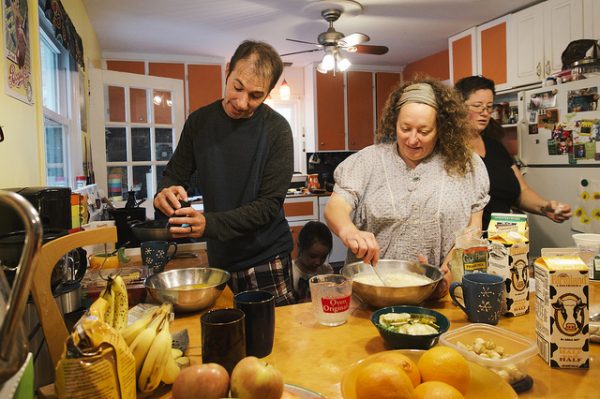
In our busy lives, we sometimes prioritize our time over our money. Services like cleaning, lawn care, child care, and meal delivery offer convenience when it seems impossible to get everything done at work and at home. While it may seem like life is getting busier every year, the use of these types of services — known as “household outsourcing” — has increased surprisingly slowly over the past 30 years, even with household incomes increasing overall. New research by Sabino Kornrich and Allison Roberts finds that the use of these services depends primarily on increases in men’s incomes, not women’s for different-sex, married couples.

Kornrich and Roberts use the Consumer Expenditure Survey (CES), a nationally representative sample of household spending for different-sex married couples beginning in 1980. CES uses interviews to capture larger, less frequent expenditures like rent or monthly childcare payments. Additionally, CES asks people to track their spending for two weeks to get a sense of small, day to day purchases that people often forget, like eating out or an afternoon latté. 

Changes in household income are the strongest predictors of outsourcing household services, like hiring a cleaning service or paying for daycare. However, changes in women’s earnings predict little change in outsourcing. This is somewhat unexpected given that compared to men, women tend to take on the majority of household work and childcare, in addition to paid work. Using economic survey data makes it difficult to capture exactly why increases in women’s incomes don’t correspond with more outsourcing of household services. The authors suggest that women may feel pressure to uphold an ideal image of the home and family and try to “do it all.”