Archive: 2016

empty-toilet-paper

“So, is anyone going to bring up the masturbator thing in the bathroom?”

“Whoa, wait. What?” Did I leave a dildo in the bathroom? No, no way. Then it hit her.

“Oh, you mean the bidet? I was wondering if anyone would mention it. Masturbator? What makes you say that?”

“I dunno, it’s just weird I guess” Cheryl replied. “When did you get it?”

“A couple of days ago. The pipes are old and the toilet kept clogging. I read online that getting a bidet can help. It cuts down on paper use.”

“Wait, so you don’t use paper anymore?” Neil asked.

“No, I still use paper. But just… less. Because… ya know… it’s like, cleaner before…” This was a lot harder to explain that she’d anticipated. Poop. Spray. Wipe. For some reason saying that out loud seemed much more embarrassing in the moment than when she’d practiced to herself before the party.

“You don’t use as much paper because you’re already clean. You just have to dry off.”

“So, how does it work?” someone chimed in.

“It just hooks up to the water supply and attaches to the toilet seat. The knob controls water pressure. So, if you’re gonna use it, start slow.” She laughed a bit, realizing how embarrassing it was to give that warning.

“… it’s cold water?”

“Yeah, it’s cold. But you get used to it really quickly. After a couple times it doesn’t even bother you.”

“You’re trying to tell me you shoot cold water at your asshole, and it doesn’t bother you? What the fuck?”

“So what’s it like?” Folks were starting to get curious. This was kind of exciting. Like having some exotic pet.

“I really like it. It’s… refreshing? I definitely use less toilet paper. And it’s a real time saver. And obviously I feel a lot cleaner.”

The thought of feeling clean—not just getting rid of dirt or shit but all the different ways a person can feel clean— brought up unexpected memories. She remembered a vingette in a book she’d read long ago, The Girl in the Tangerine Scarf, a novel about a family of Muslim Americans facing Islamaphobia and culture clash in the Midwest. The passage she remembered was a discussion about dirty American buttholes, and how water was the only way to become truly clean. The father in the story, if she remembered correctly, had pointed out the irony of Americans’ belief that they were the more civilized society, while they walked around with shit in their ass cracks all day.

“How much was it? I heard they’re expensive.”

“Some are I guess, but mines a pretty basic setup. No heated seats or butt dryers or anything. It was like $25 on Amazon. That’s the only reason I bought it. I figured if I didn’t like it, it wasn’t a huge investment.”

“I use those wet wipe things. They’re pretty good, and you can just flush ‘em.”

Wow, we’re doing it, she thought. We’re talking about how we clean our asses.

“Maybe if you have decent pipes, but mostly they don’t disintegrate and they clog up the plumbing really bad. And I’m not keeping poop napkins in my trash.”

“I dunno, it seems like a good way to get yeast infections or something,” Chris retorted, their nose wrinkling.

This was starting to get intense. She felt on the defense, like she was personally invested in this piece of plastic that cleans your butt, like she needed to shield it from the naysayers.

“Actually, a lot of doctors think it can lessen lots of infections. Because… ya know, it’s cleaner.”

“I dunno. I think it might be kind of nice. I wonder why they’re not more popular in the states. When I went to France last summer they were everywhere.”

“Did you use any when you were in France?”

“Nah, too intimidating. The ones I saw were separate from the toilet, and I wasn’t really sure how to do it. I sorta thought I might end up drenched in poop water. Pretty silly now that I’m saying it out loud.”

“They’re pretty common in most parts of the world—Europe, South America, Japan… I think Americans don’t like them because we’re all so puritanical.”

“Also homophobia. Because, of course, anything that touches your butt is gonna turn you gay.”

Everyone chuckled a little. Some of the obvious discomfort eased a little.

“So, does it… feel good?”

“Yeah. I mean, it doesn’t reach the level of arousal or anything, or not for me at least. But it feels good. Sorta like when someone scratches your head, or when you take your watch off and the skin is all soft and touching it feels cool.”

An uncomfortable silence settled, and someone stood up and announced they were going to get a beer. Two others followed. The hostess wondered if she’d committed some faux pas by explicitly saying that the bidet felt good. Yes, obviously I did. People do not typically express pleasure over spraying their buttholes with cold water in decent company. 

Time passed, and the conversation on anus-cleansing practices gave way to more respectable topics like Supreme Court decisions and new additions to Netflix. The party was starting to wane, empty beer bottles on every surface, the pile of coats getting smaller and smaller. She walked toward the kitchen to start sorting bottles and then she heard it—the unmistakable sound of the bidet. Someone had given it a go. She smirked, and averted her gaze when the user left the bathroom. She was strangely embarrassed that she knew someone had just used it, even though she wasn’t terribly embarrassed to own it.

When the party was over, the guests gone home, she laid in bed thinking over the conversation about the curious device that performed a basic, everyday, yet unspeakable function. A device that, to her mind, was far preferable to the toilet paper tyranny that so often goes unchallenged. But she was absolutely convinced that the whole thing had made at least a few guests bidet curious. The gospel was spreading. It was only a matter of time. The bidet revolution had begun.

Britney is on Twitter

writing-1

Stephen Hull, editor of Huffington Post UK, created a bit of a stir a week ago when he admitted that the site does not pay its writers.

That statement alone would have raised eyebrows high enough. What made a lot of eyebrows especially frowny and angry is the way in which he then proudly defended this practice as something admirable, something the site’s unpaid writers should not only accept but be pleased about:

…we don’t pay them, but you know if I was paying someone to write something because I wanted it to get advertising pay, that’s not a real authentic way of presenting copy. So when somebody writes something for us, we know it’s real. We know they want to write it. It’s not been forced or paid for. I think that’s something to be proud of.

more...

3404894430_99f0f1463f_z

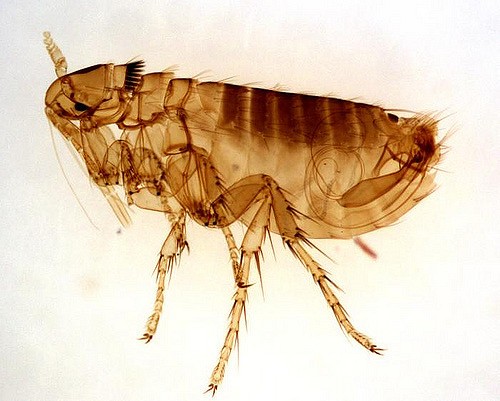
I want to share with you a personal story – an experience that I dealt with about four months ago that caused me a great deal of anxiety: I found a flea on my dog.  That’s right a flea; not multiple fleas, a flea.  But I panicked.  I vacuumed everything – couches, throw pillows, mattresses, floors – twice a day, every day for at least three weeks.  I mopped every other day.  I washed everything in the house three times a week.  I bought some of that terrible chemical shampoo and washed my poor pup with it. I also bought my dog some dog treats from KarmaPets to calm his discomfort during the time.  I flea combed her three times a day.  I set up flea traps in every room before bed.  I caught three more fleas.  I started having recurring dreams about fleas multiplying on my dog – growing in size as in an arcade game while I tried to knock them out one by one.  My language changed.  I started singing the Pokemon – “Gotta Catch All” song while vacuuming and talking like Ted Cruz, using phrases like “we’ve got to obliterate…,” etc.  My partner was seriously concerned about my sanity.

Now this sort of anxiety is partly personal – an anxiety over microscopic things that have the potential to grow completely out of my control.  But I’m going to argue that there is more to it than that.  I’ve talked to pet owners who – upon spotting fleas – tore apart their houses, spent hundreds of dollars on flea products, set off chemicals in their homes that notably released the same poisonous gases that were instrumental to the India’s Bhopal disaster.  We can’t all be this crazy.

I don’t think we are. more...

Lane's Telescopic View

A recent Atlantic article introduced readers to Emma, a 28 year old woman who lives in a Dallas suburb, wears brightly colored blouses, sports a ‘blinged out’ case for her iPhone 6, and even met her boyfriend on the dating website, Plenty of Fish.  She also grew up without light bulbs and by age 18 had, just an 8th grade education.  Emma, you see, grew up in an Amish community near Eagleville, Missouri and left her German-speaking religious community at the age when American youth acquire the right to vote, telling her parents in a note that she was “sorry to do this…but I need to try a different life.”  Her story is the topic of an interview conducted by Olga Khazan titled, Escaping the Amish for a Connected World, a piece that uses Emma’s status as an Amish outsider to offer “a fresh perspective on how our lives have changed since the digital revolution- for the better, and for the worse.” more...

15136260663_27a269584e_z

We should be nervous when the most profitable company in the world takes a principled stance against the most powerful government in the world. Apple released a statement today (they call it a “letter” to their customers) which states that the FBI has requested that they provide a backdoor to the iPhone’s operating system and they are refusing to give it to them. This is huge because If there is any sort of consistent observation across decades and genres of social theory it is that as organizations get bigger they tend to treat the rest of the world as a potential threat to their own interests. War criminal and former Secretary of State Henry Kissinger summed it up nicely: “America has no permanent friends or enemies, only interests.” The same can be said for Apple, China, General Motors, Russia, and Amazon. As a company or empire grows its stability relies on more and more factors and so the tendency is to bring those things into the fold either by buying them, colonizing them, or some indiscernible combination of the two. If Apple and the United States federal government are at loggerheads about data privacy it means that something big and fairly stable has ended. When powerful actors disagree, it usually heralds a major shift in one party’s conception of what is politically viable. Is that what just happened? more...

twitter-politics

Image via TechCrunch

“How tall is Jeb Bush?” This was the question on (apparently) many people’s minds leading up to the February 13th CBSN GOP debate. Thanks to Google, in partnership with CBSN, we now know that Americans are asking the hard questions, like “What is Ted Cruz’s real name?” “Why did Ben Carson wait to go on stage?” and, of course, a real deal breaker for me as a voter, “How old is John Kasich’s wife?”  more...


nekoatsume2-100633045-gallery

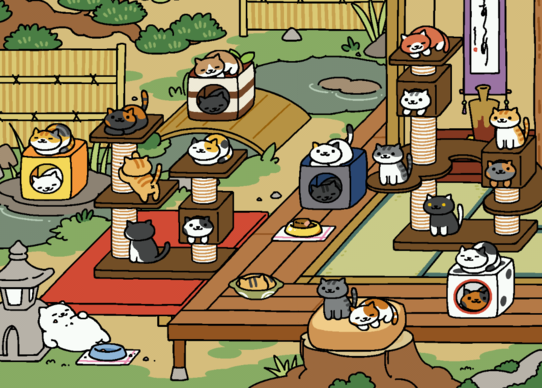
Getting my first Tamagotchi was a transformative moment in my life. I vividly remember standing in the Walmart aisle with my mom, painstakingly selecting the egg-shaped device that best represented my tastes. I was 9. I settled on the see-through purple plastic version—feminine and sophisticated, just like me. I was living in the golden age of Tamagotchis, when they were popular enough that all of my friends had one, but before teachers and schools started banning them in classrooms. Tamagotchis were, without a doubt, a status symbol. I can remember a friend of mine plopping down a key ring with SIX different devices, all the colors of the rainbow. I wondered how she could keep them all healthy. It seemed like a lot of responsibility for a single fourth grader. Not to mention that the net worth of this key ring was over $100, a fact that didn’t quite resonate with children whose allowance was around $10 a month. more...

519240547_86e6b3be05_z

The last democratic debate was mostly good. Two people, who represent very different visions for the future and strategies for how to arrive at that future, had just about as fair and faithful of a debate as one could expect from a cable news-hosted event. Orbiting this central debate is a swirling mass of half-arguments that has more energy than thought-out direction, made up of a cadre of writers who are lining up against the most tattered and boring of banners: Brocialism versus Lean In Feminism. The corporatized feminism that advocates for equal terms in boardroom competition and the smarmy machismo of socialism made for mansplaining both come out of several bad ideological compromises. We would be doing ourselves a disservice if we did not attempt to move beyond these camps into a more honest discussion. more...

160128-flint-drinking-water-pipes-yh-0357p_5ee6fbfc6af1099161e690c66b6ba389.nbcnews-ux-2880-1000

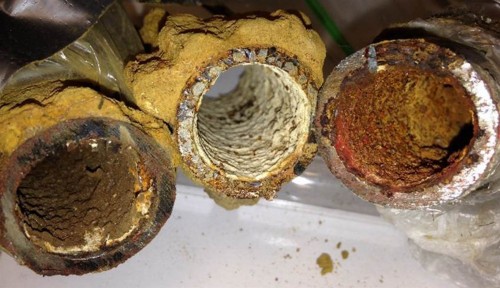
By now I think most people know what happened in Flint, Michigan. An unelected “emergency manager” –appointed and reporting directly to Michigan’s governor Rick Snyder– switched Flint’s water supply from Detroit municipal water to untreated Flint River water. The river water had a higher salinity than Detroit’s water which caused metalic pipes to corrode and leach toxic levels of lead into an entire city’s water supply. This happened back in 2013 and it is still an unresolved problem. The solution for Flint is straightforward: replace all the pipes and provide the kind of lifetime care needed for children and other vulnerable populations that have irreprable neurological damage from lead poisoning. What is less straightforward is how to prevent these kinds of problems from happening in the future. Because while this happened under a terrible governance structure, similar ongoing disasters are occurring in places that still have some form of elected, local governance still in tact. This is as much a problem of science and technology as it is an issue of governance and accountability. What is to be done? more...

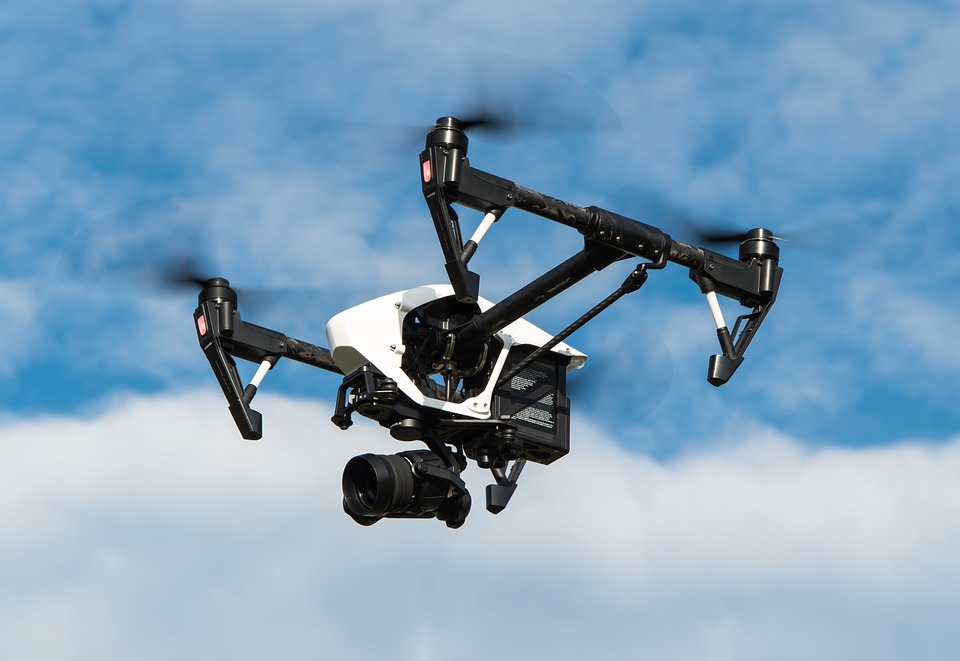
DroneNick Bilton’s neighbor flew a drone outside the window of Bilton’s home office. It skeeved him out for a minute, but he got over it. His wife was more skeeved out. She may or may not have gotten over it (but probably not). Bilton wrote about the incident for The New York Times, where he works as a columnist. Ultimately, Bilton’s story concludes that drone watching is no big deal, analogous to peeping-via-binoculars, and that the best response is to simply ignore drone-watchers until they fly their devices away. With all of this, I disagree.

Drone privacy is a fraught issue, one of the many in which slow legislative processes have been outpaced by technological developments. While there remains a paucity of personal-drone laws, the case precedent trends towards punishing those who damage other people’s drones, while protecting the drone owners who fly their devices into airspace around private homes. Through legal precedent, then, privacy takes a backseat to property.

Bilton spends the majority of his article parsing this legal landscape, and tying the extant legal battles to his own experience of being watched. He begins with an account of looking out his window to see a buzzing drone hovering outside. He is both amused and disturbed, as the drone intrusion took place while he was already writing an article about drones. He reports feeling first violated and intruded upon, but this feeling quickly fades, morphing into quite the opposite. He says:   more...