Archive: 2016

Caucus

Today marks the beginning of the official presidential primaries, launching off with voting in Iowa. While the political pundits and campaign camps scrutinize poll numbers, attendance trends, and even the weather, I find myself poring over this fascinating protocol document put out by NPR.

Admittedly, I’ve never voted in a primary election. I’m going to this year. Word has it, I’m not alone. With intense fractures both within and between parties, this election holds a lot at stake and political analysts say that the primary season is likely to see participation from those who normally abstain altogether, or those like me, who have historically saved their participation for the national election.

So what happens during primary voting? The answer is that it varies drastically, but Iowa has a particularly raucous caucus (<< I know).

In learning about the Iowa primaries, I am most struck by their charm, and relatedly, the simplicity of their technological apparatuses. In Iowa today, the eminent technologies include pencils, paper, voices, and feet. more...

DeathtoStock_Wired8

This past year, I sort of disappeared from Twitter. Not completely – I’d poke my head in now and then – but for a number of reasons I stopped checking it at all regularly.

One of the things that ended up keeping me away for longer than I might otherwise have been was how it felt, those times when I poked my head back in. It was intimidating in a way it hadn’t been before. It was like I had been missing a long series of conversations that added up to one enormous conversation, and I no longer had any idea what was going on. Friends and colleagues and friend-colleagues with whom I used to be in nearly constant touch were suddenly discussing things I didn’t know anything about, and the prospect of trying to catch up was overwhelming. I felt like I had nothing to contribute to the conversation I left behind months ago. It was like a party I would wander into, circulate in kind of a distant and awkward fashion, and leave again. Because I had nothing to say.

I like people, but I’m very bad at feeling like I belong anywhere. It’s my default to feel like a fraud in any crowd I’m a part of, and awkwardness has a way of turning into a withdrawal spiral. This began in physical space, but physical space doesn’t have a corner on making me feel that way. Not at all.

I still don’t check Twitter very regularly.

more...

719u7lrPFJL

Nearly a month after the occupation of Malheur National Wildlife Refuge began, Oregon State Police and the FBI arrested several members of the armed militia group led by Ammon Bundy. Lavoy Finicum, the group’s spokesperson, was killed by law enforcement in the incident. Details on the confrontation are spare at this time; militia members say Finicum was complying with the officers and surrendering, while officials say he was resisting. But the wildlife refuge and the strip of highway where the confrontation occurred are not the only battlegrounds in this war. Another fight has broken out between the militia’s supporters and critics—the Amazon review page for Finicum’s novel Only by Blood and Suffering.

more...

bivens

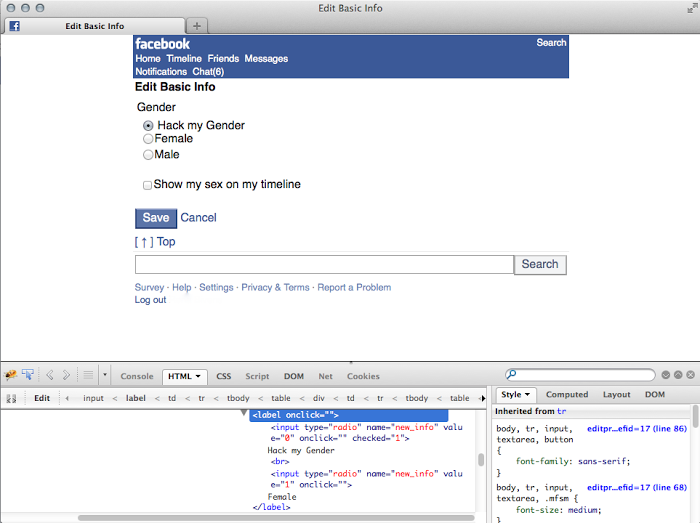
Almost two years ago, Facebook waved the rainbow flag and metaphorically opened its doors to all of the folks who identify outside of the gender binary. Before Facebook announced this change in February of 2014, users were only able to select ‘male’ or ‘female.’ Suddenly, with this software modification, users could choose a ‘custom’ gender that offered 56 new options (including agender, gender non-conforming, genderqueer, non-binary, and transgender). Leaving aside the troubling, but predictable, transphobic reactions, many were quick to praise the company. These reactions could be summarized as: ‘Wow, Facebook, you are really in tune with the LGBTQ community and on the cutting edge of the trans rights movement. Bravo!’ Indeed, it is easy to acknowledge the progressive trajectory that this shift signifies, but we must also look beyond the optics to assess the specific programming decisions that led to this moment.

To be fair, many were also quick to point to the limitations of the custom gender solution. For example, why wasn’t a freeform text field used? Google+ also shifted to a custom solution 10 months after Facebook, but they did make use of a freeform text field, allowing users to enter any label they prefer. By February of 2015, Facebook followed suit (at least for those who select US-English).

There was also another set of responses with further critiques: more granular options for gender identification could entail increased vulnerability for groups who are already marginalized. Perfecting your company’s capacity to turn gender into data equates to a higher capacity for documentation and surveillance for your users. Yet the beneficiaries of this data are not always visible. This is concerning, particularly when we recall that marginalization is closely associated with discriminatory treatment. Transgender women suffer from disproportionate levels of hate violence from police, service providers, and members of the public, but it is murder that is increasingly the fate of people who happen to be both trans and women of color.

Alongside these horrific realities, there is more to the story – hidden in a deeper layer of Facebook’s software. When Facebook’s software was programmed to accept 56 gender identities beyond the binary, it was also programmed to misgender users when it translated those identities into data to be stored in the database. In my recent article in New Media & Society, ‘The gender binary will not be deprogrammed: Ten years of coding gender on Facebook,’ I expose this finding in the midst of a much broader examination of a decade’s worth of programming decisions that have been geared towards creating a binary set of users. more...

DSC08155

I love taking and seeing photos of snow. As the east coast is enjoying right now, big snowstorms produce a blizzard of images across whatever social networks you use. As I tap through these photos this morning, I have some probably obvious thoughts as to why we take and post and like snow photos.

The Snow Day is exceptional and is thus picture worthy because we tend to document what is out of the ordinary and thus interesting and novel. The photo of snow says look how different things are right now. An image of your car so fully under it all suggests how much the normal flow is disrupted. Look what is happening to me. Look at what I witnessed.

In this way, the snow photo is participating in a larger news event, because east coast weather always seems to be an event worth caring about, which is never not funny to this midwesterner. Thus, we get the time-lapse style photo sets of the accumulation. There’s something to keeping track of the snow’s growth. How high can it go? There’s almost obsessive sports-like statistical attention paid to its progress, the hourly updated predictions down to the inch, the constant updates down to the tenth of an inch, the charting of how close we are to whatever record. The snow is progress, each extra bit making it all somehow more successful, more special, newsy, exceptional, and photographable.

Such a thick snow blanket over your world is a dramatic change of scenery, a shift in perception, and thus provides novelty worth a snap. Everyday surroundings that usually seem to have been already exhausted of their photographic potential are breathed new productive life. By making the mundane exceptional, the snow photo sits happily on any network, from the experience trophy in the Instagram scene to the spaces in between on a Snapchat stream.

And snow photos themselves look good. The white wash makes the image simple and more striking by removing extra elements from the frame. The bright snow provides instant contrast, making any subject pop. The flurries in the wind provide movement and texture and depth. The snow itself falls and is blown into beautiful and unpredictable designs and arrangements, wrapped around the contours of objects so smoothly and lifelike. And some snow photos appear almost black-and-white even when shot in color. Snow is its own photo filter.

Anyone in the snow photo is made more interesting, too. Snow implies effort and adventure, sometimes hardship and discomfort, but most of the images posted right now suggest fun. Snow is itself almost comical when it is too much. For some, snow means time off of work, off of adulthood. It can remind of childhood. So snow photos are often of play, throwing snowballs and diving in. Kids and dogs look especially happy. We get to walk, or ski, down the middle of the street. Rules suspended, we photos of people enjoying the snow dressed in costumes.

Providing extra motivation to take photos right now is that this snow is ephemeral. Like photos of a newly served plate of food, you need to document it now or never. Snow around here is quite temporary: This week’s forecast is for temperatures well above freezing. So, take and share and enjoy snow photos now. It’s not just that snow melts but that it slushes and gets dirty and refreezes into a mess that’s soon soiled and jagged. The elegant formations get shoveled and plowed into piles. The snow becomes more work than play. The novelty and documentary potential gets used up, the snow gets less photogenic, less likeable.

nathan is on twitter and this piece was crossposted from his tumblr

(as seen on Mashable) (AP Photo/Mary Altaffer)

When Sarah Palin endorsed Donald Trump, it provided political commentators with a goldmine of analytic fodder.  Working through the Palin-Trump team up, there is a lot to untangle.

For instance, how do we make sense of a political climate in which the 2008 vice presidential candidate, who so damaged the presidential campaign of her running mate that he could barely mask his contempt for her on election night, is now a desirable connection?

Or what dynamics were in play that pushed Palin to Trump rather than Cruz, especially given Palin’s support of Cruz in his senate bid?

Or could her endorsement backfire, finally impressing upon moderate Republicans the urgency of nominating Rubio or Bush? And relatedly, what’s up with Rubio falling into the mainstream/moderate category?

While commentators touched on a few of these things, largely, the conversation was dominated by another topic entirely: Sarah Palin’s sweater. more...

stiffed-lrg

Rachel Monroe recently published a fascinating essay on Jared Rutledge, the pickup artist whose Asheville, NC community turned against him after discovering his dehumanizing and degrading comments online. Rutledge’s comments were quite similar to what you might find in much of the manosphere if you go looking—lashing out at women who won’t have sex with him, saying women are only valuable if they are beautiful and submissive, tallying the number of women he has slept with, and going so far as to give them scores.

Rutledge expressed a great deal of remorse for his actions, even trying to make amends by donating to a local rape crisis center (which was rejected). For the story, he told Monroe about his past, and what had drawn him to pickup artistry and the manosphere—anger, bitterness, insecurity, and a feeling that he couldn’t make sense of the world around him. In my own research on manosphere discourse, and what men say about the current state of dating and masculinity, Rutledge is far from alone. Many men turn to these communities to try to make sense of their role in a society that looks very different from their fathers’; the decline of the industrial economy, the end of “The Greatest Generation,” and of course the decades of feminist movement and LGBT activism that have dramatically changed the landscape of gender and sexuality.

The work of author and journalist Susan Faludi has been foundational for my own thinking on the topic, and her account of this problem can shed light on what brings men to the manosphere in the first place. In her 1999 book Stiffed: The Betrayal of the American Man, she writes:

It’s often been observed that the economic transition from industry to service, or from production to consumption, is symbolically a move from the traditional masculine to the traditional feminine. But in gender terms, the transition is far more than a simple sex change and, so, more traumatic for men than we realize. A society of utility, for all the indisputable ways that it exploited men’s health and labor, and in an industrial context broke the backs and spirits of factory workers and destroyed the lungs of miners, had one saving grace: it defined manhood by character, by the inner qualities of stoicism, integrity, reliability, the ability to shoulder burdens, the willingness to put others first, the desire to protect and provide and sacrifice. These are the same qualities, recoded as masculine, that society has long recognized in women as the essence of motherhood. Men were publicly useful insofar as they mastered skills associated with the private realm of maternal femininity. Like mothers tending selflessly to their babes, men were not only to take care of their families but also their society without complaint; that was, in fact, what made them men.

In a culture of ornament, by contrast, manhood is defined by appearance, by youth and attractiveness, by the curled lip and petulant sulk and flexed biceps, by the glamour of the cover boy, and by the market-bartered ‘individuality’ that sets one astronaut or athlete or gangster above another. These are the same traits that have long been designated as the essence of feminine vanity, the public face of the feminine as opposed to the private caring, maternal one. The aspects of this public ‘femininity’—objectification, passivity, infantilization, pedestal-perching, and mirror-gazing—are the very ones that women have in modern times denounced as trivializing and humiliating qualities imposed on them by a misogynist culture. No wonder men are in such agony. Not only are they losing the society they were once essential to, they are ‘gaining’ the very world women so recently shucked off as demeaning and dehumanizing. [pp. 38-39]

Britney is on Twitter.

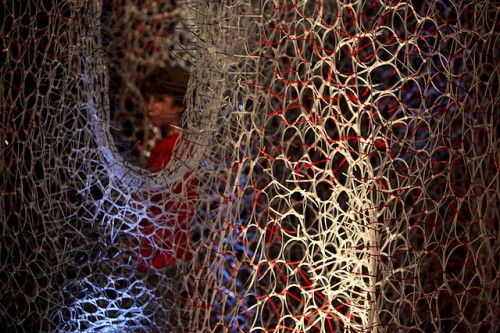
Branching Morphogenesis, a walk-through installation by Jenny Sabin, consisting of 75,000 cable ties combined in a beautiful 3D network, somehow resembling neural net of the brain. Credit
Branching Morphogenesis, a walk-through installation by Jenny Sabin, made up of 75,000 cable ties combined to resemble the human brain. Source


Douglas Langston [langston@levitshaw.oceanea]

11/26/2073 14:35:22.4

RE: ugh these adverts FWD: Claim The Life You Want


You sick fuck why did you do that?


Douglas Langston

Associate Contracted Operations Manager

Levit//Shaw Cloud Services

45a: @Doug_Langston

t: langston@levitshaw.oceanea


sarah caldana [sara_c@thread.fuck]

11/26/2073 13:14:08.7

RE: ugh these adverts FWD: Claim The Life You Want

i know it hurts and i’m so sorry. i love you i love you i love you. but i know this is what its gonna take. we’re not wrong. if it makes you feel any better (i know it won’t) my shoulder hurts like a son of a bitch. i had no idea… i don’t think something healed quite right. maybe nerve damage. i’m typing this lying on the floor in my apartment. my lower back hurts something fierce too. looks like i’m literally gonna take this lying down. hope the cops that find me are feeling their own injuries. i bet every cop out there has a torn rotator cuff and one tumor for every bullet in the chamber by now. haha. i love you and will miss you so much. -s


more...

Lanius

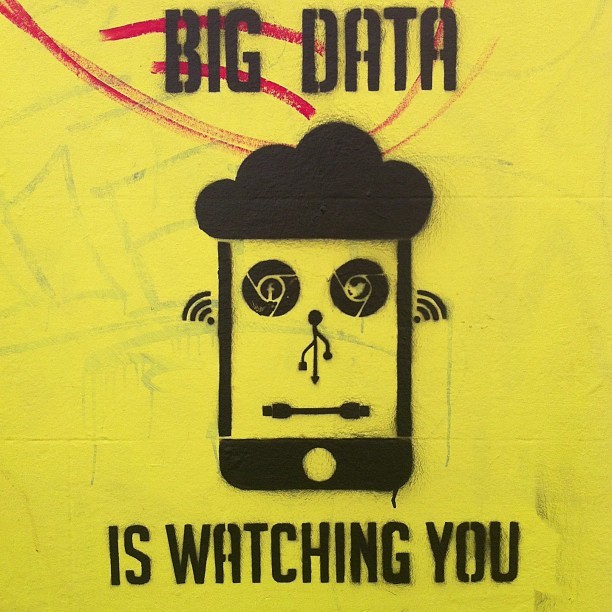
In December, the Center for Data Innovation sent out an email titled, “New in Data: Big Data’s Positive Impact on Underserved Communities is Finally Getting the Attention it Deserves” containing an article by Joshua New. New recounts the remarks of Federal Trade Commissioner Terrell McSweeny at a Google Policy Forum in Washington, D.C. on data for social empowerment, which proudly lists examples of data-doing-good. As I read through the examples provided of big data “serving the underserved”, I was first confused and then frustrated. Though to be fair, I went into it a little annoyed by the title itself.

The idea of big data for social good is not “new in data”: big data have been in the news and a major concern for research communities around the world since 2008. One of the primary justifications, whether spoken or implicit, is that data will solve all of humanities biggest crises. Big data do not “deserve” attention: they are composed of inanimate objects without needs or emotions. And, while big data are having an “impact” on underserved communities, it is certainly not the unshakably positive, utopian impact that the title promises. more...

Alaska

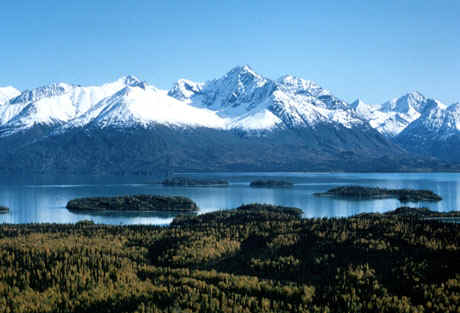
Turn on your TV and I bet you can find a show about Alaska. A partial list of Alaska-themed reality shows airing between 2005 and today includes Deadliest Catch, Alaskan Bush People, Alaska the Last Frontier, Ice Road Truckers, Gold Rush, Edge of Alaska, Bering Sea Gold, The Last Alaskans, Mounting Alaska, Alaska State Troopers, Flying Wild Alaska, Alaskan Wing Men, and the latest, Alaska Proof, premiering last week on Animal Planet, a show that follows an Alaskan distillery team as they strive to “bottle the true Alaskan spirit.” And with Alaska Proof, I submit that we have saturated the Alaskan genre; we have reached Peak Alaska. We may see a few new Alaska shows, but it’s likely on the decline. I don’t imagine we have many Alaskan activities left yet unexplored.

Television programming remains a staple of American Leisure, even as the practice of television watching continues to change (e.g., it’s often done through a device that’s not a TV). As a leisure activity, consumers expect their TV to entertain, compel, and also, provide comfort. What content and forms will entertain, compel and comfort shift with cultural and historical developments. Our media products are therefore useful barometers for measuring the zeitgeist of the time.  Marshall McLuhan argues in The Medium is the Message that upon something’s peak, when it is on the way out, that thing becomes most clearly visible. And so, with Alaska peaking in clear view, I ask, what does our Alaskan obsession tell us about ourselves?    more...